Description
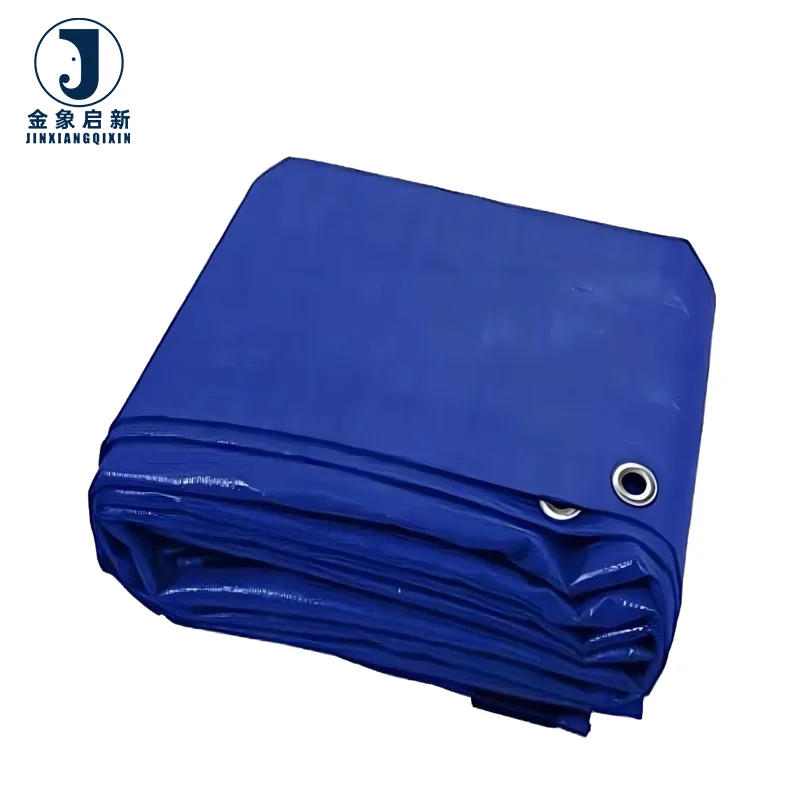
Process-Controlled Roll Stock — Three dedicated production lines enforce tight GSM and colour tolerances across every roll in a wholesale consignment.
Technical Specifications
| Parameter | Value |
|---|---|
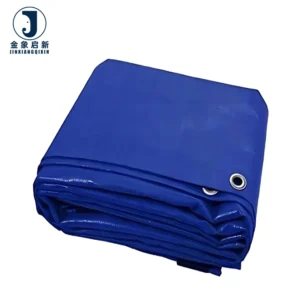
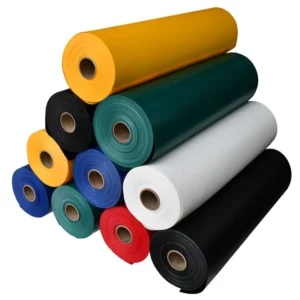
| Product Type | PVC Coated Tarpaulin Roll |
| Material Composition | PVC + High-strength polyester mesh fabric |
| Available GSM Grades | 350gsm, 420gsm, 500gsm, 550gsm, 600gsm, 750gsm |
| Corresponding Thickness | 0.32mm, 0.35mm, 0.4mm, 0.45mm, 0.5mm, 0.65mm |
| Standard Roll Sizes | 2m width × 75m length / 2.1m width × 50m length |
| Finish Product Sizing | Custom cut-to-size or supplied as inventory roll stock |
| Coating Technology | Laminated technology & Hot-melt coating technology |
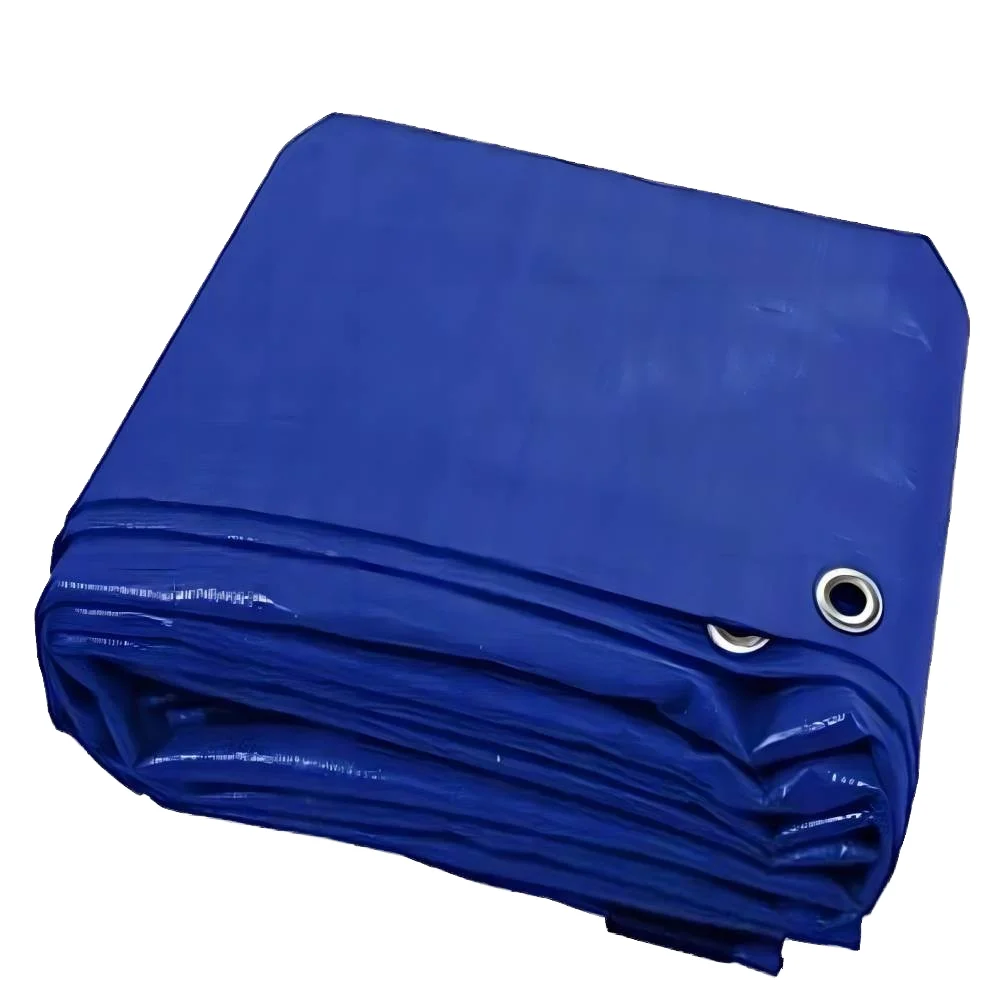
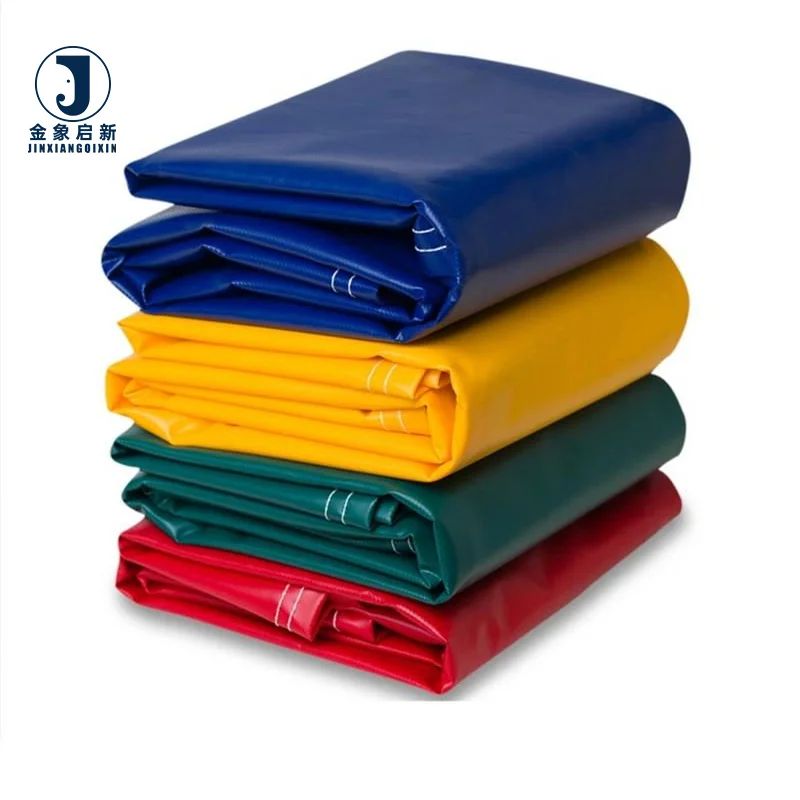
| Available Colors | Blue, Red, Yellow, Light blue, Grey (Customized) |
| Key Features | Cold crack resistance, Anti-mildew, Anti-static treatment (grade not stated in source), Waterproof, Sunproof (test basis not stated in source), High tenacity yarns |
| Standards | ISO (specific standard number not stated), CE |
Application Suitability
| Application | Exposure & Requirement |
|---|---|
| Tarpaulin distributor resale | Mixed-GSM stock for regional hardware and industrial supply chains |
| Tent and awning fabrication | Continuous yardage for heat-welded panel cutting and frame assembly |
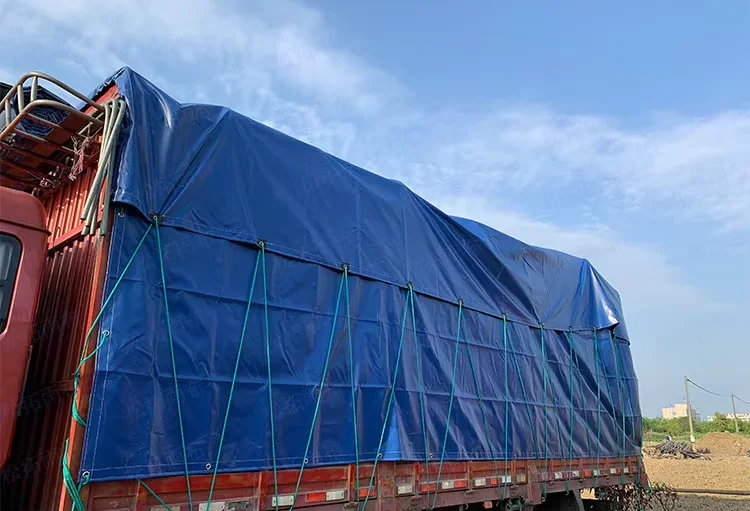
| Transport fleet in-house shops | Roll stock for side curtain repair and custom truck cover fabrication |
| Inflatable structure manufacturing | High-adhesion coated fabric for radio-frequency or hot-air welded seams |
| Pond and reservoir lining | Permanent water immersion, soil chemistry, puncture from substrate |
Why GSM Variance Between Rolls Disrupts Wholesale Operations
A quoted GSM that is not verified per roll before dispatch becomes a receiving-department liability, not a supplier problem.
Distributors who consolidate container loads from multiple sources often discover that roll-to-roll weight variation shows up only after the material has been cut, welded and installed on the job site. One roll measuring lighter than the next means a fabricator cannot set a single heat-weld temperature across a production run, and a truck cover shop cannot guarantee uniform drape and tie-down tension across a fleet order [NEED_CITE: tensile and tear test methods for coated fabrics per ISO 1421]. The cost of replacing a single installed panel often exceeds the value of the entire original roll, which is why PVC coated tarpaulin roll buyers are now demanding per-roll inspection records before the container is sealed.
Container-Load Consolidation Across Weight Grades
Wholesale buyers sourcing PVC coated tarpaulin roll stock need a single production source capable of running multiple GSM grades within one container load without cross-contamination of colour batches. Our facility stages 350gsm through 750gsm rolls on parallel lines, allowing distributors to mix lightweight awning grades with heavy-duty truck cover grades in a single 40-foot container, reducing landed cost per roll and simplifying customs clearance under one bill of lading.
Roll-to-Roll Colour Matching for Side-by-Side Installation
When two rolls from the same order are welded together on a tent roof or truck side curtain, even minor pigment variation becomes visible in direct sunlight. We control colour consistency by locking masterbatch dosing at the coating stage and recording batch reference numbers on every roll label [NEED_CITE: colour fastness and batch matching standards for coated textiles]. Distributors who supply fabrication shops can specify a single Pantone or RAL reference, and we hold that tolerance across the full production run.
Coating Weight Versus Base Fabric Density
The GSM figure on a quotation combines both the polyester base fabric weight and the PVC coating weight, yet the two contribute differently to end-use performance. A heavier coating improves waterproofing and abrasion resistance at the surface, while a denser base fabric — measured in denier and thread count — governs tensile strength and tear propagation resistance. Laminated and hot-melt coating technology allows us to adjust coating weight independently of the mesh, so buyers can specify a 600gsm roll with a higher base fabric proportion for tensile-critical applications like tensioned membrane structures, or a higher coating proportion for pond liners requiring maximum chemical resistance. Width and roll length directly influence cutting yield: the 2.1m × 50m format reduces transverse welds on wide truck trailers, while the 2m × 75m format maximises linear meterage per roll for tent panel fabrication.
The Cost of Undetected Batch Inconsistency
A distributor who ships lighter-than-specified rolls to a fabricator may not receive a complaint until the finished truck cover fails at a flex point six months into service. By that stage, the container has been paid for, the fabricator has invoiced the fleet operator, and the warranty claim traces back through three supply chain layers [NEED_CITE: coated fabric weld seam failure analysis at flex points]. Reputational damage to the importer often exceeds the material credit issued, which is why we conduct 100% pre-shipment inspection and document GSM readings per roll.
Why Wholesale Buyers Source Rolls From This Facility
Our three full production lines and 36 sets of professional equipment allow us to schedule dedicated batch runs for custom colour and custom width orders without disrupting standard stock roll output. A 10-person R&D team develops samples within days for distributors who need to present swatches to their end-market fabricators before committing to a full container order. Every roll passes through dedicated QA/QC stations at coating, winding and packing stages, generating a pre-shipment inspection record that travels with the shipping documentation. We supply roll packing lists that detail roll count, net weight, batch number and GSM verification per roll, enabling receiving departments to reconcile against the purchase order without sampling every roll on the dock.
Documentation & Verification
- Material specification sheet listing GSM, base fabric construction, coating type and colour reference for each roll grade
- Pre-shipment inspection record with measured GSM per roll compared against the quotation value
- Roll packing list showing individual roll weight, batch number and dimensions for receiving reconciliation
- Certificate of origin and customs documentation prepared per destination country import requirements
- UV and flame retardant test reports supplied where the specific grade has been requested and confirmed
Fabrication, Handling & Storage
- Heat-weld temperature profiles vary by GSM grade; request our recommended settings for laminated and hot-melt coated rolls
- Store rolls upright on pallets to prevent flat-spot deformation on the outer wrap layers
- Allow cold-stored rolls to acclimatise to workshop temperature before unrolling to avoid coating micro-cracking
- Use compatible PVC-based adhesives for patch repairs on high-tenacity polyester mesh substrate
- Plan cutting layouts around the 2m or 2.1m standard width to minimise transverse weld seams on long panels
Request a Quotation With Your Container Plan
To receive a consolidated quotation, please share the GSM grades, roll widths, colour references and estimated annual volume you intend to load per container. If your market requires specific fire classification or anti-static certification, specify the standard applicable in your destination country so we can confirm the correct grade before sampling. Let us know whether you require finished cut-to-size panels or roll stock only, and whether sample swatches should be dispatched for fabricator approval prior to full production.
Frequently Asked Questions
Q: How is GSM verified on each roll before the container is sealed?
A: Our QA team measures coating weight and total GSM at multiple points along every roll during winding, recording the readings on a pre-shipment inspection report. This document accompanies the roll packing list and is shared with the buyer before dispatch, allowing verification on arrival against the original quotation specification without destructive sampling.
Q: What controls are in place to prevent colour variation across rolls in one order?
A: We lock the masterbatch pigment formulation at the coating stage and assign a single batch reference to all rolls within a production run. Rolls are compared against the approved sample swatch under standardised lighting before packing, and any roll falling outside tolerance is diverted from the consignment.
Q: What roll packing and container loading configurations are available?
A: Standard rolls are wound on cardboard cores and wrapped in opaque PE film, then stacked vertically on pallets for container loading. We provide a load plan showing roll count, weight distribution and cubic utilisation for 20-foot and 40-foot containers based on the specific GSM grades and widths ordered.
Q: What minimums and lead times apply to custom colour or custom width roll orders?
A: Custom colour and custom width orders are scheduled as dedicated batch runs on one of our three production lines. Minimum quantities and lead times depend on the GSM grade and the degree of deviation from standard stock specifications; we confirm both at the quotation stage after reviewing your target container volume.
Q: How do you manage coating adhesion consistency in bulk wholesale shipments?
A: Laminated and hot-melt coating technology requires precise temperature and pressure control at the bonding nip. Our operators monitor these parameters continuously during production, and adhesion is verified by peel testing at the start, middle and end of each roll before it is released for winding and packing.