
Description
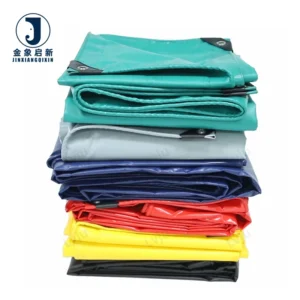
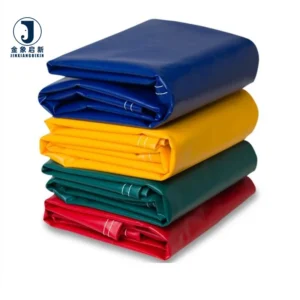
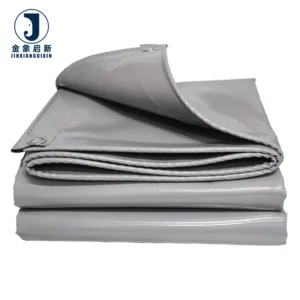
Roll-to-Roll Consistency — Every batch of PVC knife coated tarpaulin roll wholesale stock is inspected for GSM weight, coating adhesion, and surface finish before dispatch, ensuring uniform material across container loads.
Technical Specifications
| Parameter | Value |
|---|---|
| Product Type | PVC Knife-Coated Fabric |
| Weight Range | 300-600 gsm (confirm specific grade for your application) |
| Coating Method | Knife coated |
| Coating Material | PVC |
| Flame Retardant | Available in flame retardant grades — confirm the grade required for your market |
| Anti-Static | Available — specify the standard applicable to your site |
| UV Treatment | Anti-UV treatment available — confirm test basis for your region |
| Anti-Mildew | Available |
| Anti-Cold | Available |
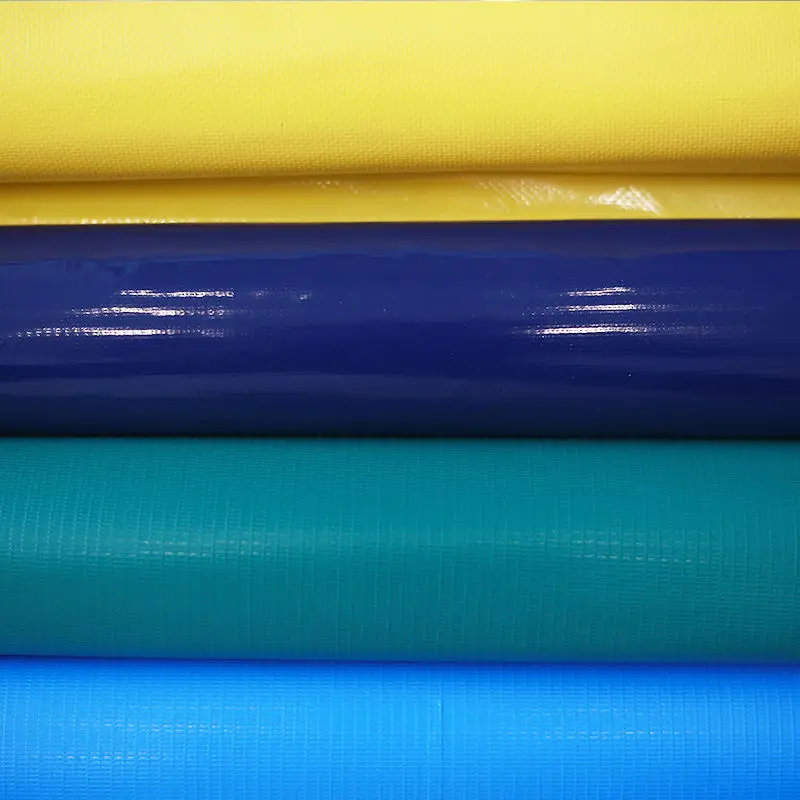
| Surface Finish | Glossy or matte (3P treatment available) |
| Form | Roll stock or custom cut sizes |
| Tensile Property | High strength, tear-resistant base fabric |
| Waterproofing | Fully waterproof, oil-resistant coated surface |
| Certifications | ISO, CE |
Application Suitability
| Application | Exposure & Requirement |
|---|---|
| Tarpaulin distribution and restocking | Consistent roll weight, batch colour match, standard and specialty grades for diverse end users |
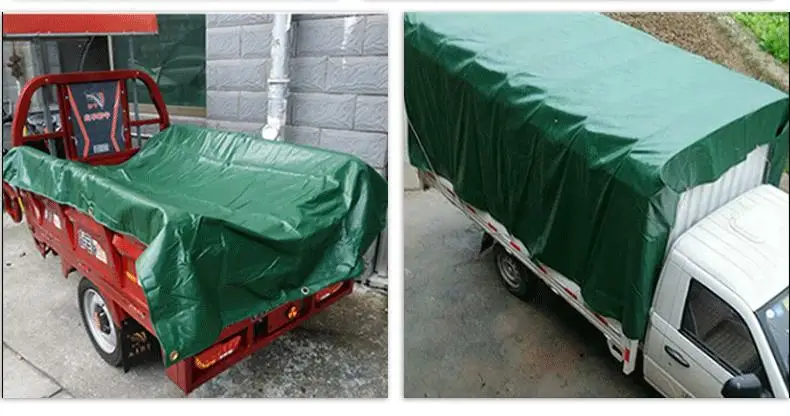
| Truck side curtain and load cover fabrication | Constant flexing at tie-down points, road debris abrasion, UV and weather exposure during transit |
| Outdoor tent and awning manufacturing | Tension across frame structures, prolonged sun exposure, wind-driven rain, repeated folding and deployment |
| Pond liner and agricultural stock cover | Permanent water contact, soil chemistry exposure, puncture risk from substrate irregularities |
| Inflatable and membrane structure production | Air pressure loading, seam integrity under stress, UV degradation resistance over extended installation |
What Happens When the Roll Weight Does Not Match the Invoice
Verified GSM per roll is the only way to eliminate short-weight delivery disputes before the container leaves the factory.
Purchasing agents who order by weight but receive material that measures lighter on the scale face immediate cost overruns — the roll covers less area than calculated, margins erode, and the end customer receives fabric that underperforms in the field [NEED_CITE: pre-shipment inspection protocols for coated fabric weight verification]. This issue surfaces more often when the supply chain involves multiple intermediaries between the coating line and the final buyer, with no single party accountable for the dispatch weight. For wholesale buyers consolidating mixed containers, a discrepancy across even one roll grade can trigger a full-batch rejection at destination.
Maintaining Coating Uniformity Across the Full Weight Spectrum
The knife coating process applies a controlled PVC layer onto the base fabric, building weight and performance characteristic by characteristic. Across the 300-600 gsm range, the coating formulation and blade gap must be adjusted precisely to maintain adhesion without over-saturating or starving the substrate. Buyers sourcing PVC knife coated tarpaulin roll wholesale need confirmation that each grade in their order — from lighter stock for tent fabric to heavier material for truck covers — has been produced under process parameters matched to that specific weight. Inconsistent coating weight within a single roll shows up as visible variation during fabrication, where some sections weld cleanly and others delaminate under the same heat setting.
Batch Colour Control for Side-by-Side Installation
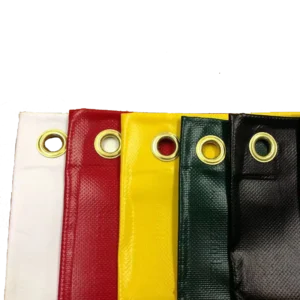
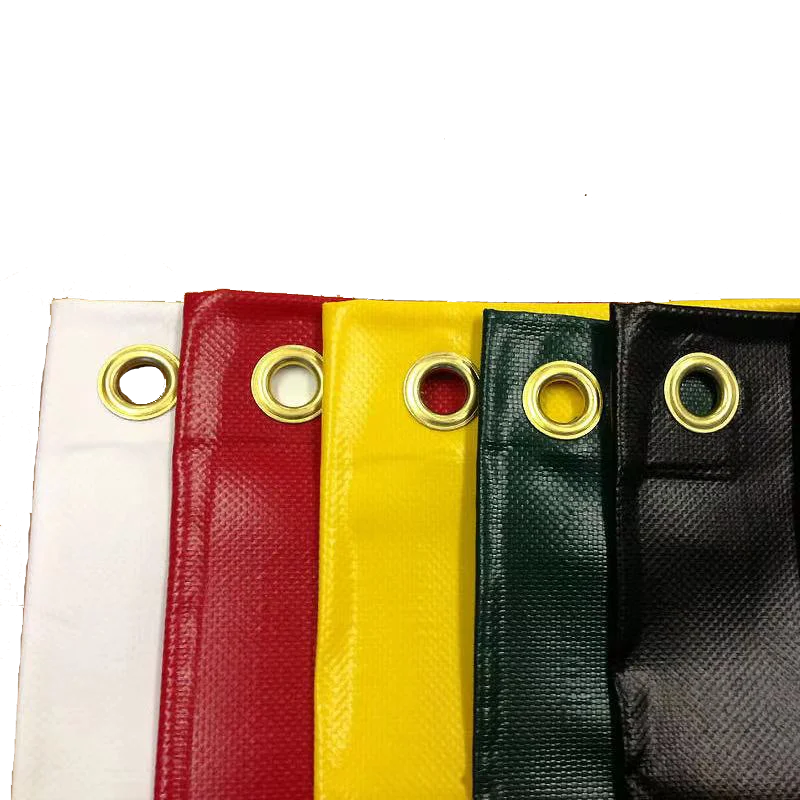
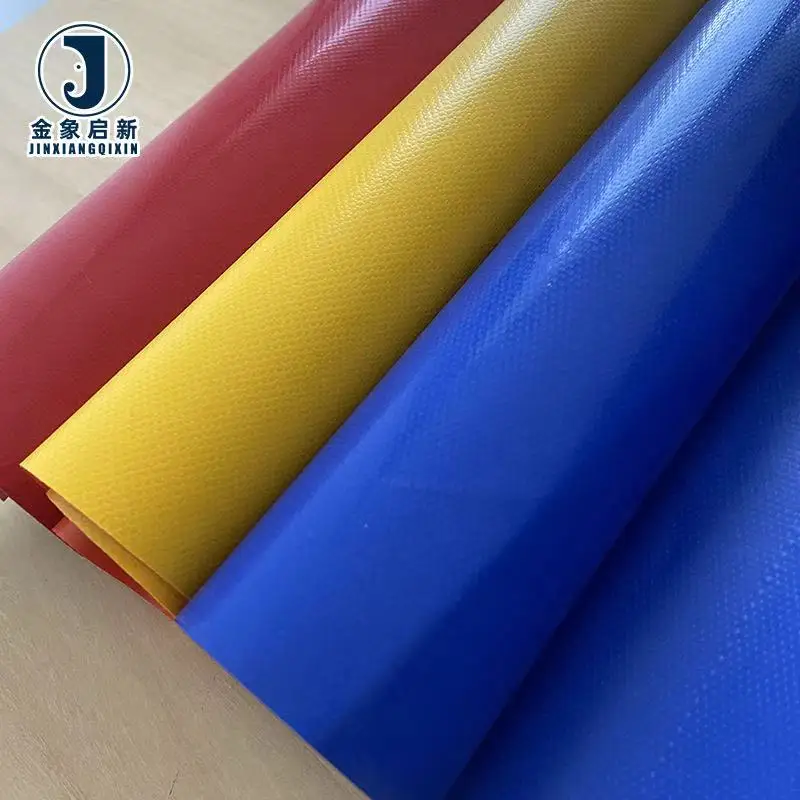
Colour variation between rolls becomes immediately visible when two or more panels are installed adjacent to each other on a truck curtain or tent structure. For distributors holding stock across multiple orders, maintaining a consistent colour reference against the original Pantone or RAL code requires that the coating line runs the same pigment batch through the entire production window [NEED_CITE: colour matching standards for PVC coated textiles in bulk production]. Rolls from different production dates that test within tolerance individually can still present a perceptible shift when unfurled side by side. This is why buyers consolidating a full container of mixed grades require a single colour approval sample retained against the production run.
Decoding the Specification Sheet Beyond the GSM Number
The stated weight in grams per square metre combines the base fabric mass and the PVC coating applied to it, but two rolls at the same GSM can perform very differently depending on how that weight is distributed. A roll where the base fabric carries more of the total weight will generally offer higher tensile and tear strength, because the woven polyester yarns bear the mechanical load. A roll where the coating accounts for a larger share of the GSM may present a smoother surface and better chemical resistance but can show lower tear propagation resistance. Knife coating, as opposed to calendering or lamination, allows the PVC to penetrate the yarn interstices, producing stronger coating-to-substrate adhesion — this directly affects how the material behaves at welded seams where delamination is the most common failure mode. Surface finish selection between glossy and matte influences both cleanability and print receptivity; glossy surfaces shed dirt and water more readily while matte finishes reduce glare and accept solvent-based inks with less preparation. Anti-UV, flame retardant, and anti-static treatments each add a functional layer, but their effectiveness depends on the specific grade and the test standard applicable to the buyer’s end market.
The Hidden Cost of Specifying on Price Per Kilogram Alone
Selecting coated fabric purely on the lowest cost per kilogram invites a chain of downstream problems that outweigh the initial saving. Material that arrives below the quoted GSM means each roll yields fewer linear metres of cut panels, pushing the fabrication cost per finished product higher than the budget assumed. Rolls with inconsistent coating adhesion fail at the weld line during fabrication, generating scrap that was never factored into the order quantity. A flame retardant claim unsupported by a test report matching the batch in question leads to rejection at the project site when the inspector requests documentation [NEED_CITE: fire safety documentation requirements for temporary structures and transport covers]. Colour mismatch across rolls within the same shipment forces the fabricator to sort and segregate panels, adding labour hours and delaying dispatch to their own customer.
Procurement Advantages for Wholesale and Roll Stock Buyers
Dedicated QA inspection at every production stage means that GSM, coating adhesion, and surface finish are checked roll by roll, not sampled from a single piece at the end of the line. A 10-person R&D team supports custom width, colour matching, and specialty treatment formulation, allowing buyers to consolidate standard stock and made-to-order grades within the same container. Three full production lines with 36 sets of professional equipment provide the capacity to fulfil bulk roll orders within the agreed dispatch window, reducing the risk of partial shipments that delay container booking. Samples for custom colours, widths, or treatment combinations are developed within days, enabling buyers to verify material against their fabrication process before committing to the full production run. Pre-shipment inspection records accompany every dispatch, documenting the weight verification and visual check performed on each individual roll.
Documentation & Verification
- Material specification sheet confirming GSM, base fabric denier, and coating weight for each roll grade
- Pre-shipment inspection record with roll-by-roll weight check against the stated specification
- Roll packing list detailing roll count, net weight, and container loading sequence
- Test reports for UV and flame retardant grades matched to the specific production batch
- Certificate of origin and customs documentation for international roll stock shipments
Fabrication, Handling & Storage
- Hot air weld temperature and speed must be calibrated to the specific 300-600 gsm grade to prevent coating burn-through or incomplete bonding
- Store rolls upright on end caps to prevent flat spots and permanent creasing across the PVC coating surface
- Allow knife coated rolls to acclimatise to workshop temperature before unrolling to avoid coating crack in cold stock
- Use compatible PVC-based repair patches and solvent cement matching the coating chemistry for field repairs
- Plan cutting layouts to maximise yield from the available roll width, reducing waste at selvedge edges
Requesting a Quotation for Your Roll Stock Requirements
To provide an accurate quotation with realistic lead times, we need your target GSM range, the specific treatments required for your end market (flame retardant grade, anti-static standard, UV test basis), and your preferred roll width and length. Share your annual volume estimate and whether you require standard stock grades, custom colours, or a mixed container combining both. If you are fabricating finished products in-house, let us know your welding method so we can recommend the appropriate surface finish and coating formulation.
Frequently Asked Questions
Q: How do you guarantee the GSM weight matches what was quoted?
A: Every roll is weighed and measured against the specification sheet during pre-shipment inspection. The inspection record documents the actual GSM for each roll in the order and accompanies the shipping documents. Buyers can cross-check on arrival using the same method — cut a measured sample, weigh it, and compare against the stated value on the packing list.
Q: Can I get consistent colour across a full container of rolls?
A: Colour consistency is managed by running the same pigment formulation through a single production window for your entire order. A retained approval sample is held against the production batch so that any future re-order can be matched. We recommend ordering the full container quantity at once rather than splitting across multiple production runs to minimise batch-to-batch variation.
Q: What are the minimum order quantities for custom width or colour?
A: MOQ for custom colours and widths is lower than buyers typically expect from coating lines, particularly when combined with standard stock grades in the same container. Provide your required dimensions and colour reference, and we will confirm the minimum based on current production scheduling. Mixed containers combining custom and stock rolls are supported.
Q: Which treatments are backed by test reports?
A: UV, flame retardant, and anti-static treatments are available across the product range, each producible to specific test standards. Confirm which standard your end market requires — such as the applicable fire classification or UV exposure test method — and the corresponding test report will be matched to your production batch and included with the shipment documentation.
Q: How are rolls packed for container shipment?
A: Each roll is wrapped to protect the coating surface from transit abrasion and moisture, then labelled with grade, colour reference, weight, and dimensions. A container loading plan details the roll count, stacking arrangement, and total weight to maximise space utilisation and prevent movement during ocean freight.