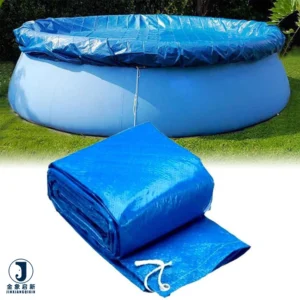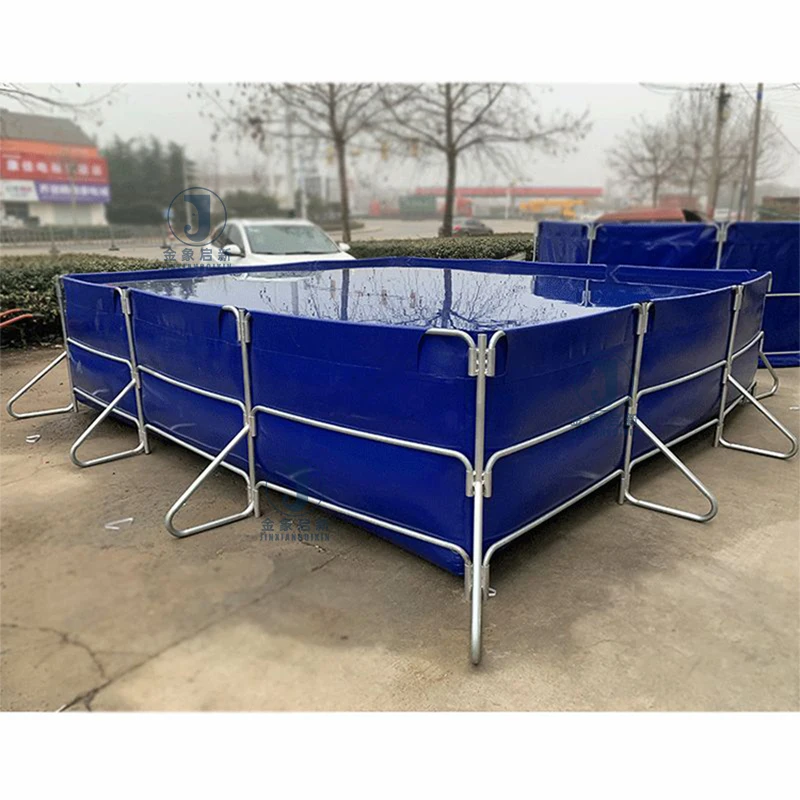
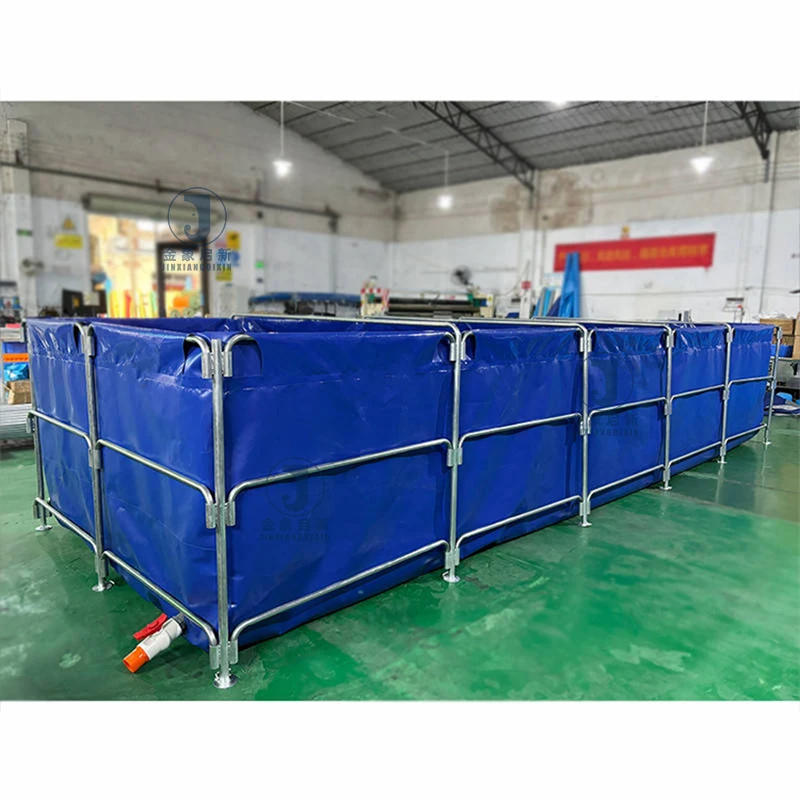
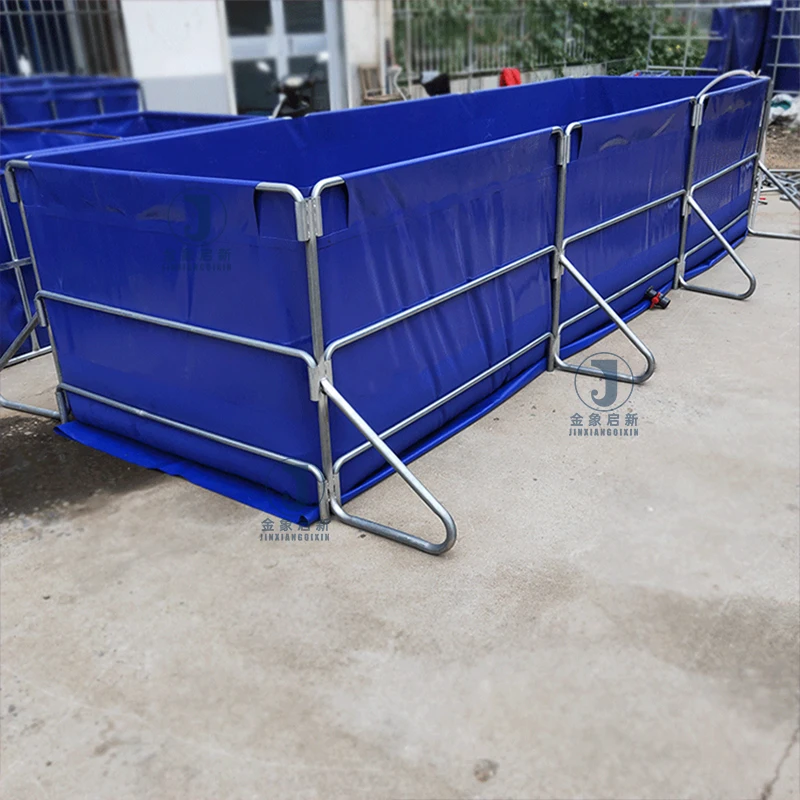
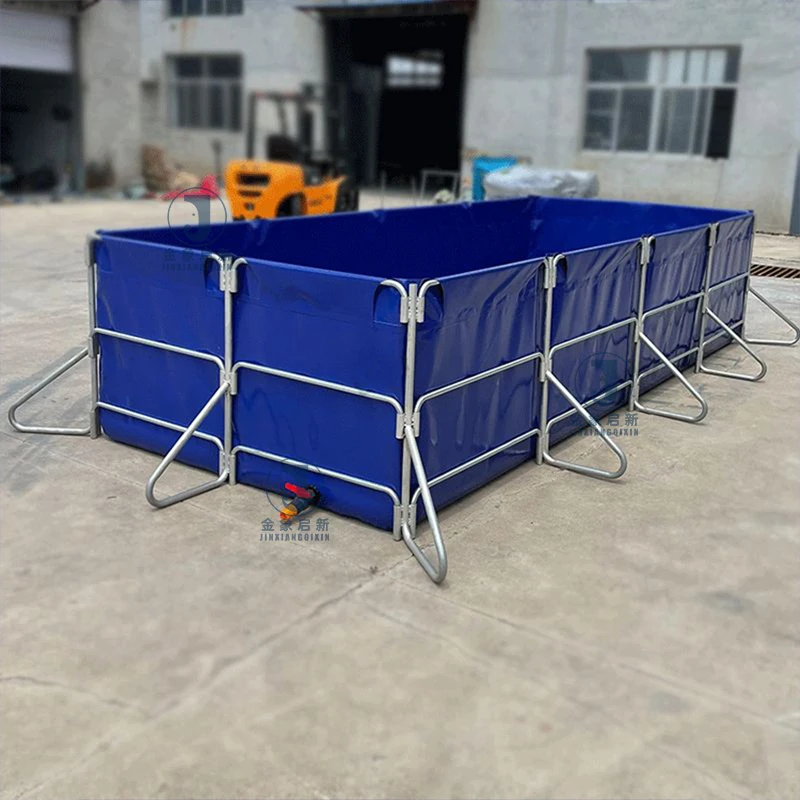
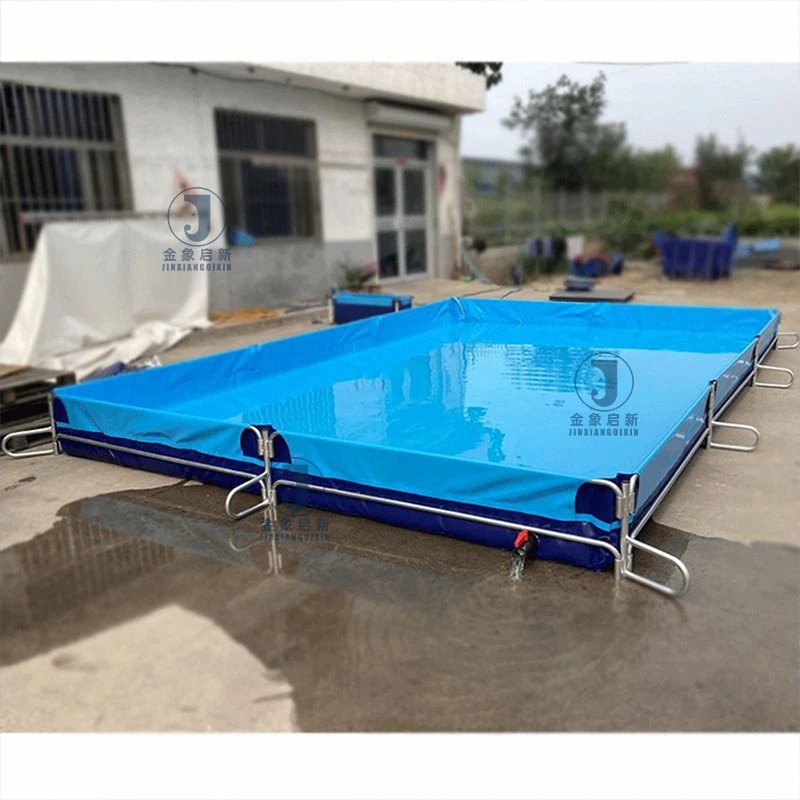
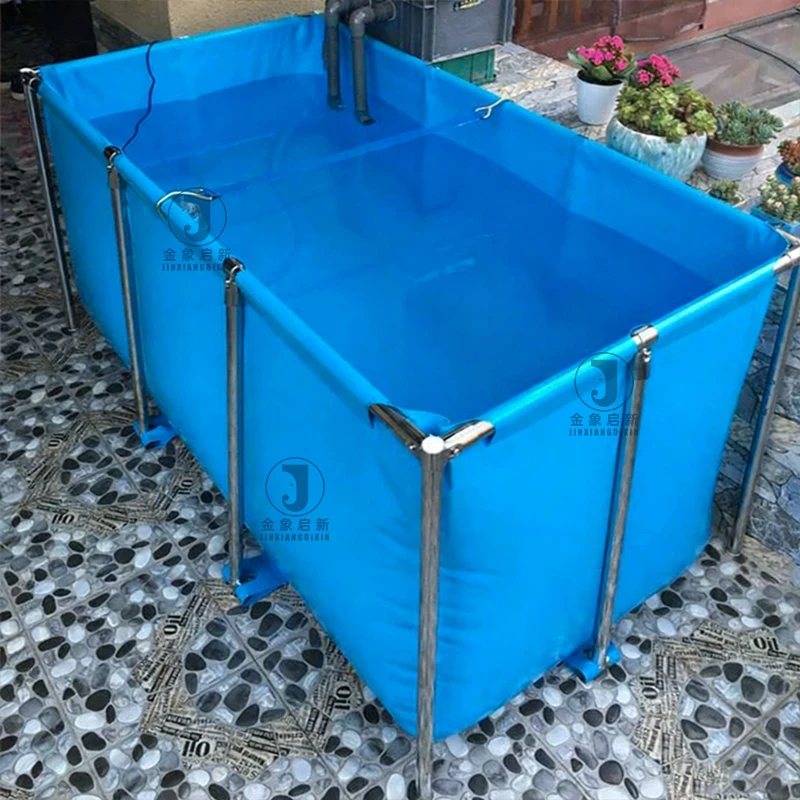
Description
Precision-Coated Roll Consistency — Every roll of PVC tarpaulin fish pond liner undergoes GSM and thickness verification before dispatch, ensuring batch-to-roll uniformity for large-scale aquaculture installations.
Technical Specifications
| Parameter | Value |
|---|---|
| Product Type | PVC Tarpaulin Fish Pond Liner |
| Base Fabric Yarn Count | 500D×500D / 500D×840D / 500D×1000D / 1000D×1000D / 1000D×1300D / 1300D×1300D / 1000D×2000D |
| Mesh Density | 20×20 / 30×19 / 30×15 |
| Coating Material | PVC (polyvinyl chloride) |
| Material Composition | PVC & Polyester |
| Thickness Range | 0.29mm / 0.32mm / 0.38mm / 0.44mm / 0.46mm / 0.55mm / 0.65mm |
| Weight Options | 350 GSM / 400 GSM / 420 GSM / 500 GSM / 600 GSM / 650 GSM / 750 GSM / 900 GSM |
| Warp Tensile Strength (N) | 1650 / 1800 / 1850 / 2050 / 2500 / 2550 / 2750 / 3900 (test basis not stated) |
| Weft Tensile Strength (N) | 1600 / 1700 / 1750 / 1900 / 2200 / 2250 / 2850 / 3500 (test basis not stated) |
| Key Features | Water Resistant, Waterproof, Flame Retardant (grade not stated), Anti-UV (test basis not stated) |
| Surface Finish | Smooth PVC coated |
| Standards Referenced | ISO and CE |
Application Suitability
| Application | Exposure & Requirement |
|---|---|
| Commercial fish farming ponds | Permanent water immersion, biological load, puncture from substrate stones, continuous UV exposure |
| Aquaculture tank liners | Circular and rectangular geometry, constant hydrostatic pressure, chemical interaction with feed and waste |
| Agricultural irrigation reservoirs | Large surface area coverage, seasonal filling and draining, soil chemistry contact, mechanical abrasion from equipment |
| Portable water storage bladders | Foldable construction, repeated deployment, flex stress at corners and seams |
Why Quoted GSM Often Fails the Pond Water Test
Weight verification at the coating head, not just on the shipping label, separates reliable pond liners from field failures.
Bulk buyers sourcing PVC tarpaulin fish pond liner rolls frequently receive material that measures lighter than the agreed specification once unrolled and sampled on site. [NEED_CITE: coated fabric GSM tolerance standards per ISO 2286] A shortfall of even a small percentage in coating weight reduces the PVC layer that protects the polyester base fabric from water ingress and biological degradation. In aquaculture, where ponds hold thousands of litres under constant hydrostatic pressure, a thinner coating means faster breakdown at the weld seams and a higher probability of leaks appearing within the first season. Our process holds each roll to the stated GSM with in-line coating weight checks, so the material you cut and weld on site matches the data sheet you approved at the sample stage.
Roll-to-Roll Uniformity Across Container-Volume Orders
When a single aquaculture project requires multiple containers of PVC tarpaulin fish pond liner, the colour, thickness and hand feel must remain identical from the first roll to the last. Variation between rolls forces fabricators to sort and match panels before welding, adding labour and creating visible seam lines across the pond surface. Our three production lines run dedicated coating batches per order, with cross-roll sampling documented in the pre-shipment inspection record.
Weld Seam Integrity Under Continuous Water Load
The seam is the weakest link in any lined pond. Heat-welded joints on PVC coated polyester must fuse through the coating layer without degrading the base fabric. If the coating weight is inconsistent, the welding temperature window narrows and seam peel strength drops. [NEED_CITE: hot air welding parameters for PVC coated fabrics per ISO 1421] Our material maintains a uniform coating profile across the full roll width, giving fabricators a stable process window and seams that hold under full pond water pressure.
Reading the Specification Sheet Beyond the GSM Number
GSM tells you the total mass per square metre but reveals nothing about how that mass is distributed between the polyester base fabric and the PVC coating. A 650 GSM liner built on a 1000D×1000D base with a 30×19 mesh count carries the load differently from a 650 GSM liner on a lighter 500D×500D base padded with extra coating. The former delivers higher tensile and tear resistance because the woven structure bears the mechanical stress, while the latter relies on coating thickness that may crack under flex or puncture from sharp substrate. Our specification sheets break out base fabric denier, mesh count and coating weight separately, so buyers can match the construction to the pond depth and expected mechanical load rather than relying on a single headline number.
The Hidden Cost of Specifying on Price Per Kilogram Alone
Procurement teams that compare PVC tarpaulin fish pond liner suppliers solely on cost per kilogram often end up paying twice — once for the initial order and again for liner replacement after seam failures or coating delamination appear mid-season. [NEED_CITE: total cost of ownership for pond liner replacement in aquaculture operations] Lighter coating applied to hit a lower price point reduces puncture resistance and accelerates UV degradation of the exposed surface. The polyester yarns underneath absorb moisture once the coating erodes, losing tensile strength and tearing under the weight of a full pond. Selecting on construction and verified GSM rather than unit price protects the long-term integrity of the aquaculture installation.
Why Aquaculture Operators Source Rolls Here
Dedicated coating lines running PVC formulations for pond liner applications maintain consistent adhesion between the coating and the polyester base fabric, verified through peel strength checks during production.
Ten-person R&D team develops custom width and colour samples within days, allowing fabricators to confirm weld behaviour and visual appearance before committing to bulk volume.
One hundred percent pre-shipment inspection covers GSM spot checks, coating thickness measurement and visual surface review on every roll, documented in a signed inspection record.
Three full production lines and 36 sets of professional equipment support container-volume orders with reliable scheduling, reducing the risk of project delays during peak aquaculture construction seasons.
Roll packing with protective wrapping and palletisation prevents surface damage and edge crushing during ocean freight, so material arrives ready for immediate fabrication.
Documentation & Verification
- Material specification sheet detailing base fabric denier, mesh count, coating weight and total GSM for each roll grade
- Pre-shipment inspection record with GSM spot-check results and coating thickness readings per production batch
- Roll packing list showing net weight, gross weight and cubic volume for container load planning
- ISO and CE certificates available for compliance submission to aquaculture regulatory bodies
- Anti-UV and flame retardant test reports provided where the selected grade carries those treatments
Fabrication, Handling & Storage
- Heat welding temperature must match the selected PVC coating thickness — test weld on a scrap piece from the same roll before full production
- Store rolls horizontally on pallets in a shaded area to prevent surface flattening and edge deformation before fabrication
- Avoid dragging liner panels across unprepared ground; the smooth PVC coating surface resists abrasion but sharp stones can puncture the material
- When folding circular or rectangular pond shapes, maintain a minimum fold radius to prevent stress whitening in heavier GSM grades
- Clean welded seam areas with isopropyl alcohol before joining to remove surface dust that weakens bond strength
What We Need to Move Your Inquiry Forward
To recommend the right construction for your aquaculture project, share the pond dimensions, water depth and whether the liner will sit on prepared sand, compacted soil or a concrete base. Let us know the target market so we can align any flame retardant or anti-UV treatment with local compliance requirements. Specify whether you need stock widths in roll form or pre-cut panels with welded seams, and indicate your annual volume so we can plan dedicated production runs.
Frequently Asked Questions
Q: What GSM grade suits a commercial fish pond at different water depths?
A: Shallow ponds under one metre typically use lighter GSM options from the available range, while deeper installations holding greater hydrostatic pressure require heavier grades with higher denier base fabric. We provide specification sheets listing tensile strength for each GSM option so you can match the liner to the expected water column load and substrate conditions at your site.
Q: Can liners be supplied in custom widths to reduce welding for large ponds?
A: Yes. Our production lines support custom width runs for bulk orders, reducing the number of field welds needed for large rectangular or circular ponds. Fewer seams mean fewer potential leak points and lower fabrication labour. Provide your pond dimensions and we will recommend the most efficient roll width to minimise offcuts.
Q: How is batch colour consistency maintained across multiple roll orders?
A: Each production batch uses matched pigment formulations, and cross-roll colour comparison is performed during the pre-shipment inspection. For projects requiring multiple containers of PVC tarpaulin fish pond liner, we schedule dedicated coating runs so that all rolls in the order share the same dye lot, eliminating visible panel mismatch after installation.
Q: What welding method works best for joining pond liner panels?
A: Hot air welding and high-frequency welding both produce strong seams on PVC coated polyester. The optimal method depends on the selected thickness and GSM grade. We recommend running test welds on sample pieces to confirm temperature, speed and pressure settings before full panel fabrication, ensuring peel strength meets your project specification.
Q: How are rolls packed for ocean freight to prevent damage?
A: Rolls are wrapped in protective film and packed horizontally on pallets to prevent edge crushing and surface indentation during transit. Bale packing and carton options are also available depending on the roll diameter and order volume. The packing list details roll count, dimensions and weight for container load planning.