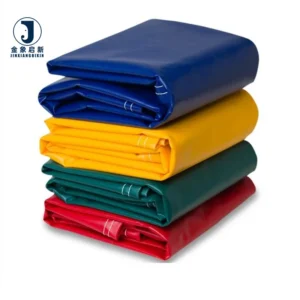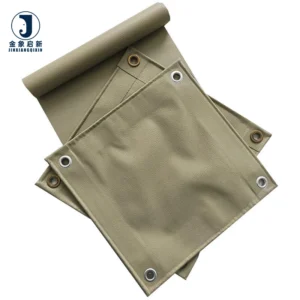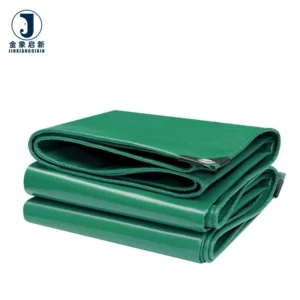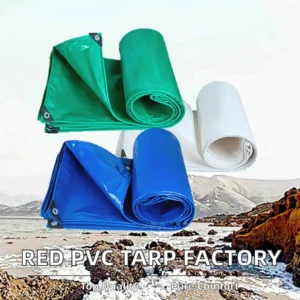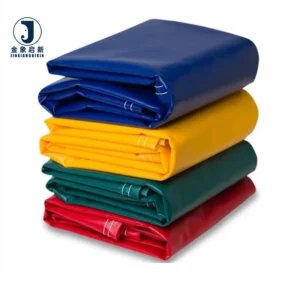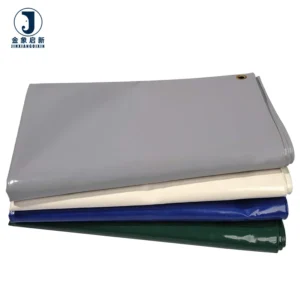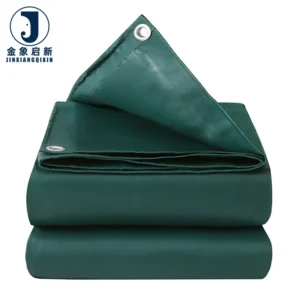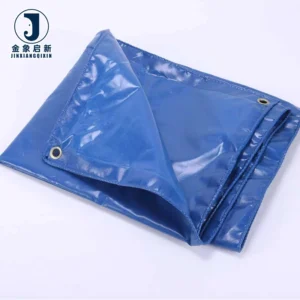
Description
Roll-to-Roll Consistency — every PVC coated tarpaulin roll in your container ships only after 100% pre-shipment inspection confirms GSM, colour, and coating weight match the quoted specification across the entire batch.
Technical Specifications
| Parameter | Value |
|---|---|
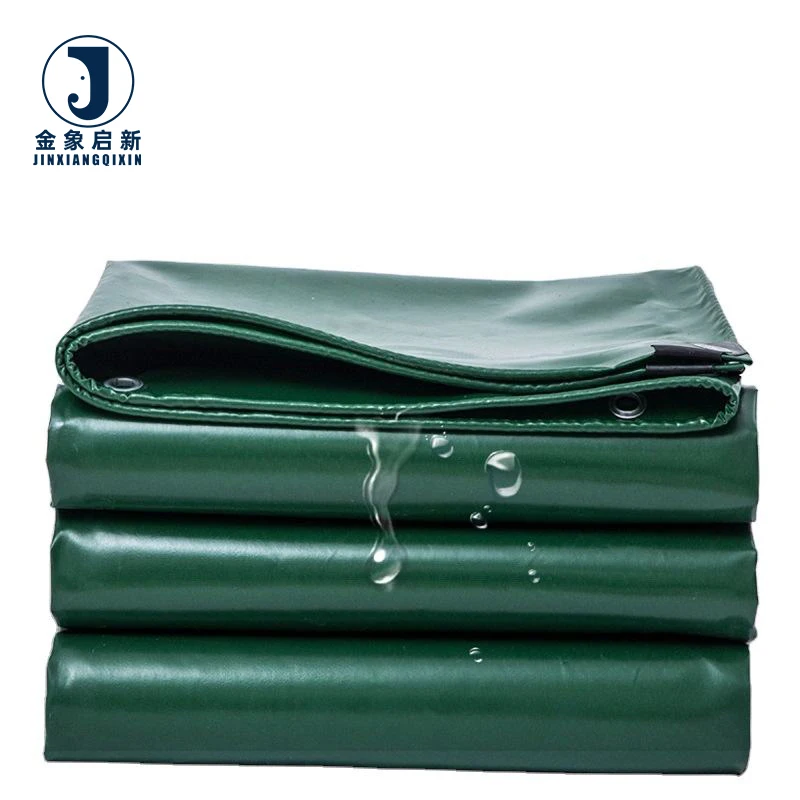
| Product Type | PVC Coated Tarpaulin Roll |
| Construction | Double-faced |
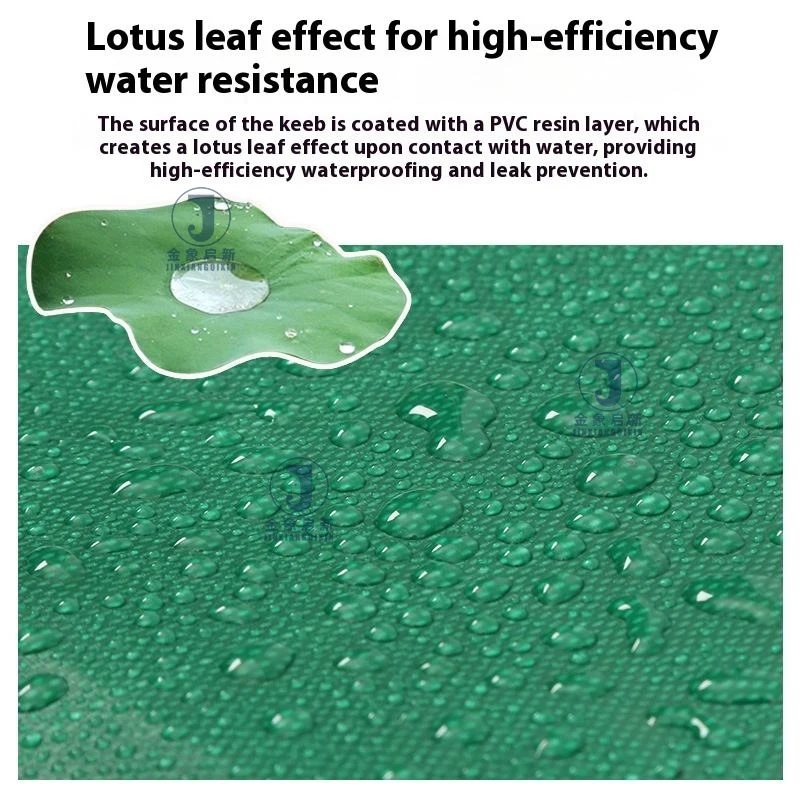
| Water Resistance | Water and mildew resistant |
| UV Treatment | Anti-UV treatment (test basis not stated in source) |
| Flame Retardancy | Flame retardant (grade not stated in source) |
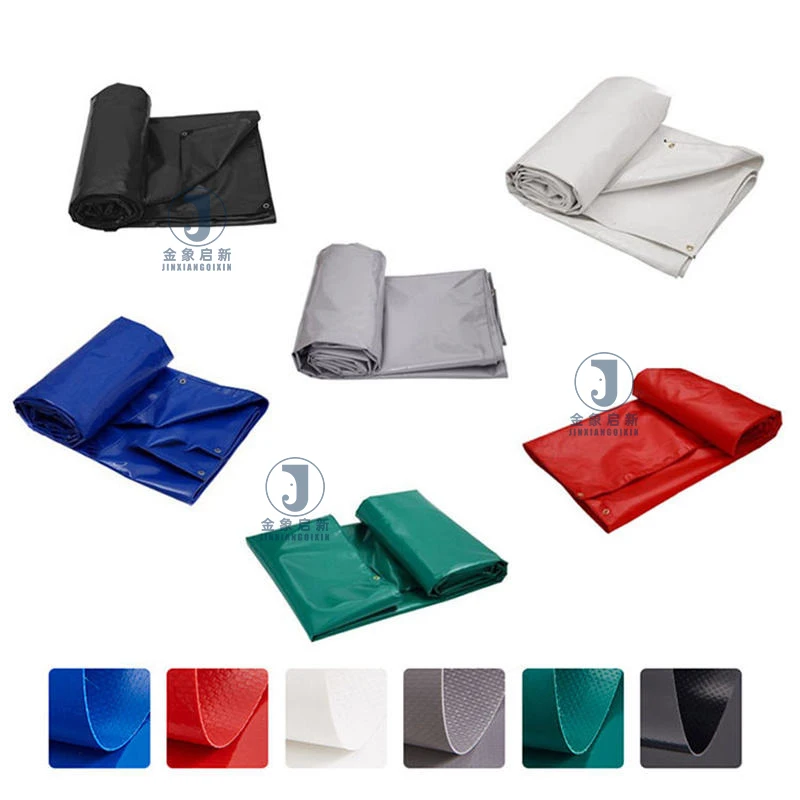
| Colour Options | Multiple colors available |
| Format | Roll stock |
| Application Grade | Heavy duty |
| Standards | ISO, CE certified facility |
Application Suitability
| Application | Exposure & Requirement |
|---|---|
| Flatbed trailer load covering | Sustained highway wind load, rain ingress, UV exposure on long hauls, tie-down abrasion at contact points |
| Lumber transport protection | Sap and resin contact, heavy stacked weight, repeated folding and unfolding at job sites |
| Heavy-duty truck transportation | Constant mechanical stress at flex points, diesel particulate exposure, multi-season temperature swings |
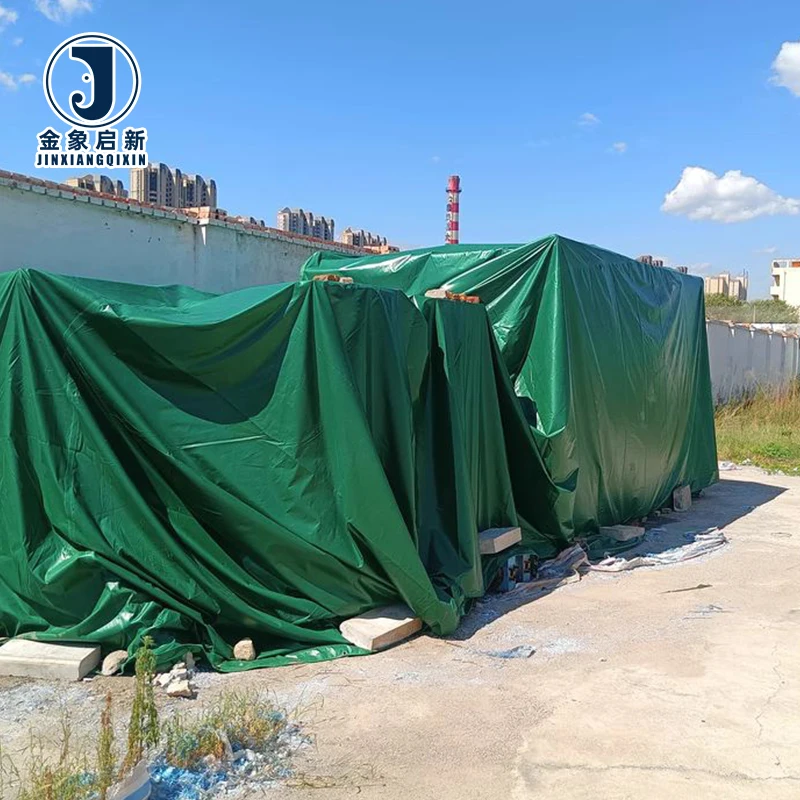
| Outdoor cargo weather protection | Continuous sun and rain exposure, wind flap fatigue, handling abrasion during loading and unloading |
Why Batch Consistency Matters More Than Quoted GSM for PVC Coated Tarpaulin Roll Wholesale Buyers
A quoted weight on paper means nothing if the roll that arrives is lighter, off-shade, or unevenly coated across the batch.
Wholesale buyers ordering by the container often discover too late that GSM, colour, and finish vary from one roll to the next. One roll may measure within tolerance while the next sits below the stated weight, and the colour drift becomes visible only after the fabric is cut and installed side by side on a trailer. [NEED_CITE: batch consistency failures in coated fabric procurement]. This is not a defect caught on a production line — it is a sourcing failure that surfaces at the customer’s warehouse, where returns, re-cuts, and delayed dispatch compound the original material cost.
Roll Stock Purchasing Demands Uniformity Across the Entire Shipment
When you source PVC coated tarpaulin roll wholesale for flatbed and transport covering, the material must behave identically from the first roll to the last. Double-faced construction ensures both sides carry the same coating weight, so the fabric performs uniformly regardless of which face meets the load or the weather. This matters especially when rolls from the same order are cut into side curtain panels or truck covers that sit adjacent on the same vehicle — any shade or gloss variation becomes immediately visible to the end user.
How In-Process QA Controls What Arrives in Your Container
Our production workflow embeds quality checks at every stage rather than relying solely on a final inspection before loading. Coating weight, colour match, and adhesion are verified during the run, not after the roll is wound. Each roll undergoes a 100% pre-shipment check where actual weight is measured against the quoted GSM and recorded in the inspection file. [NEED_CITE: ISO quality management process for coated textile production]. This means the container you receive contains documented evidence of what was produced, not just what was promised at the quotation stage.
Reading the Specification Sheet Beyond the Headline Weight
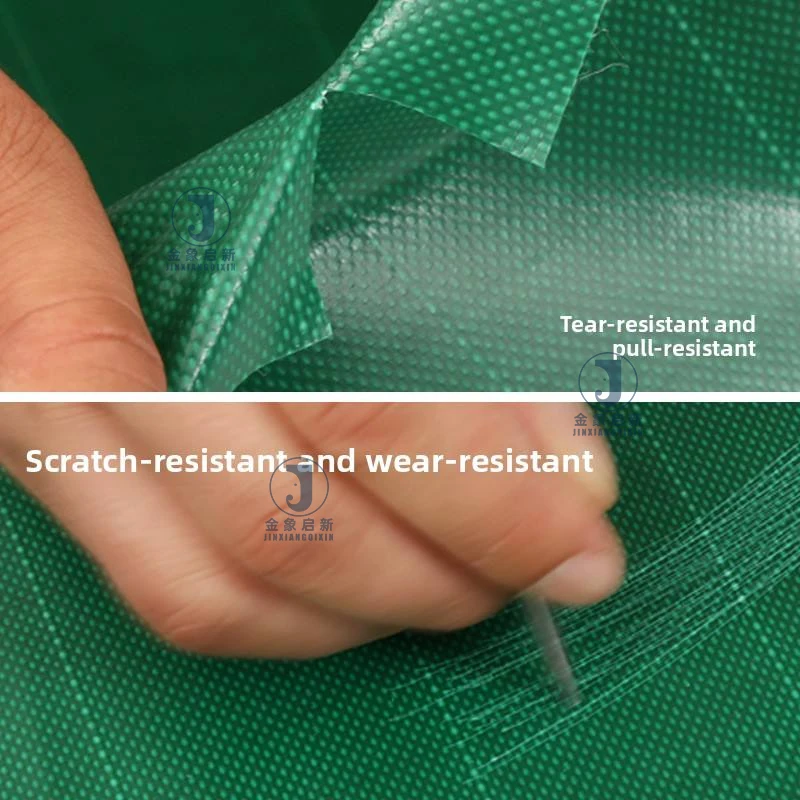
The GSM figure on a product sheet tells you the total weight per square metre of base fabric plus coating, but it does not isolate how that weight is distributed. A roll may reach its stated GSM through a heavier coating on one face and a thinner coat on the other, which compromises the double-faced balance and creates uneven wear in service. Understanding the relationship between base fabric denier, weave density, and coating method — whether knife-over-roll, lamination, or calendering — gives you a clearer picture of how the material will handle tension, tearing, and repeated folding. Surface finish selection between glossy and matte also influences how the material sheds dirt, accepts printed branding, and resists surface scuffing during transport handling. Width and roll length directly affect cutting yield and the number of welded seams needed for a given trailer cover, making these parameters as consequential as weight when calculating total fabrication cost. [NEED_CITE: tensile and tear test methods for coated fabrics per ISO 1421].
The Hidden Cost of Specifying on Price Alone
Buyers who select roll stock based on the lowest per-kilogram quote frequently encounter downstream failures that erase any upfront saving. Rolls arriving below the stated GSM tear at tie-down points under normal highway loads. Flame retardant grades supplied without a matching test report cause site rejections when a mining or construction inspector asks for documentation. Colour inconsistency across a single batch forces fabricators to cull panels and re-order, delaying the entire production schedule. [NEED_CITE: common causes of coated fabric rejection at receiving inspection]. Welded seams on unevenly coated material fail at the flex line long before the body of the fabric shows wear, because the coating did not bond uniformly to the base fabric during manufacture.
Why Buyers Source PVC Coated Tarpaulin Rolls Here
Three full production lines and dedicated professional equipment support container-volume output without sacrificing per-roll quality control. A 10-person R&D team handles custom width, colour matching, and sample development so that trial rolls reach you in days rather than weeks. Every production stage includes dedicated QA/QC oversight, culminating in 100% roll-by-roll inspection before dispatch — not a statistical sample from the batch. Rapid sample turnaround lets you verify colour, hand feel, and weld behaviour before committing the full order to production. Documentation accompanies every shipment: material specification sheets, pre-shipment inspection records, roll packing lists, and certificates of origin for customs clearance.
Documentation & Verification
- Material specification sheet stating GSM, base fabric, and coating per roll batch
- Pre-shipment inspection record with 100% roll-by-roll weight and colour check
- Roll packing list with roll count, weight, and container loading plan
- UV and flame retardant test reports provided where grades are specified
- Certificate of origin and customs documentation included per shipment
Fabrication, Handling & Storage
- Hot-air weld temperature and speed must match the PVC coating thickness for consistent seam strength
- Double-faced construction allows welding from either side without exposing uncoated base fabric
- Store rolls upright on cores to prevent flat spots that cause creasing during unrolling
- Allow cold-stored rolls to reach ambient temperature before unrolling to avoid coating crack at low flex
- Cut panels should be laid flat and inspected for coating uniformity before welding seams
What to Include in Your PVC Coated Tarpaulin Roll Inquiry
To provide an accurate specification and quotation, share the target application and the environmental exposure the fabric will face — highway transport, static outdoor storage, or mining ventilation contact. Specify required roll widths, annual volume, and whether you need flame retardant treatment with test reports matching your local fire safety code. If colour consistency across the full order is critical, provide a Pantone or physical swatch reference and confirm whether you need sample rolls before committing to full container production.
Frequently Asked Questions
Q: How is GSM verified on arrival and what documentation supports the quoted weight?
A: Every roll is weighed during pre-shipment inspection and recorded against the stated GSM in the inspection report shipped with your container. The material specification sheet included in the documentation package lists the base fabric weight, coating weight, and total GSM for each roll batch, so you can cross-check on arrival without relying solely on the quotation figure.
Q: How do you control colour consistency across rolls in a single bulk order?
A: Colour matching is monitored during the coating run, not only at final inspection. Rolls from the same batch are produced in a continuous run with dye control checks at set intervals. Before dispatch, rolls designated for the same order are visually compared side by side under controlled lighting, and any roll showing shade drift is pulled and replaced before container loading.
Q: What roll widths and lengths are available, and what are the minimums for custom sizes?
A: Standard widths and roll lengths are available from stock for immediate container loading. Custom widths and lengths are produced on dedicated equipment with minimums that depend on the specification and colour requested. Our R&D team develops sample rolls for custom dimensions within days so you can verify fit and fabrication behaviour before the full production run begins.
Q: How are rolls packed and loaded for container shipping to prevent transit damage?
A: Each roll is wound on a reinforced core, wrapped in protective film, and loaded according to a container plan documented in the packing list. The plan specifies roll count, total weight, and stacking arrangement to prevent crushing and edge damage during ocean transit, and is shared with you for logistics coordination before the container is sealed.
Q: Can you supply flame-retardant rolls with test reports matching our market requirements?
A: Flame retardant treatment is available across the PVC coated tarpaulin roll range, but the specific grade and test standard required varies by market and application. Share the fire safety classification your end user or local authority demands, and we will confirm the matching grade and provide the corresponding test report with your shipment documentation.