Description
Batch-Weight Verification — Every roll leaves the facility with a documented GSM check and a pre-shipment inspection record, so the PE tarpaulin aftermarket supplier order you receive matches the specification you signed off on.
Technical Specifications
| Parameter | Value |
|---|---|
| Product Type | PE Tarpaulin |
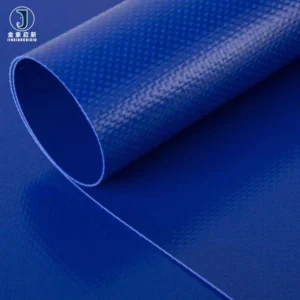
| Base Fabric | HDPE weaving with LDPE lamination on both sides |
| Weight Range | 50 g/m² ~ 220 g/m² |
| Thickness | 0.2 mm – 0.4 mm (8 mil – 16 mil) |
| Weave Density Options | 8×8, 10×10, 12×12 |
| Roll Widths | 6 ft, 8 ft, 10 ft, 12 ft / 2 m, 4 m, 6 m |
| Roll Lengths | 100 yards, 100 meters, or custom |
| Hem | All four edges reinforced with PP rope |
| Eyelets | Galvanized, every 3 ft or 1 m interval |
| Corners | Reinforced plastic |
| Surface Finish | Matte |
| Color Options | Blue, Blue/Orange, Green, Grey, Black, Clear, Grey/Green, Orange, custom |
| Key Features | Waterproof, washable, tear resistant, UV treated (grade available — confirm for your market), mildew proof, anti-aging |
Application Suitability
| Application | Exposure & Requirement |
|---|---|
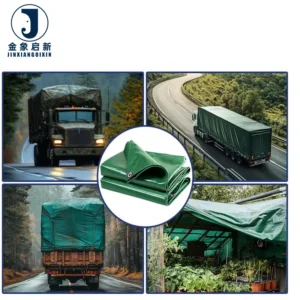
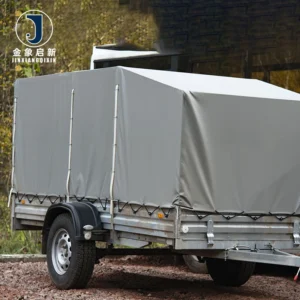
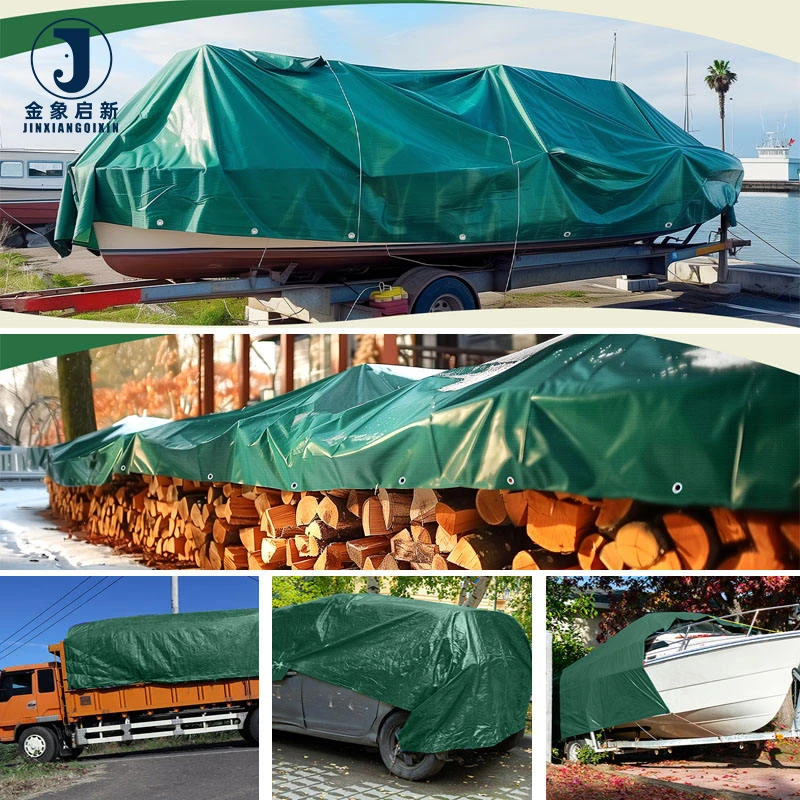
| Truck side and top cover | Constant road vibration, flexing at load points, weather and debris abrasion, UV exposure |
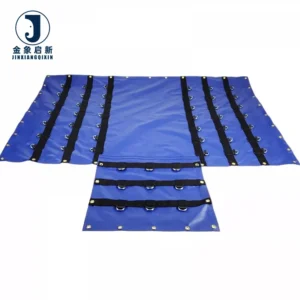
| Flatbed trailer load wrapping | High tensile loads from tie-down straps, edge tear at eyelet rows |
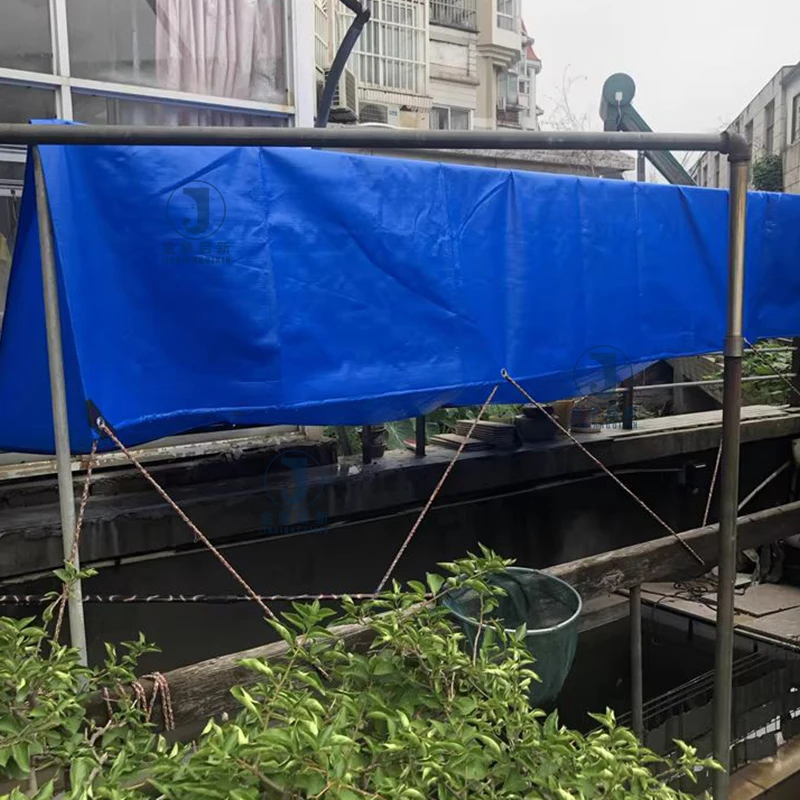
| Agricultural stockpile cover | Prolonged sun exposure, moisture, wind uplift forces |
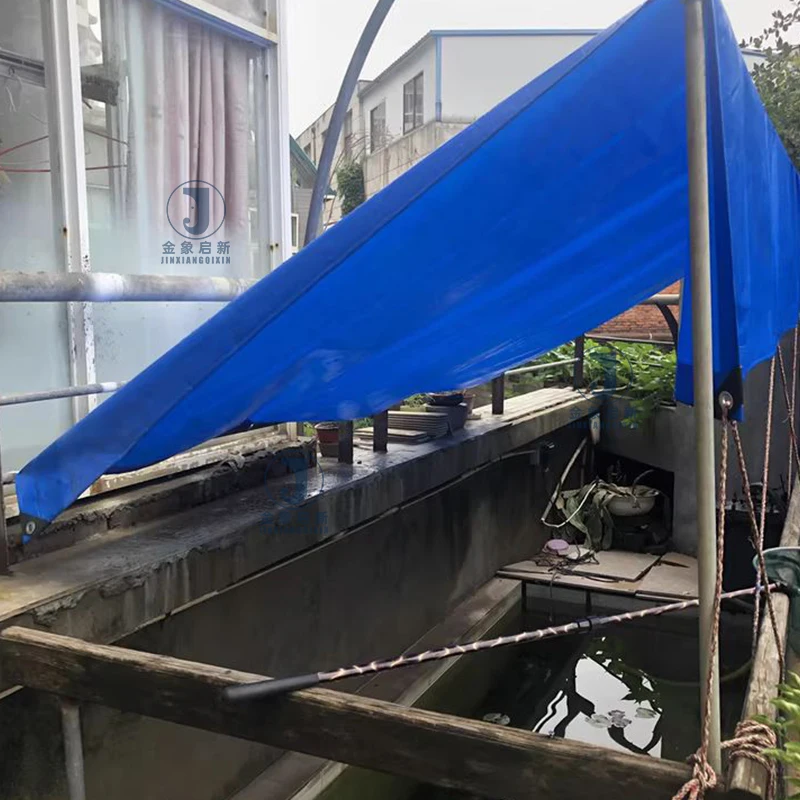
| Warehouse and yard partitioning | Repeated handling, forklift contact, dust and moisture protection |
| Equipment protective wrap | Point loading at sharp edges, fold crease stress during transport |
Why Roll-to-Roll Weight Variance Undermines Your Truck Cover Supply
Every roll must measure the same GSM on arrival as on the quotation — no exceptions.
When you source PE tarpaulin aftermarket supplier stock by the container, the specification sheet promises a certain weight. Yet at destination, some rolls come in lighter, cutting into tensile capacity and shortening service intervals. Fleet operators end up replacing covers earlier than planned, and the cost of that downtime lands on your ledger, not the mill’s [NEED_CITE: impact of GSM variance on tarpaulin tensile performance per ISO 1421]. Consistent weight across every roll is not a bonus; it is the baseline your buyers depend on.
Batch Consistency Across Container-Load Volumes
Roll stock ordered in bulk for truck cover fabrication demands uniform thickness, color, and coating weight from the first roll to the last. When a fleet operator cuts covers from consecutive rolls and installs them side by side, any color shift or surface variation becomes immediately visible on the trailer. This PE tarpaulin aftermarket supplier range is produced with in-process QA checkpoints at coating, lamination, and winding stages, keeping roll-to-roll deviation within accepted tolerances for wholesale distribution.
Width and Length Configurations for Efficient Loading
Container economics depend on how tightly rolls pack and how few dead-space gaps remain. Roll widths from 2 m to 6 m and lengths up to 100 meters per roll allow buyers to match the exact cut sizes needed for standard trailer dimensions — reducing off-cuts and waste on the fabrication floor. Custom roll lengths are available so that the winding count aligns with the container weight limit and the buyer’s downstream cutting schedule [NEED_CITE: container loading optimization for woven tarpaulin rolls].
Weave Density and Its Role in Truck Cover Durability
The three knitting density tiers — 8×8, 10×10, and 12×12 — directly shape how the fabric behaves under load. An 8×8 weave suits lightweight wrapping and short-term covers where flexibility matters more than puncture resistance. The 10×10 tier handles medium-duty truck tarps subjected to tie-down strap tension and routine handling. The 12×12 density provides the highest meridian and latitude tensile values, suited to heavy-duty transport covers that face sharp-edged cargo, frequent rigging, and extended outdoor exposure. Choosing the correct density tier prevents both over-specification, which adds unnecessary cost, and under-specification, which leads to early tear propagation along the weave.
The Hidden Cost of Specifying the Wrong Grade
A truck cover cut from a lightweight 8×8 roll will flex easily but may tear at the eyelet row when tie-down straps are tensioned for long-haul transit. Conversely, specifying a heavy-duty 12×12 grade for a short-term yard cover inflates material spend without adding functional value. Coating weight, weave density, and finished GSM must all align with the actual exposure conditions — road abrasion, strap tension cycles, and UV duration — or the cover fails at the point the load flexes most [NEED_CITE: tarpaulin seam and eyelet failure modes under dynamic load].
What This Production Line Delivers
Three full production lines and 36 sets of professional equipment support bulk PE tarpaulin roll output with reliable on-time dispatch for container-scale orders. A 10-person R&D team handles custom width, color matching, and sample development so buyers can verify material before committing to a full shipment. Dedicated QA/QC runs at every production stage — weaving, lamination, winding, and packing — with 100% inspection before dispatch. Nearly 30 years of coated fabric process control underpins the consistency that wholesale and transport buyers require.
Documentation & Verification
- Material specification sheet listing exact GSM, weave density, and LDPE coating weight per roll grade
- Pre-shipment inspection record with verified weight, color, and dimension checks against the purchase order
- Roll packing list detailing roll count, individual weights, and container loading plan for shipment reconciliation
- Certificate of origin and customs documentation provided for international freight forwarding
- Test reports for UV treatment available upon request — confirm the grade required for your market
Fabrication, Handling & Storage
- Heat-seal matte-finish LDPE surfaces using moderate temperature settings to avoid film scorch or delamination
- Space galvanized eyelets at 1 m intervals along PP-rope reinforced hems for even tie-down load distribution
- Store rolls upright on pallets in shaded, ventilated areas to prevent LDPE lamination creasing
- Unroll and allow HDPE fabric to relax before cutting in cold-weather conditions to reduce shrinkage distortion
- Clean matte-finish covers with mild detergent; avoid solvent-based cleaners that degrade LDPE coating
- Plan cut layouts around standard roll widths to minimize off-cuts and reduce the number of welded seams
Requesting a Quote
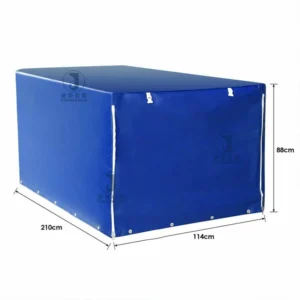
Provide the target trailer dimensions or cut sizes, the expected exposure conditions (route climate, tie-down frequency, storage duration), and your preferred roll width and color. If you need finished tarpaulins rather than raw roll stock, specify eyelet spacing and hem reinforcement requirements. Sample rolls can be dispatched for your evaluation before a full container order is confirmed.
Frequently Asked Questions
Q: How do you ensure color and weight consistency across multiple rolls in one order?
A: In-process QA checkpoints cover coating weight, lamination temperature, and winding tension at each production stage. A pre-shipment inspection verifies GSM, color against the approved reference, and dimensions before dispatch. Every roll is logged on the packing list so you can trace each one back to its production batch.
Q: What roll widths and lengths are available for container-scale orders?
A: Standard roll widths include 2 m, 4 m, and 6 m, with imperial equivalents from 6 ft to 12 ft. Lengths run to 100 meters or 100 yards per roll, with custom lengths available to optimize container weight and volume. Loading plans are provided before shipment for buyer approval.
Q: Can finished tarpaulins be cut to custom sizes with specific eyelet and hem details?
A: Yes. Finished covers can be cut to buyer-specified dimensions with PP rope hem reinforcement on all four edges, galvanized eyelets at custom intervals, and reinforced plastic corners. Provide the exact size list and hardware spacing at the inquiry stage for accurate quotation.
Q: What documentation accompanies each shipment?
A: Each container ships with a material specification sheet, pre-shipment inspection record, roll packing list, certificate of origin, and customs documentation. UV treatment test reports are available on request — buyers should confirm the specific grade required for their market before ordering.