Description
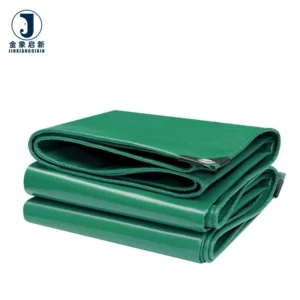
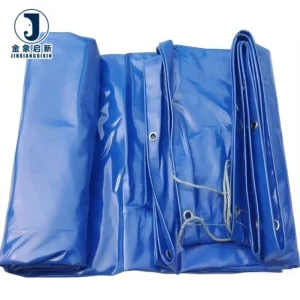
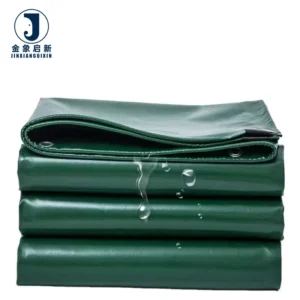
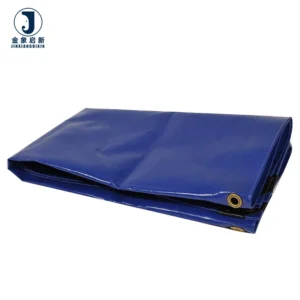
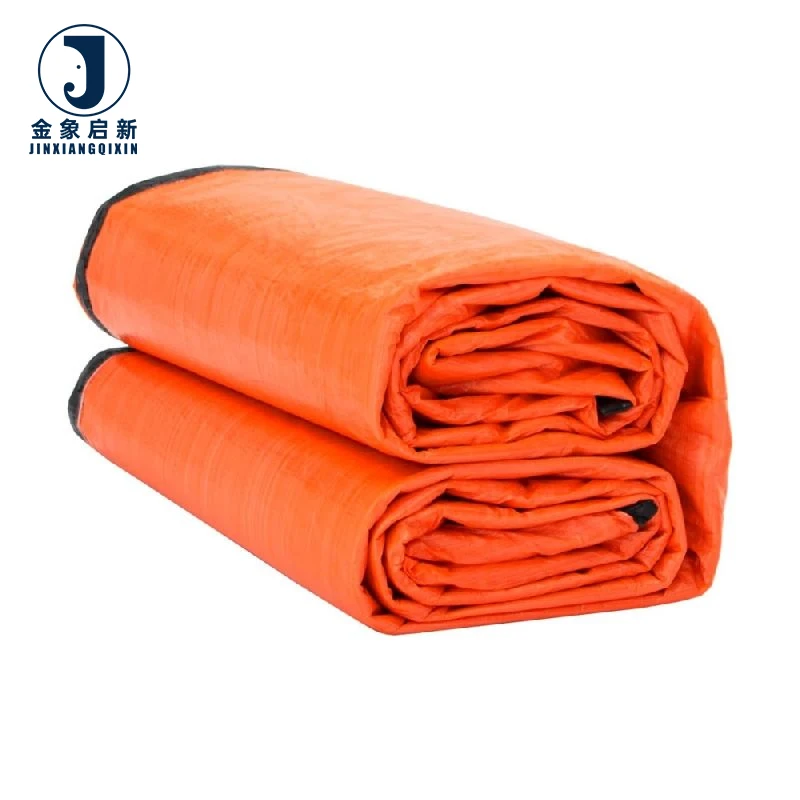
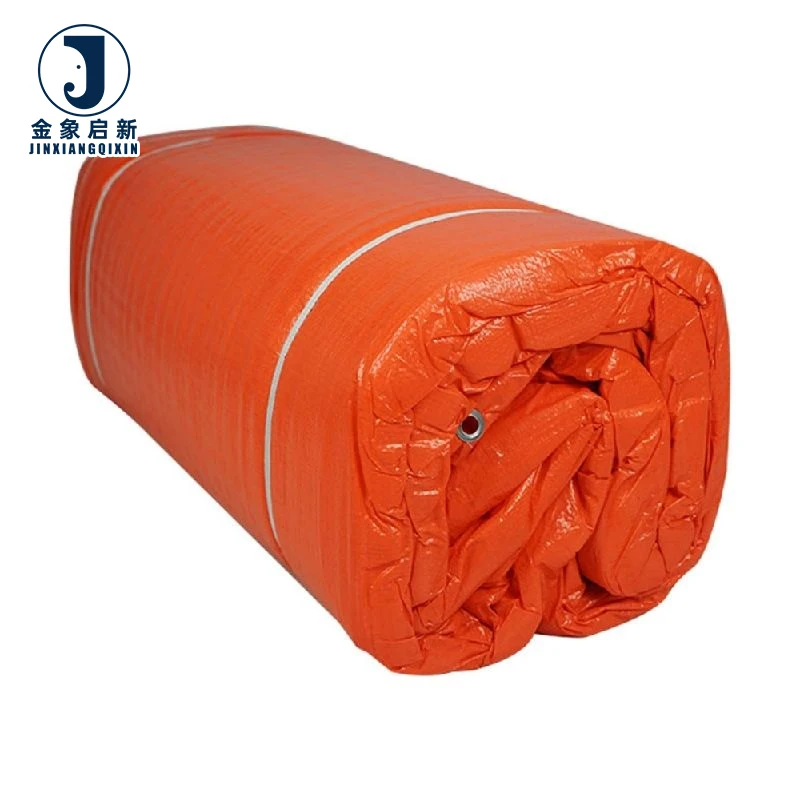
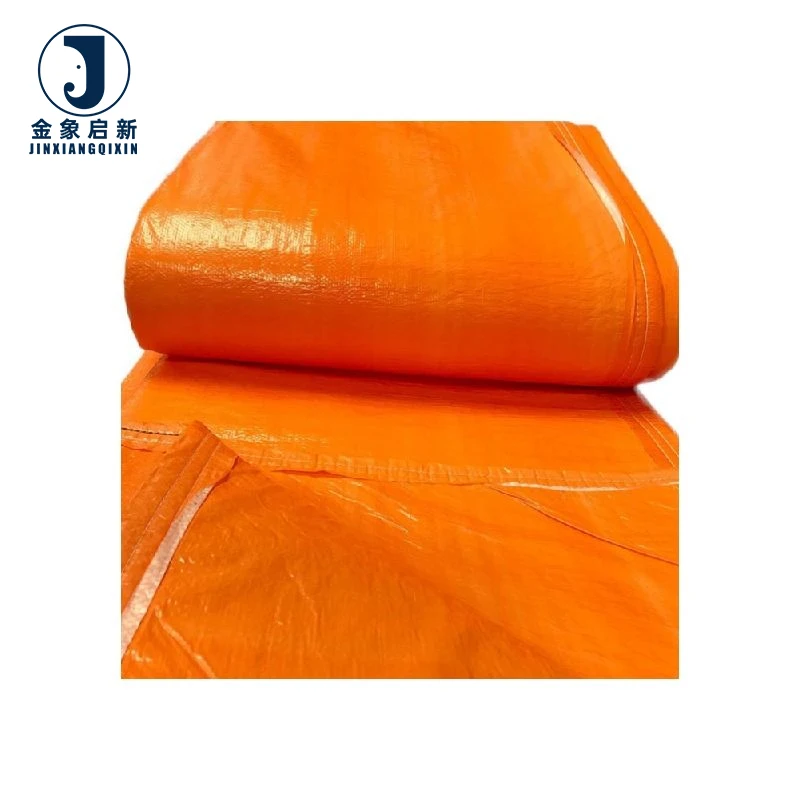
Bulk Roll Consistency — Insulated PE tarpaulin rolls shipped with verified thickness and colour uniformity across every unit in the same production batch, ensuring predictable performance on large-volume construction orders.
Technical Specifications
| Parameter | Value |
|---|---|
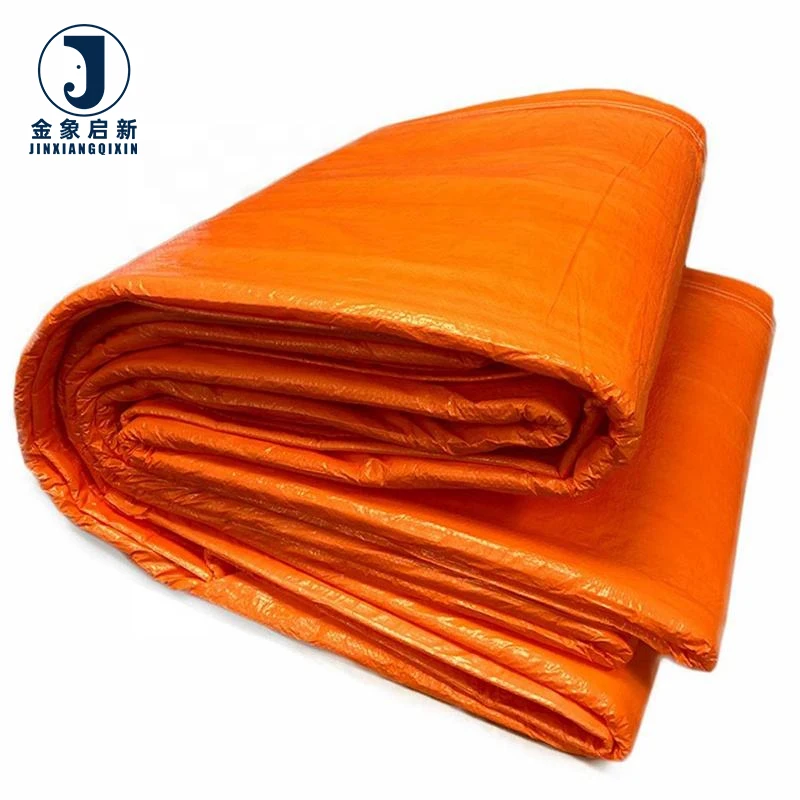
| Product Type | Insulated PE Tarpaulin Concrete Curing Blanket |
| Dimensions | 6ft×24ft / 8ft×25ft / 12ft×20ft / 12ft×24ft |
| Thickness Options | 2×2mm / 3×1.5mm / 1×4mm / 5mm / 6mm / 8mm / 12mm |
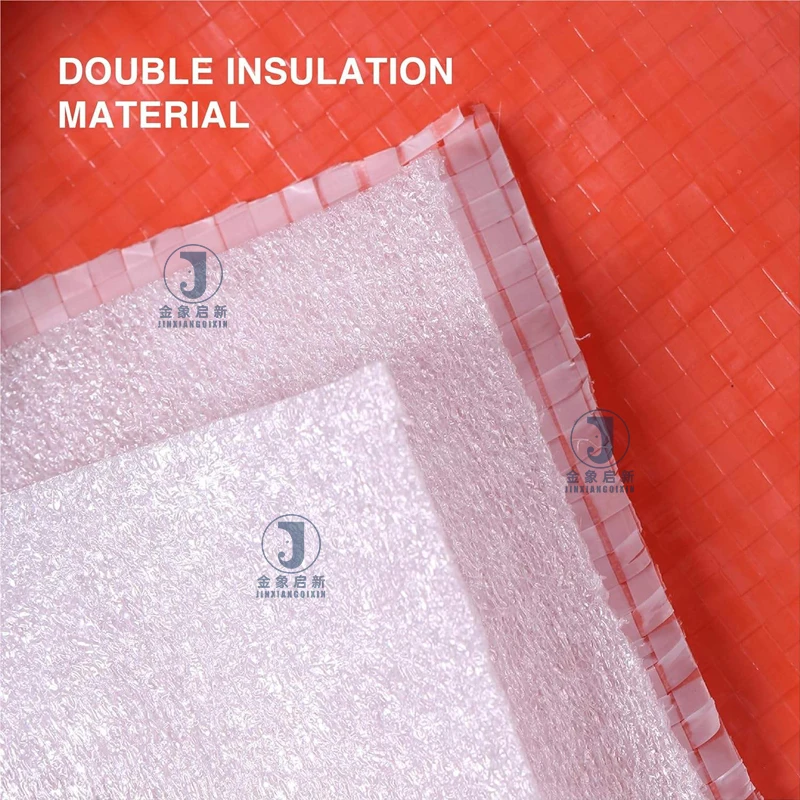
| Material Structure | PE cloth + closed cell PE foam core + PE cloth |
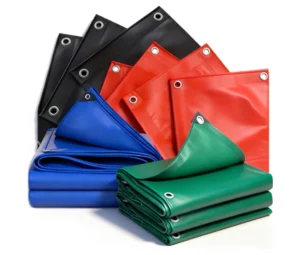
| Color Options | Orange / Black / White / Silver / Customized |
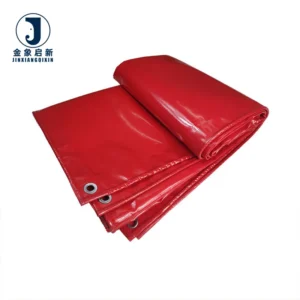
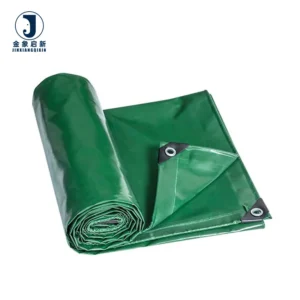
| Grommet Configuration | Aluminum grommets, spacing 61cm and 91.5cm |
| Edge Finish | Reinforcement stitch |
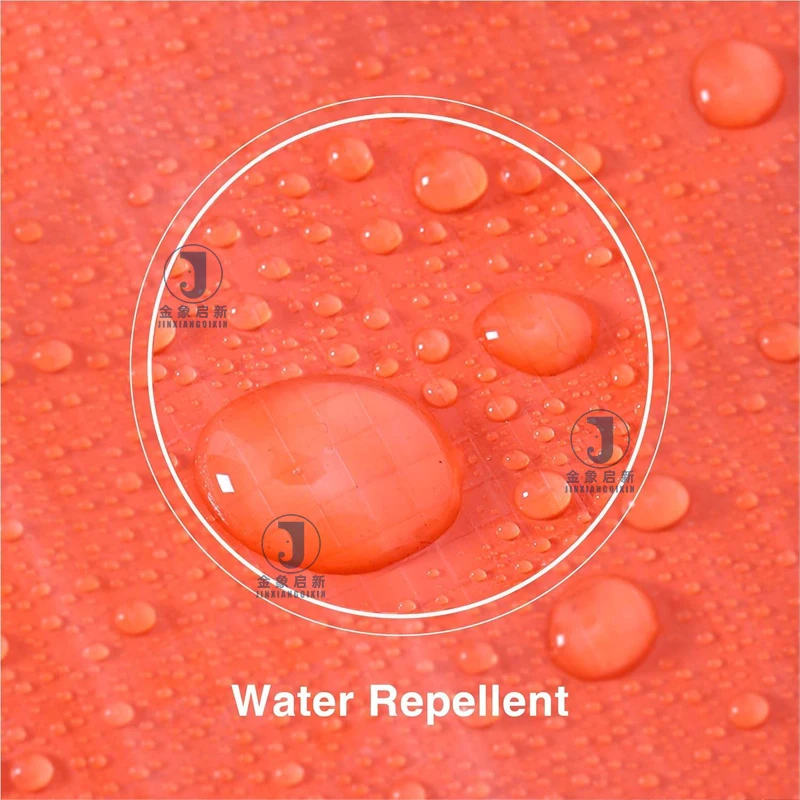
| Surface Treatment | Waterproof, UV resistant (test basis not stated) |
| Certifications | ISO, CE (factory certification, grade not specified in source) |
Application Suitability
| Application | Exposure & Requirement |
|---|---|
| Cold weather concrete curing blanket | Continuous ground contact, freeze-thaw cycles, thermal retention over pour zones |
| Heated enclosure insulation | Temperature differential across membrane, internal heat retention, repeated deployment |
| Wind block and vertical building enclosure | Wind load on grommet points, lateral stress on stitched edges, UV exposure on façade |
| Road repair site cover | Abrasion from aggregate and equipment, water pooling, vehicular proximity |
| Scaffolding wrap on construction sites | Sustained wind pressure, tie-down tension, UV degradation over multi-week exposure |
| Industrial equipment and pallet cover | Dust and moisture ingress, static stacking load, indoor and outdoor storage variation |
Why Roll-to-Roll Colour Drift Matters More Than You Think on Insulated PE Tarpaulin Orders
Matching colour across every Insulated PE Tarpaulin Roll wholesale batch is a production discipline, not a post-production sorting exercise.
When insulated tarpaulin rolls arrive on site with visible colour variation between adjacent panels, the entire enclosure looks patched together — and that visual inconsistency often signals deeper process control failures in coating weight or foam core density. Buyers who specify a single colour for a full container load expect uniform appearance once the material is hung or laid out [NEED_CITE: colour consistency standards in coated fabric batch production]. Drift between rolls typically traces back to pigment batching errors or inconsistent lamination temperature across the production run, problems that are avoidable when QA protocols track each roll individually.
Closed-Cell Foam Core and Thermal Separation
The three-layer construction — PE cloth outer, closed cell PE foam core, PE cloth outer — creates a thermal break that standard single-layer tarpaulins cannot achieve. The foam core traps still air within its cell structure, reducing conductive heat transfer across the membrane. For concrete curing operations, this means the blanket retains heat generated by the hydration reaction or by auxiliary heaters beneath it, slowing the rate at which the slab loses temperature to cold ambient air.
Multiple thickness grades from 2×2mm through 12mm allow contractors to match insulation value to the severity of the exposure. A 12mm roll provides substantially greater thermal resistance for deep-freeze pours, while lighter grades serve adequately for mild frost protection or short-term enclosure panels. The closed-cell structure also prevents water absorption into the core, so the insulation value does not degrade when the blanket is deployed on wet concrete or in rain.
Grommet Spacing and Edge Reinforcement Under Wind Load
Aluminum grommets set at 61cm and 91.5cm intervals provide frequent tie-down points along every edge, distributing wind load across a wider area of the fabric rather than concentrating stress at widely spaced anchor points. This spacing is critical for vertical building enclosure applications where sustained wind pressure can peel inadequately fastened panels away from scaffolding or frame structures.
The reinforcement stitch along all edges adds a secondary load path: if the grommet pulls through the PE cloth face under extreme gust load, the stitched hem continues to hold the panel in place [NEED_CITE: grommet pull-through resistance in reinforced tarpaulin hems]. This dual retention system matters most on tall scaffolding wraps and large curing blankets where a single panel failure exposes the entire work zone to cold air ingress.
Reading the Thickness and Structure Specifications
Total thickness in insulated PE tarpaulin is a composite measurement across all three layers — it is not simply the foam core depth. A specification like 3×1.5mm indicates the individual layer contributions, helping buyers understand how much of the total profile is insulation versus protective outer skin. Thicker outer PE cloth layers improve abrasion resistance and puncture tolerance on rough ground, while a thicker foam core directly increases thermal resistance.
Closed-cell foam differs fundamentally from open-cell alternatives: each cell is sealed, so moisture cannot migrate through the core even if the outer layer is scratched or punctured. This property is essential for concrete curing blankets that sit directly on wet surfaces for days. The aluminum grommet spacing at 61cm and 91.5cm means buyers can calculate tie-down point density per linear metre of edge, which directly correlates to wind load capacity on vertical installations.
The Cost of Specifying Insulation Without Verifying Core Integrity
Insulated tarpaulins that compress permanently after the first deployment lose both their thermal value and their structural rigidity — the closed-cell foam structure collapses under sustained pressure, and the roll never recovers its original thickness. This failure typically appears when low-density foam is used to hit a thickness target without the corresponding cell-wall strength [NEED_CITE: compression set testing for closed-cell foam insulation materials].
Equally problematic are rolls where the outer PE cloth delaminates from the foam core after repeated folding and unfolding. Once the layers separate, water enters the gap and the insulation becomes ineffective. Pre-shipment inspection that checks bond strength between layers and measures recovered thickness after a compression cycle catches both defects before the container ships.
Sourcing Insulated Roll Stock With Verified Batch Control
Three full production lines allow concurrent manufacturing of different thickness grades without cross-contamination of foam density settings between runs. Each roll undergoes thickness measurement and colour verification during 100% pre-shipment inspection, so the specification sheet accompanying the order reflects actual measured values rather than nominal targets.
A 10-person R&D team develops samples within days when buyers need a specific thickness or colour matched to an existing enclosure system. The QA process tracks every roll from coating through lamination to grommet insertion, recording individual roll data that ships with the packing list. Production capacity supports full container loads with consistent lead times, whether the order is stock dimensions or custom widths developed for a specific distributor market.
Documentation & Verification
- Material specification sheet listing total thickness, core structure, and colour reference per roll
- Pre-shipment inspection record with individual roll thickness and colour verification data
- Roll packing list with roll count, dimensions, and container loading configuration
- UV and waterproof treatment documentation with available test basis on request
- ISO and CE certificates covering production facility quality management systems
- Certificate of origin and customs documentation for cross-border shipments
Fabrication, Handling & Storage
- Heat-weld PE cloth edges at moderate temperature to seal cut ends without melting the closed cell PE foam core beneath
- Store rolls horizontally on pallets to prevent permanent compression of the foam insulation layer
- Avoid stacking heavy loads on top of stored rolls to maintain core thickness and thermal value
- Use grommet spacing of 61cm for high-wind vertical enclosure applications requiring frequent tie-down points
- Clean surface PE cloth layers with mild detergent only to preserve waterproof coating integrity
Requesting a Quotation That Matches Your Project
Provide the thickness grade you need, the application environment including expected temperature range and wind exposure, and the total roll count or container volume you are planning. Specify whether standard dimensions from the available range work for your cutting pattern or whether custom widths are required to reduce on-site waste.
If your market requires UV treatment documentation or specific colour references, include the RAL or Pantone reference and the end-use context so the correct formulation is selected. Sample rolls can be developed to confirm thickness, colour, and grommet placement before the full production run is committed.
Frequently Asked Questions
Q: How is colour consistency maintained across rolls in a single bulk order?
A: Pigment batching is controlled at the mixing stage with spectrophotometer verification against the approved colour standard. Every roll in the order is checked during pre-shipment inspection, and rolls showing measurable drift from the batch reference are held back. This ensures the full container load installs with uniform appearance across adjacent panels.
Q: What thickness grade should be specified for concrete curing versus building enclosure?
A: Concrete curing blankets typically require heavier grades such as 8mm or 12mm to retain hydration heat during cold weather pours. Building enclosure and wind block applications often perform adequately at lighter thickness options, balancing insulation value against weight and handling ease on scaffolding. The R&D team can recommend grades based on your climate data.
Q: How are rolls packed to prevent compression damage to the foam core?
A: Rolls are packed horizontally on pallets with protective interleaving and secured to prevent shifting during transit. Vertical stacking weight is limited to avoid permanent compression of the closed cell PE foam core. The packing list details roll count, dimensions, and loading position within the container for verification on arrival.
Q: Can custom widths or lengths be ordered, and what are the minimums?
A: Custom widths and lengths are available with sample development completed within days for approval before bulk production. Minimum order quantities depend on the requested dimensions and thickness grade. The sales team will confirm lead time and minimums once the cutting specification and colour reference are provided.
Q: How is UV resistance verified and what test basis supports the claim?
A: UV treatment is applied during PE cloth production, and test reports are available upon request to document the treatment basis. Buyers specifying insulated rolls for extended outdoor enclosure use should confirm the UV test standard required by their market so the correct formulation is matched to the application.