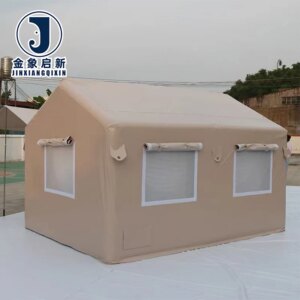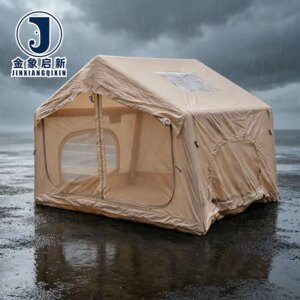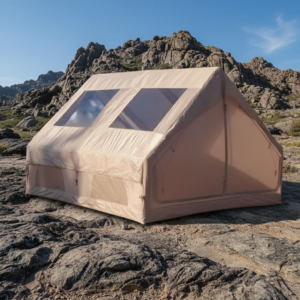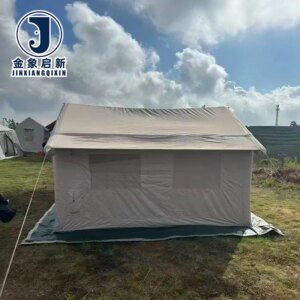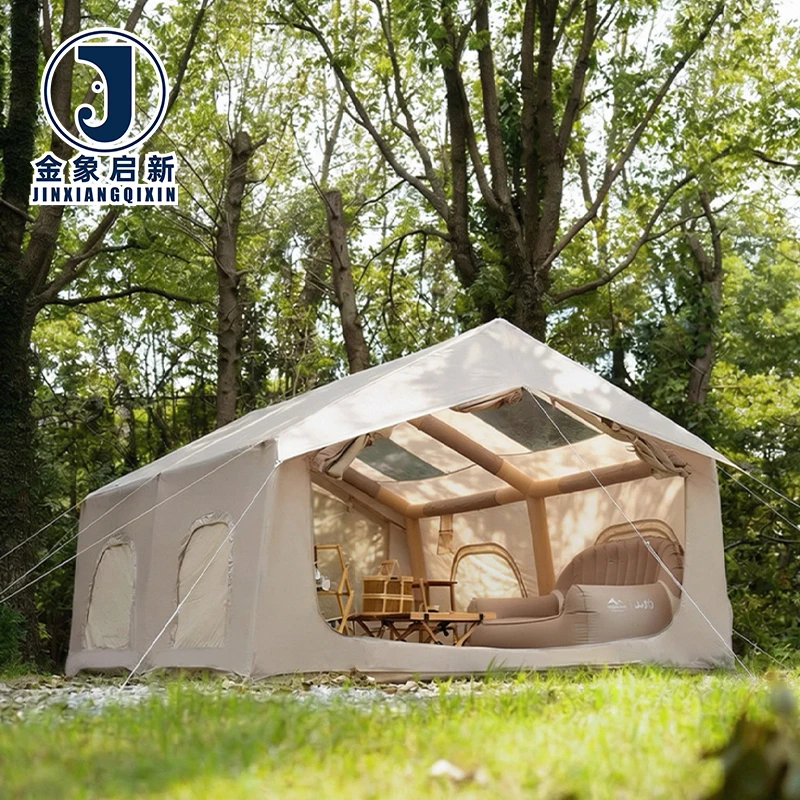
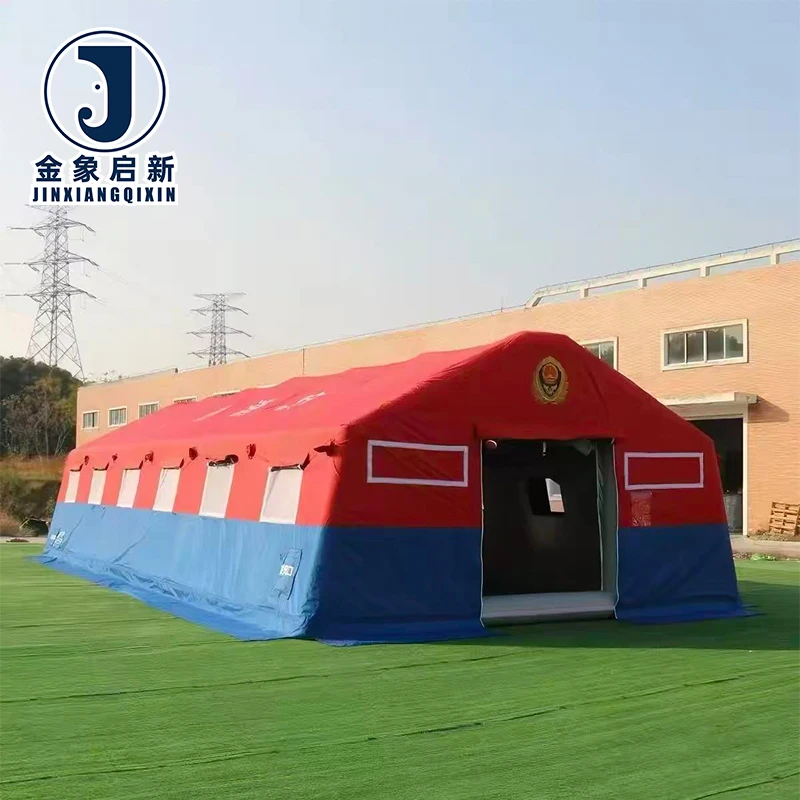
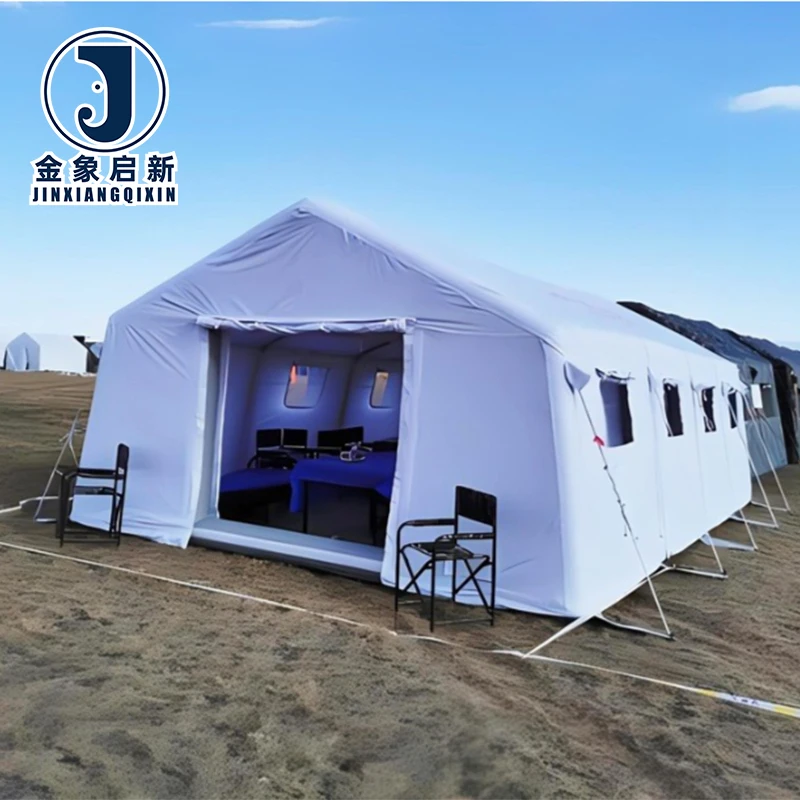
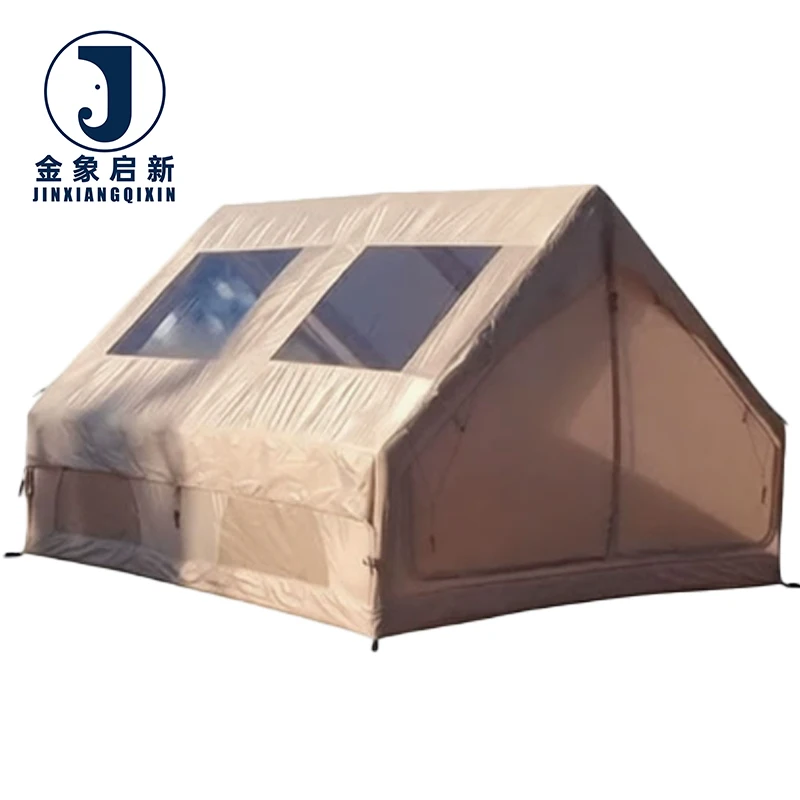


Description
Roll-Stock Reliability — Every batch of PVC inflatable tent fabric undergoes dedicated roll inspection for consistent coating weight and color uniformity before dispatch.
Technical Specifications
| Parameter | Value |
|---|---|
| Product Type | Inflatable Tent |
| Core Material | PVC tarpaulin |
| Capacity | 2-3 Person |
| Construction | Single layer |
| Product Form | Inflatable structure with quick automatic opening mechanism |
| Waterproof | Fully waterproof coated construction |
| UV-Resistant | Available with anti-UV treatment — confirm the grade required for your market |
| Tear-Resistant | Tear-resistant PVC construction |
| Fire-Retardant | Available in flame retardant grades — confirm the grade required for your market |
| Anti-Static | Available in anti-static grades — confirm the standard required for your site |
| Customization | OEM & ODM, sample customization, pattern printing, size modifications, material thickness adjustment |
| Quality Control | Full-process QA & QC with air pressure testing, material strength verification, seam integrity checks |
| Standards | ISO9001, ISO14001, ISO45001, CE |
Application Suitability
| Application | Exposure & Requirement |
|---|---|
| Emergency disaster relief shelters | Rapid deployment, extreme weather exposure, high visibility requirements, repeated inflation cycles |
| Construction site temporary base camps | Abrasive ground contact, dust and debris accumulation, UV exposure during extended outdoor use |
| Outdoor event logistics storage | Frequent setup and teardown, mechanical stress from folding and transport, moisture ingress risk |
| Industrial fieldwork operations | Chemical and particulate exposure, wind load on inflated structure, thermal variation across seasons |
| Commercial outdoor pop-up operations | High-frequency deployment cycles, branding and color consistency across multiple units, public safety compliance |
Why Roll-to-Roll Consistency Matters More Than You Think for Inflatable Tent Fabric
Colour variation between rolls in a single order is the most common reason inflatable tent fabric batches fail visual inspection after fabrication.
When you source PVC inflatable tent fabric for production runs, the stated GSM on the quotation often masks a deeper problem: coating weight fluctuation across the roll batch. I have reviewed production runs where adjacent rolls showed visible shade differences once the fabric was welded and erected side by side on the shop floor. This is not a cosmetic complaint — it forces fabricators to segregate rolls, disrupts cutting plans, and delays container loading. The problem originates upstream, where coating lines running at high speed drift in plastisol application weight without continuous monitoring. [NEED_CITE: coating weight variation tolerance standards for PVC tarpaulin per ISO 2286]
Controlling Batch Uniformity Across High-Volume Inflatable Tent Fabric Orders
Roll-stock procurement for inflatable structures demands that every metre delivered matches the approved sample in thickness, colour, and coating adhesion. Our production process maintains inline coating weight checks throughout each run, ensuring that the PVC inflatable tent fabric you receive in container quantities performs identically from the first roll to the last. This consistency is essential for manufacturers running automated cutting tables and high-frequency welding machines, where material variation forces recalibration and scrap generation.
Welding Behaviour and Seam Integrity in Inflatable Structure Production
Inflatable tents rely entirely on welded seams to hold air pressure, making the PVC coating formulation directly responsible for structural performance. The coating must soften uniformly under hot air or high-frequency welding to create a bond that matches or exceeds the base fabric strength. Inflatable Structure Material bulk orders from our facility are produced with consistent plastisol formulation across the batch, so your welding parameters set on the first roll remain valid through the last. [NEED_CITE: high-frequency welding parameters for PVC coated fabrics]
Reading Beyond the GSM Number on Your Inflatable Fabric Quotation
GSM alone tells you the total mass per square metre but nothing about the ratio between base fabric and coating. A heavier PVC tarpaulin with a thick coating layer over a light base fabric will show high GSM but poor tear propagation resistance — critical when an inflatable structure flexes under wind load. The base fabric denier and weave density determine how the material resists puncture initiation and tear spread. Coating weight governs waterproofing, weld-ability, and surface durability. For inflatable tent applications, the balance between these two components matters far more than the total weight figure. Our material specification sheets break down base fabric and coating contributions separately so you can evaluate suitability for your inflation pressure and deployment cycle.
The Hidden Cost of Specifying Inflatable Tent Fabric on Price Per Kilogram Alone
When procurement decisions focus on the lowest cost per kilogram, suppliers compensate by reducing coating thickness while maintaining stated GSM through heavier, cheaper base yarn. The result is a PVC tarpaulin that welds poorly because the coating layer is too thin to form a proper bond under standard hot-air parameters. Seams peel at the first inflation cycle, and the inflatable structure fails air-pressure testing on the production line. The cost of re-welding, re-testing, and scrapping failed units far exceeds the savings on raw fabric. [NEED_CITE: seam peel strength test methods for coated fabrics per ISO 2411]
Why Inflatable Tent Manufacturers Source PVC Tarpaulin From This Facility
Three full production lines running dedicated PVC coating schedules allow us to hold tight tolerances on inflatable-grade fabric without cross-contamination from heavier industrial grades.
A 10-technician R&D team develops custom colour matches and thickness adjustments with sample rolls dispatched for your approval before bulk production begins.
Thirty-six sets of professional processing equipment handle everything from base fabric weaving inspection through to finished roll winding, keeping the entire production chain under one roof.
Dedicated QA and QC staff conduct air pressure testing and seam integrity verification on finished inflatable structures, providing batch-level test data tied to your order number.
Full-process quality inspection at every stage means coating weight, colour reference, and surface finish are verified per roll — not sampled per batch — before any roll is packed for shipment.
Documentation & Verification
- Material specification sheet stating GSM, base fabric denier, and coating weight for each roll batch
- Roll packing list with individual roll count, net weight, and container loading plan for shipment scheduling
- Pre-shipment inspection record with batch-level coating adhesion and air-pressure test data by order number
- ISO and CE certificates plus certificate of origin for customs clearance and compliance filing
- Colour reference card matched to your approved sample for incoming goods inspection at your factory
Fabrication, Handling & Storage
- Hot-air welding temperature must be calibrated to the specific PVC coating thickness of your inflatable tent fabric batch
- High-frequency welding settings should be validated on sample pieces from each new roll before full production
- Store rolls horizontally on racking to prevent permanent creasing in the PVC coating layer
- Avoid stacking rolls above recommended height to prevent compression marks on the coating surface
- Clean inflated structures with mild detergent only — solvents will degrade the PVC coating plasticiser
- Repair minor punctures with compatible PVC patching compound matched to the coating formulation
What We Need From You to Quote Accurately
To provide a firm quotation on Inflatable Tent Fabric wholesale, share your target fabric thickness, required roll width, and annual volume estimate. Confirm whether your end market requires specific fire-retardant or anti-static certification and which test standard applies. Let us know if you need colour matching to a Pantone or RAL reference, and whether pattern printing is part of the specification. We will send sample rolls for your welding and inflation testing before any bulk commitment.
Frequently Asked Questions
Q: How is the stated GSM verified on arrival and what documentation supports the weight claim?
A: Each roll batch ships with a material specification sheet listing base fabric and coating weight separately. Our pre-shipment inspection record includes per-roll weight verification data tied to your order number, so you can cross-check incoming goods against the documented values immediately upon receipt.
Q: What fire-retardant and anti-static grades are available for inflatable tent fabric?
A: We offer PVC tarpaulin with fire-retardant and anti-static treatments, but the applicable grade depends on your end-use market and regulatory framework. Share the test standard required by your local authority or project specification, and our R&D team will confirm the matching formulation with supporting test documentation.
Q: How is batch-to-batch colour consistency controlled across a multi-roll Inflatable Structure Material bulk order?
A: Colour is matched to your approved sample reference before production begins. Inline inspection checks shade consistency throughout the coating run, and our QA team flags any roll that drifts outside the agreed tolerance. The colour reference card included in your shipment supports your incoming quality check.
Q: What sample options exist to validate the material before committing to a container load?
A: We develop sample rolls in your specified thickness, colour, and width within days of approval. These samples are intended for your welding trials, inflation testing, and end-use evaluation. Once you confirm performance, bulk production follows the identical formulation and process parameters.
Q: What custom roll widths and lengths are available, and what are the minimum order requirements?
A: Roll width and length are configurable to match your cutting table and production layout. Minimum order quantities depend on whether you are ordering stock grades or custom colours and treatments. Contact us with your width, length, and volume requirements for a specific lead time and minimum confirmation.