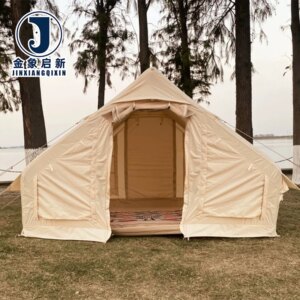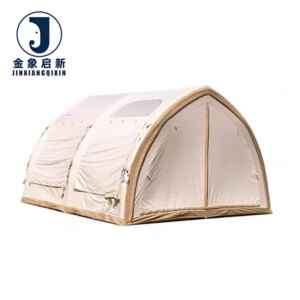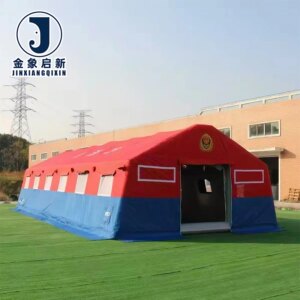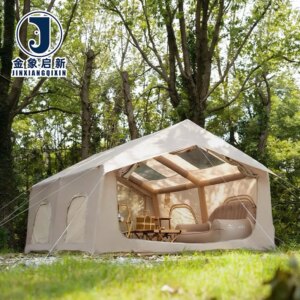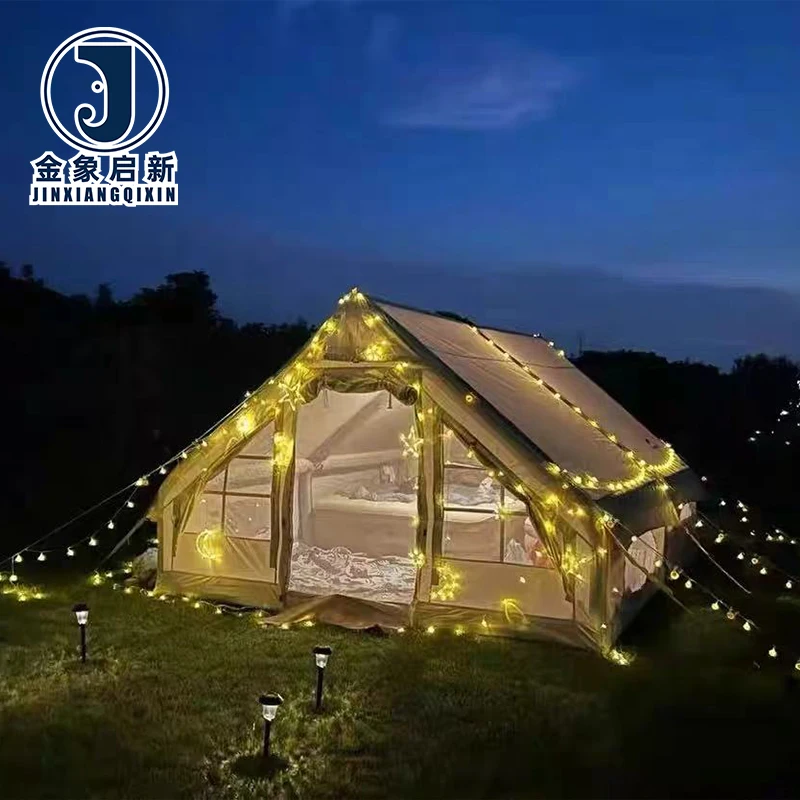
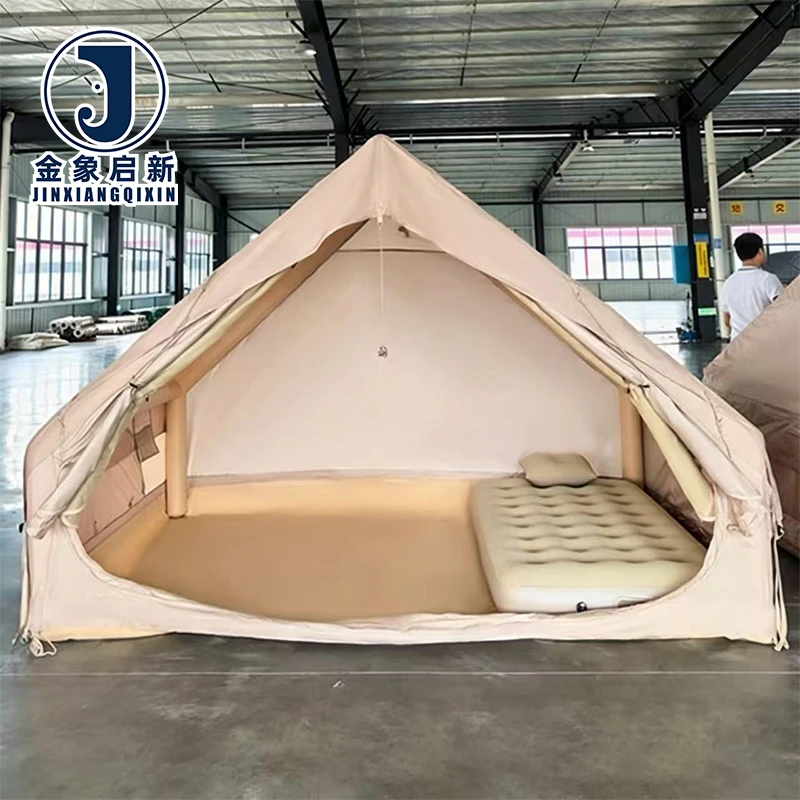
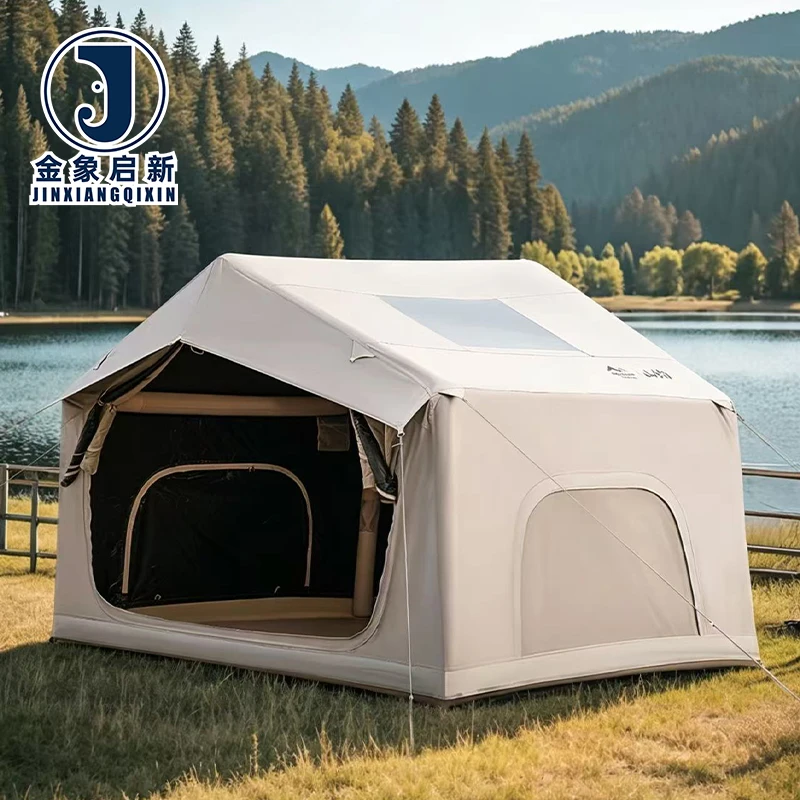
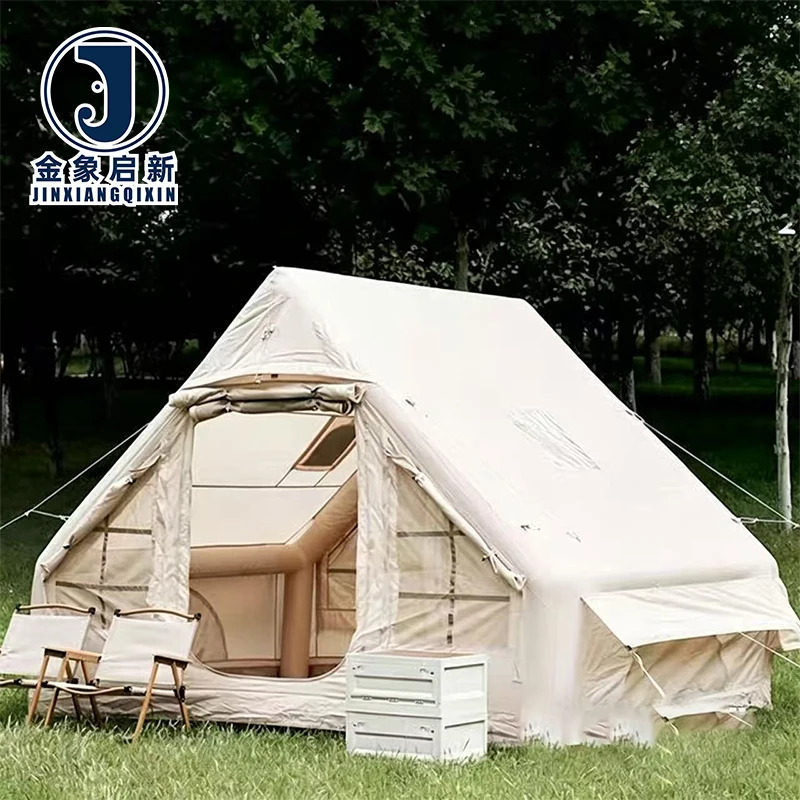
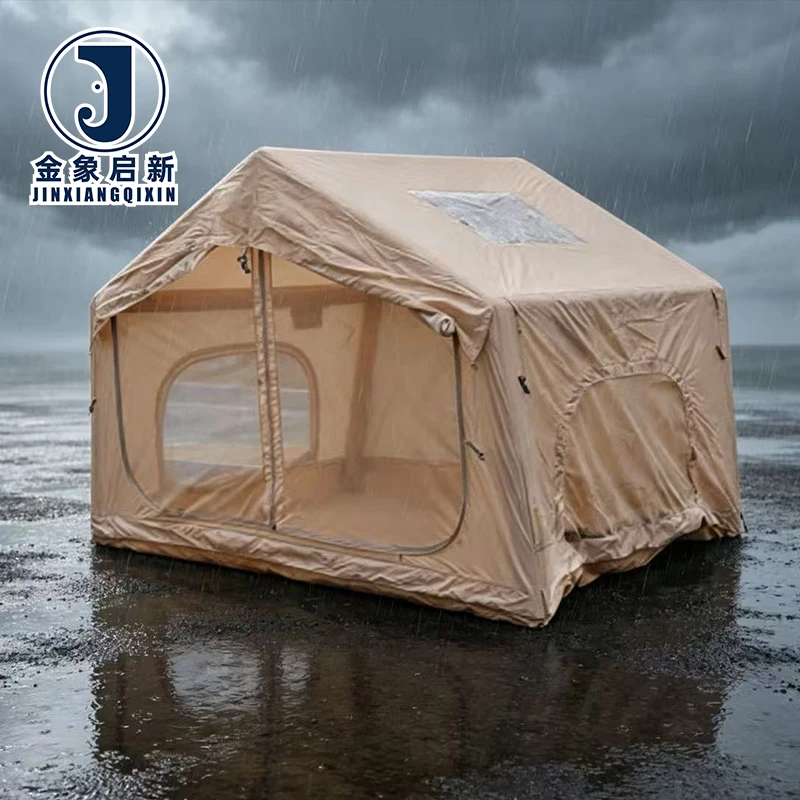
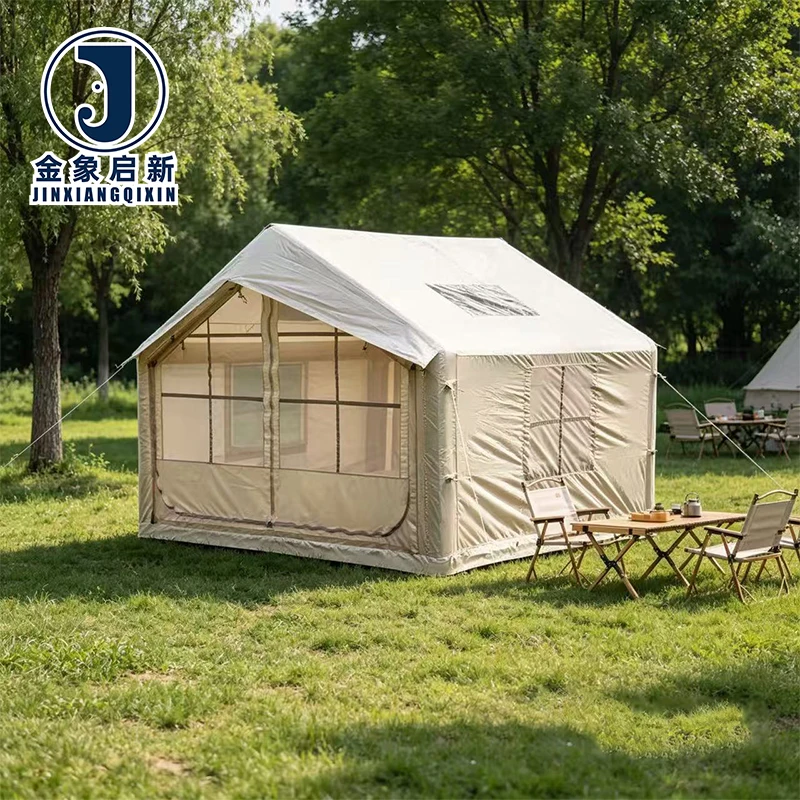
Description
Batch-Consistent Roll Supply — Our three-line production setup with dedicated QA checkpoints ensures colour and coating uniformity across every roll in an inflatable tent bulk order.
Technical Specifications
| Parameter | Value |
|---|---|
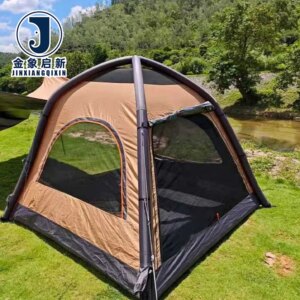
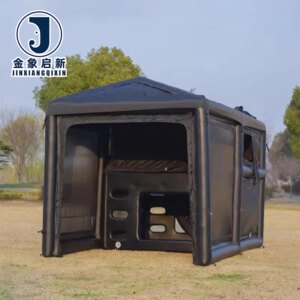
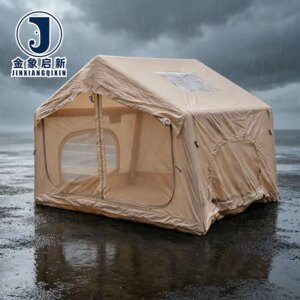
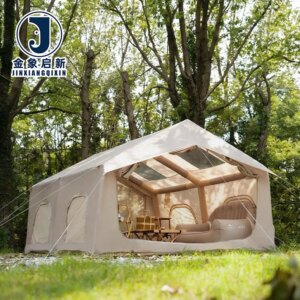
| Product Type | Inflatable Tent |
| Core Material | PVC Tarpaulin (knife coated PVC fabric) |
| Capacity | 4-6 Person |
| Deployment | Quick Automatic Opening, Inflatable Air Structure |
| Construction | Single-layer construction |
| Waterproofing | Fully waterproof coated construction |
| UV Resistance | Available in UV-resistant grades — confirm the grade required for your market |
| Fire Retardancy | Available in flame retardant grades — confirm the grade required for your market |
| Anti-static | Available in anti-static grades — confirm the standard required for your market |
| Tear Resistance | Tear-resistant PVC coated fabric |
| Customization | OEM & ODM (sample customization, pattern printing, size adjustments, material thickness modifications) |
| Production Facility | 9,180 m² with 3 full production lines |
| Processing Equipment | 36 sets of professional processing equipment |
| R&D Team | 10 technicians |
| Quality Control | Full-process QA & QC with 24-hour inflation leak testing before packaging |
| Standards | ISO9001, ISO14001, ISO45001, CE |
Application Suitability
| Application | Exposure & Requirement |
|---|---|
| Temporary site accommodations for construction crews | Constant outdoor weather exposure, ground moisture, repeated inflation and deflation cycles |
| Mobile command centers for outdoor events | Rapid deployment demands, high foot traffic, UV and rain exposure over multi-day operations |
| Emergency response shelters for infrastructure projects | Immediate inflation requirement, harsh weather conditions, transport abrasion during logistics |
| Equipment storage and temporary workspace | Dust and debris ingress prevention, sustained air pressure holding, puncture risk from stored items |
| Rapid deployment logistics in diverse outdoor locations | Repeated packing and unpacking, variable temperature ranges, handling stress at seams and valves |
Why Batch Consistency Matters More Than Quoted GSM in Inflatable Tent Wholesale
Roll-to-roll uniformity in coating weight and colour determines whether a bulk inflatable tent order ships on schedule or triggers rework.
Commercial buyers sourcing inflatable camping tent bulk quantities frequently discover that material arriving in separate batches varies in stiffness, shade, or inflation behaviour. One roll inflates firmly while the next sags at the beam. A fleet of emergency shelters deployed side by side shows visible colour banding across units that were supposed to match. These inconsistencies trace back to uneven coating application or pigment dispersion during manufacturing — problems that compound across container-load orders and erode buyer confidence at the point of delivery [NEED_CITE: coated fabric batch consistency standards in industrial textile supply].
Coating Uniformity Across Production Runs
When sourcing inflatable tent wholesale volumes, the coating weight applied to each linear metre of PVC base fabric directly controls air-holding capability and structural rigidity. Our knife coated PVC fabric process meters coating compound onto the substrate with blade-gap precision, producing consistent thickness from the first metre to the last within a production run. For buyers placing repeat orders across seasons, this means the inflation pressure and beam stiffness remain predictable from one shipment to the next.
Colour Matching at Volume
Distributors stocking inflatable camping tent bulk inventory cannot afford shade variation between rolls cut from different batches. Pigment formulation is locked to reference standards before each production run, and in-process colour checks verify alignment against the approved swatch. This discipline matters most when multiple tents are erected in the same compound or event site, where even minor hue shifts become immediately visible [NEED_CITE: colour fastness and batch matching requirements for PVC coated textiles].
Reading the Specification Sheet Beyond the Headline Numbers
The PVC tarpaulin used in inflatable structures relies on the interaction between base fabric denier, weave density, and coating weight to deliver usable strength. A heavier coating does not automatically produce higher tear resistance if the underlying yarn count is low — the coating fills gaps between yarns but cannot substitute for substrate integrity. Knife coated construction, as opposed to lamination or calendering, bonds the PVC compound directly into the weave interstices, improving peel strength at the coating-to-fabric interface. This bond quality becomes critical at welded seams, where heat and pressure must fuse two coated surfaces without delaminating the layers. For inflatable tent manufacturers, understanding these relationships prevents over-specifying coating weight while under-specifying the base fabric that actually carries mechanical loads.
The Hidden Cost of Specifying on Price Per Kilogram Alone
Buyers who select inflatable tent fabric on a cost-per-kilogram basis often absorb downstream losses that far exceed the initial savings. A lighter coating may pass the incoming weight check yet fail to hold air pressure through a full operational cycle, causing beam deflation and structure collapse under wind load. Inconsistent pigment loading produces tents that photograph differently for marketing material, forcing distributors to sort and segregate stock before fulfilling customer orders. Welded seams on under-coated fabric tend to peel at the bond line rather than the fabric body, creating warranty claims that trace back to material rather than fabrication [NEED_CITE: seam peel failure modes in PVC coated inflatable structures].
Why Volume Buyers Consolidate Here
Three full production lines running PVC tarpaulin give us the throughput to fill container-load inflatable camping tent bulk orders within typical multi-week lead times for custom specifications. Each roll passes through dedicated QA and QC checkpoints, with coating weight verified against the stated value before it reaches the packing stage. The 10-person R&D team develops samples within days when buyers need custom sizes, pattern printing, or material thickness adjustments before committing to full production. Our 24-hour inflation test on finished units catches leak paths at seams and valve interfaces before packaging, reducing field failures. Documentation — from material specification sheets to pre-shipment inspection records — accompanies every consignment so buyers can verify what they received matches what was quoted.
Documentation & Verification
- Material specification sheet stating PVC base fabric type, coating method, and performance parameters per roll
- Pre-shipment inspection record listing batch numbers, coating weight verification, and 24-hour inflation test results
- Roll packing list detailing roll count, dimensions, and container loading plan for volume shipments
- Certificate of origin and customs documentation prepared for international inflatable tent wholesale consignments
- UV-resistant and flame retardant test reports supplied where applicable grades are specified in the purchase order
Fabrication, Handling & Storage
- Heat welding parameters must be calibrated to the knife coated PVC surface to avoid delamination at seam lines
- Store rolls upright on pallets to prevent flat-spot deformation that affects inflation symmetry when cut
- Use PVC-compatible cleaners only — solvent-based products can soften the coated surface and reduce tear resistance
- Allow cold-stored rolls to acclimatize before unrolling to prevent cracking in single-layer PVC construction
- Cut patterns should account for fabric stretch direction relative to the base fabric weave orientation
Preparing Your Specification for Quotation
Provide your target capacity range, intended deployment environment, and any fire-retardant or anti-static standards your end market requires. If you need pattern printing or custom sizing beyond standard 4-6 person dimensions, share drawings or reference samples so the R&D team can develop a prototype for approval. Confirm whether you need finished inflatable units or roll stock for your own fabrication line.
Frequently Asked Questions
Q: How do you ensure colour and material consistency across bulk inflatable tent orders?
A: Pigment formulation is locked to approved reference standards before each production run. In-process colour and coating weight checks run at defined intervals across all three production lines. Pre-shipment inspection records list batch numbers and verified parameters, so buyers can trace every roll back to its production window and confirm uniformity across the order.
Q: What customization options are available and what are the minimum order quantities?
A: OEM and ODM customization covers size adjustments, pattern printing, material thickness modifications, and sample development. The 10-person R&D team produces prototypes within days for buyer approval. Minimum quantities depend on the degree of customization and current line scheduling — share your specification and annual volume to receive a tailored threshold and lead-time estimate.
Q: How is the 24-hour inflation test conducted and what documentation is provided?
A: Each finished inflatable camping tent is inflated to its rated operating pressure and held for a continuous 24-hour period. Dedicated QA staff monitor for pressure loss indicating leak paths at seams, valves, or fabric surfaces. The test result is recorded on the pre-shipment inspection report with the unit batch number and shipped with the order documentation.
Q: What fire-retardant and anti-static grades are available, and which certifications apply?
A: Flame retardant and anti-static treatments are available in multiple grades to match different regional compliance requirements. Our production chain holds ISO9001, ISO14001, ISO45001, and CE certifications. Buyers should specify the exact standard their end market mandates so we can confirm grade availability and supply the corresponding test report with the shipment.
Q: How are inflatable tents packed for container shipping to minimize transit damage?
A: Rolls and finished units are packed with protective wrapping to prevent surface abrasion during ocean freight. A detailed roll packing list accompanies each container, documenting piece count, weight, and loading position. The packing plan is designed to maximize container utilization while keeping inflatable tent wholesale consignments secure against compression and moisture ingress during transit.