Description
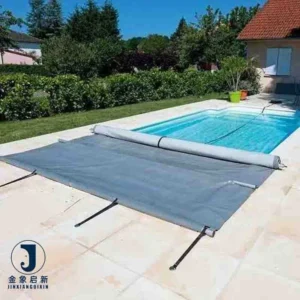
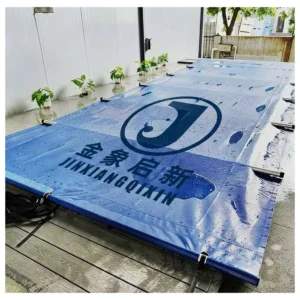
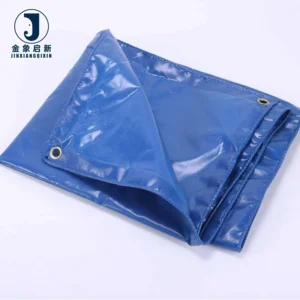
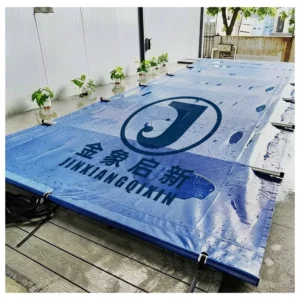
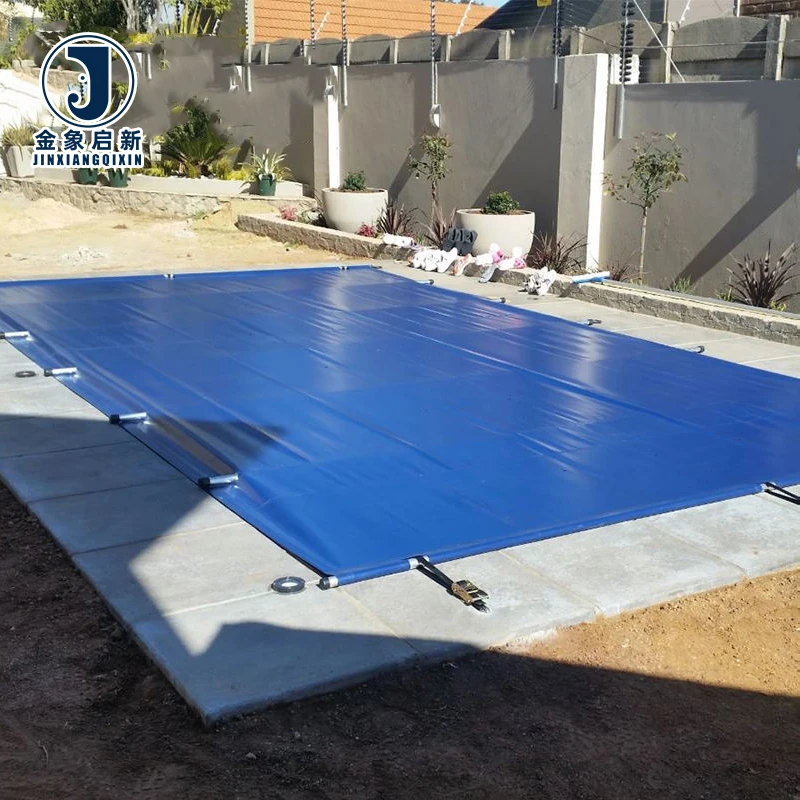
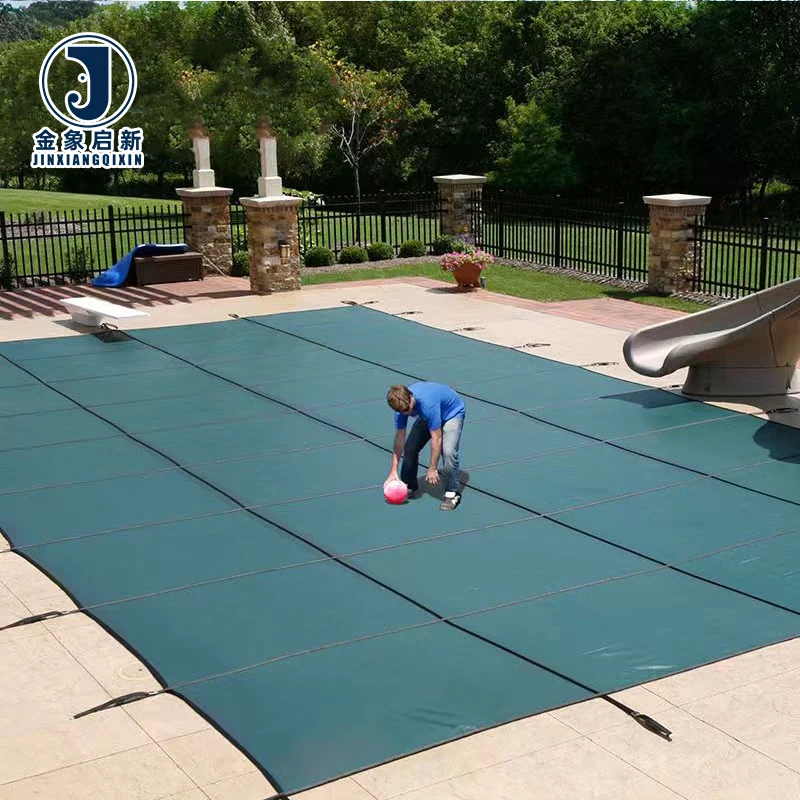
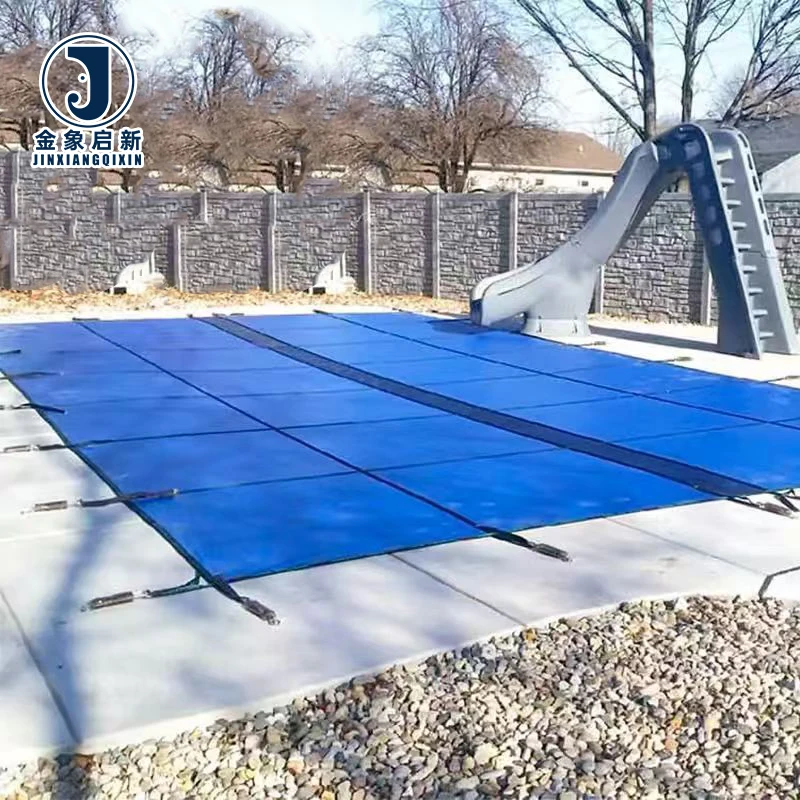
Integrated pressing construction — PVC coated tarpaulin rolls for pool cover fabrication with welded seam integrity that eliminates stitching failure at flex points under constant tension.
Technical Specifications
| Parameter | Value |
|---|---|
| Product Type | PVC Coated Tarpaulin (Pool Cover Application) |
| Base Fabric Denier | 500D-500D polyester yarn |
| Coating Material | PVC coating over polyester base |
| Weight Range | 450-900 g/m² (select grade at inquiry) |
| Construction Method | Integrated pressing (non-stitched) |
| Water Resistance | Fully waterproof coated surface |
| Flame Retardant | Available in flame retardant grades — confirm the grade required for your market |
| Anti-UV | Available with UV stabilisation — confirm test basis required for your region |
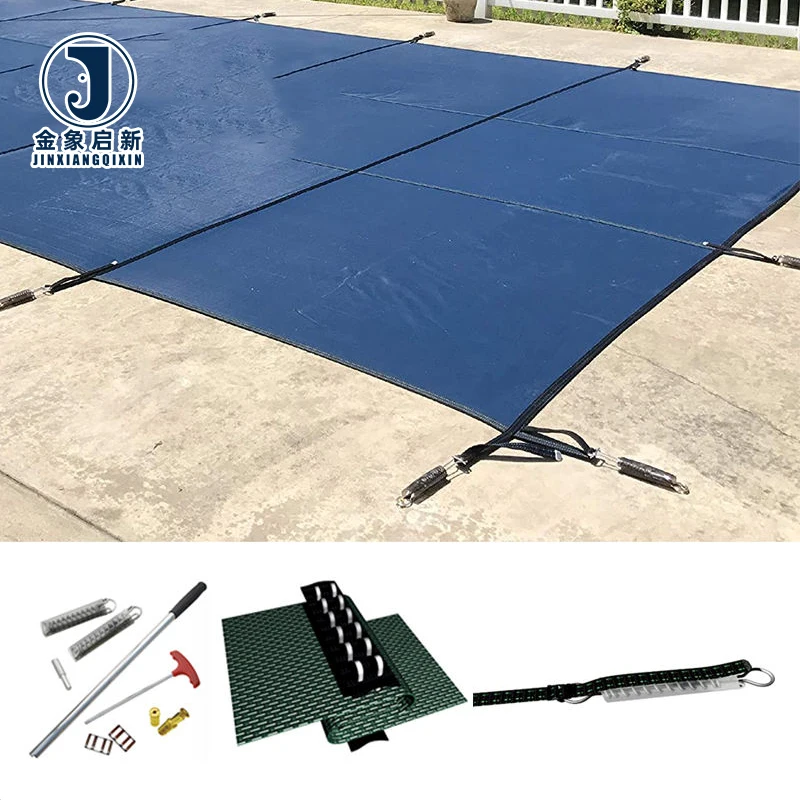
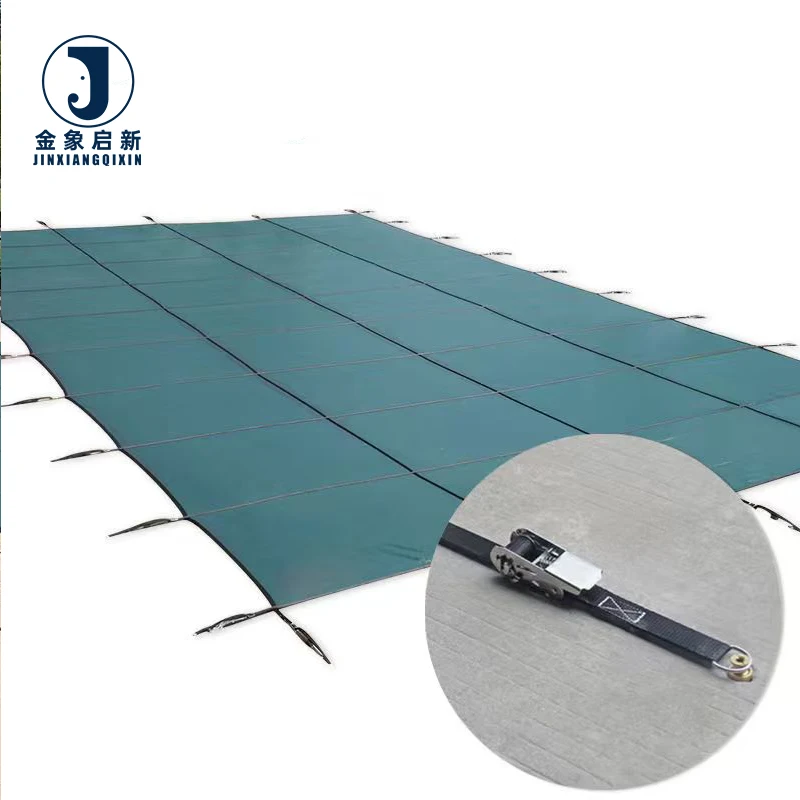
| Installation Compatibility | Brass anchoring / Aluminium batten ratchets / Water tube loops |
Application Suitability
| Application | Exposure & Requirement |
|---|---|
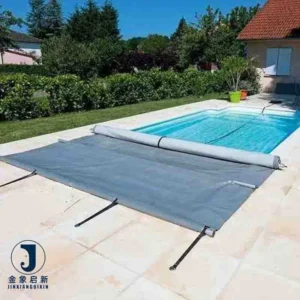
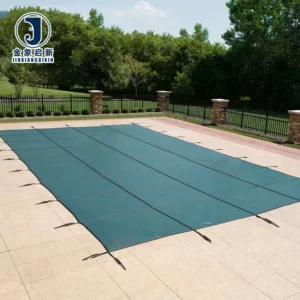
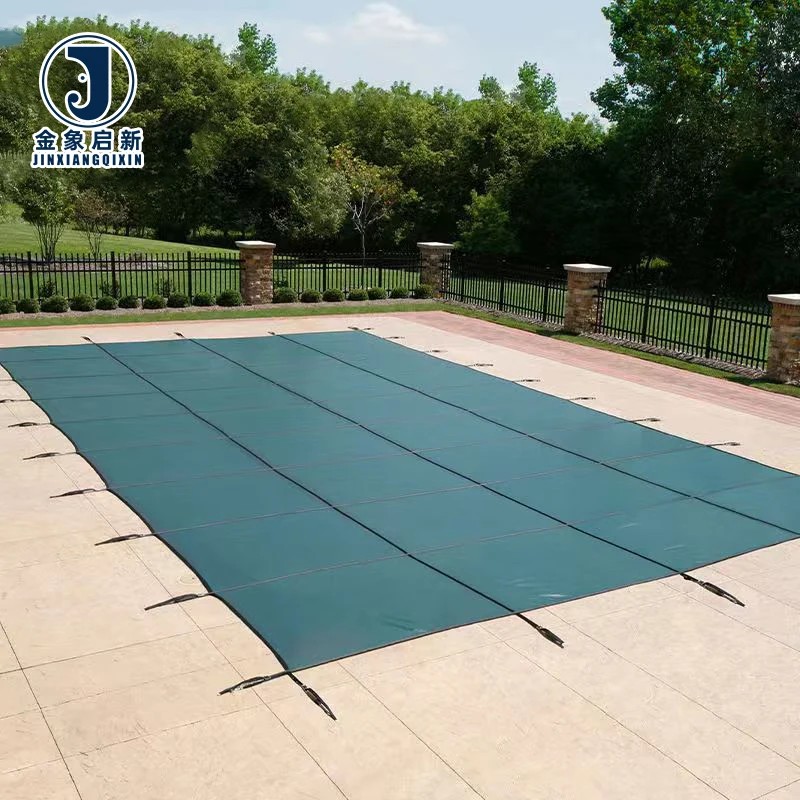
| In-ground winter pool safety cover | Continuous water contact, UV exposure, debris loading, child and pet barrier integrity |
| Commercial pool facility cover | Flame retardant compliance for public venues, high-frequency deployment and removal |
| Custom-shaped residential pool cover | Dimensional accuracy for non-standard geometries, tension without crease formation |
| Evaporation reduction barrier | Long-term water immersion, chemical exposure from pool treatment agents |
Why Batch Consistency Across Rolls Determines Cover Quality
Roll-to-roll colour and weight uniformity is the foundation of professional pool cover fabrication, not a bonus feature.
When fabricators cut PVC pool cover material from multiple rolls to cover a large or irregularly shaped pool, any colour shift between rolls becomes immediately visible once the panels are welded together and installed side by side. Similarly, GSM variation between rolls means some panels will flex differently under tension, creating uneven stress distribution across the welded seams. Buyers who specify a grade on paper but receive inconsistent material end up rejecting entire batches after fabrication has already begun [NEED_CITE: batch consistency standards for coated fabric roll goods].
Roll Width Selection and Cutting Waste Minimisation
Pool cover fabricators working with rectangular, square, and freeform in-ground pool shapes need PVC pool cover roll stock in widths that align with common pool dimensions to reduce offcuts and welding seams. Each additional weld line represents a potential failure point under the tension loads that safety covers endure during winter storms. Selecting the correct roll width at the ordering stage directly influences fabrication efficiency and the structural reliability of the finished cover.
Anchoring System Compatibility and Fabric Edge Preparation
The three installation methods supported — brass anchoring systems, aluminium battens with stainless steel hook and ratchets, and heavy-duty water tube loops — each demand different edge preparation on the PVC coated tarpaulin. Brass anchors require precise hole punching and reinforced perimeter welding, while aluminium batten systems need continuous edge beading that the integrated pressing construction accommodates without stitch-line weakness. Water tube loops demand consistent spacing and weld strength to hold the water weight without tearing at the attachment point [NEED_CITE: anchoring load distribution on PVC coated fabric edges].
Understanding How Denier, Coating Weight, and Weave Interact
The 500D-500D polyester base fabric provides the tensile backbone of this PVC pool cover material, but denier alone does not determine the final strength. The coating weight and the weave density of the base fabric work together to produce the tear and tensile values that matter during installation and service. A tighter weave with a given GSM will outperform a looser weave at the same weight because the yarns share load more evenly. The integrated pressing construction method bonds the PVC coating to the polyester base without needle holes, preserving the full tear resistance of the base fabric and allowing hot-air welding at seams without delamination. Surface finish — whether glossy or matte — affects how easily debris releases from the cover during spring removal and how the material responds to pool chemical splashes over successive seasons.
The Hidden Cost of Specifying Without Verification
Fabricators who order PVC pool cover roll stock based solely on a quoted GSM without requiring pre-shipment inspection records often discover discrepancies only after the material has been cut and welded into finished covers. At that stage, returning the material is not an option, and the cover may fail prematurely under snow load or wind uplift. Flame retardant grades specified without a supporting test report create liability exposure for commercial pool installations where fire compliance is inspected [NEED_CITE: liability from uncertified flame retardant claims in pool facilities]. Colour inconsistency discovered mid-production forces fabricators to either re-order specific rolls at extended lead times or deliver a cover with visible panel differences that the end customer rejects.
Why Fabricators Source PVC Pool Cover Roll Stock Here
Nearly 30 years of continuous coated fabric production provides process control over coating adhesion and weight distribution that directly translates to consistent roll-to-roll quality for pool cover applications. Three full production lines and 36 sets of professional equipment support bulk roll orders with reliable dispatch scheduling during peak autumn demand when pool cover fabricators need material on time. A dedicated 10-person R&D team handles custom width requirements, colour matching across production runs, and sample development within days so fabricators can test weld parameters before committing to a full order. Every roll undergoes 100% pre-shipment inspection with records provided, ensuring the GSM and colour stated on the specification sheet match what arrives at the fabrication shop. ISO and CE certified production processes underpin the documentation trail that commercial pool projects require for compliance submission.
Documentation & Verification
- Material specification sheet stating GSM, 500D-500D base fabric denier, and PVC coating weight per roll
- Pre-shipment inspection record confirming weight and colour against the order specification before dispatch
- Roll packing list with batch identification for traceability across multi-roll pool cover orders
- Test report for UV stabilisation and flame retardant grades where applicable to the specified product
- Certificate of origin and customs documentation for international pool cover material shipments
Fabrication, Handling & Storage
- Hot-air weld temperature and speed must be calibrated to the specific 450-900 g/m² grade ordered for seam integrity
- Integrated pressing construction allows clean welding without stitch-line delamination at perimeter edges
- Store PVC pool cover rolls vertically on end caps to prevent flat-spot deformation that affects cutting accuracy
- Allow cold-weather rolls to reach ambient temperature before unrolling to avoid coating crack at low temperatures
- Use mild detergent only for cleaning — solvents degrade the PVC coating surface on finished pool covers
- Plan cutting layout around roll width to minimise weld seams across high-tension zones of the cover
What We Need to Quote Your PVC Pool Cover Roll Order
Provide your target GSM range, required roll width and length, and whether you need flame retardant or UV stabilisation grades with specific test standards for your market. Confirm the anchoring system your finished covers will use so we can advise on edge preparation compatibility. Let us know your annual roll volume and colour requirements so we can confirm batch consistency across your production schedule.
Frequently Asked Questions
Q: How do I verify the GSM of PVC pool cover rolls matches the quotation?
A: We provide a material specification sheet stating the exact GSM, base fabric denier, and coating weight for every roll. Our 100% pre-shipment inspection includes weight verification against the stated specification, and inspection records are supplied with your dispatch documentation so you can cross-check before fabrication begins.
Q: How is colour consistency maintained across multiple rolls in one order?
A: Every roll in your PVC pool cover order is produced within the same batch run, and our QA/QC process includes side-by-side colour comparison before packing. The pre-shipment inspection record documents this check, ensuring that panels cut from different rolls will not show visible colour variation once welded and installed on the pool.
Q: Which roll width should I choose to minimise cutting waste?
A: The optimal roll width depends on your most common pool dimensions and whether you fabricate rectangular or freeform covers. We offer custom widths on roll stock so you can align the material with your cutting patterns, reducing offcuts and the number of weld seams required across the finished PVC pool cover panels.
Q: What is the difference between integrated pressing and stitched construction?
A: Integrated pressing bonds the PVC coating to the polyester base without needle perforations, preserving full tear resistance across the fabric surface. Stitched seams create holes that become failure points under the tension loads a pool safety cover endures. Our welded seams hold as long as the fabric itself at flex and stress points.