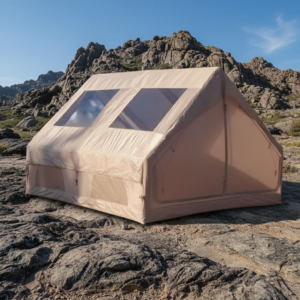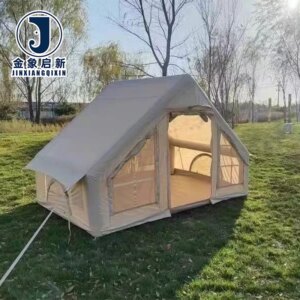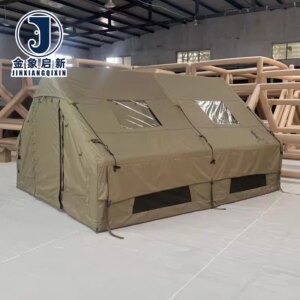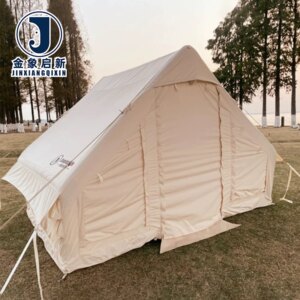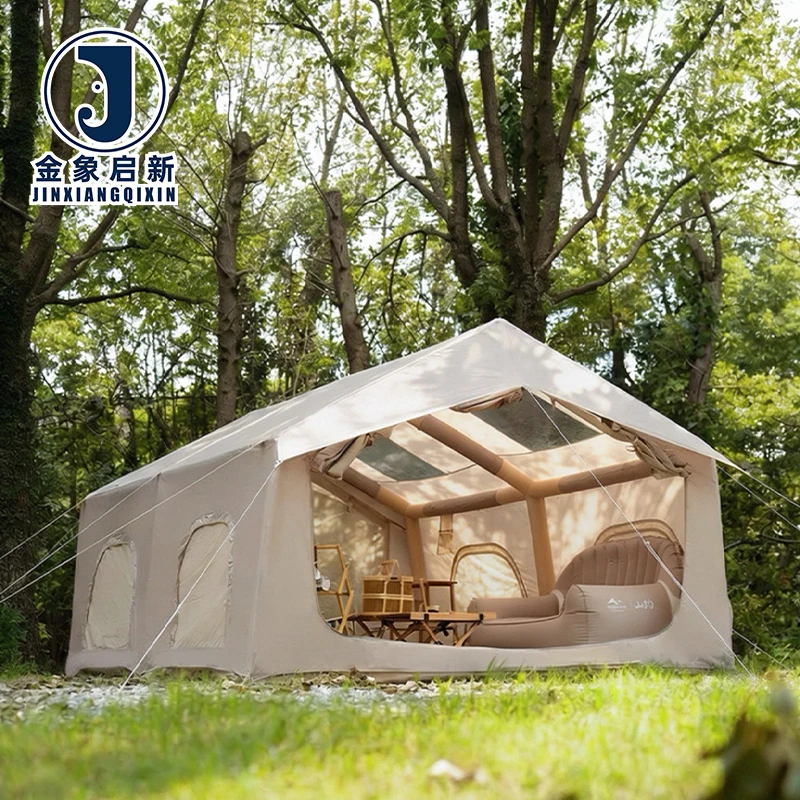



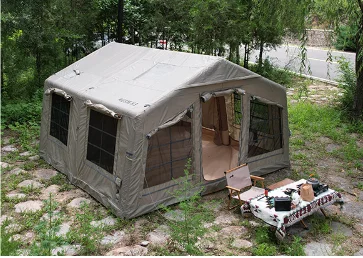
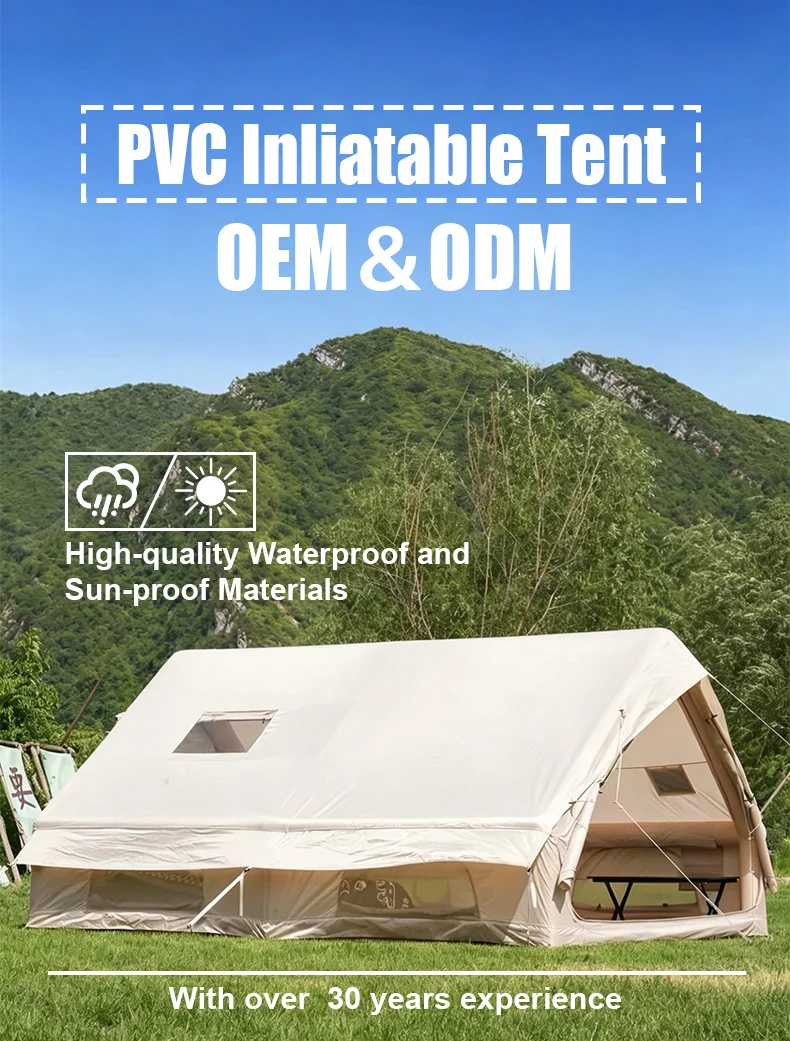
Description
Bulk Consistency You Can Verify — every roll of PVC inflatable tent fabric is inspected against its stated coating weight and base fabric density before dispatch, ensuring batch-to-batch uniformity for high-volume shelter production.
Technical Specifications
| Parameter | Value |
|---|---|
| Product Type | Inflatable Tent |
| Core Material | PVC knife-coated tarpaulin |
| Waterproof Rating | ≥8000mm H₂O |
| Tear Strength | ≥300N (test standard to be confirmed at inquiry) |
| Key Features | Waterproof, UV-resistant, tear-resistant, fire-retardant, anti-static |
| Fire-Retardant Treatment | Available — confirm the grade required for your market |
| Anti-Static Treatment | Available — surface resistance or standard to be confirmed at inquiry |
| UV Resistance | Treatment applied — outdoor durability validation available on request |
| Design Configuration | Extended type, four-season construction |
| Dimensional Tolerance | ±2% |
| Pressure Retention Test | 24-hour testing before shipment |
| Customization | OEM & ODM: size adjustment, color options, pattern printing, access points, ventilation integration |
| Certifications | ISO 9001, ISO 14001, ISO 45001, CE |
Application Suitability
| Application | Exposure & Requirement |
|---|---|
| Disaster response emergency shelters | Rapid deployment under severe weather, repeated inflation cycles, transport abrasion |
| Construction site temporary housing | Prolonged UV exposure, wind loading, crew traffic wear on floor and entry points |
| Infrastructure project equipment staging | Moisture ingress protection, dust containment, secure storage in remote locations |
| Industrial emergency preparedness stockpiles | Long-term rolled storage, fire safety compliance, immediate readiness on demand |
| Commercial inflatable structure manufacturing | Roll-to-roll consistency for automated cutting, predictable heat-weld behaviour across batches |
Why Unverified Material Claims Cost More Than the Fabric Itself
Specifying PVC inflatable tent fabric without documented test results turns compliance into a gamble.
Procurement teams sourcing material for emergency shelters and industrial inflatables regularly receive shipments where the flame-retardant or anti-static claims stated on the quotation cannot be backed by a matching test report. When an inspector asks for certification on site and the documentation does not align, the entire structure is rejected — not just the roll in question but every unit already fabricated from it. [NEED_CITE: fire safety compliance verification for temporary industrial structures] The financial exposure extends far beyond material cost into wasted labour, delayed project handover, and contractual penalties.
How Roll Consistency Affects Inflatable Structure Production
When manufacturers buy PVC inflatable tent fabric by the roll for serial production, batch uniformity directly determines cutting yield and weld reliability. Coating weight variation between rolls shifts the optimal heat-weld temperature, meaning a setting that produces a clean seam on one roll may leave under-fused joints on the next. This inconsistency forces fabricators to recalibrate equipment mid-run, generating scrap and delaying order fulfilment. Our production process controls coating application across all three lines so that tensile behaviour and thermal response remain stable from the first roll to the last in any given order.
Pressure Retention and Structural Reliability in the Field
Inflatable shelters depend entirely on continuous air-holding integrity — a single seam leak compromises the entire structure within minutes. Every unit undergoes a 24-hour pressure retention test before shipment, validating that the coated fabric and welded joints maintain inflation under sustained load. [NEED_CITE: pneumatic structure pressure loss standards for temporary shelters] This testing protocol catches adhesion failures, pinhole defects, and seam delamination that visual inspection alone cannot detect. For procurement teams specifying material for disaster relief or industrial emergency response, this pre-dispatch validation removes the risk of field failures when deployment speed is critical.
Reading the Specification Sheet Beyond the Headline Numbers
Tear strength and waterproof rating are frequently cited in product literature, but their practical meaning depends on the test method and base fabric construction. A tear strength figure of ≥300N carries different implications depending on whether it was measured by tongue tear or trapezoid method — the former simulates a propagating rip while the latter captures resistance at a stress concentration point such as an access opening. Similarly, the waterproof rating of ≥8000mm H₂O reflects hydrostatic head resistance at a specific point in time; the durability of that resistance across repeated inflation cycles and UV exposure depends on the coating formulation and adhesion to the base fabric. PVC knife-coated construction typically delivers stronger coating-to-substrate bonding than laminated alternatives, which directly influences how well the material resists delamination when the structure flexes under wind load. Fire-retardant performance must be understood within the classification system applicable to the destination market — grades recognised in one jurisdiction may not satisfy building code requirements in another, making early specification alignment essential.
The Hidden Cost of Specifying on Price Per Square Metre Alone
Selecting inflatable structure fabric primarily on unit cost often surfaces problems only after production begins. Thinner-than-quoted coating reveals itself when heat-weld parameters calibrated for the expected thickness produce burn-through or incomplete fusion. Batch colour variation becomes visible only after panels from different rolls are joined into a single structure, forcing costly rework or rejection. [NEED_CITE: coated fabric batch consistency failures in industrial textile procurement] Undocumented fire-retardant treatment fails at the compliance review stage, blocking project sign-off weeks into the construction schedule. These downstream costs consistently outweigh any initial saving on the material invoice.
What Backs the Fabric Before It Ships
Our 10-person R&D team develops pre-production samples for every custom specification, allowing buyers to evaluate weld behaviour, colour accuracy, and dimensional tolerance before committing to a full order. In-process quality inspection runs at every stage of coating and finishing, with dedicated QA and QC staff verifying parameters against the confirmed specification rather than sampling at the end. The 36 sets of professional processing equipment across three production lines provide capacity to fulfil bulk roll orders on schedule without compressing curing or coating steps. Every shipment includes a complete documentation package — from material specification sheets to batch-specific inspection records — so that compliance verification begins at the receiving dock, not on the installation site. Nearly 30 years of focused PVC coated fabric production informs the process controls that make this consistency possible.
Documentation & Verification
- Material specification sheet stating base fabric denier, coating method, and confirmed waterproof rating for each order
- Batch-specific quality inspection report covering tear strength, dimensional tolerance, and pressure retention results
- Fire-retardant and anti-static test reports provided where applicable — request at inquiry stage
- UV resistance validation documentation available for orders requiring outdoor durability evidence
- Pre-shipment inspection record with roll-by-roll coating weight verification before container loading
- ISO 9001, ISO 14001, ISO 45001, and CE certificates supplied with dispatch documentation
Fabrication, Handling & Storage
- Set heat-weld temperature based on confirmed coating thickness of the PVC knife-coated fabric to avoid under-fusion or burn-through
- Allow adhesive and primer compatibility testing before bonding ventilation ports or access panels to the coated surface
- Store rolls horizontally on padded racks to prevent permanent creasing of the PVC coating under its own weight
- Protect stored rolls from direct sunlight even indoors to preserve UV treatment effectiveness until fabrication
- Use mild detergent for field cleaning; avoid solvent-based cleaners that can degrade the PVC coating bond
- Inflate to working pressure gradually during cold-weather deployment to let the coated fabric reach flexibility without stress cracking
Getting Your Specification Right at Inquiry Stage
To ensure the PVC inflatable tent fabric we quote matches your production or deployment requirements, please share your target market’s fire safety and anti-static classification requirements, the intended roll width and estimated annual volume, and whether you need raw roll stock or pre-cut panels with welded access points. If colour matching or pattern printing is part of the project, providing a Pantone or RAL reference at the inquiry stage allows our R&D team to develop an accurate sample before production scheduling. Let us know whether the end use involves long-term storage in inflated condition or repeated deploy-and-pack cycles, as this affects the coating formulation we recommend.
Frequently Asked Questions
Q: Which fire-retardant classifications can this inflatable tent fabric meet?
A: Fire-retardant treatment is available in multiple grades, and the applicable standard depends on your destination market and end-use environment. We supply test reports matched to the grade confirmed at inquiry. Provide your local fire safety code or project specification requirement early so we can align the formulation and documentation before production begins.
Q: How is anti-static performance verified on this PVC inflatable fabric?
A: Anti-static treatment can be incorporated into the coating formulation, with surface resistance measured according to the standard relevant to your application. Confirm the required test method and acceptable resistance range during the inquiry stage so that the treatment level and supporting test report are included with your shipment documentation.
Q: Can I evaluate a sample before placing a bulk roll order?
A: Yes. Our R&D team produces pre-production samples reflecting your specified color, coating weight, and customization requirements including pattern printing or access point integration. Sample development allows you to verify weld behaviour, dimensional tolerance, and finish appearance before committing to full-scale production, reducing the risk of batch-level discrepancies.
Q: What is the minimum order and how are rolls packed for container shipment?
A: Minimum order quantity depends on the customization scope — standard stock grades carry lower minimums than custom color or printed rolls. Rolls are packed with protective wrapping and loaded by count and weight to maximise container utilisation. Share your required width, length per roll, and total quantity at inquiry for a precise packing plan.
Q: What documentation accompanies each shipment for compliance purposes?
A: Every order ships with a material specification sheet, batch-specific inspection report, ISO and CE certificates, and a packing list. Fire-retardant and anti-static test reports are included where applicable. Confirm the full documentation set your project or market requires during the quotation stage so nothing is missing at delivery.