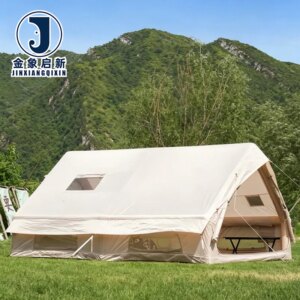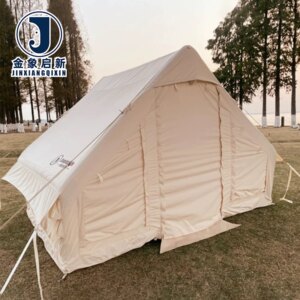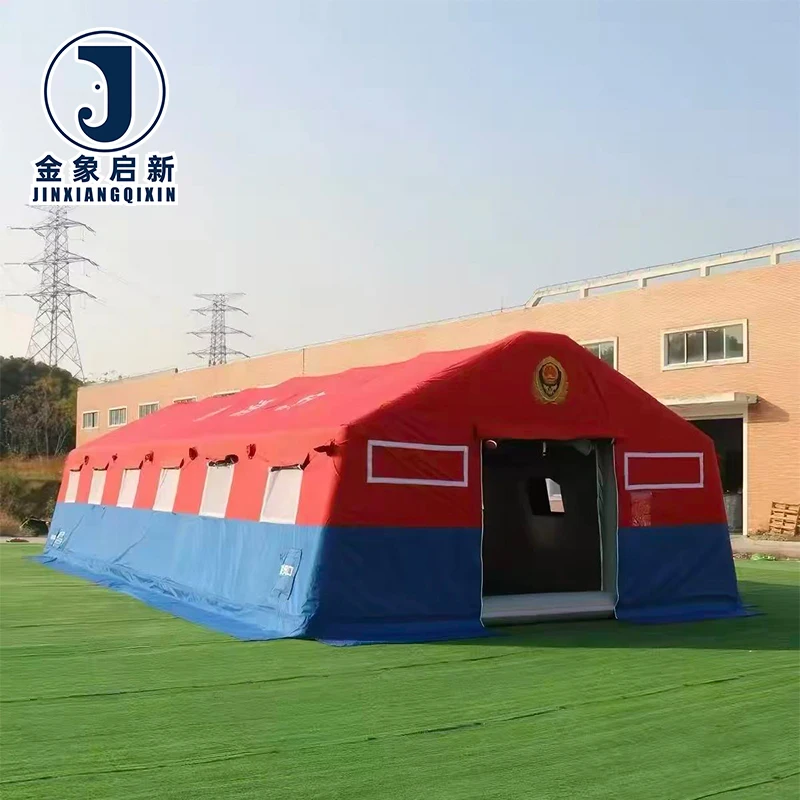



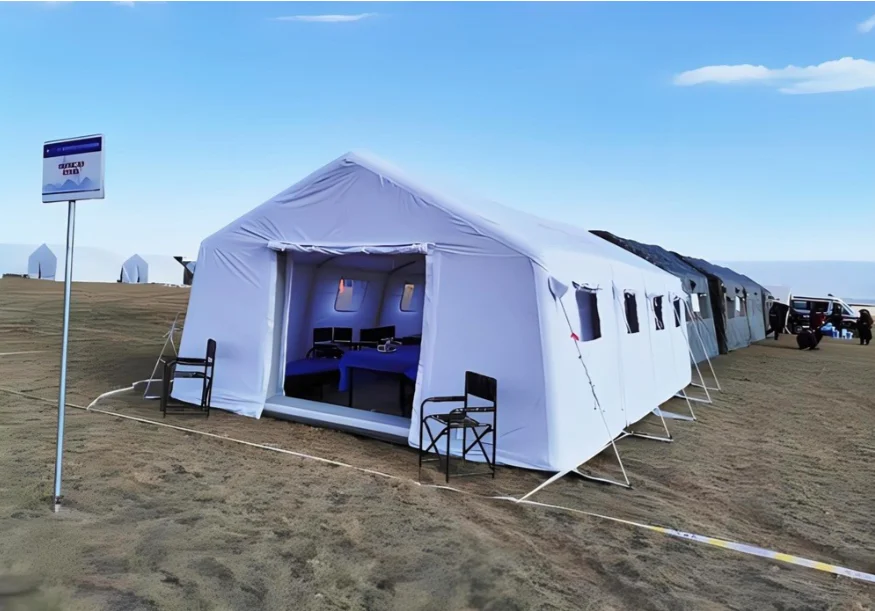

Description
Consistent Roll Stock — Batch-to-batch coating weight and colour control maintained through dedicated QA checkpoints on every production line, keeping inflatable tent fabric uniform across large-volume orders.
Technical Specifications
| Parameter | Value |
|---|---|
| Product Type | Inflatable Tent |
| Core Material | PVC Tarpaulin (PVC knife-coated fabric) |
| Key Features | Waterproof, UV-resistant, Tear-resistant, Fire-retardant, Anti-static |
| Construction | Single layer inflatable structure |
| Customization | OEM & ODM (sample customization, pattern printing) |
| Quality Control | Full-process QA&QC with dedicated on-site staff |
| Certifications | ISO9001, ISO14001, ISO45001, CE |
Application Suitability
| Application | Exposure & Requirement |
|---|---|
| Disaster relief shelters | Rapid deployment, prolonged weather exposure, repeated inflation cycles |
| Emergency command centers | High visibility, stable structural inflation, fire safety compliance on site |
| Construction site storage | Abrasion from ground contact, UV degradation risk, dust and moisture ingress |
| Outdoor industrial work areas | Wind load on inflated surfaces, chemical splash, temperature fluctuation |
Why Colour Shifts Between Rolls Can Wreck an Entire Shipment
Batch consistency across every roll is verified before it leaves the factory, not after it arrives at your warehouse.
When sourcing PVC inflatable tent fabric for disaster relief programs or serial tent production, buyers frequently encounter colour variation between rolls in a single order. The difference becomes visible only after multiple tents are erected side by side — far too late to negotiate a replacement. This problem compounds when procurement spans multiple shipments over a season, with each delivery drifting further from the original sample. [NEED_CITE: batch colour consistency testing methods for coated fabrics per ISO standards] Our approach ties colour reference and coating weight to the batch record for each roll, so what you approve in the sample is what fills the container.
Roll-Stock Supply That Matches Production Rhythm
Inflatable structure manufacturers running serial production cannot absorb delays caused by minimum order spikes or custom-width bottlenecks. Our PVC inflatable tent fabric is stocked and produced in roll form, allowing you to align delivery schedules with your fabrication calendar. Width and length options are available to match your cutting table dimensions, reducing off-cut waste and keeping material costs predictable across production runs.
Coating Weight Verification at Every Stage
The gap between quoted GSM and actual delivered weight is one of the most persistent complaints among tarpaulin importers. We run in-process coating weight checks during production and a final verification before roll packing. Each roll is recorded against its batch number, giving you a traceable link between the material specification sheet you received at quotation stage and the goods on your warehouse floor. [NEED_CITE: GSM verification methods for PVC coated fabrics during production]
How Knife-Coated PVC Performs Under Inflation Stress
PVC knife-coated fabric delivers a continuous coating layer that penetrates the base fabric weave, creating a mechanical bond that resists delamination under repeated inflation and deflation cycles. The coating method matters for inflatable tent applications because the fabric flexes at seam points every time the structure is pressurised or depressurised. Tear resistance depends on both the base fabric denier and the coating adhesion strength — neither can compensate for weakness in the other. Waterproof performance is inherent in the fully coated construction, while UV-resistant and flame-retardant treatments are available in grades that should be confirmed against your destination market’s regulatory requirements before ordering. Fire-retardant and anti-static treatments can also be specified — confirm the grade required for your market to ensure compliance documentation matches the actual material supplied.
What Specification Guesswork Costs in the Field
Selecting inflatable tent fabric without confirming coating weight and treatment grades leads to failures that appear only after deployment. Coating that is lighter than specified reduces abrasion resistance at ground-contact points, where the tent base meets rough terrain during disaster relief operations. Flame-retardant claims unsupported by test reports create compliance risk when inspectors visit emergency command centers or industrial work sites. Colour drift between production batches forces tent manufacturers to segregate rolls or absorb visible inconsistency across a product line. [NEED_CITE: common causes of coated fabric failure in inflatable structure applications] These problems are preventable when the material specification sheet, pre-shipment inspection record, and physical roll all carry the same verified data.
Why Buyers Keep Placing Repeat Roll Orders
Our 9,180 m² production facility runs three full production lines with 36 sets of professional processing equipment, giving us the capacity to fill container-load roll orders without splitting production across external workshops. A 10-person R&D team develops samples for custom colour and pattern printing within days, so you can validate specifications before committing to full production volume. Dedicated QA and QC staff inspect every roll before dispatch, checking coating weight, colour consistency, and material composition against the batch record. Nearly 30 years of focus on coated fabric has produced deep process control over coating adhesion and weight accuracy — the variables that determine whether inflatable tent fabric survives repeated inflation cycles in the field. ISO and CE certifications accompany every shipment, and pre-shipment inspection records are shared before goods leave the factory.
Documentation & Verification
- Material specification sheet stating PVC base fabric, knife-coating method, and treatment options per roll
- Pre-shipment inspection record confirming coating weight and colour reference per batch
- Roll packing list cross-referencing batch number, GSM, and roll dimensions
- ISO and CE certificates included with each shipment for customs and audit compliance
- UV and flame-retardant test reports provided where treatment grade has been specified and confirmed
Fabrication, Handling & Storage
- Heat welding parameters should be calibrated to the specific PVC knife-coated fabric weight before production runs begin
- Store rolls upright on pallets in a dry, shaded area to prevent surface creasing and coating compression marks
- Unroll fabric flat for at least several hours before cutting to allow the PVC coating to relax and flatten
- Use PVC-compatible adhesive and solvent cleaners that will not degrade the knife-coated surface layer
- Plan cutting layouts around roll width to minimise transverse seams on inflated panel surfaces
- Repair minor field damage with PVC patch kits matched to the same coating type and weight
Request a Roll-Stock Quote
To move forward, provide your target roll width, annual volume estimate, and any colour or pattern printing requirements. Specify the fire safety or compliance standards applicable in your destination market so we can match treatment grades to your documentation needs. Let us know whether you require finished cut panels or roll stock for your own fabrication line, and whether a production sample is needed before your first bulk order.
Frequently Asked Questions
Q: How is batch-to-batch colour consistency verified before shipment?
A: Each production batch is checked against the approved colour reference using standardised lighting conditions. Coating weight is measured per roll and recorded on the batch-specific packing list. Any roll falling outside the tolerance range is pulled before packing. The pre-shipment inspection record confirms colour and weight uniformity across the entire order.
Q: What roll widths and lengths are available for container loading?
A: Roll widths and lengths are available in multiple options to suit your cutting table and container loading plan. Custom widths can be produced for consistent orders. We provide container loading calculations by roll count and weight at quotation stage so you can optimise shipping costs against your production schedule.
Q: Can custom colour or pattern printing be done at bulk roll quantities?
A: Yes, custom colour and pattern printing are available for roll-stock orders at bulk quantities. Our R&D team develops print samples within days for your approval before production begins. Colour matching is verified during production to maintain consistency across all rolls in the order, including repeat shipments.
Q: How do I verify GSM and coating weight on arrival against the quotation?
A: Every roll ships with a packing list recording its batch number and coating weight. The material specification sheet provided at quotation stage lists the agreed GSM, base fabric, and coating details. You can cross-reference the physical roll label against these documents and conduct spot-check weighing to confirm compliance.
Q: What documentation is included per shipment for customs and quality audit purposes?
A: Each shipment includes a roll packing list, material specification sheet, certificate of origin, and customs support documents. ISO and CE certificates are provided for compliance records. Where fire-retardant or UV treatment grades have been specified, the corresponding test reports are included to support site inspections and regulatory audits.