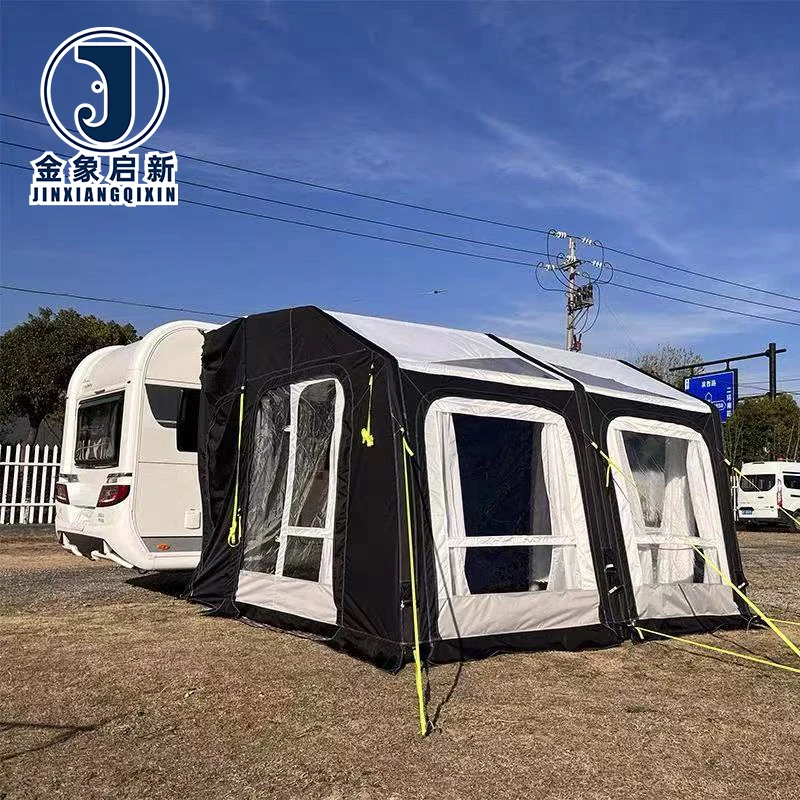
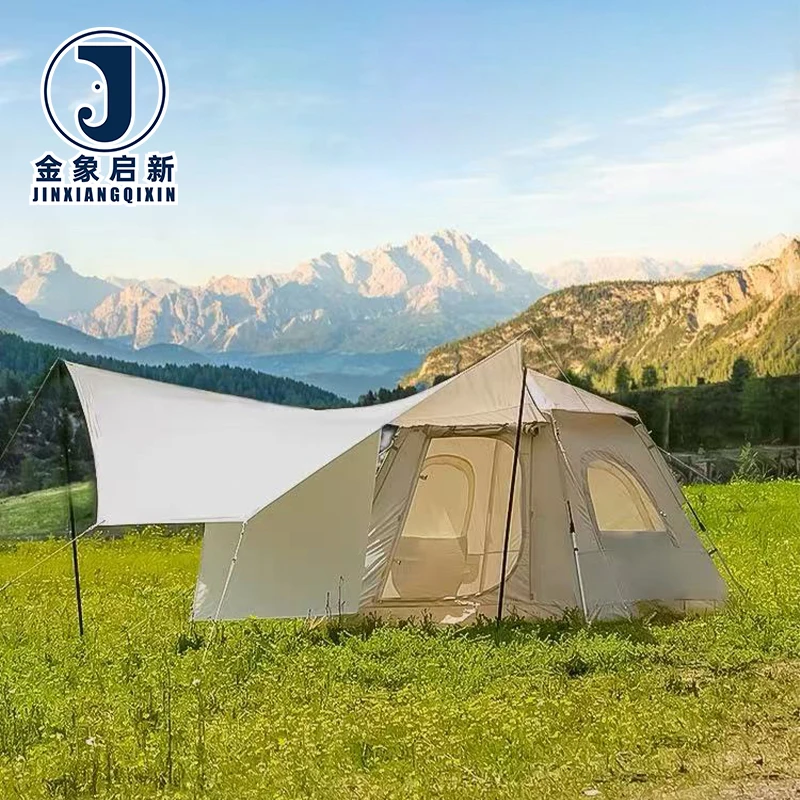
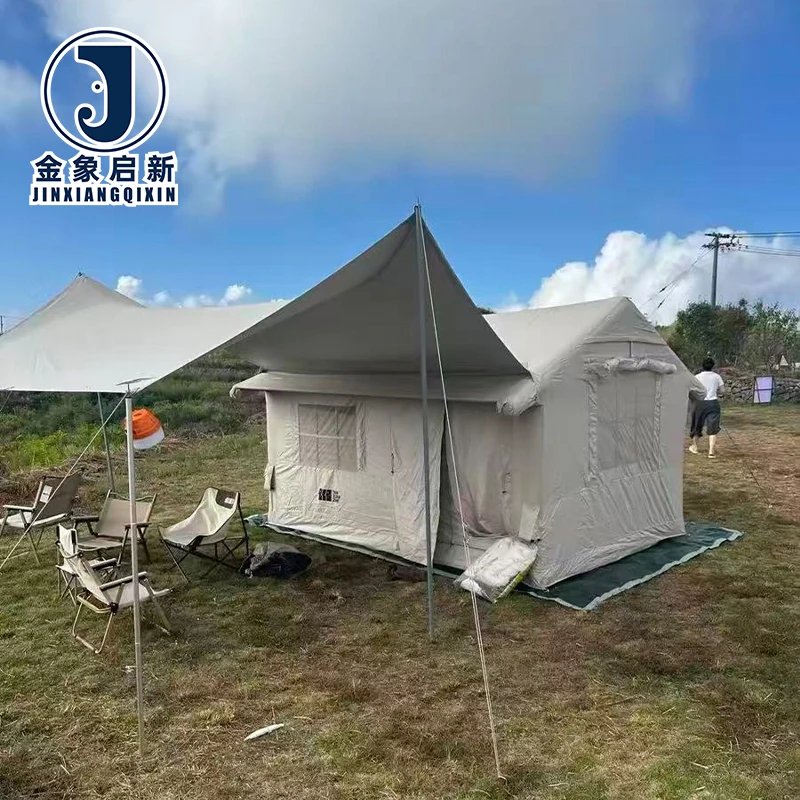
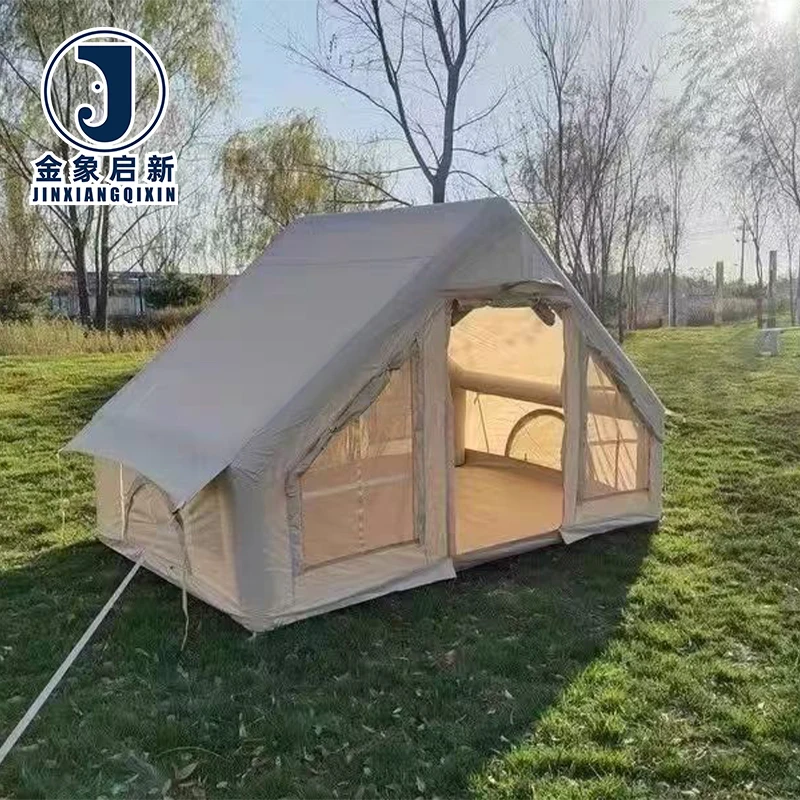
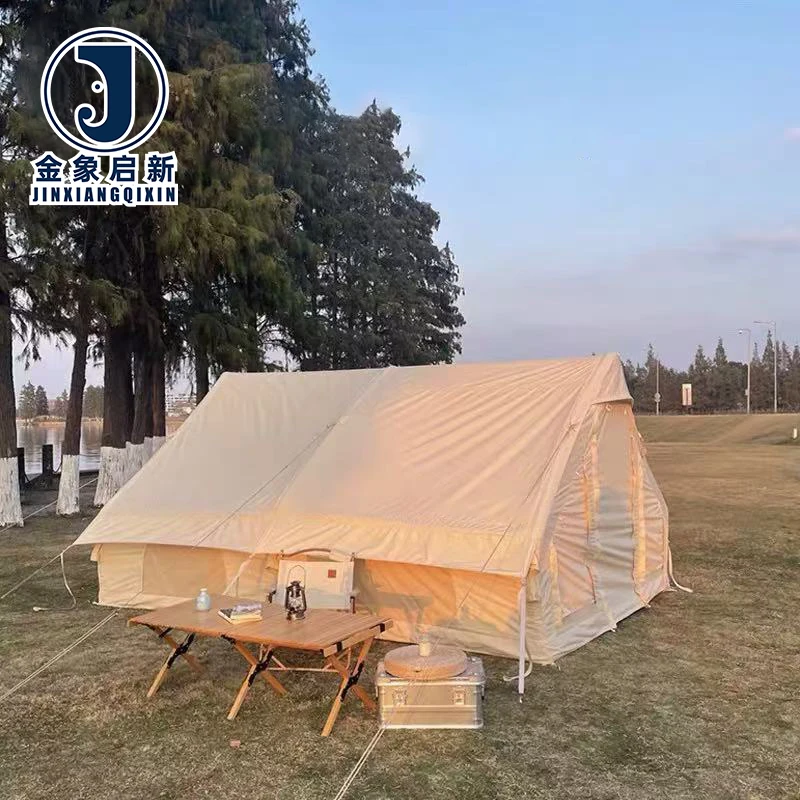
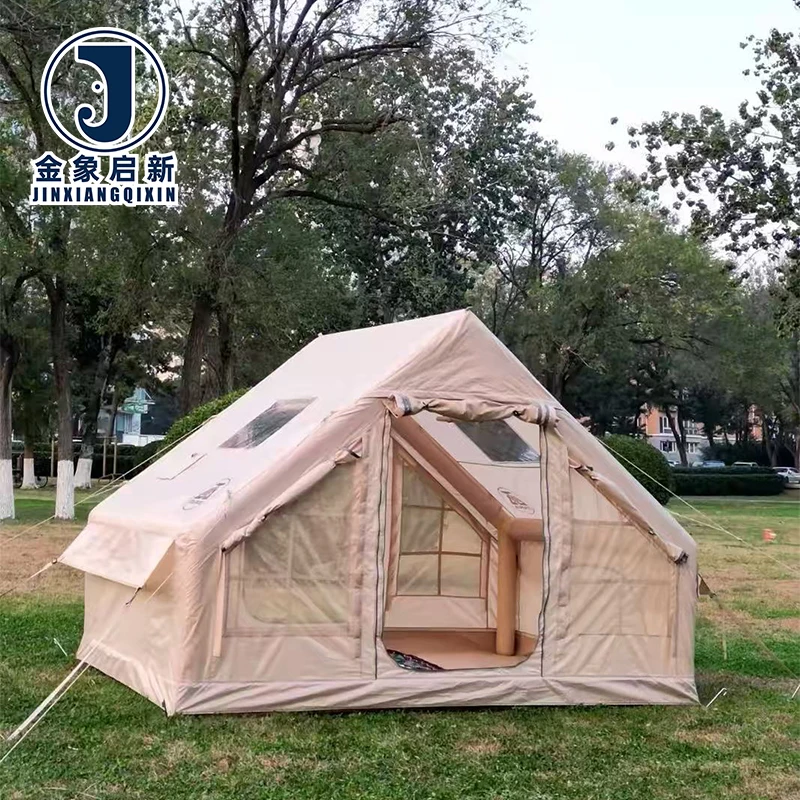
Description
Coated Fabric Consistency — Three full production lines with dedicated QA/QC at every stage ensure roll-to-roll uniformity critical for inflatable tent fabricators running continuous welding operations.
Technical Specifications
| Parameter | Value |
|---|---|
| Product Type | Inflatable Tent Fabric |
| Core Material | PVC Tarpaulin |
| Waterproof Rating | 500mm water column for 24 hours (verify against manufacturer catalog) |
| UV Treatment | Anti-UV coating, up to 5 years outdoor service life (test basis not stated) |
| Flame Retardant Grade | DIN 4102 B1 |
| Anti-Static | Anti-static feature (surface resistance or standard not stated) |
| Coating Thickness Tolerance | ±0.02mm |
| Seam Strength | 150N/cm (verify against manufacturer catalog) |
| Inflation Test | 48-hour airtightness test before shipment |
| Product Forms | Single Layer Construction, Extended Type |
| Size Range | 5㎡ to 100㎡ (customizable) |
| Color | Standard RAL color chart |
| Printing Option | Pattern printing |
| Customization | OEM & ODM, sample customization |
| Monthly Output Capacity | 500+ units |
| Sample Lead Time | 7-10 days |
| Production Lead Time | 15-30 days |
| Raw Material Standard | GB/T 12582-2008 |
| Certifications | ISO9001, ISO14001, ISO45001, CE |
Application Suitability
| Application | Exposure & Requirement |
|---|---|
| Temporary site offices during infrastructure projects | Daily UV exposure, wind loading, repeated inflation/deflation cycles requiring reliable seam integrity |
| Equipment storage shelters in remote construction areas | Dust ingress, temperature fluctuation, mechanical abrasion from loading operations |
| Emergency response stations for industrial accident management | Rapid deployment demands, chemical splash exposure, compliance with site fire safety regulations |
| Disaster relief rapid deployment shelters | Mass procurement consistency, transport durability, immediate weather protection upon arrival |
Why Batch Consistency Matters More Than Quoted GSM for Inflatable Tent Fabric Roll Buyers
A quoted GSM tells you what was promised; roll-to-roll verification tells you what was actually delivered.
Inflatable tent manufacturers sourcing PVC tarpaulin fabric by the roll face a recurring problem: the material specification sheet states one weight, but the rolls arriving at the production floor measure lighter. This discrepancy compounds across a container load, where dozens of rolls must feed a continuous heat-welding line producing air-beam channels and membrane panels. When coating thickness varies by more than the stated tolerance, weld parameters calibrated for one roll fail on the next, generating seam failures that only surface during the 48-hour airtightness test. [NEED_CITE: tensile and tear test methods for coated fabrics per ISO 1421]
The cost is not the rejected roll. It is the production downtime, the recut panels, and the shipment delay that cascades into missed project deadlines for emergency shelter distributors and construction contractors alike.
Roll-to-Roll Colour Matching Across Bulk Orders
Colour variation between rolls in the same order is one of the most visible defects once inflatable tent panels are installed side by side. When PVC inflatable tent fabric roll stock is coated across multiple production runs, pigment batching differences can produce shade shifts detectable to the unaided eye. Manufacturers supplying branded emergency shelters or colour-coded disaster relief kits cannot absorb this variability without sorting and re-matching rolls manually on the cutting table. Custom colour matching via the RAL chart, combined with pattern printing capability, allows tent fabricators to specify exact references and hold the supplier to a measurable standard across the entire order.
Coating Thickness Control and Weld Line Performance
The coating thickness tolerance of ±0.02mm is not a cosmetic specification. In inflatable tent construction, the air-beam channels rely on high-frequency or hot-air welding to create sealed chambers that hold pressure for extended periods. When coating thickness drifts outside this tolerance, the heat transfer profile changes across the weld zone, producing cold joints on thin sections and burn-through on thick sections. Seam strength tested to 150N/cm indicates the welded joint can withstand the internal pressure cycles that inflatable structures experience during wind gusts and temperature-driven expansion. [NEED_CITE: DIN 4102 fire classification for building materials]
Understanding the Flame Retardant Grade for Market Compliance
Flame retardant to DIN 4102 B1 positions this PVC tarpaulin fabric within a recognized European classification system for building materials, which many regulated markets reference for temporary structures including inflatable tents. The B1 grade indicates that the material is difficult to ignite and does not contribute to flame spread under the test conditions defined by the standard. For tent manufacturers exporting to jurisdictions that require fire safety documentation for public assembly structures, having the grade stated with the standard reference enables procurement teams to submit compliance packages without requesting additional testing. Anti-static features are noted in the specification, though the surface resistance value and applicable standard should be confirmed for projects in environments where static discharge poses an ignition risk.
The Hidden Cost of Undocumented Material Properties
When an inflatable tent fabricator sources PVC tarpaulin without verified flame retardant documentation, the failure rarely occurs on the cutting table. It surfaces at the project site when the safety inspector requests the fire classification certificate and the supplier cannot produce one tied to the specific batch delivered. Entire shelter deployments have been rejected at the commissioning stage because the material certificate referenced a generic product family rather than the actual roll batch used in production. Similarly, when coating thickness is not verified roll by roll before dispatch, the manufacturer absorbs the cost of failed airtightness tests, scrapped panels, and expedited re-shipments. [NEED_CITE: batch consistency verification procedures for coated fabric procurement]
Why Fabricators Source PVC Inflatable Tent Fabric Here
Nearly 30 years of focused coated fabric production provides process control over coating weight and adhesion that directly affects weld performance in inflatable tent manufacturing. Three full production lines and 36 sets of professional equipment support the bulk roll capacity that tent fabricators and emergency shelter distributors require for continuous production scheduling. The 10-person R&D team handles material selection, pattern printing, custom sizing, and sample development, enabling OEM and ODM projects to move from specification to approved sample within 7 to 10 days. Dedicated QA/QC at every production stage, with 100% inspection before shipment, catches thickness deviations and colour drift before rolls are containerized. ISO and CE certification, maintained across production systems, provides the documentation foundation that regulated procurement channels require.
Documentation & Verification
- Material specification sheet stating PVC tarpaulin base fabric, coating weight, and flame retardant grade DIN 4102 B1
- Pre-shipment inspection record confirming coating thickness within ±0.02mm tolerance and colour consistency across rolls
- Roll packing list with batch number for incoming quality verification against the quoted GSM
- Container loading plan detailing roll count and weight for inflatable tent fabric logistics planning
- Certificate of origin and customs documentation supporting international shipment clearance
Fabrication, Handling & Storage
- Heat-weld air-beam channels using parameters calibrated to the ±0.02mm coating thickness tolerance for consistent seam strength
- Verify seam strength at 150N/cm on sample welds before committing full roll stock to production cutting
- Store rolls horizontally on padded racking to prevent surface creasing that compromises inflation panel aesthetics
- Allow cold-stored PVC tarpaulin rolls to acclimatize to workshop temperature before unrolling to avoid coating micro-cracking
- Use compatible PVC-based repair adhesives matching the coating chemistry for field patching of inflatable tent membranes
- Plan cutting layouts around the available roll width to minimize off-cuts and reduce welded seam count in large panels
What We Need to Quote Your Inflatable Tent Fabric Order
To provide an accurate specification recommendation and production timeline, share your intended application environment, the fire safety classification required by your target market, and the annual roll volume you anticipate purchasing. If you require custom colour matching to a specific RAL reference or pattern printing for brand identification, include the artwork files and confirm whether you need sample approval before bulk production. Specify whether you are purchasing PVC inflatable tent fabric roll stock for your own cutting and welding operations or require pre-cut panels sized to your inflatable tent designs.
Frequently Asked Questions
Q: How can I verify the GSM upon arrival matches what was quoted?
A: Request the roll packing list with individual batch numbers and stated GSM before dispatch. Upon receipt, cut measured samples from random rolls and weigh them against the specification sheet. Our pre-shipment inspection record documents coating thickness and weight verification per roll, providing a baseline for your incoming quality check to confirm the PVC inflatable tent fabric roll stock matches the order.
Q: How is colour consistency controlled across multiple rolls in a single order?
A: Colour matching follows the standard RAL chart with pigment batching controlled across the production run. Pre-shipment inspection includes visual comparison of rolls side by side under standardized lighting to detect shade variation before containerization. For pattern printing orders, registration and colour density are verified on the first pull before the full run proceeds.
Q: What fire safety documentation accompanies each shipment?
A: Each shipment includes a material specification sheet stating the DIN 4102 B1 flame retardant grade along with the test report supporting that classification. This documentation package enables tent manufacturers to submit compliance evidence to project safety inspectors without requesting supplementary testing from independent laboratories.
Q: What roll width and length options are available for efficient cutting?
A: Custom width and length are available to match your cutting table dimensions and panel layouts, minimizing off-cuts and reducing the number of welded seams in large inflatable tent structures. Specify your required dimensions during the inquiry stage so the production team can confirm availability and container loading efficiency for your PVC inflatable tent fabric roll stock order.
Q: What is the minimum order and lead time for custom colour or print?
A: Custom colour and pattern printing orders carry minimums and lead times that vary with specification complexity and volume. Sample development takes 7 to 10 days for approval, followed by 15 to 30 days for bulk production depending on order size. Submit your colour reference and print artwork early in the inquiry process to align the production schedule with your project timeline.