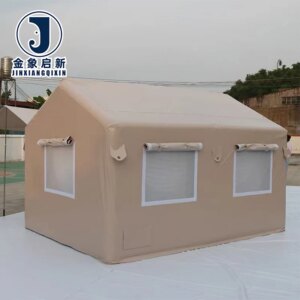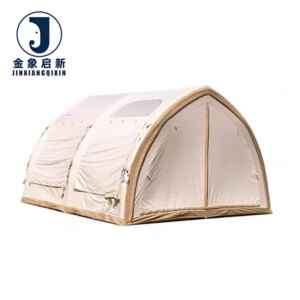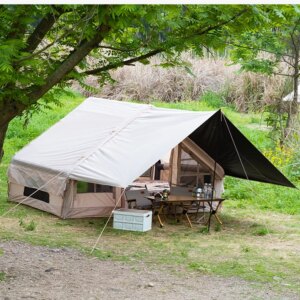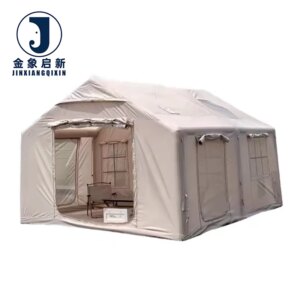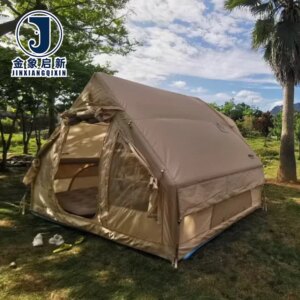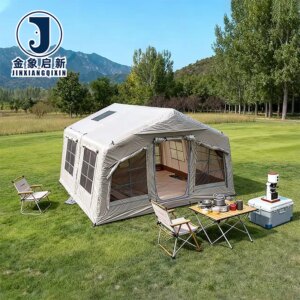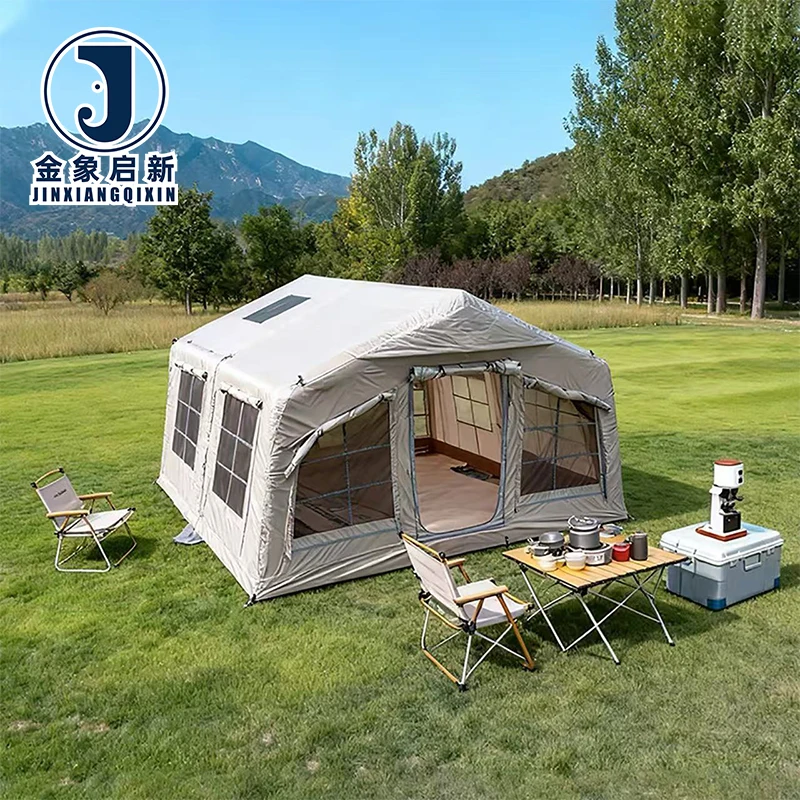
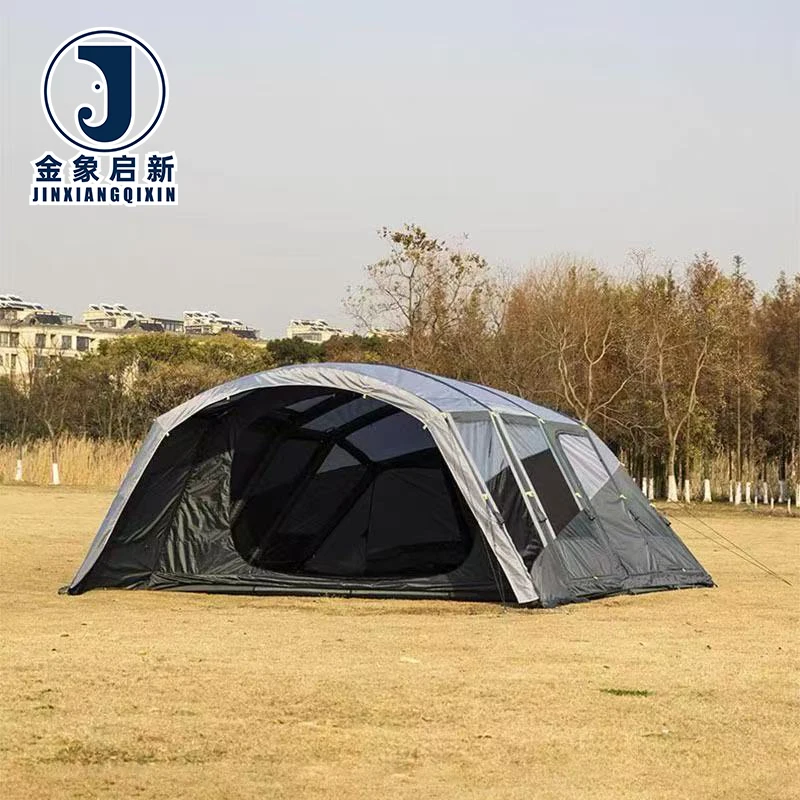
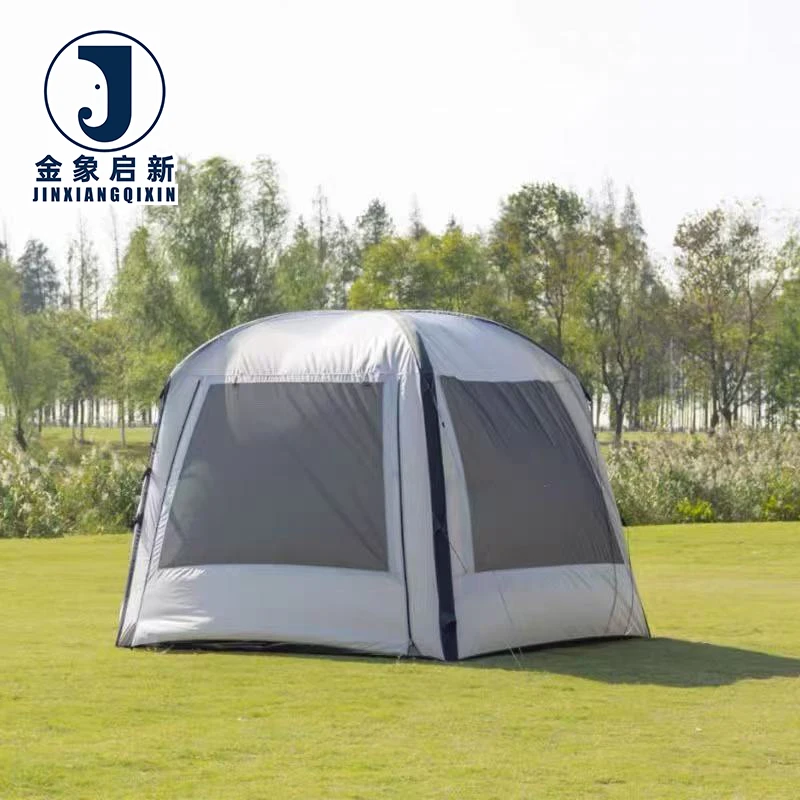
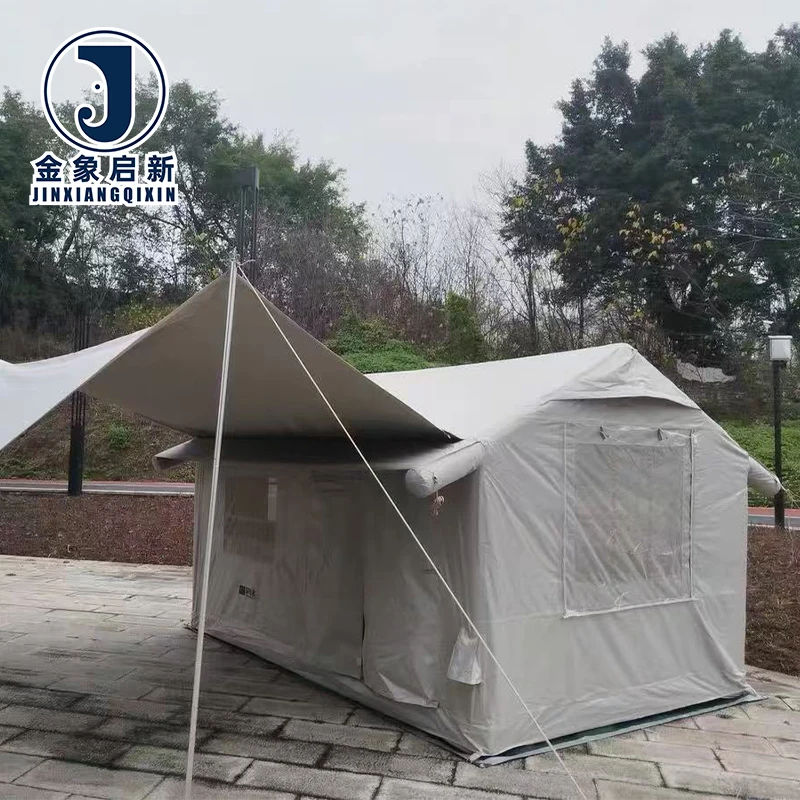
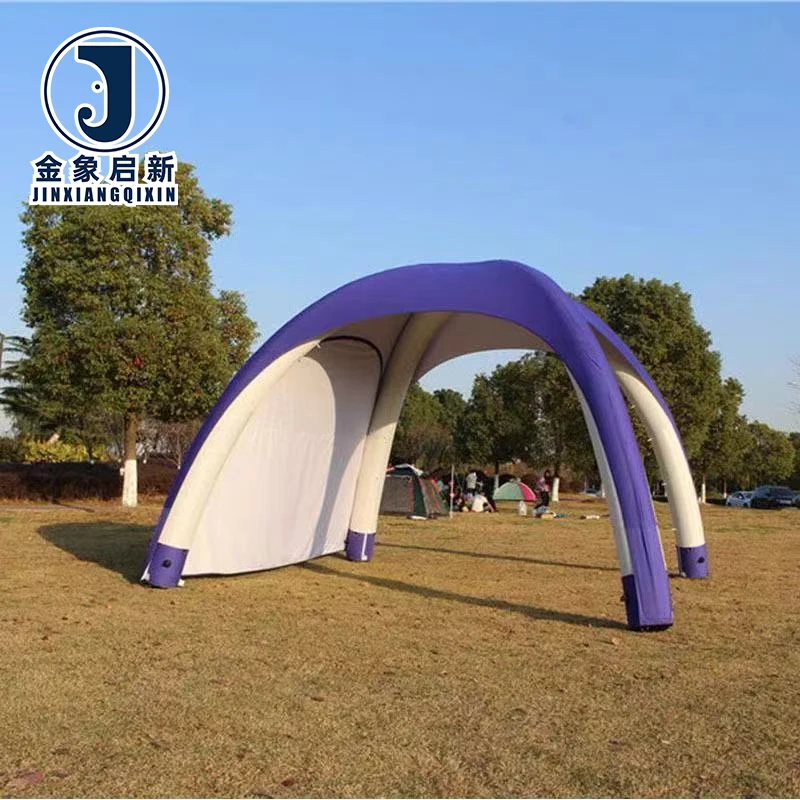
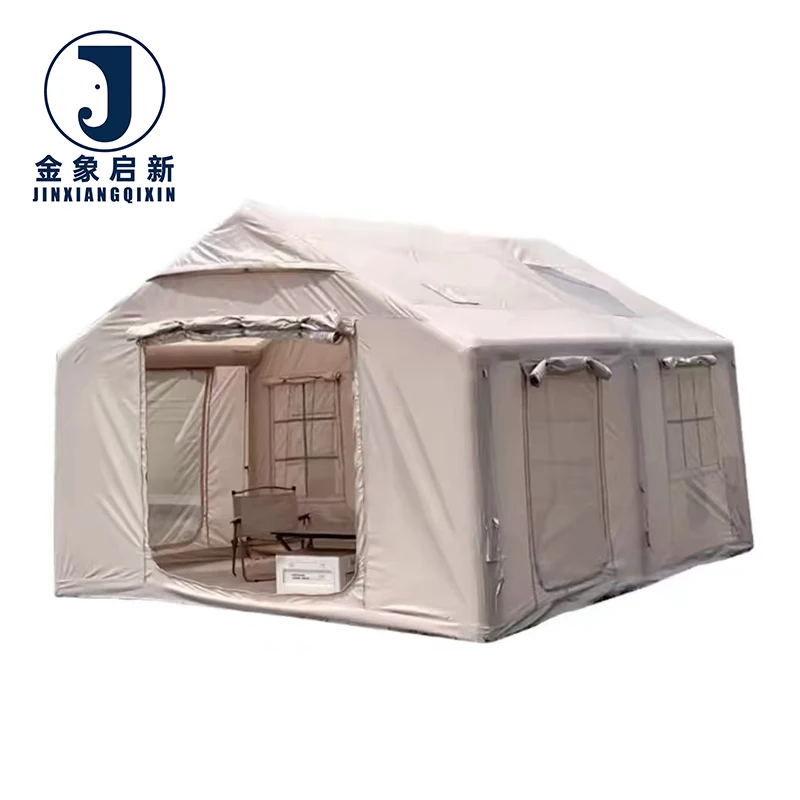
Description
Batch-to-Batch Colour and Weight Consistency — verified per roll against the stated specification before dispatch, ensuring inflatable tent fabricators receive uniform material across every container load.
Technical Specifications
| Parameter | Value |
|---|---|
| Product Type | Inflatable Tent |
| Core Material | PVC tarpaulin |
| Waterproofing | Fully coated PVC construction |
| UV Resistance | UV-resistant treatment available — confirm the grade required for your market |
| Fire Retardancy | Fire-retardant treatment available — confirm the grade required for your market |
| Anti-Static | Anti-static treatment option available — surface resistance or standard to be confirmed per order |
| Tear Resistance | Tear-resistant PVC-coated structure |
| Customization | OEM & ODM, sample customization, pattern printing |
| Production Facility | 9,180 m² with 3 full production lines |
| Processing Equipment | 36 sets of professional processing equipment |
| R&D Team | 10 technicians |
| Quality Control | Full-process QA & QC inspection |
| Certifications | ISO9001, ISO14001, ISO45001, CE |
Application Suitability
| Application | Exposure & Requirement |
|---|---|
| Commercial glamping dome fabrication | Repeated inflation/deflation stress, sustained weather exposure, guest safety compliance |
| Tourism resort inflatable structures | Year-round UV and rain exposure, fire safety requirements for hospitality venues |
| Event and festival temporary shelters | Rapid deployment cycles, transport abrasion, short-term high wind loads |
| Staff quarters and on-site facilities | Extended occupation, ventilation requirements, flame-retardant compliance for enclosed spaces |
| Inflatable membrane structure manufacturing | Weld integrity under internal air pressure, coating adhesion under cyclic flex |
What Batch Consistency Really Means When You Buy Inflatable Tent Fabric by the Roll
Colour variance between rolls in a single order is one of the most frequent and costly failures in commercial inflatable tent fabrication.
When a glamping operator orders multiple inflatable units for a resort expansion, the tents are often installed side by side. If the PVC tarpaulin rolls come from different production batches, the shade difference becomes immediately visible under natural light. This is not a cosmetic issue — it damages the operator’s brand and forces the fabricator into expensive rework. The same principle applies to GSM: a roll that arrives lighter than quoted will show different handling behaviour on the welding table and may fail to meet the structural engineer’s load calculation. Wholesale inflatable tent PVC tarpaulin buyers need every roll in the shipment to match the confirmed sample, not just on paper but on the cutting table [NEED_CITE: incoming material inspection standards for coated fabric rolls per ISO 1421].
Roll-to-Roll Colour Matching for Inflatable Tent Production Lines
Inflatable tent fabricators running batch production cannot afford shade drift between rolls. When the PVC coating compound is mixed in separate batches, slight variations in pigment dispersion create visible boundaries once the panels are welded together. Our colour matching protocol references a confirmed master sample and extends across the entire order quantity. Each production run of inflatable tent fabric roll is tracked by batch number, so reorders can be matched to previous shipments with documented colour reference data.
Coating Adhesion Under Repeated Inflation Cycles
Inflatable tent structures place a unique demand on coated fabric. Every inflation cycle stretches the PVC coating and the base fabric simultaneously, then releases them. If the coating adhesion is weak, micro-delamination begins at the weld lines and propagates with each cycle. The PVC tarpaulin produced here uses a coating process engineered for strong bond integrity between the base fabric and the PVC layer. This matters particularly at the seams where heat welding concentrates thermal stress. Wholesale inflatable tent PVC tarpaulin must maintain this adhesion through hundreds of inflation cycles without cracking or peeling [NEED_CITE: coating adhesion test methods for PVC-coated fabrics].
Understanding the Specification Parameters That Actually Matter
The tear resistance of PVC tarpaulin for inflatable structures depends on the interaction between the base fabric weave density and the coating weight. A heavier coating does not automatically deliver higher tear strength if the underlying yarn denier and pick count are low. The base fabric carries the structural load; the coating provides the environmental barrier. When specifying inflatable tent fabric roll, both elements must be evaluated together. The waterproof performance comes from continuous PVC coating without pinholes or thin spots, which is a function of coating process control rather than thickness alone. Fire-retardant and anti-static treatments are available — confirm the grade required for your market, as different jurisdictions apply different standards such as NFPA 701, DIN 4102, or local building codes. Pattern printing and branding can be applied per roll for OEM tent manufacturers who need consistent logo placement across production runs.
The Hidden Cost of Overlooking Weld Line Performance
Inflatable tent fabricators frequently report that the welded seam fails before the fabric body does, and this failure almost always occurs at the point where the structure flexes most under internal pressure. When the PVC coating formulation is not matched to the heat welding parameters, the bond at the seam becomes the weakest link. A seam that opens under load deflates the entire structure and creates a safety incident on a commercial glamping site. Specifying the correct material grade and confirming the recommended welding temperature range before production begins eliminates this failure mode. The inflatable tent fabric roll must be validated on the fabricator’s own welding equipment, not assumed from a data sheet [NEED_CITE: heat welding parameters and seam strength testing for PVC-coated fabrics].
Why Fabricators Source Inflatable Tent Fabric Here
Three full production lines and 36 sets of processing equipment support bulk roll output with consistent scheduling for wholesale inflatable tent PVC tarpaulin orders. The 10-person R&D team handles material selection, custom width development, and pattern printing directly, so sample requests are developed within days rather than weeks. Every roll undergoes dedicated QA and QC inspection at each production stage, with full pre-shipment verification against the order specification. The facility holds ISO9001, ISO14001, ISO45001, and CE certifications, providing the compliance documentation that commercial glamping operators and event companies require from their fabricators. Production capacity and process control are scaled to handle container-volume orders while maintaining batch consistency.
Documentation & Verification
- Material specification sheet stating GSM, base fabric construction, and coating type per roll
- Fire-retardant and UV test reports applicable to the specific batch upon request
- Pre-shipment inspection record confirming 100% roll inspection before dispatch
- Roll packing list with container loading details by roll count and weight
- Certificate of origin and customs documentation for international shipment
Fabrication, Handling & Storage
- Heat welding temperature must be matched to the PVC coating formulation — request recommended parameters before production
- Store rolls upright on pallets to prevent flat-spot deformation of the PVC coating surface
- Allow cold-transported rolls to acclimatise before unrolling to avoid coating stiffness cracking
- Clean finished inflatable panels with mild detergent only; solvents may degrade the PVC coating surface
- Plan cutting layout to minimise offcuts and maximise yield from each inflatable tent fabric roll width
- Protect roll ends during transport with end caps to prevent edge damage and contamination
Before You Request a Quote
Provide your target market and the fire safety or compliance standards your inflatable structures must meet. Specify whether you need raw roll stock for your own cutting and welding line, or if you require custom widths, pattern printing, or branded panels. Include the estimated annual volume and container frequency so that batch consistency can be maintained across shipments. If colour matching to an existing product line is required, send a physical sample or Pantone reference for confirmation before production begins.
Frequently Asked Questions
Q: How can I verify the GSM of inflatable tent fabric rolls on arrival?
A: Request the pre-shipment inspection record that documents weight per roll. On receipt, use a calibrated scale and a standard-area cutting die to check sample panels from multiple rolls. Any discrepancy from the material specification sheet should be reported immediately before cutting begins, so that replacement rolls can be dispatched without disrupting your production schedule.
Q: How do you control colour consistency across multiple rolls in one order?
A: Every production batch references a confirmed master sample. Rolls within a single order are produced in the same coating run wherever possible. Batch numbers are recorded on the roll packing list so that reorders can be colour-matched to previous shipments. For large orders spanning multiple runs, intermediate shade checks are conducted against the reference standard.
Q: What custom widths and minimum order quantities apply to inflatable tent fabric?
A: Custom widths are available to match your cutting table and panel layout, reducing material waste. Minimum order quantities depend on the width, colour, and treatment specification requested. Sample rolls can be produced for approval before bulk production. Contact our team with your specific width, GSM, and treatment requirements for a detailed quotation and lead time.
Q: Which fire-retardant grades are available for commercial inflatable tent applications?
A: Fire-retardant treatments are available in grades suited to different market requirements. The applicable standard — whether NFPA 701, DIN 4102, or a local building code — should be specified at inquiry stage so that the correct formulation is applied. Test reports documenting the grade achieved by the specific batch are provided with shipment documentation.
Q: How are rolls packed for container shipment to prevent damage?
A: Each inflatable tent fabric roll is wrapped and packed to prevent abrasion and compression damage during transit. The roll packing list details roll count, individual weight, and container loading plan. End caps protect roll edges, and palletised loading prevents shifting. Container loading calculations are provided in advance so that logistics planning can be completed before dispatch.