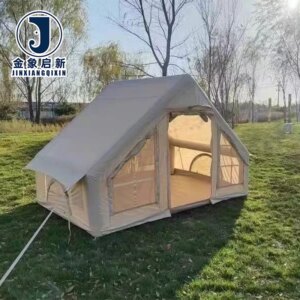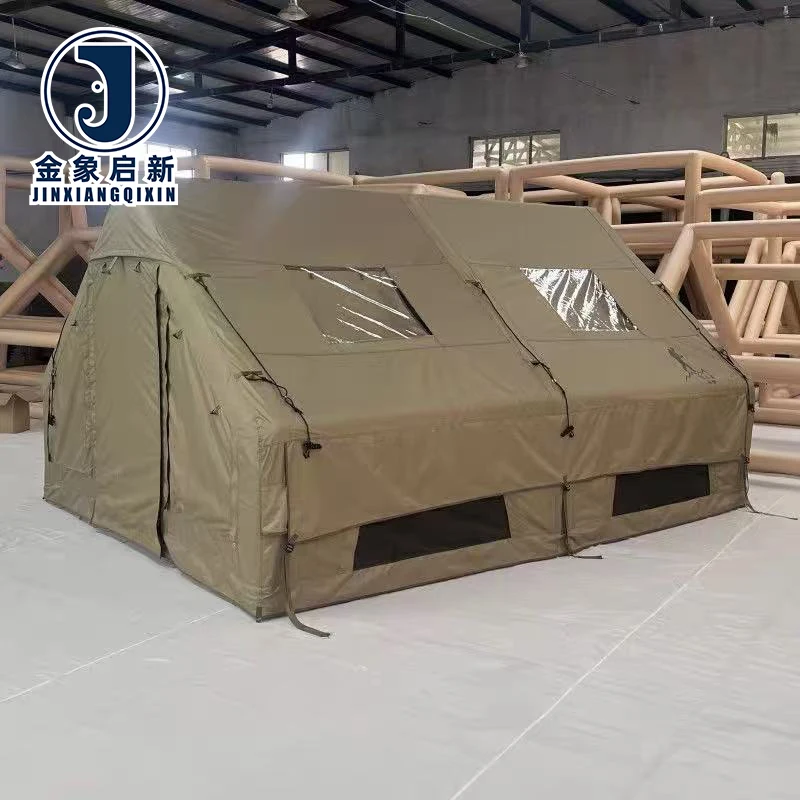
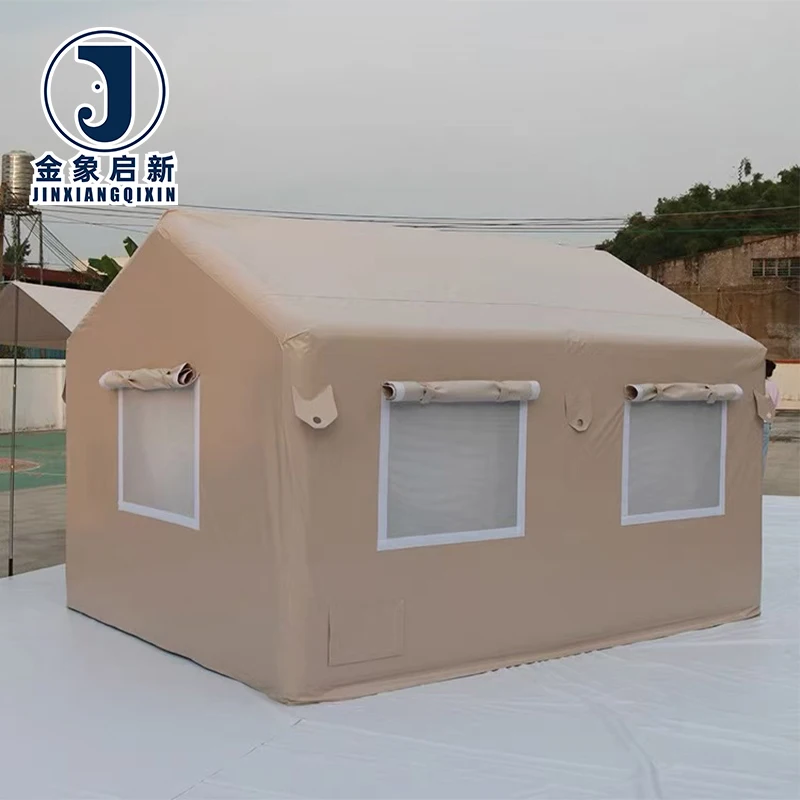
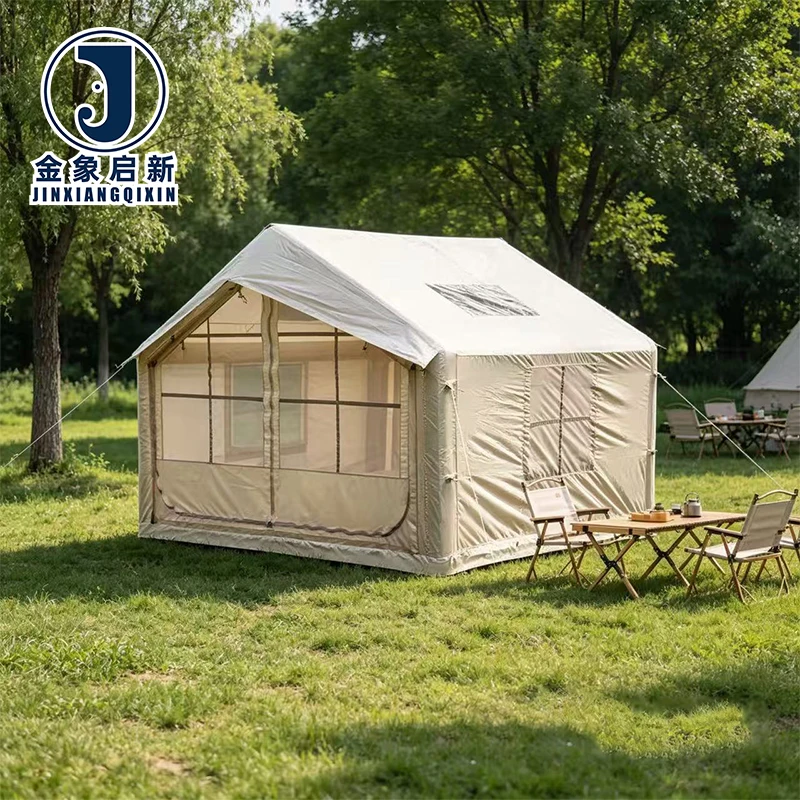
Description
Consistent Roll Stock — Every batch of PVC tarpaulin for inflatable tent production is tracked against a master colour reference, with coating weight verified before release to eliminate lot-to-lot variation across your volume order.
Technical Specifications
| Parameter | Value |
|---|---|
| Product Type | Inflatable Tent Fabric / Inflatable Shelter |
| Core Material | PVC Tarpaulin |
| Waterproof Rating | Minimum 3000mm water column |
| UV Resistance | 400 hours accelerated aging test (grade not explicitly classified) |
| Tear Strength Standard | Tested per ASTM D751 (grade not stated in source) |
| Wind Load Resistance | Up to 12m/s |
| Temperature Range | -10°C to 40°C |
| Dimensional Tolerance | ±2cm for large structures |
| Construction | Single-layer, inflatable |
| Customization Options | Dimensions, color, ventilation configurations, reinforcement points, pattern printing |
| Sample Lead Time | 7-10 days |
| Production Lead Time | 15-20 days for non-custom orders |
| Inflation Test Protocol | 24-hour pressure test, environmental simulation, structural load test |
| Certifications | ISO9001, ISO14001, ISO45001, CE, ASTM D751 |
Application Suitability
| Application | Exposure & Requirement |
|---|---|
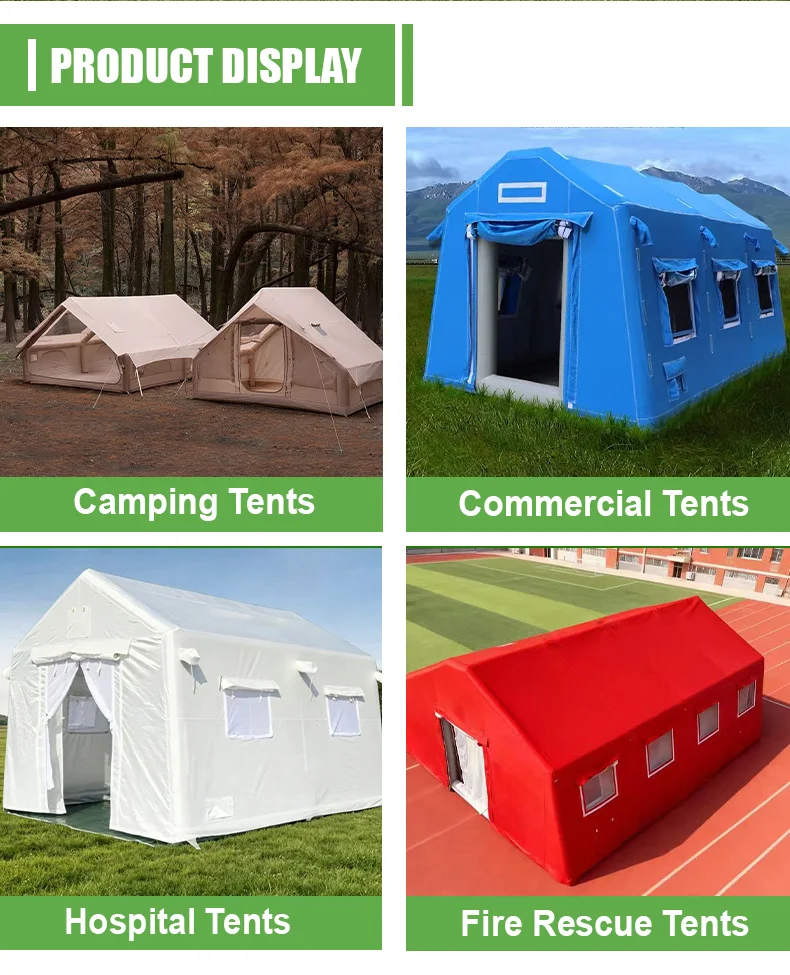
| Tent and inflatable manufacturers buying PVC fabric by the roll | Air-beam shelter production requiring consistent fabric weldability, roll-to-roll colour match, and bulk supply for production scheduling |
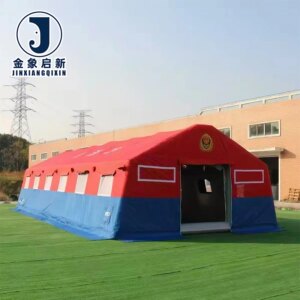
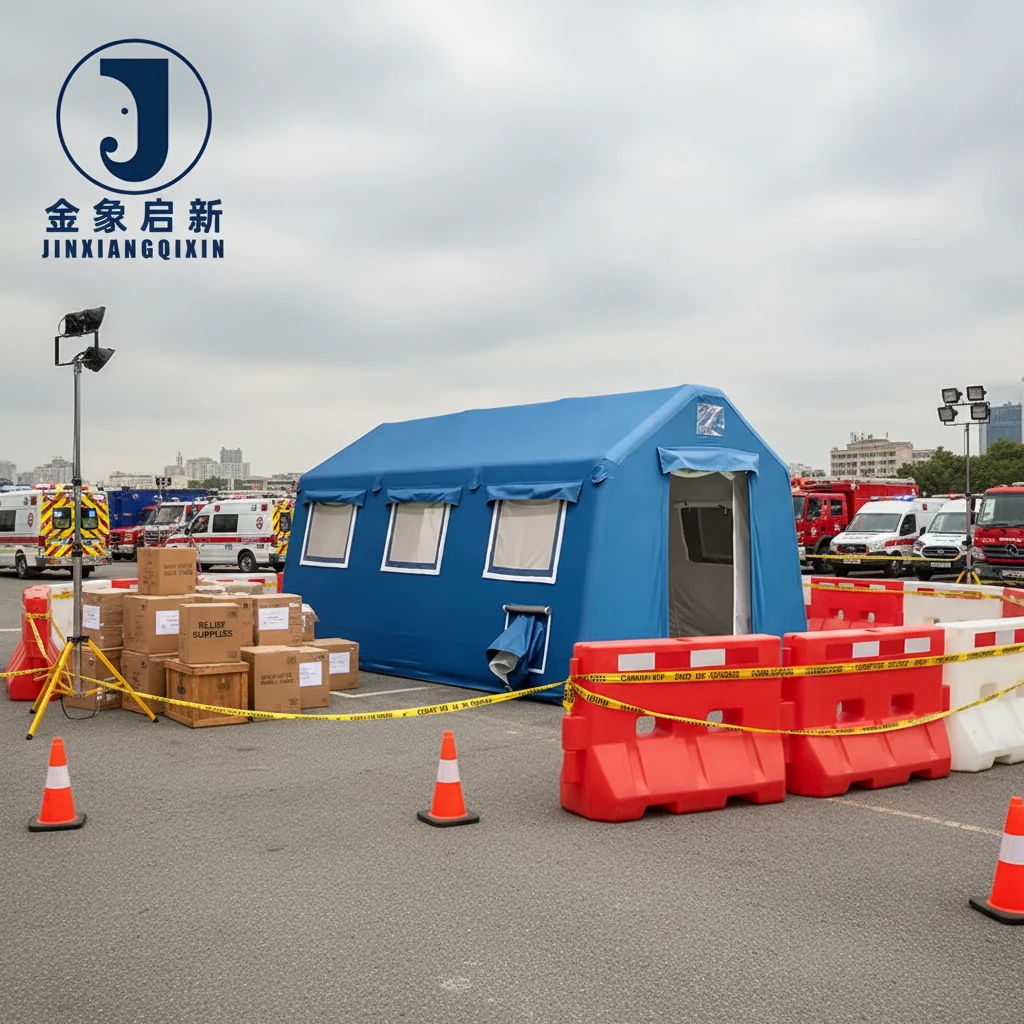
| Disaster relief procurement agencies | High-volume inflatable medical and command tents demanding rapid container loading, waterproof membrane integrity, and verified UV treatment |
| Industrial contractors for remote site operations | Temporary shelters exposed to wind loads, temperature fluctuation, and repeated inflation/deflation cycles requiring tear-resistant seams |
Why Roll-to-Roll Colour Consistency Matters for Inflatable Tent Fabric
Matching colour reference at the coating stage prevents visible drift across panels sewn or welded from different rolls.
When an inflatable tent is assembled from multiple rolls of PVC tarpaulin, even a slight shade variation becomes obvious once the panels are joined side by side under natural light. This is one of the most common complaints from fabricators who receive a bulk inflatable tent roll shipment and discover that panels from different rolls do not match [NEED_CITE: colour tolerance standards for coated fabric batches]. The issue is not merely cosmetic — inconsistent colour often signals inconsistent coating weight, which then affects weld strength and waterproof integrity at the seams. Controlling pigment dispersion and coating thickness at every production stage is the only reliable way to guarantee that roll number three matches roll number thirty in the same order.
Stock Grades and Widths Available for Inflatable Shelter Production
Inflatable tent manufacturers need PVC tarpaulin supplied in widths that minimize seam count across large panels. Our roll stock is available in widths suited to air-beam tent fabrication, reducing the number of welded joints that could become leak points under inflation pressure. The stock grades cover the range of GSM weights typically specified for inflatable camping tents and large disaster relief shelters, allowing you to select the weight that balances structural rigidity against pack weight for your end product. Each inflatable tent roll is produced on dedicated coating lines with process controls that maintain uniform thickness from core to edge.
Batch Consistency Across Volume Orders
When you order multiple containers of inflatable tent roll stock, the coating weight, surface finish, and colour reference must remain identical from the first roll to the last. Our production scheduling groups your entire order into a single coating run wherever possible, eliminating the risk of batch-to-batch drift [NEED_CITE: PVC coating batch consistency protocols for industrial fabric]. This matters most when your production line is cutting and welding panels continuously — a change in surface texture or plasticizer content between batches can alter your heat-sealing parameters mid-run, causing scrap and downtime. Our QA records track coating weight per roll against the specification sheet so you can verify consistency upon receipt.
How Material Properties Translate to Inflatable Tent Performance
The waterproof rating of minimum 3000mm water column ensures that the PVC tarpaulin resists moisture intrusion even under sustained rainfall and ground contact, which is critical for disaster relief shelters deployed on wet terrain. The UV treatment validated through 400 hours of accelerated aging protects the fabric surface from degradation during extended outdoor exposure, though the specific grade should be confirmed against your target market’s requirements. Tear strength tested per ASTM D751 provides a standardized benchmark for comparing fabric durability, particularly at stress points where air beams flex during inflation and wind loading. The operational temperature range of -10°C to 40°C defines the boundary conditions — below -10°C the PVC coating can become brittle and crack at fold lines, while above 40°C the material softens and may lose dimensional stability under inflation pressure [NEED_CITE: PVC coated fabric temperature performance boundaries for inflatable structures].
The Hidden Cost of Specifying Rolls Without Coating Verification
A roll that arrives lighter than the quoted GSM means the coating is thinner than specified, and this shortfall shows up first at the welded seams where the fabric flexes most during inflation cycles. Thinner coating also reduces the waterproof margin, so a shelter that tests fine in the factory may leak under sustained rain in the field. When flame retardant or anti-static treatment is claimed without a supporting test report, the entire batch can be rejected at site inspection, leaving your production schedule stalled and your client exposed [NEED_CITE: ASTM D751 test compliance for coated fabric in temporary structures]. Colour variation between rolls forces fabricators to either accept mismatched panels or sort and re-cut, wasting material and labour on an order that should have been production-ready on arrival.
Why Procure Inflatable Tent Roll Stock Through This Facility
Nearly 30 years of focused coating fabric production means the process parameters for PVC tarpaulin are established through long operational experience, not trial and error on your order. Three full production lines and 36 sets of professional equipment support the bulk roll capacity required for container-volume inflatable tent fabric orders with reliable dispatch timelines. A 10-person R&D team handles sample development for custom widths, colours, and surface finishes, with samples typically ready within 7-10 days for your approval before production begins. Dedicated QA/QC inspection at every production stage — including 100% inspection before shipment — ensures that each roll leaving the facility matches the specification sheet you approved. [NEED_CITE: ISO9001 quality management system for coated fabric manufacturing]
Documentation & Verification
- Material specification sheet stating PVC base fabric denier, coating weight, colour reference, and GSM per roll batch
- Test report for UV aging performance issued against the specific production batch
- Pre-shipment inspection record with 100% roll inspection and coating weight verification
- Roll packing list detailing roll count, individual weight, and container loading plan
- Certificate of origin and full customs documentation for international roll-stock export
Fabrication, Handling & Storage
- Heat-seal temperature and dwell time must be calibrated to the specific PVC coating weight before welding air-beam seams
- Store rolls upright on pallets in a shaded, ventilated area to prevent surface coating transfer between layers
- Allow rolls to acclimate to workshop temperature before unrolling to prevent creasing in cold-stiffened PVC
- Use compatible PVC adhesive and primer for field repairs on inflatable tent panels to maintain waterproof integrity
- Plan cutting layout to maximize panel yield from each roll width and minimize offcut waste at the selvage
Request a Quotation for Inflatable Tent Roll Stock
To prepare an accurate quotation, provide your target GSM weight, required roll width, annual volume estimate, and colour reference or RAL code. If your end market mandates a specific flame retardant grade or anti-static classification for inflatable shelters, state the standard so we can confirm availability and include the relevant test report with your documentation package. Specify whether you require standard stock rolls or custom width and length to optimize your cutting line utilization.
Frequently Asked Questions
Q: How do you guarantee colour consistency across multiple rolls in a single bulk order?
A: We group your full order into a single coating run and control pigment dispersion against a master colour reference at every production stage. Each roll is inspected against this reference before release. Pre-shipment inspection records include batch-specific colour verification so you can confirm match upon arrival.
Q: What stock widths and roll lengths are available for inflatable tent fabric?
A: Stock widths cover the range typically used in inflatable shelter panel fabrication, minimizing seam count on large structures. Custom widths can be ordered in volume with a dedicated coating run. Provide your panel cutting layout and we will recommend the roll width that maximizes material yield.
Q: How can I verify the GSM of each roll upon arrival matches the quotation specification?
A: Each shipment includes a pre-shipment inspection record with coating weight verified per roll. You can conduct a spot-check using a calibrated scale and sample cutter on arrival. Any discrepancy against the specification sheet is documented and resolved before dispatch.
Q: What is the test basis for UV resistance, and how does it translate to field exposure?
A: UV resistance is validated through a 400-hour accelerated aging test. The specific grade classification is not stated in the standard test, so we recommend confirming the required UV performance level for your target market and end-use conditions before placing your order.
Q: How are rolls packed and loaded into containers to prevent coating damage during ocean freight?
A: Rolls are packed upright on pallets with protective wrapping to prevent surface abrasion and coating transfer during transit. A detailed roll packing list specifies roll count, weight, and container loading plan so you can verify shipment completeness and condition upon arrival.