
Description
Bulk Consistency Guaranteed — every 600gsm roll of PVC laminated canvas tarpaulin undergoes weight verification and 100% pre-shipment inspection before container loading, so the specification on your purchase order matches what arrives at your warehouse.
Technical Specifications
| Parameter | Value |
|---|---|
| Product Type | Canvas Tarpaulin |
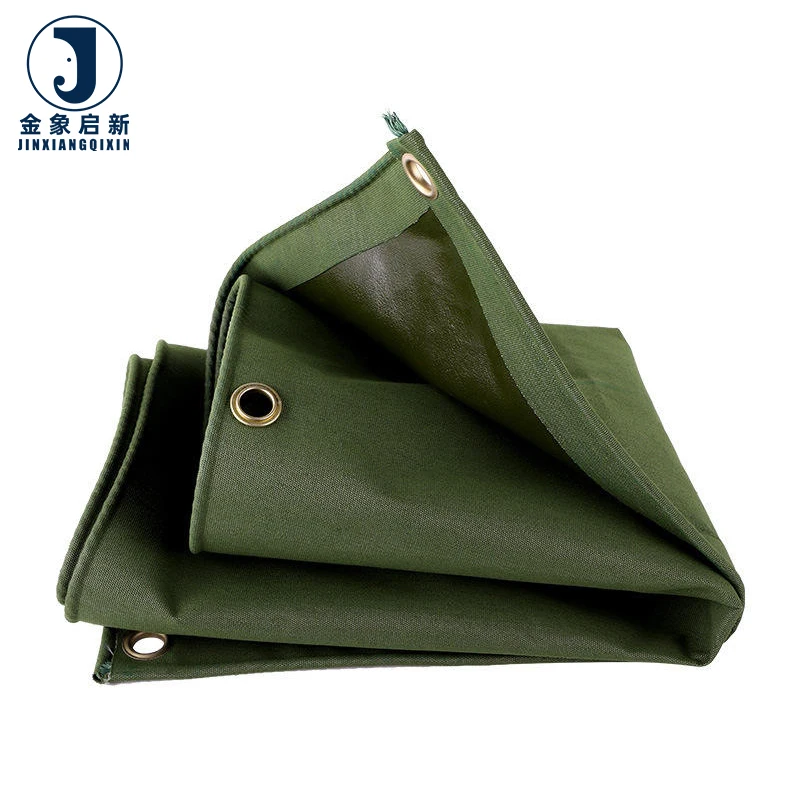
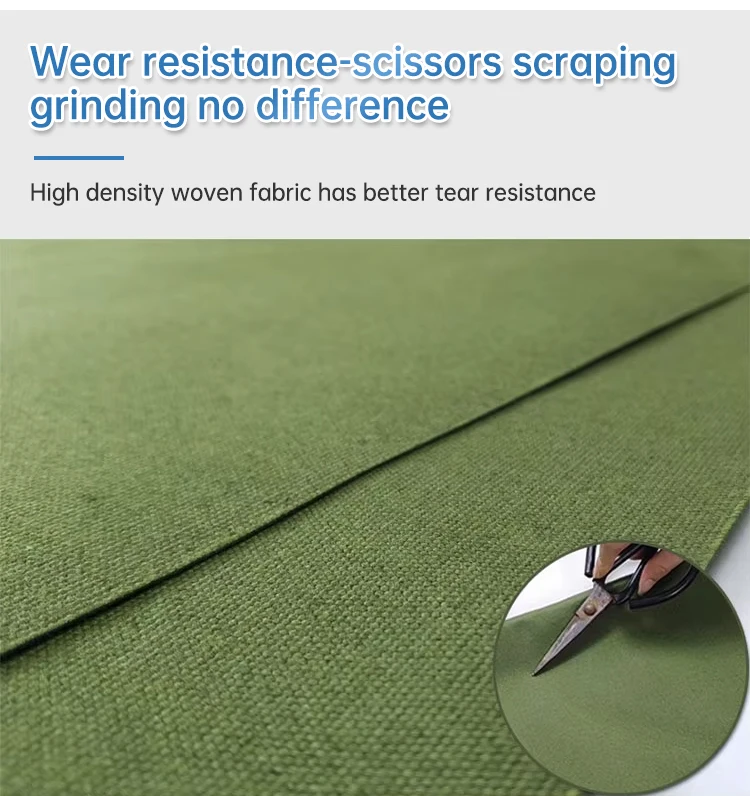
| Material | Polyester-cotton industrial textile base with 8-12 strands of fine cotton yarn |
| Weight | 600 GSM |
| Thickness | 0.5 mm / 0.6 mm / 0.7 mm (available in multiple grades — confirm requirement) |
| Roll Width | 2 m |
| Roll Length | 100 m |
| Coating Method | Laminated PVC |
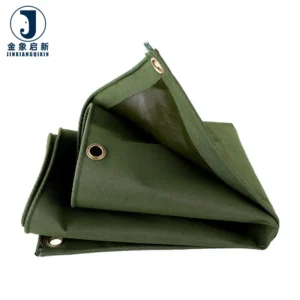
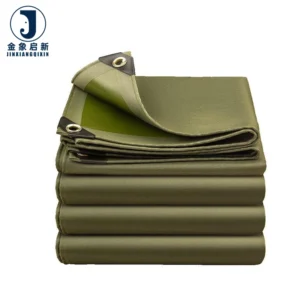
| Color | Army Green Camouflage / Custom options available |
| Eyelets & Hem | Rust-proof aluminum eyelets at 1 m intervals on corners and hem; hems folded, welded, and sewn with poly ropes |
| UV Resistance | Claimed UV resistant (test basis not stated — request test report for your market) |
| Flame Retardant | Not stated — available in flame retardant grades, confirm the grade required for your market |
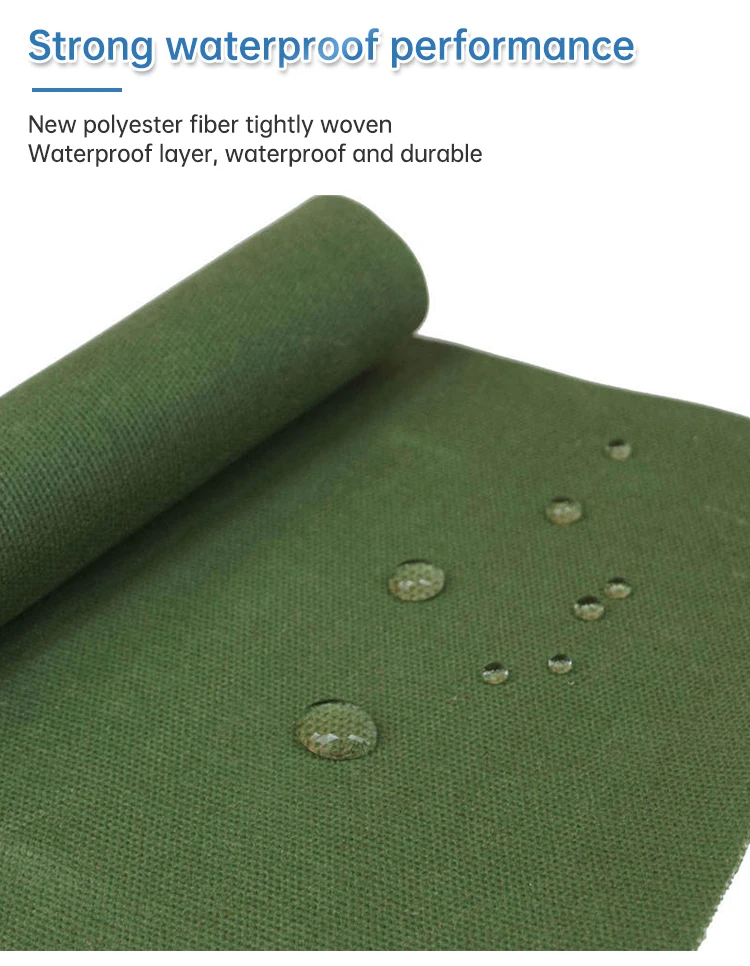
| Waterproofing | Claimed waterproof (test basis not stated — verify with specification sheet) |
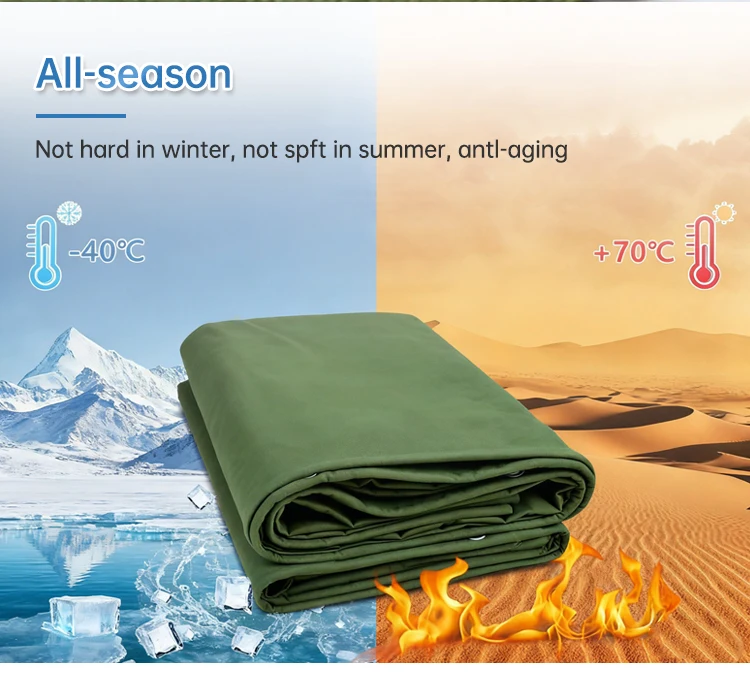
| Key Features | Wear-resistant, corrosion-resistant, tensile-resistant, high- and low-temperature resistant |
Application Suitability
| Application | Exposure & Requirement |
|---|---|
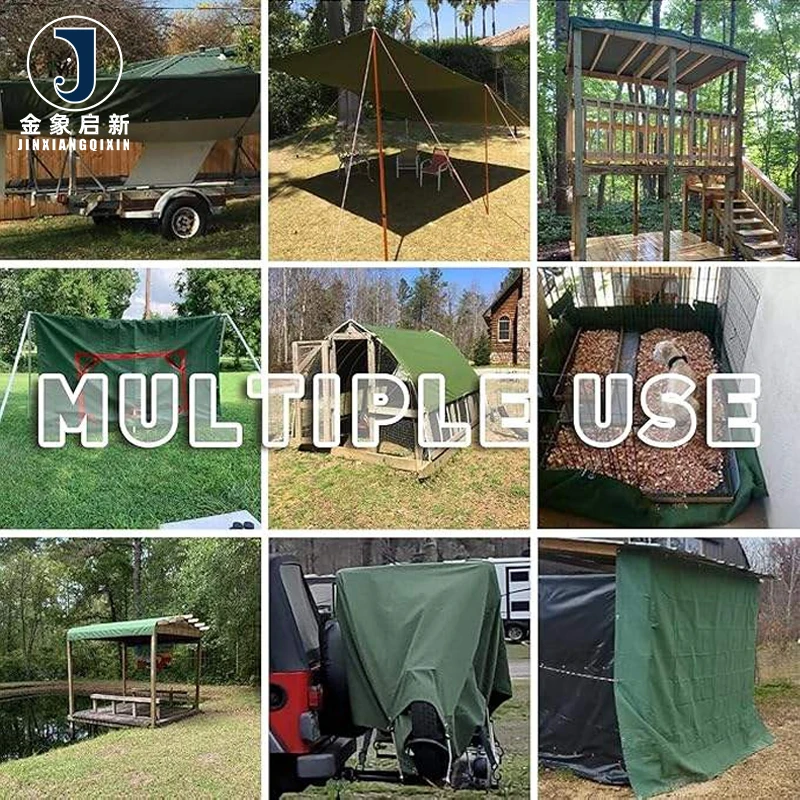
| Tarpaulin distributor stock inventory | Roll-to-roll colour and GSM consistency for resale under one brand |
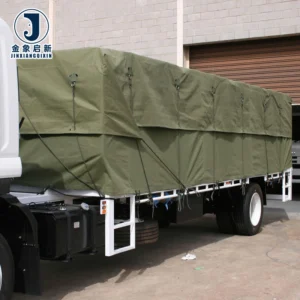
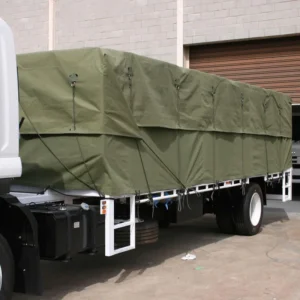
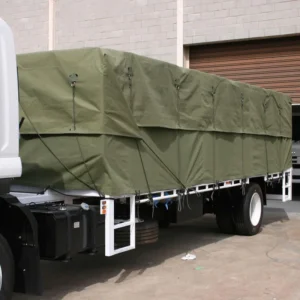
| Truck cover and transport fleet panels | Road abrasion, wind flexing, tie-down load at eyelet points |
| Construction site and equipment covers | Prolonged weather exposure, dust ingress prevention, heavy handling |
| Tent and awning panel fabrication | Dimensional stability during cutting and sewing, colour matching across panels |
| Open-air asphalt and material covers | Heat transfer from substrate, UV exposure, puncture from uneven surfaces |
Why Roll-to-Roll Weight Consistency Matters More Than the Quoted GSM
We verify the actual weight of every PVC laminated canvas tarpaulin roll against the quoted 600gsm before it leaves the production line.
Quotation sheets routinely list a target weight, but what arrives on the dock can fall short when process control during coating and lamination drifts. Distributors who re-sell roll stock absorb the complaint when a converter discovers the material is lighter than expected mid-production run. Transport fleets specifying canvas tarpaulin for side curtains find that under-weight fabric tears at the eyelet reinforcement points far earlier than it should. The cost of replacing installed panels dwarfs any saving on the original roll purchase. [NEED_CITE: ISO 1421 tensile and tear test methods for coated fabrics]
Stock Roll Dimensions Built for Container Efficiency
The standard 2 m × 100 m format allows warehouse racking and container loading plans to be calculated with precision. Roll weight per unit stays within handling limits for standard forklifts, and the 2 m width suits the cutting tables most converters already operate. For buyers stocking canvas tarpaulin roll inventory across multiple colourways, this uniformity simplifies container space planning and reduces dead freight.
Colour Matching Across an Entire Shipment
Batch-to-batch shade variation is one of the most visible defects once panels are installed side by side on a truck or awning frame. Our in-process QA checkpoints compare every roll against the confirmed colour reference before it is wrapped and staged for loading. If a distributor orders twenty rolls of army green camouflage, all twenty ship from the same confirmed production batch. [NEED_CITE: colour fastness evaluation methods for coated textile surfaces]
Reading the Specification Sheet Beyond the GSM Figure
The 600 GSM figure combines the polyester-cotton base fabric and the laminated PVC coating, but it is the base fabric’s 8-12 strand cotton yarn construction that determines how the material behaves under tension and at cut edges. A heavier base yarn delivers higher tear propagation resistance, which matters when a truck cover flexes repeatedly at the same fold line. Lamination as a coating method bonds the PVC film to the textile under heat and pressure, producing a tighter seal between coating and substrate compared to dip-coating — this directly affects how well the material holds up during heat-welding at seam lines. Thickness options of 0.5 mm, 0.6 mm, and 0.7 mm let buyers match the material to the severity of the mechanical abrasion it will face: lighter grades suit temporary covers while heavier grades handle permanent installation on transport fleets. The 2 m roll width balances cutting yield against the number of weld seams needed for large-format covers.
What Happens When Colour Consistency Is Not Enforced at the Mill
A fleet operator orders replacement side curtain panels for six trailers. Rolls from different dye lots produce a visible shade shift across adjacent panels once fitted. The operator refuses delivery, the converter absorbs the re-cut cost, and the distributor loses the account. This chain of failure traces back to a single missed checkpoint: no side-by-side colour comparison before rolls were packed together. [NEED_CITE: industry standards for batch colour tolerance in coated textiles]
Why Procurement Teams Choose This Supply Line
Three full production lines running dedicated coating and lamination processes mean bulk canvas tarpaulin roll orders are fulfilled from capacity built for volume, not squeezed between small custom runs. A 10-person R&D team handles width, colour, and specification adjustments so that custom rolls do not face the long lead times typically associated with non-stock items. Every roll passes through stage-by-stage QA and a final 100% pre-shipment inspection, catching GSM deviation and surface defects before dispatch. Sample development for custom widths or printed branding is completed within days, allowing buyers to approve physical material before committing to a container load. The documentation package — from specification sheets to certificate of origin — supports smooth customs clearance across importing markets.
Documentation & Verification
- Material specification sheet confirming 600 GSM, base fabric composition, and laminated coating method
- Pre-shipment inspection record with actual measured weight per roll against the agreed specification
- Roll packing list detailing roll count, individual dimensions, and container loading position
- Certificate of origin and customs export documentation for the destination country
- Test reports for UV and flame retardant treatments available upon request for specified grades
Fabrication, Handling & Storage
- Heat-weld seam temperature must match the laminated PVC coating — verify with a test weld on 600 GSM offcuts before production runs
- Rust-proof aluminum eyelets at 1 m intervals distribute tie-down load; reinforce high-stress corner points with additional welded patches
- Store 2 m × 100 m rolls horizontally on pallets to prevent edge creasing that shows through after unrolling
- When cutting army green camouflage panels, align pattern direction across consecutive rolls to maintain visual continuity on finished covers
- Use neutral-pH cleaners on the PVC surface; solvent-based products can degrade the laminated coating bond over time
Before You Send an Enquiry
To help us quote accurately, provide the target market’s fire safety or compliance requirements so we can match the correct treatment grade. Specify whether you need rolls in the standard 2 m × 100 m format or a custom width and length, along with your annual volume estimate so we can plan production allocation. If your end-use requires printed branding or a specific Pantone colour match, share the artwork or colour reference at the sample request stage.
Frequently Asked Questions
Q: What roll widths and lengths are held in stock for immediate shipment?
A: Standard inventory carries canvas tarpaulin in 2 m × 100 m rolls at 600 GSM. Custom widths and shorter or longer roll lengths are produced to order. Stock rolls are staged for container loading as soon as pre-shipment inspection is cleared, while custom dimensions follow a confirmed production schedule after sample approval.
Q: How do you ensure colour and weight consistency across multiple rolls in one order?
A: Every roll in a single order is drawn from the same confirmed production batch. In-process QA checkpoints verify GSM against the 600 GSM specification and compare shade against the approved colour reference. A 100% pre-shipment inspection record accompanies each batch, documenting the actual measured values per roll.
Q: Can I order custom width or printed branding, and what is the minimum?
A: Custom widths, lengths, colours, and printed branding are all available alongside stock rolls. Minimum order quantities depend on the specific customisation requested and are confirmed at the quotation stage. Our R&D team develops physical samples within days so you can approve material and print quality before full production begins.
Q: How is container loading calculated by roll count and total weight?
A: Container plans are built on the exact roll count, individual roll dimensions, and total gross weight. The standard 2 m × 100 m format is optimised for palletised loading in standard containers. A detailed roll packing list is provided before dispatch, showing position and weight distribution to maximise freight efficiency.
Q: What documentation ships with each order — spec sheet, test report, certificate of origin?
A: Each shipment includes a material specification sheet confirming GSM, base fabric, and coating method, a pre-shipment inspection record, a roll packing list, and a certificate of origin. Test reports for UV resistance or flame retardant treatments are supplied for orders where those grades have been specified and confirmed at the sample stage.