Description
Batch-Matched Roll Consistency — Every PE tarpaulin roll in a single container order is verified for colour reference and coating weight before dispatch, eliminating the visible variation that forces installers to reject material on arrival.
Technical Specifications
| Parameter | Value |
|---|---|
| Product Type | PVC Tarpaulin / PE Tarpaulin (Truck Cover) |
| Coating Material | HDPE weaving with LDPE lamination on both sides |
| Weight (GSM) | 50gr/m² ~ 220gr/m² available — confirm the grade for your application |
| Total Thickness | 0.2–0.4 mm / 8 mil–16 mil |
| Mesh Count | 8×8 (lightweight), 10×10 (medium), 12×12 (heavy-duty) |
| Tensile Strength (N/5cm) | Meridian 300–1200 / Latitude 250–1000 (varies by grade, test basis not stated) |
| Roll Width Options | 2 m, 4 m, 6 m (6ft, 8ft, 10ft, 12ft) |
| Roll Length | 100 yards, 100 meters, or custom |
| Available Colors | Blue, Blue/Orange, Green, Grey, Black, Clear, Grey/Green, Orange, or custom |
| Surface Finish | Matte, woven pattern |
| Waterproof Rating | Fully waterproof and washable |
| UV Treatment | UV treatment available — confirm the grade required for your market |
| Anti-Mildew | Mildew proof and anti-aging (grade not stated) |
| Finished Edge | PP rope reinforced hem on all four edges |
| Eyelets | Galvanized eyelets every 3ft or 1 m interval |
| Corner Reinforcement | Reinforced plastic corners |
| Certifications | ISO and CE (company-level) |
Application Suitability
| Application | Exposure & Requirement |
|---|---|
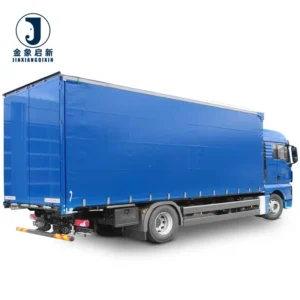
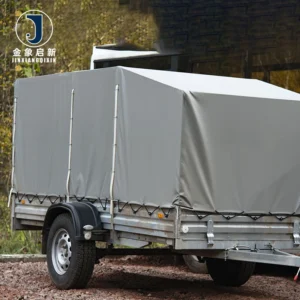
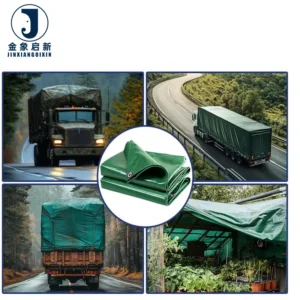
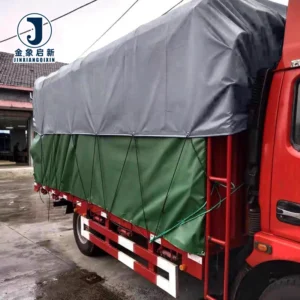
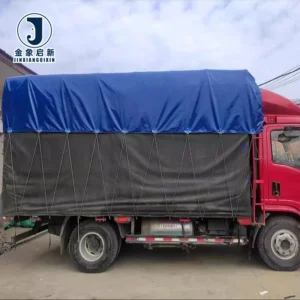
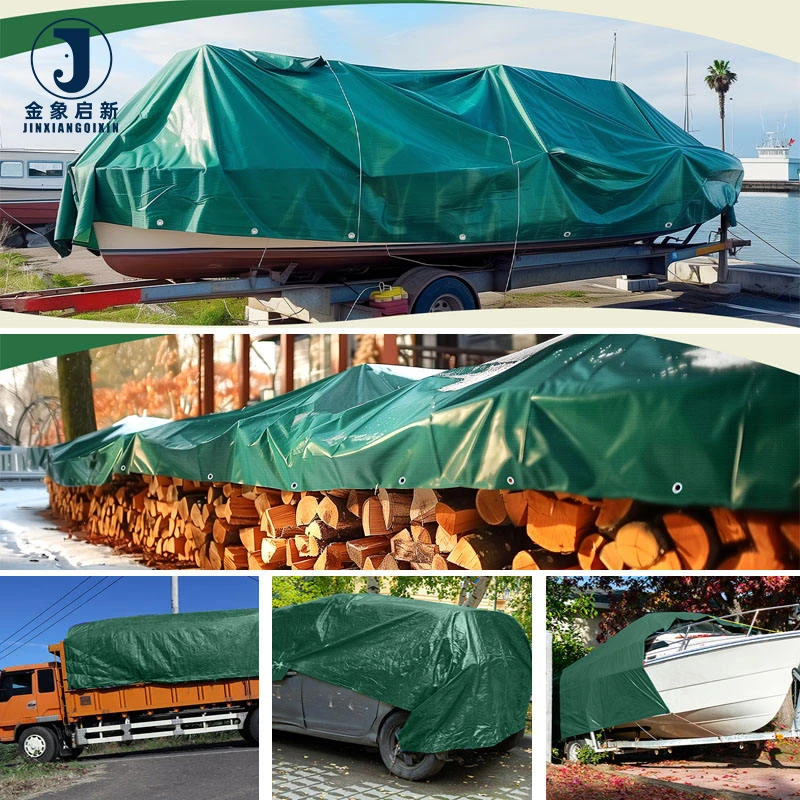
| Truck and trailer load cover | Road abrasion, wind flex, UV exposure, frequent tie-down tension at eyelets |
| Tarpaulin distributor stock | Shelf-ready rolls in multiple widths and colours for regional resale consistency |
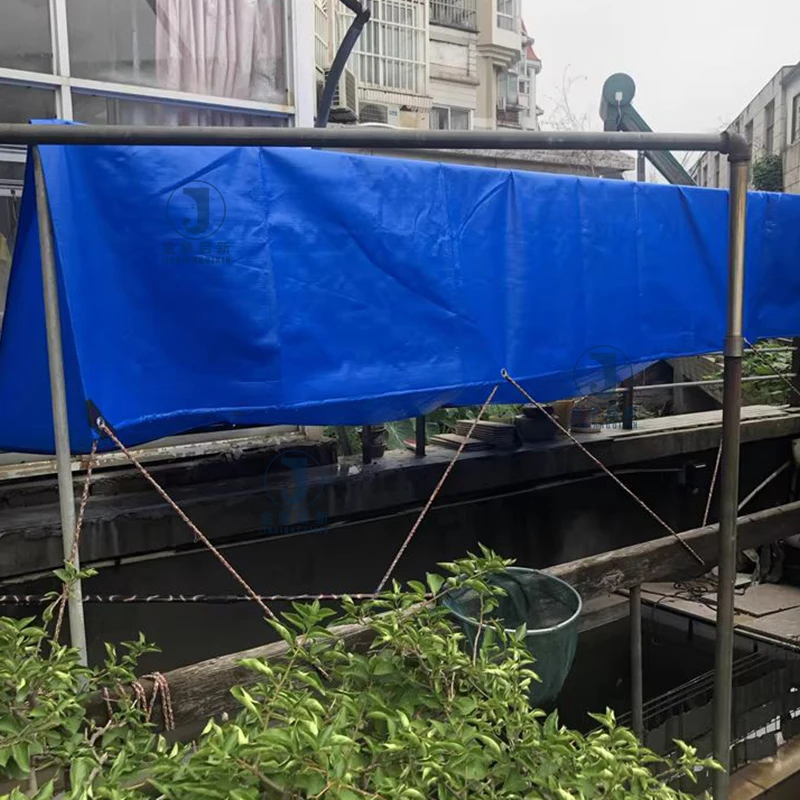
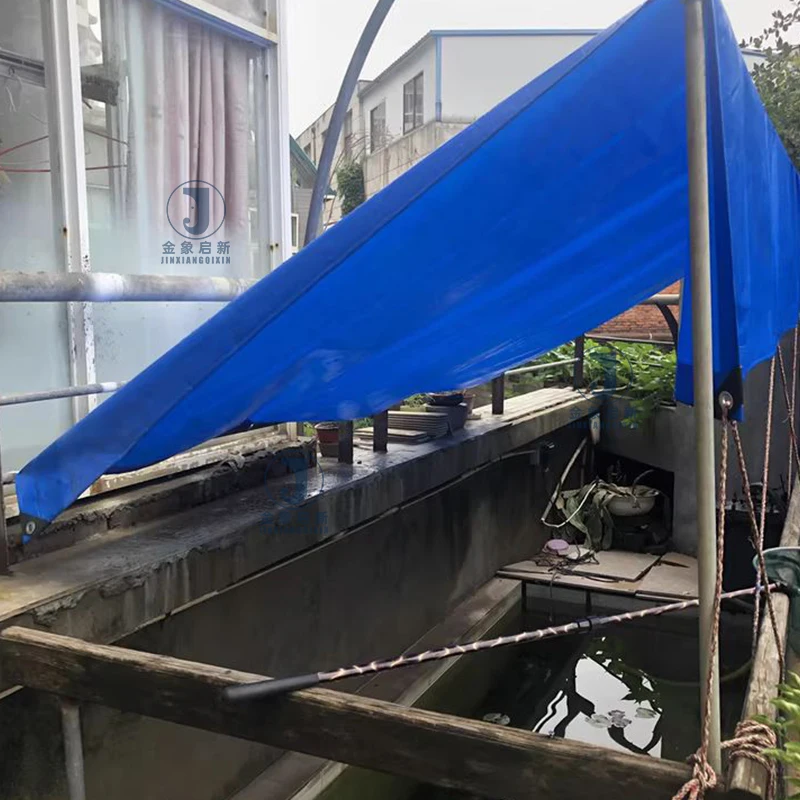
| Agricultural and aquaculture covering | Continuous moisture contact, mildew risk, lightweight handling for seasonal deployment |
| Warehouse and industrial protective cover | Dust and water ingress prevention, forklift contact abrasion, indoor or outdoor storage |
| Transport fleet standardisation | Uniform specification across multiple vehicle types, batch-matched colour for fleet identity |
Why Roll-to-Roll Colour Drift Costs More Than the Fabric Itself
Colour consistency across every roll in a shipment is a production-control problem, not a dye problem.
When a transport fleet orders twenty rolls of PVC Truck Cover material in the same grey, a visible shade shift between rolls three and fourteen forces the fabricator to either reject the batch or install mismatched panels side by side. The rework cost — labour, freight, delayed dispatch — routinely exceeds the material cost of the affected rolls. From what I have traced through buyer complaints, the root cause is almost always inconsistent masterbatch dosing at the lamination stage rather than a supplier switching pigment suppliers mid-order [NEED_CITE: batch colour control methods in LDPE lamination].
Volume Loading and Container Planning for Bulk Buyers
A full container order of PE tarpaulin roll stock requires precise weight and dimension planning to avoid dead space or overweight penalties at port. Rolls in the 50gr/m² to 220gr/m² range vary substantially in per-roll weight, and mixing lightweight agricultural grades with heavy-duty transport grades in one container demands a loading schedule that balances axle weight limits with cubic capacity. Wholesale buyers benefit from a packing list that states roll count, individual roll weight, and total net weight before the container is sealed.
Roll Width Selection and Downstream Fabrication Yield
Choosing between 2 m, 4 m, and 6 m roll widths is a yield calculation, not just a coverage question. A fabricator cutting finished PVC Truck Cover panels from 4 m stock for a standard 2.5 m wide trailer will generate less offcut waste than cutting the same panels from 6 m stock, where the excess strip is too narrow to use for secondary products. Conversely, buyers producing wide-format pond liners or agricultural covers gain seam reduction by selecting the widest available roll, eliminating a welded joint that would otherwise be a failure point under tension [NEED_CITE: welded seam strength versus base fabric tensile in HDPE laminated tarpaulins].
How Mesh Count, GSM, and Lamination Interact
The relationship between mesh count and GSM is not linear, and reading one without the other leads to specification errors. An 8×8 mesh at 90gr/m² relies on heavier LDPE coating to reach its target weight, meaning the base fabric contributes less to tensile and tear performance. A 12×12 mesh at the same weight distributes more yarn across both directions, producing a fabric where the woven structure — not the coating — carries the mechanical load. For truck cover applications where tie-down straps concentrate stress at eyelet rows, a higher mesh count provides better resistance to tear propagation from the eyelet hole outward. Thickness alone (0.2 mm versus 0.4 mm) does not predict this behaviour; two rolls at identical thickness but different mesh densities will perform differently under the same strap tension.
The Hidden Cost of Ordering by GSM Without Mesh Verification
Buyers who specify PVC Truck Cover material solely by GSM and accept delivery without mesh count verification expose themselves to a material that meets the weight target but fails prematurely at stress points. A lightweight 8×8 mesh loaded with extra LDPE coating to hit 150gr/m² will pass a scale check but crack along fold lines in cold weather where the thicker coating becomes brittle. The coating carries weight without carrying strength. This failure pattern appears most often in transport cover applications where the fabric is folded and unfolded daily, and the first visible sign is a hairline crack along the hem fold that propagates into a full tear within weeks [NEED_CITE: cold-temperature embrittlement of LDPE lamination on woven HDPE substrates].
Why Procurement Teams Source Roll Stock Here
Three full production lines running HDPE weaving and LDPE lamination allow simultaneous production of multiple width and colour variants within a single order cycle, so a distributor can consolidate lightweight agricultural rolls and heavy-duty transport grades in one shipment without waiting for sequential production runs.
A dedicated ten-person R&D team develops custom colour matches and sample rolls within days, giving buyers a physical reference to approve before the full batch enters production — eliminating the guesswork that leads to colour disputes on arrival.
Dedicated QA/QC at every production stage includes GSM sampling from each roll and colour comparison against the approved reference under standardised lighting, with a pre-shipment inspection record documenting the results per roll.
Roll packing lists state individual roll dimensions, net weight, and gross weight, enabling buyers to plan container loading and warehouse slotting before the shipment leaves the facility.
The material specification sheet issued with each order documents the base fabric denier, mesh count, coating type, and colour reference for traceability across the supply chain.
Documentation & Verification
- GSM verification record per roll matched against the quotation grade before dispatch
- Colour reference sheet confirming batch-to-batch shade consistency under controlled lighting
- Roll packing list with net weight, gross weight, and dimensions for container planning
- Material specification sheet stating base fabric mesh, LDPE coating weight, and colour code
- Pre-shipment inspection report documenting eyelet spacing, hem reinforcement, and corner patches on finished cuts
- Certificate of origin and customs documentation for cross-border wholesale shipments
Fabrication, Handling & Storage
- Heat-seal LDPE-laminated rolls at lower platen temperatures than PVC to avoid coating melt-through at the weld line
- Space galvanized eyelets at 1 m intervals on finished truck covers to distribute tie-down strap load across the PP rope hem
- Store rolls upright on pallets to prevent flat-spot deformation on the outer wrap of heavy-duty 220gr/m² grades
- Unfold cold-stored tarpaulin sheets slowly — LDPE lamination on HDPE weave becomes stiff below freezing and may crack at fold creases
- Cut panels from 4 m or 6 m rolls using a nesting plan that aligns the machine-direction yarn with the primary stress axis of the finished cover
- Clean matte-surface PE tarpaulin with mild detergent only; solvent-based cleaners can degrade the LDPE lamination bond over repeated use
What We Need to Quote Your Order Accurately
To prepare a specification and sample for your PVC Truck Cover requirement, share the target GSM or mesh count your end use demands, the roll widths and lengths that match your fabrication equipment, and the colour reference or Pantone code for fleet matching. If you need finished cut sizes with eyelets and reinforced hems rather than roll stock, provide the panel dimensions and eyelet spacing so we can calculate material yield and packing. Confirm whether UV treatment or anti-mildew additives are required for your market’s compliance standards.
Frequently Asked Questions
Q: What GSM grades do you stock for truck cover applications?
A: Roll stock spans 50gr/m² through 220gr/m², with lightweight grades suited to agricultural covers and heavy-duty grades specified for transport fleet use. Mesh count options at 8×8, 10×10, and 12×12 interact with GSM to determine actual tear performance. Request a sample at your target weight to verify the mesh-to-coating ratio before committing to a bulk order.
Q: Can I mix different widths and colours in one container?
A: Yes. Production lines run multiple variants concurrently, so a single container can include 2 m, 4 m, and 6 m rolls in different colours. A detailed loading plan with per-roll weight and dimensions is provided before dispatch so you can verify container utilisation and plan warehouse receiving.
Q: How do you guarantee roll-to-roll consistency within an order?
A: Every roll is sampled for GSM and compared against the approved colour reference under standardised lighting before packing. A pre-shipment inspection record documents these results roll by roll. This catches dosing drift and shade variation before the container is sealed rather than after it arrives at your warehouse.
Q: Do you supply rolls, finished covers, or both?
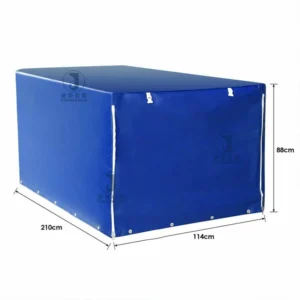
A: Both are available. Roll stock ships in 100-yard or 100-meter lengths at widths up to 6 m. Finished PVC Truck Cover panels are cut to your dimensions with PP rope reinforced hems, galvanized eyelets at your specified spacing, and reinforced plastic corners. Provide panel drawings for a yield-optimised cutting plan.
Q: What is the minimum order for a custom colour?
A: Custom colour runs require a minimum volume to justify masterbatch setup on the lamination line. The exact threshold depends on the roll width and GSM grade selected. Submit your colour reference and target quantity, and the R&D team will confirm feasibility and produce a sample roll for approval before full production begins.