
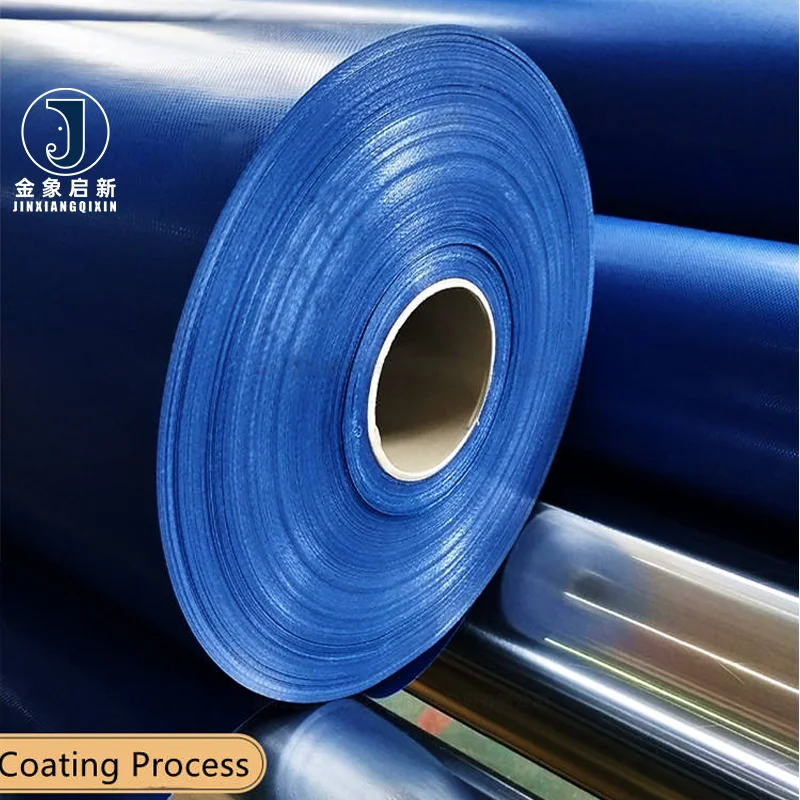
Description
Volume Consistency — Three full production lines verify coating weight and GSM at every stage so roll stock arrives with the same specification across your entire order.
Technical Specifications
| Parameter | Value |
|---|---|
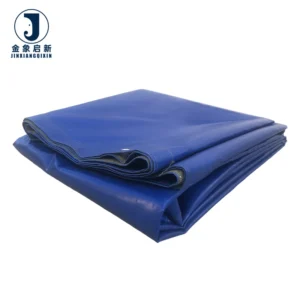
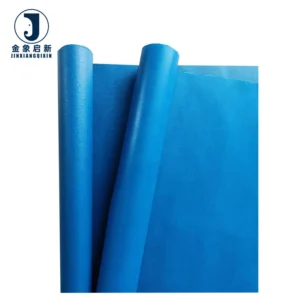
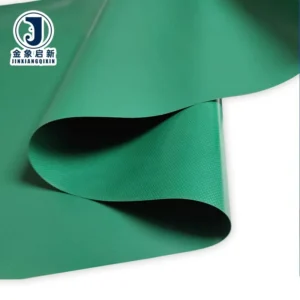
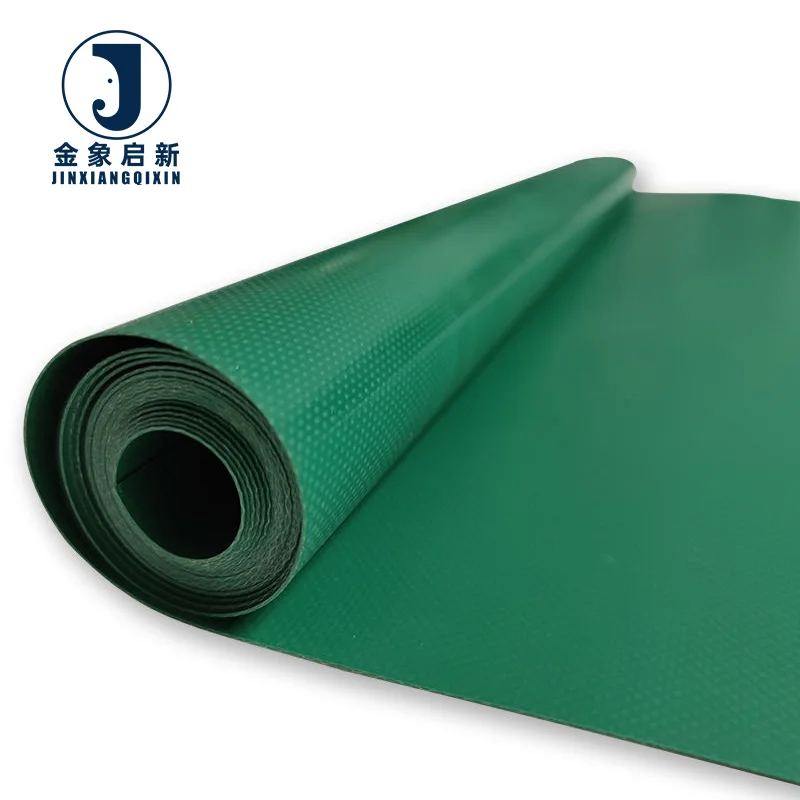
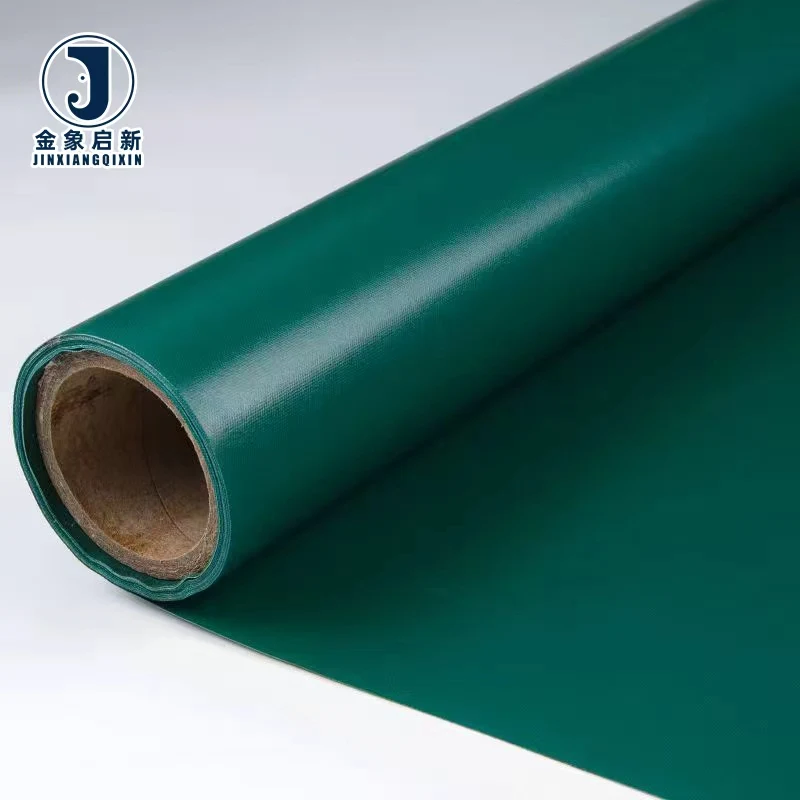
| Product Type | PVC Coated Tarpaulin Roll |
| Coating Material | PVC & polyester |
| Base Fabric Denier Options | 500D×840D, 500D×1000D, 1000D×1000D, 1000D×1300D, 1300D×1300D, 1000D×2000D |
| Mesh Count | 30×19, 20×20, 30×15 (varies by grade) |
| Weight Options | 350, 400, 420, 500, 600, 650, 750, 900 GSM |
| Total Thickness Options | 0.29mm, 0.32mm, 0.38mm, 0.44mm, 0.46mm, 0.55mm, 0.65mm |
| Tensile Strength (Warp) | 1650 N to 3900 N (varies by grade, test standard not stated in source) |
| Tensile Strength (Weft) | 1600 N to 3500 N (varies by grade, test standard not stated in source) |
| Density | 1.15–2.00 g/cm³ |
| Tensile Strength (Material) | 50–80 MPa |
| Brittle Temperature | ≤ -50 to -60°C |
| Softening Temperature | ≥ 80°C |
| Melting Point | 212°C |
| Key Features | Water resistant, waterproof, flame retardant (grade not stated — confirm requirement), anti-UV (test basis not stated — confirm requirement) |
| Standards | ISO, CE |
Application Suitability
| Application | Exposure & Requirement |
|---|---|
| Tarpaulin distributor stock | Regional resale across multiple weight grades requiring batch-to-batch colour and GSM consistency |
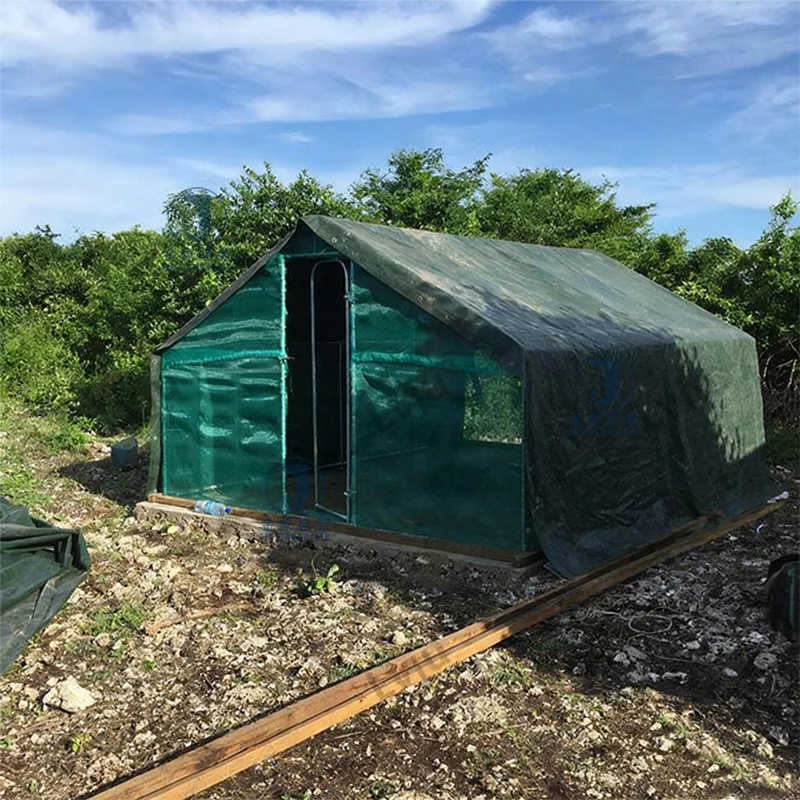
| Tent and awning fabrication | Roll-fed cutting and welding, demanding uniform coating thickness for reliable heat-sealed seams |
| Inflatable structure manufacturing | Continuous roll feed into CNC or die-cutting, needing consistent tensile properties across every linear metre |
| Construction site and equipment covers | Bulk roll procurement for on-site fabrication, exposed to weather, abrasion and UV radiation |
| Truck and trailer cover fabrication | Roll stock cut to model-specific patterns, requiring reliable edge wrapping and reinforcement adhesion |
Why Roll-to-Roll GSM Consistency Matters More Than the Quoted Number
A quoted GSM is meaningless if the actual weight varies across rolls in the same shipment.
Distributors who buy PVC coated tarpaulin roll wholesale regularly face complaints from downstream fabricators: one roll welds cleanly while the next from the same batch delaminates at the seam. The root cause is often a coating weight swing of 30–50 GSM between rolls that were quoted at the same specification [NEED_CITE: coating weight variation and heat-seal reliability in PVC coated fabrics]. When you load a container with multiple rolls, every one of them must match the material specification sheet or your fabrication parameters will not hold. Our in-process QA checks coating weight at every production stage, not just at final inspection, so the GSM on your roll label matches what you actually receive.
Stock Widths and Roll Lengths Built for Container Efficiency
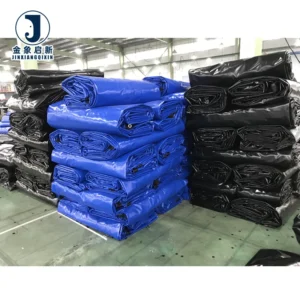
When you are buying PVC tarpaulin roll stock supplier volumes, container loading efficiency directly affects your landed cost per square metre. Rolls are packed in roll packing, bale packing, or carton formats depending on your warehouse handling equipment and downstream cutting setup. Available widths and lengths are selected to maximise container fill rate by both volume and weight, reducing the dead space that inflates freight cost per roll.
Batch Colour Matching Across a Full Container Load
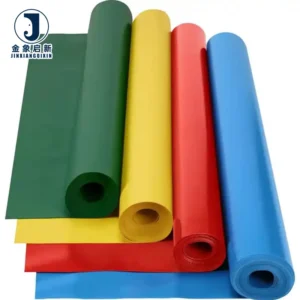
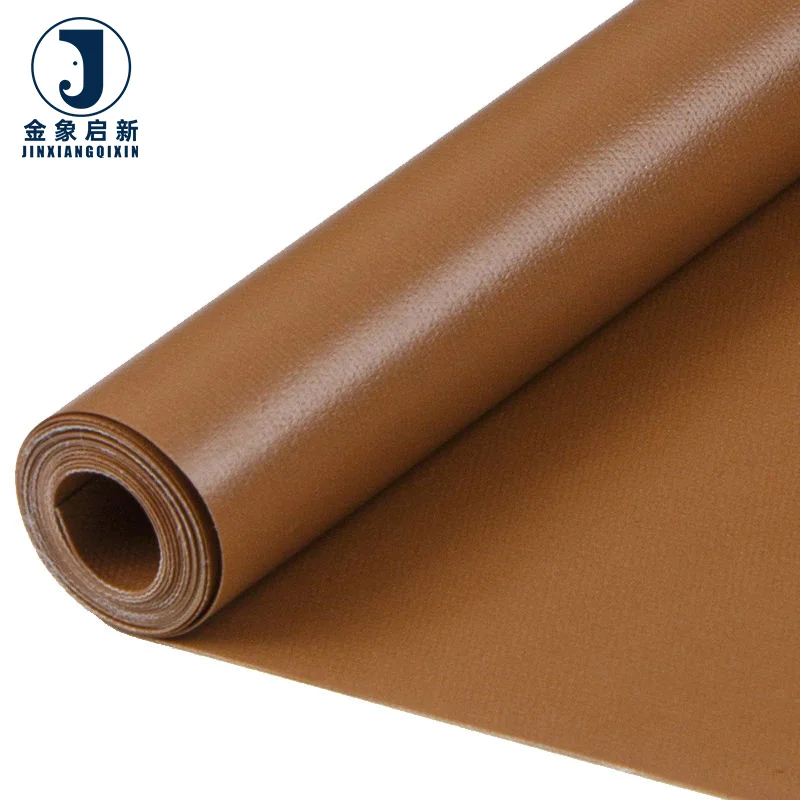
Colour variation between rolls in the same order is one of the most common reasons fabricators reject a shipment. A tent maker installing adjacent panels from two rolls will see any mismatch immediately once the structure is erected in sunlight. Our PVC coated tarpaulin roll wholesale programme controls pigment dosing and coating temperature to hold colour within a tight tolerance across every roll in a single production run [NEED_CITE: colour consistency standards in PVC coated textile manufacturing]. Pre-shipment inspection includes side-by-side colour comparison under controlled lighting before the container is sealed.
How Denier and Mesh Count Interact with GSM
A 650 GSM roll built on a 500D×840D base fabric behaves very differently from a 650 GSM roll on a 1000D×1000D base. The denier determines individual yarn thickness and therefore the tear initiation resistance, while the mesh count defines how those yarns are distributed across each square inch of fabric. A higher denier with a lower mesh count concentrates strength in fewer, thicker yarns, which resists puncture but can allow tear propagation once a yarn breaks. A lower denier with a tighter mesh spreads load across more intersection points, slowing tear spread but offering less puncture resistance. GSM alone tells you how much PVC coating was applied, not how the base fabric will perform under stress. This is why our specification sheets list denier, mesh count and GSM together so you can match the grade to your specific fabrication and end-use requirements.
The Hidden Cost of Specifying on GSM Alone
A buyer who selects rolls based only on the lowest GSM price often discovers downstream that the lighter base fabric cannot hold a welded seam under load. The coating may meet the quoted weight, but if the polyester scrim underneath is undersized for the application, the fabric tears at the weld line before the body of the material fails. Fabricators then face returns, warranty claims, and replacement costs that far exceed the savings from choosing a lower-specification roll [NEED_CITE: weld seam failure versus fabric body failure in coated textiles]. Matching the denier and mesh count to the actual load and flex conditions of the end product eliminates this failure mode at the procurement stage.
Why Procurement Teams Source Roll Stock Here
Our three full production lines run dedicated coating schedules for each GSM grade, so a 500 GSM roll and a 750 GSM roll never share a coating bath on the same day — eliminating cross-contamination of coating weight. A 10-person R&D team develops custom colour samples within days, allowing you to approve the exact shade before the full production run begins. Every roll passes through dedicated QA/QC at each production stage with a full pre-shipment inspection record documenting actual GSM, colour check, and coating adhesion. Roll packing lists detail the exact roll count, weight and dimensions for your container loading plan. ISO and CE certified production processes are supported by full customs documentation and certificates of origin for international shipment.
Documentation & Verification
- Material specification sheet stating exact GSM, base fabric denier and coating weight for every roll grade ordered
- Pre-shipment inspection record with GSM verification and colour consistency check across the batch
- Roll packing list detailing roll count, individual weight and container loading plan for your freight forwarder
- Certificate of origin and full customs documentation support for international roll stock shipments
- UV and flame retardant test reports provided where applicable — confirm the grade required for your market
Fabrication, Handling & Storage
- Heat-seal parameters must match the specific GSM grade — test weld each roll grade before full production runs
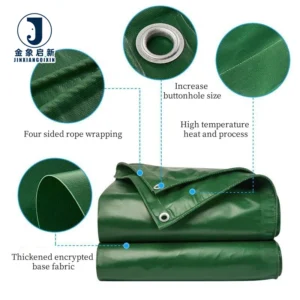
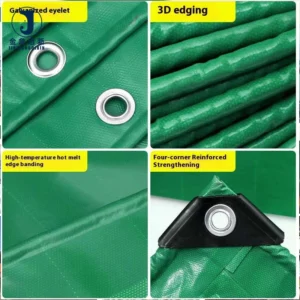
- High temperature heat sealed seamless edge wrapping requires consistent heat input across the full width
- Store rolls upright on pallets to prevent flat-spot deformation that causes tracking issues on unrolling equipment
- Allow cold-stored rolls to reach workshop temperature before unrolling to avoid coating micro-cracking at low temperature
- Cut patterns should account for the specific roll width ordered to maximise material yield and minimise welded seams
- Reinforced corners and 3cm enlarged aluminum alloy buttonholes distribute load at tie-down points on fabricated covers
What We Need to Quote Your Roll Stock Order
Tell us the GSM grade, roll width and total linear metres you need per shipment. If you are fabricating for a specific end use, share the load and exposure conditions so we can recommend the right denier and mesh count. For custom colour orders, a Pantone or RAL reference lets us develop a sample roll for your approval before the production run begins.
Frequently Asked Questions
Q: How is GSM verified on each roll before shipment?
A: Every roll is weighed and measured during pre-shipment inspection. The actual GSM is recorded on the inspection report and compared against the material specification sheet. Rolls that fall outside the stated tolerance are pulled from the shipment before the container is sealed, so you receive only verified material.
Q: What colour consistency tolerance do you hold across rolls in one order?
A: All rolls in a single production run are manufactured from the same pigment batch under controlled coating temperature. Pre-shipment inspection includes side-by-side visual comparison under standardised lighting. If your application demands extremely tight colour matching across multiple containers, we recommend ordering the full annual volume in a single production run.
Q: Which roll widths and lengths are available for stock and custom orders?
A: Standard widths are available from stock for immediate dispatch. Custom widths and lengths are produced on our full production lines with typical multi-week lead times. Share your required width and roll length so we can confirm availability, packing method and container loading efficiency for your specific order.
Q: How is container loading optimised by roll count and packing method?
A: We provide a roll packing list showing roll count, individual weight, dimensions and the recommended packing format — roll packing, bale packing or carton — based on your warehouse handling setup. This lets you and your freight forwarder plan the container load to maximise fill rate and minimise freight cost per square metre.
Q: What minimum order quantity applies to custom colour or custom width rolls?
A: Minimum quantities depend on the specific width, GSM grade and colour requested. Custom colours require a pigment batch setup, so minimums are tied to the coating line capacity for that grade. Send us your target specification and annual volume so we can confirm the minimum and provide a sample for approval.