Description
Batch Consistency — every roll verified against stated GSM and colour reference before container loading, backed by in-process coating-weight control and pre-shipment inspection.
Technical Specifications
| Parameter | Value |
|---|---|
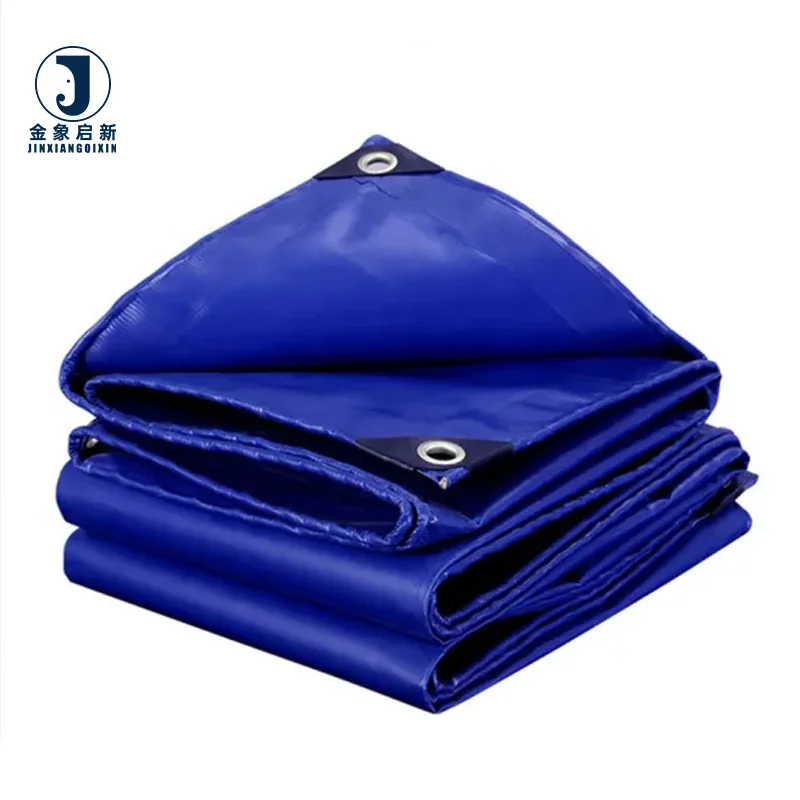
| Product Type | PVC Tarpaulin Roll |
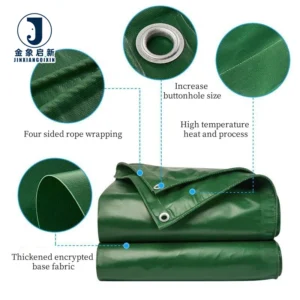
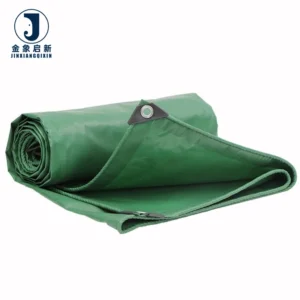
| Material | PVC coated high-strength polyester mesh fabric |
| Weight Range | 250 / 300 / 350 / 400 / 420 / 450 / 500 / 550 / 560 / 600 / 650 / 680 / 750 / 950 / 1000 gsm |
| Total Thickness | 0.32 mm / 0.35 mm / 0.4 mm / 0.45 mm / 0.5 mm / 0.65 mm |
| Base Fabric Denier | 500D×500D / 500D×1000D / 840D×840D / 1000D×1000D / 2000D×2000D |
| Density (warp × weft per inch) | 15×15 / 18×18 / 18×25 / 20×20 / 23×24 / 30×17 / 30×30 |
| Roll Size | 2 m × 75 m / 2.1 m × 50 m |
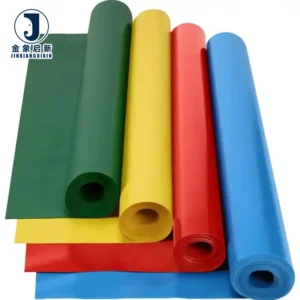
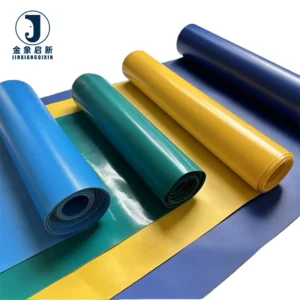
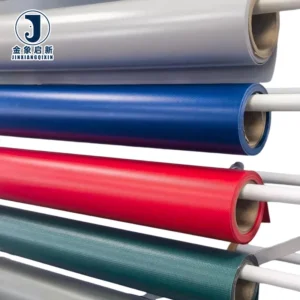
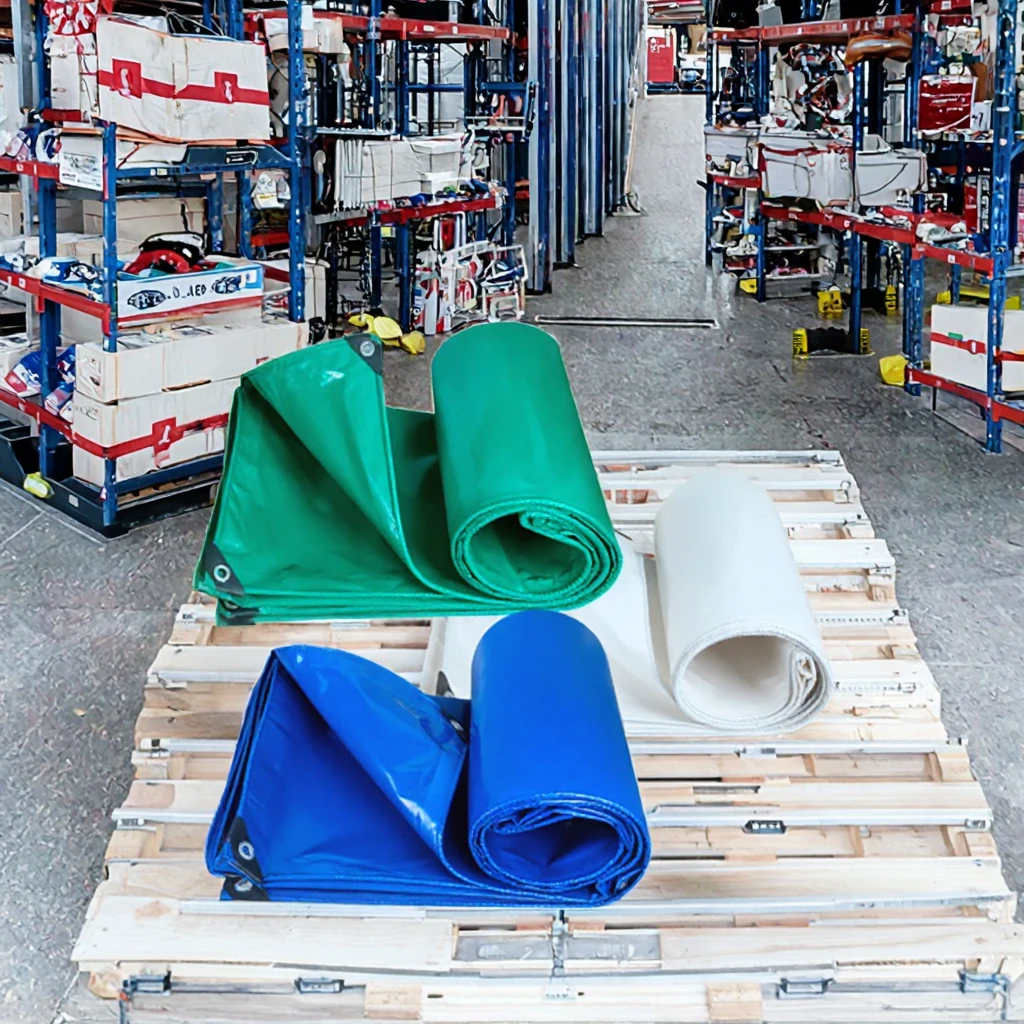
| Color Options | Blue / Red / Yellow / Light Blue / Grey (custom colors available) |
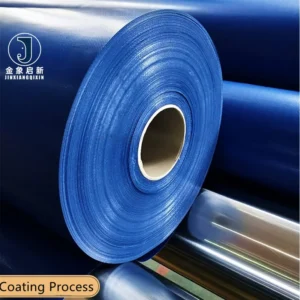
| Coating Technology | Laminated / Hot-melt Coating |
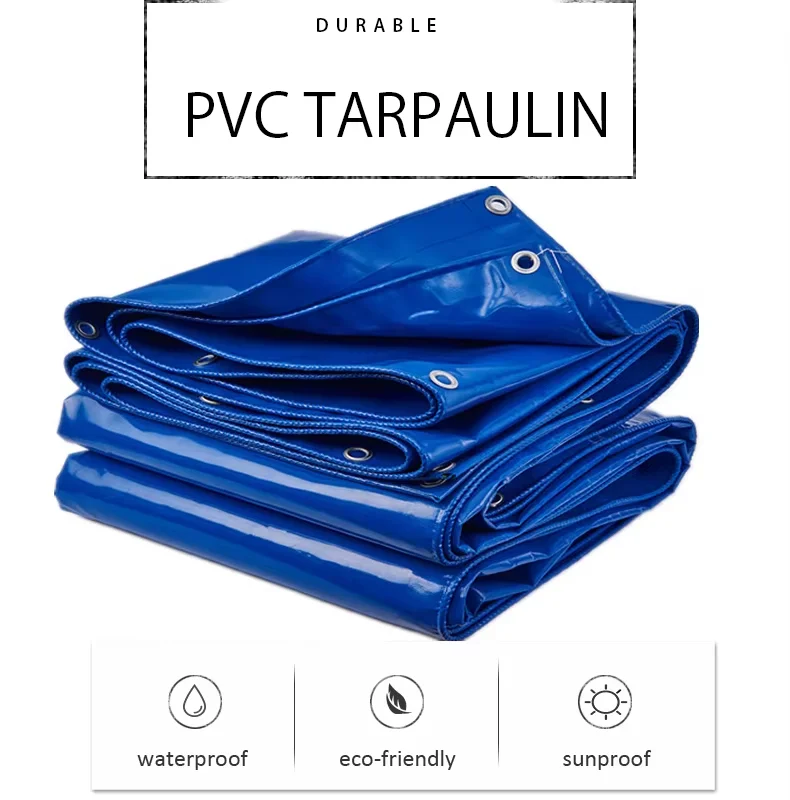
| Key Features | Waterproof, sunproof, cold crack resistance, anti-mildew, anti-static treatment, flame retardant options, high tear strength for welding |
| Flame Retardant Grade | Available in flame retardant grades — confirm the grade required for your market |
| UV Treatment | Sunproof (test basis not stated in source) |
| Service Life | 3–7 years under normal conditions (source value — verify against manufacturer catalog) |
| Customization | Width, length, color, printing, eyelets, reinforced hems |
Application Suitability
| Application | Exposure & Requirement |
|---|---|
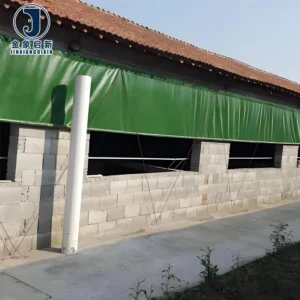
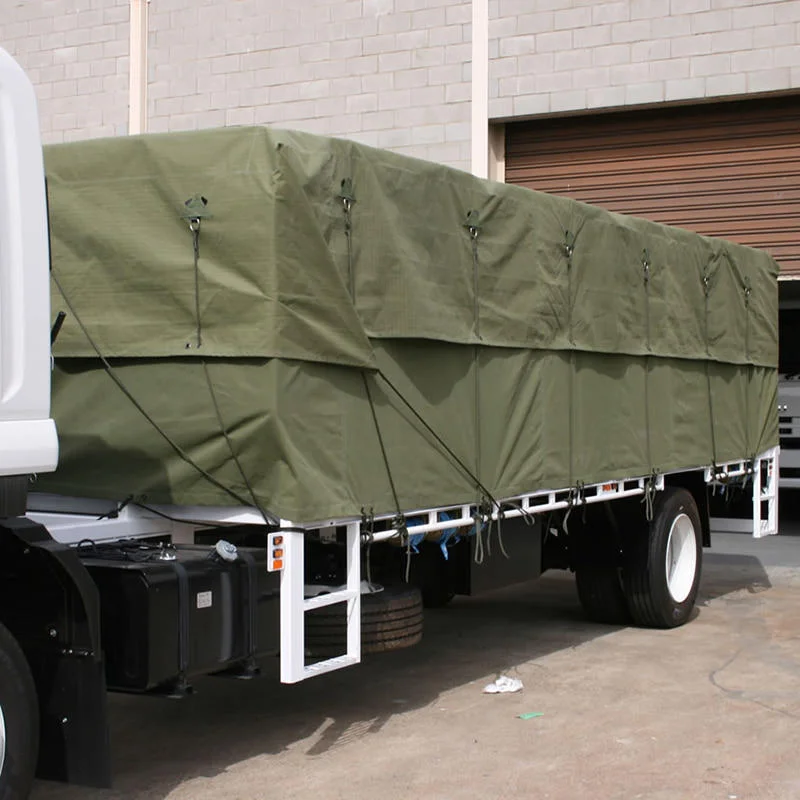
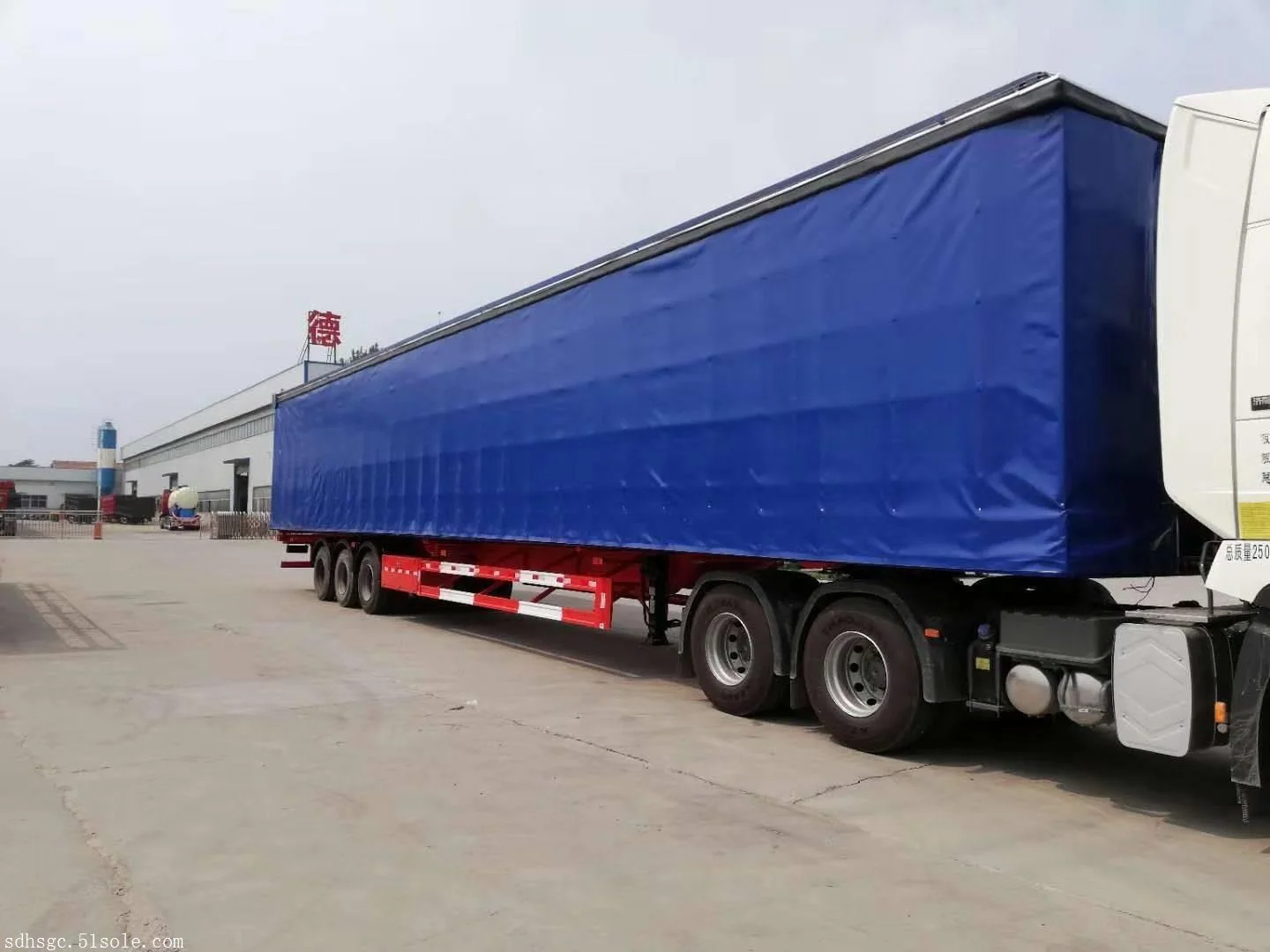
| Truck and trailer side curtains | Constant flexing at load points, road abrasion, UV and weather exposure, weld seam integrity |
| Cargo ship and goods yard covers | Prolonged outdoor weathering, wind load, water pooling, tie-down stress at hems |
| Fish tanks and liquid storage pools | Permanent water contact, hydrostatic pressure, puncture resistance, seam watertightness |
| Push-and-pull tent structures | Repeated folding and unfolding, frame abrasion, sun exposure, colour retention |
| Breed farm waste transportation | Chemical and biological contact, heavy wet loads, frequent cleaning and disinfection |
| Dust and equipment covers | Abrasion from machinery contact, outdoor storage, wind flutter fatigue |
Why Roll-to-Roll Consistency Decides Your Resale Reputation
A quoted GSM that does not survive the voyage is a liability your end customer will discover before you do.
Distributors and importers who buy PVC coated tarpaulin rolls by the container load face a recurring problem: material arrives lighter than specified, or colour drifts visibly between rolls that are supposed to be identical. When a fabricator cuts two panels from different rolls and welds them side by side, a shade difference becomes an immediate customer complaint. When a roll comes in 30 gsm below the agreed weight, the tensile and tear margins shrink — and the first failure happens in the field, not on the test bench. [NEED_CITE: tensile and tear test methods for coated fabrics per ISO 1421]
Batch consistency is not a quality aspiration; it is the foundation of any wholesale tarpaulin operation that sells onward to fabricators or end users. Every PVC tarpaulin roll in this stock range is held to controlled coating-weight tolerances during production, and pre-shipment inspection covers GSM verification roll by roll.
Stock Grade Availability Across the Full GSM Spectrum
This PVC Coated Tarpaulin Roll range spans 250 gsm through 1000 gsm, covering everything from light-duty dust covers and temporary site sheeting to heavy-duty liquid containment and truck side curtain applications. Standard roll widths of 2 m × 75 m and 2.1 m × 50 m are held for common grades, allowing container-load orders to ship without extended production waits. For buyers specifying PVC Coated Tarpaulin Roll wholesale quantities, this breadth means a single container can mix light and heavy grades to match regional demand patterns without splitting orders across multiple suppliers.
Colour and Weight Control Across the Same Shipment
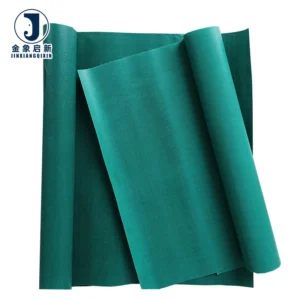
Roll-to-roll colour variation within a single order is one of the most visible quality failures in coated fabric distribution. When a fabricator installs panels from two adjacent rolls on a truck curtain or awning and the shade mismatch is obvious, the entire installation is called into question. Our production process controls coating pigment dosing and mixing ratios per batch, and the pre-shipment inspection record confirms both colour reference and GSM per roll before the container is sealed. This discipline protects your reputation downstream with fabricators and end users who expect uniformity. [NEED_CITE: colour fastness and batch consistency standards for coated textiles]
How Base Fabric Denier and Coating Weight Shape Real-World Performance
GSM alone tells an incomplete story. Two rolls both rated at 550 gsm can behave very differently depending on how that weight is distributed between base fabric and PVC coating. A higher denier base — such as 1000D×1000D versus 500D×500D — delivers greater tear resistance and dimensional stability, which matters on applications where the fabric flexes under load or is welded into large panels. The coating weight then determines surface waterproofness, abrasion resistance, and the quality of the heat-weld bond. Hot-melt coating produces stronger adhesion between the PVC layers and the polyester mesh than laminated processes, which translates directly to weld seam durability. A roll specified for truck side curtains should prioritise base fabric denier and tear strength, while a roll destined for pond liners should emphasise coating thickness and puncture resistance. [NEED_CITE: relationship between base fabric denier and tear propagation in PVC coated fabrics]
The Hidden Cost of Specifying on Price Per Roll Alone
When the primary purchasing criterion becomes the lowest cost per roll, the compromise usually lands on coating weight. Thinner PVC layers reduce material cost but shorten service life under UV exposure and mechanical abrasion. Rolls that arrive underweight will weld poorly — the seam peels before the fabric reaches its rated tear load. Fabricators who have experienced welded seams failing at flex points know this failure mode well, and it almost always traces back to insufficient coating adhesion or an incorrect hot-melt temperature window for the grade supplied. Colour inconsistency across the same batch forces fabricators to sort and match rolls manually, adding labour cost that erodes the savings from the cheaper purchase price. [NEED_CITE: weld seam failure analysis in PVC coated tarpaulin fabrication]
Why Buyers Consolidate Roll Stock Orders Here
Three full production lines and 36 sets of professional equipment give this operation the throughput capacity to fill container-load orders on schedule, which matters when your downstream customers are waiting on material to begin fabrication. A dedicated 10-person R&D team handles custom width, length, colour and pattern printing requests with sample development turnaround measured in days rather than weeks. QA/QC checkpoints at every production stage, culminating in 100% pre-shipment inspection, mean that the GSM, colour and dimensions stated on your packing list are the ones that arrive at your warehouse. ISO and CE certified production processes, combined with full export documentation, reduce customs delays and give your compliance team the paperwork they need without chasing it after the vessel has sailed.
Documentation & Verification
- Roll-by-roll GSM and weight verification recorded before container dispatch
- Material specification sheet listing base fabric denier, mesh count, coating method and weight per grade
- Roll packing list detailing width, length, GSM, colour reference and roll count per container
- ISO and CE certificates on file with certificate of origin included per shipment
- UV and flame retardant test reports supplied where applicable to the grade ordered
- Customs documentation package prepared to match destination country requirements
Fabrication, Handling & Storage
- Hot-melt coated grades require weld temperature adjustment to match coating thickness — confirm settings per GSM before production runs
- Store rolls upright on end cores to prevent flat-spot creasing, particularly on heavier 750 gsm and above grades
- Cut panels from the same roll for adjacent welded seams to avoid colour shift visible after installation
- Reinforce eyelet and hem zones with additional PVC patches on lighter 250–350 gsm grades used for tie-down applications
- Clean sunproof coated surfaces with mild detergent only — solvents degrade the PVC top layer over repeated wash cycles
- Allow cold-stored rolls to acclimate to workshop temperature before unrolling to prevent coating micro-cracking in winter shipments
What to Include in Your Next Enquiry
To ensure the correct grade is quoted, specify the end-use application and the primary exposure conditions — whether the fabric will face constant UV, water immersion, mechanical abrasion or chemical contact. State your target GSM, required roll width and length, and annual volume so container loading and pricing tiers can be structured accordingly. If your market mandates flame retardant or anti-static certification, name the standard so the correct grade is matched and test documentation is prepared before shipment.
Frequently Asked Questions
Q: How is roll-to-roll GSM consistency ensured before shipment?
A: Coating weight is monitored in-line during production, and every roll is weighed and measured individually during pre-shipment inspection. The inspection record accompanies your shipment, listing actual GSM, width, length and colour reference per roll so you can verify against your purchase order before the container leaves the factory.
Q: What standard roll sizes are stocked and how is container loading planned?
A: Standard stock rolls ship at 2 m × 75 m or 2.1 m × 50 m. Container loading plans are prepared per GSM grade and roll dimension, providing roll count and total weight for both 20 ft and 40 ft containers so you can plan freight costs and warehouse intake in advance.
Q: How do you control colour consistency across multiple rolls in one order?
A: Pigment dosing is controlled per production batch, and all rolls within a single order are produced from the same coating mix where possible. Pre-shipment inspection includes visual colour comparison against the confirmed reference, and results are documented on the packing list.
Q: What is the minimum order for custom width or colour?
A: Minimum order quantities for custom specifications depend on the width, length and colour requested. Stock grades in standard widths have lower minimums. Submit your required dimensions and colour reference to receive a quotation with the applicable minimum and lead time for your specification.
Q: Which export documents are provided with each container?
A: Each shipment includes a material specification sheet, roll packing list, pre-shipment inspection record, ISO and CE certificates, certificate of origin and customs support documentation. Flame retardant or UV test reports are included where the ordered grade carries a stated certification.