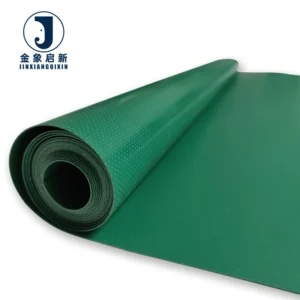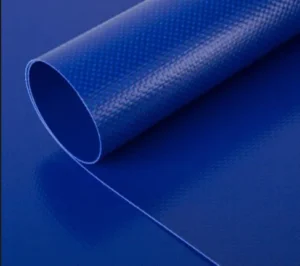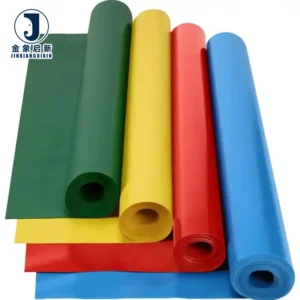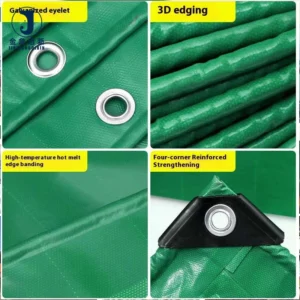
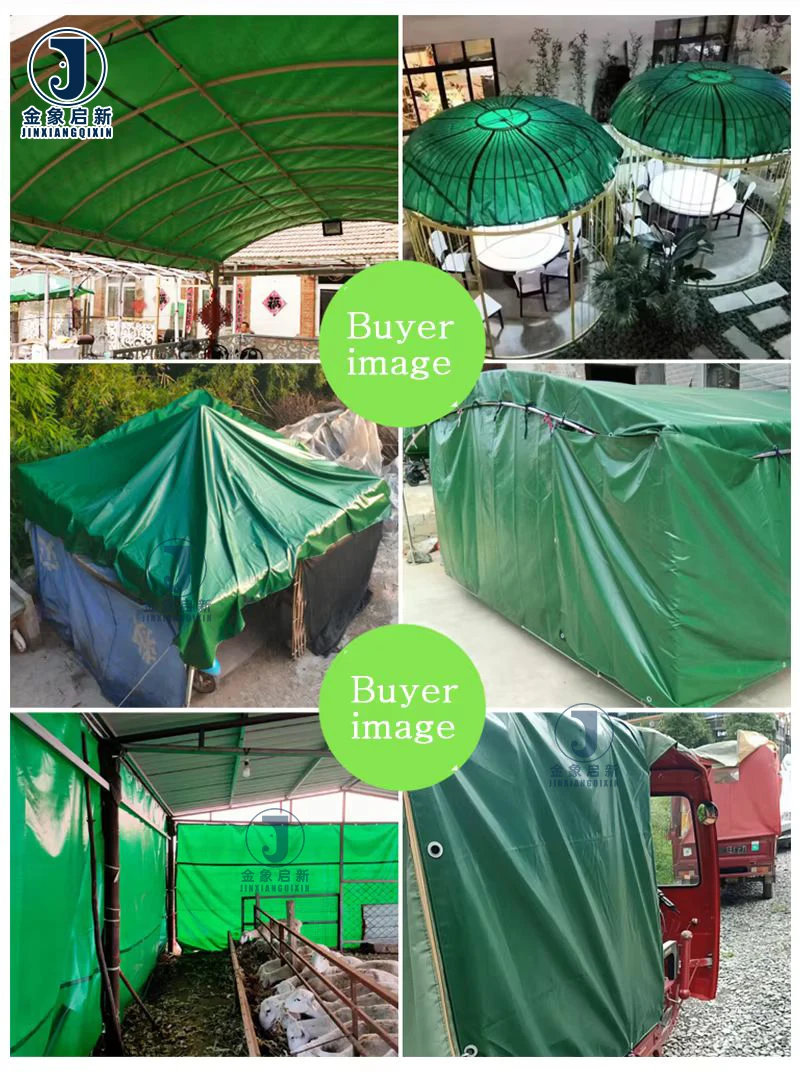
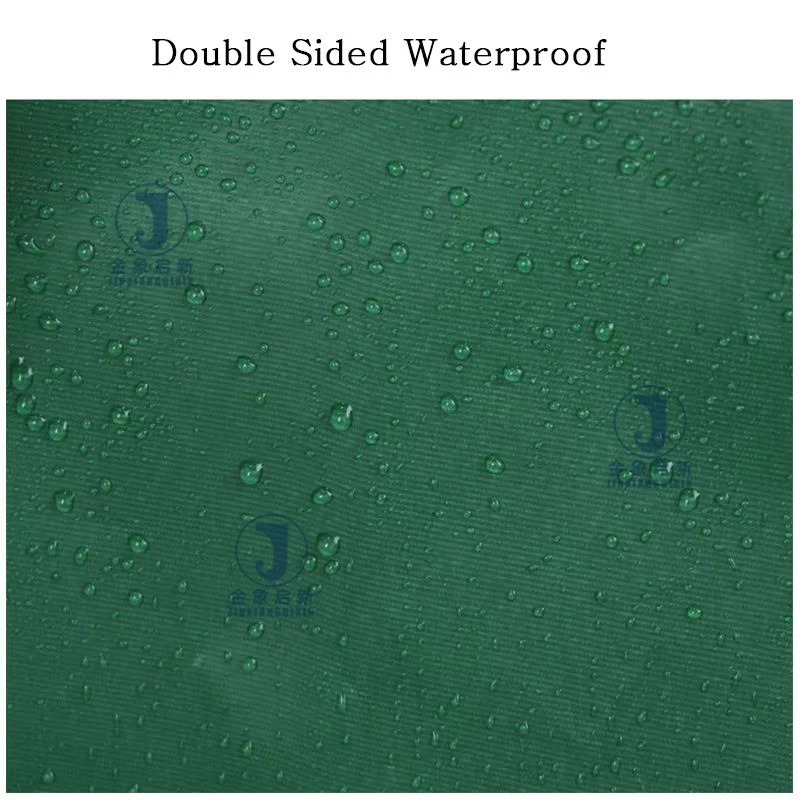
Description
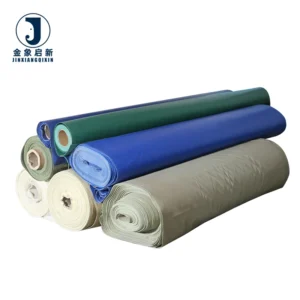
Batch-Matched Roll Consistency — Our three-line coating facility and in-process QA checkpoints keep GSM, colour, and adhesion uniform across every roll in your shipment, reducing waste and rework at your fabrication bench.
Technical Specifications
| Parameter | Value |
|---|---|
| Product Type | PVC Coated Tarpaulin Roll |
| Coating Material | PVC |
| Base Fabric | Warp knitted |
| Application Style | Woven plain |
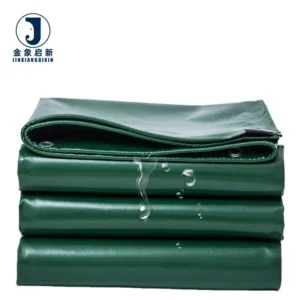
| Waterproof | Yes |
| Tear Resistance | Durable and tear resistant (test basis not stated in source) |
| Anti-Static | Standard not stated in source |
| Finish | Plain style |
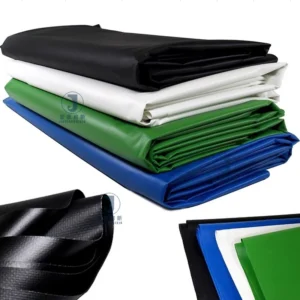
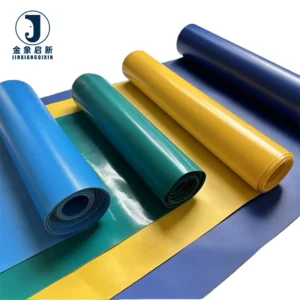
| Color | Customizable colors |
Application Suitability
| Application | Exposure & Requirement |
|---|---|
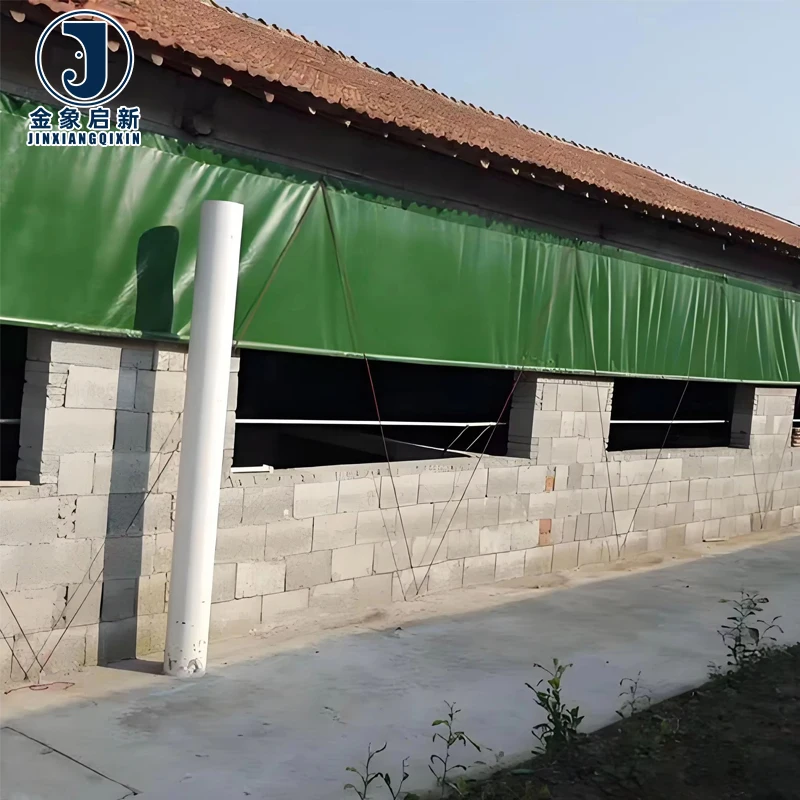
| Poultry farm shelter covers | Continuous humidity, ammonia vapor, and daily washdowns requiring fully waterproof, easy-clean surfaces |
| Pig and livestock windbreaks | Abrasion from animal contact, mud, and mechanical fastening demanding tear-resistant base fabric |
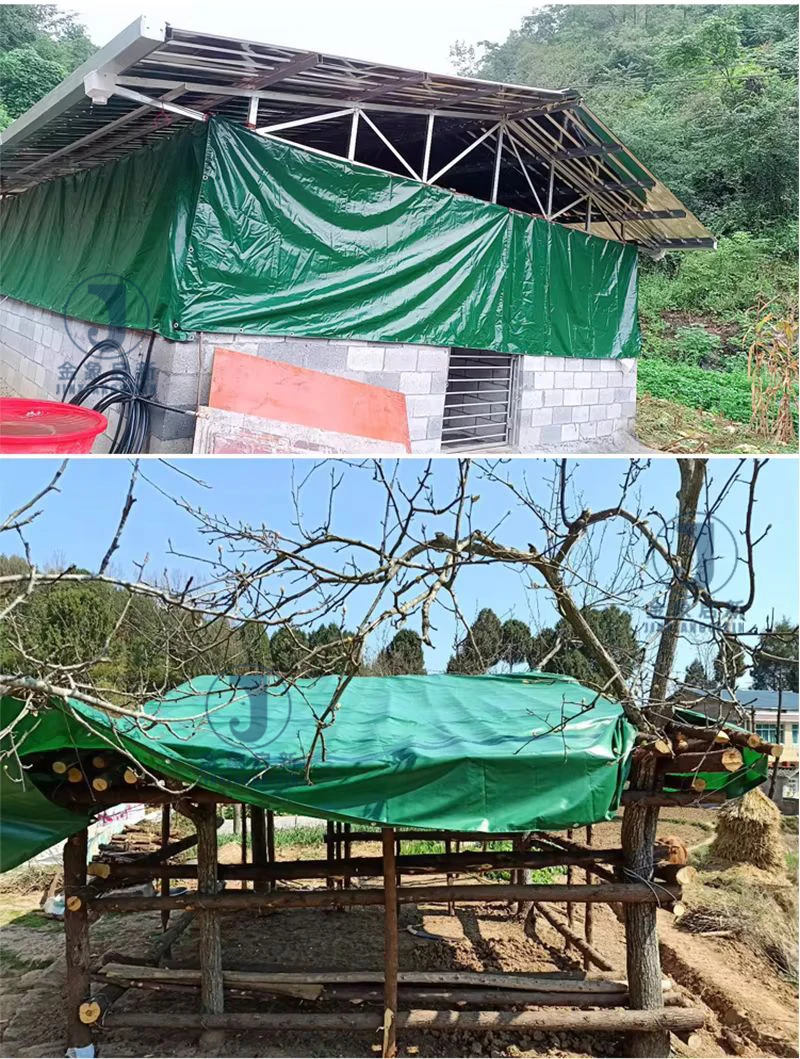
| Agricultural tent sidewalls | Sun exposure and wind loading calling for stable dimensional performance across long spans |
| Broiler house end-wall curtains | Frequent rolling and unrolling that tests coating adhesion and flex endurance at fold lines |
Why Colour Shift Between Rolls Disrupts Farm Projects
Colour varying between rolls in the same order becomes obvious the moment two panels are hung side by side on a poultry house or livestock shelter. For agricultural distributors and farm builders, this inconsistency means pulled panels, wasted yardage, and delayed project handovers. A dedicated QA/QC checkpoint tied to a documented colour reference per order is the only way to prevent batch mismatch before the container leaves the factory floor. [NEED_CITE: colour fastness evaluation methods for coated textiles per ISO 105]
When a distributor orders twenty rolls of green PVC tarpaulin for a multi-bay broiler farm and three rolls arrive a visible shade lighter, the entire install sequence stalls. Farm operators cannot mix panels without the building looking patched together, so the lighter rolls sit in inventory or get returned.
Controlling Shade Uniformity Across Bulk PVC Tarpaulin Roll Orders
Pigment dispersion in PVC plastisol must remain stable from the first roll coated to the last. Temperature fluctuation in the coating head, resin lot changes, or pigment settling in the feed tank all introduce shade drift that may not appear until the rolls are unrolled under natural light. Our production protocol locks the plastisol batch for each confirmed order and verifies shade against the approved reference at multiple intervals during the run. This approach keeps every PVC coated tarpaulin roll within the same visual tolerance window, whether you order five rolls or a full container.
Warp Knitted Base Fabric and Tear Behaviour on the Farm
Warp knitted construction interlocks yarns in a way that resists tear propagation when a puncture or edge nick occurs under field tension. On poultry and livestock shelters, the fabric endures constant stress from wind gusts, tie-down hardware, and accidental contact with equipment or animals. A woven plain application style gives the coater a stable substrate to build adhesion on, while the knitted structure underneath arrests small tears before they travel across the panel. [NEED_CITE: tear propagation testing for coated fabrics per ISO 13937]
Reading GSM, Base Fabric, and Coating Together
GSM alone tells you how much material is on the roll but not how that weight is distributed between yarn and coating. A heavy coat over a light base fabric may read the same GSM as a lighter coat over a dense warp knitted scrim, yet the two will behave very differently when a seam is welded or a grommet is set. Coating weight governs waterproofing and surface durability, while base fabric denier and stitch density govern tensile and tear performance. Buyers comparing PVC coated tarpaulin roll wholesale quotes should request the breakdown of base fabric weight versus coating weight to understand where the mass actually sits. Coating method also matters: knife-over-roll coating builds adhesion layer by layer and generally delivers higher peel strength than lamination, which affects how well welded seams hold when the fabric flexes under wind load.
The Hidden Cost of Specifying Roll Stock by GSM Alone
A buyer who selects PVC tarpaulin strictly on quoted GSM without verifying coating adhesion may find that welded seams fail at the fold line before the fabric body shows any wear. In poultry farm curtains that roll up and down daily, the hinge zone endures thousands of flex cycles, and poor peel strength between coating and base fabric lets moisture penetrate the scrim. Once water reaches the yarn, the panel degrades from the inside out, and replacement costs exceed the original savings from choosing a lower-priced roll. [NEED_CITE: peel strength test methods for coated fabrics per ISO 2411]
Why Agricultural Distributors Source Roll Stock Here
Our coating lines run dedicated batches per order, so the plastisol formulation and colour pigment do not shift mid-production. The ten-person R&D team develops custom colour matches and width options with sample rolls produced within days, letting you verify shade and hand feel before the full run starts. Every roll passes through in-process QA and a 100% pre-shipment inspection against the documented GSM and colour reference for your order. Container loading plans are built around roll count, weight, and diameter to maximise cubic utilisation and prevent transit crushing. Custom widths and lengths that other suppliers quote with extended lead times are accommodated here through dedicated line scheduling.
Documentation & Verification
- Material specification sheet listing GSM, base fabric type, and coating weight for each roll batch
- Colour reference card matched to your order code for shade verification on receipt
- Pre-shipment inspection record confirming roll count, weight, and visual check
- Roll packing list detailing roll dimensions and weight for customs and warehouse intake
- Certificate of origin and customs support documents for agricultural textile imports
Fabrication, Handling & Storage
- Set hot-air weld temperature to match PVC coating thickness for consistent peel strength on farm cover seams
- Allow rolls to acclimatise before unrolling in cold weather to avoid coating stiffness and crease marks
- Store PVC coated tarpaulin rolls upright on end caps to prevent flat-spotting and edge deformation
- Use compatible PVC-based repair patches for field repairs on poultry shelter panels
- Plan panel cutting layout around roll width to minimise off-cuts and welded seam count
Preparing Your Roll Stock Inquiry
Tell us the farm cover application, the exposure conditions the fabric will face, and the annual volume you plan to purchase. Specify the roll width and length you need, along with any colour reference or custom shade requirement. If you need sample rolls for approval before committing to a full container, indicate that in your initial inquiry so we can schedule sample production alongside your timeline.
Frequently Asked Questions
Q: How is GSM verified on arrival and what documentation supports the quoted weight?
A: Each roll is weighed and measured during pre-shipment inspection, and the results are recorded against the stated GSM on your material specification sheet. You receive this inspection record with your shipping documents, allowing you to cross-check roll weight on arrival without guesswork.
Q: How do you control colour consistency across multiple rolls in one order?
A: We lock the plastisol pigment batch for your entire order and verify shade against the approved reference at multiple production checkpoints. A colour reference card tied to your order code ships with the documentation so your warehouse team can confirm consistency on receipt.
Q: What roll widths and lengths are available, and what are the minimums for custom sizes?
A: Standard widths cover common agricultural panel dimensions, and custom widths are available with a confirmed minimum based on line setup requirements. Provide your target width and roll length in the inquiry, and we will confirm the feasible range and minimum order.
Q: How are rolls packed and loaded for container shipping to prevent transit damage?
A: Rolls are packed vertically on end caps with cushioning between layers, and the container loading plan is calculated by roll count, weight, and diameter. This method prevents crushing and edge deformation during ocean transit to your distribution warehouse.
Q: What is the lead time for custom colour or width orders on bulk roll stock?
A: Custom colours and widths require a dedicated production run, and typical lead times run several weeks from sample approval to container loading. Submitting your colour reference and width requirement early allows us to schedule sample development and production in sequence.