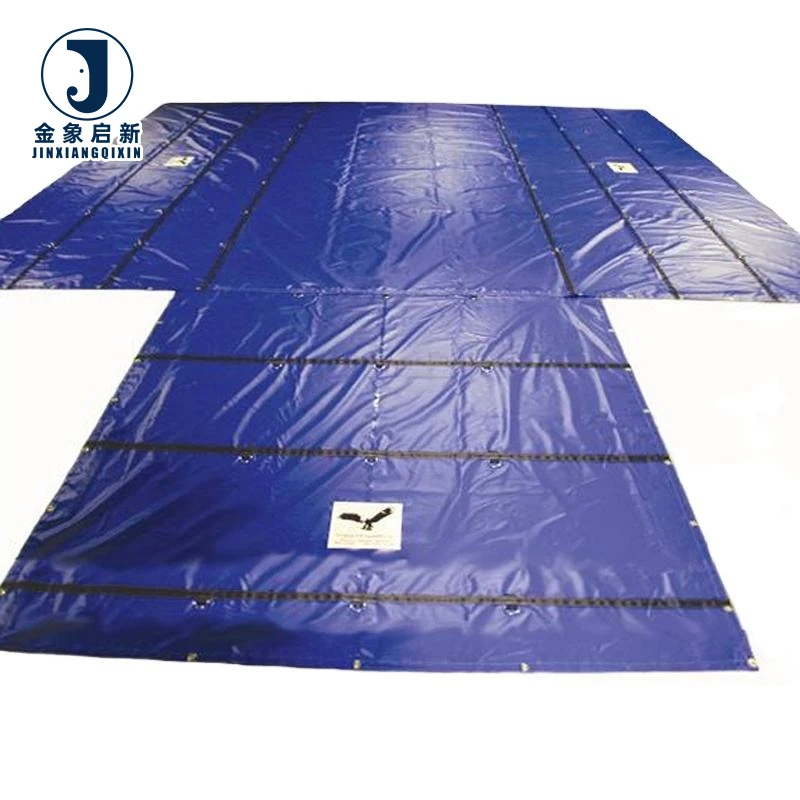
Description
Bulk GSM Verification — Every roll of this PVC lumber tarpaulin is weighed and cross-checked against the 610gsm (18oz) specification before loading, with a documented pre-shipment record matching roll count to net weight for container-load reconciliation.
Technical Specifications
| Parameter | Value |
|---|---|
| Product Type | PVC Lumber Tarpaulin |
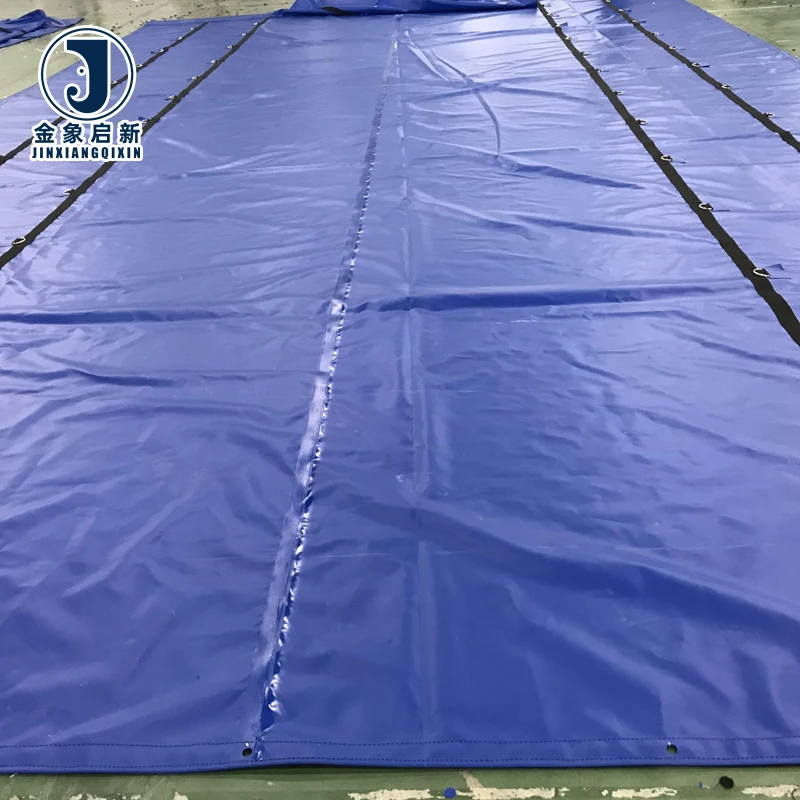
| Dimensions | 24′ × 27′ |
| Drop Length | 8ft (also available in 6ft and 4ft variants) |
| Base Fabric Denier | 1000×1000D |
| Mesh Count | 20×20 / 18×18 |
| Coating Material | PVC (polyvinyl chloride) |
| Weight (GSM) | 18oz (610gsm) / 16oz / 14oz — confirm grade for your application |
| Total Thickness | 0.70–1.0 mm (heavy-duty grade reference) |
| Color | Black / Blue |
| Temperature Range | -35 ~ 70 °C |
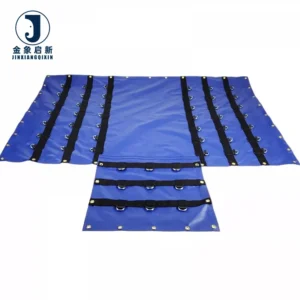
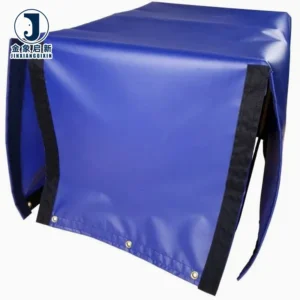
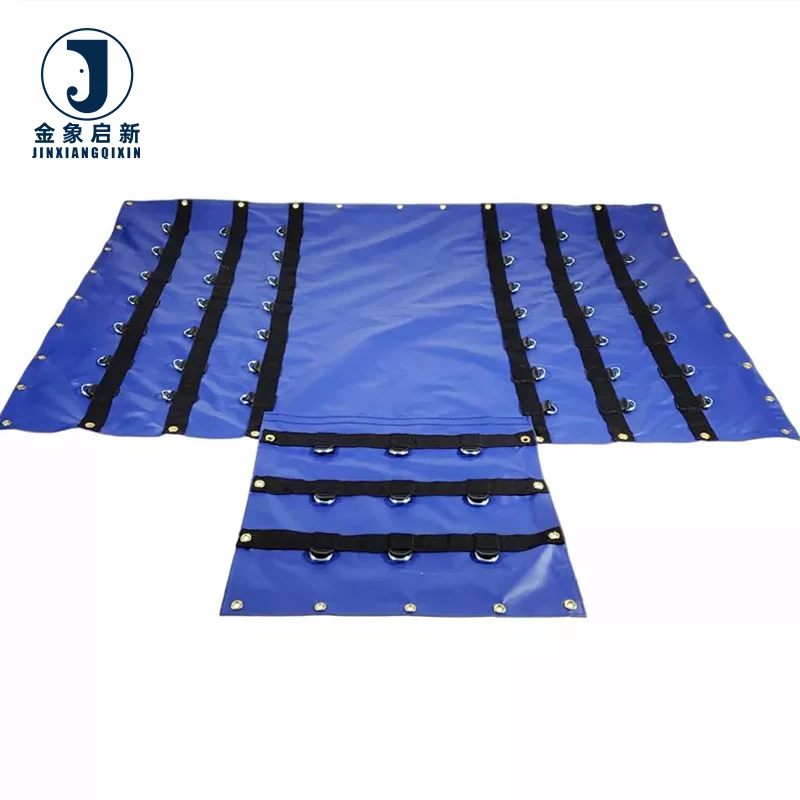
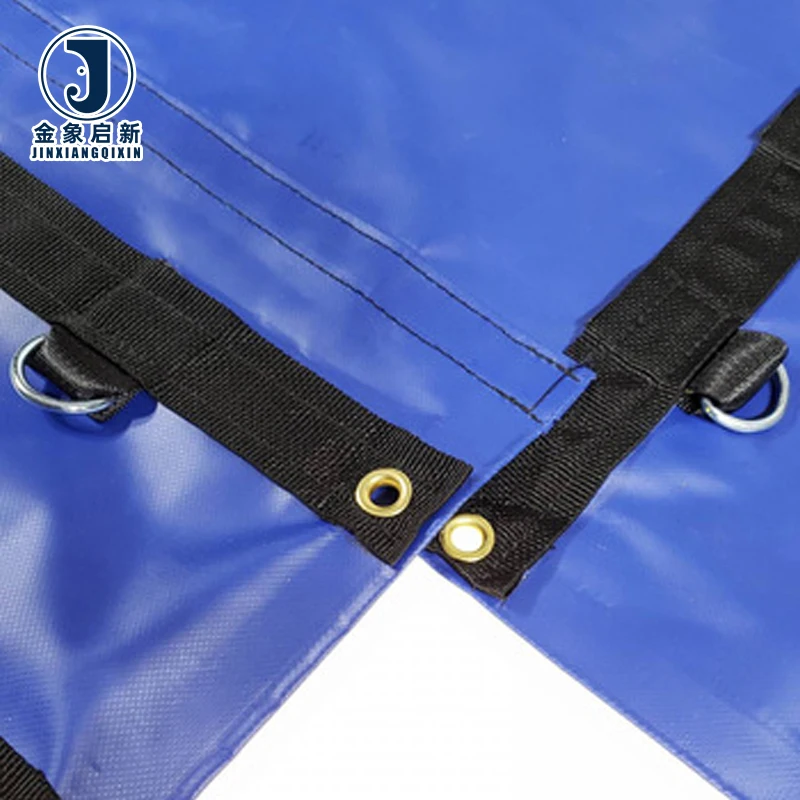
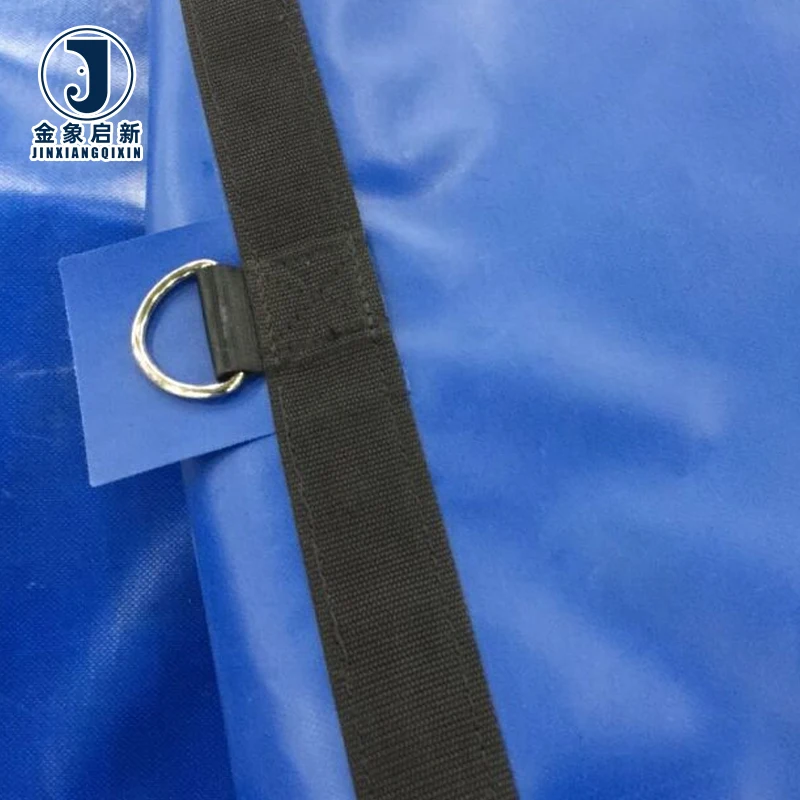
| D-Ring Configuration | 3 rows on 8ft and 6ft drops; 2 rows on 4ft drops |
| Tail Wing Flap | Included on 6ft and 8ft drops |
| Chemical Resistance | Acid-resistant (grade not stated in source) |
| Flame Retardant Grade | Available in flame retardant grades — confirm the grade required for your market |
| UV Treatment | Available with UV treatment — confirm test basis for your region |
| Standards | ISO, CE (verify against shipment documentation) |
Application Suitability
| Application | Exposure & Requirement |
|---|---|
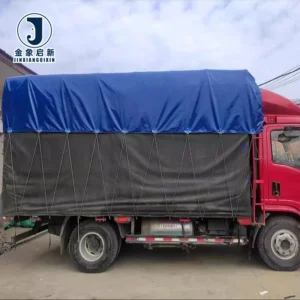
| Flatbed lumber hauling — long stacked timber loads | Rainwater ingress, road debris impact, UV exposure on highway transit, end-grain moisture protection via tail wing |
| Wall panel and building material transport | Abrasion at load edges, wind uplift on elevated loads, repeated tie-down stress at D-ring rows |
| Step-deck trailer covering for high-profile freight | Flex fatigue at drop transitions, thermal cycling from -35 °C to 70 °C, chemical splash from roadside environments |
| Regional tarpaulin distribution — container-load import | Roll-to-roll GSM consistency, batch colour uniformity, documented packing lists for customs and inventory control |
Why Roll-to-Roll GSM Consistency Matters More Than the Quoted Number
A quoted 610gsm that arrives at 570gsm is a different product — verification before dispatch eliminates the guesswork.
PVC lumber tarpaulin wholesale buyers regularly face a gap between the GSM printed on the quotation and the actual coating weight measured on arrival. A shortfall of even a few percentage points translates into a lighter base fabric, thinner coating, and a tarp that tears at the D-ring anchor points under highway wind load rather than lasting through multiple seasons of flatbed use. When a fleet operator orders two hundred tarps to standardise across a mixed trailer fleet, batch variation means some units arrive underweight while others hit spec — creating uneven wear rates across the fleet and premature replacement cycles that erode the bulk discount. [NEED_CITE: tensile and tear test methods for coated fabrics per ISO 1421]
Container-Load Planning by Roll Count and Net Weight
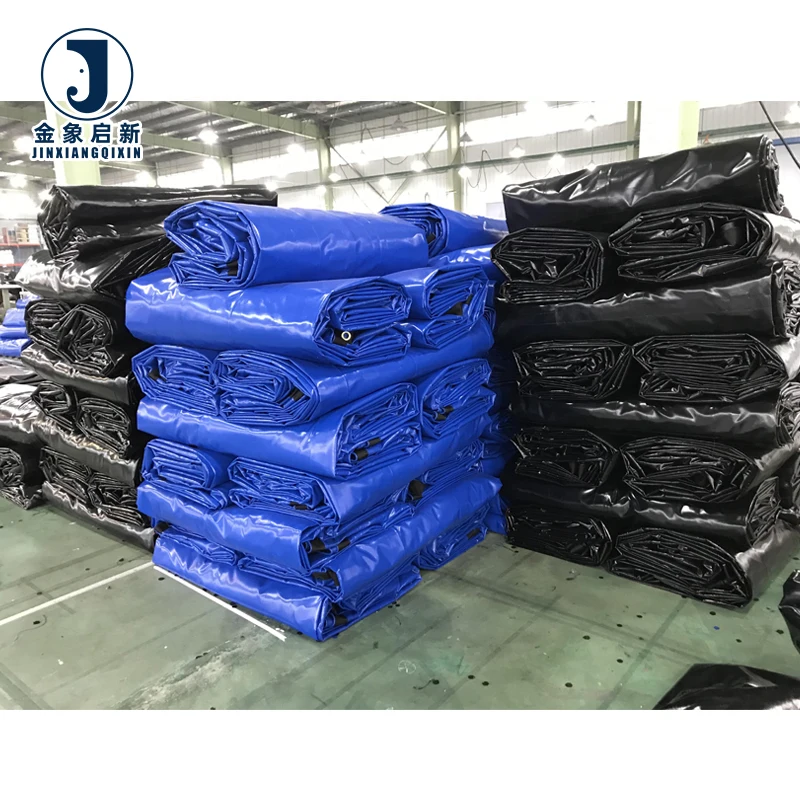
Purchasing PVC lumber tarpaulin wholesale at container scale requires precise loading calculations. Each roll is packed with a documented net weight and GSM reading, allowing the buyer to reconcile the packing list against the bill of lading before the container leaves the factory floor. The 24′ × 27′ cut size with 8ft drop is a high-volume flatbed format, and bulk orders are staged so that roll count, gross weight, and cubic volume align with standard 20ft and 40ft container limits. This planning reduces dead freight and ensures that distributors receive a shipment where every roll matches the purchase order.
Batch Colour Uniformity Across Multi-Roll Orders
When a distributor unrolls fifty tarps side by side at a regional depot, even a slight shade shift between rolls becomes visible — and the customer notices before the tarp ever reaches a truck. Colour consistency is controlled through coating-batch matching and inline visual inspection at every production stage. For PVC lumber tarpaulin wholesale orders spanning multiple container loads, the colour reference is locked at sample approval and held constant across all subsequent production runs, so that a reorder placed months later arrives in the same shade as the original shipment. [NEED_CITE: colour fastness and batch matching standards for PVC coated textiles]
How Base Fabric and Coating Weight Interact on a Flatbed Tarp
The 1000×1000D base fabric with 20×20 mesh count provides a dense woven grid that resists tear propagation when a load shifts against the tarp during braking. Coating weight — whether 18oz (610gsm), 16oz, or 14oz — determines how much PVC encapsulates that grid, directly affecting puncture resistance at the tie-down points and flexibility in sub-zero conditions. A heavier coat fills the weave more completely, improving waterproofing and abrasion resistance at the trailer edge, but adding roll weight that affects handling during daily tarp deployment. The 0.70–1.0 mm thickness range in the heavy-duty grade reflects this balance: sufficient coating depth to protect the base yarns from road grit and chemical splash without making the tarp too stiff to fold at -35 °C. The 3-row D-ring configuration on the 8ft drop distributes tie-down tension across a wider fabric area, reducing point-load stress on the coated surface.
What Happens When the Specification Is Wrong for the Route
A lumber tarp specified at 14oz for a fleet running northern winter routes will stiffen and crack at fold lines well before a heavier grade would, because the thinner coating has less plasticiser reserve to absorb repeated thermal cycling. A tarp ordered without the tail wing flap leaves end-grain timber exposed to driven rain on highway descents, causing load damage claims that far exceed the cost difference of the flap. When D-ring rows are insufficient for the drop length, tie-down straps concentrate force on fewer anchor points, and the fabric tears at the webbing edge rather than stretching across the load. [NEED_CITE: field failure analysis for PVC coated transport covers under thermal and mechanical fatigue]
Why Wholesale Buyers Source This Range Here
Three full production lines and 36 sets of professional equipment provide the capacity to fill multi-container PVC lumber tarpaulin wholesale orders without splitting production across external mills. A dedicated 10-person R&D team develops samples within days when a distributor requests a custom width or colour match, keeping the approval cycle short enough to maintain seasonal stocking schedules. Every production run passes through QA/QC at each stage, with 100% pre-shipment inspection verifying GSM, colour, and D-ring placement against the signed-off sample. Nearly 30 years of coating-fabric process control means coating weight and adhesion are managed at the formulation level, not adjusted reactively after a failed inspection. Documentation packages travel with each shipment — material spec sheets, roll packing lists, and certificates of origin — so customs clearance and inventory reconciliation proceed without back-and-forth requests.
Documentation & Verification
- Pre-shipment weight record confirming 610gsm (18oz) per roll against purchase specification
- Roll packing list with roll count, net weight, and GSM for container-load reconciliation
- Material specification sheet stating 1000×1000D base fabric, coating weight, and colour reference
- Certificate of origin and customs documentation for cross-border PVC lumber tarpaulin wholesale shipments
- Test report for UV or flame retardant grades where applicable to destination market requirements
Fabrication, Handling & Storage
- Heat-weld seams using temperature and dwell settings matched to the 0.70–1.0 mm PVC coating thickness
- Reinforce D-ring anchor plates across all 3 rows to distribute tie-down load on the 8ft drop panel
- Store rolls horizontally on pallets to prevent flat-spot creases in the 1000×1000D base fabric
- Allow cold-stored tarps to acclimatise before unfolding at temperatures near -35 °C to avoid coating crack
- Clean with mild detergent; avoid solvents that degrade the PVC coating surface on black or blue panels
- Plan cutting layout on 24′ × 27′ panels to position seams away from high-flex zones at the drop transition
What We Need to Prepare Your Quotation
Specify the drop length, D-ring row count, and whether the tail wing flap is required for your end-grain coverage needs. Provide the target GSM — 18oz (610gsm), 16oz, or 14oz — along with your annual volume and container-load schedule so we can plan production runs for batch colour consistency. If your market mandates a flame retardant or anti-static certification, state the standard and grade so we can include the correct test documentation with the shipment.
Frequently Asked Questions
Q: How is the GSM verified before my container ships?
A: Each roll is weighed individually during pre-shipment inspection, and the measured GSM is recorded on the roll packing list. This document accompanies the shipment so you can cross-check the stated 610gsm, 16oz, or 14oz against your purchase order at the port of destination without waiting for a third-party lab result.
Q: Can I expect the same colour across multiple container orders placed months apart?
A: Colour reference is locked at sample approval and stored as the production standard for your account. Subsequent PVC lumber tarpaulin wholesale orders are produced against that locked reference with inline visual inspection, ensuring that a reorder matches the original batch when tarps are deployed side by side at your depot.
Q: What roll widths and lengths are available for this lumber tarp range?
A: Standard cut sizes include 24′ × 27′ with 8ft, 6ft, and 4ft drop options. Custom widths and lengths are available — provide your target dimensions and order volume so we can confirm minimum quantities and production lead time against current line scheduling.
Q: How is container loading optimised for bulk tarpaulin shipments?
A: Rolls are packed with documented net weight and dimensions so that roll count and gross weight are matched to 20ft or 40ft container limits. The packing list details roll count, individual roll weight, and total shipment weight, enabling your logistics team to plan unloading and warehouse allocation before the container arrives.
Q: Are flame retardant or UV-resistant grades available with test reports?
A: Flame retardant and UV-treated grades are available across the lumber tarp range. Specify the standard required for your destination market — such as a specific fire classification or UV test method — and we will confirm the applicable grade and include the corresponding test report in the shipment documentation package.