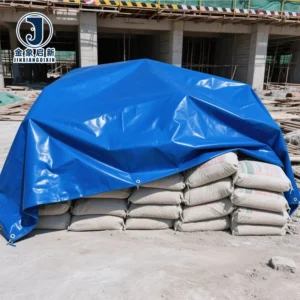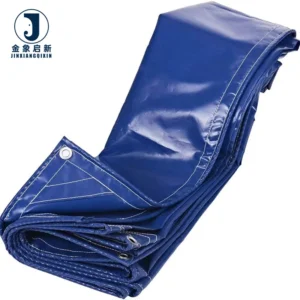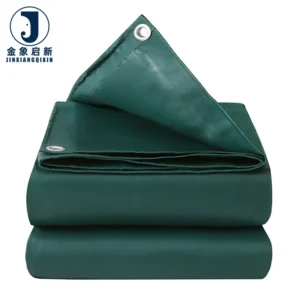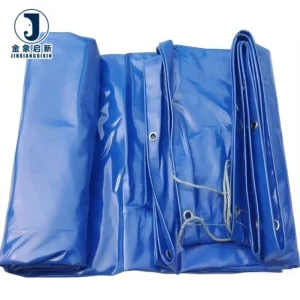
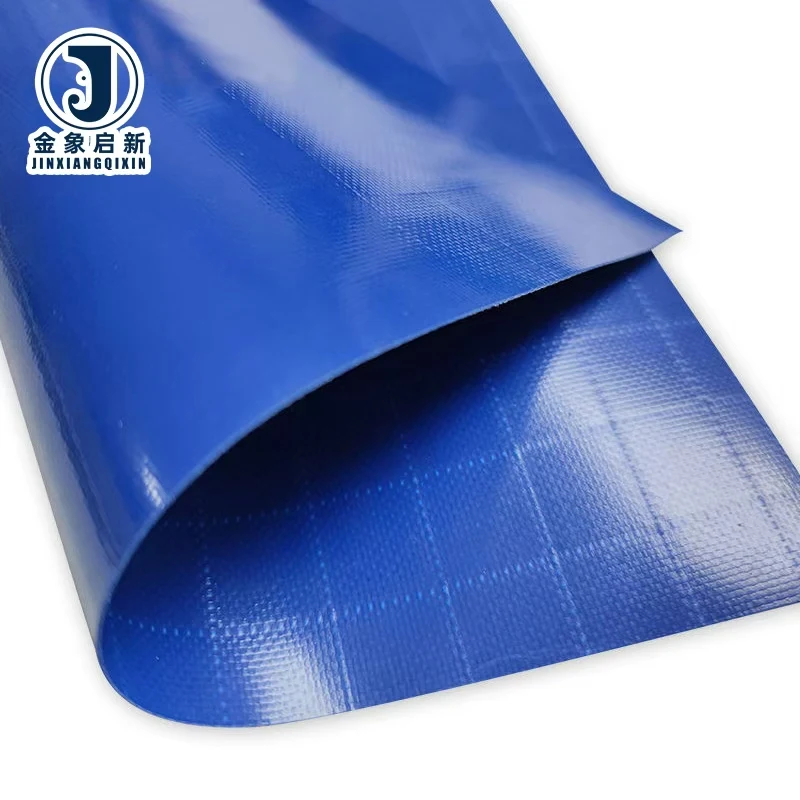
Description
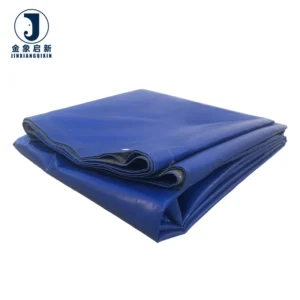
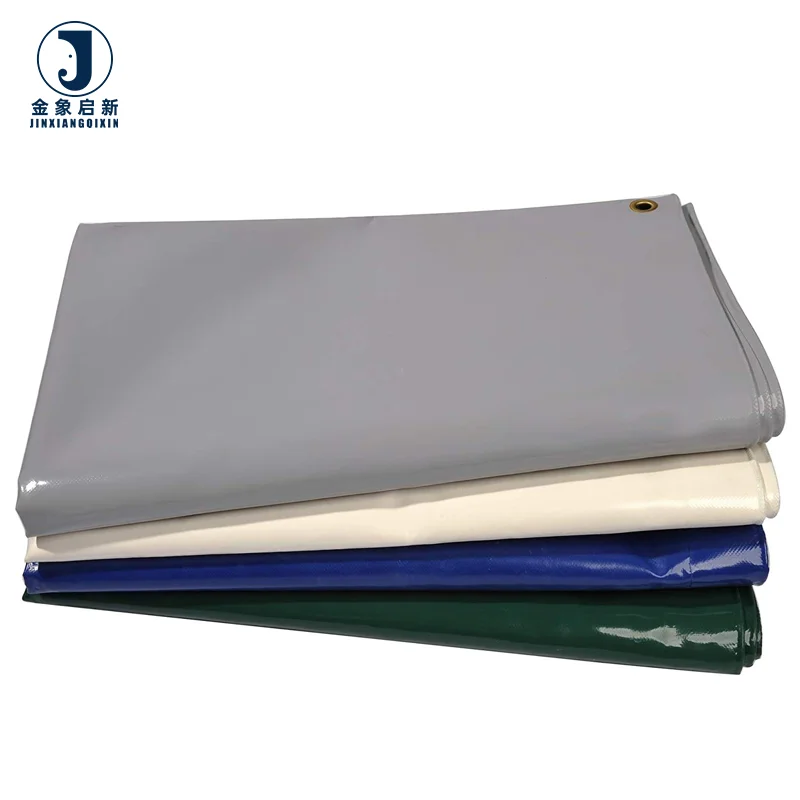
Volume Consistency — every roll of PVC coated tarpaulin roll stock in a container-load order is checked for coating weight and colour match before dispatch, so distributors receive identical material from the first roll to the last.
Technical Specifications
| Parameter | Value |
|---|---|
| Product Type | PVC Coated Tarpaulin Roll |
| Base Fabric Yarn | 500D×840D / 500D×1000D / 1000D×1000D / 1000D×1300D / 1300D×1300D / 1000D×2000D |
| GSM Range | 350 / 400 / 420 / 500 / 600 / 650 / 750 / 900 g/m² |
| Total Thickness | 0.29 mm – 0.65 mm (verify against selected grade) |
| Weave Density | 30×19 / 20×20 / 30×15 |
| Warp Tensile Strength | 1650 N – 3900 N (test basis not stated in source) |
| Weft Tensile Strength | 1600 N – 3500 N (test basis not stated in source) |
| Coating Material | PVC, double-sided on polyester base |
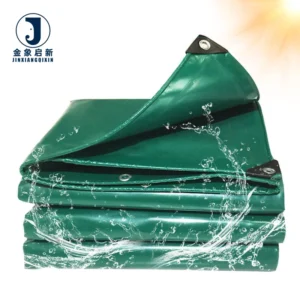
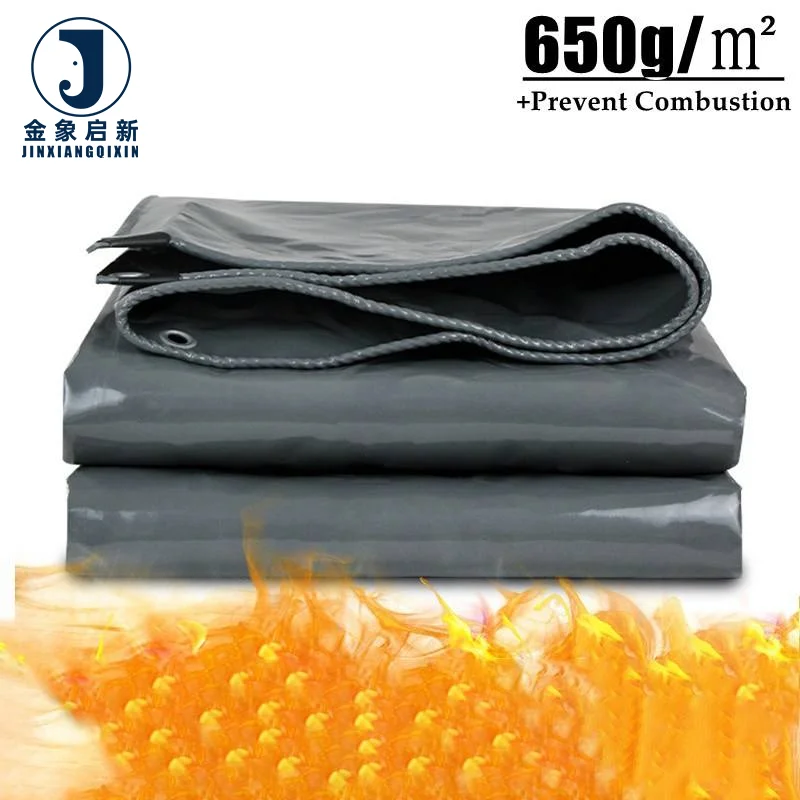
| Key Features | Water resistant, waterproof; flame retardant and anti-UV treatment available in specific grades — confirm the grade required for your market |
| Edge Finish | High temperature heat sealed seamless edge wrapping |
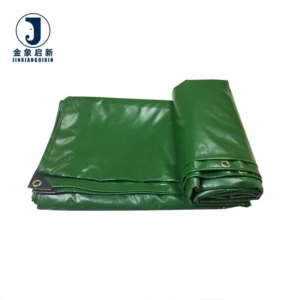
| Eyelets | 3 cm enlarged aluminum alloy buttonhole |
| Corner Reinforcement | Reinforced corners on all sides |
| Rope Hem | 5 mm thick rope without splicing |
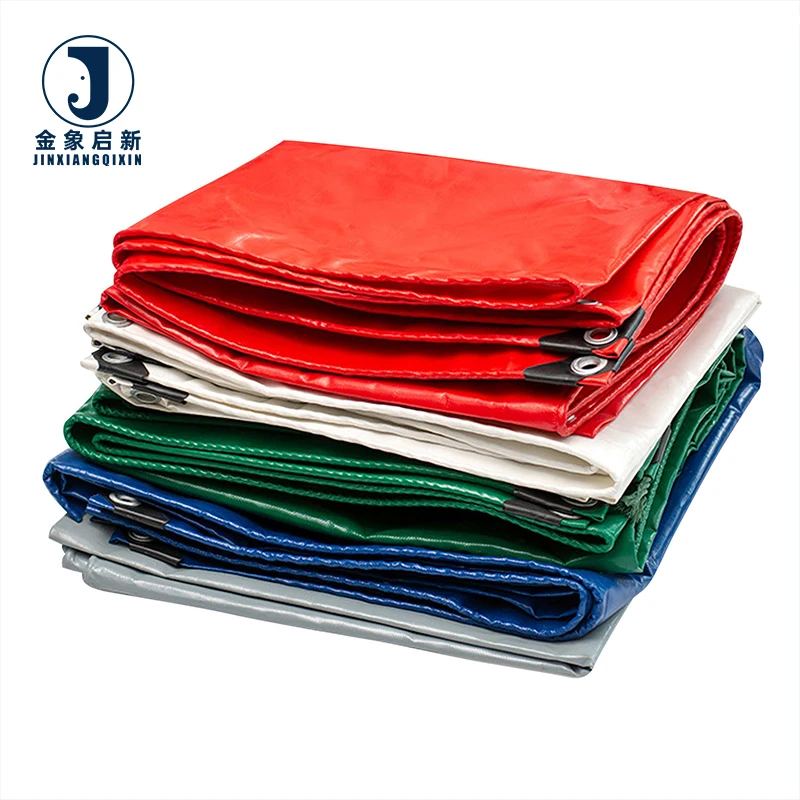
| Customization Options | Custom width, length, hole spacing, colour, printing |
Application Suitability
| Application | Exposure & Requirement |
|---|---|
| Tarpaulin distributor resale stock | Multiple GSM tiers needed to serve varied end-users; roll-to-roll colour and weight consistency critical for brand trust |
| Truck and trailer side curtain fabrication | Constant flexing at load points, road abrasion, UV and rain exposure; requires high tensile and tear resistance |
| Tent and awning manufacturing | Fabric cut from roll for welded panel assemblies; demands uniform coating thickness for reliable heat-seal adhesion |
| Machine and equipment covers | Outdoor storage exposure, puncture risk from sharp edges; needs dimensional stability and waterproof barrier |
| Pergola and canopy covers | Sustained sun and weather load; benefits from anti-UV treated grades with low stretch under tension |
Why GSM and Tensile Strength Do Not Always Move Together
A heavier roll is not automatically a stronger roll — yarn denier and weave density define the structural skeleton before the coating is even applied.
When a wholesale buyer orders PVC coated tarpaulin roll stock based only on a quoted GSM figure, the material can arrive feeling lighter or behaving differently under tension than expected. [NEED_CITE: tensile and tear test methods for coated fabrics per ISO 1421] A 650 g/m² fabric woven from 500D×1000D yarn at a loose 20×20 mesh carries its weight largely in coating, not in the base fabric. Compare that to a 600 g/m² fabric built on 1000D×1000D yarn at 30×19 mesh — less PVC by weight, but substantially more polyester structure resisting pull and tear. Distributors who specify only on grams per square metre end up fielding complaints from customers whose covers split at the flex points within the first season.
Base Fabric Denier as the True Load-Bearing Layer
The polyester yarn in this PVC coated tarpaulin roll range spans from 500D×840D through to 1000D×2000D, covering light covers up to heavy-duty side curtain applications. The denier figure describes the mass per unit length of each yarn — higher denier means a thicker, heavier thread before weaving begins. When a truck curtain flexes thousands of times on the motorway, it is the yarn structure absorbing that mechanical fatigue. The PVC coating protects against water and abrasion, but the base fabric carries the structural load. Selecting the correct denier for the end-use prevents premature failure at stress points, and this is where technical buyers differentiate their stock from commodity-grade material.
Coating Weight and the GSM Conversation
The total GSM of a coated fabric is the sum of the base fabric weight and the PVC applied to both faces. A roll quoted at 900 g/m² can achieve that figure through a heavy base cloth with moderate coating, or a lighter base cloth buried under thick PVC layers. The first approach yields better tear resistance and weld integrity; the second gives a stiff hand feel that can be mistaken for quality. [NEED_CITE: coating adhesion and peel strength test methods for PVC tarpaulin] Buyers ordering PVC coated tarpaulin roll stock in volume should request the coating weight separated from the base fabric weight on the material specification sheet. This single data point clarifies whether the roll will survive fabrication and field use as expected.
Reading Thickness, Weave Density and Tensile Together
Total thickness in this range runs from 0.29 mm to 0.65 mm, but thickness alone tells only part of the story. A 0.55 mm fabric at 20×20 weave density may feel substantial yet tear easily because the yarns are spaced widely apart, leaving coating to bridge the gaps. A 0.46 mm fabric at 30×19 density packs more yarn intersections per square centimetre, distributing load more evenly when a tie-down rope pulls on an eyelet. Warp and weft tensile values across this product family reach up to 3900 N and 3500 N respectively on the heavier constructions — figures that reflect the combined effect of yarn count, mesh tightness and coating penetration.
The Hidden Cost of Ordering on Price Per Kilogram Alone
When procurement teams compare PVC coated tarpaulin roll quotes purely on cost per kilogram, the supplier under pressure can reduce coating weight or switch to a lower-denier base fabric while maintaining the same quoted GSM through formulation adjustments. The roll arrives at the correct weight but behaves differently during fabrication — heat-seal parameters that worked on the previous batch produce weak welds, and eyelets pull through under lower tension. [NEED_CITE: common causes of weld failure in coated fabric fabrication] Colour can shift between rolls produced in different batches, becoming visible once two panels are installed side by side on a trailer or tent wall. These failures surface after the container has been shipped and the material cut, making returns impractical and reputational damage immediate.
Why Sourcing Roll Stock from Jinxiang Works for Volume Buyers
Three full production lines and 36 sets of professional equipment support container-load orders of PVC coated tarpaulin roll without splitting production across subcontracted facilities. A dedicated ten-person R&D team develops custom widths, colours and printed samples within days, shortening the approval cycle before bulk commitment. Every roll passes through QA/QC at each production stage, with 100% pre-shipment inspection verifying GSM, colour consistency and coating integrity before the container is sealed. Nearly 30 years of focused coated-fabric production means process variables — oven temperature, coating knife gap, line speed — are controlled within narrow bands that keep roll-to-roll variation within acceptable limits. Export documentation, customs support and certificates of origin are prepared in-house, reducing clearance delays at destination ports.
Documentation & Verification
- Material specification sheet stating GSM, base fabric denier, and coating weight for the exact grade shipped
- Pre-shipment inspection record confirming measured weight per square metre on sampled rolls
- Roll packing list detailing roll count, individual roll dimensions, and gross weight per container
- UV or flame-retardant test report matching the specific treatment grade ordered, not a generic certificate
- Certificate of origin and customs documentation prepared for the destination market
Fabrication, Handling & Storage
- Heat-seal temperature and dwell time must be matched to the selected GSM grade to avoid under-cured or burnt welds
- The 3 cm aluminum alloy eyelets distribute tie-down load effectively, but corner reinforcement patches should be applied on high-stress panels
- Store rolls upright on a flat surface to prevent permanent creasing through the PVC coating layers
- In cold weather, allow rolls to acclimatise before unrolling to avoid coating micro-cracks at low temperature
- Cut patterns from the roll centre outward to maximise yield and minimise waste on narrow-width grades
- Clean with mild detergent only; solvent-based cleaners can degrade the PVC surface finish over time
What to Include in Your Roll Stock Enquiry
Specify the end-use application and the exposure conditions your customers face, along with the GSM grades and widths that move fastest in your market. Indicate your annual volume and preferred container loading plan so we can batch production for colour consistency across the entire order. If your market requires flame-retardant or anti-UV certification for resale compliance, state the standard or grade needed so the correct treatment is applied and documented from the first roll.
Frequently Asked Questions
Q: What is the minimum order quantity per GSM grade and width?
A: Minimum order quantities vary by the selected GSM grade, width, and whether the roll is a standard stock item or a custom specification. Standard widths and mid-range grades typically carry lower minimums suitable for trial orders, while custom widths or treated grades require a full production run. Contact us with your target grade and width for a confirmed minimum and container loading plan.
Q: Can you guarantee the same colour across multiple rolls in one container?
A: Yes. All rolls in a single order are produced from the same dye lot under controlled coating conditions, and 100% pre-shipment inspection includes visual colour comparison between rolls. We provide a colour reference on the material specification sheet so you can verify consistency upon arrival against the agreed standard.
Q: Do you provide a GSM test result with each shipment?
A: A pre-shipment inspection record documenting measured GSM on sampled rolls is prepared before dispatch and included with your shipping documentation. Additional laboratory test reports for tensile strength, flame retardant grade, or anti-UV treatment are available upon request and match the specific grade in your order.
Q: What are the standard roll widths and can I order custom widths?
A: Standard widths are available across the full GSM range for immediate allocation. Custom widths can be produced to match your fabrication requirements, subject to a production minimum and a lead time that depends on the selected grade and treatment. Provide your required width and annual volume for a confirmed schedule.
Q: How do you pack rolls for container shipping to avoid damage?
A: Rolls are packed in roll packing, bale packing, or carton format depending on the grade and your handling preference. Each roll is wrapped to protect the coating surface, and the container loading plan is calculated by roll count and gross weight to maximise utilisation while preventing compression damage during transit.