Description
Roll-to-Roll Consistency — dedicated QA&QC at every production stage verifies colour, GSM and coating weight before dispatch, eliminating batch drift across container loads.
Technical Specifications
| Parameter | Value |
|---|---|
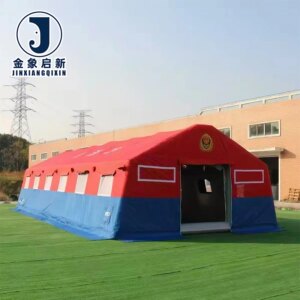
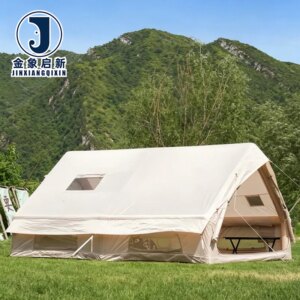
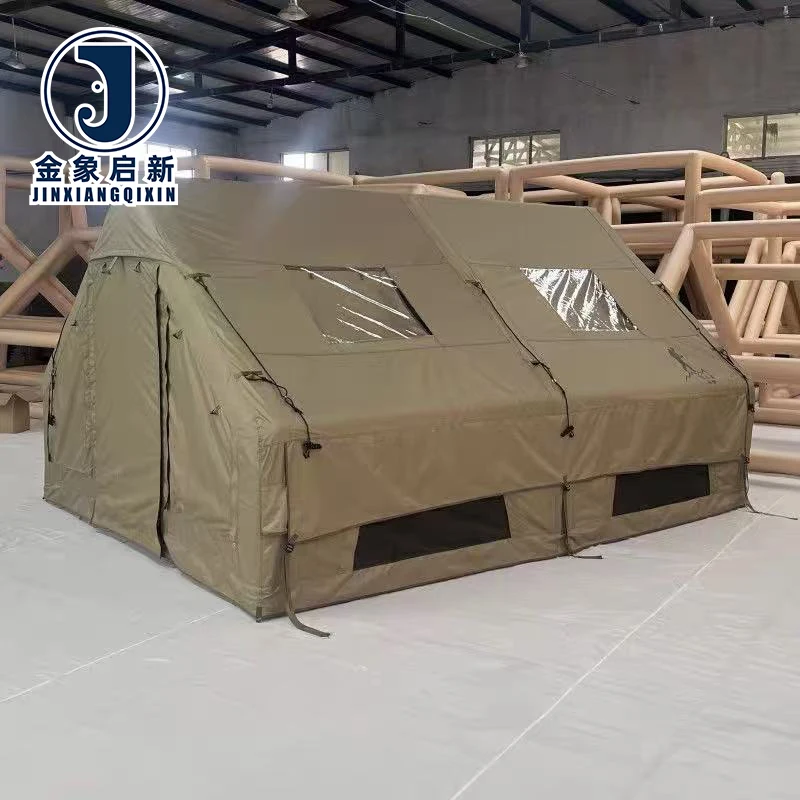
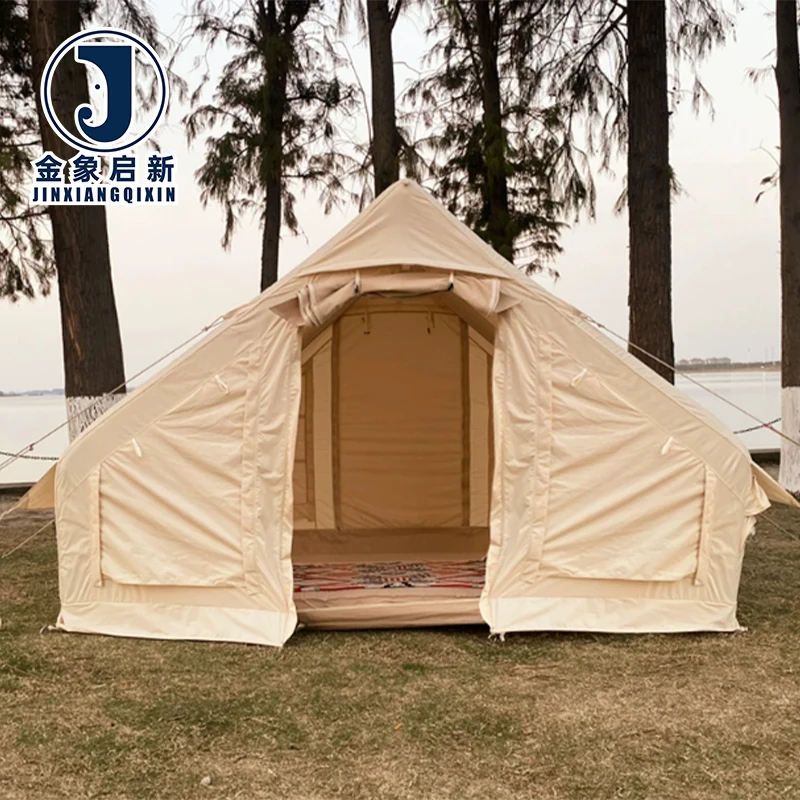
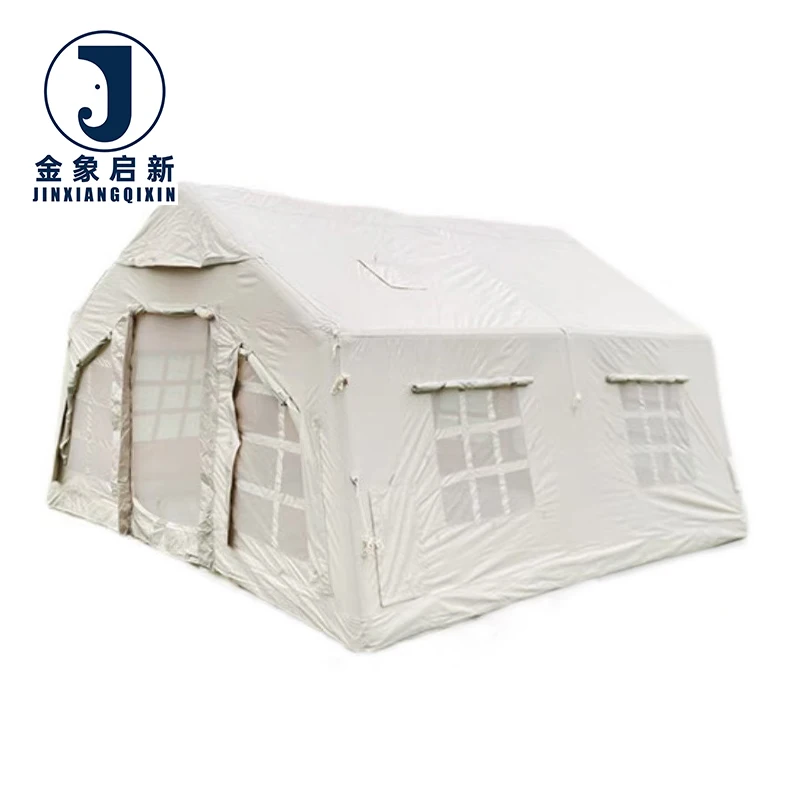
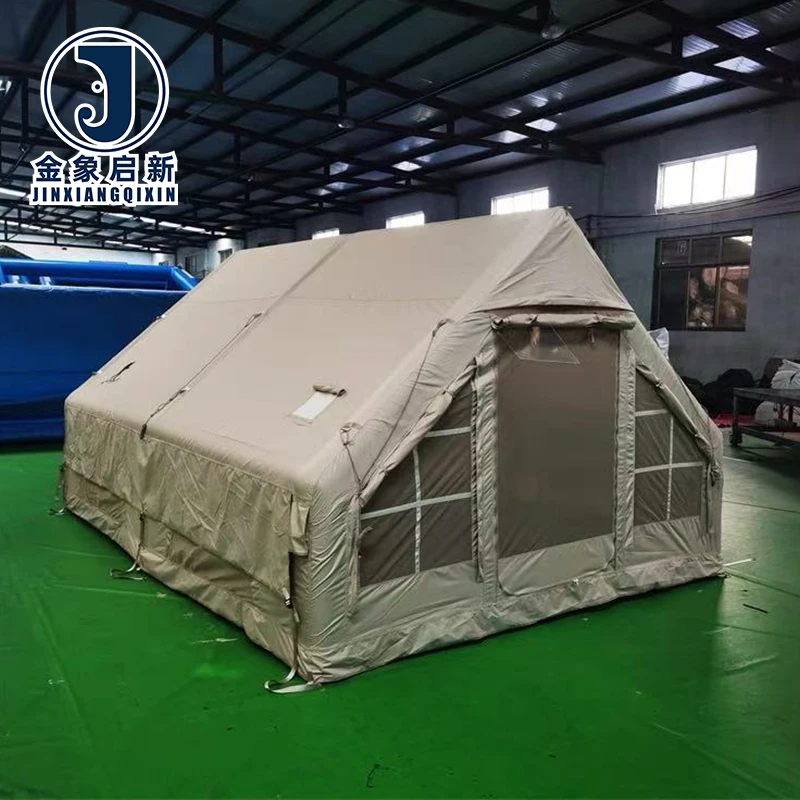
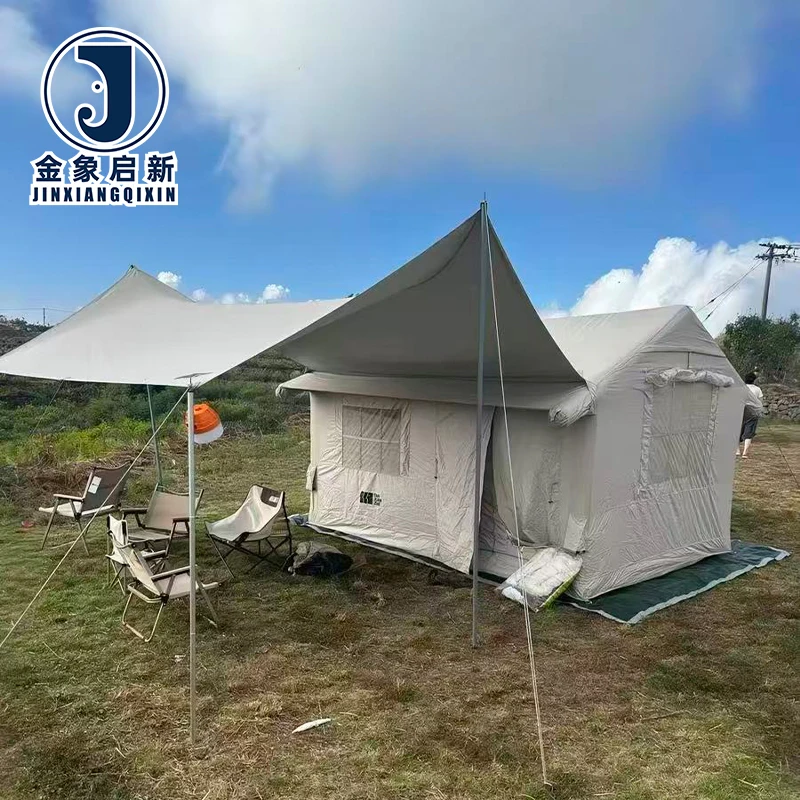
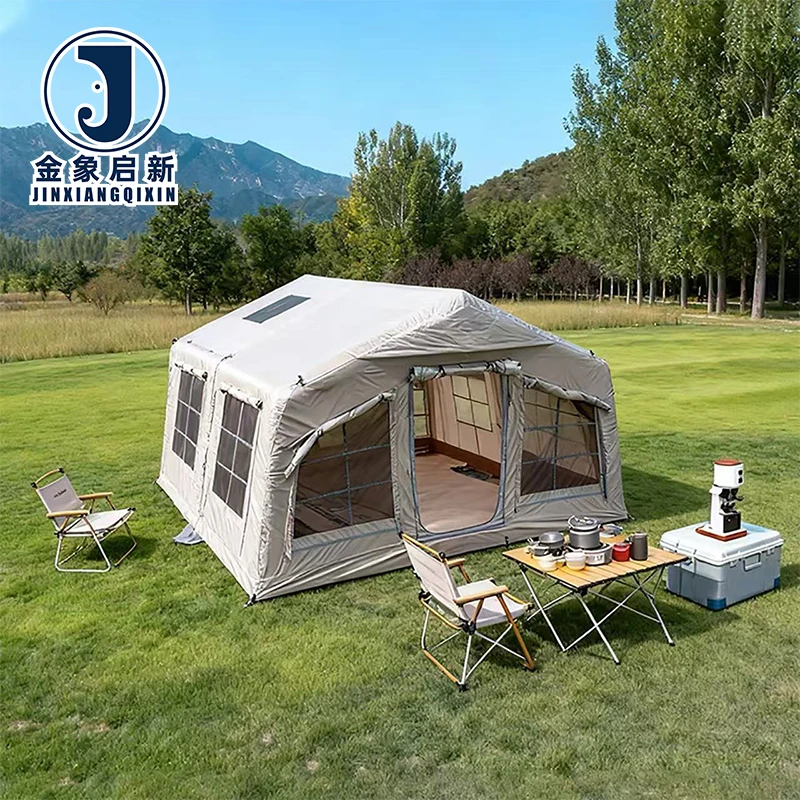
| Product Type | Inflatable Tent |
| Core Material | PVC tarpaulin |
| Waterproof | Fully coated, waterproof construction |
| UV-Resistant | Available with UV treatment — confirm the grade required for your market |
| Tear-Resistant | Tear-resistant construction — confirm the grade required for your market |
| Flame Retardant | Available in flame retardant grades — confirm the grade required for your market |
| Anti-Static | Available with anti-static treatment — confirm the surface resistance standard required for your market |
| Key Features | Waterproof, UV-resistant, tear-resistant, flame retardant, anti-static options |
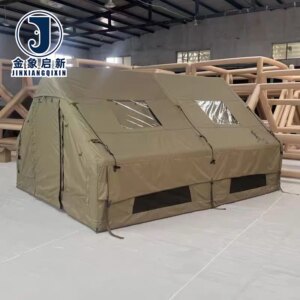
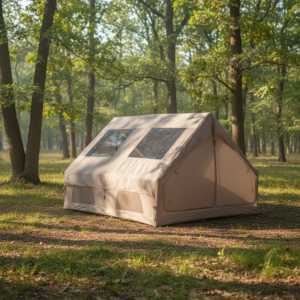
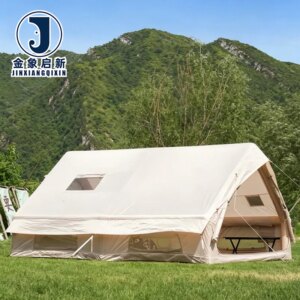
| Construction | Single-layer, quick automatic opening mechanism |
| Capacity | 4–6 person |
| Customization | OEM & ODM, sample customization, pattern printing, material selection, product design |
| Production Facility | 9,180 m², 3 full production lines, 36 sets of professional processing equipment |
| R&D Team | 10 technicians |
| Quality Control | Full-process QA&QC, 24-hour air pressure testing for inflation integrity |
| Standards | ISO 9001, ISO 14001, ISO 45001, CE |
Application Suitability
| Application | Exposure & Requirement |
|---|---|
| Commercial-grade inflatable camping tents | Extended outdoor UV exposure, repeated inflation cycles, ground moisture contact, abrasion from folding and packing |
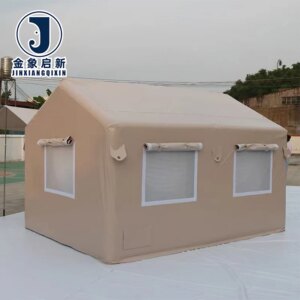
| Construction site temporary shelters | Wind load stress, dust and debris impact, rapid deployment and teardown cycles, fire safety compliance |
| Industrial event canopies | Large-span inflation pressure, crowd safety fire codes, branding and print durability under sun exposure |
| Large-scale outdoor gear deployment | Bulk transport abrasion, varied climate storage, repeated field setup in wet or humid conditions |
Why Colour Drift Across Rolls Derails Inflatable Tent Production
Inflatable tent fabric roll consistency is determined before coating, not after.
When tent manufacturers receive multiple rolls for a single production run, visible colour variation between adjacent panels is one of the most costly defects. It forces rework, delays shipment, and damages buyer confidence — especially when the finished tents are displayed side by side at trade shows or retail channels. The root cause is usually inconsistent pigment dispersion or uneven coating thickness, problems that originate in the mixing and coating stages rather than in final inspection. [NEED_CITE: coating weight variance and visual colour matching standards for PVC tarpaulin] Sourcing inflatable tent fabric roll stock from a facility with in-process colour verification at every stage removes this failure point before rolls ever reach the shipping container.
Batch Traceability From Pigment to Finished Roll
Each production batch of inflatable tent fabric roll stock is assigned a traceable identifier linked to the specific pigment lot, base fabric roll, and coating formulation used. This means that when a tent manufacturer places a reorder months later, the exact material recipe can be retrieved and matched. Sample chips from every batch are archived, providing a physical reference that eliminates guesswork when verifying colour alignment across multiple shipments.
Coating Uniformity and Inflation Integrity
For inflatable tent structures, the coating layer must maintain uniform thickness to hold air pressure without weak spots. A thin section in the PVC coating becomes a failure origin under cyclic inflation and deflation. Our 24-hour air pressure testing protocol on finished units verifies that the fabric holds structural pressure consistently. This testing reveals coating inconsistencies that visual inspection alone cannot detect. [NEED_CITE: air pressure retention testing methods for inflatable PVC structures]
GSM, Base Fabric and Coating Weight Interplay
The relationship between base fabric denier, weave density, and coating weight determines how the material behaves under tension during inflation. A higher GSM does not automatically mean greater tear resistance — if the base fabric has a loose weave, the coating bears more load than it should, leading to delamination at stress points. Conversely, a tightly woven base with moderate coating weight delivers better tear propagation resistance than a heavy-coated loose fabric. The coating method also influences weldability: knife-coated fabrics typically achieve stronger heat-welded seams than laminated alternatives because the PVC penetrates the weave rather than sitting on the surface. This matters directly for inflatable tent seams, which carry the internal air pressure load at every joint.
The Hidden Cost of Specifying on Price Per Kilogram Alone
When procurement decisions hinge primarily on cost per kilogram, the supplier has incentive to reduce coating weight or substitute lower-grade base fabric to hit the target price. The result is inflatable tent fabric that meets the quoted GSM on a sample swatch but delivers inconsistent performance across the roll. Weld seams fail prematurely because the coating is too thin to fuse properly. UV degradation appears within the first season because the stabilizer loading was reduced. These failures surface in the field, not at the factory gate, making them far more expensive to resolve. [NEED_CITE: premature weld failure in PVC tarpaulin inflatable structures]
Why Sourcing Inflatable Tent Fabric Here Reduces Risk
Three full production lines and 36 sets of professional processing equipment provide capacity to fulfil volume roll orders without rushing individual batches, which is where coating inconsistencies typically emerge. The 10-person R&D team develops material selections and samples matched to specific tent designs, enabling validation before bulk commitment. A 100% pre-shipment inspection verifies roll-to-roll GSM, colour, and coating integrity, supported by batch-specific quality reports. Production under ISO 9001, ISO 14001, and ISO 45001 systems ensures process control is documented and auditable. Sample libraries retained for each batch enable precise reorder matching without re-sampling.
Documentation & Verification
- Material specification sheet stating GSM, base fabric denier, coating type and colour reference for every roll batch
- Batch-specific quality inspection report with tensile strength and waterproof verification results included per shipment
- Flame retardant and anti-static test reports provided where applicable, matched to the grade specified on the order
- Roll packing list with individual roll weights and dimensions for container loading verification
- Certificate of origin and customs documentation prepared per destination country requirements
Fabrication, Handling & Storage
- Heat weld temperature and speed must be calibrated to the specific PVC coating weight on this inflatable tent fabric to avoid seam delamination under inflation pressure
- Store rolls vertically on end caps to prevent flat-spot deformation that compromises coating uniformity across the inflatable tent panel
- Avoid dragging rolls on unprotected surfaces — the single-layer PVC coating can pick up abrasion marks that show through on inflated panels
- Use compatible PVC-based adhesives for field repairs to maintain chemical bond with the tarpaulin coating surface
- Plan cutting layouts to minimise transverse welds across inflation chambers, as each seam is a potential pressure loss point
Request a Material Match for Your Inflatable Tent Programme
To receive an accurate specification recommendation and sample, share your target market fire safety and anti-static requirements, the inflation pressure range your tent design operates under, annual volume and preferred roll widths, and any colour or print specifications. If you need OEM or ODM development, include dimensional drawings or reference samples so the R&D team can confirm material selection before tooling begins.
Frequently Asked Questions
Q: How is roll-to-roll colour consistency controlled across large-volume inflatable tent fabric orders?
A: Pigment lots are matched to archived batch samples before each production run. In-process colour checks occur at the coating stage, and a 100% pre-shipment inspection compares every roll against the approved sample chip. Sample libraries are retained per batch, enabling precise colour matching on future reorders without requiring new sample approval cycles.
Q: What flame-retardant and anti-static grades are available, and which certifications apply?
A: Flame retardant and anti-static treatments are available in multiple grades. The specific grade required depends on your destination market and application — construction shelters, event canopies, and camping tents each carry different compliance demands. Share your target standard or certification requirement, and we provide the matching formulation with a test report included in the shipment documentation.
Q: What custom widths, roll lengths and printing options are supported, and what are the minimums?
A: Custom widths, roll lengths, pattern printing, and material formulations are supported through OEM and ODM development. Minimum order quantities depend on the specific width, colour, and printing complexity. Submit your required dimensions and annual volume estimate to receive a production plan with lead time and batch sizing confirmation.
Q: How is container loading planned by roll count and weight for inflatable tent fabric shipments?
A: Container loading is calculated based on roll diameter, width, and individual roll weight to maximise space utilisation while preventing compression damage during transit. A detailed roll packing list accompanies every shipment, listing each roll’s dimensions and weight for receiving verification against the order quantity at destination.
Q: What documentation is provided per shipment for import and compliance purposes?
A: Each shipment includes a material specification sheet, batch-specific quality inspection report, roll packing list, certificate of origin, and customs documentation prepared for the destination country. Flame retardant and anti-static test reports are included where applicable. ISO and CE certificates are available to support import compliance and buyer audits.