
Description
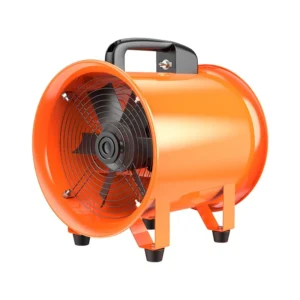
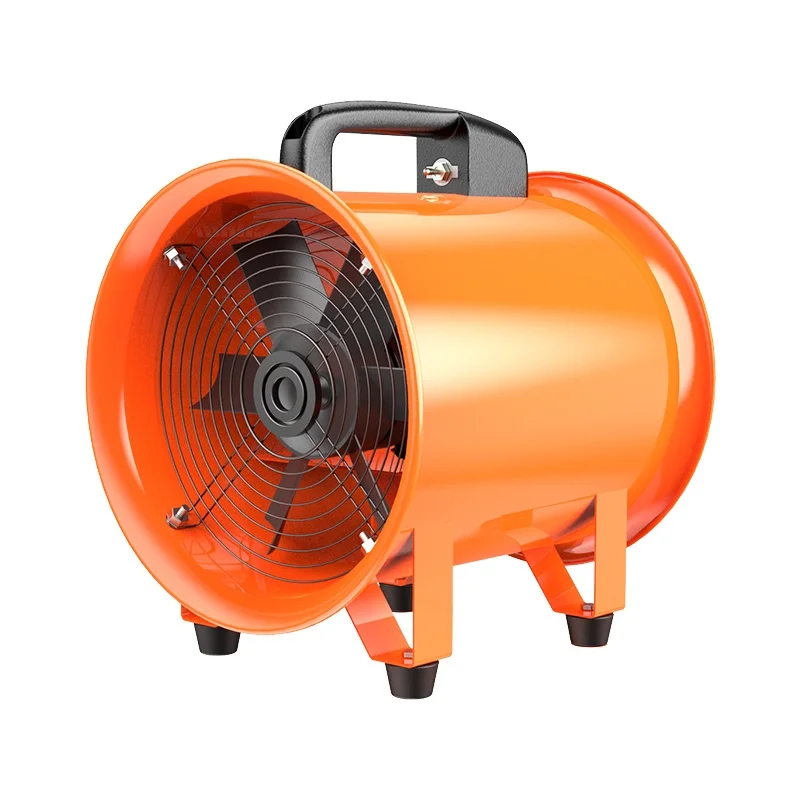
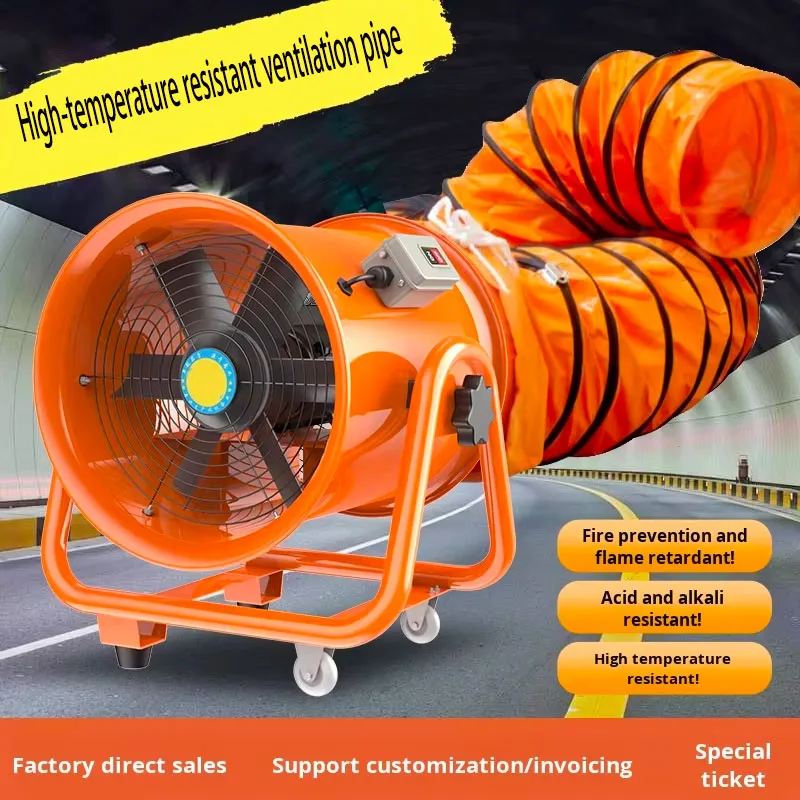
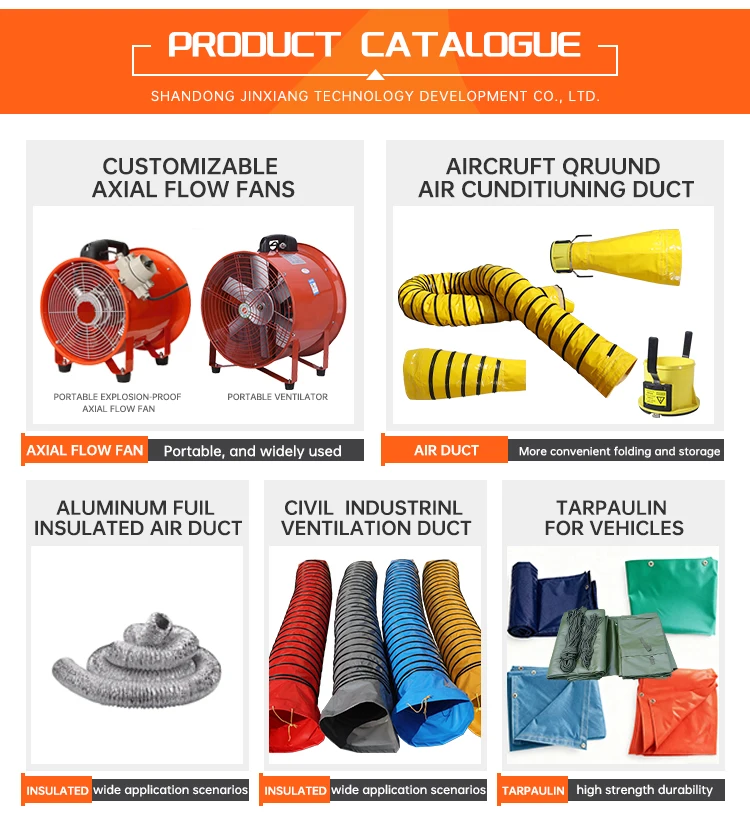
Complete Axial Flow Fan Size Range — 11 model options from 200mm to 900mm paired with ventilation duct systems, enabling mining and construction buyers to specify fan and duct from a single source.
Technical Specifications
| Parameter | Value |
|---|---|
| Product Type | Axial Flow Fan |
| Size Range | 200mm / 250mm / 300mm / 350mm / 400mm / 450mm / 550mm / 650mm / 750mm / 850mm / 900mm |
| Power Range | 250W / 370W / 550W / 750W / 1100W / 2200W / 3000W / 4000W / 5500W |
| Air Volume | 1300 m³/h to 28000 m³/h |
| Total Pressure | 140 Pa to 320 Pa |
| Voltage | 220V / 380V |
| Noise Level | 57 dB(A) to 88 dB(A) |
| Bearing Type | Ball Bearing |
| Housing Material | Cast Iron |
| Customization | ODM Available |
| Standards | ISO, CE |
Application Suitability
| Application | Exposure & Requirement |
|---|---|
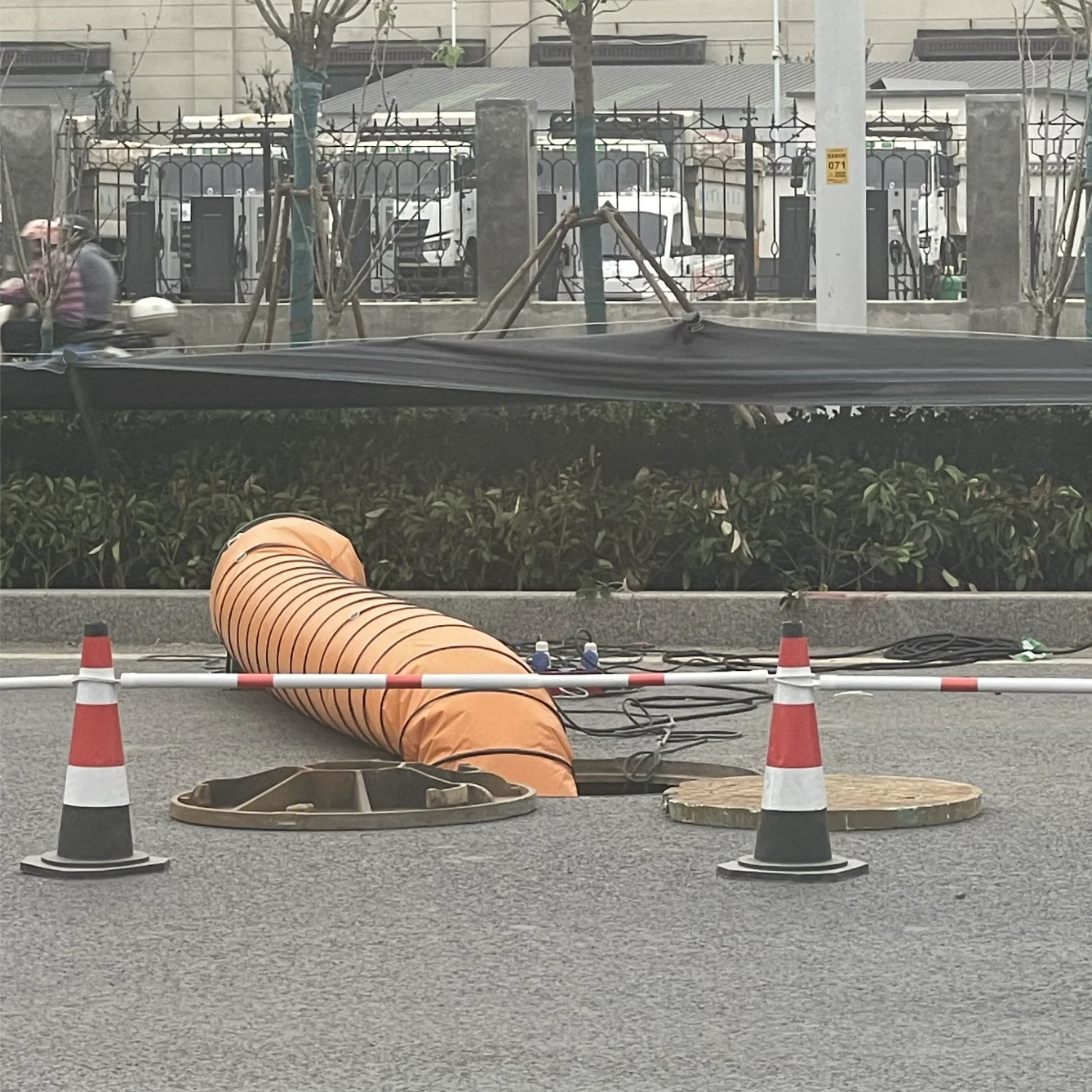
| Mining and tunnelling ventilation | Forced or exhaust airflow through flexible duct in abrasive, humid underground conditions |
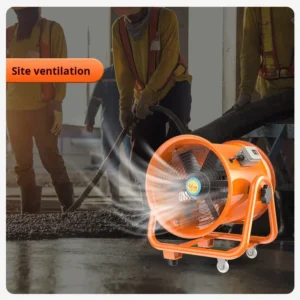
| Construction confined space ventilation | Fume and dust extraction during welding, coating or demolition in enclosed areas |
| Aviation and industrial maintenance bays | Portable exhaust for solvent and paint fumes in tight-access service bays |
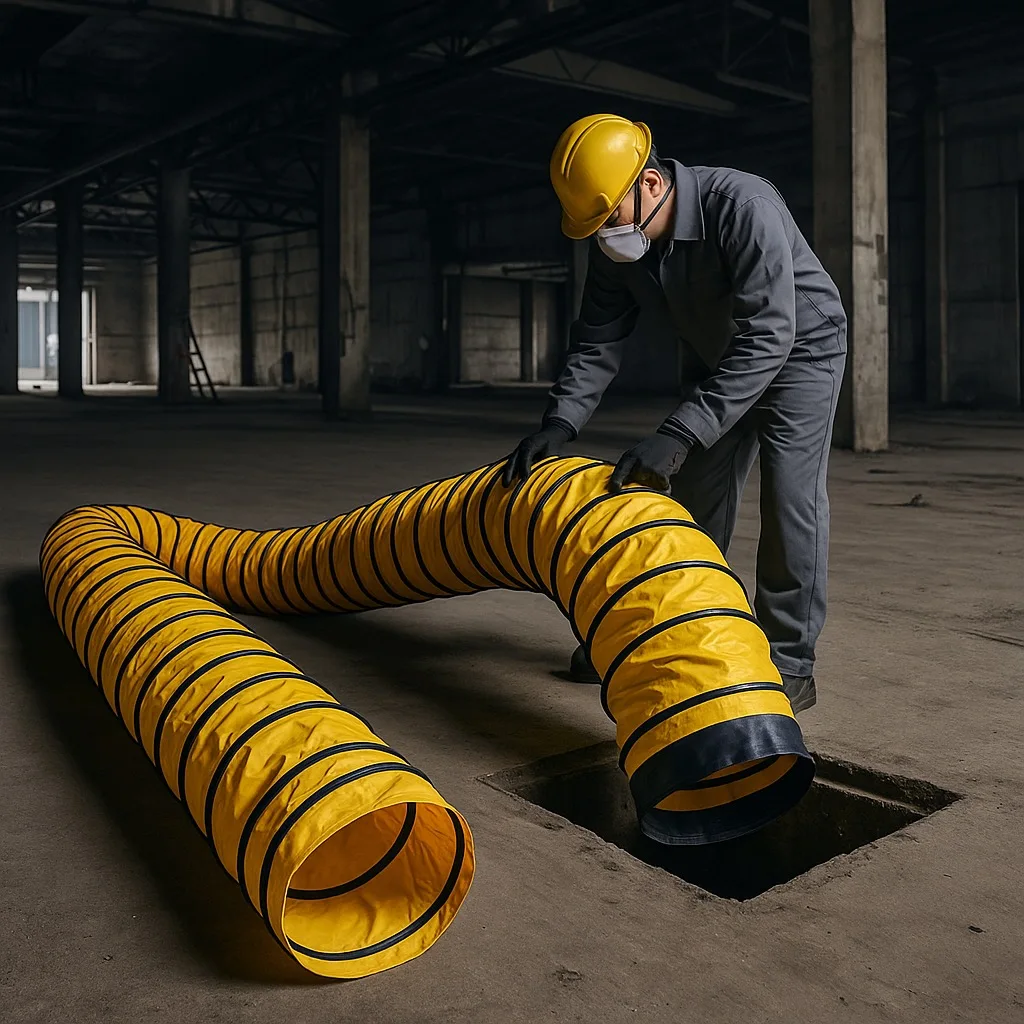
| Temporary site ventilation | Rapid deployment for trenches, basements and partially enclosed structures |
Why Ventilation Duct Without the Right Fan Specification Fails on Site
An Axial Flow Exhaust Fan for Tight Space Ventilation must be matched to duct diameter, run length and system resistance — specifying either component in isolation leads to airflow shortfall.
Ventilation duct is often ordered by diameter alone, with the fan selected later based on availability rather than duty point calculation. The result is a system that moves less air than the site safety plan requires, particularly where duct runs exceed typical lengths or include multiple bends. In underground mining and tunnelling, this gap between designed and delivered airflow can halt production until corrective equipment arrives [NEED_CITE: ventilation airflow requirements per occupational health and safety standards]. Contractors who source duct and fan together reduce the risk of mismatch, since the supplier can verify the fan performance curve against the actual duct resistance before dispatch.
Matching Fan Duty Point to Duct System Resistance
Selecting the correct Axial Flow Exhaust Fan for Tight Space Ventilation begins with the system resistance curve, not the fan catalogue. Each size in the range — from 200mm to 900mm — delivers a distinct air volume and pressure combination, and the operating point sits where the fan curve intersects the duct resistance curve. Longer duct runs, sharper bends and smaller diameters all increase resistance, shifting the duty point toward lower volume. Providing the full duct layout at inquiry stage allows the fan selection to be verified against actual site conditions rather than generic assumptions.
Cast Iron Housing and Ball Bearing Construction for Continuous Site Duty
Mining and tunnelling environments expose ventilation equipment to sustained vibration, airborne particulate and extended operating cycles. The cast iron housing across this fan range absorbs vibration and resists impact damage during relocation between work faces. Ball bearing construction supports continuous operation with defined service intervals, reducing unplanned downtime compared to sleeve bearing alternatives [NEED_CITE: bearing service life under continuous industrial duty cycles]. Dual voltage compatibility at 220V and 380V allows deployment across varied site power supplies without requiring transformers or phase converters.
Reading the Specification Table for Ventilation Procurement
Air volume and total pressure together determine whether a fan can push or pull the required airflow through the connected duct system. A higher air volume figure does not guarantee adequate performance if the total pressure is insufficient for the duct resistance — both values must be evaluated at the intended duty point. The noise level range, spanning 57 dB(A) at smaller sizes to 88 dB(A) at larger models, informs hearing protection requirements and placement relative to occupied work areas. Power ratings from 250W to 5500W correspond to the air volume and pressure each size delivers, with higher power models reserved for long duct runs or high-resistance applications. Voltage selection between 220V and 380V should align with site supply availability to avoid phase imbalance or cable sizing issues. ODM availability means fan specifications can be adjusted where standard models do not meet the exact duty point required.
What Happens When Fan and Duct Are Specified Separately
Sourcing ventilation duct from one supplier and the Axial Flow Exhaust Fan for Tight Space Ventilation from another creates a gap where neither party takes responsibility for system airflow. The duct supplier certifies the fabric; the fan supplier certifies the motor — but the assembled system delivers less air than the safety plan demands. This shortfall often surfaces only during site commissioning, when airflow measurements fall below the threshold required by the ventilation engineer [NEED_CITE: ventilation system commissioning and airflow verification]. Correcting the problem means replacing either the fan or the duct layout under time pressure, with project costs escalating while the work face remains unventilated.
Sourcing Fan and Duct from One Coated Fabric Manufacturer
Jinan Jinxiang produces both ventilation duct fabric and the fan units that drive airflow through them, which means system compatibility is addressed before equipment leaves the factory. The 10-person R&D team evaluates fan performance curves against duct resistance to confirm the duty point matches site requirements. Three full production lines and 36 sets of professional equipment support bulk orders where multiple fan sizes and duct lengths are needed for a single project. Pre-shipment inspection covers electrical safety and airflow performance testing, with results documented before dispatch. Samples are developed within days for custom requirements, allowing buyers to verify fitment and performance before committing to full production.
Documentation & Verification
- Material specification sheet confirming fan model, size, power rating and voltage
- Performance test record showing air volume and total pressure at the stated duty point
- ISO and CE certificates covering the fan unit and associated electrical components
- Pre-shipment inspection record covering electrical safety and airflow output verification
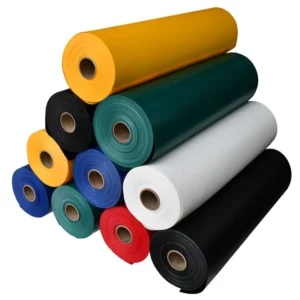
- Packing list detailing fan model, quantity and associated duct fabric rolls per shipment
- Certificate of origin and customs documentation for international project sites
Fabrication, Handling & Storage
- Confirm duct diameter matches fan flange size before site assembly to prevent air leakage at the connection point
- Store cast iron fan units upright on pallets to prevent housing distortion during extended site storage
- Handle fan units with mechanical lifting equipment — cast iron housing weight increases significantly at 750mm and above
- Verify voltage and plug configuration against site supply before first energisation to prevent motor damage
- Inspect ball bearing condition and lubrication after transit before placing fan into continuous duty service
- Protect fan intake and exhaust openings with covers during storage to prevent particulate ingress
Project Inquiry Requirements
Provide the duct diameter, total run length and number of bends in your ventilation layout so the fan duty point can be calculated against actual system resistance. Specify whether fire-retardant or anti-static certification is required by your site regulations, and indicate the applicable standard. Confirm the available site voltage and phase configuration to ensure the correct motor is supplied. Where multiple work faces require ventilation, provide the layout for each to allow fan and duct quantities to be matched accurately.
Frequently Asked Questions
Q: How do I match fan size and air volume to my ventilation duct diameter and run length?
A: Provide your duct diameter, total run length and the number of bends or junctions. The fan performance curve is then plotted against your system resistance curve to identify the operating point. The correct Axial Flow Exhaust Fan for Tight Space Ventilation is the model that delivers the required air volume at that intersection, not simply the largest volume in the catalogue.
Q: What fire-retardant or anti-static certification is needed for mining and tunnelling sites?
A: Requirements vary by jurisdiction and project specification. Some sites mandate specific flame retardant grades for duct fabric, while others require anti-static properties to prevent ignition in gaseous atmospheres. State the applicable standard in your inquiry so both duct fabric and fan can be supplied with matching certification documentation.
Q: Can fan voltage and plug configuration be customised for different country standards?
A: The range supports 220V and 380V configurations. ODM customisation extends to plug type, cable length and frequency compatibility for international projects. Provide your site electrical specifications at inquiry stage to ensure the motor and wiring match local supply standards without requiring on-site adapters or transformers.
Q: What is the expected bearing service life under continuous operation?
A: Ball bearing service intervals depend on operating temperature, load and environmental contamination. In clean, moderate-temperature conditions, ball bearings support extended continuous duty cycles. Request the bearing specification and recommended service interval for your specific operating environment to plan maintenance scheduling around your project timeline.
Q: How are cast iron fan units packaged to prevent transit damage?
A: Fan units are secured on pallets with housing protection and intake and exhaust covers to prevent particulate ingress and physical damage during shipping. Larger models at 750mm and above require mechanical handling at destination. Packaging specifications can be adjusted for container loading alongside ventilation duct rolls in mixed shipments.