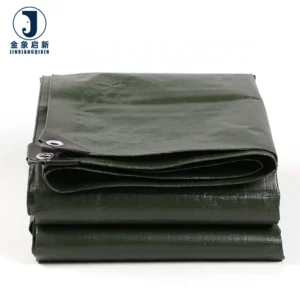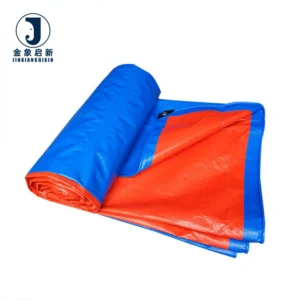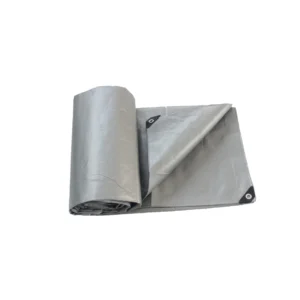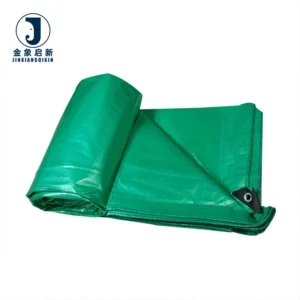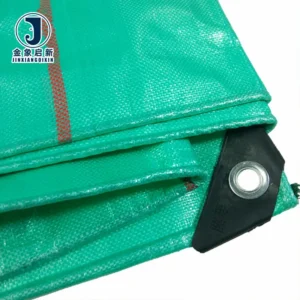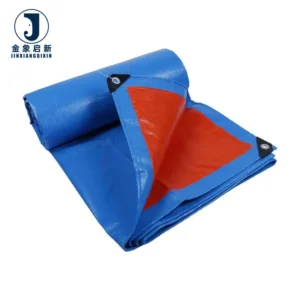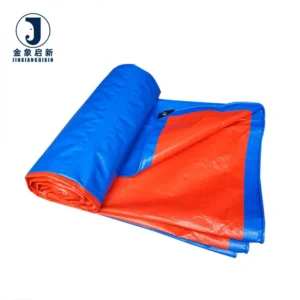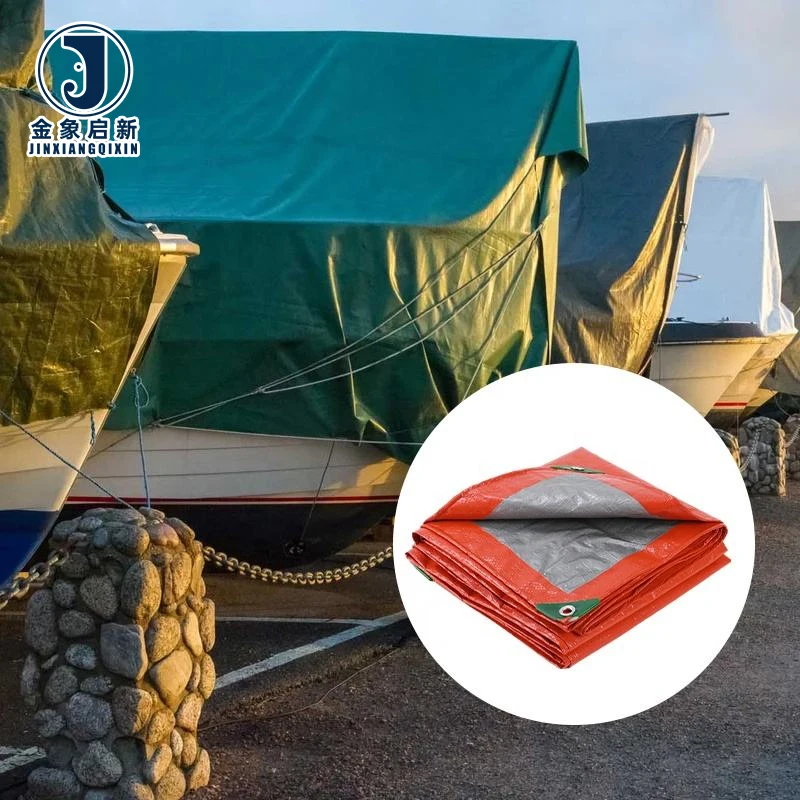
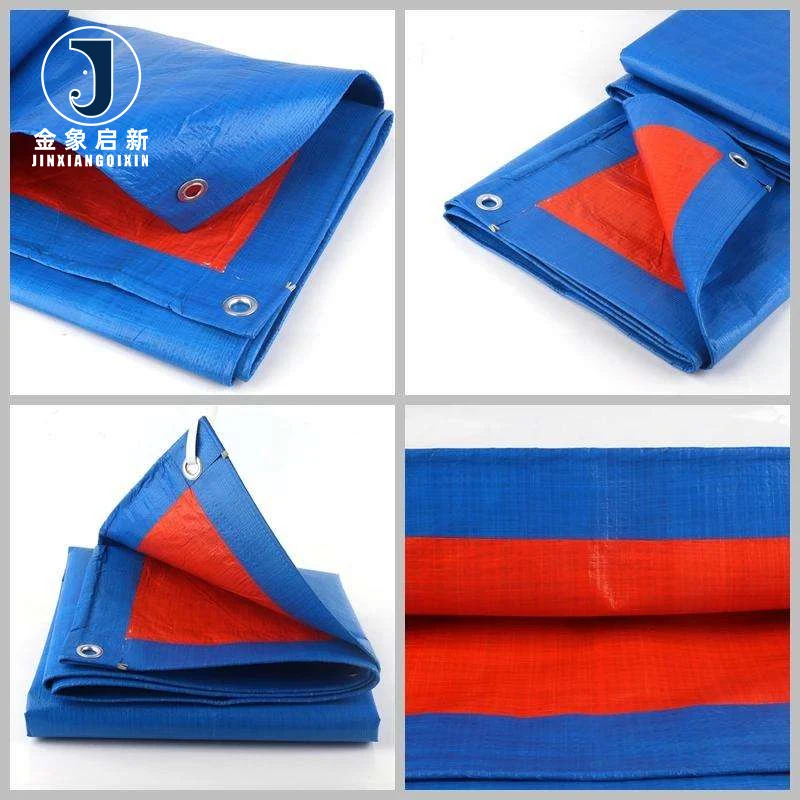
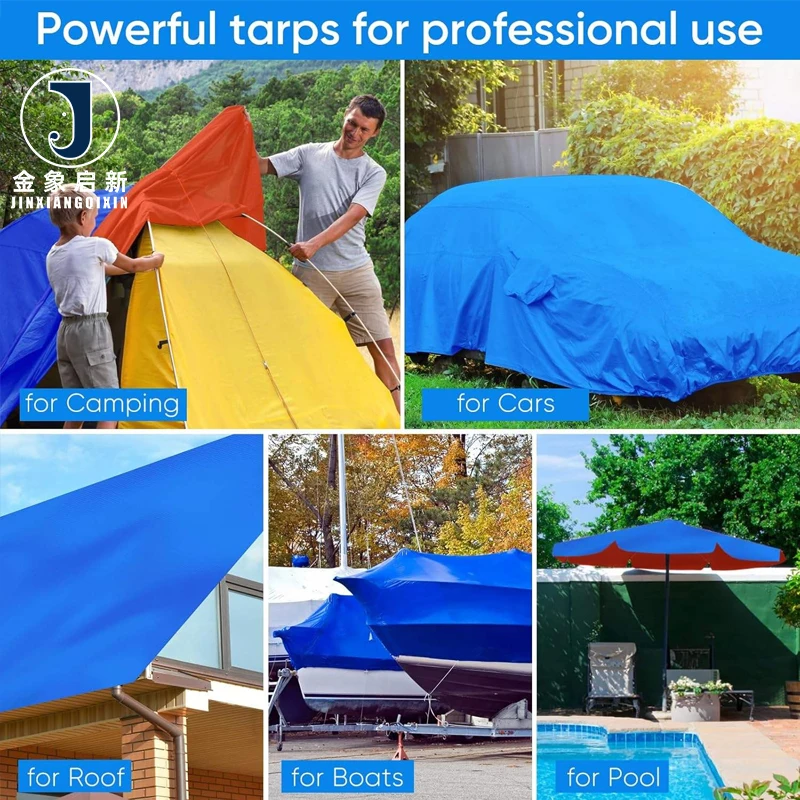
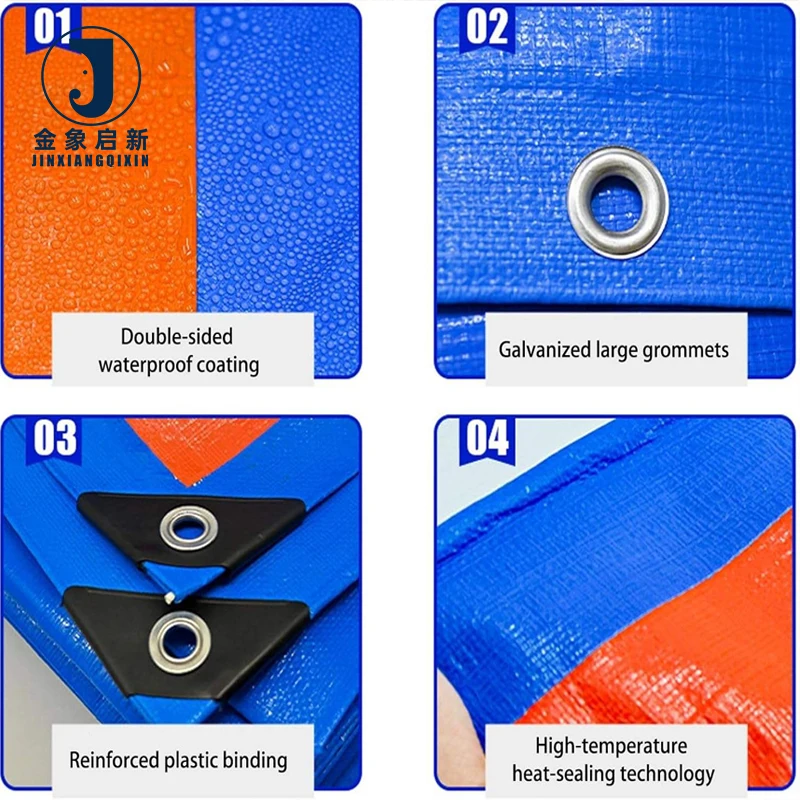
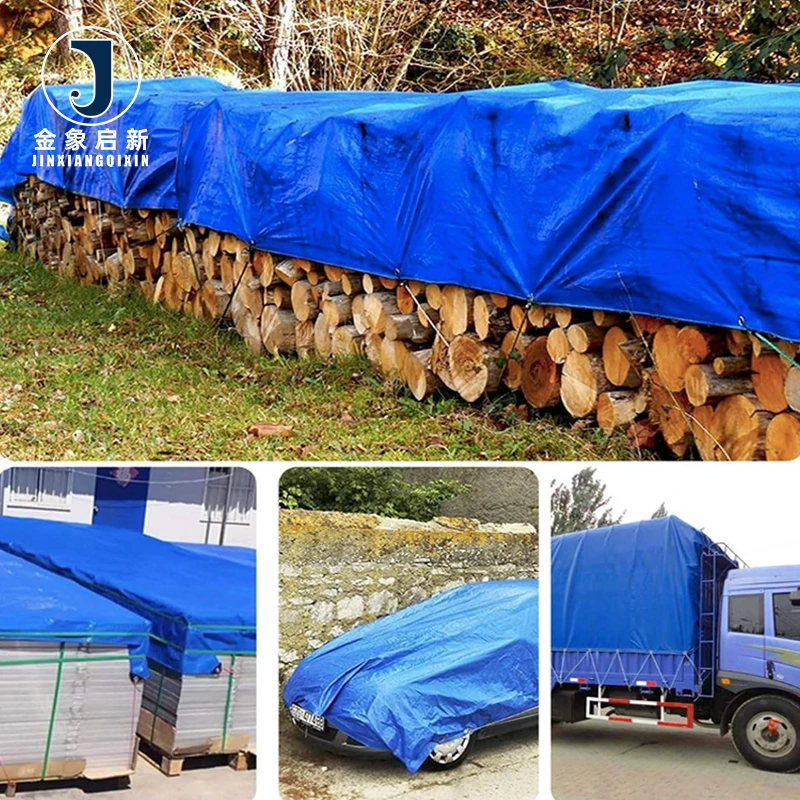
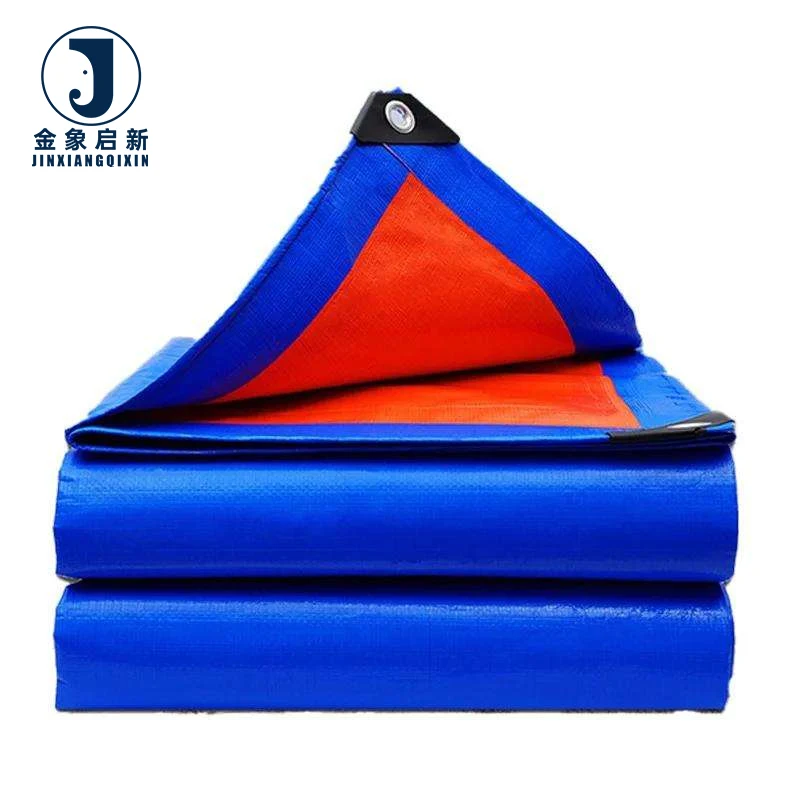
Description
Bulk Consistency — Every PE tarpaulin roll leaving the facility carries a specification sheet stating exact coating weight and base fabric, verified against the order before dispatch.
Technical Specifications
| Parameter | Value |
|---|---|
| Product Type | PE Tarpaulin |
| Material | HDPE fabric cross weaving, laminated both sides with LDPE |
| Coating Method | Laminated |
| Structure Options | 3 layers (1 fabric + 2 coating) / 5 layers (2 fabric + 3 coating) |
| Weight (GSM) | 80–110 (lightweight), 120–150 (medium), 160–240 (heavy-duty) |
| Total Thickness | 0.18–0.22 mm (lightweight), 0.22–0.28 mm (medium), 0.30–0.35 mm (heavy-duty) |
| Mesh Count | 8×8 (lightweight), 10×10 (medium), 12×12 (heavy-duty) |
| Tensile Strength (N/5cm) | Meridian 300–500 / Latitude 250–450 (lightweight); Meridian 500–800 / Latitude 400–700 (medium); Meridian 900–1200 / Latitude 700–1000 (heavy-duty) |
| Color | Custom color available |
| Size | Custom size available |
| UV Treatment | Available — confirm the UV grade required for your market |
| Waterproof | Double waterproof surfaces |
| Eyelet & Hem Options | Reinforced rustproof grommets, reinforced corner |
| Center To Center Spacing | 39.4 inches |
| Printing Option | Custom printing supported |
Application Suitability
| Application | Exposure & Requirement |
|---|---|
| Agricultural covering | Prolonged sun exposure, moisture, wind load, crop and soil protection |
| Warehouse coverage | Dust and water ingress, UV degradation on roof or wall openings |
| Truck tarpaulin | Road abrasion, wind flap fatigue, tie-down stress at grommets |
| Industrial protective cover | Chemical splash, mechanical abrasion, outdoor storage weathering |
| Canopy tents and camping | Rainfall, UV exposure, repeated folding and transport |
| Pond and reservoir lining | Continuous water contact, soil chemistry, puncture from substrate |
Why Roll-to-Roll Colour Drift Ruins a PE Tarpaulin Roll Stock Shipment
Colour matching must be verified against a reference standard before the rolls are loaded, not after the container arrives.
Distributors restocking PE tarpaulin roll stock across regional warehouses have seen entire batches returned because two rolls placed side by side on the same shelf showed visible shade differences. The buyer receives a container of rolls that individually look fine, but when a customer cuts panels from adjacent rolls for a single truck cover or greenhouse roof, the mismatch becomes obvious. This is not a cosmetic complaint — it signals inconsistent masterbatch dosing during the lamination stage, which often correlates with uneven UV stabiliser distribution across the batch [NEED_CITE: batch consistency protocols for PE laminated fabrics]. The cost of replacing rolls, re-shipping, and managing the customer dispute far exceeds the savings from choosing a lower-priced supplier.
How Three Weight Tiers Map to Real Purchasing Decisions
When buying PE tarpaulin roll stock in volume, the GSM tier you choose determines which customer segment you can serve. The lightweight grades at 80–110 GSM suit short-term agricultural covers and temporary site protection where cost-per-square-metre drives the decision. Medium grades at 120–150 GSM fill the high-volume distributor segment — warehouse covers, general-purpose truck tarps, and canopy tent fabric that must survive a full season. The heavy-duty range at 160–240 GSM answers demand from construction contractors and fleet operators who need tear resistance at stress points and will inspect the material on arrival. Stocking across all three tiers from one source simplifies container loading and reduces the number of supplier relationships to manage.
Lamination Structure and What It Means for Your Customers
The 3-layer construction places a single HDPE woven fabric between two LDPE coating films, giving reliable waterproof performance at a competitive roll cost. The 5-layer option adds a second fabric layer and an additional coating barrier, raising tensile strength and puncture resistance for applications where the tarpaulin faces mechanical abuse or sustained wind load. For wholesale buyers, this distinction matters because it lets you offer two quality tiers within the same PE tarpaulin roll product family — a value line and a premium line — both sourced from the same production run. The LDPE lamination also determines how well the fabric heat-welds during fabrication [NEED_CITE: lamination adhesion test methods for PE coated fabrics]. Poor bonding between layers shows up as delamination at the fold line after the first season of outdoor use.
Reading the Specifications Behind the GSM Number
GSM alone does not predict how a roll will perform once it is cut and installed. A 120 GSM PE tarpaulin with a 10×10 mesh count and tight HDPE cross-weave can outperform a 140 GSM roll with a looser 8×8 weave, because tensile and tear strength depend on how many yarns share the load across any given centimetre of fabric. The LDPE lamination weight on each side adds to the total GSM without contributing proportionally to strength — it contributes to waterproof integrity and surface durability instead. Thickness readings between 0.18 mm and 0.35 mm across the three grades correlate more closely with puncture resistance than GSM does, since a thicker cross-section absorbs more energy before a sharp substrate or cargo edge penetrates the film. Buyers specifying by weight should request the base fabric weight and coating weight stated separately on the material specification sheet to understand what they are actually receiving.
The Hidden Cost of Accepting Generic Roll Stock Without Verification
Rolls ordered at a stated GSM sometimes arrive lighter than the quotation specified, with the material shortfall hidden inside the coating layers where a visual check cannot detect it. A distributor who ships unverified rolls to end users absorbs the warranty claims when covers tear prematurely at grommet points or along fold lines. Colour variation between production batches forces warehouse staff to sort and segregate rolls before resale, adding handling cost and delaying order fulfilment. Reinforced corners and rustproof grommets may be omitted on some rolls within the same shipment if the finishing specification was not locked in the purchase order [NEED_CITE: pre-shipment inspection standards for laminated tarpaulin rolls]. Each of these failures traces back to insufficient documentation at the point of dispatch.
Why Buyers Source PE Tarpaulin Roll Stock Here
Three full production lines with 36 sets of professional equipment give the facility capacity to fill container-volume orders without splitting production across partner factories. A 10-person R&D team handles custom colour matching, width adjustment, and print layout before production begins, so the first roll matches the approved sample. Dedicated QA/QC at every production stage — weaving, lamination, finishing, and packing — catches GSM drift and colour deviation before the roll is wrapped. Nearly 30 years of focused coated-fabric experience means the production team recognises lamination faults that automated sensors miss. Every roll ships with a pre-shipment inspection record that the buyer can review before the container is sealed.
Documentation & Verification
- Material specification sheet stating exact GSM, base fabric denier, and LDPE coating weight per roll
- Colour reference confirmed against approved standard for all rolls in the same order
- 100% pre-shipment inspection record provided before container loading
- Roll packing list detailing roll count, individual weight, and container loading plan
- Certificate of origin and full customs documentation for destination-country clearance
Fabrication, Handling & Storage
- Heat-weld settings must match the LDPE lamination grade — test a scrap piece from each roll batch before full production runs
- Reinforced rustproof grommets at 39.4-inch spacing suit standard tie-down patterns; confirm spacing with your hardware supplier
- Store PE tarpaulin rolls vertically on pallets to prevent flat-spot deformation on the outer wrap layers
- Unroll and allow the fabric to relax for several hours before cutting to reduce tension-induced measurement error
- Clean surfaces with mild detergent only — solvents can attack the LDPE coating and compromise waterproof integrity
What to Include in Your Inquiry
Specify the GSM tier, roll width, and total metreage you need per colour so the production team can plan batch runs that maintain roll-to-roll consistency. State whether you require finished cut sizes with grommets or if you are buying roll stock for your own fabrication line. If your market mandates UV stabilisation or fire-retardant grades, name the standard your customers expect so the correct additive package is selected at the lamination stage.
Frequently Asked Questions
Q: What GSM grades and widths are available for PE tarpaulin roll stock?
A: Lightweight grades from 80–110 GSM, medium from 120–150 GSM, and heavy-duty from 160–240 GSM are produced on the same lines. Custom widths are available — confirm the required width and container loading quantity so the production schedule can group your rolls into a single batch for colour consistency.
Q: How is colour consistency maintained across multiple rolls in one order?
A: Each production batch uses a single masterbatch mix, and colour is checked against the approved reference at the lamination stage. Rolls from the same order are grouped in one batch run where possible. A pre-shipment inspection record documents the colour check before dispatch.
Q: What is the minimum order quantity for custom colour or width?
A: Minimums depend on the GSM grade and the colour changeover cost on the lamination line. Standard stock colours carry lower minimums than bespoke matches. Provide your target colour reference and annual volume so a realistic minimum can be quoted against your container plan.
Q: How many PE tarpaulin rolls fit in a standard shipping container?
A: Roll count depends on the GSM grade, roll width, and roll length. A packing list with container loading plan by roll count and total weight is prepared before dispatch so you can confirm the load plan matches your freight booking and warehouse capacity.
Q: Can a material test report be provided for UV treatment and tensile strength?
A: UV treatment is available in grades matched to your market requirements — confirm the standard or exposure duration your end users expect. Tensile strength data for the specified GSM tier is documented on the material specification sheet that accompanies each shipment.