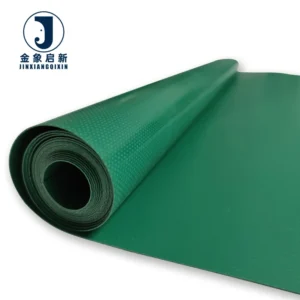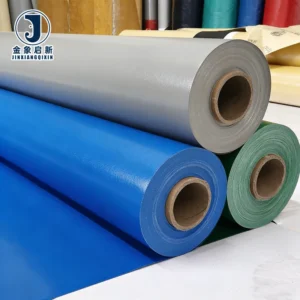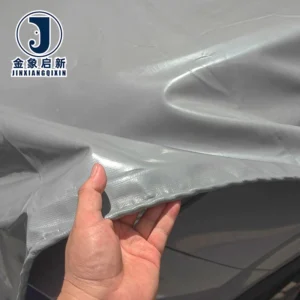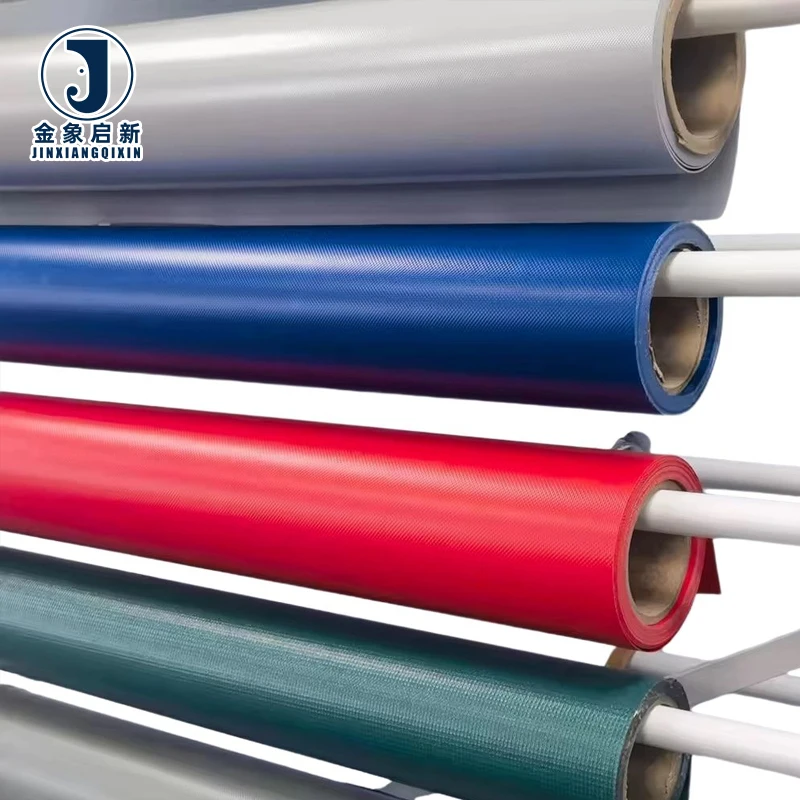
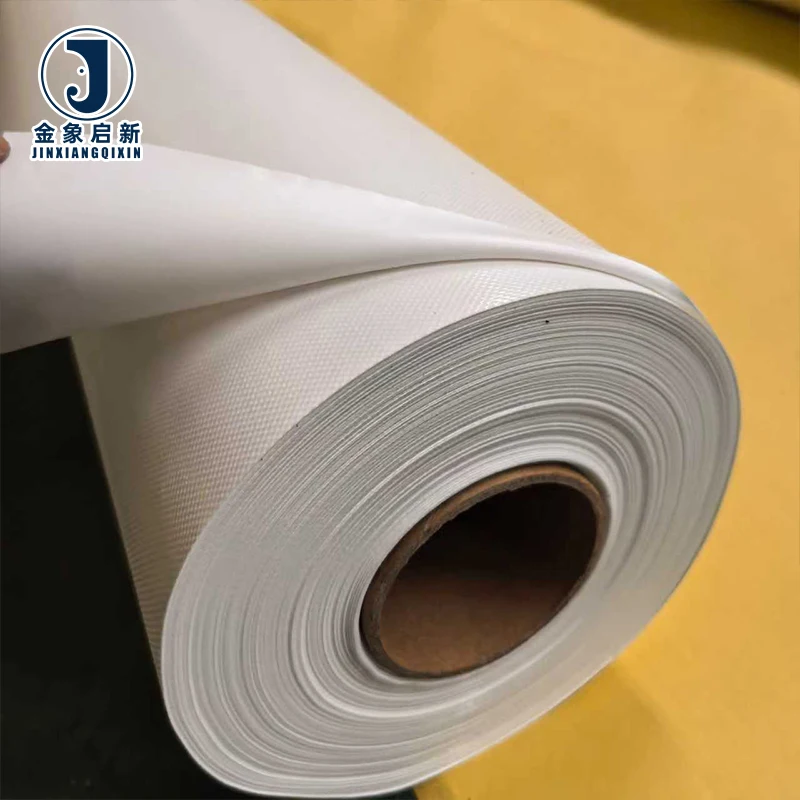
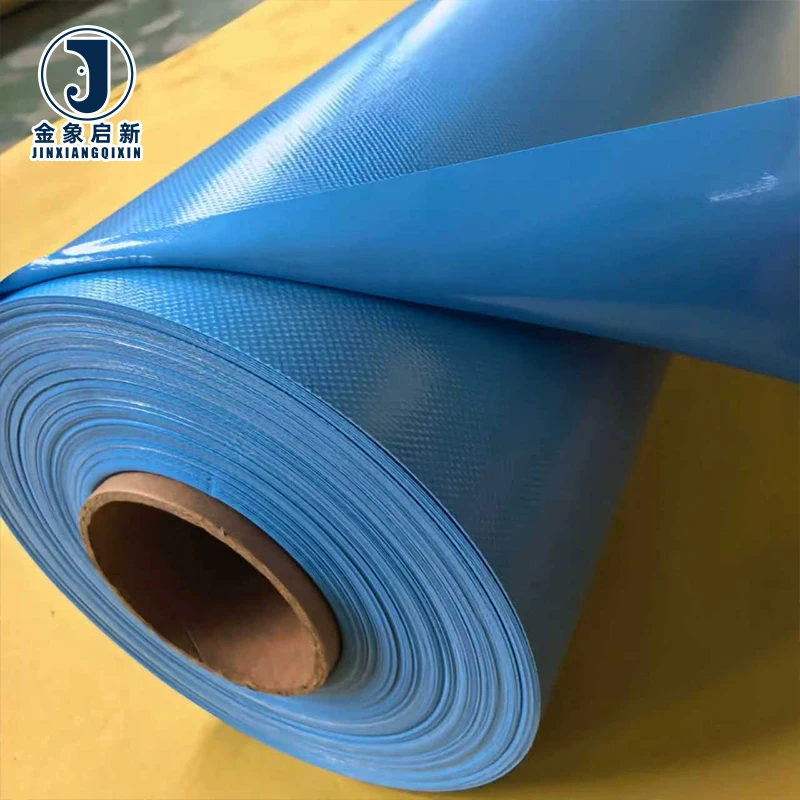
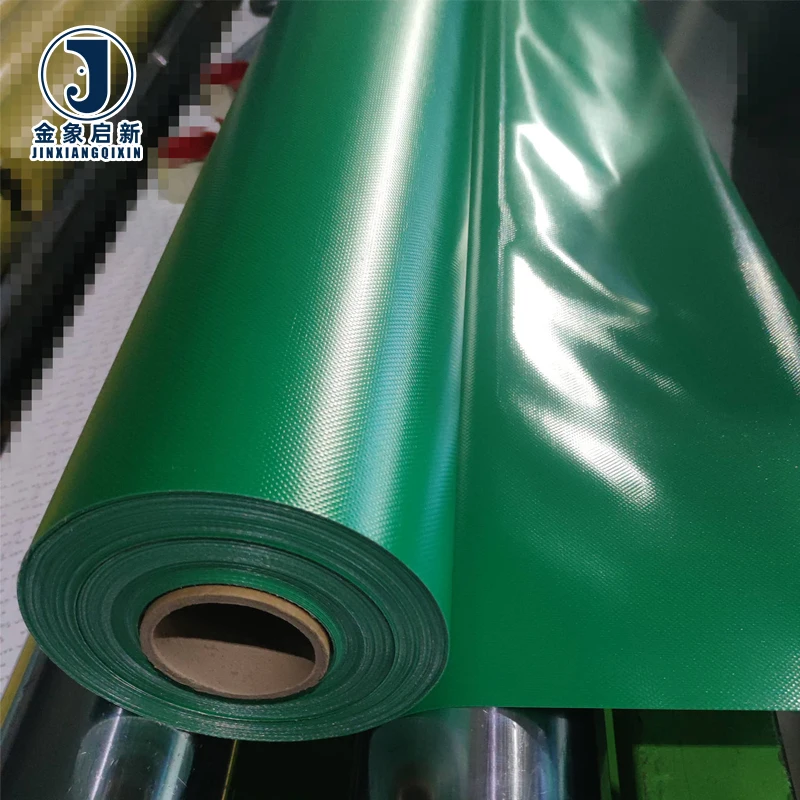
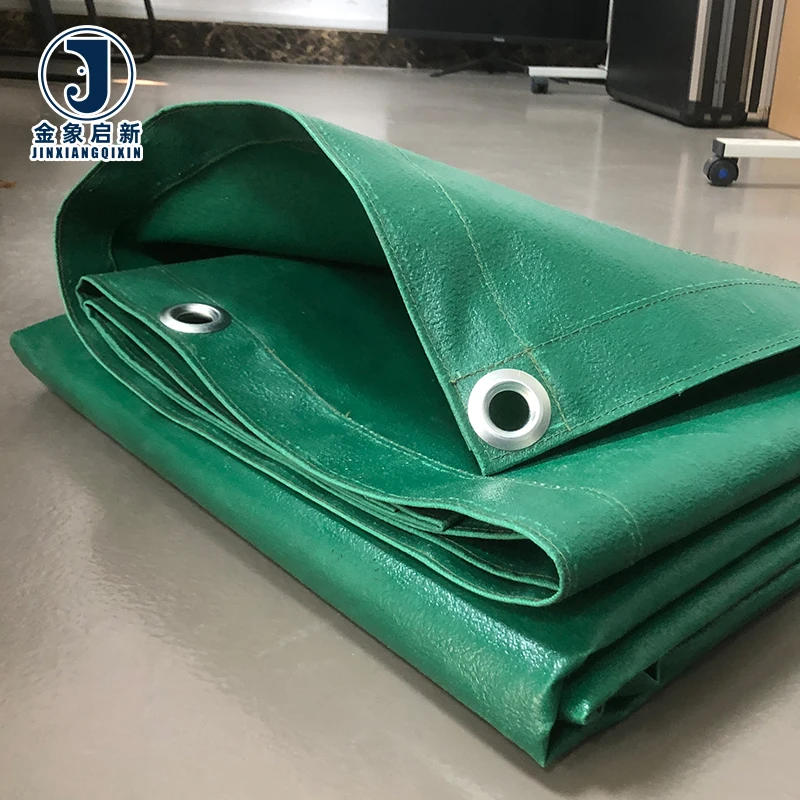
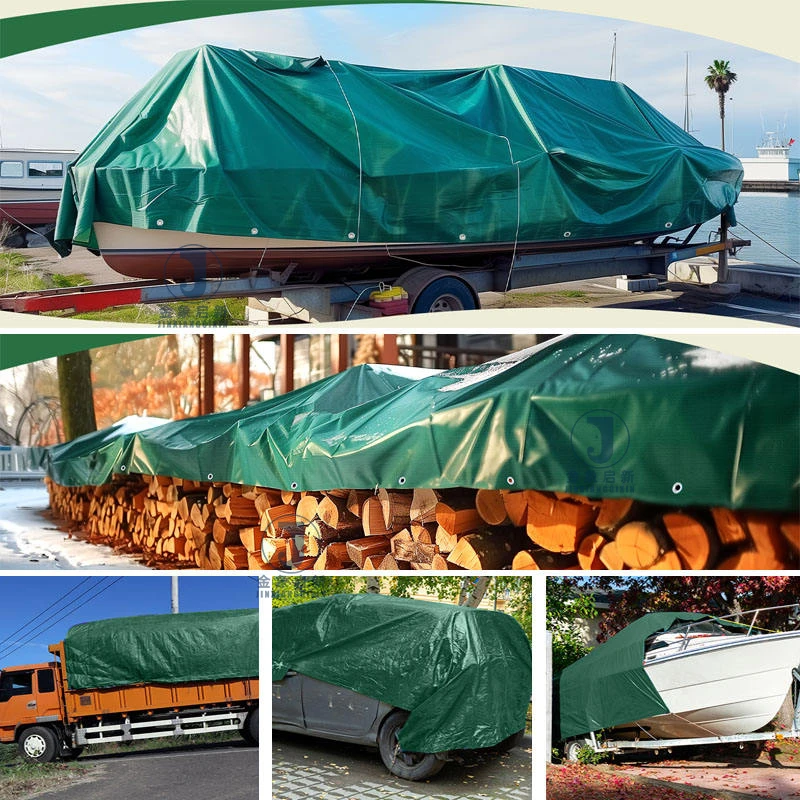
Description
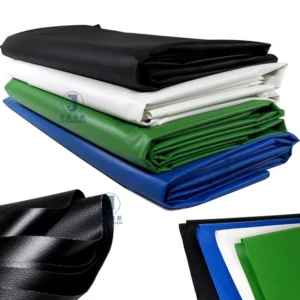
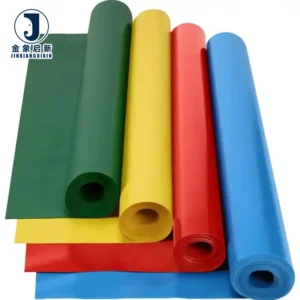
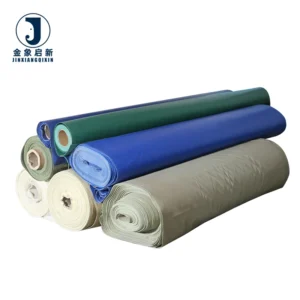
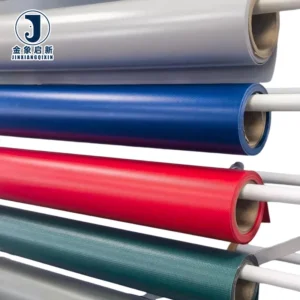
Consistent Roll-to-Roll Output — three full coating lines with in-process QA maintain matched GSM and colour across every roll in your container load.
Technical Specifications
| Parameter | Value |
|---|---|
| Product Type | Blackout Tarpaulin Roll |
| Base Fabric Denier | 1000D |
| Coating Material | PVC |
| Finish | Blackout |
| UV Treatment | Anti-UV (test basis not stated in source) |
| Flame Retardant | Grade not stated in source |
| Anti-Mildew | Mildew proof (standard not stated in source) |
| Oil & Stain Resistance | Claimed (standard not stated in source) |
| Acid & Alkali Resistance | Claimed (standard not stated in source) |
| Welding Options | HF / Hot Air / Sewing |
| Flexibility | Highly flexible, resistant to cracking |
| Temperature Range | High temperature and cold resistance (values not stated in source) |
| Self-Cleaning | Claimed |
Application Suitability
| Application | Exposure & Requirement |
|---|---|
| Event exhibition shade tents | Full light blockage, frequent assembly and teardown, UV exposure, welded seam integrity |
| Tensile and membrane structures | High tensile loads at anchor points, long-term UV and weather exposure, panel joining at scale |
| Stadium architectural canopies | Large-span tension, wind uplift forces, fire code compliance for public venues |
| Portable storage structures | Abrasion from stored goods, wind and rain exposure, blackout for light-sensitive contents |
| Airport hangars | Wide clear-span coverage, flame retardant requirements for aviation environments |
| Shade systems | Continuous sun exposure, colour consistency across adjacent panels, self-cleaning surface |
Why Roll-to-Roll Colour Consistency Determines Project Viability
A single shade mismatch between adjacent panels can reject an entire tensile structure installation.
When you source blackout PVC tarpaulin roll wholesale for large-format tent or shade fabrication, the fabric from one container often covers thousands of square metres of visible surface. If two rolls from the same order show a perceptible colour difference once unrolled and installed side by side, the client sees it immediately — and the rework cost falls on the fabricator. This is not a cosmetic preference; it is a commercial risk that compounds with every container you order. The PVC Tarpaulin Roll for Tent Fabric – Wholesale supply chain must address this at the coating stage, not at the packing stage. [NEED_CITE: colour consistency standards in coated technical textiles for architectural applications]
How Batch Consistency Is Maintained Across Production Runs
Roll-stock supply for tent and shade fabricators demands that every roll leaving the line matches the approved sample in coating weight, colour depth and surface finish. In-process quality checks at each coating stage catch drift before it propagates through an entire batch. For a Blackout PVC Tarpaulin Roll wholesale order, this means the GSM measured on roll one and roll fifty stays within tolerance, and the blackout opacity does not vary from the centre of the roll to the edge. Fabricators joining panels for event tents or tensile canopies rely on this uniformity to set welding parameters once and run production without constant adjustment.
Welding Compatibility at Fabrication Scale
Fabricators processing 1000D blackout PVC tarpaulin by the roll need the material to respond predictably to high-frequency and hot-air welding. If the coating formulation shifts between rolls, the weld temperature that produced a clean seam on Monday may burn through or under-fuse on Wednesday. Full compatibility with HF, hot-air and sewing methods means your production team can join panels for stadium canopies, exhibition tents or portable storage structures without re-calibrating equipment for each new roll. The 1000D base fabric denier provides the tensile backbone that holds the weld line under load, while the PVC coating formulation determines how cleanly the seam fuses. [NEED_CITE: high-frequency welding parameters for PVC coated polyester fabrics]
Understanding the 1000D Base and Blackout Coating Construction
The 1000D base fabric denier indicates the yarn thickness in the woven polyester scrim, which directly influences how the material resists tear propagation under the point loads typical of tensile structures and large-span tents. A higher denier base generally supports greater tear resistance, but the coating weight and adhesion to the base fabric determine whether the composite acts as a unified panel or delaminates under stress. The blackout finish is achieved through an opaque coating layer that prevents light transmission — critical for event exhibition shade tents where interior lighting control matters. This coating also affects how the surface accepts heat during welding; a consistent coating thickness ensures the thermal energy distributes evenly across the seam. The self-cleaning surface claim relates to how the topcoat formulation resists dirt adhesion, which affects long-term appearance on shade systems and stadium canopies exposed to airborne particulates. The PVC coating method — whether knife-over-edge, dip or calender — influences both the coating weight accuracy and the bond strength between the coating and the 1000D scrim.
The Hidden Cost of Specifying on GSM Alone
Buyers who evaluate PVC tarpaulin roll stock purely on quoted GSM frequently discover that a material matching the weight specification still underperforms in the field. The reason is that GSM combines base fabric weight and coating weight into a single number, obscuring how each component contributes to tensile strength, tear resistance and weld integrity. A roll that hits the target GSM with a heavy coating on a light base may crack at fold points during tent assembly. Conversely, a well-constructed 1000D base with balanced coating provides the structural performance that large-span shade structures and tensile canopies actually require. When the specification conversation stops at weight, the fabricator absorbs the risk of material failure at seams and stress points. [NEED_CITE: relationship between coating weight and base fabric denier in PVC tarpaulin performance]
Why Fabricators and Distributors Source Blackout Roll Stock Here
Three full production lines and 36 sets of professional equipment support the volume requirements of distributors consolidating container loads across multiple roll grades. A 10-person R&D team handles custom width and colour development with samples produced within days, so you can approve the material before committing to a full container. Dedicated QA/QC at every coating stage means the PVC Tarpaulin Roll for Tent Fabric – Wholesale order you receive has been inspected roll by roll, not sampled at random. The documentation package travels with the shipment — material specification sheets, pre-shipment inspection records and roll packing lists — so your import process does not stall at customs. Nearly 30 years of coating process control translates to a fabricator receiving material that welds, cuts and installs as expected.
Documentation & Verification
- Material specification sheet stating GSM, 1000D base fabric denier and coating weight per roll
- Pre-shipment inspection record with roll-by-roll GSM verification before container loading
- Roll packing list detailing roll count, individual weight and container loading plan
- UV and flame retardant test reports matching the grade specified on your quotation — confirm the grade required for your market
- ISO and CE certificates available for import documentation and customs clearance
Fabrication, Handling & Storage
- Set HF and hot-air welding parameters based on the blackout coating thickness, and test on a cutoff before running full panel seams
- Store rolls upright on pallets to prevent flat-spotting and edge damage that affects unrolling on the fabrication floor
- Allow cold-stored rolls to reach workshop temperature before unrolling to avoid coating stiffness and cracking in the blackout layer
- Use the self-cleaning surface property to your advantage — specify mild detergent and soft cloth for on-site cleaning of installed shade structures
- Plan panel cutting layouts to maximise yield from standard roll widths and minimise the number of welded seams in visible areas
- Reinforce stress concentration points at grommet and tie-down locations with additional PVC patches welded over the 1000D base
What to Include in Your Roll-Stock Enquiry
Specify the target application — whether you are fabricating event exhibition tents, tensile shade canopies or portable storage structures — so the material recommendation matches the exposure conditions. Confirm the fire-retardant grade your local building code or event venue requires, as blackout PVC is available in flame retardant grades and you need to verify the certification accepted in your market. Provide your required roll widths, annual volume and whether you need plain rolls or custom colour runs, along with any Pantone or RAL references for colour matching. Indicate whether a production sample is needed before the full order is coated.
Frequently Asked Questions
Q: How is GSM verified per roll before dispatch, and what documentation accompanies the shipment?
A: Each roll undergoes GSM measurement during pre-shipment inspection, and the results are recorded on a roll-by-roll basis. The inspection record, material specification sheet stating the 1000D base fabric denier and coating weight, roll packing list with container loading plan, and applicable ISO and CE certificates are included with the shipment documentation for customs and receiving verification.
Q: What blackout performance can be expected, and how is light blockage tested across rolls?
A: The blackout coating is designed to prevent light transmission through the fabric, which is essential for event tents and shade structures where interior lighting control matters. Light blockage consistency is verified during in-process quality checks across the production batch. Request a sample to confirm the opacity level meets your specific application requirements before placing a bulk order.
Q: Which welding methods are recommended for 1000D blackout PVC at production scale?
A: The material supports high-frequency welding, hot-air welding and sewing. For large-format tent and tensile structure fabrication, HF and hot-air welding are typically preferred for seam strength and production speed. Welding parameters should be established on sample material first, as the blackout coating thickness influences optimal temperature and dwell time settings on your equipment.
Q: How is roll-to-roll colour consistency controlled within a single order?
A: In-process quality checks at each coating stage monitor colour depth and coating weight to prevent drift across the production run. Every roll in a Blackout PVC Tarpaulin Roll wholesale order is inspected before packing. For critical applications where adjacent panels must match exactly, confirm your colour reference and request batch samples for approval before full production.
Q: What are the standard roll widths, lengths and container loading quantities for bulk orders?
A: Roll widths and lengths can be customised to suit your fabrication equipment and panel cutting layouts. Container loading quantities depend on the roll dimensions and weight. Provide your preferred roll format and target container load plan during the enquiry stage so the packing list and loading plan can be optimised for your receiving and storage capacity.