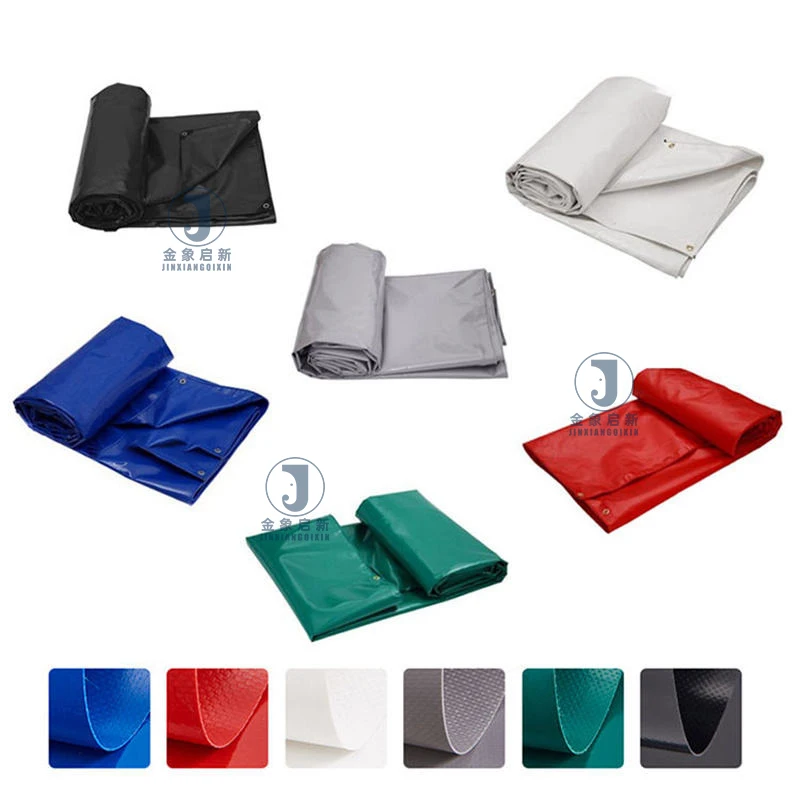
Description
Roll-to-Roll Consistency — Every roll verified for stated GSM and colour match before container loading.
Technical Specifications
| Parameter | Value |
|---|---|
| Product Type | PVC Knife-Coated Tarpaulin |
| Material | PVC + High-strength polyester mesh fabric |
| Coating Technology | Laminated & Hot-melt Coating |
| Weight Options | 350gsm / 420gsm / 500gsm / 550gsm / 600gsm / 750gsm |
| Thickness Options | 0.32mm / 0.35mm / 0.4mm / 0.45mm / 0.5mm / 0.65mm |
| Roll Size | 2m width × 75m length / 2.1m width × 50m length |
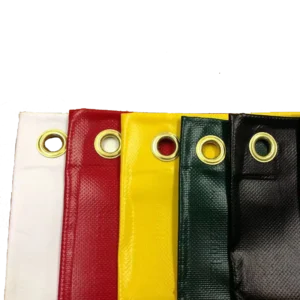
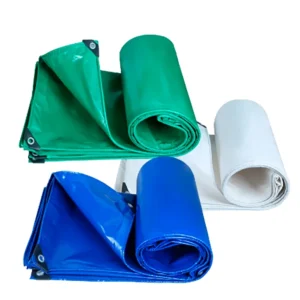
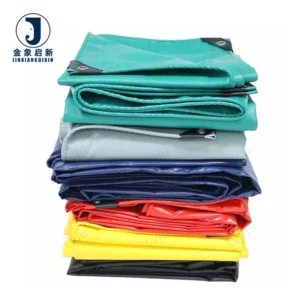
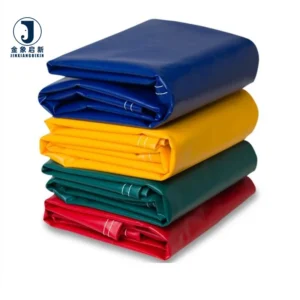
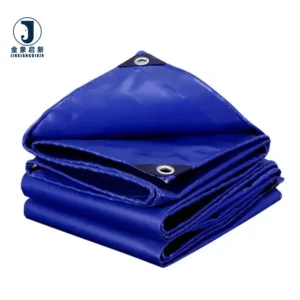
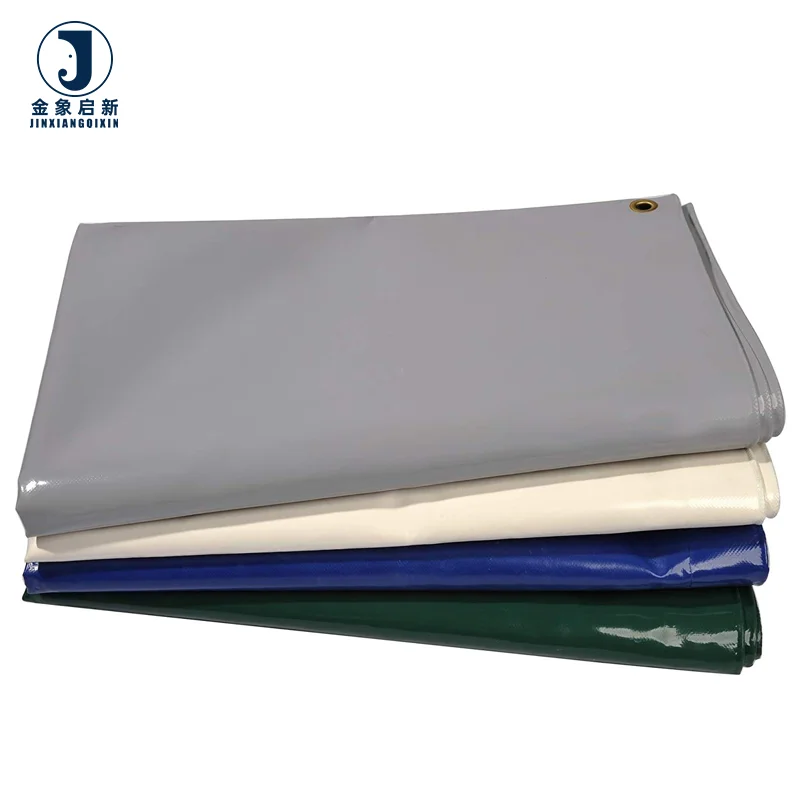
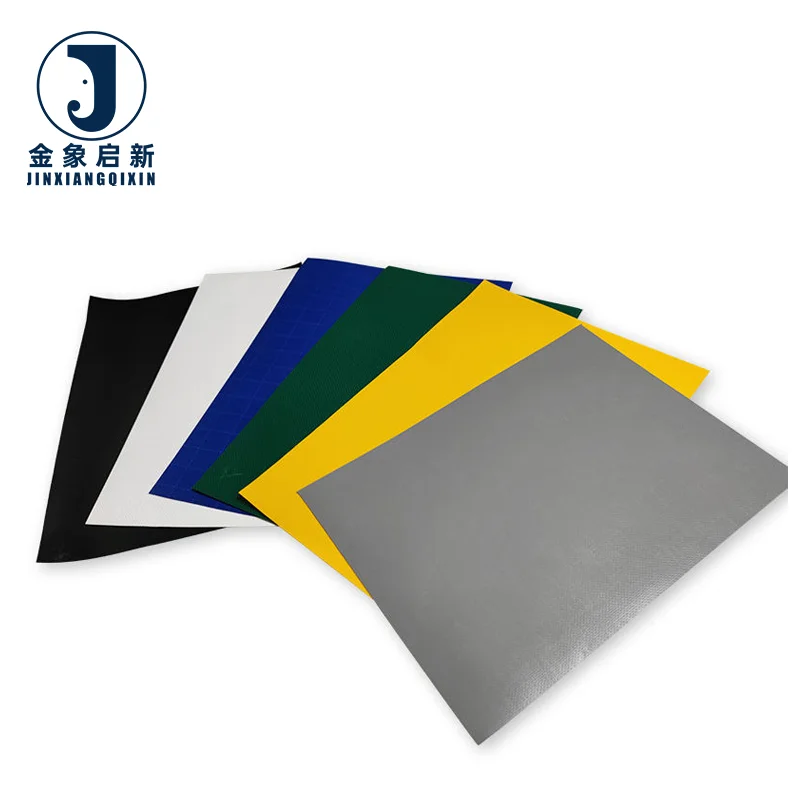
| Colour Options | Blue / Red / Yellow / Light Blue / Grey (custom available) |
| Surface Finish | Glossy / Matte |
| Temperature Range | -70°C to +100°C |
| Treatment Options | Flame Retardant / Anti-Static / Anti-Cold / Anti-Mildew / Anti-UV |
| Service Life | 3–7 years under normal use |
| Custom Sizing | Available per customer requirements |
Application Suitability
| Application | Exposure & Requirement |
|---|---|
| Tarpaulin distribution & import | Bulk container loads requiring batch-consistent GSM and colour across all rolls |
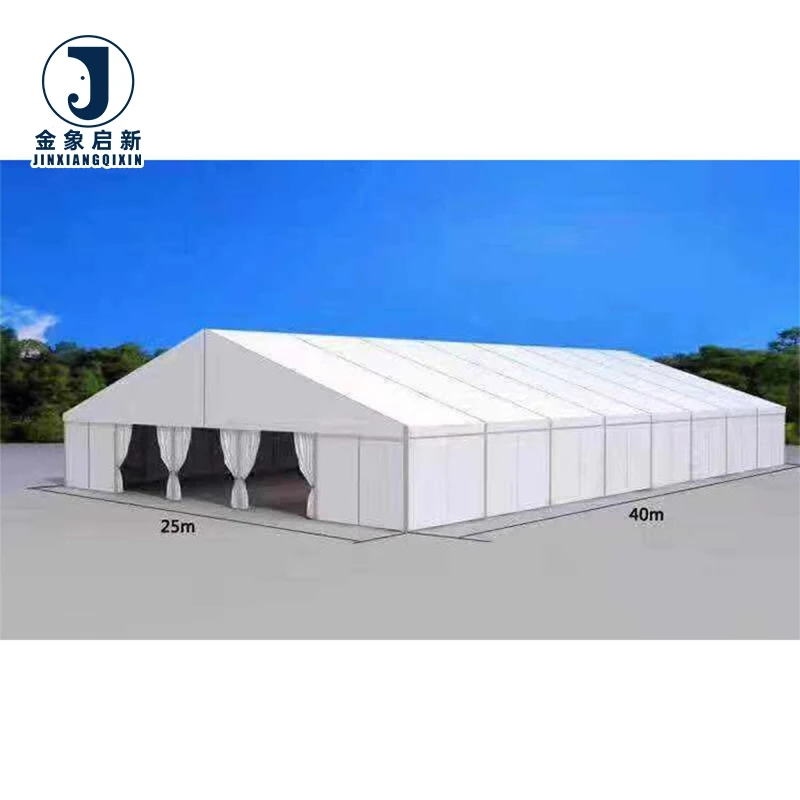
| Tent, awning & inflatable fabrication | Roll stock cut and welded into structures; demands reliable adhesion strength at seams |
| Fleet side curtain manufacturing | Constant flexing, road debris abrasion, and prolonged UV exposure on transport routes |
| Construction site enclosure | Wind load, scaffolding friction, and weather exposure over multi-month project timelines |
| Agricultural & aquaculture covers | Continuous moisture contact, biological growth risk, and seasonal temperature fluctuation |
| Transport packaging & cargo protection | Repeated handling, tie-down tension, and stacking compression during long-haul transit |
Why Roll Buyers Cannot Rely on Quoted GSM Alone
GSM verification must happen per roll, not per shipment.
A recurring problem in wholesale PVC tarpaulin roll procurement is material arriving lighter than the quotation stated. Distributors receive a full container, cut into the first few rolls, and discover the fabric feels noticeably thinner. By that point the shipment has cleared customs and the cost of return is prohibitive. This is not always intentional — it can result from coating weight variation across the production run or a supplier quoting a nominal grade without verifying the finished roll. [NEED_CITE: coating weight variation in PVC knife-coated fabric production]
For a PVC tarpaulin roll buyer, the consequence is not just a thinner product. A lower-than-stated GSM typically means a lighter base fabric, which reduces tensile and tear performance below what the end customer specified. Wholesale buyers who supply fabricators or fleet operators then face complaints from their own customers downstream. The only effective control is documented per-roll weight verification at the production stage, backed by a pre-shipment inspection record that the buyer can review before the container seals.
Roll Widths and Lengths Engineered for Container Efficiency
Standard PVC tarpaulin roll stock is supplied in 2m × 75m and 2.1m × 50m configurations. These dimensions are not arbitrary — they align with standard container internal widths and floor lengths, maximising roll count per TEU while minimising dead space between rolls. For wholesale distributors, this directly affects landed cost per square metre.
Choosing between the two standard roll sizes depends on downstream processing. Fabricators cutting smaller panels may prefer the 2m width for reduced off-cut waste, while manufacturers producing wide-format covers or side curtains benefit from the 2.1m width to eliminate a welding seam. The PVC tarpaulin roll format also determines how many linear metres are available per handling unit, influencing production scheduling on the shop floor.
Colour and Weight Consistency Across a Multi-Roll Order
When a distributor orders several hundred rolls of the same colour, visible shade variation between rolls can make the entire batch unsellable to end users who install panels side by side. Colour drift typically originates from inconsistencies in pigment dispersion or from blending batches produced on different dates. Controlling this requires strict dye-lot management and production of the full order quantity from a single pigment batch where possible. [NEED_CITE: pigment batch consistency standards in PVC coated fabric manufacturing]
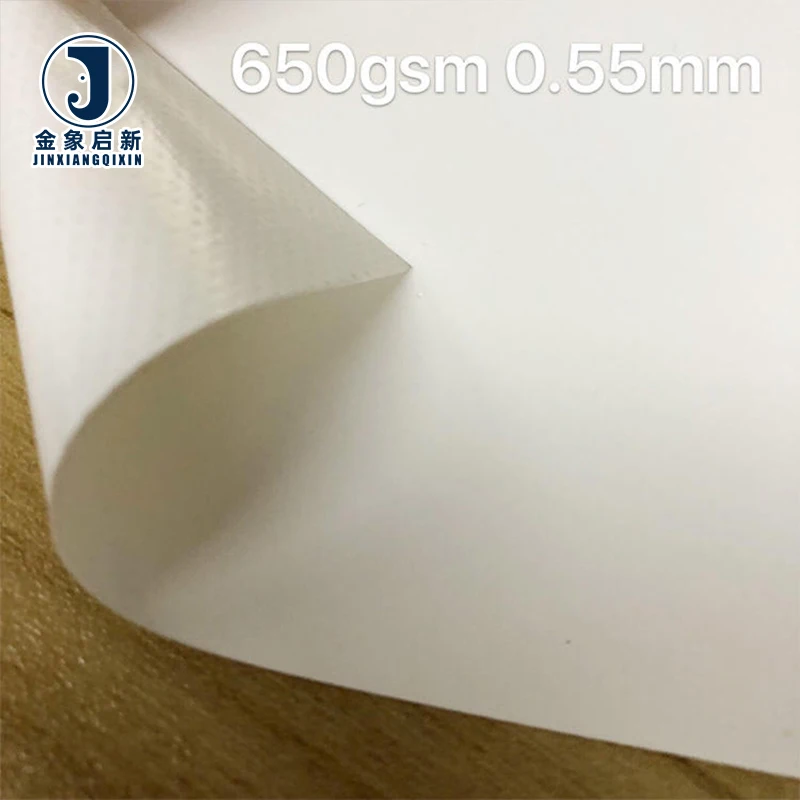
Weight consistency across rolls is equally important. A 650gsm grade that measures 620gsm on one roll and 680gsm on the next will behave differently during welding and end-use. Hot-melt coating technology supports tighter GSM tolerances than cold lamination because the coating is applied in a controlled continuous process. For wholesale buyers, requesting a roll-by-roll packing list with recorded weights is the most practical verification method before accepting delivery.
How Coating Method and Base Fabric Determine Real Performance
The distinction between laminated and hot-melt coating technology has direct consequences for fabricators who weld seams. Hot-melt coated PVC tarpaulin roll stock typically achieves higher adhesion strength between the PVC layer and the polyester mesh, which means the coating is less likely to delaminate at the weld line when the finished cover flexes under load. Laminated fabric, while cost-competitive, may show separation at heat-welded edges if welding temperature and dwell time are not carefully calibrated.
The high-strength polyester mesh base fabric provides the structural performance — tensile strength, tear resistance, and dimensional stability. The PVC coating primarily delivers waterproofing, UV screening, and surface durability. A heavier GSM does not automatically mean a stronger fabric if the additional weight comes from thicker coating rather than a denser base weave. [NEED_CITE: relationship between base fabric denier, mesh count, and tensile strength in coated textiles per ISO 1421] Buyers specifying PVC tarpaulin roll stock should request the base fabric specification alongside the total GSM to understand how the weight is distributed.
The Hidden Cost of Specifying the Wrong Roll Grade
Selecting a GSM grade that is too light for the intended application results in premature failure at stress points — tie-down patches, welded corners, and areas where the fabric wraps around sharp edges. For wholesale buyers, this translates to warranty claims from downstream customers and damaged trading relationships. A roll that costs slightly less per kilogram but fails within one season is more expensive than a heavier grade that performs through multiple seasons.
Equally problematic is ordering flame retardant or anti-static treated roll stock without confirming the specific grade required by the end market. A construction site enclosure may need to meet a national fire classification standard, and a mining ventilation application may require documented anti-static test results. Supplying PVC tarpaulin roll stock with an unverified treatment grade risks the entire shipment being rejected at the project site, with no practical option for re-treatment after delivery. [NEED_CITE: fire classification requirements for temporary building enclosures in European construction]
Why Volume Buyers Source Roll Stock Here
Three full production lines and 36 sets of professional equipment support consistent output of PVC tarpaulin roll stock across multiple GSM grades, reducing the risk of extended delays on container-scale orders.
A dedicated ten-person R&D team develops colour matches and custom width samples before bulk commitment, allowing buyers to verify hand feel, shade, and weld behaviour on a sample roll before the full order enters production.
One hundred percent pre-shipment inspection with per-roll GSM verification ensures that every roll in the container matches the purchase order specification, eliminating the common problem of underweight material reaching the warehouse.
Standard roll dimensions of 2m and 2.1m widths are optimised for container loading, and a detailed roll packing list is provided so that receiving teams can cross-check individual roll weights and dimensions against the order.
Batch dye-lot management controls colour consistency across all rolls in a single shipment, preventing visible shade variation when multiple rolls are installed or fabricated side by side.
Documentation & Verification
- Material specification sheet stating GSM, base fabric type, coating weight, and colour reference per roll grade ordered
- Pre-shipment inspection record confirming actual GSM and dimensions measured per roll against the purchase order
- Roll packing list with individual roll weight, width, and length for receiving verification at destination warehouse
- Test reports for flame retardant or anti-UV treatments supplied where specific grades have been confirmed and produced
- Certificate of origin and customs documentation prepared per destination country requirements
Fabrication, Handling & Storage
- Hot-melt coated rolls require calibrated weld temperature and dwell time; test a short seam before full production runs
- Store PVC tarpaulin roll stock upright on pallets to prevent flat spots and permanent creasing along the core
- Unroll and allow heavy-grade 750gsm fabric to relax at ambient temperature before cutting to reduce dimensional shift
- Use sharp rotary blades on glossy finish surfaces to avoid dragging and visible score lines on the coated face
- Anti-mildew treated rolls should be stored in ventilated conditions; trapped moisture between layers promotes biological growth
- Clean matte finish surfaces with mild detergent only; solvent-based cleaners may degrade the surface coating layer
What to Include in Your Roll Stock Inquiry
Provide the intended end-use application and the environmental exposure conditions the fabric will face — this determines which GSM grade and treatment options are appropriate. Specify the required roll width, target colour or Pantone reference, and estimated annual volume so that production scheduling and dye-lot planning can be arranged accordingly.
If your downstream customers require flame retardant or anti-static certification, state the specific standard and grade needed for your market before quotation. Confirm whether you require standard roll stock for your own fabrication or whether pre-cut panels with welded hems are needed.
Frequently Asked Questions
Q: How is GSM verified on each roll before shipment, and what documentation is provided?
A: Every roll is weighed and measured during pre-shipment inspection. The actual GSM and dimensions are recorded on a roll-by-roll packing list that ships with the container. Buyers receive this inspection record alongside the material specification sheet, allowing receiving teams to cross-check each roll against the purchase order without delay.
Q: How do you control colour consistency across multiple rolls in the same order?
A: Full orders are produced from a single pigment batch under dye-lot management. Colour is checked against the approved reference at multiple production stages. This prevents the visible shade variation that occurs when rolls from different production dates are installed side by side on site or in fabricated structures.
Q: What are the standard roll widths, lengths, and container loading configurations?
A: Standard roll sizes are 2m × 75m and 2.1m × 50m, both designed to maximise container floor utilisation. Loading plans are arranged by roll count and total weight to optimise TEU capacity. Buyers can request a loading configuration summary before dispatch to confirm the roll count per container.
Q: What is the MOQ for custom colour or custom width roll stock?
A: Custom colours and non-standard widths are available and subject to minimum quantities that vary by specification. A sample roll is produced for buyer approval before bulk production begins, confirming colour match, hand feel, and weld behaviour. Contact the sales team with your target specification for MOQ and lead time details.
Q: How are rolls packed and protected for ocean freight to prevent edge damage and moisture ingress?
A: Each PVC tarpaulin roll is wound on a rigid core and wrapped with protective outer layers to guard against edge compression and moisture during transit. Rolls are loaded upright or horizontally depending on container configuration, with securing methods that prevent movement at sea. Packing details are confirmed on the roll packing list before dispatch.