Description
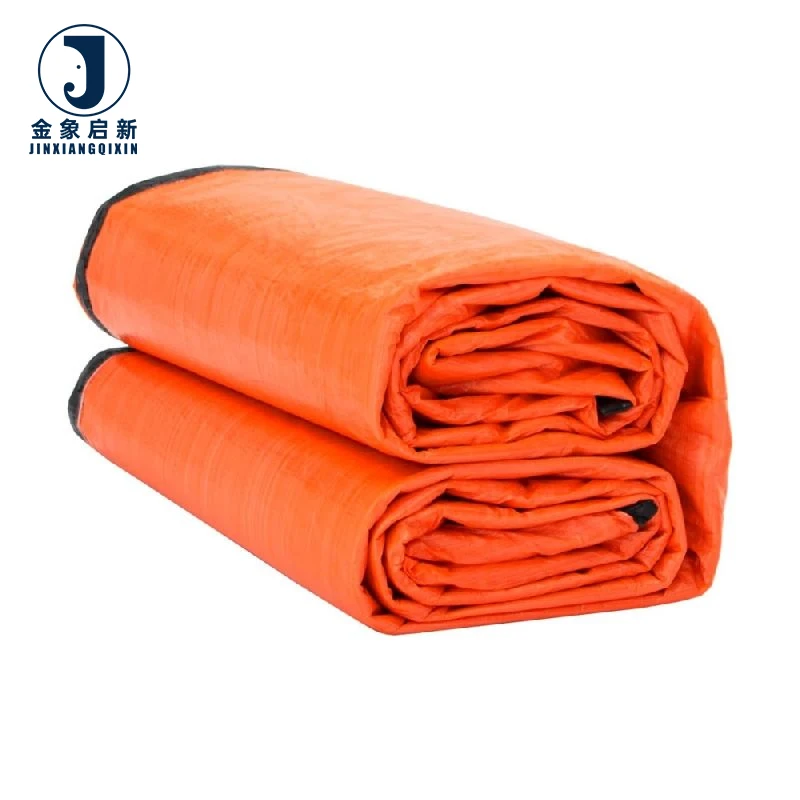
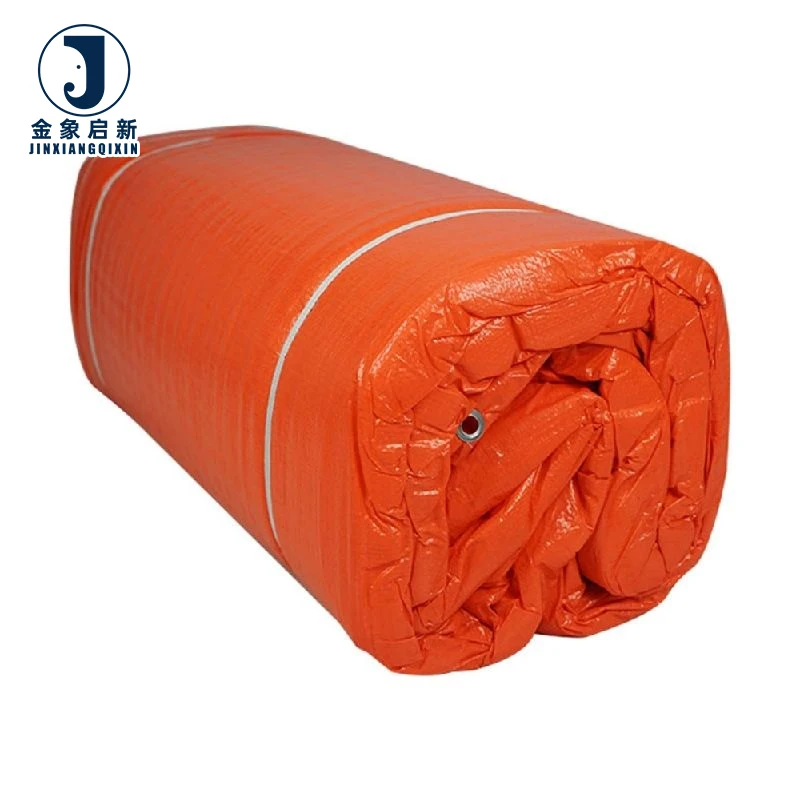
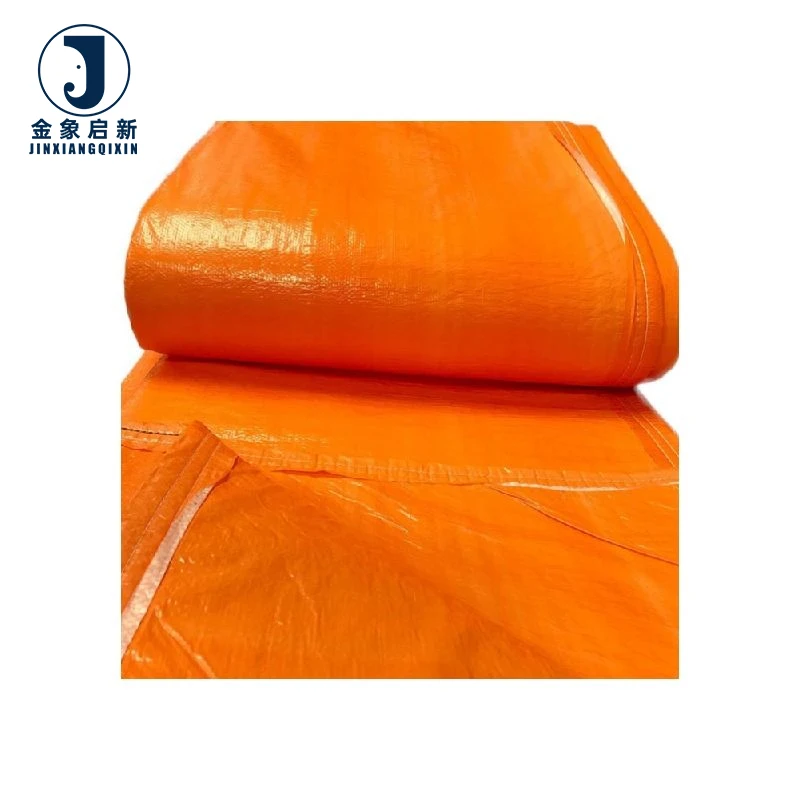
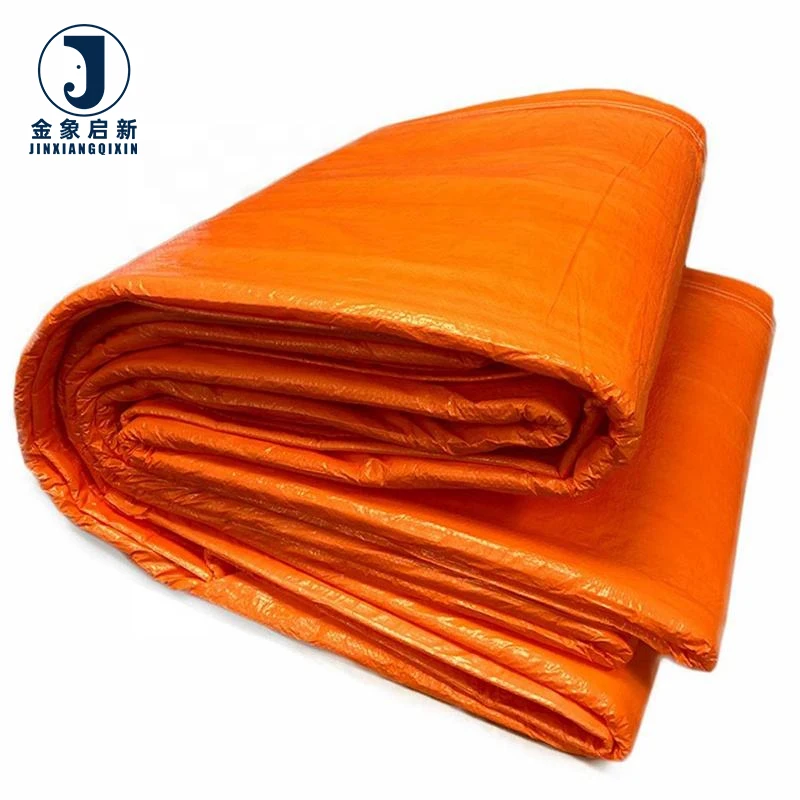
Bulk Consistency — Insulated PE tarpaulin rolls verified per batch for thickness and color match, ensuring uniform thermal performance across every roll in your order.
Technical Specifications
| Parameter | Value |
|---|---|
| Product Type | Insulated PE Tarpaulin |
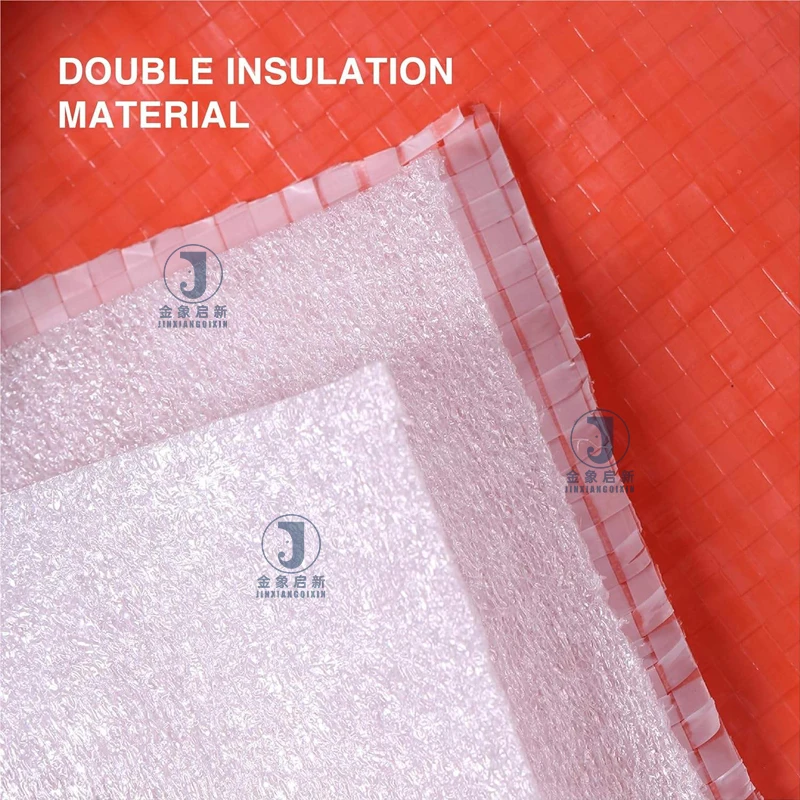
| Structure | PE cloth + closed-cell PE foam core + PE cloth |
| Total Thickness Options | 2x2mm / 3×1.5mm / 1x4mm / 5mm / 6mm / 8mm / 12mm |
| Size Options | 6ftx24ft / 8ftx25ft / 12ftx20ft / 12ftx24ft |
| Coating Material | PE |
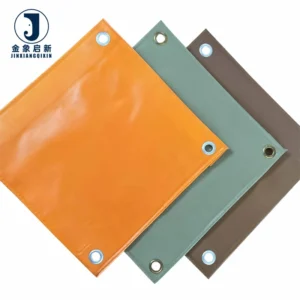
| Color Options | Orange / Black / White / Silver / Customized color |
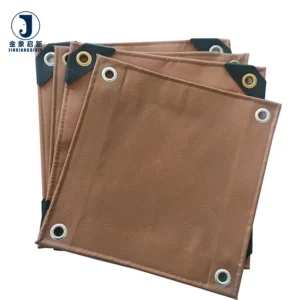
| Grommet Configuration | Aluminum grommets, hole distance 61cm and 91.5cm |
| Edge Finish | Reinforced stitch with rust-proof brass grommets (verify material against order spec) |
| UV Treatment | UV treatment built into base fabric (test basis not stated) |
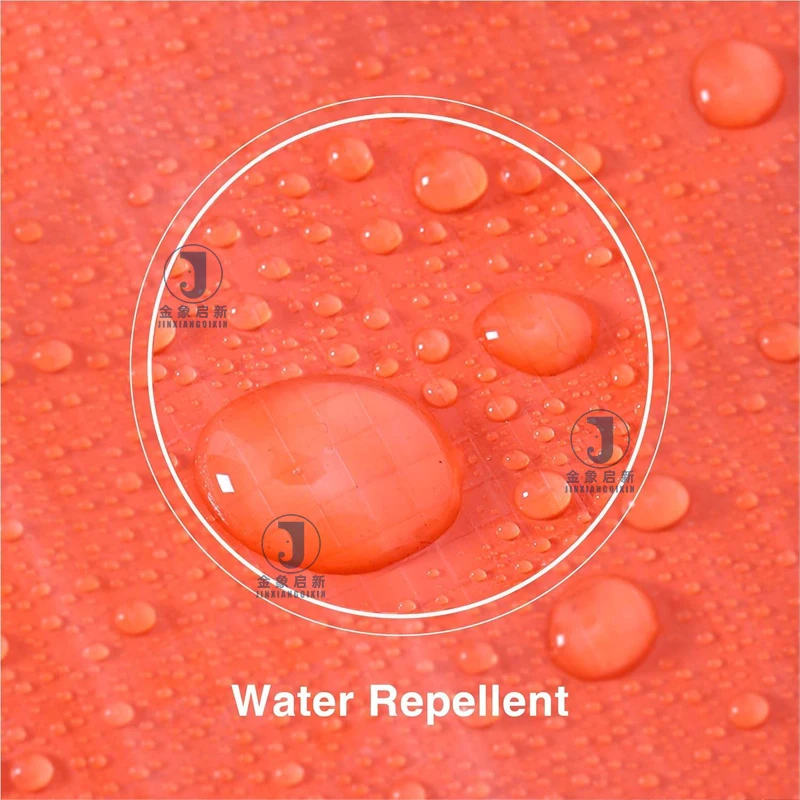
| Waterproof | Yes — surface fabric waterproof |
| Key Features | Waterproof, UV-treated, mildew resistant |
Application Suitability
| Application | Exposure & Requirement |
|---|---|
| Concrete curing blanket | Prolonged ground contact, moisture retention, thermal insulation against ambient temperature swings |
| Cold weather building enclosure | Wind pressure, snow loading, repeated installation and removal cycles |
| Heated enclosure insulation | Sustained elevated interior temperature, condensation risk, air barrier integrity |
| Construction site wind block | Medium to high wind conditions, abrasion from scaffolding and steel frames |
| Snow and rain exposure environments | Continuous water contact, freeze-thaw cycling, weight from accumulated precipitation |
Why Thickness Consistency Matters More Than You Think on Insulated PE Tarpaulin Rolls
A roll that measures 8mm at the sample stage but arrives at 6mm across half its length will leave your concrete curing blanket performing below design expectations.
When buyers order insulated PE tarpaulin in volume, the most common complaint is not outright failure but subtle variation — one roll feels stiffer, another compresses more easily under hand pressure, and the thermal insulation value shifts across the batch. This inconsistency rarely shows up in a pre-shipment sample cut from a single location. It appears on site, when tarps from the same order are laid side by side and the curing results differ from section to section [NEED_CITE: batch thickness variance in multi-layer foam-core tarpaulins]. Distributors stocking for seasonal demand face the same risk in reverse: a customer returns a roll claiming it does not match the previous order, and the entire relationship is questioned.
How the Three-Layer PE Structure Delivers Thermal Separation
The insulated PE tarpaulin uses a sandwich construction — outer PE cloth, a closed-cell PE foam core, and an inner PE cloth layer. The closed-cell foam traps still air within its cell structure, which is what provides the thermal separation between the two surfaces. Unlike open-cell foams that can absorb moisture and lose insulation value over time, the closed-cell core maintains its performance even when the outer surface is exposed to rain or condensation. This matters on a concrete curing blanket, where the warm side faces fresh concrete and the cold side faces ambient winter air.
Roll-to-Roll Uniformity Across Thickness Grades
Whether your project calls for a 5mm blanket for short-term curing or a 12mm enclosure liner for sustained heated environments, the production process must hold the foam core thickness consistent from the first meter to the last. Our three full production lines and 36 sets of equipment allow us to run dedicated batches rather than mixing thickness grades on shared equipment [NEED_CITE: production line allocation for batch-consistent foam-core lamination]. Each roll of insulated PE tarpaulin undergoes inspection before dispatch to verify that the stated thickness matches what leaves the facility.
Reading the Specification Sheet Beyond the Stated Thickness
The total thickness of an insulated tarpaulin is only part of the story. The 2x2mm option uses a symmetrical layup — equal outer fabric layers around a thinner core — while the 3×1.5mm shifts more material into the outer cloth for added puncture resistance at a slightly lower core thickness. The 1x4mm and solid 5mm, 6mm, 8mm, and 12mm options progressively increase the foam core depth, which directly influences thermal separation. Choosing between them depends on the temperature differential you need to manage and the mechanical exposure the blanket will face on site. A heavier foam core provides greater insulation but also adds bulk during handling and storage, so the selection should match both the thermal requirement and the practical logistics of your installation [NEED_CITE: thermal resistance comparison across closed-cell PE foam thickness grades].
What Inconsistent Foam Density Costs You on Site
A foam core that varies in density from one roll to the next does not fail dramatically — it underperforms quietly. Sections of a concrete curing blanket with lower-density core will allow more heat transfer, leading to uneven curing rates across the slab. In a heated enclosure, the same inconsistency means some wall panels lose heat faster, forcing the heating system to work harder and driving up fuel costs. Buyers who purchased on price alone often trace these field problems back to rolls where the foam core was not controlled to a consistent specification during lamination [NEED_CITE: relationship between foam density consistency and thermal insulation performance in PE tarpaulins].
Why Sourcing Insulated PE Tarpaulin Here Reduces Your Batch Risk
Our 10-person R&D team handles material selection and sample development in-house, so custom thickness and color requirements are developed on the same equipment that runs production — not on a separate lab line. Dedicated QA/QC checks occur at every production stage, with 100% inspection before shipment, so the roll you receive matches the roll that was approved at sample stage. We produce material specification sheets that state structure, thickness, and color reference for each order, removing ambiguity at the point of receipt. For distributors buying insulated PE tarpaulin by the container, our roll packing list details count and weight so that container loading can be planned accurately.
Documentation & Verification
- Material specification sheet stating PE cloth and closed-cell foam core structure per order
- Thickness verification measured per roll against stated grade before dispatch
- Color reference documentation for multi-roll orders requiring visual match
- Pre-shipment inspection record covering dimensions, grommet spacing, and edge finish
- UV treatment documentation with test basis noted where applicable
- Roll packing list with count and weight for container loading planning
Fabrication, Handling & Storage
- Aluminum grommets at 61cm and 91.5cm spacing distribute tie-down load across the reinforced stitched edge
- PE foam core requires flat or large-diameter roll storage to avoid permanent compression creases
- Closed-cell structure resists moisture absorption during outdoor staging between installation cycles
- Reinforced stitched edges should be inspected after repeated deployment to maintain grommet pull-out resistance
- Surface PE cloth can be cleaned with mild detergent without damaging the UV-treated outer layer
- Cut panels should be re-edge-sealed to prevent foam core exposure at raw edges
What to Include When Requesting a Quote
Provide the thickness grade you need, the intended application, and the exposure conditions your insulated PE tarpaulin will face — temperature range, wind load, and expected duration of deployment. If you require a specific color for brand consistency or site identification, note the color reference and the total roll count so we can confirm batch matching. Let us know whether you need standard cut sizes or roll stock for your own fabrication line.
Frequently Asked Questions
Q: What thickness options are available and how do they affect insulation performance?
A: Options range from 2x2mm up to 12mm total thickness. Thicker foam cores provide greater thermal separation for cold weather curing and heated enclosures, while thinner grades suit short-term protection where handling weight is a priority. Your selection should match the temperature differential and exposure duration on site.
Q: Can you guarantee color consistency across multiple rolls in the same order?
A: We run dedicated batches for each color reference and inspect every roll before shipment. Material specification sheets include the color reference so that reorders can be matched to previous deliveries. For multi-roll orders, pre-shipment inspection records confirm visual consistency.
Q: What documentation comes with shipment for material verification on arrival?
A: Each shipment includes a material specification sheet stating structure and thickness, a pre-shipment inspection record, a roll packing list with count and weight, and UV treatment documentation where applicable. Certificates of origin and customs support documents are available on request.
Q: How do you handle custom sizing and what are the minimum order quantities?
A: Custom sizes and colors are developed by our in-house R&D team with samples provided for approval before production runs. Minimum quantities depend on the specific thickness grade and color requested. Contact us with your target dimensions and volume so we can confirm the production schedule and minimums for your specification.