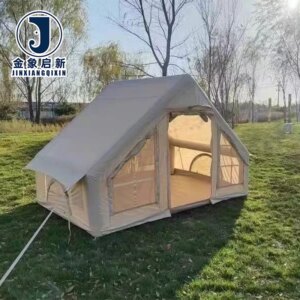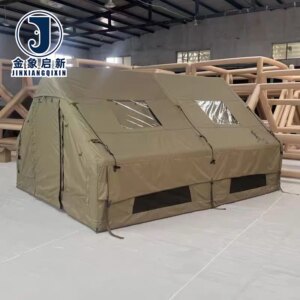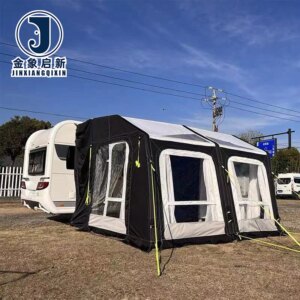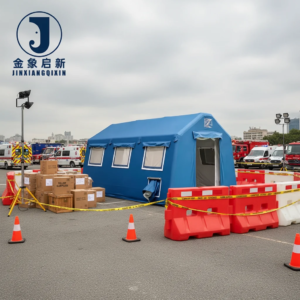
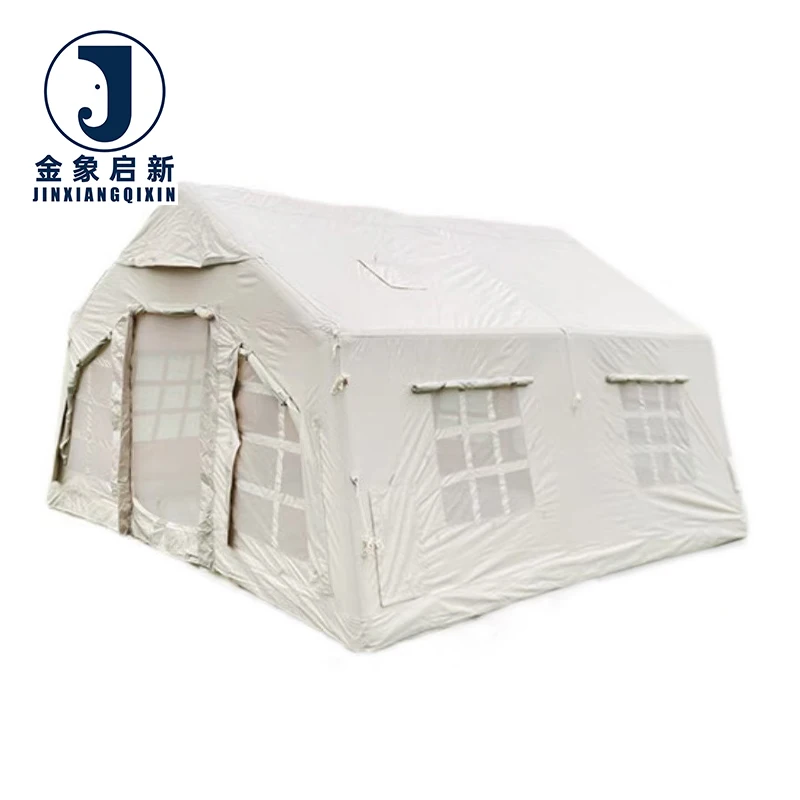
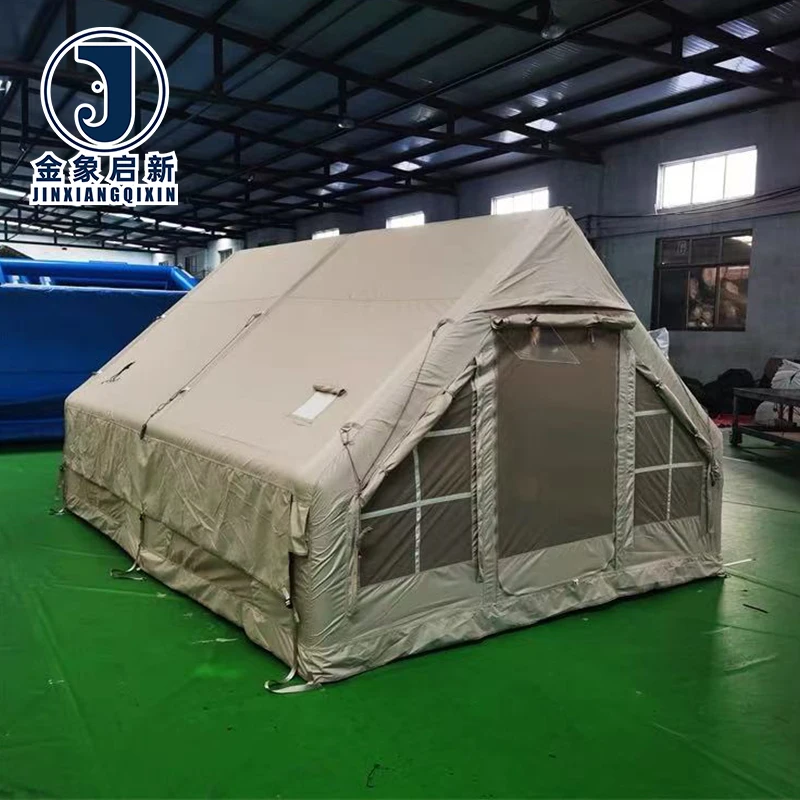
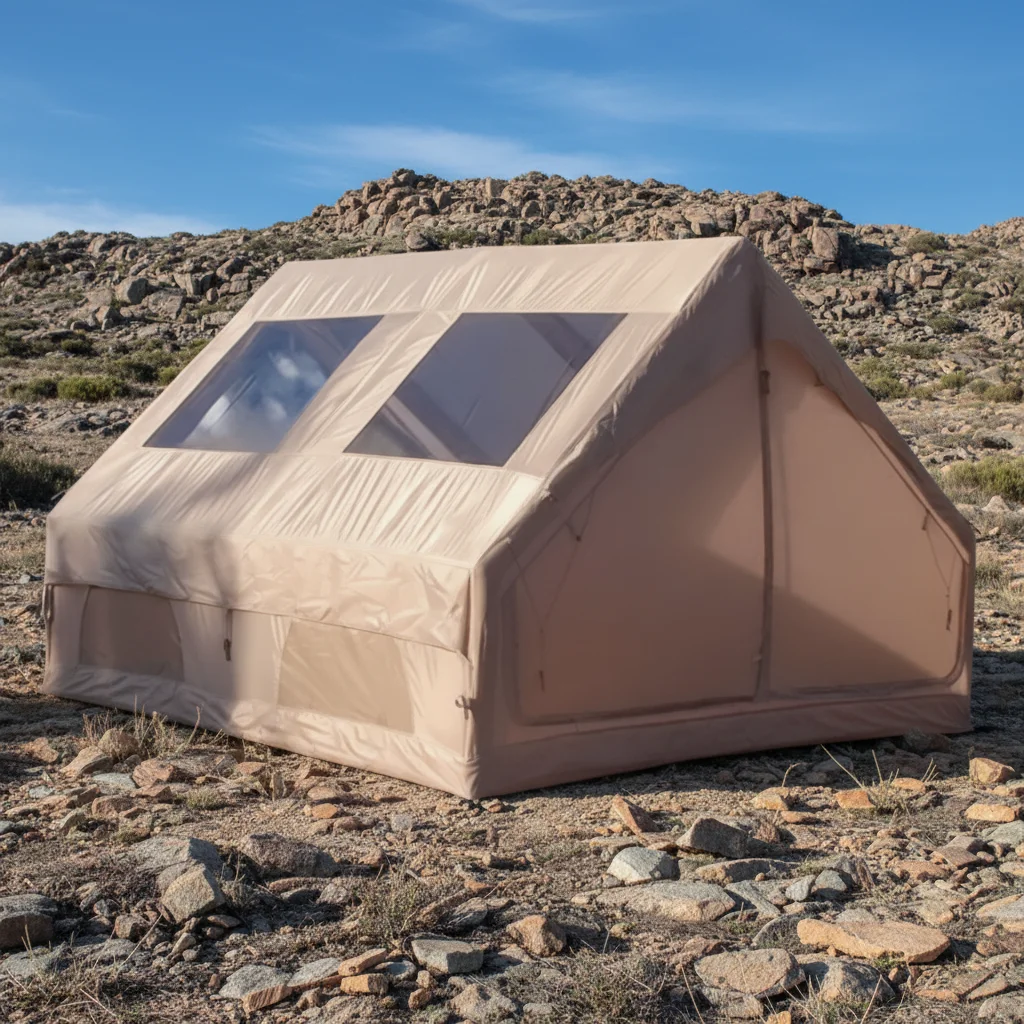

Description
Batch-Verified GSM — Every roll of PVC inflatable tent fabric is weighed and cross-checked against the quoted specification before dispatch, eliminating the gap between what you order and what arrives.
Technical Specifications
| Parameter | Value |
|---|---|
| Product Type | Inflatable Tent |
| Core Material | PVC tarpaulin |
| Key Features | Waterproof, tear-resistant, UV-resistant treatment, fire-retardant grade available on request, anti-static option available |
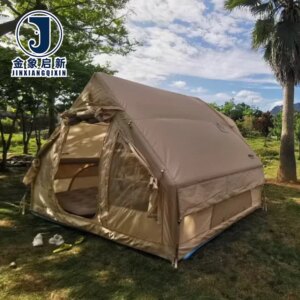
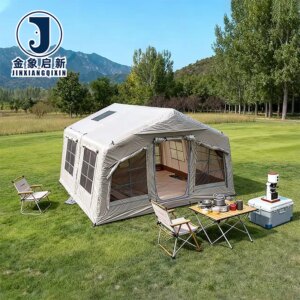
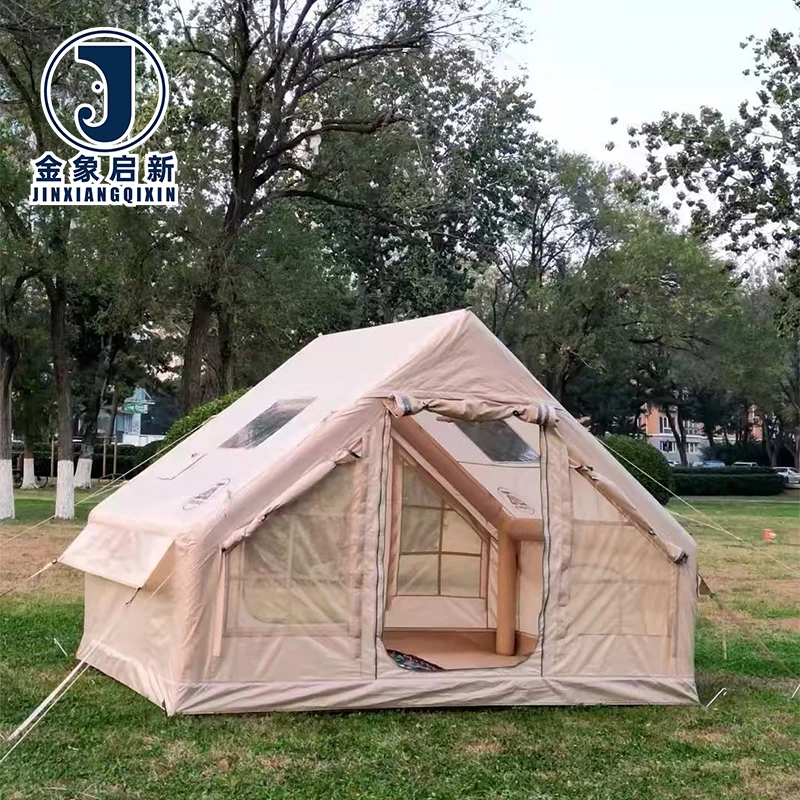
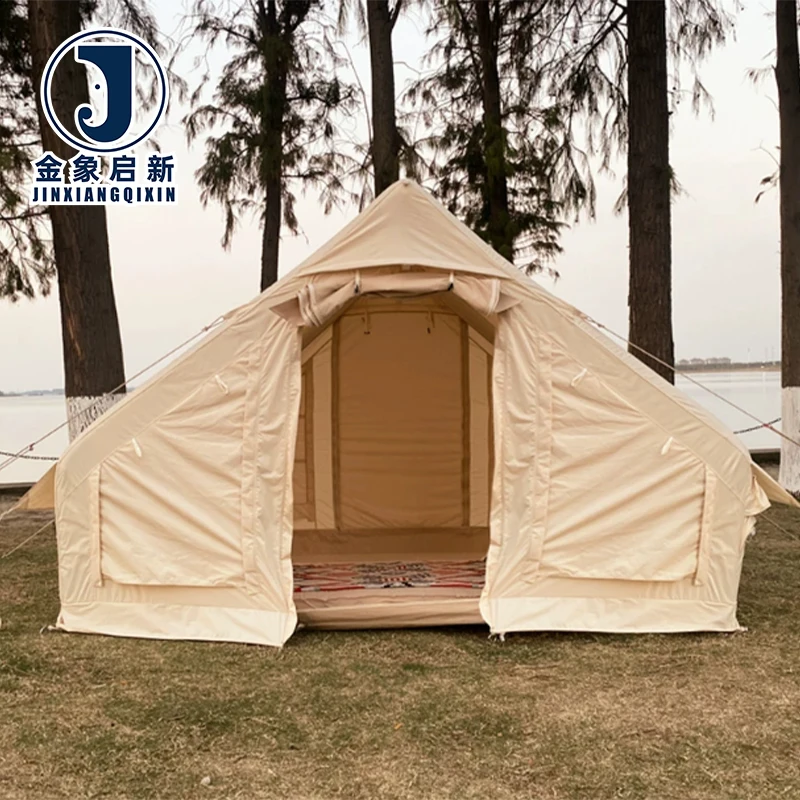
| Product Form | Inflatable structure with quick automatic opening |
| Customization | OEM & ODM — sample development, pattern printing, custom sizing |
| Standards | ISO 9001, ISO 14001, ISO 45001, CE |
Application Suitability
| Application | Exposure & Requirement |
|---|---|
| Construction site temporary shelters | Continuous weather exposure, rapid deployment and tear-down, wind loading on seams |
| Agricultural equipment mobile storage | Long-term UV exposure, moisture ingress, mechanical abrasion from equipment movement |
| Commercial outdoor events | Multi-season weather cycles, frequent inflation cycles, visual appearance consistency |
| Industrial rapid-deployment operations | Cold-start inflation, high wind shear, fire safety compliance in enclosed work zones |
What "Waterproof" Actually Means When the Seam Is the Weak Point
A waterproof rating on the base fabric does not protect the inflatable air chamber if the welded seam fails under flex load.
Inflatable tents place continuous stress on every heat-welded joint. The air bladder expands and contracts with temperature swings, and each inflation cycle tests the peel strength at the seam. I have reviewed field returns where the PVC-coated surface remained intact while the seam delaminated along the weld line — the very point that experiences the most cyclic stress. The inflatable tent manufacturer must control coating adhesion and welding parameters together, not treat them as separate checks. [NEED_CITE: tensile and tear test methods for coated fabrics per ISO 1421]
Coating Adhesion and Weld Integrity in Inflatable Structures
The PVC tarpaulin used for inflatable tents must hold a consistent coating weight across the entire roll width. Variations in coating thickness translate directly into weak spots at heat-welded seams, where the molten PVC layers fuse together. When a custom inflatable tent is inflated to full pressure, every seam carries the structural load. Batch-consistent coating ensures that weld parameters set on the first panel produce the same bond strength on the last.
Air Chamber Design and Material Selection
The inflatable structure relies on the tear resistance of the base fabric to contain internal air pressure, especially at corners and valve attachment points where stress concentrates. A tear that starts at a valve fitting can propagate along the weave direction if the base fabric density is insufficient. The 10-person R&D team reviews each custom inflatable tent design to match base fabric denier and weave density to the inflation pressure and chamber geometry specified by the buyer. [NEED_CITE: coated fabric tear propagation behavior under biaxial stress]
How PVC Coating Weight and Base Fabric Density Work Together
The waterproof performance of an inflatable tent depends on both the PVC coating layer and the underlying base fabric. The coating provides the continuous barrier against water ingress, while the base fabric provides the tensile and tear strength that keeps the structure standing under wind and snow loads. Coating weight alone does not determine durability — a heavy coating on a low-density base fabric will crack at flex points, while a lighter coating on a high-density weave can outperform it in tear resistance. The relationship between GSM, denier, and weave count determines how the material behaves at the welded seams where the inflatable chambers are formed. Surface finish also matters: a matte surface accepts printed patterns and branding more reliably than a high-gloss finish, which matters when commercial event operators need consistent visual identity across multiple deployed units.
The Real Cost of Skipping Batch-Level Material Verification
When a buyer specifies fire-retardant PVC inflatable tent fabric but receives material without a supporting test report, the consequence is not discovered until the site safety inspector asks for documentation. The entire installation may need to be removed and replaced, not because the material fails, but because compliance cannot be demonstrated. Similarly, when UV-resistant treatment is claimed on the quotation but varies between rolls, the discolouration becomes visible only after installation — by which point the order is already deployed and the replacement lead time compounds the project delay. [NEED_CITE: DIN 4102 fire classification for building materials]
Why Source Inflatable Tent Fabric Here
Three full production lines and 36 sets of professional processing equipment run simultaneously, meaning your custom inflatable tent order enters the production queue without waiting for a dedicated slot. The 10-person R&D team develops samples within days, not weeks, so pattern printing and sizing adjustments are confirmed before mass production begins. Full-process QA and QC inspection at every stage — not just final inspection — catches coating weight deviation and colour drift before the roll reaches the cutting table. Pre-shipment inspection is performed on 100 percent of output, with each roll weighed and checked against the specification sheet. ISO 9001, ISO 14001, ISO 45001 and CE certification documentation ships with every order, removing the back-and-forth that delays customs clearance and site acceptance.
Documentation & Verification
- Material specification sheet stating PVC composition, base fabric, and coating parameters for each batch
- Fire-retardant and anti-static test reports matched to the grade specified on your purchase order
- Pre-shipment inspection record covering waterproof integrity, seam strength, and dimensional accuracy
- Roll-by-roll packing list with individual weight and dimensions for receiving verification
- Certificate of origin and customs documentation package for cross-border shipment clearance
Fabrication, Handling & Storage
- Heat-weld seams using temperature and dwell time matched to the specific PVC coating weight of this inflatable tent fabric
- Store rolls horizontally on a flat surface to prevent permanent creasing that weakens the PVC coating layer
- Use compatible PVC adhesive for field repairs on the inflatable chamber, matching the coating chemistry
- Allow cold-stored rolls to reach ambient temperature before unrolling to avoid coating micro-cracking
- Plan panel cutting layout to minimize offcuts and place high-stress seams along the warp direction
What to Include in Your Inquiry
Provide the intended deployment environment, expected wind and snow loads, and any fire safety or anti-static compliance requirements for your target market. Specify whether you need fabric by the roll for your own fabrication line, or finished inflatable tent units with custom dimensions, pattern printing, and valve placement. Confirm the sample approval process and the number of pre-production samples required before bulk release.
Frequently Asked Questions
Q: How do we verify the fire-retardant grade matches our local safety regulations?
A: Request the specific test standard and grade applicable to your market during the inquiry stage. We supply fire-retardant test reports matched to the grade confirmed on the purchase order. For markets requiring DIN 4102, NFPA 701, or equivalent classification, confirm the target standard before sample development so the correct formulation is used from the first sample onward.
Q: What test basis supports the anti-static performance claim?
A: Anti-static treatment is available as an option for inflatable tent fabric destined for environments where static discharge is a hazard. The specific surface resistance value or test standard depends on the application. State your compliance requirement at inquiry so the appropriate additive level is formulated and documented in the test report accompanying your shipment.
Q: How is batch-to-batch colour and performance consistency maintained?
A: Every production run passes through dedicated QA and QC checkpoints that verify coating weight, colour match, and performance treatments against the approved sample. Pre-shipment inspection covers 100 percent of output. If your order spans multiple batches, request the batch-specific inspection records to confirm consistency across all rolls before dispatch.
Q: What is the sample approval process before mass production?
A: The R&D team develops samples based on your dimension, colour, pattern printing, and performance requirements. Once you approve the sample, those exact parameters are locked into the production specification. Mass production does not begin until written sample approval is received, ensuring the bulk order matches the confirmed sample in material, finish, and construction.