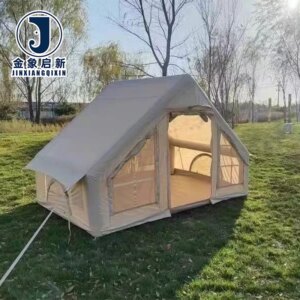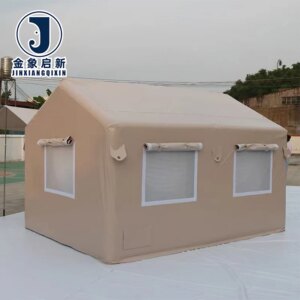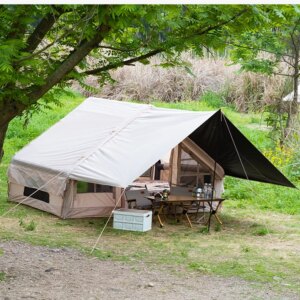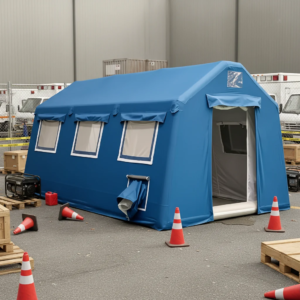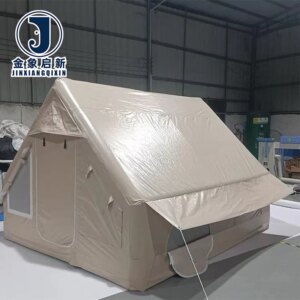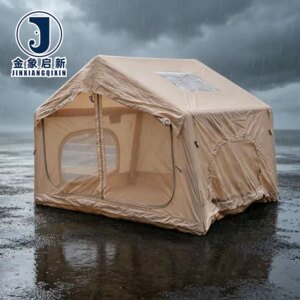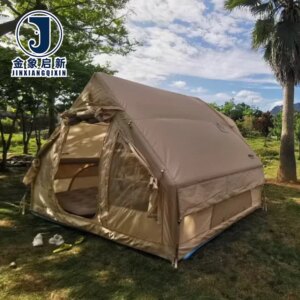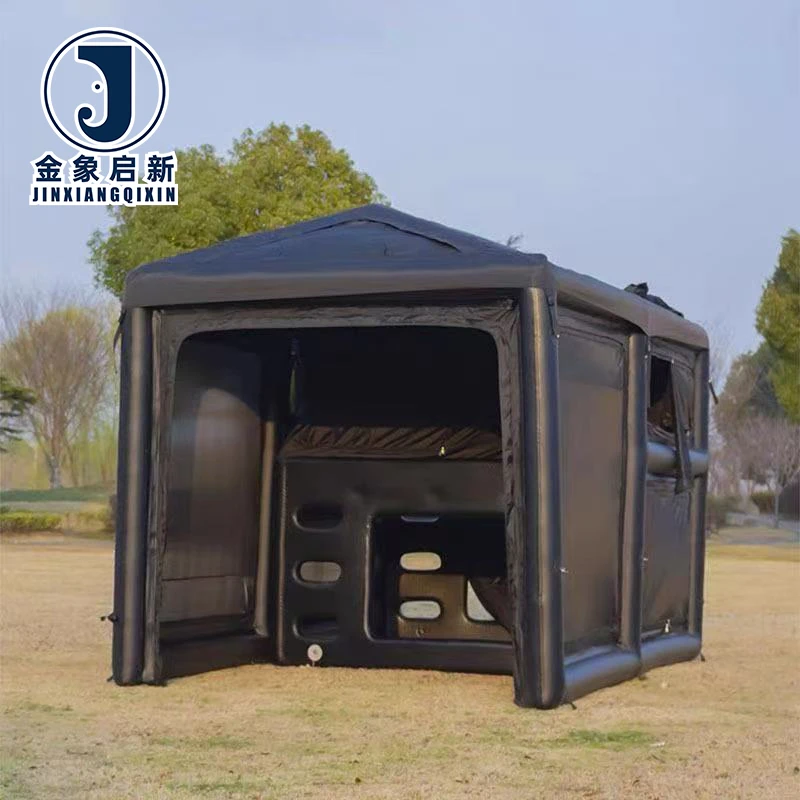
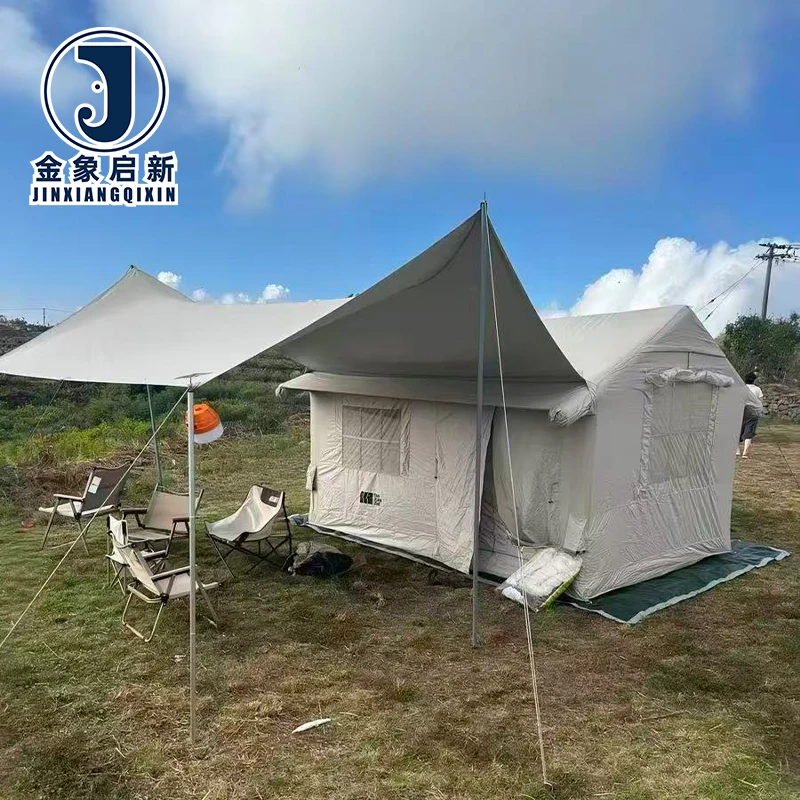
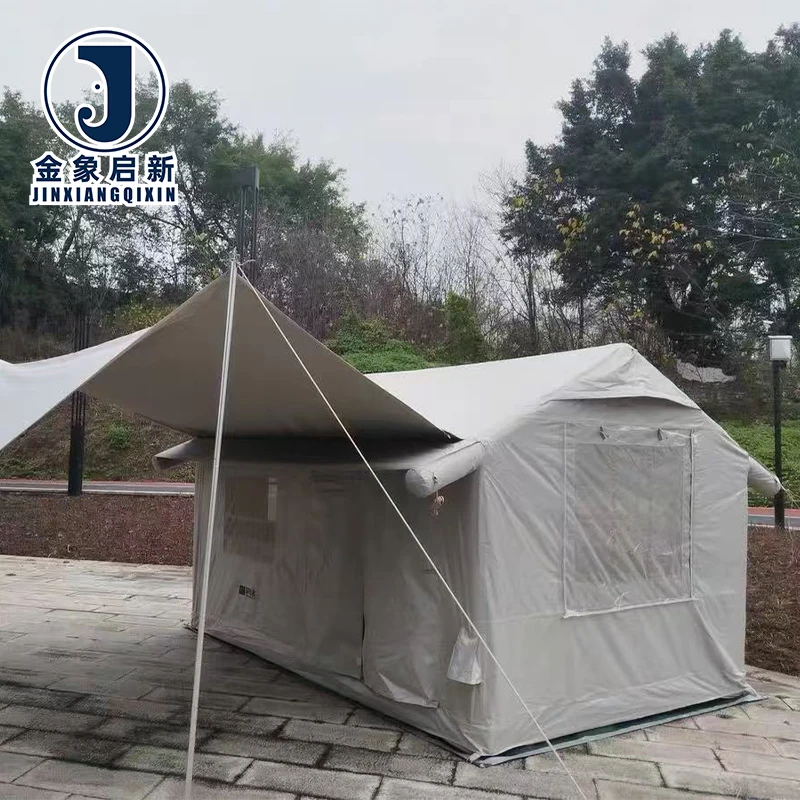
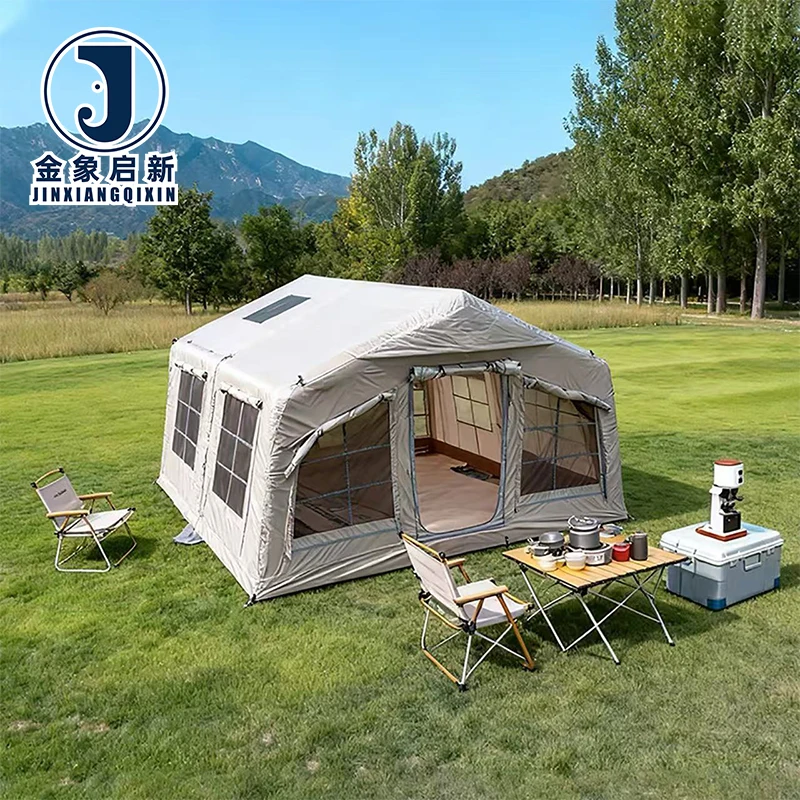
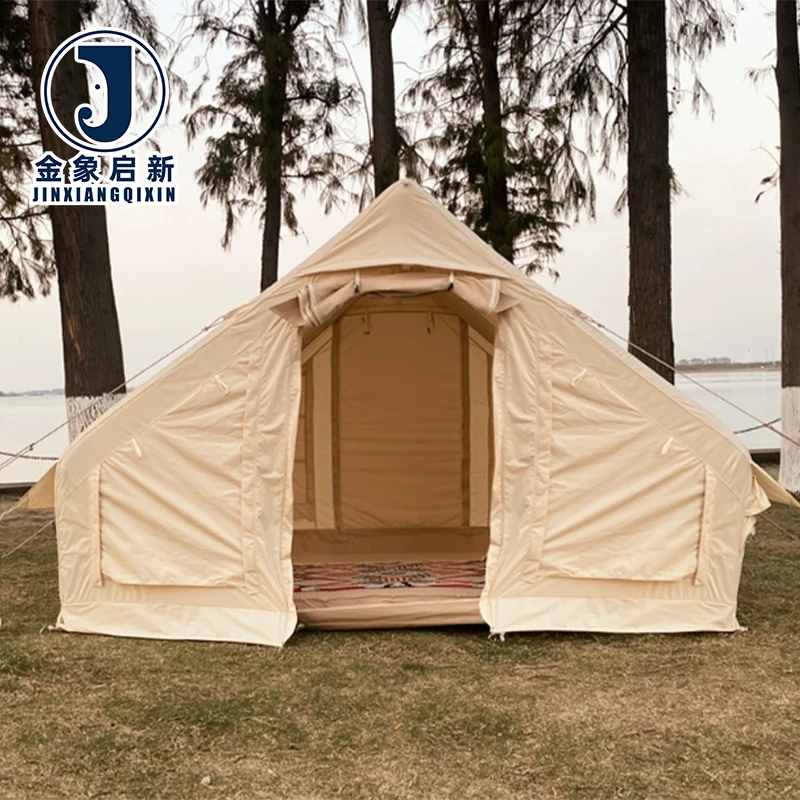
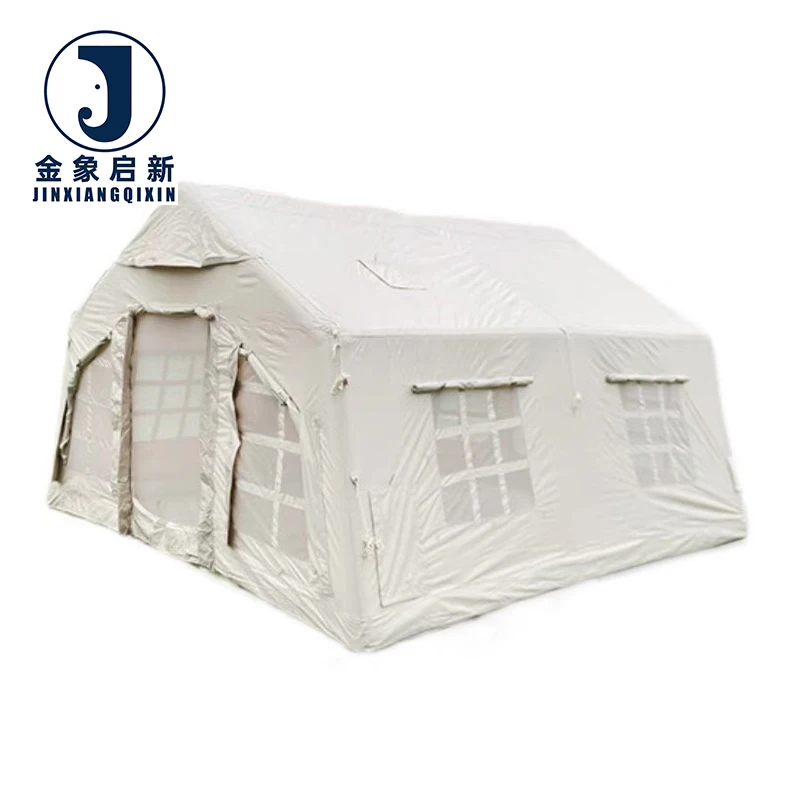
Description
Consistent Roll Stock — Every roll of inflatable tent fabric verified for GSM and colour before dispatch, backed by three full production lines and strict in-process coating control.
Technical Specifications
| Parameter | Value |
|---|---|
| Product Type | Inflatable Tent Fabric |
| Core Material | PVC tarpaulin |
| Waterproof Performance | Waterproof (grade not stated in source) |
| UV Resistance | UV-resistant (test basis not stated in source) |
| Tear Resistance | Tear-resistant (test standard not stated in source) |
| Construction | Single layer |
| Feature | Quick automatic opening, four seasons outdoor use |
| Customization Service | OEM & ODM, sample customization, pattern printing |
| Certifications | ISO9001, ISO14001, ISO45001, CE |
Application Suitability
| Application | Exposure & Requirement |
|---|---|
| Temporary outdoor event shelters | Rapid deployment cycles, variable weather, high foot traffic, wind load on inflatable beams |
| Mobile field stations for engineering projects | Remote site exposure, dust and abrasion, repeated inflation and deflation |
| Storage facilities in construction sites | UV and moisture exposure, mechanical contact with equipment and materials |
| Commercial outdoor shelters requiring rapid deployment | High-frequency assembly, structural air-holding integrity, branded exterior surfaces |
Why Colour Shift Between Rolls Derails Inflatable Tent Production
Batch-to-batch colour uniformity depends on in-process coating control, not just the Pantone reference on the purchase order.
When a tent manufacturer sources inflatable tent fabric roll from multiple batches or a supplier with limited process control, visible colour variation appears once panels are heat-welded side by side. This is especially damaging for inflatable camping tents, where large uninterrupted panels form the visible shell. A single roll that reads slightly warmer or cooler than the rest can force a fabricator to reject an entire cutting batch, delay a container shipment, or absorb the cost of rework on the factory floor [NEED_CITE: colour measurement tolerances for coated fabrics]. Wholesale buyers stocking inventory for downstream tent makers face the same exposure — one inconsistent roll in a container can trigger a return claim that erodes the margin on the full order.
Coating Weight and Air-Holding Integrity
The PVC tarpaulin core of this inflatable tent fabric is engineered to meet the air-holding demands of inflatable structures. Single-layer construction balances durability against pack weight, a critical factor for camping tents that must be transported and deployed quickly. The coating must maintain a continuous film across the base fabric to prevent micro-leaks at the beam and seam interfaces. Manufacturers sourcing inflatable tent fabric roll for these applications need verified GSM documentation per batch, not just a stated figure on the initial quotation, to ensure the coating weight supports structural inflation pressure throughout the product lifecycle.
OEM Capability and Roll-Stock Flexibility
Tent and inflatable structure manufacturers benefit from OEM and ODM services that extend beyond basic cut-to-width. Pattern printing and custom sizing are developed in-house with sample confirmation before the full roll order enters production. This workflow matters when a brand specifies a proprietary colour or printed logo across a large inflatable tent fabric wholesale order — the sample stage locks in the coating formulation, colour match, and print registration before bulk coating begins. The ten-technician R&D team handles material selection and sample development, ensuring that custom specifications translate accurately from the approved swatch to every roll in the container [NEED_CITE: OEM coating formulation approval process for custom colours].
Reading the Specification Sheet Beyond the GSM Number
GSM alone does not define how inflatable tent fabric performs under inflation stress. The base fabric denier and weave density determine how tear forces propagate once a puncture or cut edge is introduced. A heavier coating adds surface durability and waterproof integrity, but if the base fabric is loosely woven, tear resistance remains low regardless of total weight. Single-layer PVC tarpaulin for inflatable tents must balance these variables: enough coating to hold air and resist moisture ingress, paired with a base fabric dense enough to stop tear propagation at beam joints and welded seams. Specifying inflatable tent fabric roll requires reviewing the full material construction — base fabric, coating method, and treatment grades — rather than comparing GSM figures in isolation. UV-resistant and tear-resistant treatments are available; confirm the test grade required for your destination market before placing the order.
The Hidden Cost of Incorrect Fabric Specification
Selecting inflatable tent fabric based solely on the lowest GSM quotation often surfaces as premature failure at the welded seams, where inflation stress concentrates during wind loading. Fabric that is lighter than specified may not provide sufficient coating thickness for reliable heat-welding, causing seam delamination before the fabric body shows wear. Similarly, UV-resistant treatment claimed without a supporting test report can lead to surface chalking and embrittlement after one or two seasons of outdoor deployment, generating warranty claims that far exceed the initial material savings. Batch colour inconsistency forces tent makers to sort and segregate rolls on the production floor, adding labour cost and delaying shipment schedules [NEED_CITE: seam failure analysis in inflatable fabric structures].
Why Source Inflatable Tent Fabric Here
Three full production lines and thirty-six sets of professional processing equipment provide the capacity to fulfil large inflatable tent fabric wholesale orders without splitting production across multiple runs, which is a primary cause of batch inconsistency. A dedicated QA and QC team inspects every roll before shipment, catching GSM deviations and colour drift at the point of production rather than after the container is sealed. The ten-person R&D team develops custom width, colour, and printed pattern samples within days, compressing the approval cycle that typically delays roll-stock orders. Nearly thirty years of focused coated fabric production provides the process depth to maintain coating adhesion and weight accuracy across long production runs. Every batch ships with a complete documentation package that supports customs clearance and downstream compliance verification.
Documentation & Verification
- Material specification sheet confirming GSM, base fabric construction, and coating type per roll batch
- Pre-shipment inspection record with full roll-by-roll QA verification before container loading
- Roll packing list detailing roll count, individual weight, and container loading plan
- Test reports for UV and flame-retardant grades where applicable to your market requirements
- Certificate of origin and customs support documentation for export market clearance
Fabrication, Handling & Storage
- Heat-weld parameters must match the PVC coating formulation — request the recommended temperature and dwell time for this single-layer construction
- Store rolls horizontally on pallets in a dry, shaded area to prevent surface creasing that affects downstream cutting accuracy
- Allow cold-stored rolls to reach ambient temperature before unrolling to avoid coating micro-cracking on the PVC tarpaulin surface
- Plan cutting layouts to minimise transverse seams across inflatable beam panels, preserving air-holding continuity
- Use compatible PVC-based adhesives for field repairs to maintain coating bond integrity on the single-layer fabric
What to Include in Your Inquiry
Specify the target application — whether the fabric will be used for camping tents, event shelters, or commercial inflatable structures — along with the expected deployment environment and any wind or weather load requirements. Provide the required roll width, colour references, and annual volume so the production schedule can be planned for batch consistency. If your destination market mandates fire-retardant or anti-static certification, state the applicable standard so the correct treatment grade and test documentation are prepared before production begins.
Frequently Asked Questions
Q: How is GSM verified per roll and what documentation accompanies shipment?
A: Each roll of inflatable tent fabric is weighed and measured during the pre-shipment inspection to confirm it matches the stated GSM on the material specification sheet. A full inspection record ships with the batch, listing individual roll weights and the corresponding production batch number, so you can cross-reference against your purchase order on receipt.
Q: How is batch-to-batch colour consistency maintained across large roll orders?
A: Colour is controlled at the coating stage using standardised formulation ratios and in-process checks on every production run. The approved sample serves as the master reference, and each roll is compared against it before packing. This ensures that inflatable tent fabric wholesale orders spanning multiple containers maintain uniform colour across all panels.
Q: What roll widths and lengths are available, and what is the MOQ per colour?
A: Roll widths and lengths are customised to your cutting layout and container loading plan. The minimum order quantity per colour depends on the coating formulation and whether pattern printing is required. Submit your target dimensions and colour references to receive a production recommendation and MOQ confirmation.
Q: How are rolls packed and loaded to prevent damage during container transit?
A: Rolls are packed on pallets with protective end caps and stretch wrapping to prevent edge crushing and surface abrasion during transit. A container loading plan is prepared in advance to optimise roll count per container while ensuring no roll bears excessive weight from stacking, preserving the PVC tarpaulin coating surface for fabrication on arrival.
Q: What pattern printing and branding options are available on roll stock?
A: Pattern printing is developed through the in-house R&D team with a sample confirmation stage before bulk production. Logo placement, repeat pattern spacing, and colour registration are locked at the sample stage. This ensures that every roll in the inflatable tent fabric roll order carries consistent branding that matches the approved prototype.