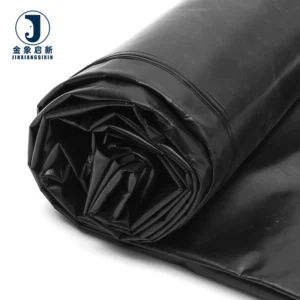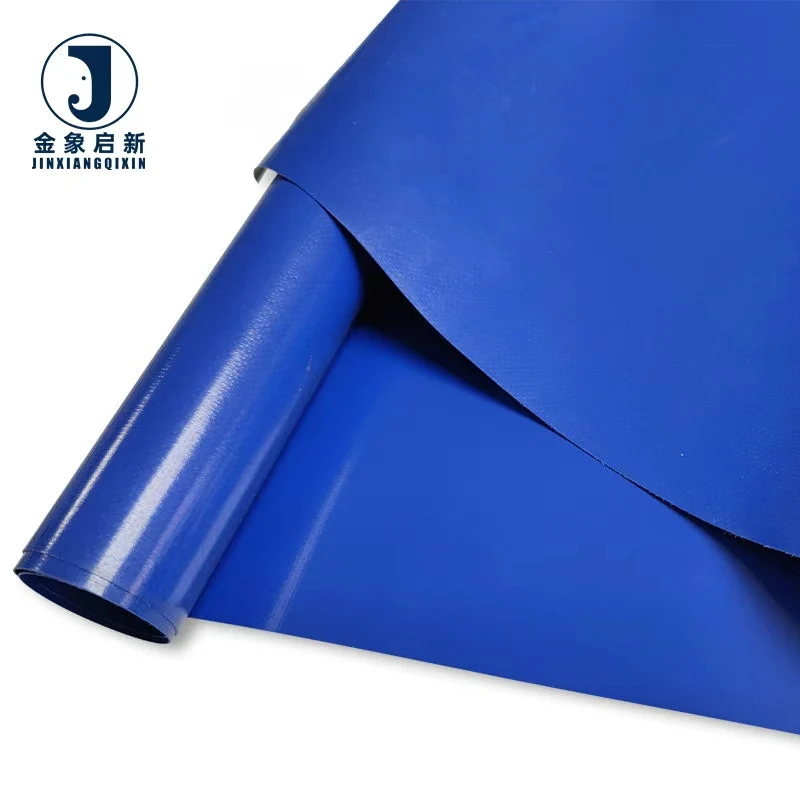
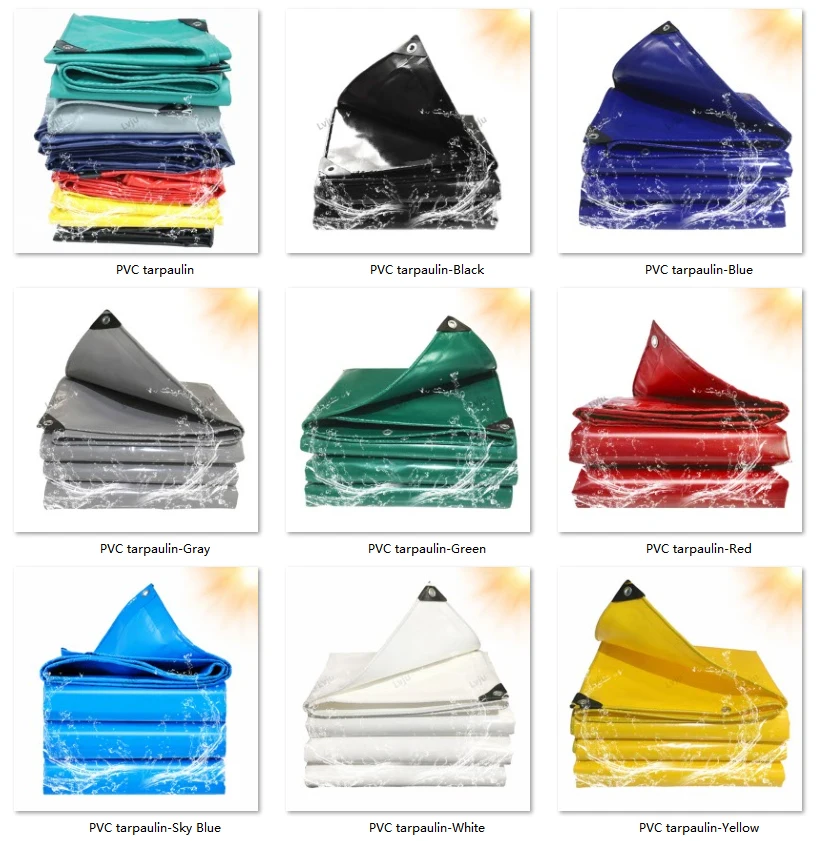
Description
Consistent roll weight across batches — every PVC Laminated Tarpaulin Roll shipped goes through 100% pre-shipment inspection so the GSM you order is the GSM you receive.
Technical Specifications
| Parameter | Value |
|---|---|
| Product Type | PVC Tarpaulin Roll |
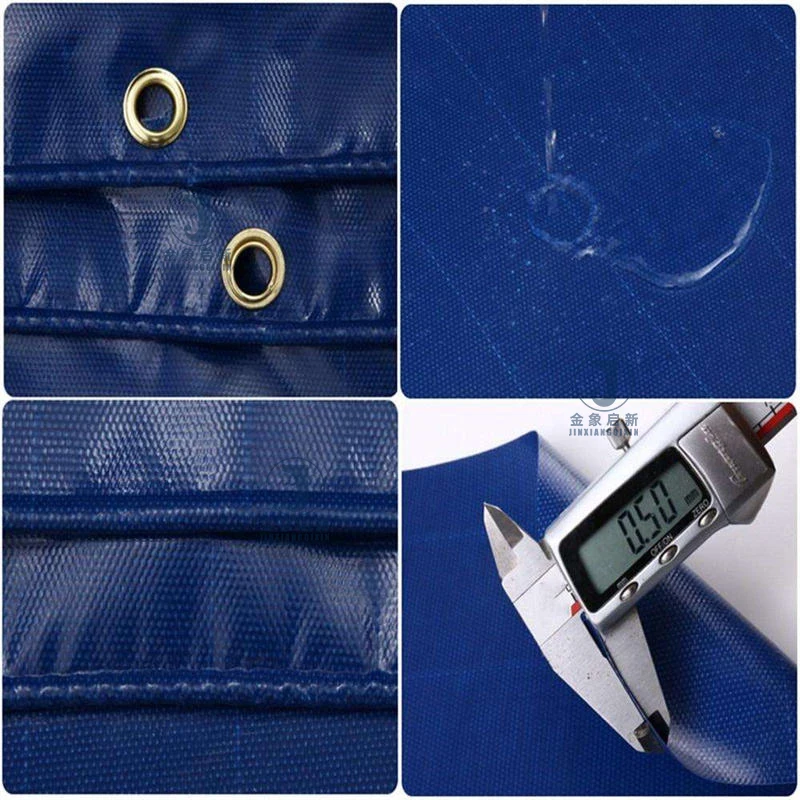
| Material | PVC + High-strength polyester mesh fabric |
| Coating Method | Laminated Technology & Hot-melt Coating Technology |
| Weight (GSM) | 350gsm (0.32mm) / 420g (0.35mm) / 500gsm (0.4mm) / 550gsm (0.45mm) / 600gsm (0.5mm) / 750gsm (0.65mm) |
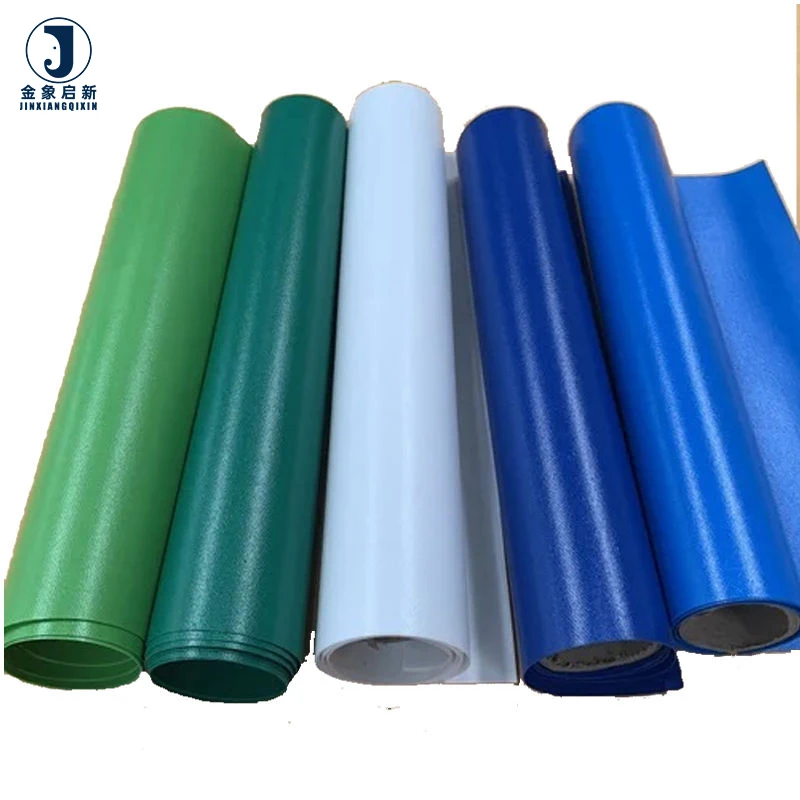
| Roll Size | 2m width × 75m length / 2.1m width × 50m length |
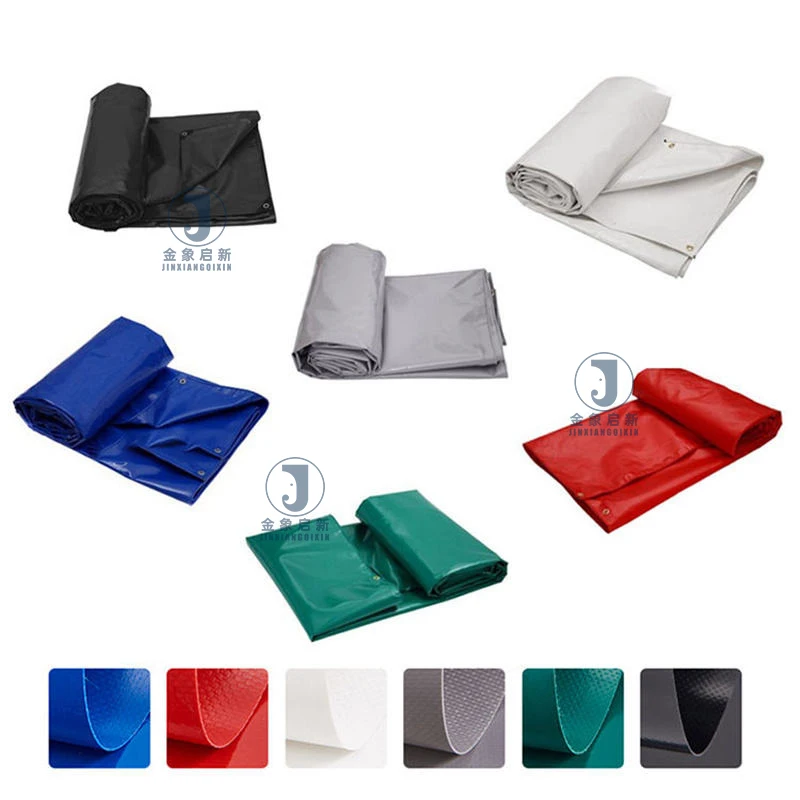
| Finish Product Size | Custom items as per customer’s needs or sold by inventory |
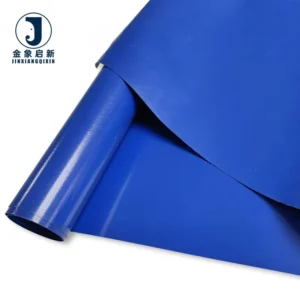
| Color | Blue / Red / Yellow / Light blue / Grey (Customized) |
| Key Features | Waterproof, Anti-mildew, Cold crack resistance, Good color fastness, Outstanding tearing strength for welding |
| Special Treatments Available | Flame retardant, Anti-static, Anti-cold, Anti-mildew, 3P (grade not stated — confirm the grade required for your market) |
| Service Life | 3-7 years under normal circumstances |
| Certifications | ISO, CE |
Application Suitability
| Application | Exposure & Requirement |
|---|---|
| Construction site enclosure | Wind load, rain, UV exposure, scaffold tie-down stress, repeated installation and removal |
| Temporary industrial covers | Dust containment, chemical splash, outdoor weathering, forklift handling abrasion |
| Agricultural and aquaculture pond lining | Permanent water contact, soil chemistry, puncture risk from substrate, seasonal temperature swings |
| Scaffolding and building wraps | Sustained wind pressure, UV degradation, visibility and branding print requirements |
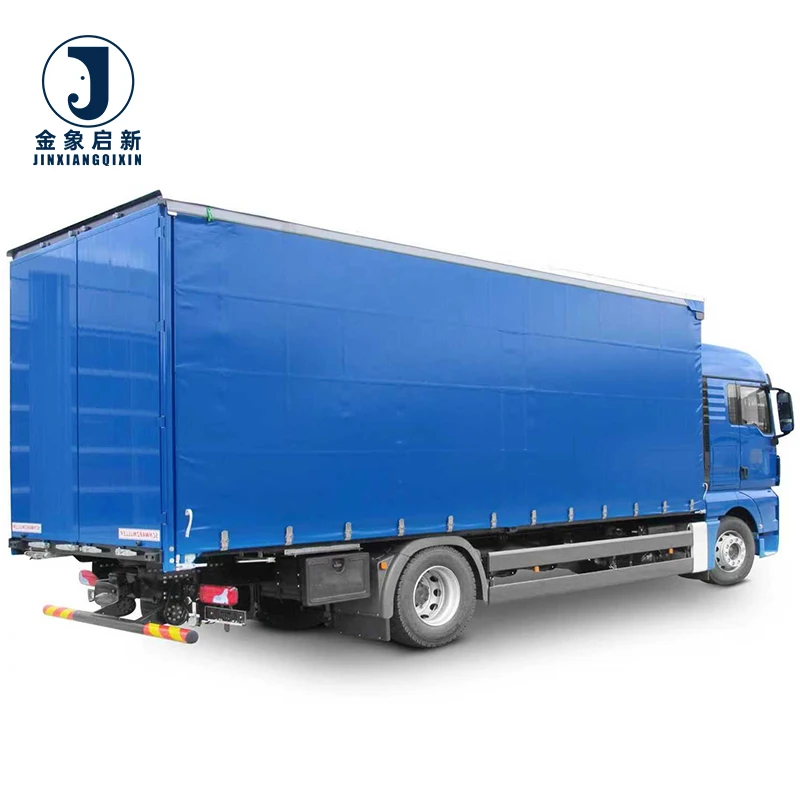
| Truck awning and side curtain | Constant flexing at folds, road debris abrasion, weather exposure during transit |
| Tent and inflatable structure covers | Tensile stress at frame contact points, UV exposure, waterproofing under sustained rain |
Why Quoted GSM Rarely Matches What Arrives on Site
Batch consistency in roll stock is not a bonus — it is the baseline requirement for wholesale distribution.
When you source PVC Laminated Tarpaulin Roll wholesale from multiple suppliers, the pattern repeats: the quotation states 550gsm, but the rolls arriving at the warehouse feel lighter, and cutting into a cross-section confirms the coating is thinner than agreed [NEED_CITE: common industry discrepancy between quoted and delivered GSM in coated fabrics]. For distributors restocking regional dealers, this means customer complaints, return shipments, and damaged credibility. For contractors ordering by the container, a GSM shortfall translates directly into reduced tensile and tear performance in the field, where the cover fails at flex points long before the expected service window closes. The issue is rarely fraud — it is usually a lack of in-process weighing and coating control on the production line.
Roll-to-Roll Weight Verification Before Dispatch
Every roll in a PVC Laminated Tarpaulin Roll wholesale order is weighed individually during pre-shipment inspection. The recorded weight is cross-referenced against the stated GSM and roll dimensions to confirm that coating thickness meets specification. Rolls that fall outside tolerance are rejected before packing, not after the container is sealed. This process eliminates the most common dispute in bulk coated fabric procurement — weight shortfall discovered only when the buyer cuts into the first roll on arrival.
Colour Matching Across a Full Container Load
When a distributor orders two hundred rolls of the same blue or grey for regional resale, visible shade variation between rolls destroys end-user confidence once the covers are installed side by side. Our coating line controls pigment dosing at the mixing stage and runs colour checks at intervals through the production run [NEED_CITE: colour consistency measurement methods for PVC coated textiles]. Each roll is compared against the approved reference swatch before it leaves the inspection station, so batch-to-batch shade stays within tolerance across the full order.
How Coating Technology Determines Roll Performance
Laminated technology bonds the PVC film to the polyester mesh under heat and pressure, creating a coating layer that resists delamination even when the fabric is folded repeatedly — critical for truck awnings and tent covers that see constant flexing. Hot-melt coating technology drives the PVC compound into the mesh interstices, producing stronger adhesion and better tear propagation resistance [NEED_CITE: comparison of lamination versus hot-melt coating adhesion strength in PVC tarpaulins]. The choice between the two depends on end use: laminated rolls suit applications demanding surface smoothness and printability, while hot-melt coated rolls deliver the mechanical bond needed for heavy-duty covers that undergo welding and fabrication.
GSM, Base Fabric Density, and the Strength Misconception
A 750gsm roll is not automatically stronger than a 550gsm roll if the extra weight comes from coating thickness rather than base fabric density. Tensile and tear resistance depend on the polyester yarn denier and the warp-weft density of the mesh — the coating adds weight and waterproofing, but it is the base fabric that carries the structural load. This is why a lighter roll with a denser mesh can outperform a heavier roll with a sparse weave in tear tests. When evaluating PVC Laminated Tarpaulin Roll wholesale options, request the base fabric specification alongside the GSM figure so you can compare structural capacity, not just surface weight. Roll width and length — available at 2m × 75m and 2.1m × 50m — also affect fabrication yield: wider rolls reduce the number of welded seams in large covers, and longer rolls lower the per-metre handling cost during cutting.
The Hidden Cost of Specifying the Wrong Roll Grade
Choosing a 350gsm roll for an application that demands 600gsm or above leads to early failure at stress concentrations — tie-down points, welded seams, and fold lines bear loads the lighter fabric cannot sustain. Equally problematic is ordering a standard roll when the site requires flame-retardant or anti-static certification: the cover passes initial inspection but fails the compliance audit, forcing a complete replacement at the contractor’s expense [NEED_CITE: fire safety compliance requirements for temporary covers on construction sites]. Colour inconsistency between rolls in the same shipment creates a different kind of cost — not structural, but reputational — when a distributor’s customer installs adjacent panels that are visibly different shades. These failures all originate at the specification stage, not in the field.
Why Distributors Source PVC Tarpaulin Roll Stock Here
Three full production lines and 36 sets of professional equipment run simultaneously, supporting bulk roll output with reliable scheduling for container-load orders. The 10-person R&D team develops custom width, colour, and treatment samples within days, allowing distributors to test new grades before committing to a full shipment. Dedicated QA inspection at every production stage — coating weight, colour shade, roll dimension, surface quality — catches deviations before packing rather than after delivery. Rolls are packed with individual weight and dimension records so customs documentation matches the physical shipment exactly. Samples for custom requirements are developed rapidly so buyers can verify GSM, colour, and coating feel before the production run begins.
Documentation & Verification
- Material specification sheet stating GSM, base fabric type, and coating method for each roll grade
- Roll packing list with individual roll weight and dimensions for customs clearance
- Pre-shipment inspection record confirming GSM and colour consistency across the batch
- Test report for UV and flame-retardant grades where applicable to the order
- Certificate of origin and customs support documentation included with every dispatch
Fabrication, Handling & Storage
- Hot-air welding at temperatures suited to the laminated or hot-melt coating for seam integrity
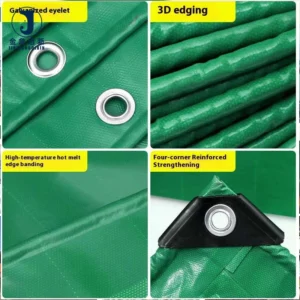
- Reinforced hems at tie-down points distribute load across the polyester mesh base fabric
- Store rolls upright on pallets to prevent flat-spot deformation on the outer layers
- Unroll in moderate temperatures to avoid cold crack stress on the PVC coating surface
- Cut with a straight blade along the warp direction to maintain clean edges for welding
What to Include in Your Enquiry
Specify the GSM grade and thickness range your market requires, along with the target application and exposure conditions. Confirm whether your end users need flame-retardant or anti-static treatment and the compliance standard applicable in your region. Indicate preferred roll width and length, estimated annual volume, and whether you need custom colour matching or print-ready surface finish. State whether you require stock rolls only or finished cut-to-size panels with welded hems.
Frequently Asked Questions
Q: How is GSM verified on each roll before shipment?
A: Each roll is individually weighed and measured during pre-shipment inspection. The weight is compared against the stated GSM and the roll dimensions to confirm coating thickness meets specification. Any roll outside tolerance is rejected before packing, and the inspection record is included in the shipping documentation.
Q: How do you control colour consistency across rolls in the same order?
A: Pigment dosing is controlled at the mixing stage, and colour checks are run at intervals throughout the production run. Every roll is compared against the approved reference swatch at the inspection station. This ensures shade consistency across the full batch, so adjacent panels installed side by side show no visible variation.
Q: What roll widths and lengths are available, and what are the minimums for custom sizes?
A: Standard rolls are offered at 2m × 75m and 2.1m × 50m. Custom widths and lengths are available with minimums that depend on the GSM grade and colour selected. Submit your required dimensions and target volume so we can confirm the production minimum and lead time for your specification.
Q: How are rolls packed and loaded to maximise container utilisation?
A: Rolls are packed vertically on pallets with protective wrapping to prevent transit damage. A container loading plan is prepared for each shipment, calculating the roll count and total weight to optimise space within the container dimensions. The packing list details each roll’s position for efficient unloading at destination.
Q: What documentation comes with a bulk roll order?
A: Every shipment includes a material specification sheet, roll packing list with individual weights, pre-shipment inspection record, and certificate of origin. Where flame-retardant or UV treatment is specified, the corresponding test report is provided. Additional customs support documentation is prepared based on the destination country’s import requirements.