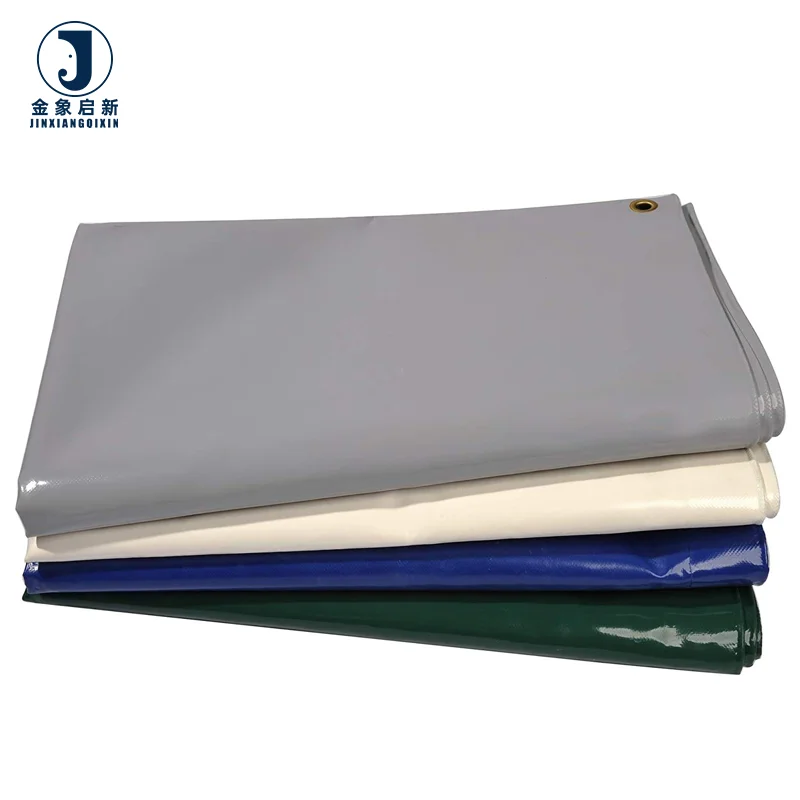
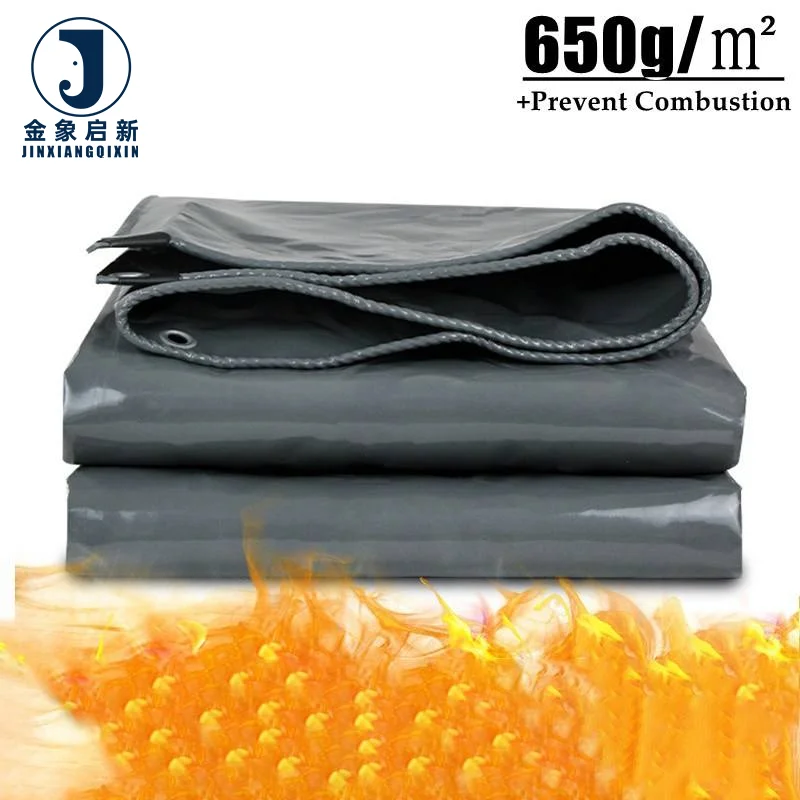
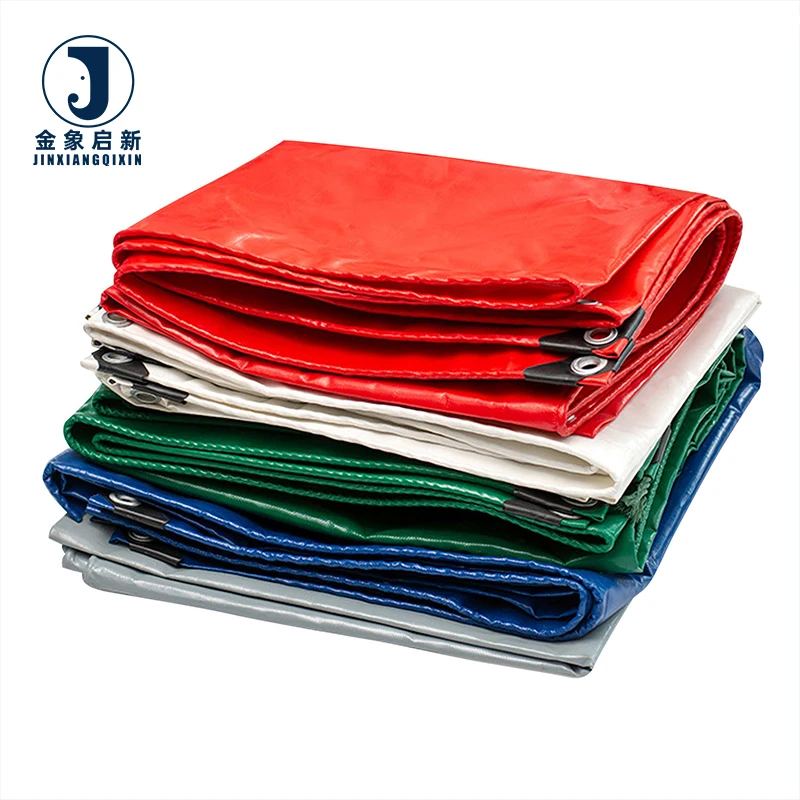
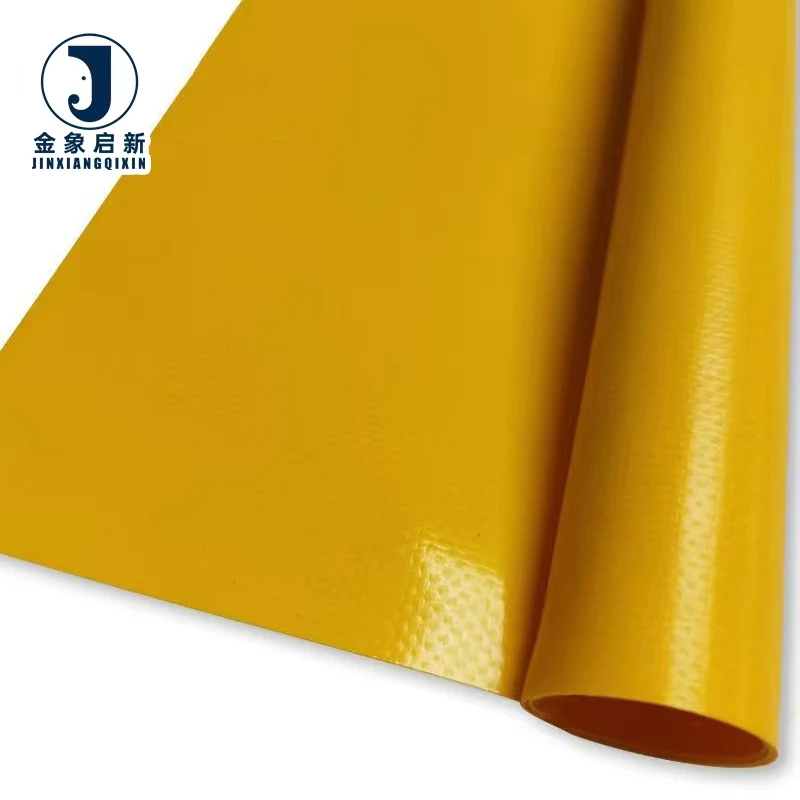
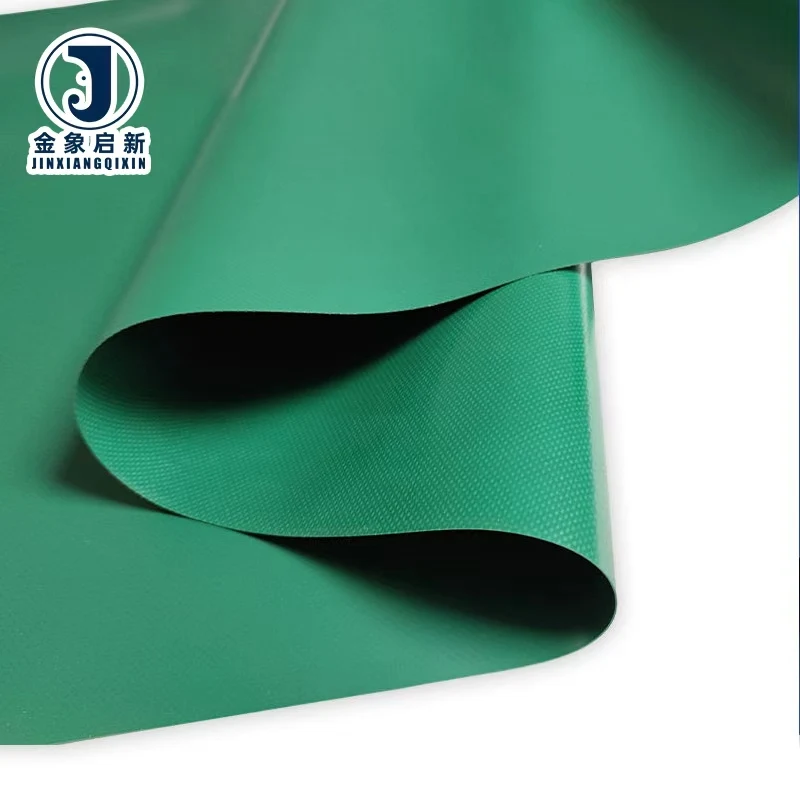
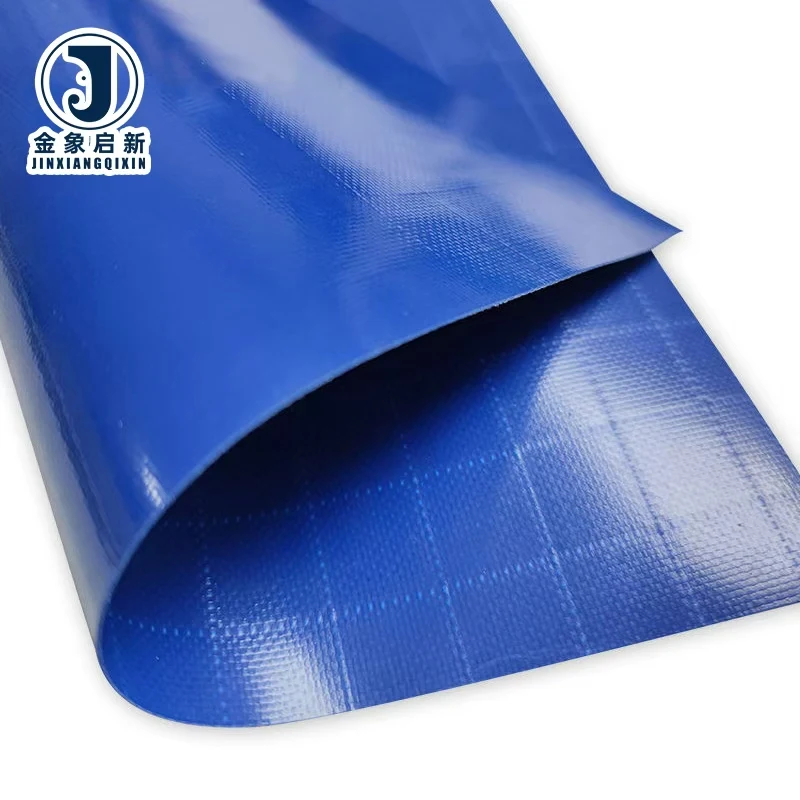
Description
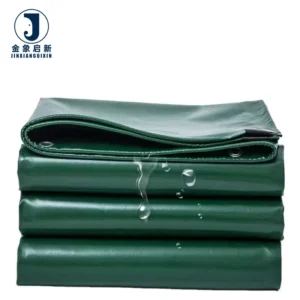
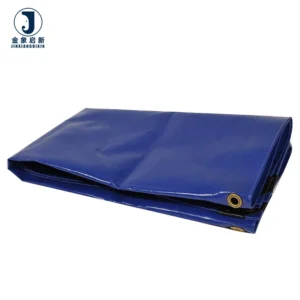
Consistent Roll Output — Every PVC Coated Tarpaulin roll is produced on dedicated lines with in-process weight checks, so the GSM you order is the GSM that arrives at your warehouse.
Technical Specifications
| Parameter | Value |
|---|---|
| Product Type | PVC Coated Tarpaulin |
| Material | PVC & Polyester (Polyester Base + Double-Sided PVC Coating) |
| Yarn Count Options | 500D840D, 500D1000D, 1000D1000D, 1000D1300D, 1300D1300D, 1000D2000D |
| Weight Options | 350 GSM, 400 GSM, 420 GSM, 500 GSM, 600 GSM, 650 GSM, 750 GSM, 900 GSM |
| Total Thickness Range | 0.29mm – 0.65mm |
| Weave Density | 3019, 2020, 30*15 |
| Tensile Strength (Warp) | 1650N – 3900N (test basis not stated in source) |
| Tensile Strength (Weft) | 1600N – 3500N (test basis not stated in source) |
| Key Features | Water Resistant, Flame Retardant (grade not stated), Anti-UV (test basis not stated) |
| Softening Temperature | ≥ 80 ℃ |
| Brittle Temperature | ≤ -50 to -60 ℃ |
| Density | 1.15 – 2.00 g/cm³ |
Application Suitability
| Application | Exposure & Requirement |
|---|---|
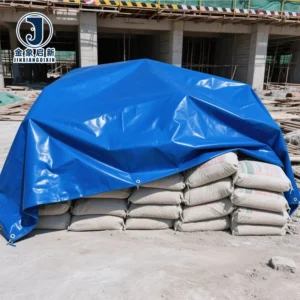
| Truck and trailer covers | Constant road vibration, UV exposure, tie-down stress at eyelets, flex fatigue at seams |
| Industrial awnings and canopies | Prolonged sun exposure, wind uplift, pooling water on flat sections |
| Tent and marquee panels | Repeated fold-unfold cycles, crowd proximity requiring flame retardant grades |
| Machine and equipment covers | Dust ingress prevention, outdoor weathering, abrasion from contact with metal housings |
| Pergola and shade structures | Overhead tension, seasonal temperature swings, UV-induced colour shift |
Why Batch-to-Batch Colour Variation Costs More Than You Think
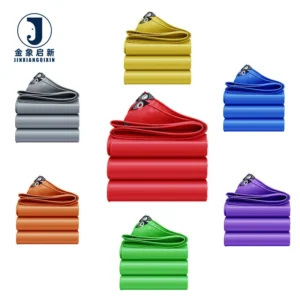
Uniform PVC coating formulation and pigment dosing across every roll in a single production run eliminates visible shading differences when installed side by side.
When a distributor sources a PVC Coated Tarpaulin container load from multiple short-run suppliers, the rolls often arrive with subtle hue shifts that only become obvious once installed next to each other on a fleet of trailers or across a large pergola [NEED_CITE: colour consistency standards for coated textile batches]. The cost of sorting, returning, and reordering mismatched rolls far exceeds the initial unit price savings. A single continuous production run with locked-in pigment ratios ensures that roll 1 and roll 500 read as the same shade under both daylight and artificial light.
Roll-to-Roll GSM Verification Before Dispatch
Buying PVC Coated Tarpaulin by the roll means the weight per square metre is the single most important commercial parameter. Each production run is sampled at multiple points along the line to confirm that the coating weight and base fabric contribution add up to the specified GSM, not a figure that drifts downward as the run progresses. Pre-shipment inspection records document these readings per roll, giving you evidence to reconcile against the quotation before the container leaves the factory.
Container Loading Plans That Protect the Roll
Heavy-grade coated fabric rolls exert significant pressure on one another during ocean freight, particularly when stowed vertically. A PVC Coated Tarpaulin roll stock shipment requires a loading plan that accounts for roll diameter, weight distribution, and bracing to prevent crushing at the core [NEED_CITE: container stowage practice for coated fabric rolls]. Horizontal stowage with interleaved separation prevents surface gloss transfer between adjacent rolls and keeps the outer wrap intact through multi-week transit.
How Base Fabric Denier and Coating Weight Interact
The 500D to 2000D yarn range listed in the specifications determines how load distributes through the weave before the PVC coating takes over. A 1000D1000D base at 650 GSM will exhibit different tensile behaviour than a 500D1000D base at the same weight, because the heavier yarns carry more load per thread while the lighter base relies more on coating thickness to bridge the gaps. Weave density (3019 versus 2020) further controls how tightly the yarns are locked in place, influencing tear propagation resistance. Coating application — in this case a double-sided PVC layer — must fully encapsulate the yarn crossover points to prevent delamination under sustained tension.
The Hidden Cost of Welding Without Material Data
When a fabricator heat-seals seams on PVC Coated Tarpaulin without a confirmed softening temperature and coating thickness, the weld can fail before the fabric itself. The softening point of ≥ 80 ℃ gives a baseline for hot-air or wedge welding, but the exact dwell time and temperature must match the actual coating weight of the GSM grade being joined [NEED_CITE: heat sealing parameters for PVC coated polyester fabrics]. Underheating produces a cold weld that peels under flex; overheating burns through the base fabric. Requesting a material specification sheet that lists coating weight separately from base fabric weight allows you to set welding parameters with confidence rather than trial and error.
What Three Production Lines Mean for Your Order Schedule
Jinan Jinxiang’s dedicated PVC coating lines handle bulk roll orders without the scheduling conflicts that arise when a single line must switch between product families. The 36 sets of professional equipment support simultaneous production of different GSM grades, so a mixed-container order of 420 GSM and 900 GSM rolls can be fulfilled without one grade waiting for the other. A 10-person R&D team develops custom colour matches and sample cuts within days, allowing you to approve material before committing to a full container. Every roll undergoes full pre-shipment inspection — no spot-checking, every roll is weighed and measured.
Documentation & Verification
- Material spec sheet stating base fabric denier, coating weight, and total GSM per roll grade
- Pre-shipment weight verification record per roll against the quoted GSM
- Colour reference chip or Pantone match record for the production batch
- Test report for flame retardant and anti-UV grades where applicable to your market
- Roll packing list with individual roll dimensions and net weight for customs reconciliation
- Certificate of origin and ISO/CE certification copies for import documentation
Fabrication, Handling & Storage
- Set hot-air welder temperature based on the specific GSM grade’s coating thickness before joining
- Reinforce corners with extra PVC patches where tie-down loads concentrate stress on lighter grades
- Store rolls horizontally on pallets to prevent permanent flat spots on the outer coating layer
- Unroll and allow fabric to acclimatise at installation temperature before tensioning across frames
- Clean glossy surfaces with mild detergent only — solvent-based cleaners attack the PVC plasticiser
- Cut panels with at least a 50mm hem allowance to accommodate double-fold heat-sealed edge finishing
Requesting a Quotation That Matches Your Actual Need
Specify the GSM grade, roll width, and colour reference you require, along with your intended application and end-market compliance needs — whether that involves flame retardant grades for European tent standards or UV treatment for equatorial shade structures. Confirm whether you need rolls in standard lengths or cut panels, and whether pattern printing or branding is required on the coating surface.
Frequently Asked Questions
Q: How is roll-to-roll colour consistency maintained across a full container order?
A: All rolls in a single order are produced in one continuous run using the same pigment batch. A colour reference is locked before production begins, and random samples are checked against the standard under controlled lighting during the run. Pre-shipment documentation includes the batch colour match record.
Q: What is the acceptable GSM tolerance, and how do I verify it on arrival?
A: The pre-shipment inspection record states the measured GSM per roll. On arrival, you can take a measured sample from the roll end and weigh it on a calibrated scale to confirm. The documentation package includes the methodology used at the factory so both readings are comparable.
Q: Can I mix different GSM grades in a single container shipment?
A: Yes, mixed loads are supported. The roll packing list itemises each grade, roll count, and weight so you can verify the load against your purchase order at the destination. Container loading plans are prepared to accommodate different roll diameters within the same shipment.
Q: What roll widths are available, and how does width affect container utilisation?
A: Rolls are available in custom widths to match your cutting patterns or fabrication equipment. Wider rolls may reduce the number of seams in a finished cover but affect how many rolls fit in a standard container. The loading plan is calculated per order to maximise container space.
Q: How are rolls packed to prevent damage during ocean freight?
A: Each roll is wrapped in protective outer packaging and stowed according to a loading plan that prevents crushing and surface contact damage. Horizontal or vertical stowage is selected based on roll diameter, weight, and transit duration to ensure the coating arrives undamaged.