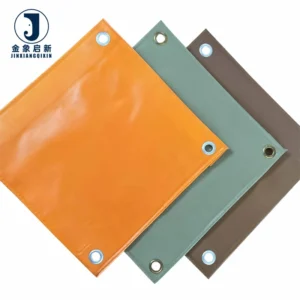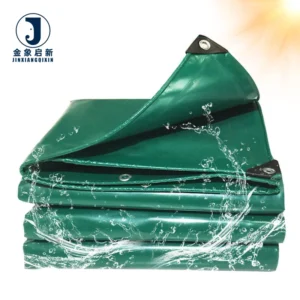
Description
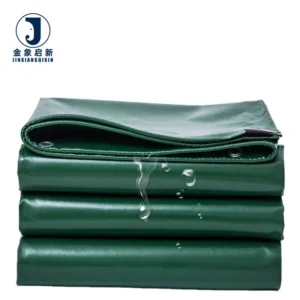
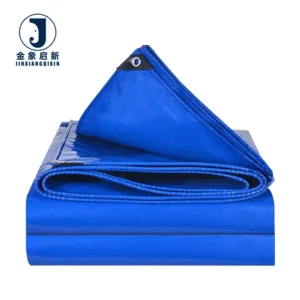
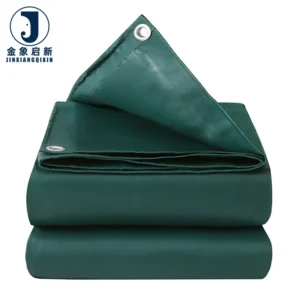
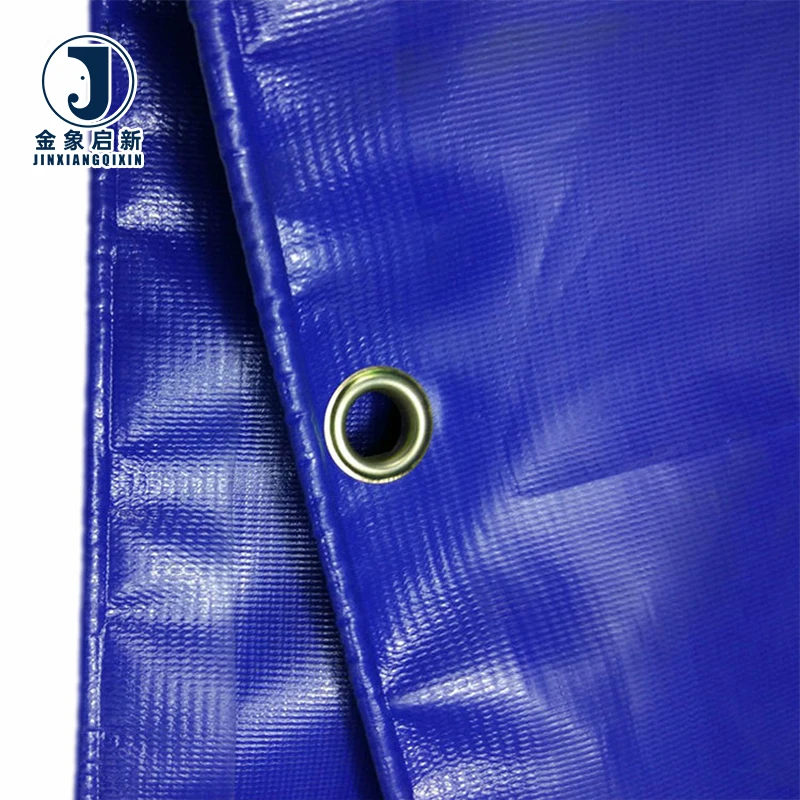
Consistent Roll Stock — every roll of PVC coated tarpaulin is weighed and measured against specification before it leaves the production line, supported by in-process QA across three full coating lines.
Technical Specifications
| Parameter | Value |
|---|---|
| Product Type | PVC Coated Tarpaulin Fabric |
| Base Fabric Material | 100% high toughness polyester yarn |
| Coating Technology | Lamination technology and hot melt coating technology |
| Thickness (Medium Grade) | 0.35–0.45 mm |
| Weight (Medium Grade) | 400–500 g/m² |
| Knitting Density (Medium Grade) | 500D |
| Tensile Strength (Medium Grade) | Longitude 1500–2000 / Latitude 1200–1800 N/5cm |
| Thickness (Heavy-duty Grade) | 0.70–1.0 mm |
| Weight (Heavy-duty Grade) | 700–1000 g/m² |
| Knitting Density (Heavy-duty Grade) | 1000D |
| Tensile Strength (Heavy-duty Grade) | Meridian 2000–2500 / Latitude 1800–2200 N/5cm |
| Thickness (Super Heavy Grade) | 1.2–1.5 mm |
| Weight (Super Heavy Grade) | 1100–1500 g/m² |
| Knitting Density (Super Heavy Grade) | 500D–2000D |
| Tensile Strength (Super Heavy Grade) | Warp 2500–3000 / Weft 2200–2800 N/5cm |
| Key Features | Waterproof, cold resistant cracking, mold proof, anti-static treatment |
| Treatment Options | Flame retardant (B1 standard referenced — confirm grade required for your market), anti-static, cold prevention, mold prevention |
| Welding Tear Strength | Excellent (test standard not stated) |
| Color Fastness | Best color fastness (grade not stated) |
| Outdoor Weather Resistance | 3–5 years (source value — verify against manufacturer catalog) |
| Certifications | ISO, CE |
Application Suitability
| Application | Exposure & Requirement |
|---|---|
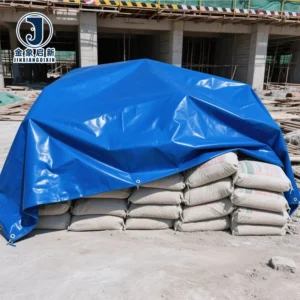
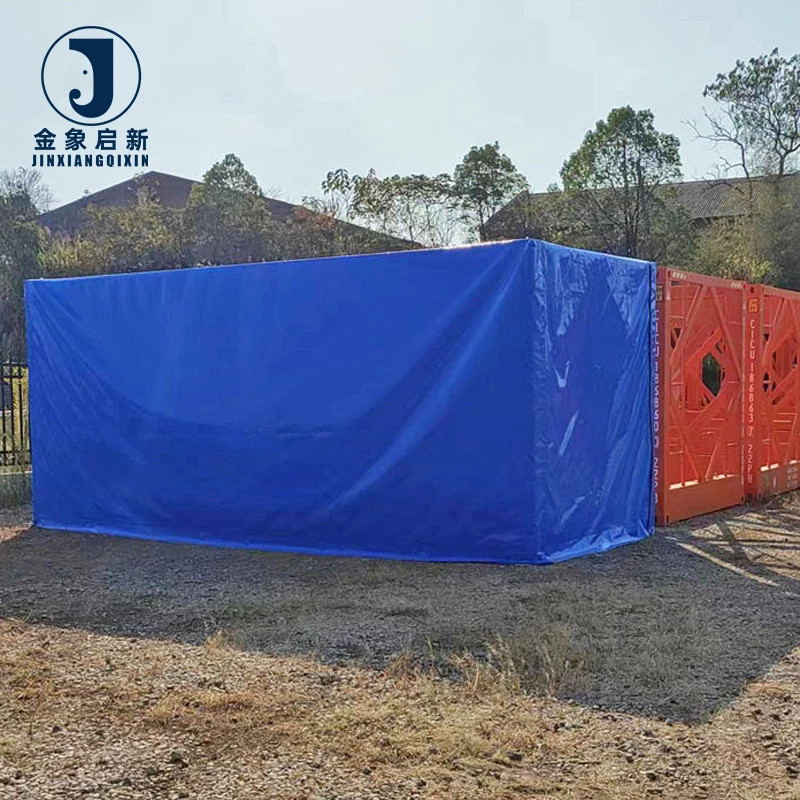
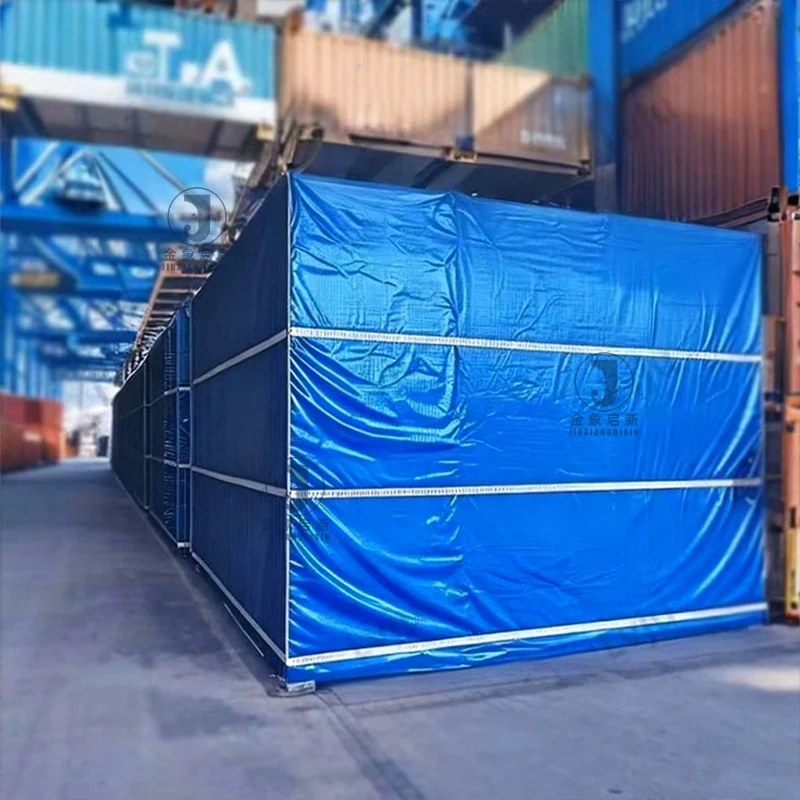
| Warehouse and stockpile covers | Continuous outdoor UV exposure, rain pooling, wind uplift, forklift abrasion at contact points |
| Construction site hoarding and wraps | Scaffolding friction, dust and debris impact, repeated installation and removal |
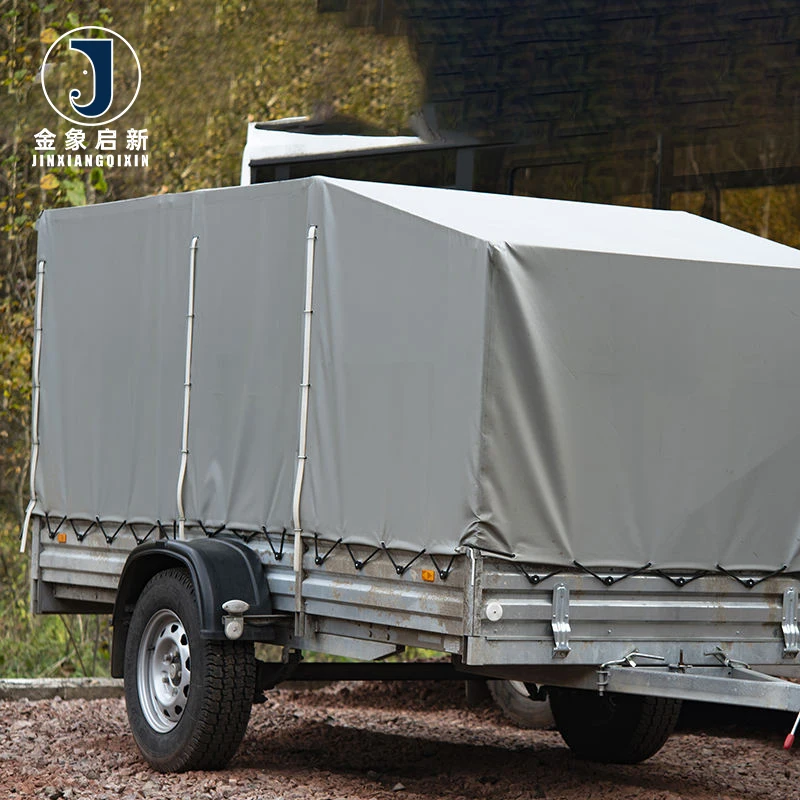
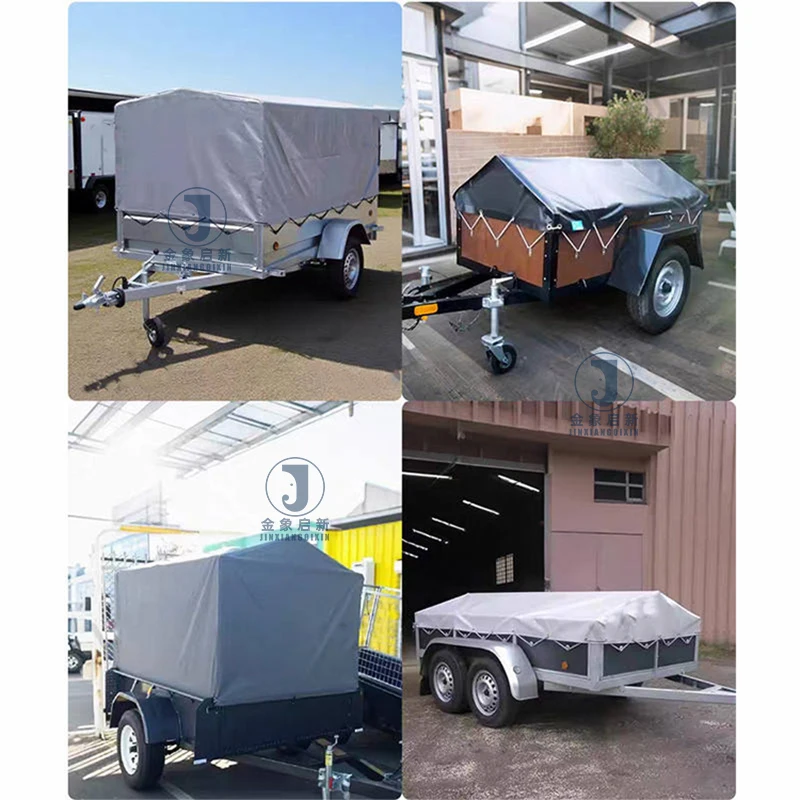
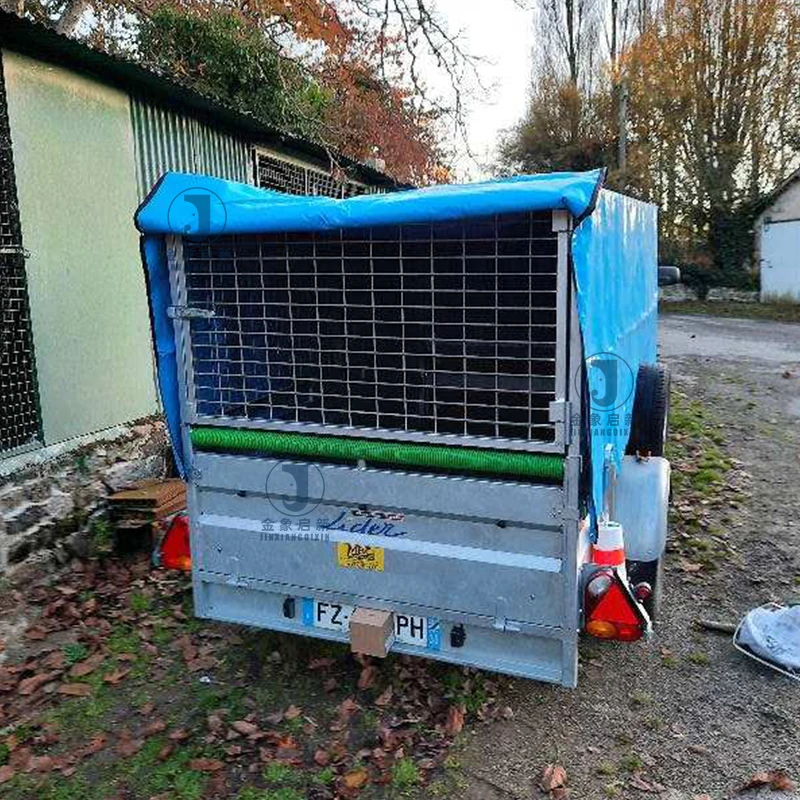
| Truck tarpaulin and side curtains | Constant flexing at tie-down points, road grit abrasion, highway wind load |
| Industrial pipe canopy and equipment enclosures | Chemical-laden atmosphere, thermal cycling, prolonged sun exposure |
| Tensioned structural fabric and inflatables | Sustained tension load, weld seam integrity, colour consistency across panels |
What Wholesale Buyers Actually Risk When Roll Consistency Is Ignored
Batch-to-batch variation in GSM, colour and coating adhesion is where container-load orders quietly fail.
When a distributor imports multiple rolls of PVC coated tarpaulin for regional resale, the quotation states a single weight grade and colour reference. The reality at the warehouse is often different: some rolls arrive lighter than agreed, colour shifts become visible once two rolls are unfurled side by side, and coating adhesion varies enough that hot-air welding parameters must be adjusted roll by roll. For a truck curtain fabricator, this means production downtime. For a construction contractor, it means rejected material on site. These failures compound across a full container order and erode the margin the wholesale price was supposed to protect. [NEED_CITE: common quality deviations in imported coated fabric rolls]
Roll-to-Roll Consistency Across Weight Grades
The production capability behind this PVC coated tarpaulin roll wholesale supply covers three distinct weight tiers — medium, heavy-duty, and super heavy — each running on dedicated line settings. Hot melt coating and lamination technology is applied across all grades, maintaining adhesion between the PVC layer and the polyester base fabric. This matters for wholesale buyers because the fabric must perform predictably when a fabricator switches from cutting warehouse covers in medium grade to welding truck side curtains in heavy-duty stock, without revalidating the entire welding process.
Colour Matching at Container-Load Scale
Colour consistency across rolls within the same dye batch is controlled at the coating stage, not corrected after the fact. For a distributor stocking multiple widths of PVC coated tarpaulin roll aftermarket supplier inventory, visible shade differences between rolls installed side by side on a construction hoarding or truck curtain would generate an immediate complaint. The dye formulation is locked per production run, and roll identification ties each unit back to its batch record so that reorder matching stays traceable. [NEED_CITE: colour fastness testing methods for coated textiles]
Reading the Specification Sheet Beyond GSM
GSM alone tells a buyer how much material is in a square metre, but not how that material is distributed between base fabric and coating. A roll at 1000 g/m² with a 1000D polyester base and balanced lamination coating will resist tear propagation differently than a roll at the same weight using a lighter base and thicker coating layer. The denier and knitting density of the yarn determine how the fabric handles point loads — such as a tie-down ring pulling on a truck curtain — while the coating weight governs surface abrasion resistance and weld behaviour. Hot melt coating technology tends to produce stronger peel adhesion at the weld line than simple lamination, which directly affects whether a fabricated seam outlasts the field of the fabric. Coating thickness also influences low-temperature flexibility: a heavier coating on a super heavy-grade roll may resist puncture from falling debris on a construction site, but it must remain pliable enough in cold climates to avoid cracking at fold lines. Understanding the interplay between these parameters lets a wholesale buyer specify the right grade for each downstream application rather than defaulting to weight alone. [NEED_CITE: relationship between base fabric denier and tensile performance in PVC coated textiles per ISO 1421]
The Hidden Cost of Specifying on Price Per Kilogram Alone
When a wholesale buyer selects roll stock based primarily on cost per kilogram, the supplier has an incentive to hit the GSM target by increasing coating weight while reducing base fabric density. The roll passes the weight check, but the fabric tears more easily under tension and weld seams fail at lower peel loads. A distributor who has already committed the container to a customer then faces returns, rework, or a damaged relationship. Colour inconsistency across rolls in the same order carries a similar hidden cost: a fabricator cutting panels from two mismatched rolls must either reject one or install a visibly uneven product, neither of which preserves margin. [NEED_CITE: impact of base fabric density on tear propagation in coated fabrics]
Why Sourcing Roll Stock Here Reduces Procurement Risk
Three full production lines and 36 sets of professional equipment provide the capacity to fill container orders without splitting a single colour batch across multiple production runs, which is where shade variation typically enters the supply chain. A dedicated QA/QC team inspects every roll before shipment — not a sampling protocol, but a full count — so the GSM on the packing list matches the roll in hand. The 10-person R&D team can develop colour-matched samples within days when a distributor needs to confirm shade accuracy before committing to a bulk order. Hot melt coating and lamination technology is applied consistently across all weight grades, giving fabricators a predictable welding window regardless of whether they are processing medium-grade stock for pond covers or super heavy-grade material for tensioned structures. Documentation accompanies every dispatch, tying each roll to its production batch and specification sheet.
Documentation & Verification
- Material specification sheet stating GSM, base fabric denier and coating method per roll grade
- Pre-shipment inspection record confirming measured weight against quoted GSM for every roll
- Roll packing list with exact roll count, dimensions and net weight for container loading plans
- Test report for flame retardant or anti-static treatment where applicable — confirm required grade
- Certificate of origin and customs documentation matched to roll batch numbers
- ISO and CE certificates referenced against the production facility
Fabrication, Handling & Storage
- Hot-air welding temperature must be adjusted per grade — medium-grade 400–500 g/m² rolls require lower heat input than super heavy-grade stock to avoid coating burn-through
- Store rolls upright on pallets to prevent flat-spot deformation that becomes permanent on heavier 1100–1500 g/m² grades
- Cold-resistant formulation reduces cracking risk during winter transport, but rolls should be acclimatised before unrolling in freezing conditions
- Cut panels with allowance for thermal expansion on large-area warehouse covers, especially in heavy-duty 700–1000 g/m² grades under direct sun
- Anti-static treatment on the coating surface requires compatible cleaners — avoid solvent-based products that strip the treatment layer
- Mold-proof treatment extends storage life in humid warehouses, but rolls should still be kept off concrete floors to prevent moisture wicking at the edges
What to Include in Your Inquiry
Specify the end-use application and the environmental conditions the fabric will face — sustained UV, chemical exposure, temperature extremes, or mechanical abrasion at flex points. State the weight grade range you need, the roll widths that match your cutting table or welding equipment, and your annual volume so that batch scheduling can be planned around colour consistency. If your market requires a specific flame retardant or anti-static certification, name the standard so that the correct treatment and test report are matched to your order.
Frequently Asked Questions
Q: How is GSM verified on each roll before shipment?
A: Every roll is weighed and measured individually during the pre-shipment inspection, not sampled from a batch. The measured GSM is recorded against the roll number on the inspection report, which ships with the container. This means you can cross-reference any roll in your warehouse against the documented weight at the point of dispatch.
Q: How do you ensure colour consistency across rolls in the same order?
A: All rolls within a single order are produced in the same dye batch under locked formulation parameters. Roll identification numbers tie each unit back to its batch record. If you are placing repeat orders, the batch reference from your first shipment is used to match colour on subsequent production runs.
Q: What custom widths and roll lengths are available, and what are the minimums?
A: Custom widths and roll lengths are available across all three weight grades. Minimum order quantities vary by specification and colour, particularly for non-stock shades. Provide your target width, roll length and annual volume so that the production team can confirm the most efficient run configuration and the applicable minimum.
Q: How are rolls packed for container loading and what documentation is included?
A: Rolls are packed upright on pallets with protective wrapping to prevent transit damage and flat-spotting. The packing list details exact roll count, individual roll dimensions and total net weight, allowing you to plan container loading in advance. All shipment documentation including inspection records and specification sheets is included with the dispatch.
Q: What certifications and test reports accompany flame-retardant or anti-static roll stock?
A: Flame retardant treatment is available with reference to B1 standard classification. Anti-static treatment is also offered. The specific test report accompanying your shipment depends on the grade selected and your market requirements — state the standard your end user or local authority requires so the correct documentation is prepared before dispatch.