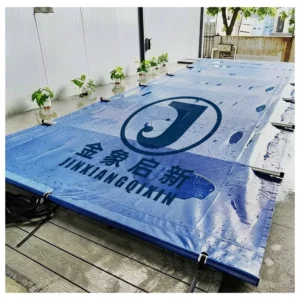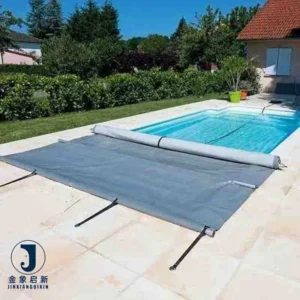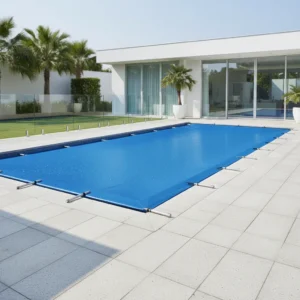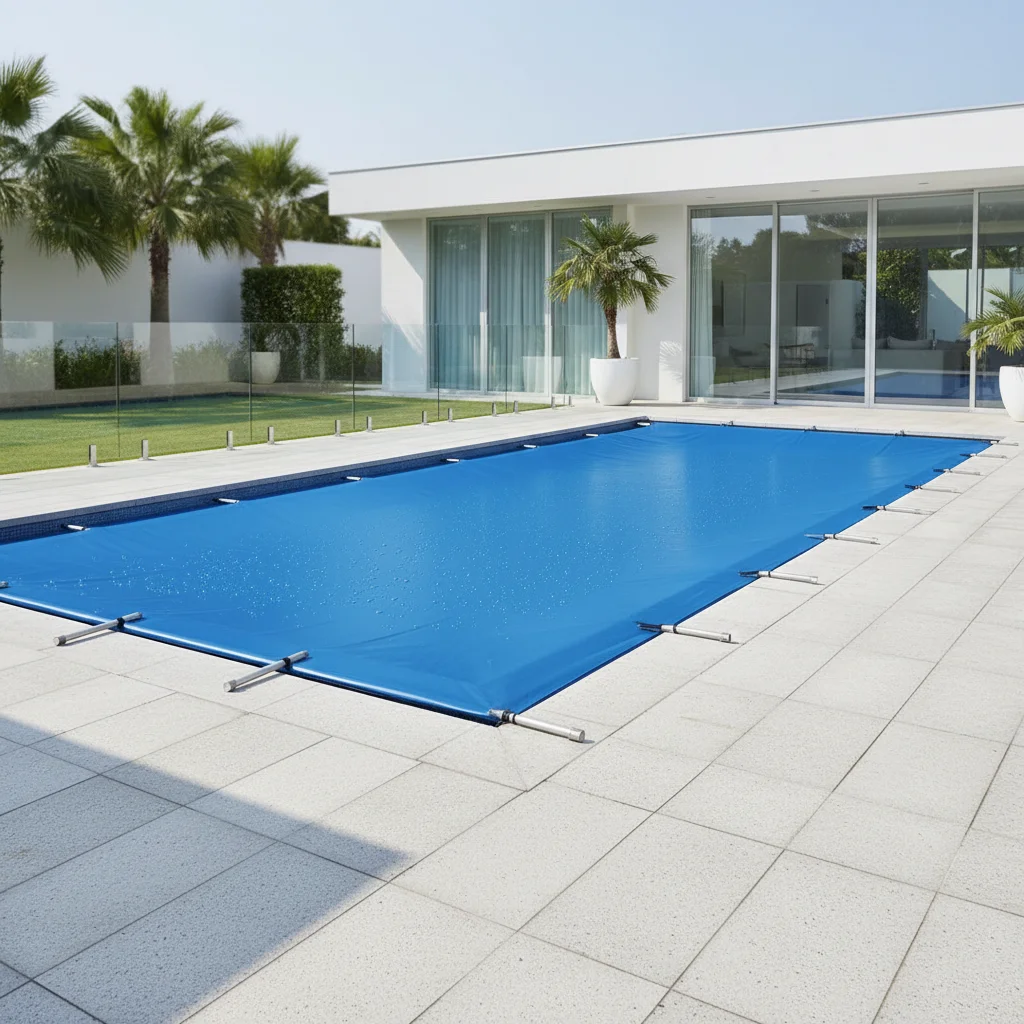
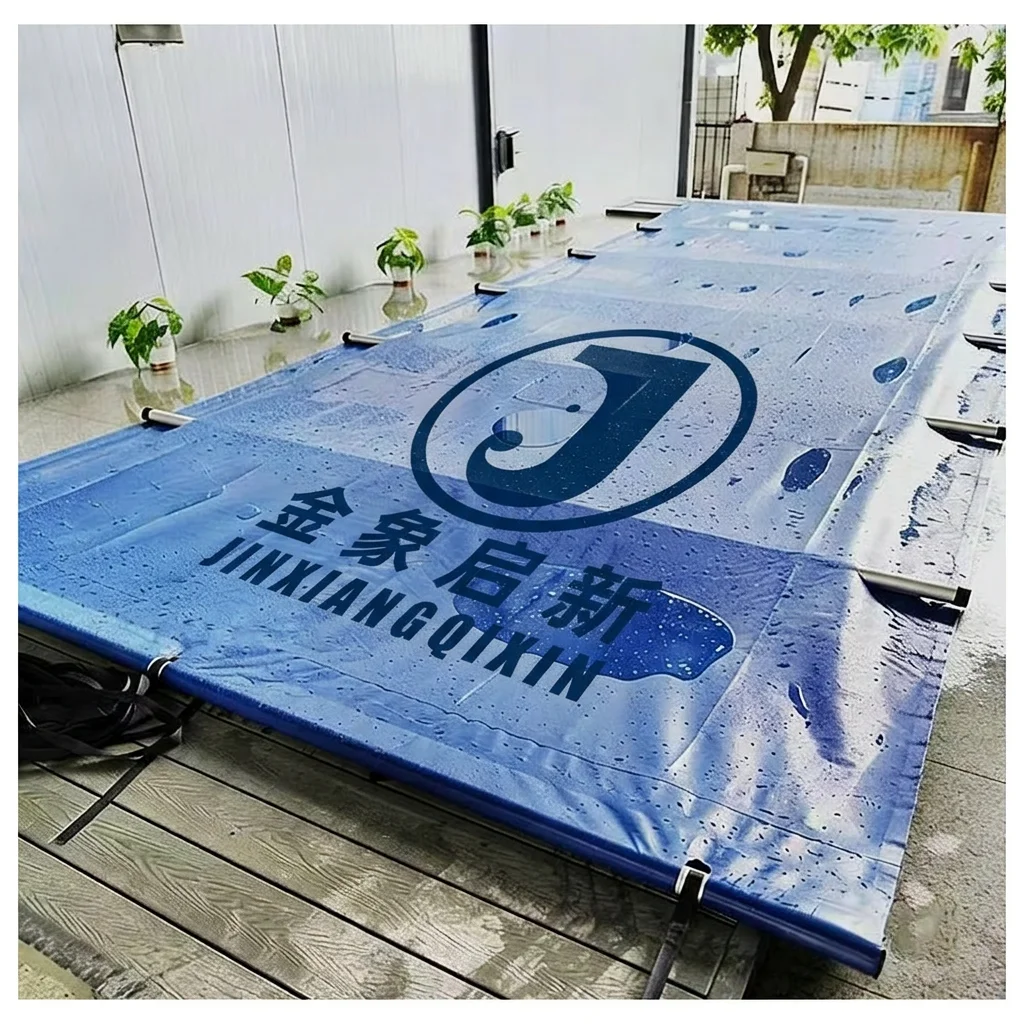
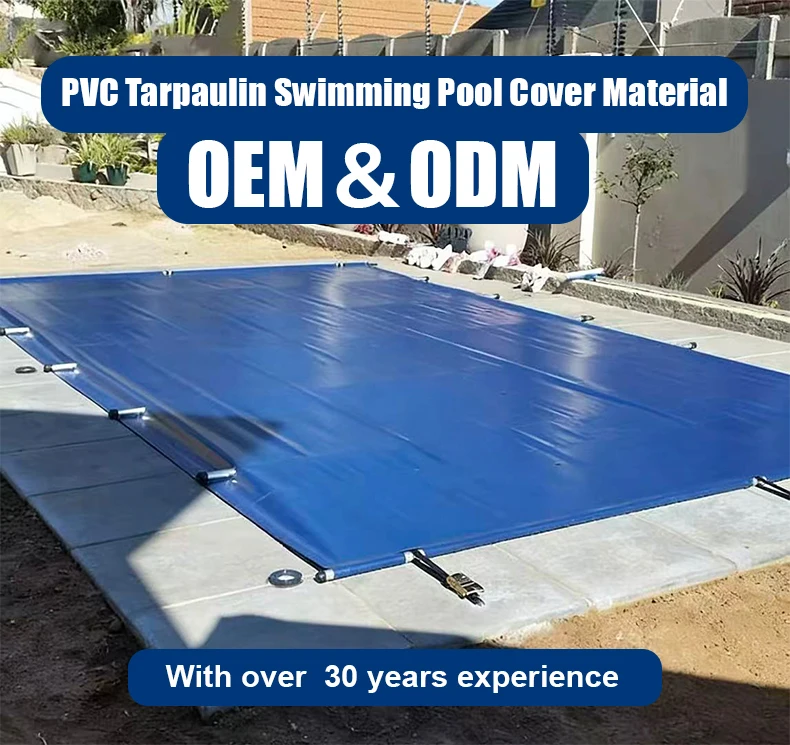
Description
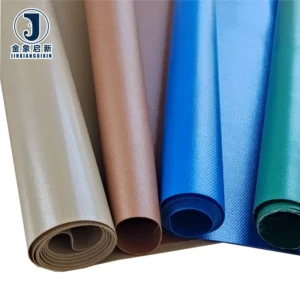
Roll-To-Roll Consistency — every roll of PVC coated tarpaulin shipped carries a verified GSM and colour match record, confirmed at 100% pre-shipment inspection before container loading.
Technical Specifications
| Parameter | Value |
|---|---|
| Product Type | PVC Coated Tarpaulin Pool Cover |
| Coating Material | PVC |
| Waterproof | Yes |
| UV Treatment | Anti-UV (test basis not stated in source) |
| Weight Grade | Medium Weight |
| Certification | ISO, CE |
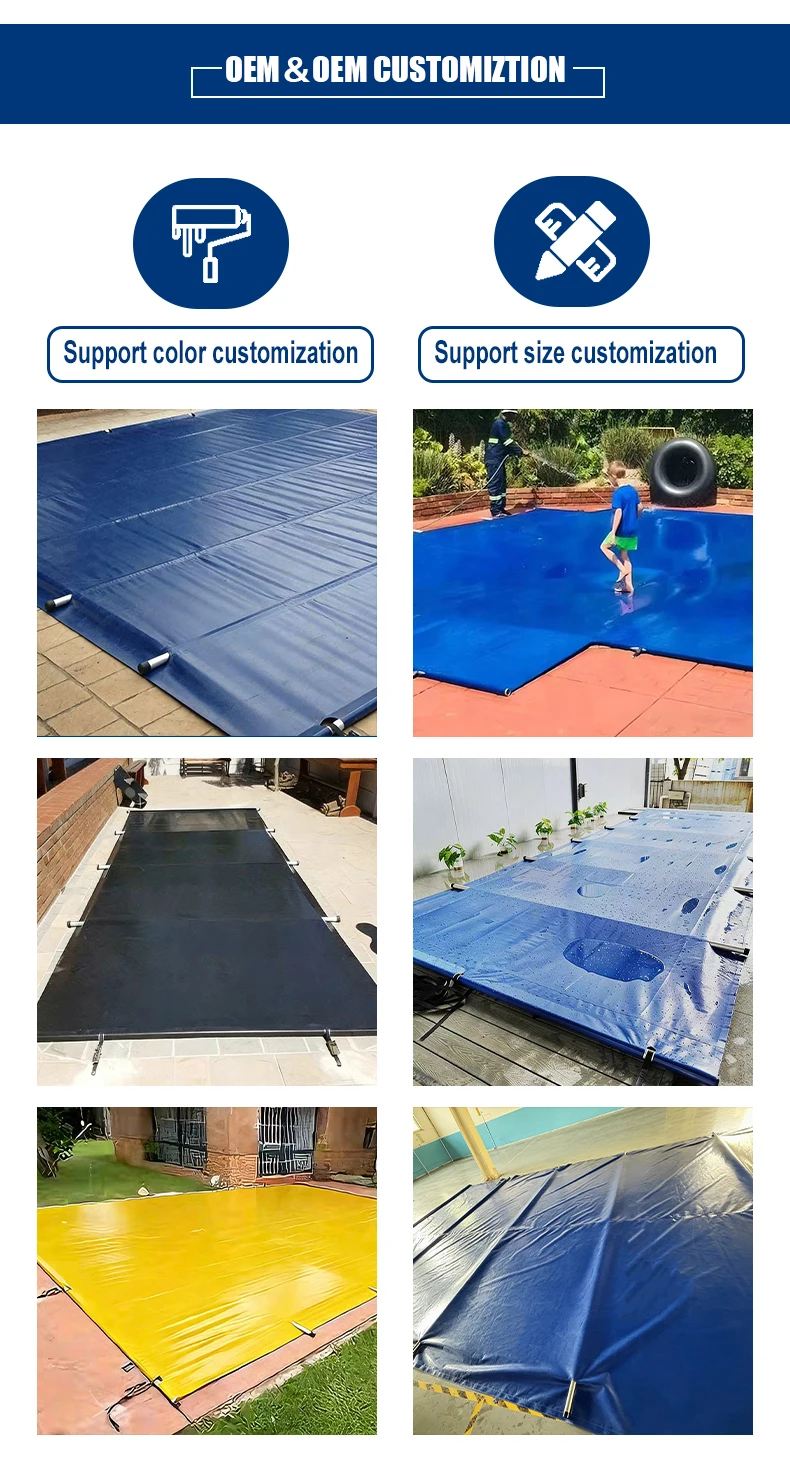
| Surface Options | Custom colour available |
| Edge Treatment | Reinforced hems and eyelet placement available |
Application Suitability
| Application | Exposure & Requirement |
|---|---|
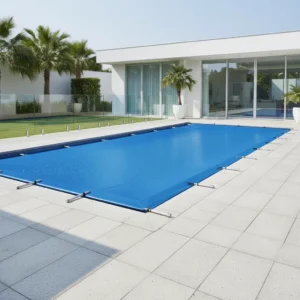
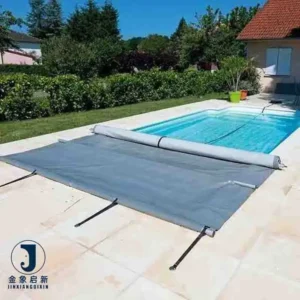
| Residential pool winterization | Prolonged moisture contact, debris load, wind uplift requiring secure tie-down |
| Commercial pool seasonal cover | Repeated handling, UV exposure during off-season storage, chemical residue contact |
| Outdoor shade and canopy structures | Direct sunlight, rain ingress prevention, wind flutter demanding fabric stability |
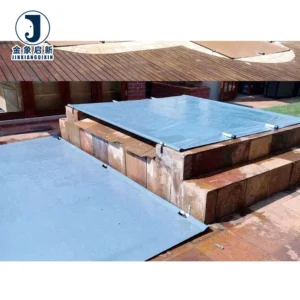
| Equipment and general waterproof cover | Dust, precipitation, and ambient temperature fluctuation across storage periods |
Why Roll Consistency Matters More Than Quoted GSM for Pool Cover Fabricators
A specification sheet only tells half the story — what arrives at your cutting table must match it roll after roll.
When purchasing PVC coated tarpaulin roll stock in bulk, the GSM printed on the quotation is the number everyone negotiates around. Yet fabricators frequently discover on arrival that the actual coating weight varies across the batch, leading to inconsistent weld behaviour and visible shade differences once covers are installed side by side. For pool cover production, where customers expect uniform appearance and predictable performance, this variance creates rework, customer complaints, and wasted material. [NEED_CITE: tensile and tear test methods for coated fabrics per ISO 1421]
Batch Colour Uniformity Across Container-Volume Orders
Colour drift between rolls is one of the most common complaints in coated fabric procurement. A PVC coated tarpaulin roll produced on Monday may shade differently from one coated the following week if pigment dosing or plastisol mixing is not tightly controlled. For pool cover distributors fulfilling multi-cover orders for residential developments or commercial facilities, visible colour variation undermines perceived quality. Our production process maintains pigment consistency through controlled mixing ratios and in-line colour checks at every stage, with 100% pre-shipment inspection confirming shade uniformity before dispatch.
Waterproof Coating Integrity for Prolonged Pool Exposure
Pool covers sit in direct contact with chlorinated or salt-treated water vapour, rainwater pooling, and organic debris for weeks or months. The PVC coating must form a continuous barrier without pinholes, thin spots, or delamination at the base fabric interface. Medium weight PVC coated tarpaulin provides a balance between flexibility for folding and unfolding during seasonal use, and sufficient coating thickness to resist water penetration. The coating adhesion to the base fabric determines whether the cover survives repeated handling without cracking at fold lines. [NEED_CITE: coating adhesion test methods for PVC tarpaulin per ISO standards]
Understanding Weight, Base Fabric, and Coating as a System
The medium weight grade of this PVC coated tarpaulin reflects the combined mass of base fabric and PVC coating layers. Coating weight alone does not determine strength — the denier of the polyester yarns and the weave density of the base fabric contribute the structural backbone that resists tearing and tensile load. A lighter base fabric with heavier coating may feel substantial but tear more easily under wind uplift than a denser base with moderate coating. Similarly, the coating method influences peel strength: knife-coated fabrics typically achieve higher adhesion between layers than laminated alternatives, which affects how well the cover withstands repeated flexing during installation and removal. The anti-UV treatment is specified for extended outdoor exposure, though buyers should confirm the test basis relevant to their regional climate before placing bulk orders.
The Hidden Cost of Specifying on Price Alone
Fabricators who select PVC coated tarpaulin roll stock primarily on per-kilogram cost often encounter downstream expenses that erase the initial savings. Coating weight that falls below the quoted GSM reduces waterproof reliability and accelerates UV degradation of the base fabric underneath. Inconsistent thickness across a roll causes hot-air welding parameters to vary, producing seam failures at the thinnest points — precisely where pool cover stress concentrates at eyelet and hem junctions. Colour variation within a single batch forces fabricators to sort and match rolls manually, adding labour time and material waste. These issues surface only after the covers reach the customer, making them expensive to rectify. [NEED_CITE: common failure modes in PVC tarpaulin welding at stress points]
Why Volume Buyers Source PVC Coated Tarpaulin from Jinan Jinxiang
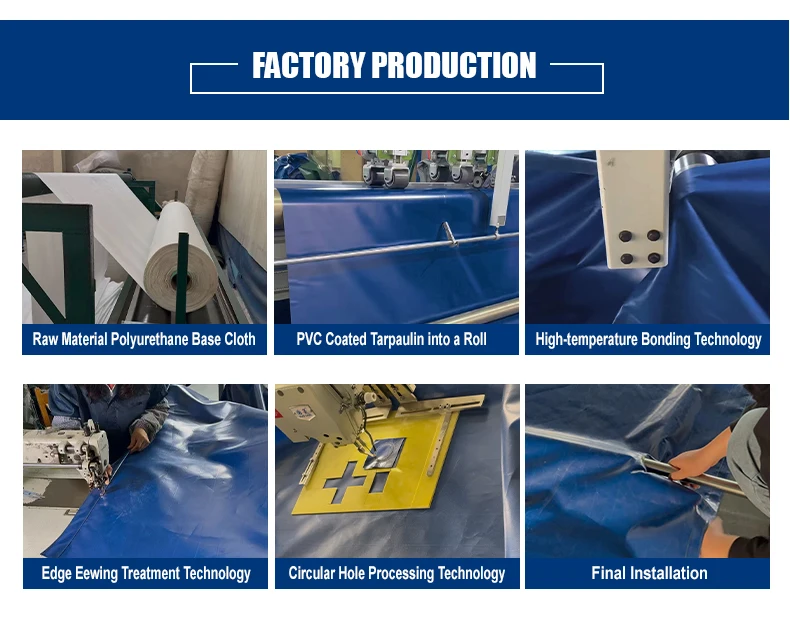
Nearly 30 years of focused coated fabric production means our process controls around coating weight and adhesion are refined through decades of troubleshooting, not theoretical. Three full production lines and 36 sets of professional equipment give us the capacity to fulfil container-volume orders within typical multi-week lead times, with scheduling flexibility for repeat buyers. The 10-person R&D team develops custom colour matches and sample rolls within days, allowing you to verify material behaviour on your own welding equipment before committing to a full order. Dedicated QA/QC personnel inspect every production stage rather than sampling at the end, catching GSM deviations and coating defects before they compound into full rolls. Every shipment leaves with a pre-shipment inspection record confirming the specifications you agreed to, not approximations.
Documentation & Verification
- Material specification sheet stating GSM, base fabric denier and coating type for each PVC coated tarpaulin roll shipped
- Roll packing list detailing roll count, individual weight, and dimensions for container loading verification
- 100% pre-shipment inspection record confirming colour consistency and coating weight against the purchase order
- Anti-UV test report documentation available upon request — confirm test basis required for your market
- Certificate of origin and customs documentation package for smooth import clearance at destination
Fabrication, Handling & Storage
- Hot-air weld temperature and speed must be calibrated to the medium weight grade — test welds on each new roll before production runs
- Reinforced hems should distribute eyelet pull-out loads across multiple base fabric yarns, not just the PVC coating layer
- Store PVC coated tarpaulin rolls upright on pallets in shaded, ventilated areas to prevent flat-spot deformation and surface blocking
- Allow rolls to acclimatise to workshop temperature before unrolling — cold PVC coating becomes stiff and may crack at fold creases
- Clean finished pool covers with mild detergent and soft brush; avoid solvent-based cleaners that degrade the PVC plasticiser system
How to Request the Right Quotation for Your Pool Cover Programme
Provide your target pool dimensions or standard cut sizes, annual volume estimate, and preferred roll width to help us recommend the most efficient cutting layout. Specify the anti-UV performance standard applicable in your destination market so we can match the treatment grade and supply supporting documentation. Confirm whether you require rolls only or finished covers with hems, eyelets, and reinforcement already applied. Colour references or Pantone codes allow us to develop sample rolls for your approval before bulk production begins.
Frequently Asked Questions
Q: How do I verify the GSM of each PVC coated tarpaulin roll against the quoted specification on arrival?
A: We include a pre-shipment inspection record with every dispatch showing measured GSM per roll. On receipt, you can cut a known-area sample from each roll, weigh it on a calibrated scale, and compare against the documentation. Any discrepancy beyond your tolerance threshold should be flagged before cutting begins, and our after-sales team will address verified shortfalls against the specification sheet provided.
Q: What test basis supports the anti-UV claim, and how do I request documentation?
A: Anti-UV treatment is applied during the coating process, but different markets require different test standards for validation. When requesting your quotation, specify the UV test standard applicable in your region — such as accelerated weathering hours or a specific ISO method — and we will confirm whether our current treatment matches and supply the corresponding test report with your shipment documentation.
Q: How is roll-to-roll colour consistency maintained across a bulk pool cover order?
A: Pigment mixing follows controlled ratios for each production batch, with in-line colour checks during the coating run. Our 100% pre-shipment inspection compares every roll against the approved colour reference under standardised lighting before packing. For multi-container orders, we can hold a master colour standard and reference it across all batches to minimise shade drift between shipments.
Q: How should I choose roll width and length for efficient pool cover cutting patterns?
A: The optimal roll width depends on your most common pool cover dimensions and how you nest cut pieces to minimise offcut waste. Share your top five cover sizes and we will recommend a roll width that aligns with your cutting layout. Standard roll lengths are available, and custom lengths can be discussed for high-volume programmes where longer rolls reduce splice frequency on your production line.