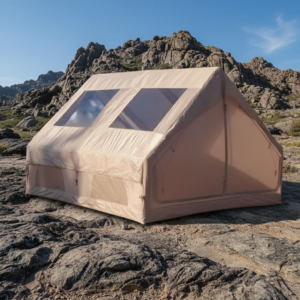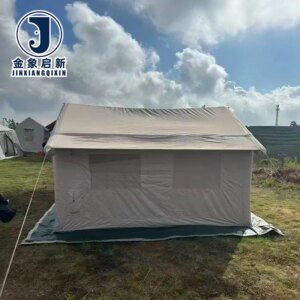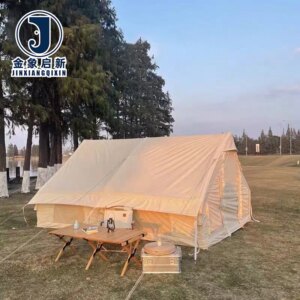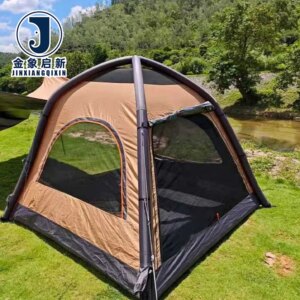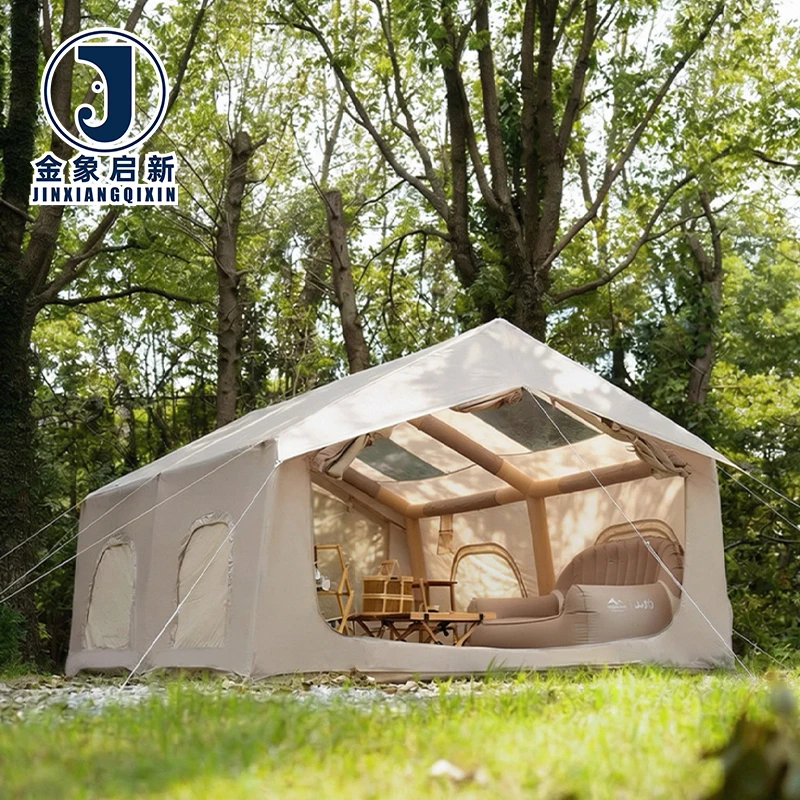
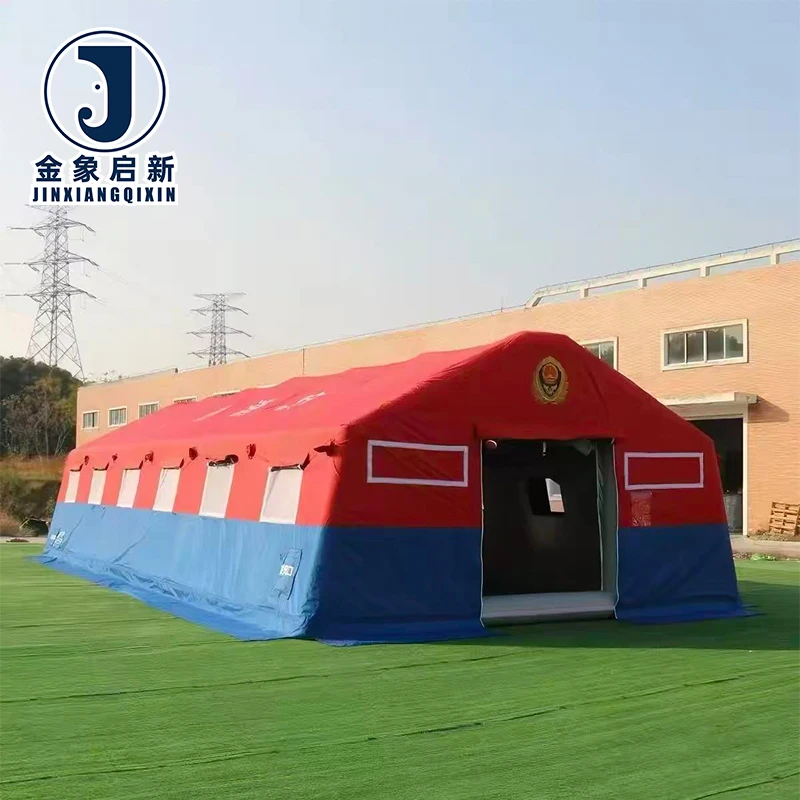
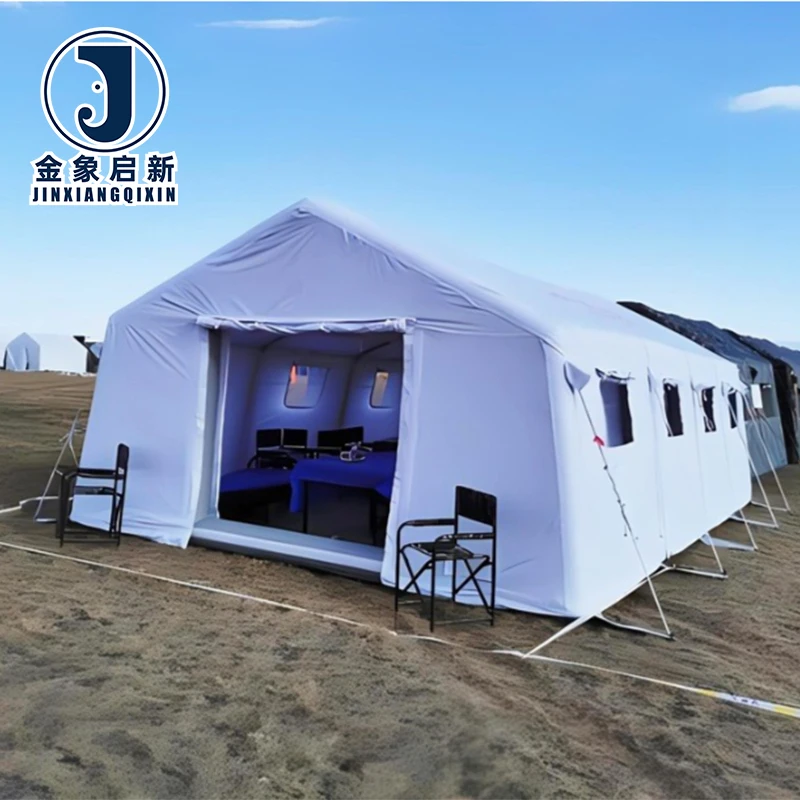
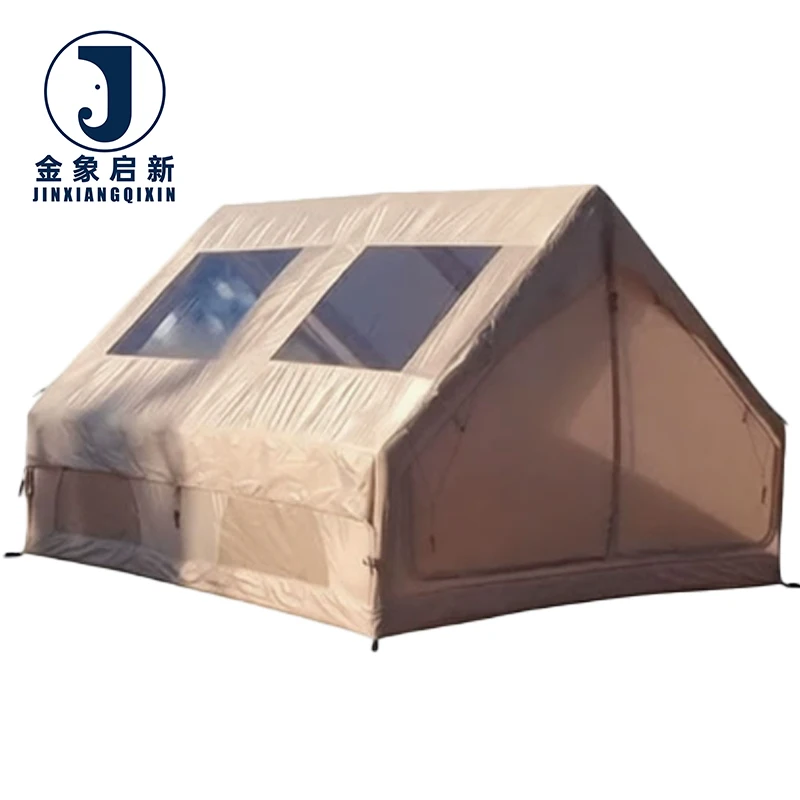
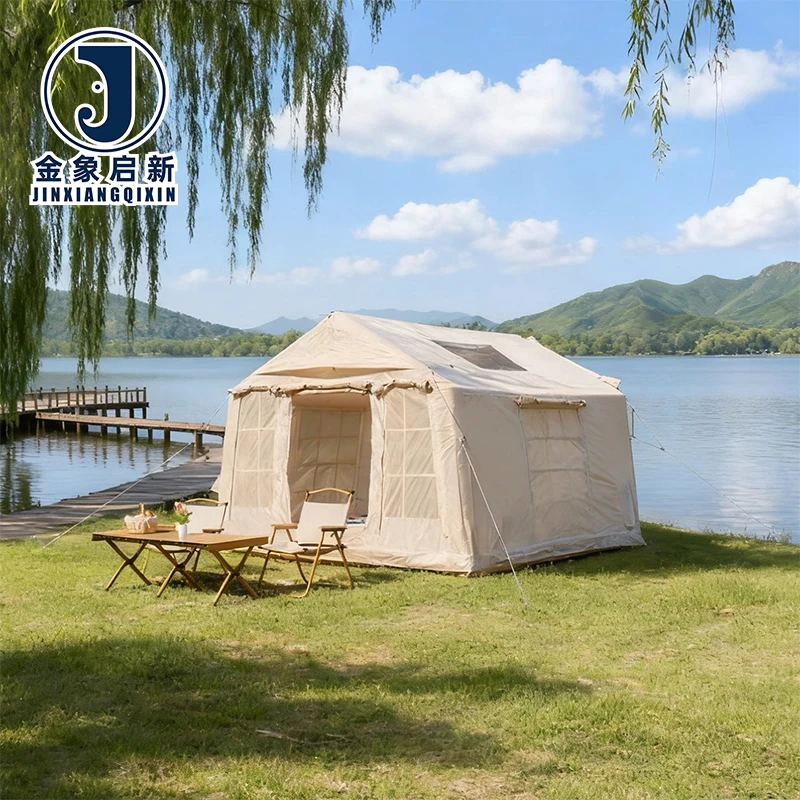

Description
Process-Controlled Coating Expertise — Every batch of PVC inflatable tent fabric undergoes weight and adhesion verification before leaving our facility, ensuring batch-to-batch consistency across your entire order.
Technical Specifications
| Parameter | Value |
|---|---|
| Product Type | Inflatable Tent |
| Core Material | PVC tarpaulin |
| Capacity | 2-3 Person |
| Structure Type | Inflatable with quick automatic opening mechanism |
| Construction | Single layer |
| Season Rating | Four-season |
| Waterproof | Yes |
| Tear-resistant | Yes |
| UV-resistant | Available — confirm test standard required for your market |
| Flame-retardant | Available — confirm the grade required for your site or region |
| Anti-static | Available — confirm the standard required for your application |
| Customization | OEM & ODM: sample customization, pattern printing, size modifications, material thickness adjustment |
| Certifications | ISO 9001, ISO 14001, ISO 45001, CE |
Application Suitability
| Application | Exposure & Requirement |
|---|---|
| Construction site temporary shelters | Wind loading, abrasive ground contact, repeated inflation cycles, UV exposure |
| Emergency disaster relief shelters | Rapid deployment demand, all-weather exposure, transport durability |
| Outdoor event logistics storage | Rain ingress prevention, UV degradation from prolonged sun exposure |
| Industrial fieldwork base camps | Remote site conditions, temperature fluctuation, equipment storage protection |
| Commercial outdoor operations | Frequent relocation, branding visibility, compliance with site safety regulations |
What "Flame Retardant" Actually Means Without a Grade Behind It
A flame-retardant claim without a cited standard is a liability, not a feature.
When buyers source inflatable shelters for construction sites or disaster relief zones, the site safety officer will ask for a test certificate — not a brochure line. Yet many inflatable tent suppliers quote "fire-retardant fabric" without specifying whether the material meets B1, M2, NFPA 701, or another classification [NEED_CITE: common fire classification standards for temporary structures]. The result is a shipment that arrives with no documentation the inspector will accept, forcing the contractor to find a replacement at the last minute. We list fire-retardant as available on this product and ask you to confirm the grade your project requires before production begins. This avoids the mismatch between what was ordered and what the site audit demands.
Matching Fabric Weight to Deployment Frequency
The inflatable tent manufacturer must balance material thickness against how often the structure gets inflated, deflated, folded, and transported. A four-season emergency shelter deployed across disaster zones sees far more handling stress than a semi-permanent event structure left standing for weeks. PVC tarpaulin as the core material offers the tensile continuity needed for repeated air-beam inflation cycles, while the single-layer construction keeps pack weight manageable for field teams who carry the unit to remote sites.
Custom Sizing Without Sacrificing Structural Integrity
Every project has a footprint constraint — a tent that must fit between site containers, clear a vehicle loading bay, or cover a specific equipment array. Our 10-technician R&D team develops custom inflatable tent dimensions with the air-beam geometry recalculated for each size change, so the structure maintains internal pressure and shape stability. Pattern printing and branding are integrated at the design stage rather than applied as an afterthought, keeping the surface treatment compatible with the PVC coating adhesion.
How Base Fabric and Coating Weight Interact in Inflatable Structures
The PVC tarpaulin used in inflatable tent construction relies on the base fabric weave to carry tensile loads while the coating provides airtightness and environmental protection. GSM alone does not determine strength — a tightly woven lighter base with good coating adhesion can outperform a heavier fabric with poor lamination [NEED_CITE: relationship between base fabric denier, weave density, and tensile performance in coated fabrics]. For inflatable applications specifically, the coating must bond completely to prevent micro-leaks at air-beam seams, and the weld integrity depends on coating composition and thickness uniformity. Fire-retardant additives, when specified, are incorporated during the coating stage so the treatment runs through the full material cross-section rather than sitting as a surface wash that degrades with cleaning.
The Hidden Cost of Underspecified Inflatable Shelters
When an inflatable tent fails at a weld line during a storm, the cause is rarely a single factor — it is typically a chain of specification compromises compounding under load. Fabric that is lighter than the agreed weight cannot sustain the internal pressure needed for structural rigidity in high winds [NEED_CITE: common failure modes in inflatable temporary structures under wind loading]. Batch-to-batch colour drift across a multi-unit order becomes visible the moment two tents are erected side by side at an event site, triggering client complaints that no amount of post-delivery explanation resolves. Weld seam failure typically precedes fabric failure when the coating thickness is inconsistent, because the heat-seal parameter that works on one section burns through another.
Why Source Your Inflatable Tent Fabric Here
Nearly three decades of PVC coated fabric production means our coating weight and adhesion processes are calibrated for the airtightness demands of inflatable structures, not borrowed from general-purpose tarpaulin runs. Three full production lines with 36 sets of processing equipment give us the capacity to fulfil multi-unit custom inflatable tent orders without extending lead times. Each production stage includes dedicated QA checks, and 100 percent pre-shipment inspection covers air pressure testing, seam integrity, and material strength verification before any unit is packed. The 10-person R&D team handles material thickness adjustment, pattern printing, and size modifications in-house, so specification changes do not require re-sourcing from external fabricators.
Documentation & Verification
- Material specification sheet stating coating composition and treatment grades per batch
- Test reports for UV, flame-retardant, and anti-static performance referenced to your order number
- Pre-shipment inspection record covering air pressure testing and seam integrity checks
- ISO 9001, ISO 14001, ISO 45001, and CE certificates included with dispatch documentation
- Certificate of origin and customs support documentation for international shipment
Fabrication, Handling & Storage
- Heat-seal parameters must match the specific PVC coating thickness to avoid seam delamination at air-beam joints
- Fold the deflated structure along consistent crease lines to prevent permanent coating stress marks
- Store rolls or folded units in a dry, shaded environment away from direct UV exposure before deployment
- Use PVC-compatible cleaners only — solvent-based products degrade the coating surface and compromise airtightness
- Inspect weld seams after each deployment cycle for early signs of peel or micro-cracking at high-flex points
- Repair minor punctures with PVC-compatible adhesive patches applied to a clean, dry surface
Before You Send the Inquiry
Tell us the deployment environment — whether the inflatable tent will serve as a disaster relief shelter in tropical conditions, a construction site command post in sub-zero temperatures, or an event structure requiring specific branding. Specify any fire-retardant or anti-static grade your local regulations mandate, and the target dimensions or capacity range. If you need sample validation before committing to a production run, outline the critical specifications so we can prioritize the development.
Frequently Asked Questions
Q: What customization options are available for size, thickness, and printing?
A: Our custom inflatable tent service covers size modifications, material thickness adjustment, and pattern printing developed by the in-house R&D team. Each customization begins with a specification review and sample development so you can validate performance before bulk production. Thickness options depend on the deployment conditions and inflation pressure requirements of your application.
Q: How can I verify flame-retardant and anti-static claims with supporting documentation?
A: We provide batch-specific test reports for flame-retardant and anti-static performance, referenced to the standard you specify at inquiry stage. Each custom inflatable tent order ships with documentation matching the grade required by your site safety or regulatory body. Confirm the applicable standard early so testing aligns with your compliance timeline.
Q: How does sample development work before I commit to a bulk order?
A: Share your target size, thickness, colour, and any treatment requirements. The R&D team develops a sample for specification validation, typically within days depending on complexity. Once approved, the same material and process parameters carry through to full production, ensuring the custom inflatable tent you receive matches the validated sample.
Q: How is colour and material consistency maintained across large orders?
A: Coating batches are matched to a reference colour standard with in-process checks during production. Each custom inflatable tent in a multi-unit order is traced to its coating batch, and pre-shipment inspection verifies visual and performance consistency before dispatch. This prevents the visible mismatch that occurs when uncoordinated batches arrive on site.
Q: What certification and compliance documents ship with each order?
A: Every shipment includes ISO 9001, ISO 14001, ISO 45001, and CE certificates, a pre-shipment inspection record, material specification sheet, and certificate of origin. For inflatable tent orders requiring fire or anti-static compliance, the relevant test reports are included and referenced to your order number.