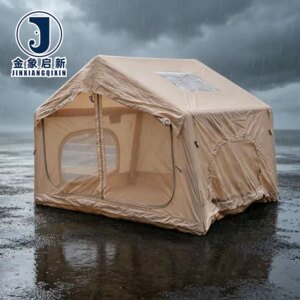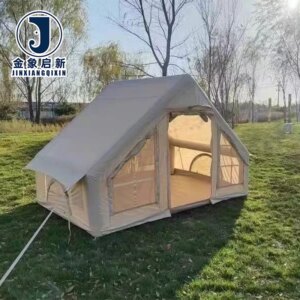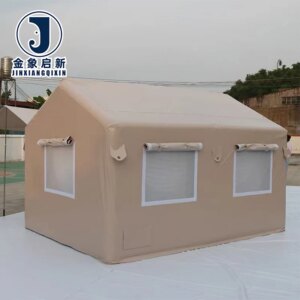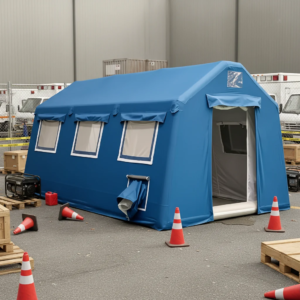
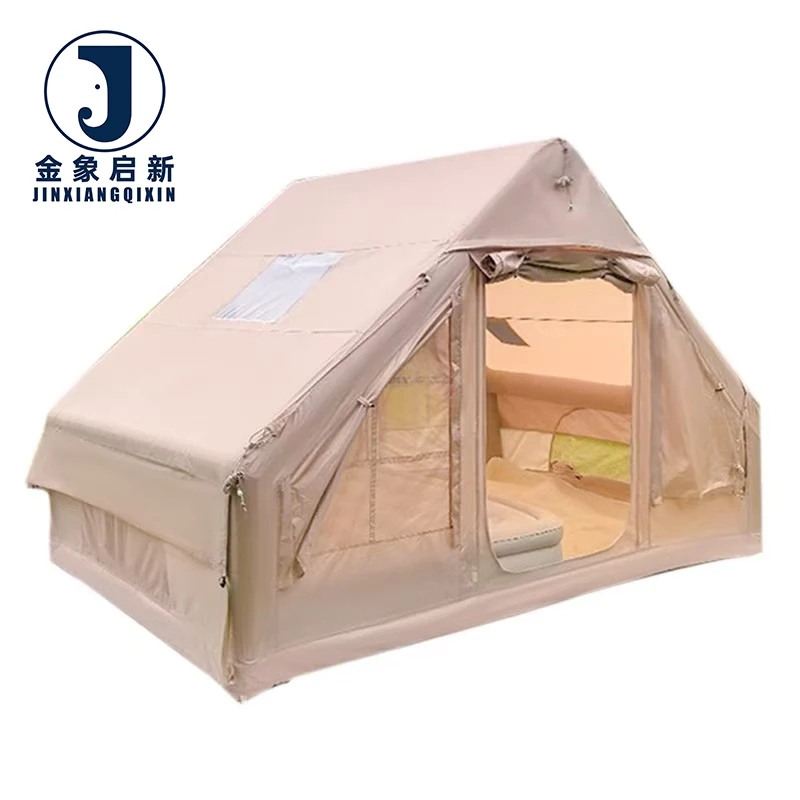
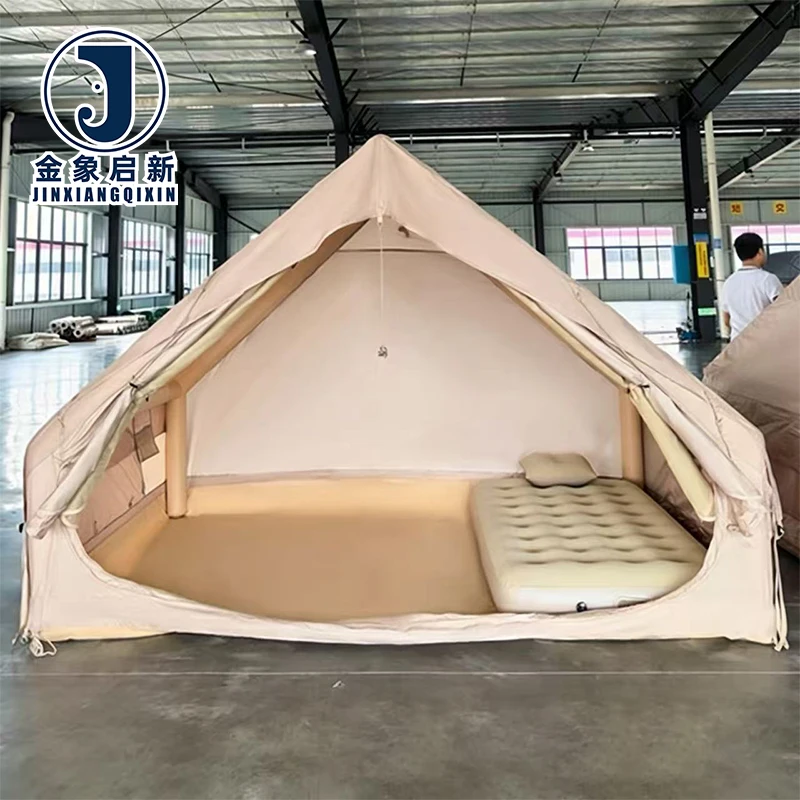
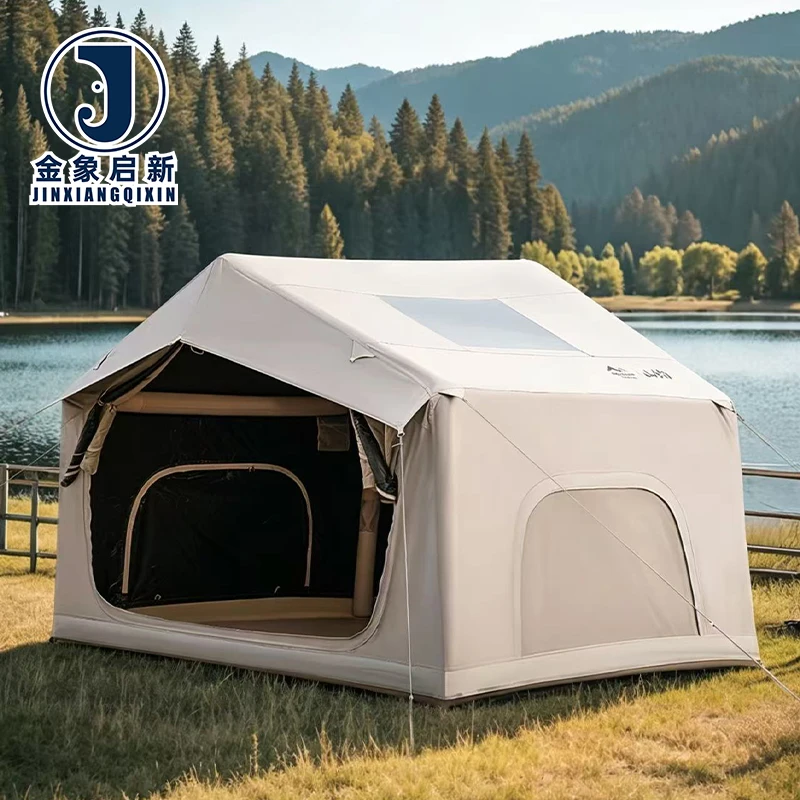
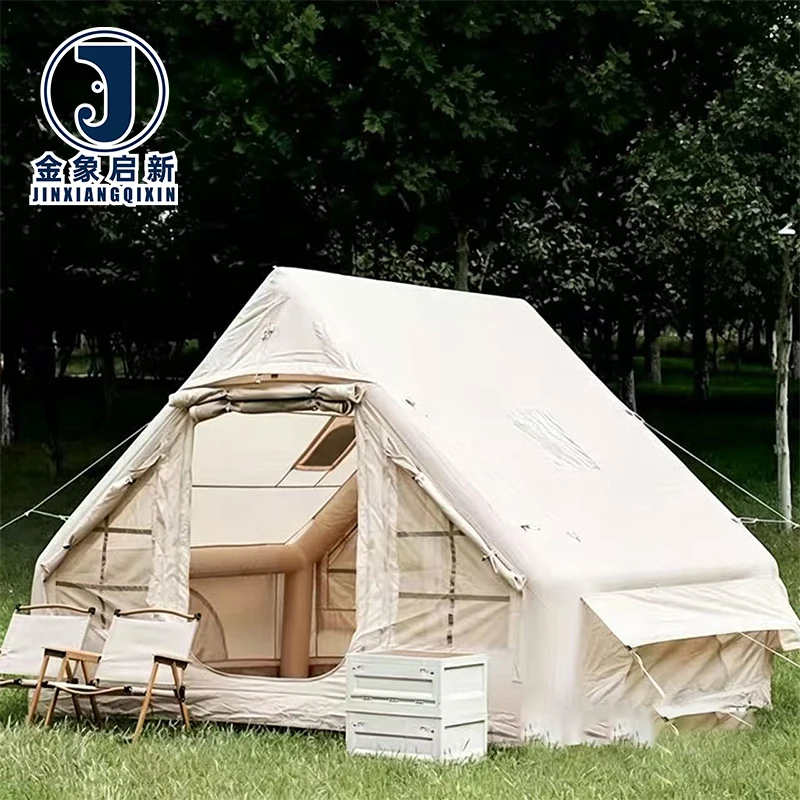
Description
Consistent Roll Stock Output — 3 full production lines and 36 sets of professional processing equipment maintain batch-to-batch colour and weight uniformity across every inflatable tent fabric roll in your container load.
Technical Specifications
| Parameter | Value |
|---|---|
| Product Type | Inflatable Tent Fabric |
| Core Material | PVC tarpaulin |
| Key Performance | Waterproof, UV-resistant (test basis not stated in source), tear-resistant |
| Customization Service | OEM & ODM (sample customization, pattern printing) |
| Production Lines | 3 full production lines |
| Processing Equipment | 36 sets of professional processing equipment |
| R&D Team | 10 technicians |
| Quality Control | Full-process inspection with dedicated QA & QC staff |
| Standards | ISO 9001, ISO 14001, ISO 45001, CE |
Application Suitability
| Application | Exposure & Requirement |
|---|---|
| Commercial inflatable event tents | Continuous UV exposure, wind-driven rain, repeated inflation/deflation flex cycles |
| Temporary site accommodation structures | Prolonged outdoor weathering, abrasion from ground contact, tear propagation risk at anchor points |
| Membrane and inflatable architectural forms | Tensile load under internal air pressure, weld integrity at seam intersections |
| Outdoor promotional and exhibition shelters | High visual consistency across joined panels, colour uniformity in daylight conditions |
Why Batch Colour Variability Derails Tent Production Runs
Roll-to-roll colour drift is the most common reason commercial tent panels get rejected on site.
When inflatable tent fabric arrives in slightly different shades across the same order, the variation becomes obvious once panels are heat-welded together and inflated under sunlight. Procurement teams frequently trace this back to inconsistent pigment dosing or coating thickness between production batches. The cost is not just the wasted material — it is the site rework, the delayed event handover, and the reputational damage to the fabricator. Sourcing Inflatable Tent Fabric roll stock with verified batch consistency eliminates this failure mode before it reaches your cutting table. [NEED_CITE: visual assessment methods for colour consistency in coated fabrics per ISO 105 series]
Production Capacity That Matches Container-Volume Orders
Commercial tent manufacturers do not order five rolls at a time — they order by the container. Our facility runs 3 full production lines with 36 sets of professional processing equipment, giving us the throughput to fill a 40-foot container of Inflatable Tent Fabric wholesale stock in a single production cycle. This means every roll in your shipment comes from the same coating run, which is the most reliable way to control GSM and colour uniformity across a bulk order. The R&D team of 10 technicians handles sample matching and pattern printing setup before the main run begins.
How OEM and ODM Support Works for Tent Fabricators
Inflatable tent makers often need more than stock rolls — they need fabric that matches a specific panel design, carries a printed brand identity, or meets a particular market’s compliance requirement. Our OEM and ODM capability covers sample customization and pattern printing directly onto the PVC tarpaulin surface. You approve the sample roll before bulk production starts, which locks in colour reference, coating weight, and print registration for the entire order. This sample-first process is how we prevent the mismatch between what was quoted and what arrives at your factory door. [NEED_CITE: OEM sample approval workflow for coated technical textiles]
What the Specification Sheet Actually Tells You
Understanding the relationship between base fabric and coating weight is essential when specifying PVC tarpaulin for inflatable structures. The tensile and tear performance depends on both the denier of the polyester yarns and the weave density of the base scrim — coating weight alone does not determine strength. A heavier GSM reading might simply mean a thicker coating layer over a lighter base fabric, which can improve abrasion resistance but will not improve tear propagation resistance. Waterproof performance is achieved through the PVC coating fully encapsulating the base fabric, while UV-resistant treatment — available in grades to be confirmed at inquiry — protects the coating surface from photo-degradation during extended outdoor deployment. The tear-resistant characteristic of this fabric matters most at inflation anchor points and weld seams, where stress concentrates during pressurization cycles.
What Happens When Weld Integrity Is Not Matched to Fabric Grade
The most expensive failure on an inflatable tent is not the fabric tearing — it is the welded seam splitting open while the structure is under air pressure. This typically occurs when the heat-welding temperature or dwell time is set for a different coating formulation or GSM than what is actually on the production table. When PVC tarpaulin rolls within the same shipment carry slightly different coating weights, the fabricator’s welding parameters may work for some panels but under-bond others. The result is seam failure at flex points that passes initial inspection but opens up after the first few inflation cycles. [NEED_CITE: heat-weld seam strength testing methods for PVC coated fabrics]
What We Bring to Your Inflatable Tent Fabric Supply Chain
Nearly 30 years of focused coated fabric production gives us process control over PVC coating weight and base fabric adhesion that directly affects your welding consistency. Our 10-person R&D team develops matched samples for custom width, colour, and pattern printing requirements before bulk commitment. Dedicated QA and QC personnel run full-process inspection — not just end-of-line spot checks — so the Inflatable Tent Fabric wholesale rolls that ship carry verified GSM and colour data. Three full production lines ensure we can deliver container-volume orders within typical multi-week lead times for custom specifications. Every shipment includes pre-shipment inspection records and the documentation package your import compliance team requires.
Documentation & Verification
- Material specification sheet stating GSM, base fabric construction, coating type, and colour reference per roll batch
- Pre-shipment inspection record confirming 100% QC pass on every roll before container loading
- ISO 9001, ISO 14001, ISO 45001, and CE certificates included with each dispatch
- UV-resistant treatment test report available upon request for market compliance submission
- Roll packing list detailing batch number, colour code, and net weight per roll
- Certificate of origin and customs documentation prepared per destination country requirements
Fabrication, Handling & Storage
- Heat-weld temperature and dwell time must be calibrated to the specific PVC coating weight on your roll batch
- Store rolls upright on pallets to prevent flat-spot deformation on the coating surface
- Avoid stacking heavy objects on horizontal rolls to prevent permanent creasing of the PVC tarpaulin coating
- Confirm pattern printing registration against the approved sample before cutting panels for production
- Use compatible PVC-based repair adhesive for field patching to match the coating chemistry
- Plan panel cutting layout to maximize roll width utilization and minimize off-cut waste
How to Structure Your Inquiry
To move from general interest to a firm quotation, we need your target GSM range, required roll width, and estimated annual volume. Specify whether you need stock Inflatable Tent Fabric rolls or finished custom-width cuts, and confirm any pattern printing or colour matching requirements. If your destination market mandates UV or fire-retardant certification, tell us the specific standard so we can include the correct test documentation with your shipment.
Frequently Asked Questions
Q: How do you verify that the GSM on the roll matches what was quoted?
A: Every roll undergoes weight verification against the stated GSM during our 100% pre-shipment inspection. We record actual measured values on the inspection report that accompanies your shipment. If a roll falls outside the agreed tolerance, it is pulled from the batch before packing. This ensures the Inflatable Tent Fabric wholesale stock you receive matches your material specification sheet.
Q: How do you control colour consistency across multiple rolls in one order?
A: Colour consistency starts with pigment dosing under controlled conditions during the same coating run. Our QA team checks colour reference against the approved sample at multiple points during production. Rolls from different production batches are never mixed within a single container order without your explicit approval and a confirmed colour variance tolerance.
Q: What custom width and roll length options are available, and what are the minimums?
A: Custom roll widths and lengths are available through our OEM and ODM service, with minimums depending on the specific PVC tarpaulin grade and colour selected. Our R&D team of 10 technicians can develop a sample roll for your approval before bulk production. Contact our team with your target dimensions and volume to confirm feasibility and lead time.
Q: What test documentation supports the UV-resistant treatment claim?
A: UV-resistant treatment is available for this PVC tarpaulin fabric, with the specific test basis to be confirmed at inquiry stage based on your target market requirements. We can provide a test report with the shipment once the grade and applicable standard are agreed upon. This documentation supports your product certification and end-user compliance submissions.
Q: How are fabric rolls packed to prevent damage during ocean freight?
A: Each Inflatable Tent Fabric roll is individually wrapped and secured on pallets to prevent crushing, surface abrasion, and moisture ingress during transit. The roll packing list details batch number, colour reference, and weight per roll so your receiving team can verify the shipment against the order immediately upon arrival at your facility.