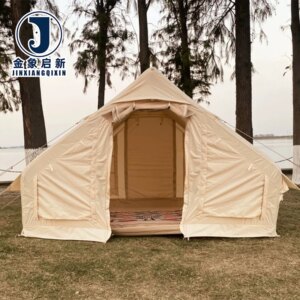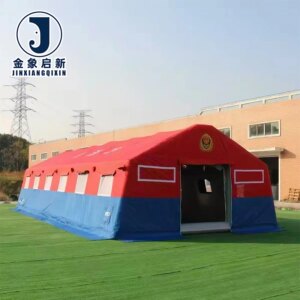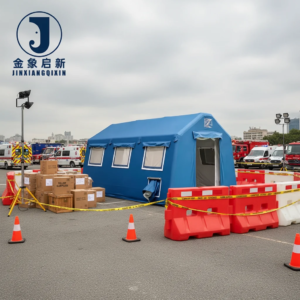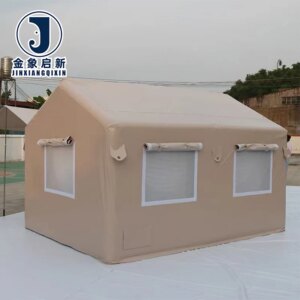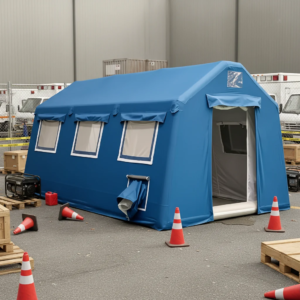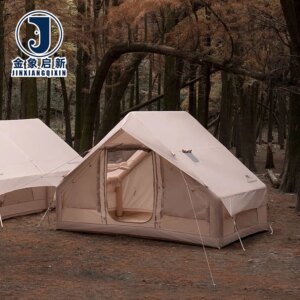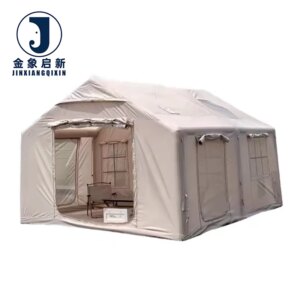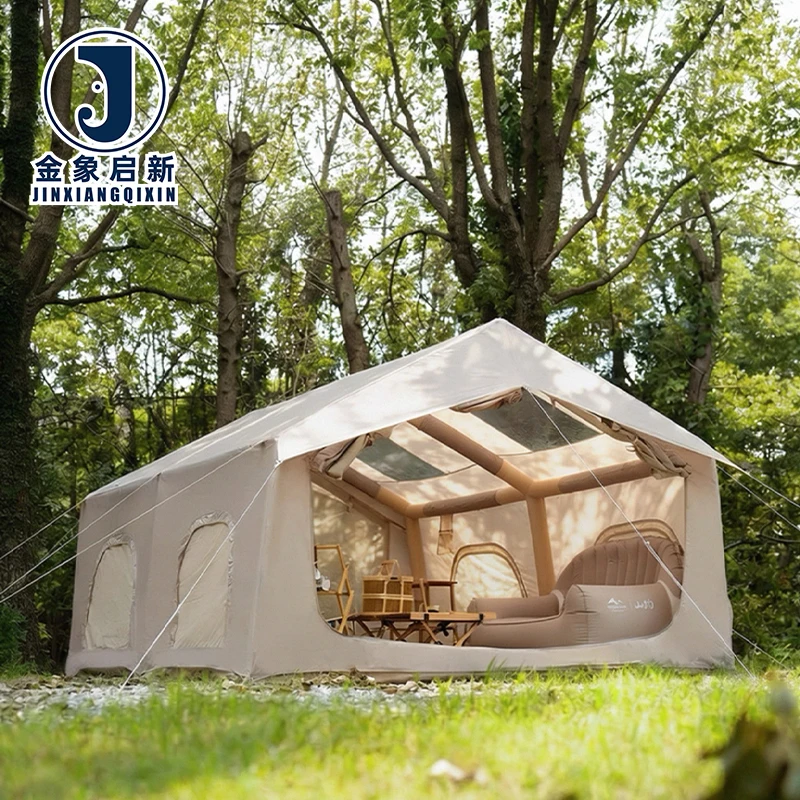
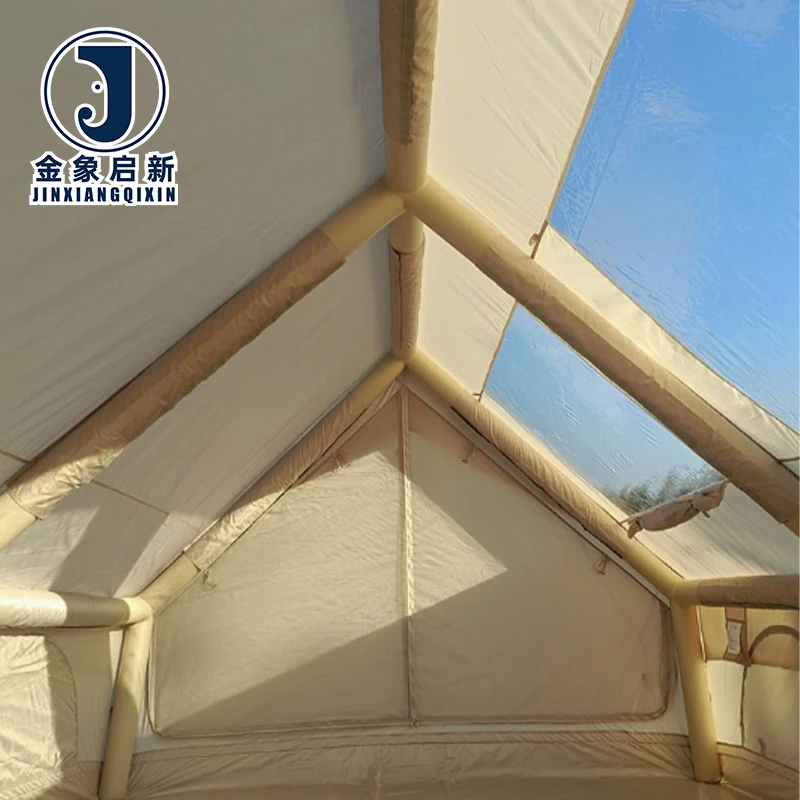
Description
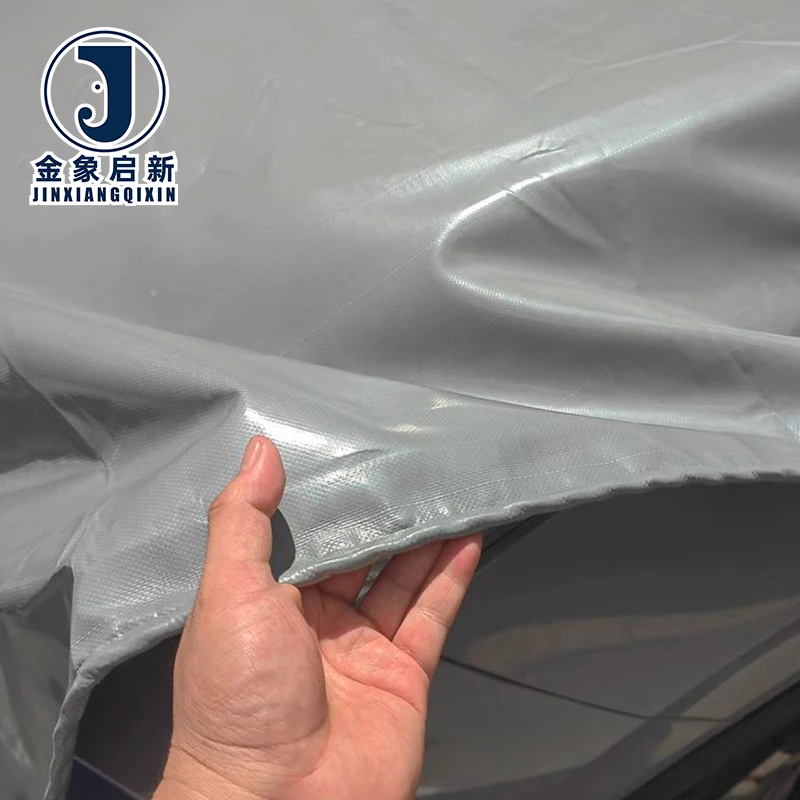
Coating Consistency Control — 9,180 m² facility with 3 dedicated production lines and 36 sets of processing equipment ensures roll-to-roll uniformity for inflatable tent fabric supplied by the roll.
Technical Specifications
| Parameter | Value |
|---|---|
| Product Type | Inflatable Tent |
| Core Material | PVC tarpaulin |
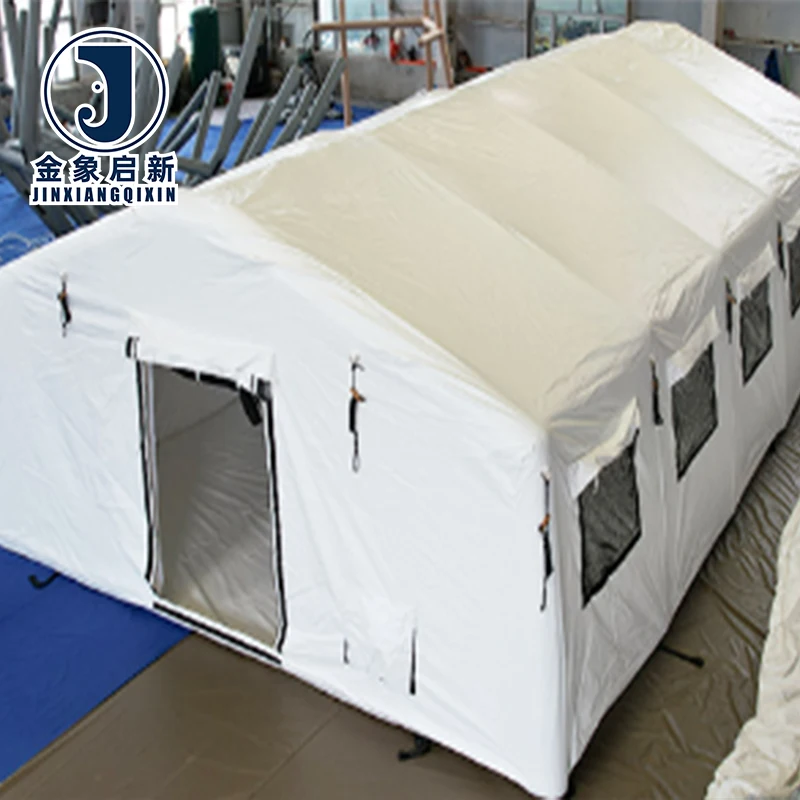
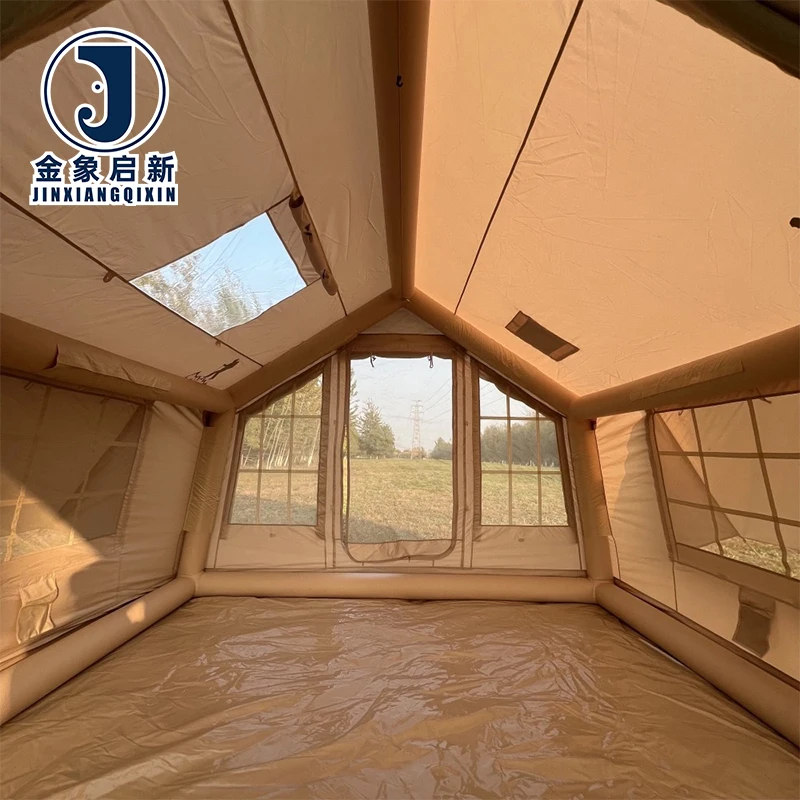
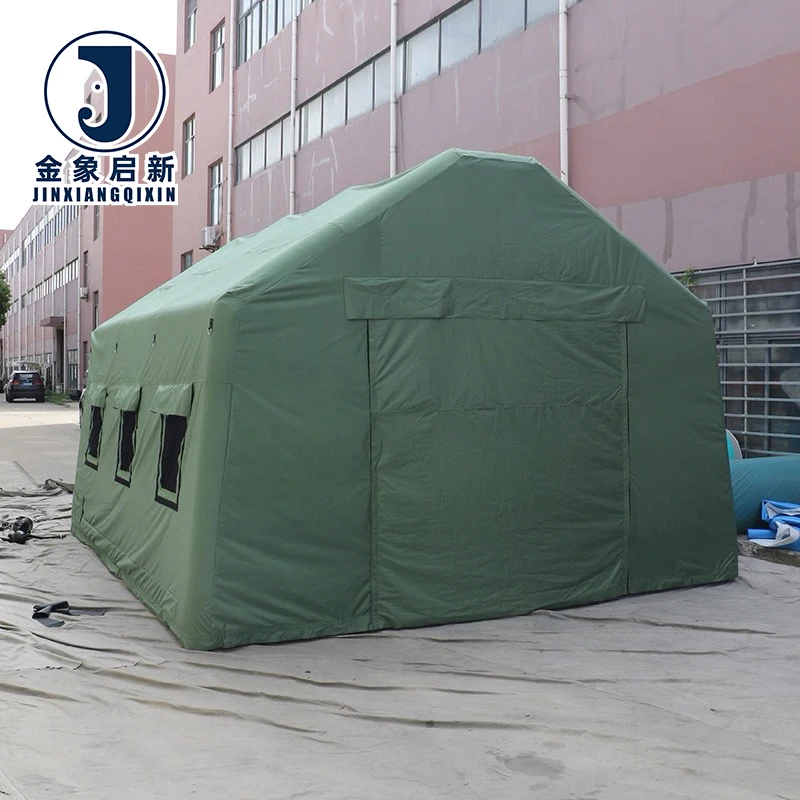
| Product Form | Inflatable shelter with single layer construction |
| Waterproof Performance | Fully waterproof coated construction |
| UV Resistance | Available with UV treatment (test basis not stated) |
| Tear Resistance | Tear-resistant construction |
| Customization | OEM & ODM, sample customization, pattern printing |
| Quality Control | Full-process inspection, dedicated QA & QC staff, 100% pre-shipment check |
| Certifications | ISO9001, ISO14001, ISO45001, CE |
Application Suitability
| Application | Exposure & Requirement |
|---|---|
| Commercial camping ground shelters | Continuous outdoor weathering, seasonal temperature swings, frequent inflation and deflation cycles |
| Outdoor event and exhibition venues | Rapid deployment demands, crowd safety compliance, sun and rain exposure over multi-day events |
| Industrial site personnel rest areas | Dust and debris exposure, heavy-duty usage frequency, equipment proximity abrasion |
| Four-season commercial outdoor operations | Low-temperature flexibility requirements, high wind inflation pressure, prolonged UV exposure |
| Equipment storage enclosures | Moisture ingress prevention, puncture risk from stored machinery, long-term static load on seams |
Why Batch-to-Batch Colour Drift Matters in Inflatable Tent Fabric Wholesale Orders
Colour deviation across rolls in a single shipment turns a production run into visible patchwork once the tents are inflated side by side.
When tent manufacturers order inflatable tent fabric wholesale, they assume every roll from the same dye lot will match. In practice, coating weight variation and pigment dispersion inconsistency between production runs cause shade shifts that only become obvious after fabrication and inflation. A commercial campground installing ten identical domes does not accept five looking noticeably different under sunlight. This is a process control failure, not a material failure [NEED_CITE: colour consistency standards for coated PVC fabrics in batch production].
Controlling Shade Variation at the Coating Stage
Achieving repeatable colour across rolls of inflatable tent fabric requires precise metering of pigment paste into the PVC compound before it reaches the coating head. Our production protocol locks the pigment-to-resin ratio per batch reference code, and the 10-technician R&D team verifies shade against the approved master swatch under controlled lighting before each run proceeds. Rolls that fall outside the tolerance band are diverted before they enter inventory.
How GSM Verification Protects Your Inflation Pressure Spec
When you procure inflatable tent fabric wholesale, the grammage directly affects how much internal pressure the shelter can hold without stretching or creeping at the seams. A roll that arrives lighter than the quoted specification will deform under sustained inflation, leading to sagging panels and stressed weld points. Our QA protocol checks coating weight at multiple points across the web width during production and again at the pre-shipment inspection stage, so the GSM on your material specification sheet matches what arrives at your factory [NEED_CITE: relationship between PVC coating weight and tensile stability under air pressure].
Understanding the Single Layer Construction Trade-Off
Single layer inflatable shelters rely entirely on the base fabric’s denier and weave density for structural integrity, since there is no secondary liner sharing the load. The PVC tarpaulin core must deliver waterproofing, tear resistance, and sufficient stiffness to hold an inflated shape — all from one coated layer. This makes the base fabric selection critical: a higher denier yarn improves tear propagation resistance but adds weight, which affects pack size and transport cost for your end users. Coating adhesion to the base weave must be uniform, because any delamination under flexing becomes an immediate air leak path.
Coating Method and Its Effect on Weld Integrity
The way PVC compound bonds to the base fabric determines how well the material behaves during high-frequency or hot-air welding at your fabrication stage. A well-controlled coating process produces a consistent surface that melts predictably under welding electrodes, creating seam strength that matches or exceeds the parent fabric. Inconsistent coating thickness causes uneven heat absorption — thin spots over-weld and become brittle, while thick spots fail to fuse completely. Our 3 production lines maintain coating parameters within tight tolerances so that your welding operators can set their machines once and run without constant adjustment [NEED_CITE: high-frequency welding parameters for PVC coated fabrics].
The Hidden Cost of Underspecified Fabric for Inflatable Structures
Tent manufacturers who select material based solely on the lowest per-roll cost often discover problems only after the shelters are in commercial use. Coating that is thinner than specified leads to premature surface cracking under UV exposure, particularly at fold lines that form during deflation and packing. Inadequate base fabric density allows tears to propagate rapidly from a single puncture, turning a repairable nick into a total panel replacement. Welded seams on underspecified material often fail before the fabric body does, because the coating layer is too thin to develop full bond strength during fabrication. These failures damage your brand reputation with campground operators who expect commercial-grade reliability [NEED_CITE: failure mode analysis of PVC inflatable structures under cyclic loading].
Why Fabric Manufacturers Choose This Supply Source
Deep process control over coating weight and adhesion means the material you receive behaves predictably on your welding tables and cutting lines. Three full production lines running 36 sets of professional equipment give us the capacity to fulfil container-volume orders without splitting your batch across multiple production windows, which is the primary cause of inter-roll inconsistency. The 10-person R&D team develops samples within days when you need a custom width, colour, or printed pattern matched to your tent design. Every roll passes through dedicated QA and QC checkpoints, with 100 percent inspection completed before shipment documentation is released.
Documentation & Verification
- Material specification sheet listing GSM, base fabric denier, coating type, and colour reference per roll
- UV resistance test report provided for treated grades where applicable to your market
- ISO9001, ISO14001, ISO45001, and CE certificates included with every shipment
- Pre-shipment inspection record confirming coating weight and visual quality per roll
- Roll packing list with net weight and linear metre count for container loading verification
- Certificate of origin documentation for customs clearance in destination markets
Fabrication, Handling & Storage
- Set high-frequency welder parameters to match the PVC coating thickness specified on your material sheet
- Allow rolled stock to acclimatise to workshop temperature before unrolling to prevent crease memory in cold-weather shipments
- Store rolls vertically on end caps to avoid flat-spot deformation that shows as permanent ridges after inflation
- Use PVC-compatible cleaners only; solvent-based products attack the coating surface and weaken weld zones
- Plan cutting layouts to minimise transverse seams where inflation pressure concentrates stress at panel junctions
- Repair field punctures with compatible PVC patch material heat-bonded at the same temperature range as factory seams
Requesting a Fabric Quotation
To specify the right material for your inflatable tent production, we need your target inflation pressure, the internal volume of the shelter design, and the climate conditions where the tents will operate. Tell us the roll width your cutting tables accept, your annual metre consumption, and whether you require pattern printing or solid colour only. If your destination market mandates specific fire classification or UV performance grades, state the standard reference so we match the correct treatment formulation.
Frequently Asked Questions
Q: How do you verify GSM before dispatch, and can I recheck on arrival?
A: Every roll is weighed and measured during the pre-shipment inspection to confirm coating weight matches the material specification sheet. We provide a roll-by-roll weight record with your packing list. Upon arrival, you can verify by cutting a known-area sample from the roll edge and weighing it on a calibrated scale to confirm it falls within the stated tolerance.
Q: What causes colour variation between rolls, and how do you prevent it?
A: Shade drift occurs when pigment dispersion ratios or coating oven temperatures vary between production runs. We lock the pigment batch reference for your entire order and verify shade against the approved master swatch under standard lighting before each run begins. Rolls outside tolerance are withheld, so your shipment maintains visual consistency across all panels.
Q: What is the minimum order for custom width or colour rolls?
A: Custom widths and colours require a production run minimum that covers machine setup, colour changeover, and trial metre waste. The exact threshold depends on the width and coating specification you request. Submit your target dimensions and colour reference, and we confirm the minimum linear metres along with lead time for sample approval before full production.
Q: How does the pattern printing and sample approval process work?
A: Provide your artwork files with Pantone colour references, and our R&D team produces a printed sample section on the specified PVC tarpaulin grade. You review colour accuracy, registration, and adhesion before approving for full-run production. Adjustments to ink density or pattern alignment are made at the sample stage, so the bulk rolls match your approved proof.
Q: How many rolls fit in a standard container, and how are they protected during transit?
A: Container loading depends on roll width, linear metres per roll, and the total order volume. We calculate the optimal roll count per container to maximise payload while preventing compression damage. Rolls are packed vertically on protective end caps with wrapping to guard against moisture ingress and surface abrasion during ocean freight transit.