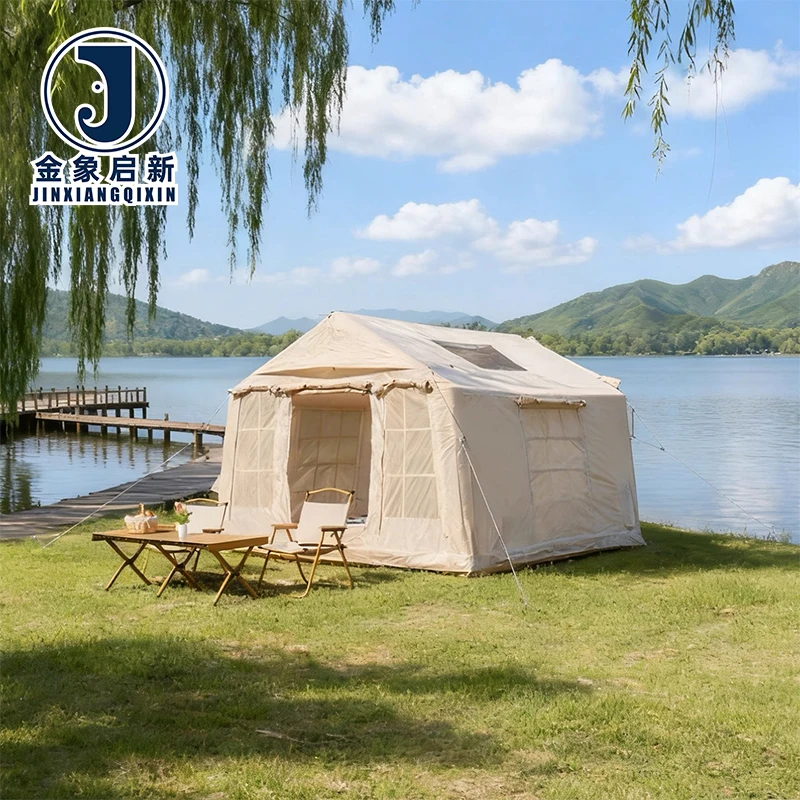
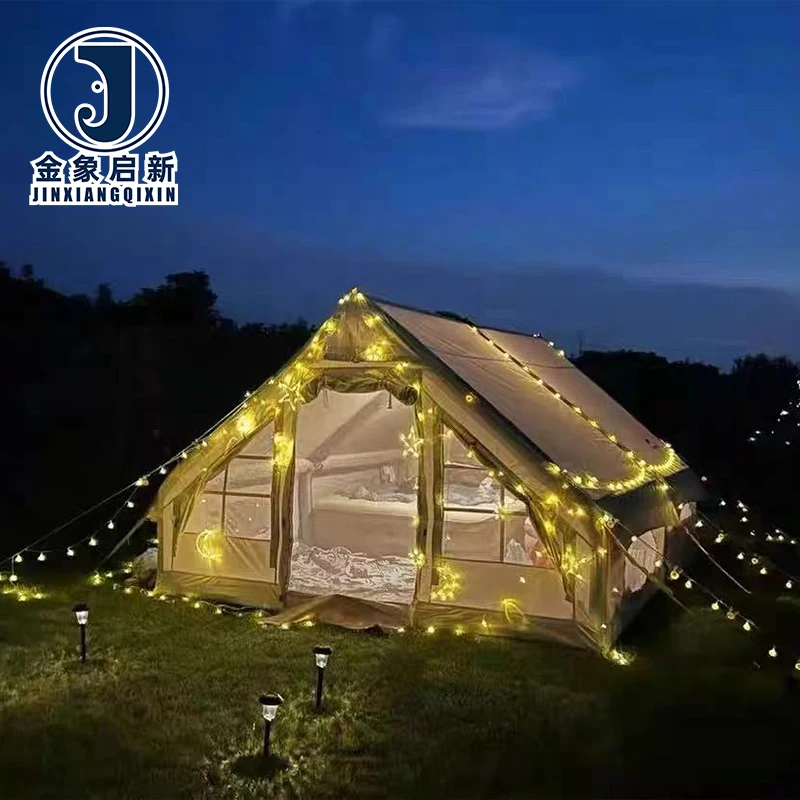
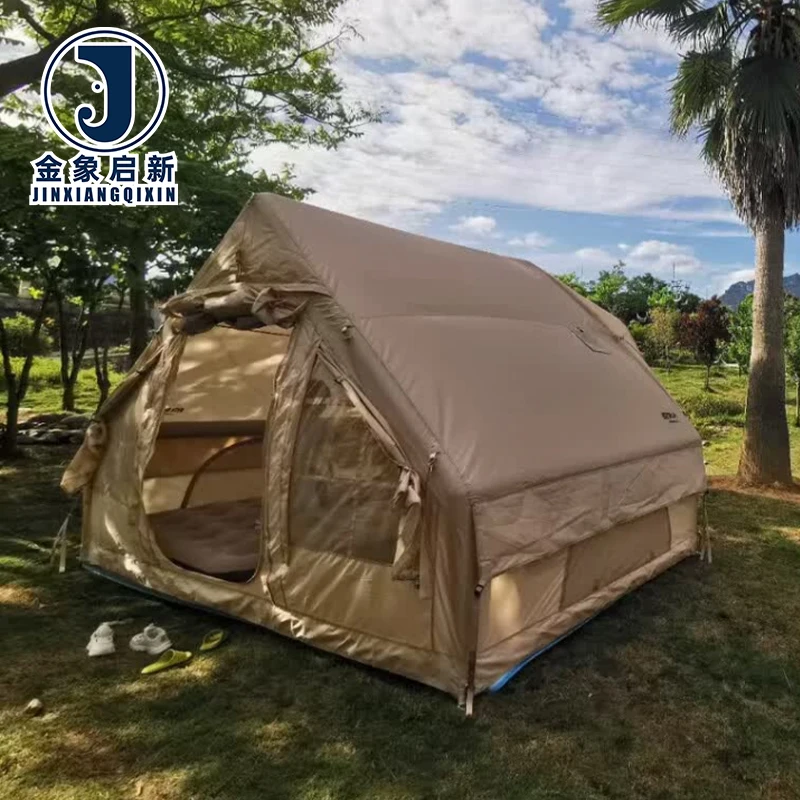
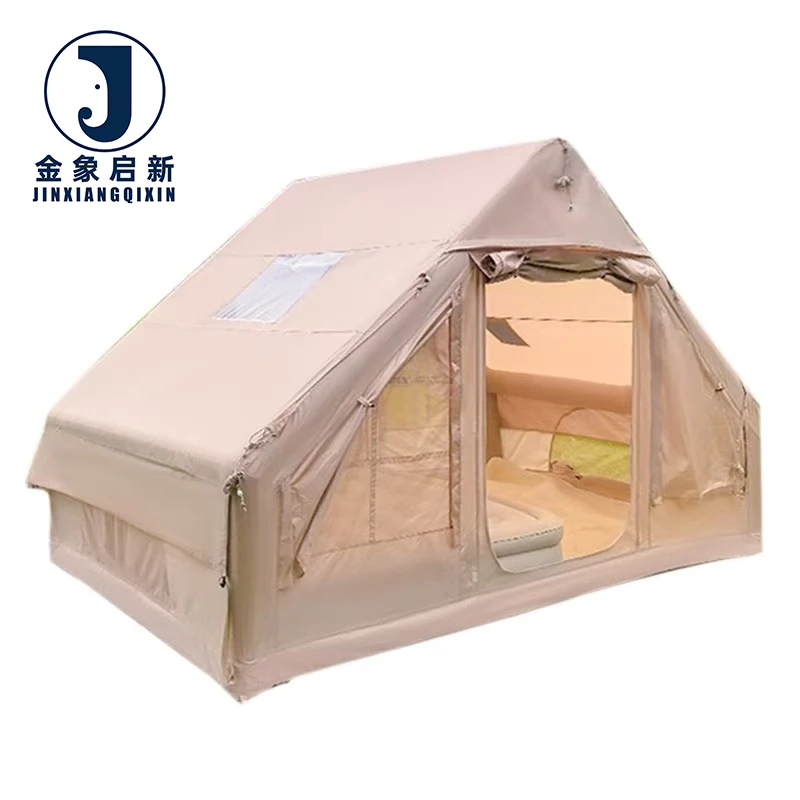
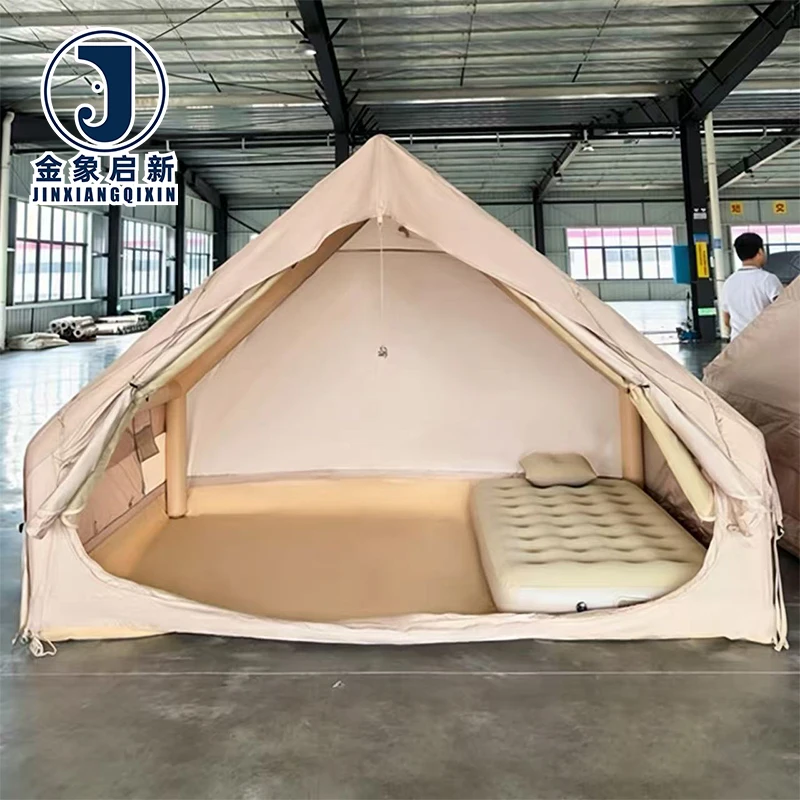
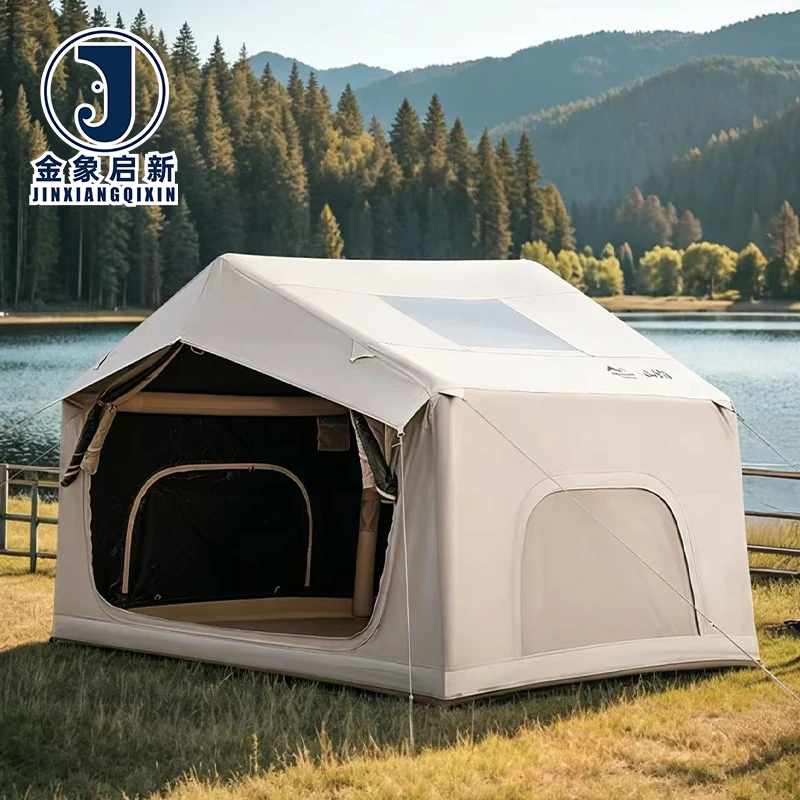
Description
Consistent Roll-to-Roll Quality — Every batch of inflatable tent fabric undergoes full-process inspection before shipment, eliminating colour drift across rolls in the same container.
Technical Specifications
| Parameter | Value |
|---|---|
| Product Type | Inflatable Tent Fabric / PVC Tent Roll |
| Core Material | PVC Tarpaulin |
| Waterproof Performance | Fully waterproof coated construction |
| UV Resistance | Available in UV-resistant grades — confirm the grade required for your market |
| Fire Retardancy | Available in flame retardant grades — confirm the grade required for your market |
| Anti-Static Property | Available in anti-static grades — confirm the standard required for your market |
| Customization | OEM & ODM (sample customization, pattern printing, material selection, product design) |
| Production Facility | 9,180 m² with 3 full production lines and 36 sets of professional equipment |
| R&D Capability | 10-person technical team |
| Quality System | Strict full-process QA & QC inspection |
| Certifications | ISO 9001, ISO 14001, ISO 45001, CE |
Application Suitability
| Application | Exposure & Requirement |
|---|---|
| Commercial inflatable camping tent production | Repeated inflation cycles, outdoor UV exposure, abrasion from ground contact, four-season temperature swings |
| Tent rental fleet manufacturing | High-frequency pack-and-deploy cycles, transport compression, varied climate deployment |
| Adventure tourism operator equipment | Continuous outdoor exposure, rapid assembly demand, guest safety and fire compliance |
| Wholesale distribution to outdoor retailers | Private-label colour consistency, container-load volume, shelf-ready roll packing |
Why Colour Varies Between Rolls and How It Affects Inflatable Tent Production
Batch-matched pigment dosing and in-line colour inspection keep every roll within the same order visually uniform.
When inflatable tent manufacturers source PVC tent roll in bulk, the most common complaint after delivery is that panels cut from different rolls show visible shade differences once assembled side by side. This forces rework or scrap on finished tents destined for retail or rental fleets. Consistency starts at the compounding stage — if pigment batches are not blended in a single lot and dispensed under controlled metering, the variation is locked in before the coating head even runs. [NEED_CITE: colour measurement methods for coated fabrics per ISO 787]
Roll-Stock Consistency for Inflatable Tent Fabric Wholesale Buyers
Purchasing Inflatable Tent Fabric wholesale means every roll in a container must meet the same thickness, colour, and surface finish. Our production runs for inflatable tent fabric are scheduled as single-lot campaigns, so the PVC compound, base fabric, and coating parameters remain constant from the first metre to the last. This approach prevents the shade banding that appears when fabric from two separate production dates is sewn or welded together on the tent production floor.
Volume Loading and Container Planning for PVC Tent Roll Bulk Orders
When ordering PVC Tent Roll bulk for container shipment, the roll diameter, core size, and packing orientation determine how many linear metres fit in a standard box. We configure roll lengths and pallet stacking patterns to maximise container utilisation while protecting the outer wrap from crush marks. Buyers ordering inflatable tent fabric for large production runs receive a detailed roll packing list that maps each roll number to its position in the container, simplifying warehouse receiving and production scheduling. [NEED_CITE: container loading guidelines for coated fabric rolls]
How Base Fabric Density and Coating Weight Interact in Inflatable Tent Material
The tensile and tear behaviour of inflatable tent fabric depends on two variables working together: the denier and weave density of the polyester base fabric, and the coating weight applied to each face. A heavier coating alone does not guarantee higher tear resistance if the base yarns are loosely woven — the tear propagates along the weave gap. Conversely, a tightly woven light base fabric with a moderate PVC coating delivers better puncture and tear performance than a loosely woven heavy one. Understanding this interaction lets buyers specify the correct balance for the inflation pressure and handling stress their tent design imposes, rather than relying on GSM as a single indicator.
The Cost of Specifying Inflatable Tent Fabric on GSM Alone
Relying only on a stated GSM when sourcing inflatable tent fabric often leads to two problems on the production floor. First, a fabric that meets the weight target but uses a low-density base weave tears easily at seam and weld points when the tent is inflated and flexed repeatedly. Second, if the coating formulation is adjusted to hit a weight figure rather than a performance target, the surface may become brittle at low temperatures or soften excessively in summer heat, causing the inflatable structure to lose rigidity. These failures surface only after the tent is in use, making the original cost saving irrelevant compared to warranty and replacement expenses. [NEED_CITE: relationship between base fabric construction and coated fabric tear strength per ISO 1421]
Why Sourcing Inflatable Tent Fabric Here Reduces Supply Risk
Three dedicated production lines allow us to schedule inflatable tent fabric runs without competing with unrelated coated fabric orders, protecting your delivery window. The 10-person R&D team develops custom colour matches and surface finishes for private-label tent brands, delivering pre-production samples for approval before mass coating begins. Full-process QA inspection covers base fabric incoming checks, in-line coating weight verification, and final roll grading — so only conforming rolls ship. Batch-specific test documentation accompanies every consignment, giving your compliance team the records needed for market entry. ISO 9001, ISO 14001, ISO 45001, and CE certifications underpin the quality management system. [NEED_CITE: ISO 9001 quality management requirements for coated textile manufacturing]
Documentation & Verification
- Material specification sheet listing PVC compound type, base fabric denier, and coating weight per roll
- UV and flame retardant test reports matched to the grade specified on your purchase order
- Pre-shipment inspection record with roll-by-roll thickness and visual grading results
- Roll packing list mapping each roll number to container position for warehouse receiving
- Certificate of origin and customs documentation for destination-country import clearance
Fabrication, Handling & Storage
- Hot-air welding temperature and speed must match the PVC coating formulation to achieve full peel strength at tent seam joints
- Store rolls upright on pallets in a shaded, ventilated area to prevent flat-spot deformation of the PVC coating surface
- Use slitting blades suited to PVC tarpaulin thickness to avoid frayed edges that compromise welded seam integrity
- Clean tent panels with mild pH-neutral detergent to preserve the PVC coating surface finish and colour
- Allow fabric to acclimatise to workshop temperature before unrolling to prevent creasing from cold-stiffened PVC
What to Include in Your Inflatable Tent Fabric Enquiry
Provide the target tent dimensions, inflation pressure range, and expected deployment climate so we can recommend the appropriate base fabric density and PVC coating weight. Specify the colour reference, surface finish preference, and any pattern printing requirements for your brand. Indicate the annual volume and whether you need full-roll stock or pre-cut panels, along with any fire-retardant or anti-static certifications required by your destination market.
Frequently Asked Questions
Q: How do you ensure colour consistency across multiple rolls in a single order?
A: All rolls in one order are produced in a single coating campaign using pigment from the same blended lot. In-line colour measurement checks every roll against the approved reference, and any roll outside the tolerance band is separated before packing. This ensures panels cut from different rolls match visually when assembled into finished inflatable tents.
Q: What stock widths are available and what is the minimum order for inflatable tent fabric?
A: Standard widths are available in a range suited to inflatable tent panel cutting. Minimum order quantities depend on whether you require a stock colour or a custom match. Custom colours typically require a full production campaign minimum to guarantee batch consistency across the entire order.
Q: Can you supply batch-specific test reports for UV and flame-retardant claims?
A: Yes. When UV-resistant or flame-retardant grades are specified on the purchase order, the corresponding test reports are issued for that specific production batch. Reports reference the test method and grade achieved, providing the documentation needed for regulatory compliance in your destination market.
Q: How is the fabric packed for container shipping to prevent surface damage?
A: Each roll is wrapped in protective film and packed upright or horizontally on pallets according to container dimensions. Edge protectors prevent crush marks, and the roll packing list records the loading position of every roll for efficient unloading and warehouse organisation at your facility.
Q: What lead times apply to bulk orders with custom colour or printing?
A: Custom colour and printed orders require additional time for sample approval and pigment matching before the production campaign begins. Once samples are approved, production scheduling depends on the volume and current line allocation. We confirm the dispatch date at the quotation stage so you can plan your container booking accordingly.