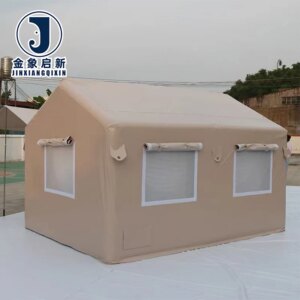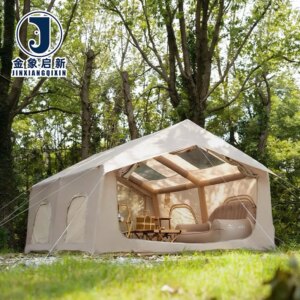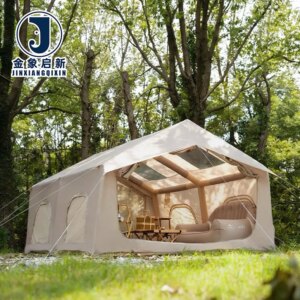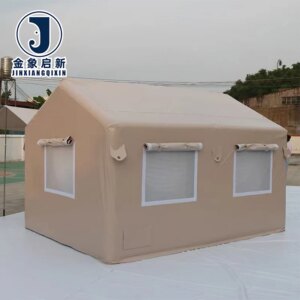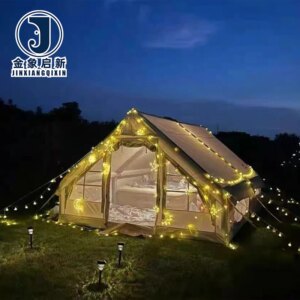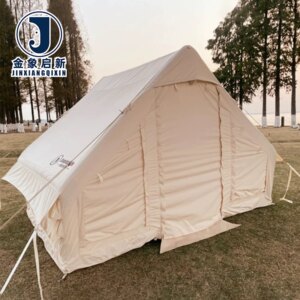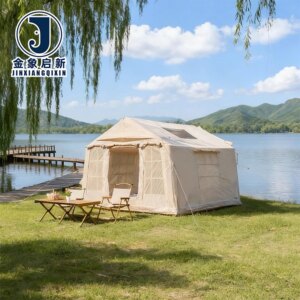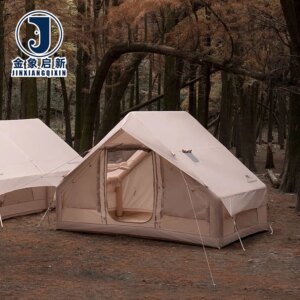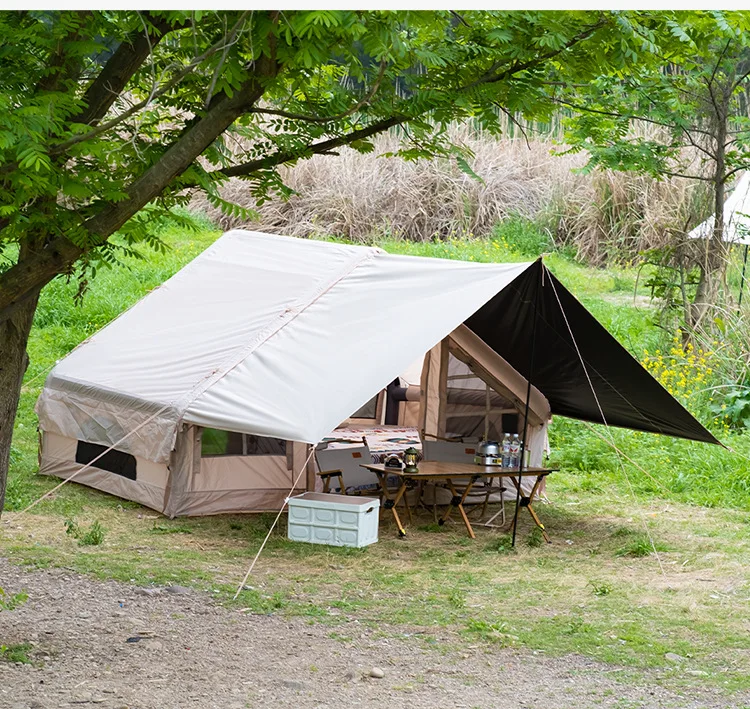
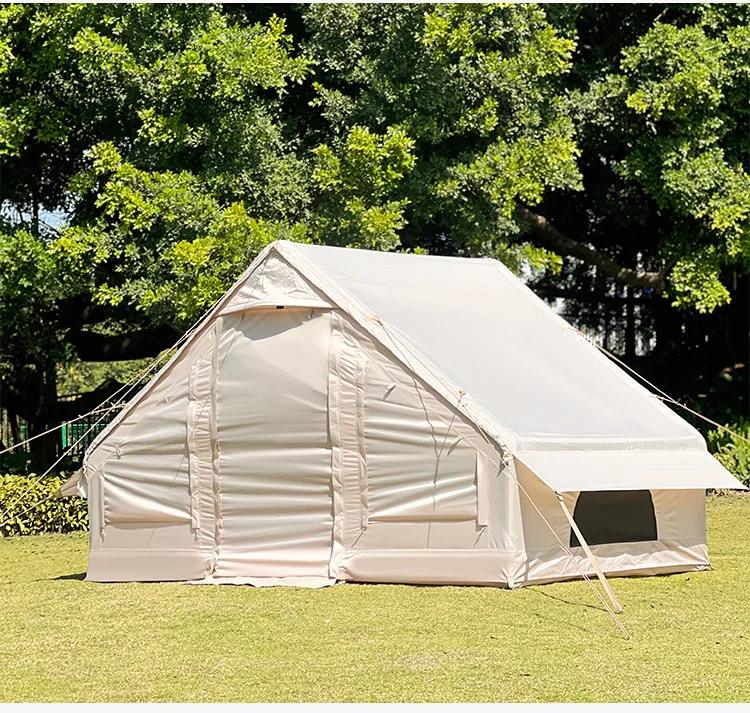
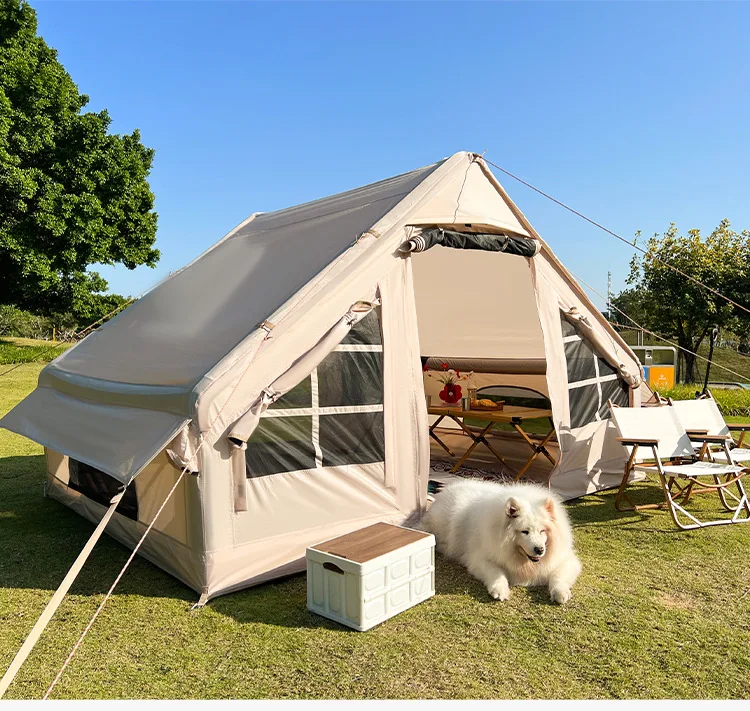
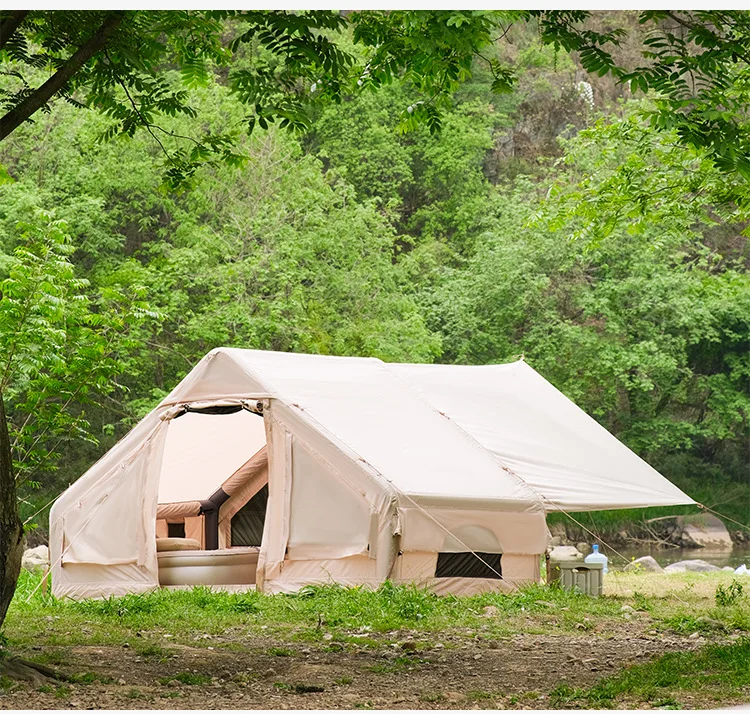
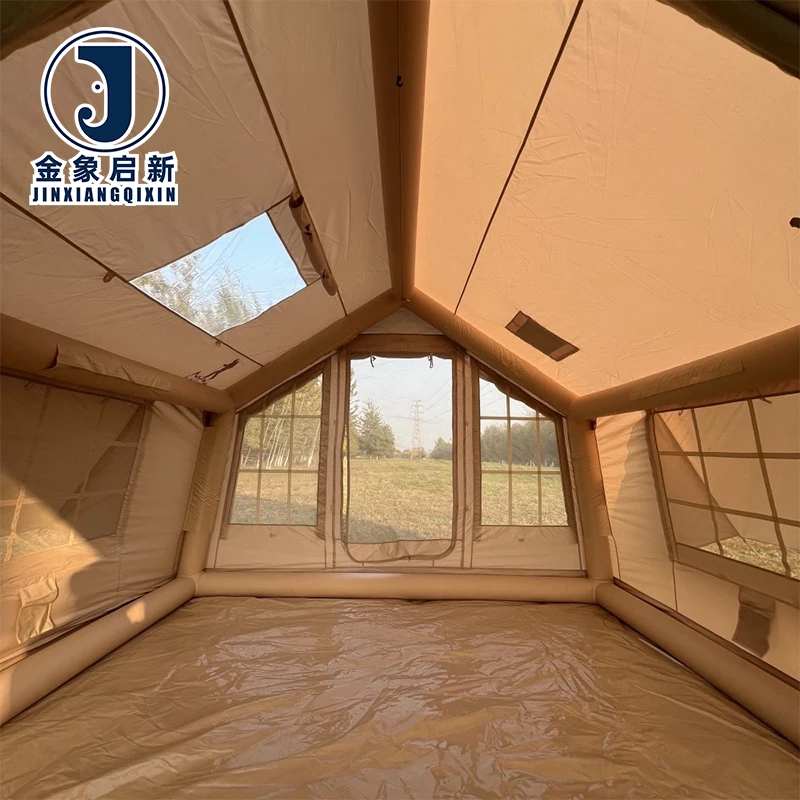
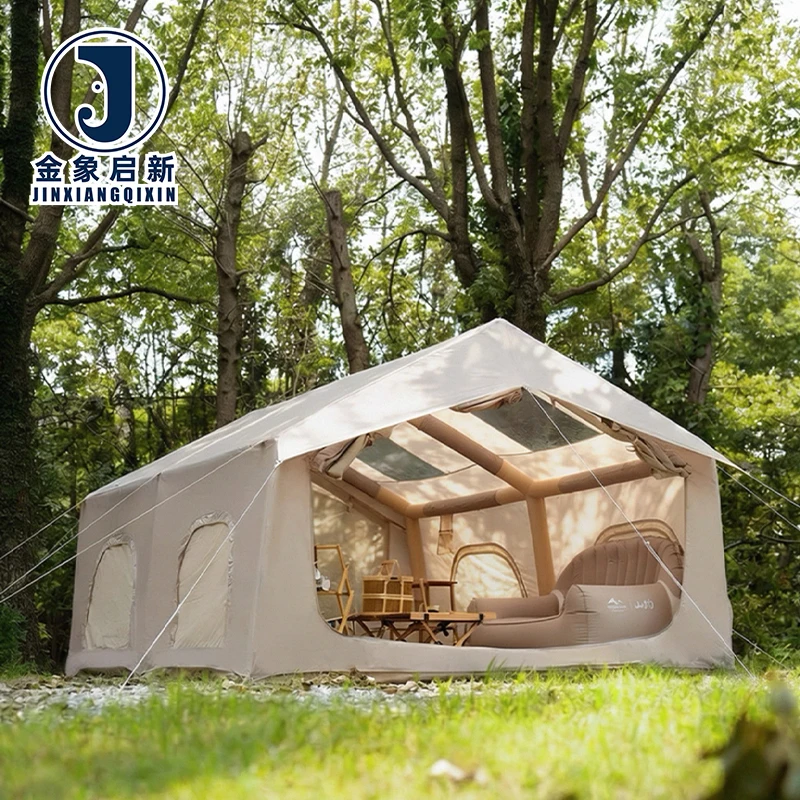
Description
Volume-Ready Supply Chain — Three full production lines and dedicated QA at every stage ensure batch-consistent inflatable tent output, with 100% pre-shipment inspection before container dispatch.
Technical Specifications
| Parameter | Value |
|---|---|
| Product Type | Inflatable Tent |
| Core Material | PVC waterproof fabric |
| Key Performance | Waterproof, UV-resistant (test basis not stated in source), tear-resistant, quick automatic opening |
| Capacity | 2–3 persons |
| Season Rating | Four-season design |
| Construction | Single layer |
| Customization | OEM & ODM, sample customization, pattern printing |
| Production Facility | 9,180 m² |
| Production Lines | 3 full production lines |
| Processing Equipment | 36 sets of professional equipment |
| R&D Team | 10 technicians |
| Quality Control | Full-process QA & QC, 100% inspection before shipment |
| Standards | ISO 9001, ISO 14001, ISO 45001, CE |
Application Suitability
| Application | Exposure & Requirement |
|---|---|
| Outdoor event infrastructure | Repeated setup and teardown cycles, weather exposure, crowd proximity |
| Temporary site offices | Extended stationary deployment, wind load, UV exposure, thermal comfort |
| Mobile exhibition spaces | Frequent transport, branded appearance, rapid deployment between venues |
| Emergency response shelters | Immediate deployment under adverse conditions, waterproof integrity |
| Logistics portable shelter | Field crew protection, abrasion from ground contact, compact storage |
| Field operations workspace | Dust and moisture ingress, multi-week continuous use, ventilation needs |
Why Batch Colour Drift Wrecks Wholesale Inflatable Tent Orders
Colour consistency across a container load is the first thing your customer checks when two units stand side by side.
Distributors and importers who add inflatable tent lines to their catalogue face a specific risk: units from the same production batch arriving in slightly different shades. This is not a cosmetic complaint — it triggers returns, damages your brand reputation with end-users, and forces costly re-sorting at the warehouse. When a distributor places a container order, the expectation is that every inflatable tent roll or finished unit matches the approved sample. Yet coating weight variation, pigment dispersion inconsistency, and oven temperature fluctuation across production runs can introduce visible differences that only appear once products are unpacked and inflated next to each other. [NEED_CITE: colour consistency standards for PVC coated fabric batches]
Roll-to-Roll Consistency Starts at the Coating Line
Maintaining uniform colour and material weight across every unit in an inflatable tent bulk order requires control at the raw material stage. Pigment batches are matched against a master reference before coating begins, and oven temperature profiles are locked for the duration of a single production run. This prevents the gradual shade shift that occurs when coating lines run mixed orders without intermediate colour checks. For wholesale buyers loading full containers, this discipline means the first unit and the last unit in the shipment present identically when inflated side by side at a trade show or event site.
Quick Automatic Opening Meets Multi-Site Deployment
The quick automatic opening mechanism in this inflatable tent design reduces the labour required for each deployment cycle. For logistics fleets and event contractors managing multiple locations, this translates to fewer trained personnel needed per site and faster turnaround between events. The PVC waterproof fabric construction handles the repeated inflation and deflation cycles that commercial users demand, while the tear-resistant build addresses the abrasion and handling stress that occur during transport and ground contact. [NEED_CITE: deployment time comparison between inflatable and pole-frame temporary shelters]
Decoding the PVC Fabric Construction
The PVC waterproof fabric used here combines a coated outer layer with a base fabric that provides dimensional stability. The coating delivers the waterproof barrier and UV-resistant treatment, while the base fabric — defined by its denier and weave density — determines how the material responds to tensile and tear forces. A heavier coating weight improves waterproof integrity and abrasion resistance but adds to packed weight; a tighter weave in the base fabric limits tear propagation if the surface is punctured during field setup. The single-layer construction keeps the inflatable tent lightweight and compact for storage, relying on the PVC coating to provide both weather protection and structural air-holding capability. Understanding this relationship helps buyers specify the right balance between durability and portability for their distribution market.
The Hidden Cost of Skipping Pre-Shipment Inspection
When inflatable tent orders ship without a detailed pre-shipment inspection record, buyers discover problems only after the container arrives. Seams that separate at the inflation point, fabric that weighs less than the quotation stated, or units that fail to hold air pressure overnight — these defects are far more expensive to resolve at destination than at the factory gate. Distributors who accept shipments without batch-specific verification documentation absorb the full cost of sorting, replacing, and re-shipping defective units. The commercial consequence extends beyond the immediate order: a distributor whose customers receive inconsistent quality loses credibility in a market where word travels quickly between contractors and event companies. [NEED_CITE: cost multiplier of defect resolution at destination versus factory inspection]
Why Distributors Source Inflatable Tents Here
Three full production lines provide the capacity to fulfil container-load inflatable tent orders within standard lead times, avoiding the delays that come from factories running single-line batch scheduling. A dedicated 10-person R&D team handles OEM and ODM requests — from pattern printing to sample customization — with sample turnaround measured in days rather than weeks. The 36 sets of professional processing equipment support both finished tent assembly and roll stock supply, giving buyers flexibility in how they receive product. Full-process QA and QC staffing with 100% inspection before shipment means every batch leaves the 9,180 m² facility with documented verification. ISO 9001, ISO 14001, ISO 45001, and CE certifications are maintained as baseline operational standards, not as marketing add-ons.
Documentation & Verification
- Material specification sheet stating PVC fabric composition and coating weight per batch
- Pre-shipment inspection record covering waterproof integrity and seam strength on every unit
- Batch-specific test data traceable by order number for UV-resistant and tear-resistant claims
- Roll packing list with unit count, weight, and dimensions for container loading verification
- Certificate of origin and customs documentation included with every export shipment
Fabrication, Handling & Storage
- Heat-weld seams at inflation points using temperature settings matched to the PVC coating thickness
- Store folded inflatable tents in dry, ventilated conditions to prevent PVC surface adhesion between layers
- Avoid stacking heavy pallets on packed units to prevent permanent crease marks in the waterproof fabric
- Use mild detergent for field cleaning; solvents can degrade the PVC coating surface
- Inspect air valves and seam junctions before each redeployment to catch early wear signs
What We Need to Prepare Your Quotation
Share the volume you plan to order annually and the destination markets, so we can align production scheduling and confirm compliance requirements. Specify whether you need finished inflatable tents or PVC fabric roll stock for your own fabrication line. If pattern printing or custom branding is required, provide artwork files and Pantone references so we can develop a sample for your approval before bulk production begins.
Frequently Asked Questions
Q: How is colour consistency maintained across units in the same container load?
A: Pigment batches are matched to a master reference before coating begins, and oven profiles are locked per production run. Inline colour checks during coating catch drift before it becomes visible. Every inflatable tent batch ships with inspection records confirming colour uniformity against the approved sample.
Q: What MOQ and lead time apply to custom dimensions and branded printing?
A: MOQ depends on the specific size, print complexity, and fabric grade selected. Custom inflatable tent orders typically require sample approval before mass production begins. Submit your dimensions, artwork, and target quantity so we can confirm lead time based on current production line scheduling.
Q: How can buyers verify PVC fabric weight on arrival against the quotation?
A: Each batch ships with a pre-shipment inspection record documenting the measured coating weight and base fabric specification. Buyers can cross-check arrival samples using a calibrated scale and fabric cutter against the stated values in the documentation package accompanying the shipment.
Q: What test basis supports UV-resistant claims for prolonged outdoor exposure?
A: UV-resistant treatment is applied during the PVC coating process and documented per batch. The specific test method and exposure rating depend on the grade selected. Request the batch test report for your order to confirm the UV performance level matches the outdoor exposure conditions in your target market.
Q: How are inflatable tents packed and loaded for bulk container shipment?
A: Each unit is individually packed to prevent surface contact damage during transit. A detailed roll packing list accompanies every shipment, specifying unit count, packed weight, and carton dimensions. Container loading plans are prepared to maximise space utilisation while protecting the PVC fabric from compression marks.