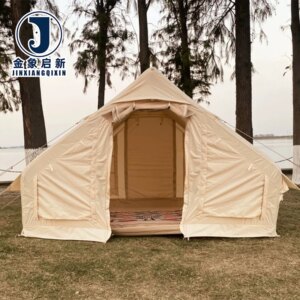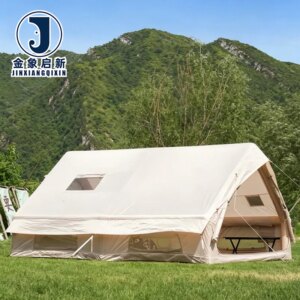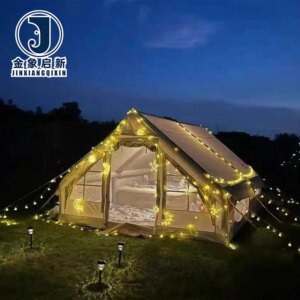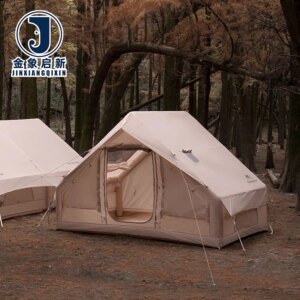
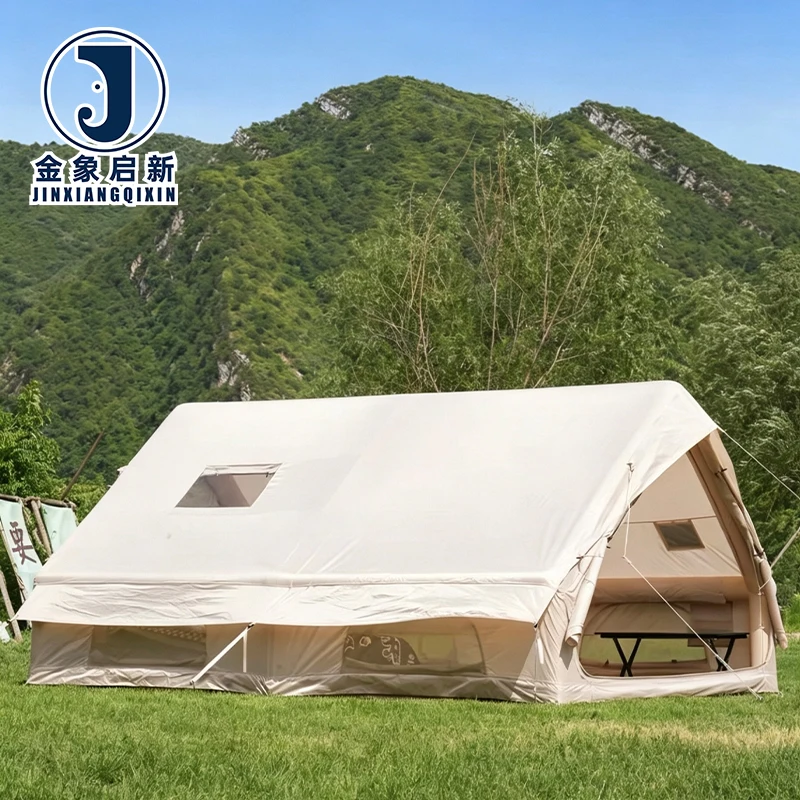
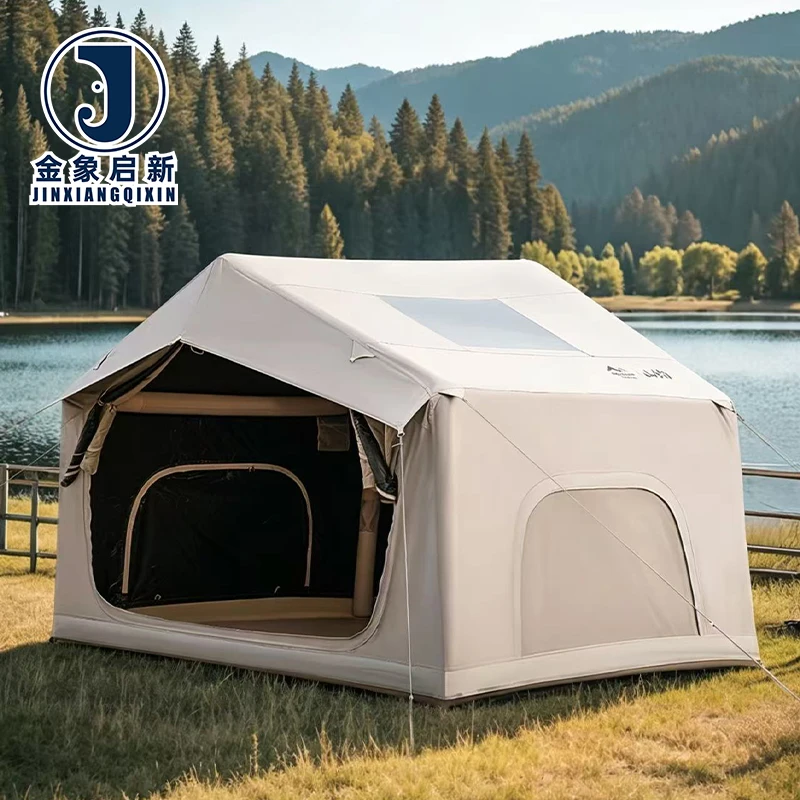
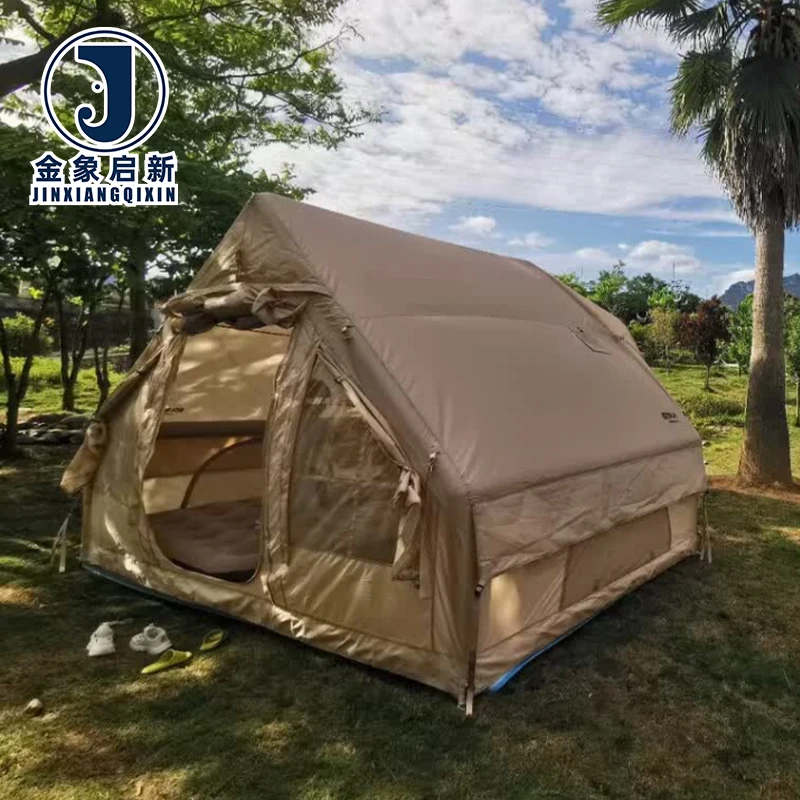
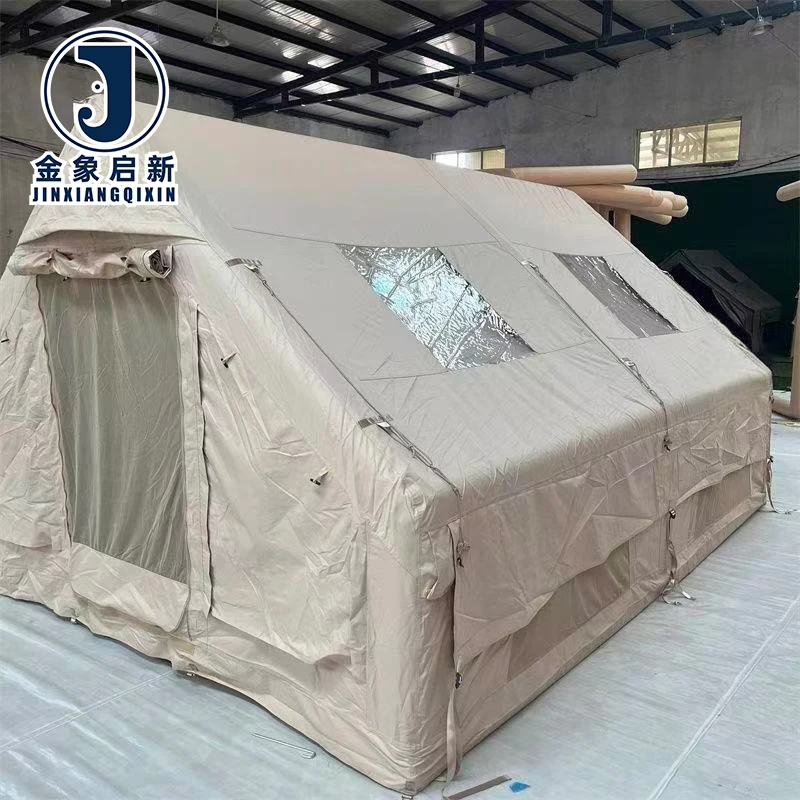
Description
Roll-Stock Consistency — batch-controlled PVC coating lines deliver uniform GSM, colour, and waterproof integrity across every roll in your inflatable tent fabric order.
Technical Specifications
| Parameter | Value |
|---|---|
| Product Type | Inflatable Tent Fabric / Inflatable Shelter |
| Core Material | PVC Tarpaulin |
| Waterproof Rating | >3000mm |
| Season Rating | 4-Season Design |
| Construction | Single Layer |
| UV Treatment | UV-resistant PVC material (test basis not stated in source) |
| Customization | OEM & ODM — sample customization, pattern printing, material thickness adjustment, structural modifications |
| Quality Control | Strict full-process quality inspection with dedicated QA & QC staff |
| Certifications | ISO9001, ISO14001, ISO45001, CE |
Application Suitability
| Application | Exposure & Requirement |
|---|---|
| Inflatable tent manufacturing (roll-stock sourcing) | Batch-to-batch colour and weight consistency for multi-panel structures; airtight weld seams for air-beam integrity |
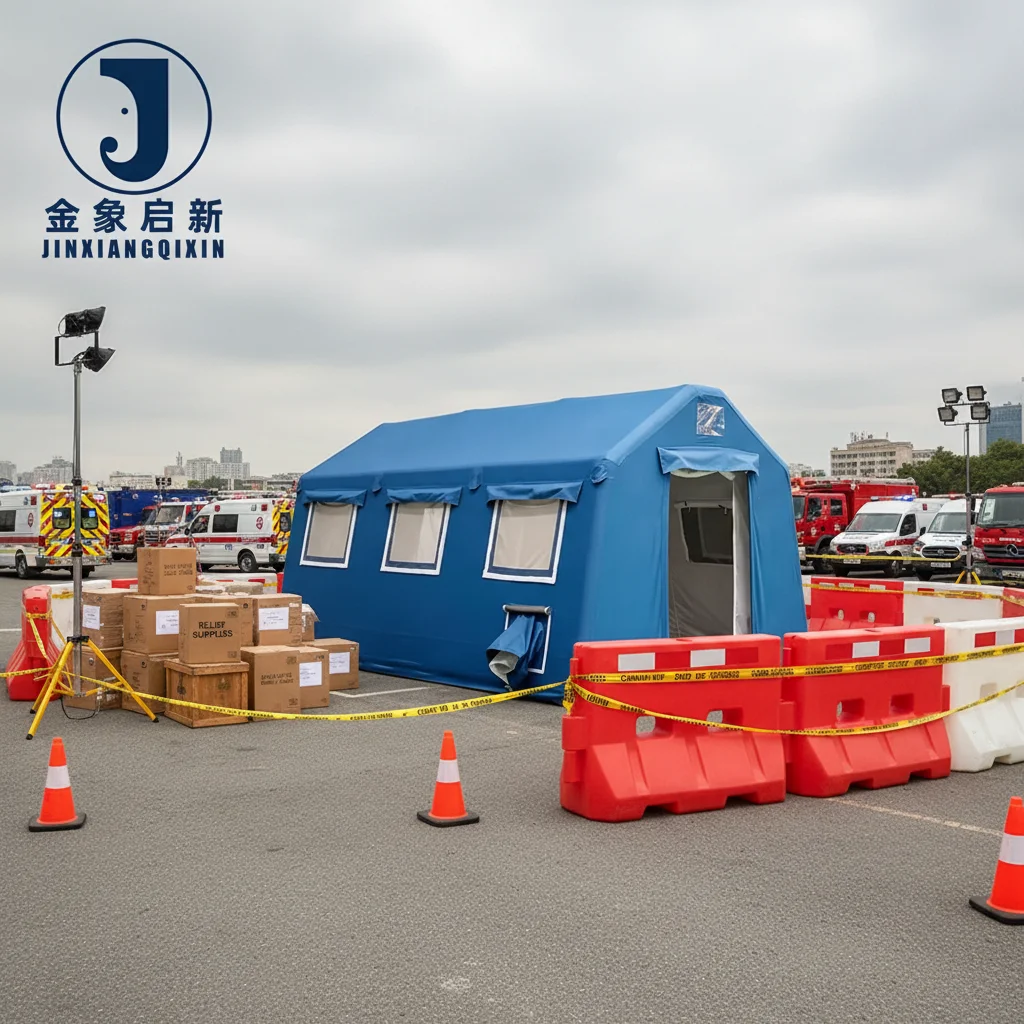
| Temporary site offices and mobile command centers | Continuous weather exposure, rapid deployment and inflation cycles, frequent folding and transport |
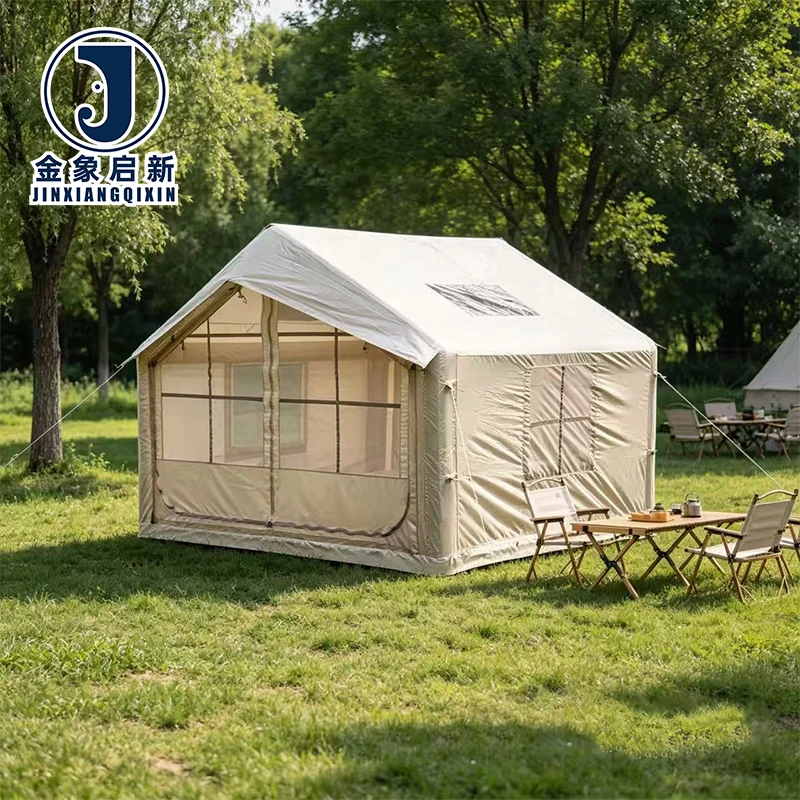
| Outdoor event and commercial shelter deployments | High foot-traffic abrasion at floor-to-wall junctions, UV exposure during extended installations |
| Equipment storage facilities on construction sites | Puncture and impact resistance from stored machinery; waterproof integrity under rain pooling |
| Logistics and transport covered workspaces | Rapid inflation and deflation cycles, wind loading on membrane surfaces, repeated roll-up storage |
What "Waterproof" Really Means When You Buy Inflatable Tent Fabric by the Roll
A stated waterproof rating only protects your production line when every roll in the shipment matches the test sample.
Tent fabricators who source inflatable tent fabric roll wholesale often discover too late that a waterproof claim on the quotation does not guarantee the same hydrostatic head across a container load. Coating weight drift between production runs creates micro-thin zones where water penetration begins under sustained rain load. For inflatable structures, this failure is magnified — a leak at a welded seam under internal air pressure compromises the entire shelter, not just one panel [NEED_CITE: hydrostatic head test methods for coated fabrics per ISO 1421].
Coating Weight Control Across Production Runs
Maintaining uniform PVC coating thickness roll after roll is the foundation of reliable inflatable tent fabric aftermarket supplier performance. Our three full production lines are calibrated to hold coating weight within tight tolerances, verified through in-process sampling at every stage. This matters for inflatable structures because uneven coating creates weak points at heat-welded seams where air pressure concentrates stress.
Colour Matching at Container-Load Scale
When your inflatable tent design uses multiple panels sewn or welded from different rolls, even slight hue variation becomes visible once the structure is inflated on site. Our batch-controlled compounding process matches colour reference standards per order, so rolls pulled from the same production run install side by side without visible mismatch. This eliminates the costly panel rejection that tent fabricators face when colour drift is discovered after cutting [NEED_CITE: colour consistency standards in coated textile manufacturing].
Understanding GSM and Its Relationship to Inflatable Structure Performance
The GSM of PVC tarpaulin determines how much coated material exists per square metre, but it is the combination of base fabric denier, weave density, and coating adhesion that governs real-world behaviour. A heavier base fabric with tighter weave resists tear propagation when an air-beam flexes under wind load, while the PVC coating weight governs airtight weld integrity. For inflatable tent applications, the single-layer construction balances sufficient structural mass with transportation efficiency when shipping fabric by the roll. The base fabric’s warp and weft density must be matched to the expected internal pressure of the air-beam system — too loose a weave allows coating penetration gaps that weaken seam welds, while too tight a weave can trap air pockets that blister under heat welding.
The Hidden Cost of Specifying Inflatable Tent Fabric on Colour Alone
Choosing rolls based on colour match without verifying coating weight consistency across the batch leads to weld failures that appear only after the structure is inflated and pressurized. A lighter-coated roll welds at different temperature and dwell-time settings than its neighbours, creating seam zones that peel under cyclic inflation stress. Fabricators then face warranty claims on finished shelters where the fabric itself passed inspection but the welded assembly did not [NEED_CITE: weld strength failure modes in PVC coated fabrics].
Why Tent Fabricators Source This PVC Inflatable Tent Fabric Roll Wholesale
Three full production lines and 36 sets of processing equipment support bulk roll orders with reliable scheduling for repeat production runs. A 10-technician R&D team handles material thickness adjustment, pattern printing, and structural modification samples developed within days for your evaluation. Dedicated QA and QC staff inspect every roll before shipment, not a statistical sample from the batch. Pre-production samples confirm custom width, colour, and printing specifications before full production begins, eliminating surprises at container loading. Every order ships with documentation traceable to the specific production run — specification sheets, packing lists by roll count and weight, and certificates of origin for international customs clearance.
Documentation & Verification
- Material specification sheet stating GSM, base fabric type, coating composition, and colour reference for each roll
- Pre-shipment inspection record with batch-specific waterproof rating verification
- Roll packing list detailing container loading plan by roll count, weight, and position
- Certificate of origin and full customs documentation for international roll shipments
- UV treatment and material test reports applicable to the specific production batch
Fabrication, Handling & Storage
- Heat-weld seams using temperature and dwell-time settings matched to the single-layer PVC coating weight for airtight bonds
- Store rolls vertically on end-caps to prevent flat-spot deformation of the PVC tarpaulin surface
- Allow cold-transported rolls to acclimate to workshop temperature before unrolling to avoid coating micro-cracking
- Use rotary blade cutting on the single-layer construction to prevent base fabric fraying at panel edges
- Clean finished inflatable structures with mild pH-neutral detergent to preserve the UV-resistant PVC surface treatment
Preparing Your Inflatable Tent Fabric Inquiry
Share your target air-beam pressure range, expected deployment climate, and annual roll volume so we can recommend the appropriate GSM and coating weight. Specify whether you need stock widths or custom roll dimensions, and whether pattern printing or branding is part of your tent panel design. If your market requires specific fire-safety classifications, state the required grade so we can confirm availability before sampling begins.
Frequently Asked Questions
Q: How is GSM verified on arrival and what documentation supports it?
A: Every roll ships with a batch-specific inspection record documenting measured GSM against the stated value. On arrival, you can cross-check by cutting a measured sample and weighing it. Our pre-shipment inspection records include roll-by-roll weight data, and the material specification sheet states the target GSM along with acceptable tolerance range for your verification process.
Q: How is colour consistency maintained across rolls in the same bulk order?
A: All rolls within a single order are produced from the same compounded PVC batch using matched colour reference standards. In-process sampling checks hue and saturation throughout the production run. This batch-controlled approach ensures that panels cut from different rolls install side by side on your inflatable tent structure without visible colour variation.
Q: What roll widths and lengths are available for inflatable tent fabric?
A: Standard widths are available for immediate production scheduling, with custom widths processed through our OEM and ODM capability. Roll lengths are configured to match your panel cutting layout, minimizing off-cuts during fabrication. Provide your panel dimensions and we will recommend roll dimensions that optimize material utilization for your specific inflatable tent design.
Q: How are rolls packed and loaded for container shipment?
A: Each PVC tarpaulin roll is wrapped and capped to protect edges and surface coating during transit. The roll packing list details container loading by roll count, total weight, and stowage position. Rolls are loaded to prevent crushing and flat-spot deformation, ensuring the material arrives ready for immediate cutting and fabrication at your facility.
Q: What are the minimum order quantities for custom width or colour rolls?
A: Minimum quantities for custom specifications depend on the width, colour, and printing requirements of your order. Our three production lines allow flexible scheduling for both stock grades and custom runs. Submit your target width, colour reference, and estimated annual volume, and we will confirm the production minimum along with lead time and sample availability for your approval.