
Description
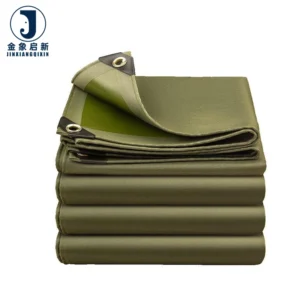
Consistent roll-to-roll yield — every 600gsm canvas tarpaulin roll is weighed and measured against the stated specification before dispatch, eliminating the batch variation that disrupts fabrication planning and container loading calculations.
Technical Specifications
| Parameter | Value |
|---|---|
| Product Type | Canvas Tarpaulin |
| Base Fabric | Polyester cotton industrial textile, 8-12 strands of fine cotton yarn |
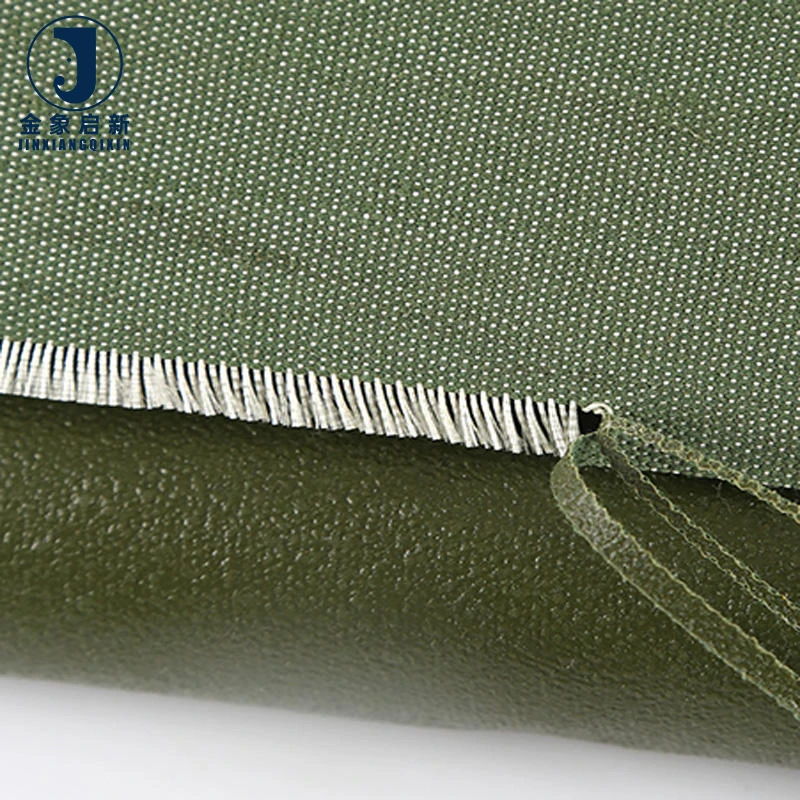
| Coating Material | Silicone canvas |
| Weight | 600gsm |
| Total Thickness | 0.5mm / 0.6mm / 0.7mm |
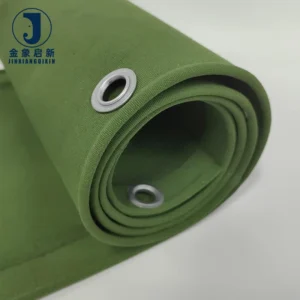
| Roll Width | 2m |
| Roll Length | 100m |
| Finish Product Size | Custom cut sizes or sold by inventory roll |
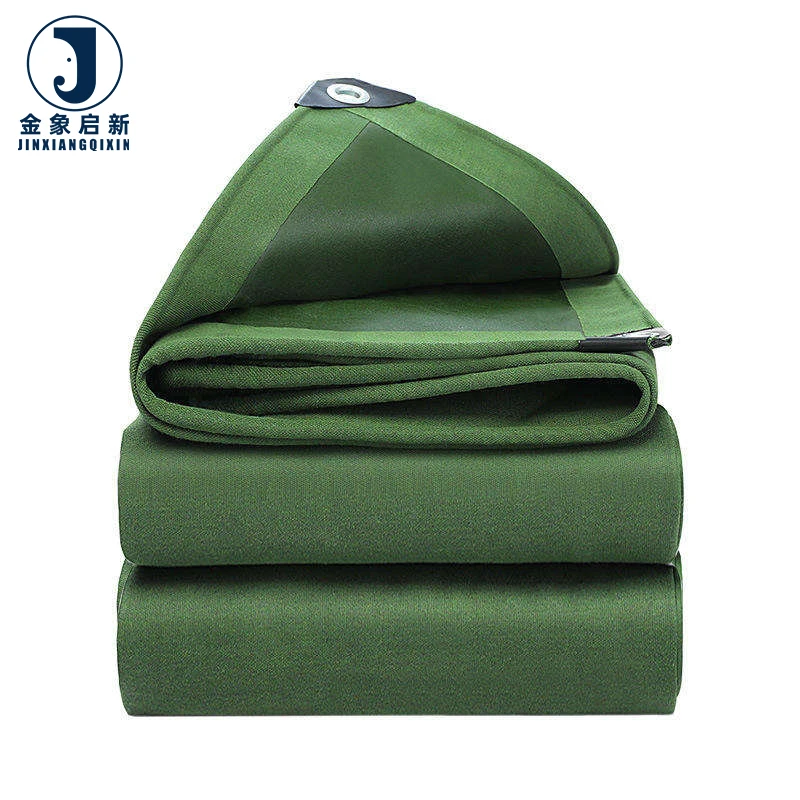
| Color | Army Green Camouflage / Custom |
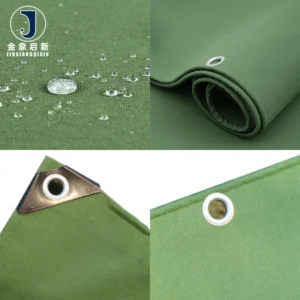
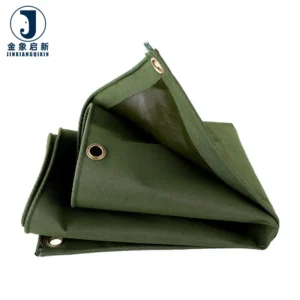
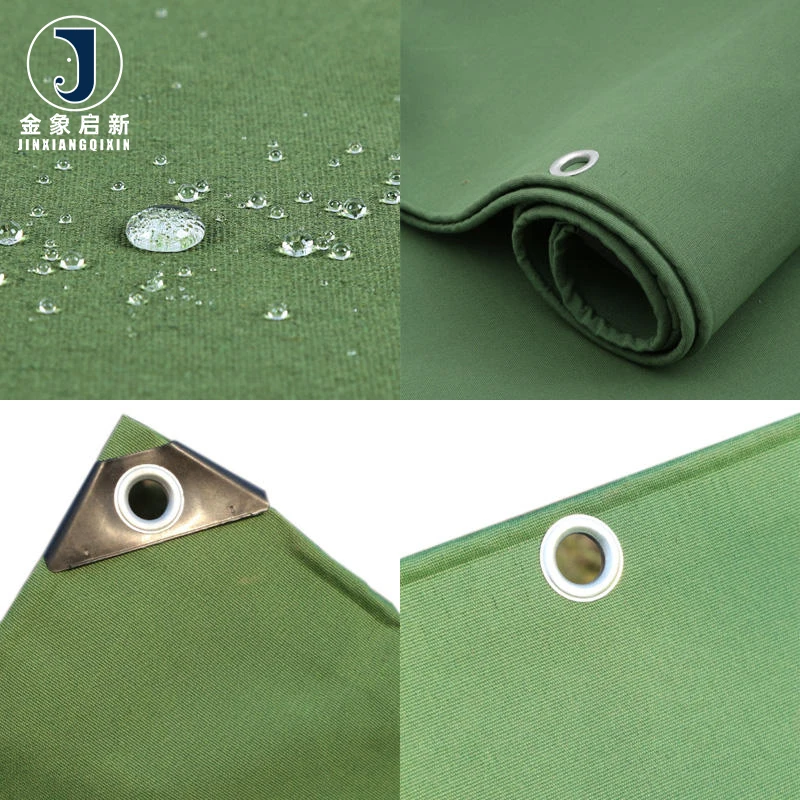
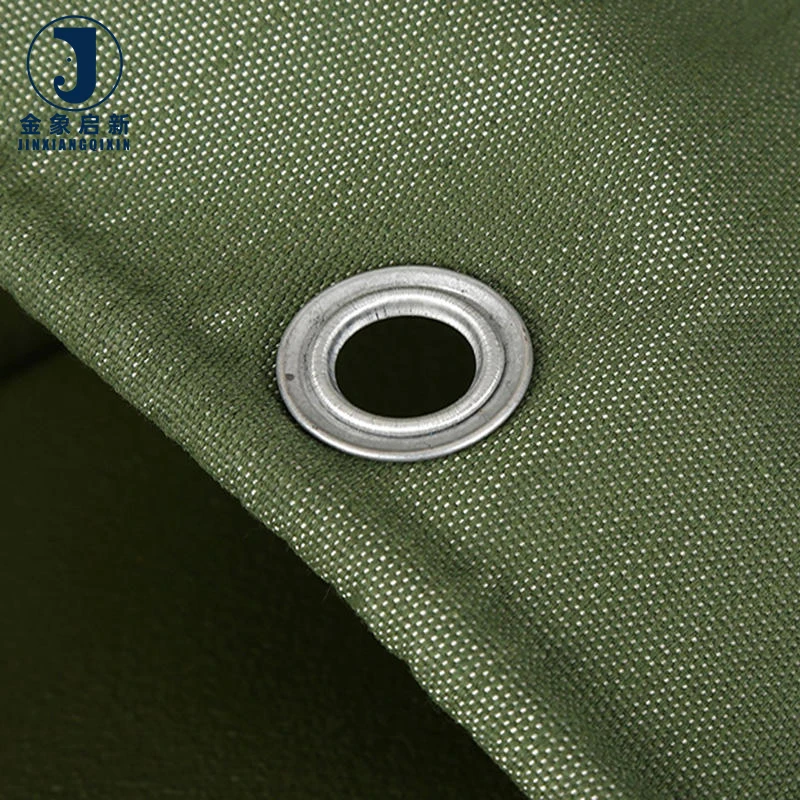
| Eyelet & Hem | Rust-proof aluminum eyelets every 1m at corners and hem; folded seams welded and sewn with poly ropes |
| Key Features | Wear-resistant, corrosion-resistant, tensile-resistant, high- and low-temperature resistant, shrink-proof, UV resistant, mold resistant, waterproof |
| UV Treatment | UV resistant (test basis not stated in source — confirm grade required for your market) |
| Flame Retardant | Available in flame retardant grades — confirm the grade required for your market |
| Service Life | 5-8 years or longer under typical outdoor exposure (source value — verify against manufacturer catalog) |
| Standards | CE, ISO |
Application Suitability
| Application | Exposure & Requirement |
|---|---|
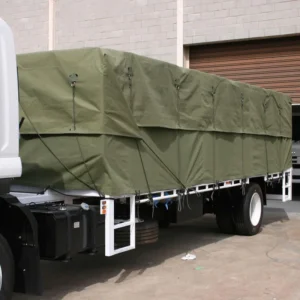
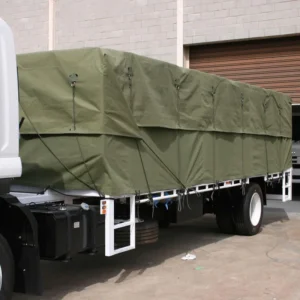
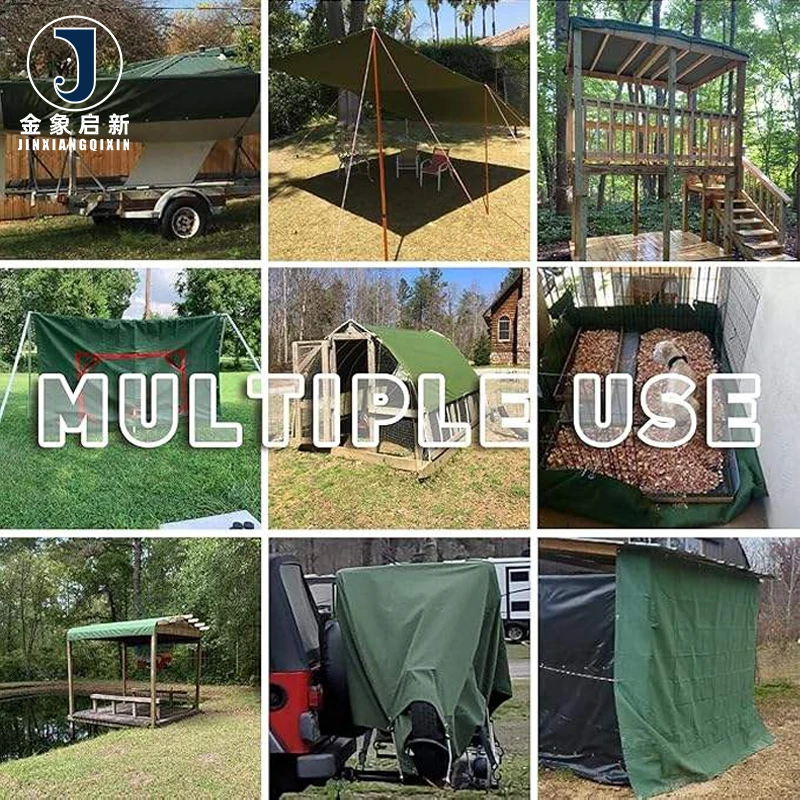
| Truck and trailer load cover | Constant road vibration, wind flap, UV exposure, tie-down tension at eyelets |
| Construction site equipment cover | Abrasive dust, moisture, prolonged sun exposure, repeated folding and unfolding |
| Asphalt cover during transport | High surface temperature, chemical contact, heavy stacking loads |
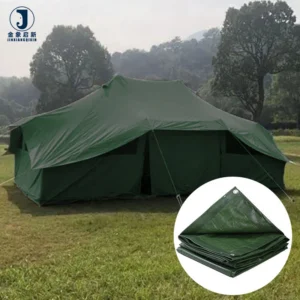
| Outdoor tent and camping shelter | Rain ingress, ground moisture, wind uplift, seasonal storage |
| Open-air stockpile protection | Weather cycling, UV degradation, mold growth in humid climates |
What "600gsm" Really Means When Rolls Arrive at Your Warehouse
Quoted weight and delivered weight are two different numbers unless every roll is inspected before it leaves the factory.
Buyers sourcing canvas tarpaulin roll wholesale frequently open containers to find material that feels lighter than expected. The GSM printed on the quotation does not guarantee what lands on the cutting table. Coating weight can drift across a production run, and base fabric density may vary between batches — meaning two rolls from the same order can behave differently under the same fabrication process. This inconsistency shows up as eyelets pulling through on some panels but holding firm on others, or seams that weld cleanly on one roll and delaminate on the next. [NEED_CITE: tensile and tear test methods for coated fabrics per ISO 1421]
Batch-Verified Weight Across Every Roll in the Order
When purchasing canvas tarpaulin roll wholesale, predictable yield per roll matters as much as the unit price. A 2m × 100m roll at 600gsm should produce a known number of cut panels — and that calculation collapses if the actual weight per square metre drifts. Each roll in this production run is checked against the 600gsm target before packing, so fabricators can plan cutting layouts and container loading with confidence. Consistent GSM also means welding and sewing parameters set on the first roll carry through to the last without mid-job adjustment.
Colour Consistency From First Roll to Last
Army green camouflage is the stock colour, but custom colours are available for buyers who need branding alignment or fleet-matching. The risk with multi-roll canvas tarpaulin roll wholesale orders is visible shade variation once panels are installed side by side on a truck or construction barrier. Colour consistency here is managed through controlled coating batches and reference samples approved before the full run begins. If your application places multiple panels in the same sightline, request a batch colour sample before production proceeds. [NEED_CITE: colour fastness and batch matching standards for coated technical textiles]
Reading the Specification Beyond the GSM Number
A 600gsm weight tells you how much material is present per square metre, but it does not tell you how that material is distributed between base fabric and coating. The polyester cotton base here uses 8-12 strands of fine cotton yarn, which creates a dense woven structure that resists tear propagation — a tear that starts at an eyelet or a cut edge has to work through multiple yarn intersections rather than splitting along a single weak line. The silicone canvas coating adds waterproofing and surface abrasion resistance, but the tensile strength under tie-down load comes primarily from the woven base. Thickness options of 0.5mm, 0.6mm, and 0.7mm allow buyers to select the stiffness and hand feel that suits their fabrication method: thinner gauges fold more easily for hemming and eyelet insertion, while thicker gauges provide more bulk for heavy-duty truck cover applications where the material must resist puncture from sharp cargo edges.
The Hidden Cost of Specifying on Price Per Kilogram Alone
Choosing canvas tarpaulin roll wholesale on the lowest cost per kilogram often means accepting lighter base fabric compensated with heavier coating — a combination that feels right on the scale but fails at the weld line when the fabric flexes under load. Coating-heavy constructions crack along fold lines after repeated use, while base-fabric-heavy constructions may lack the surface waterproofing needed for prolonged outdoor exposure. The result is covers that need replacing well before the expected service window, driving up total cost per use far beyond the initial savings. [NEED_CITE: field failure analysis of coated fabric covers under cyclic loading]
Why Sourcing Canvas Tarpaulin Here Reduces Procurement Risk
Three full production lines and 36 sets of professional equipment support bulk canvas tarpaulin roll wholesale orders with capacity to hold delivery schedules across large container volumes. A 10-person R&D team handles custom width, colour, and cut-size development, producing samples within days so buyers can validate material performance before committing to a full production run. Dedicated QA/QC at every production stage means the 600gsm weight, colour reference, and roll dimensions are verified in-process — not just spot-checked at the loading dock. Nearly 30 years of coated fabric production experience translates into process control over coating weight and adhesion that newer operations cannot match. Every shipment includes a pre-shipment inspection record, so buyers have documented proof of what was verified before dispatch.
Documentation & Verification
- Material specification sheet stating 600gsm weight, polyester cotton base composition, and silicone coating type per roll
- Pre-shipment inspection record confirming weight, dimensions, and eyelet spacing match the purchase order
- Roll packing list with individual roll identification numbers for batch traceability across the shipment
- Certificate of origin and customs documentation prepared for destination country clearance requirements
- UV and flame retardant test reports supplied where applicable grades are specified at order stage
Fabrication, Handling & Storage
- Set welding temperature to match the 0.5mm–0.7mm thickness range — thicker gauges need longer dwell time for full adhesion
- Eyelet insertion at the rust-proof aluminum holes must align with the poly-rope reinforced hem to distribute tie-down load
- Store 2m × 100m rolls upright on pallets to prevent flat-spotting and permanent creasing along the silicone coating surface
- Allow rolls to acclimatise before unrolling in cold conditions — the 600gsm canvas becomes stiff at low temperature
- Use mild detergent for cleaning; avoid solvent-based cleaners that may degrade the silicone canvas coating layer
- When cutting panels from 2m-wide rolls, plan layout to place welded seams away from high-stress tie-down zones
What to Include in Your Enquiry
Specify the application environment — whether the canvas tarpaulin will cover truck loads in highway conditions, protect construction equipment in coastal humidity, or serve as a semi-permanent outdoor shelter. Confirm whether you need roll stock only or finished cut-to-size panels with eyelets and hems already installed. If your market requires a specific flame retardant grade or UV test standard, state the requirement at enquiry stage so the correct treatment is built into the production run rather than added as an afterthought.
Frequently Asked Questions
Q: How is the 600gsm weight verified before shipment?
A: Every roll is weighed and measured against the stated 600gsm specification during the pre-shipment inspection process. The inspection record documents actual weight per square metre for each roll and is included with the shipping documentation, so you receive verified data — not just the quoted number — before the container leaves the factory.
Q: What roll widths and lengths are available for bulk ordering?
A: Standard roll stock is supplied at 2m width and 100m length, optimised for efficient container loading by roll count and weight. Custom widths and lengths are available for buyers who need to reduce cutting waste or match specific fabrication equipment. Confirm your required dimensions at enquiry stage for lead time and minimum order assessment.
Q: How is colour consistency maintained across multiple rolls in the same order?
A: All rolls in a single canvas tarpaulin roll wholesale order are produced from the same coating batch using a shared colour reference. A batch sample is available for buyer approval before the full production run begins, ensuring that panels cut from different rolls show no visible shade variation when installed side by side.
Q: What is the MOQ for custom colour or custom cut-size orders?
A: Minimum order quantities for custom colours and finished cut sizes depend on the specific width, length, and treatment combination requested. Custom orders are assessed individually with samples developed for approval before production is scheduled. Provide your target dimensions and annual volume at enquiry stage for a precise MOQ and lead time quotation.
Q: How are rolls packed and loaded for container transport to prevent damage?
A: Each 2m × 100m roll is individually wrapped and identified on the packing list for traceability. Rolls are loaded to prevent crushing and edge damage during transit. The packing list included with every shipment details roll count, individual identification, and total weight to support receiving inspection at your warehouse.