Description
Bulk availability — three full production lines and 36 sets of equipment keep multiple GSM grades and roll widths in continuous output, so container-load orders ship without waiting for a single production slot to open.
Technical Specifications
| Parameter | Value |
|---|---|
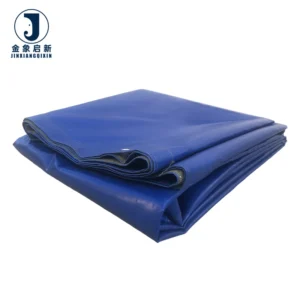
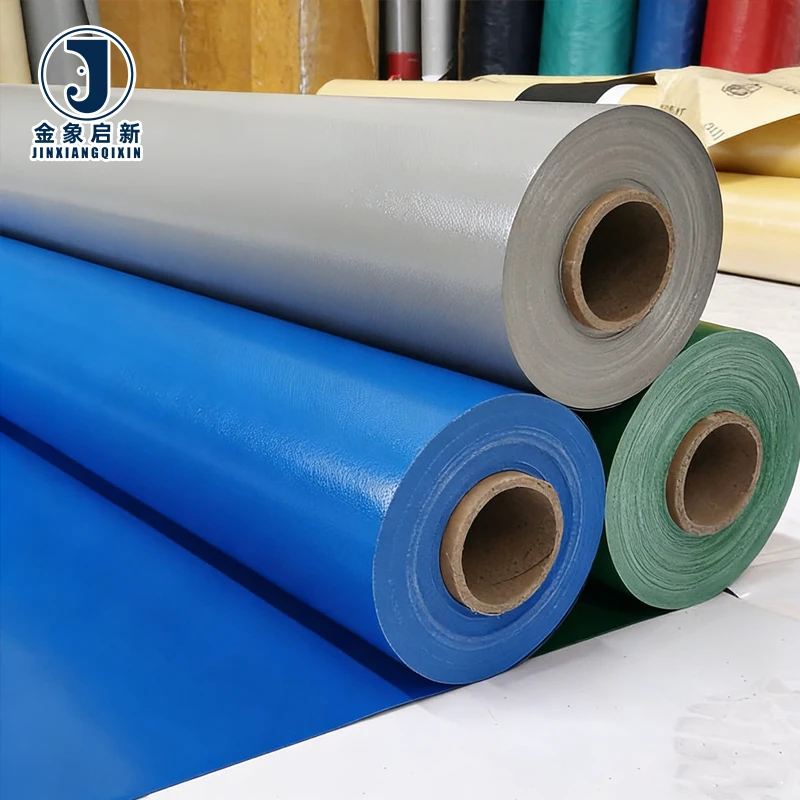
| Product Type | PVC Tarpaulin Roll |
| Material | PVC + high-strength polyester mesh fabric |
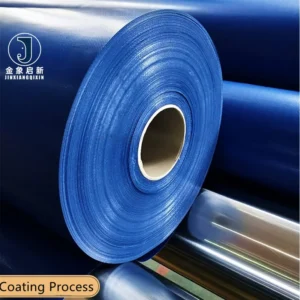
| Coating Method | Laminated technology & Hot-melt coating technology |
| Weight (GSM) | 350gsm, 420gsm, 500gsm, 550gsm, 600gsm, 750gsm |
| Total Thickness | 0.32mm, 0.35mm, 0.4mm, 0.45mm, 0.5mm, 0.65mm |
| Roll Size | 2m width × 75m length / 2.1m width × 50m length |
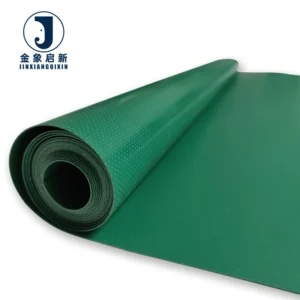
| Surface Style | Glossy surface or matt surface |
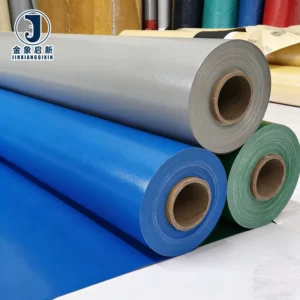
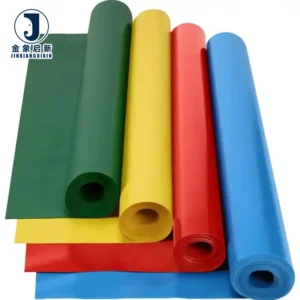
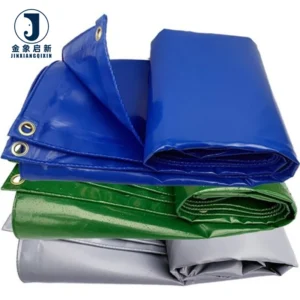
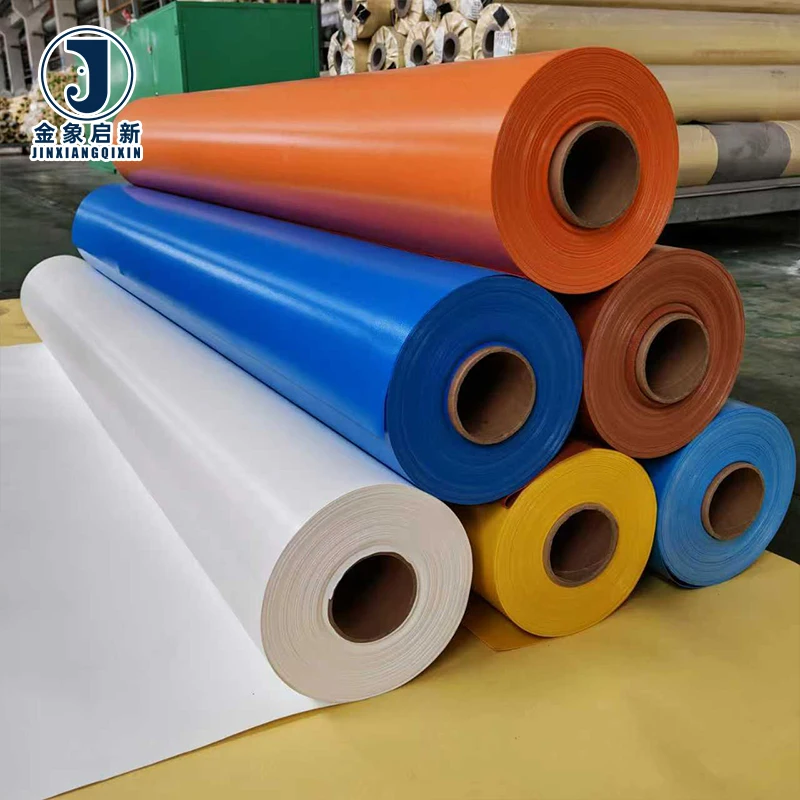
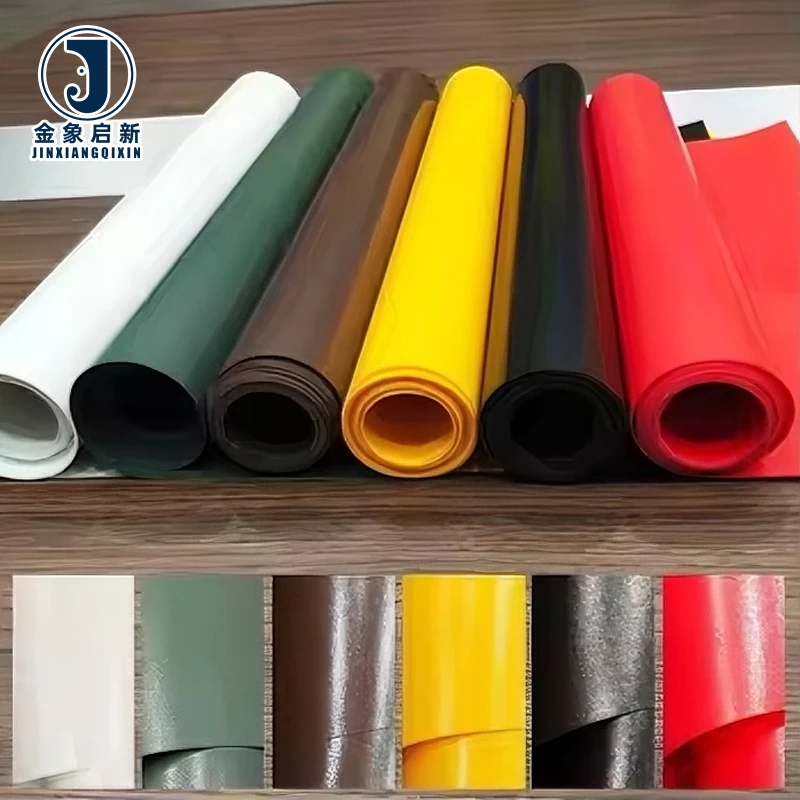
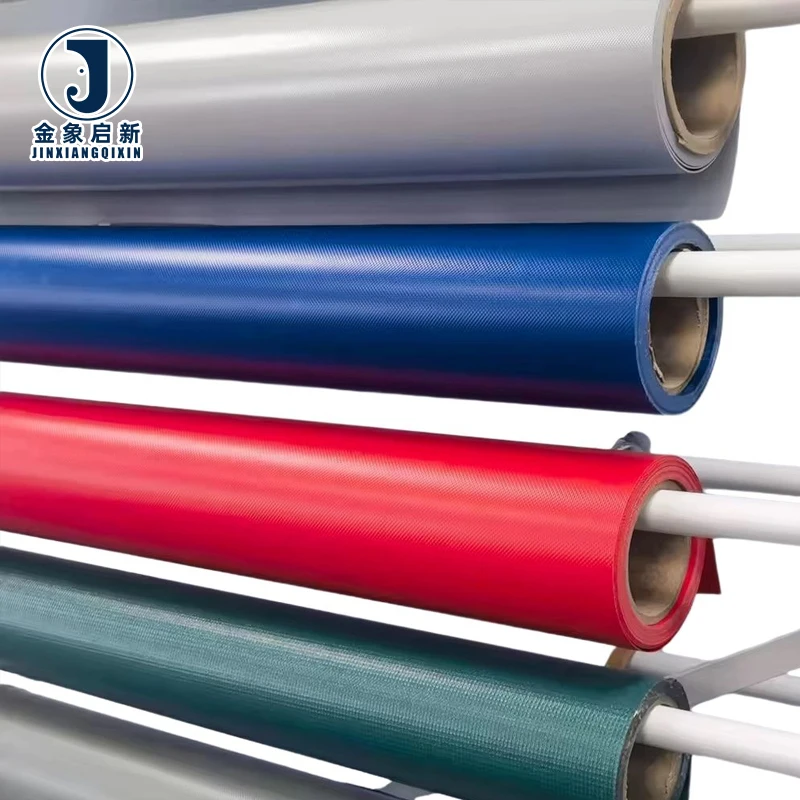
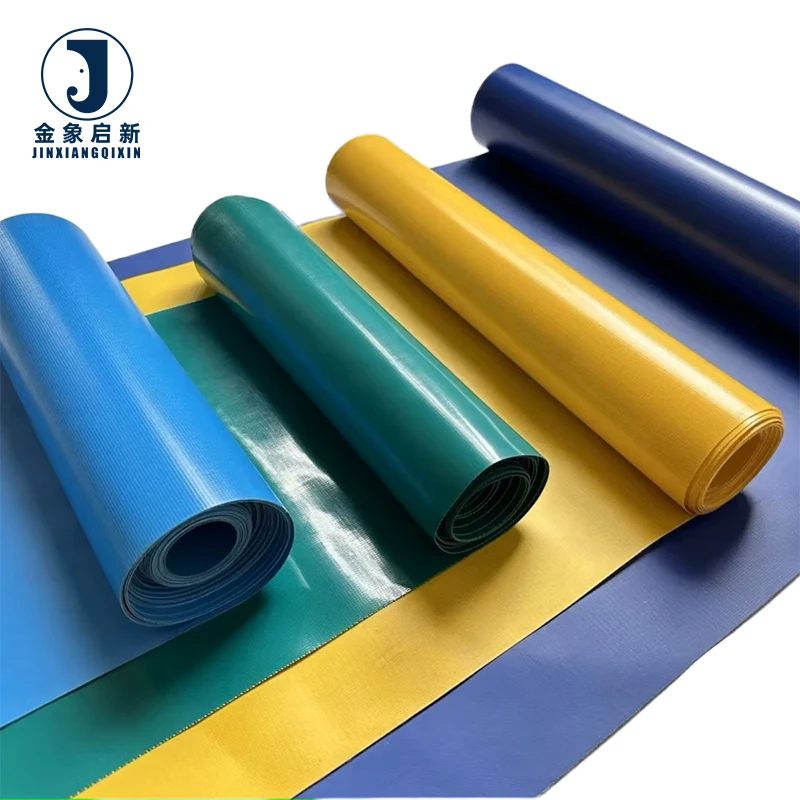
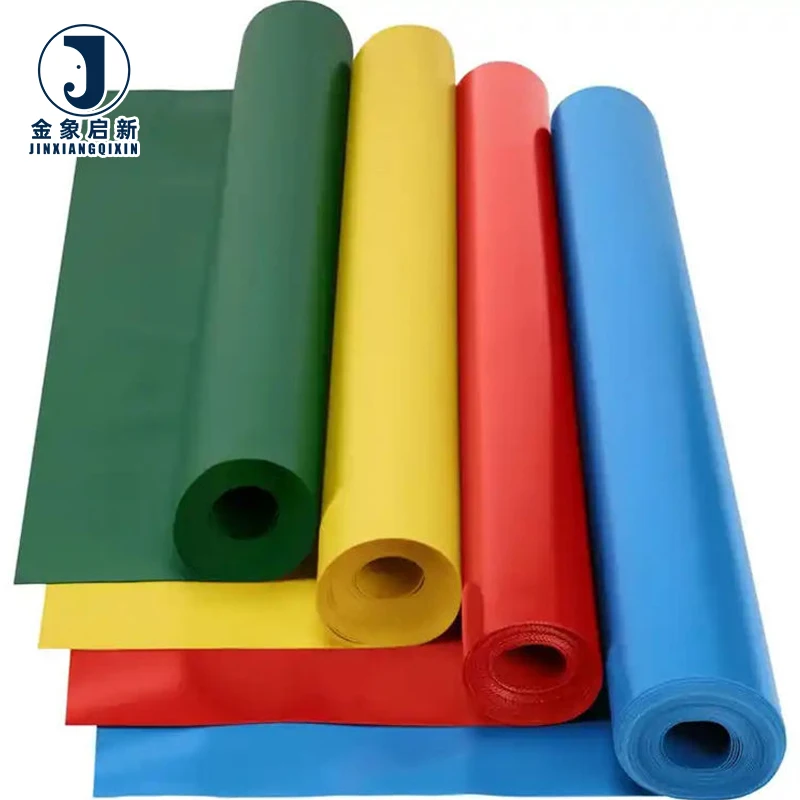
| Color | Blue, Red, Yellow, Light blue, Grey (customized) |
| Waterproof | Double-sided 100% waterproof |
| Key Features | High tension strength, high tear strength, good flexibility and adhesion strength, outstanding tearing strength for welding, cold crack resistance, anti-mildew, anti-static treatment, sunproof, best color fastness |
| Flame Retardant | Available in flame retardant grades — confirm the grade required for your market |
| Standards | ISO, CE |
Application Suitability
| Application | Exposure & Requirement |
|---|---|
| Tarpaulin distributor stock | Multiple GSM grades needed for regional resale, batch-to-batch colour consistency across orders |
| Tent and awning fabrication | Fabric bought by the roll for cutting and welding into finished structures, requires strong weld adhesion |
| Fish tank and pool liner | Continuous water contact, chemical exposure from treatment agents, puncture resistance on uneven substrates |
| Truck awning and cargo cover | Road abrasion, wind flap fatigue, UV exposure during transit and static parking |
Why Distributors Lose Customers Over Colour Drift Between Rolls
Every roll in your shipment should look identical when unrolled side by side — and that starts with pigment control at the coating stage, not after the fact.
Tarpaulin distributors importing container loads often discover colour variation only when two rolls from the same batch get cut and installed next to each other on a job site. The human eye detects hue shifts more easily on large, flat, installed surfaces than on a narrow roll sample held in the hand [NEED_CITE: colorimetric tolerance standards for coated fabric batches per ISO 105 series]. When one roll skews warmer and the next skews cooler, the end user blames the distributor, not the mill. Sourcing PVC Coated Tarpaulin Roll wholesale means the supplier’s pigment dosing and mixing discipline directly protects your reputation with fabricators and contractors downstream.
Roll-to-Roll Colour Consistency Across Bulk Shipments
Maintaining identical colour across dozens of rolls in one container requires controlled pigment batching — mixing the entire colour volume for an order in a single batch rather than topping up mid-production. PVC Coated Tarpaulin Roll wholesale orders demand this discipline because even small variations in pigment concentration become visible once the fabric is installed in large panels. The glossy or matt surface finish further amplifies or masks minor shade differences, making batch-level control essential for both finish types.
Container Loading Efficiency and Roll Dimension Planning
The two available roll dimensions — 2m × 75m and 2.1m × 50m — are configured to maximise container floor space and weight allowance. Buyers ordering PVC Coated Tarpaulin Roll wholesale benefit from planning roll counts against container payload limits before production starts [NEED_CITE: standard 40ft container payload limits for rolled textile goods]. Wider rolls reduce the number of weld seams a fabricator must make, while longer rolls cut changeover downtime on automated cutting tables. Confirming the optimal roll configuration for your container type at the inquiry stage prevents partial loads or overweight bookings.
GSM Grading and How It Maps to End-Use Selection
GSM alone does not determine how a coated fabric performs in service — it reflects the combined weight of the polyester base fabric and the PVC coating applied to both sides. A 350gsm roll may use a lighter base fabric with a thinner coat, suiting temporary covers and short-run event structures. A 750gsm roll carries a heavier base and thicker coat, absorbing more abrasion and resisting higher wind loads over longer service periods. The six available grades let distributors stock a range that covers regional demand from light-duty to heavy-duty without sourcing from multiple mills. Coating weight and base fabric denier together determine tensile and tear behaviour, so two rolls at the same GSM can perform differently if their construction splits vary.
The Hidden Cost of Ordering on Price Per Roll Without Checking Batch Documentation
Rolls that arrive lighter than the quoted GSM shift the cost burden back to the distributor — you sell by weight or area, and short weight means you absorb the gap or face a customer claim [NEED_CITE: common commercial disputes in coated fabric trade over GSM tolerance]. When anti-mildew or anti-static treatment is claimed without a supporting test report, the distributor carries the liability if a fabricator’s end user reports mould growth or static discharge in a sensitive environment. Flame retardant grades require a stated classification to pass site inspection in most commercial and public-venue applications. Ordering without securing pre-shipment inspection records and batch documentation leaves these risks entirely on the buyer’s side of the transaction.
Why Sourcing PVC Tarpaulin Rolls Here Reduces Supply Chain Risk
Three full production lines running dedicated coating operations mean your order enters the queue alongside other roll-stock production rather than competing with finished-product fabrication for machine time. The 10-person R&D team handles colour matching and sample development, producing confirmation samples before bulk coating begins. Dedicated quality checks at every production stage catch coating weight drift and surface defects before rolls reach the packing area. Pre-shipment inspection covers every roll, not a statistical sample, so GSM and visual quality are verified individually. Hot-melt coating and laminated technology together provide flexibility in matching coating adhesion to the target GSM range.
Documentation & Verification
- Material specification sheet listing GSM, base fabric construction, coating type, and colour reference per roll batch
- Weight verification per roll against the stated GSM before dispatch, recorded in the inspection log
- Roll packing list showing roll count, individual roll weight, and container loading sequence
- Certificate of origin and full customs documentation for cross-border shipment clearance
- Test reports for UV and flame retardant grades where applicable to the ordered specification
- ISO and CE certificates referenced in shipping documentation
Fabrication, Handling & Storage
- Heat-weld overlapping seams at temperatures matched to the laminated or hot-melt coating type to prevent delamination
- Store rolls upright on pallets to avoid flat spots and permanent creasing on the coated surface
- Unroll cold-weather shipments gradually — cold crack resistance helps but stiff 750gsm fabric can kink if forced open
- Cut panels using the 2m or 2.1m roll width to minimise offcut waste on standard panel dimensions
- Clean glossy surface rolls with mild detergent only; solvent-based cleaners can soften the PVC coating layer
- Allow welded seams to cool fully under tension before folding, ensuring adhesion strength holds at the bond line
What We Need From You to Quote Accurately
Provide the GSM grades and roll widths your market demands most frequently, along with annual volume estimates so production can be scheduled against raw material procurement cycles. Specify whether glossy or matt finish is standard in your region and whether flame retardant classification is required by local building or transport regulations. If custom colour matching is needed, send a physical sample or Pantone reference with your inquiry to start the pigment matching process before sampling begins.
Frequently Asked Questions
Q: How do you guarantee GSM consistency roll-to-roll within the same shipment?
A: Every roll is weighed individually during pre-shipment inspection and recorded against the quoted GSM specification. The inspection log accompanies the shipment, so you can verify that no roll falls below the agreed weight. This 100% check, not a random sample, is standard on all bulk roll orders.
Q: What is the maximum roll width available and can custom widths be ordered?
A: Standard roll widths are 2m and 2.1m, configured for container loading efficiency. Custom widths may be available depending on the coating line setup and minimum order volume — confirm your required width and quantity at the inquiry stage so feasibility can be assessed against current production scheduling.
Q: How is colour variation controlled when ordering multiple rolls of the same colour?
A: Pigment for a single order is mixed in one batch to eliminate mid-run shade drift. Rolls are produced consecutively from that batch, and visual inspection during the pre-shipment check flags any roll that deviates from the approved colour standard before packing.
Q: What documentation is provided for customs clearance at destination?
A: Each shipment includes a certificate of origin, roll packing list with weight and count, commercial invoice, and material specification sheet. ISO and CE certificates are referenced in the documentation package. Additional documents can be arranged based on the import requirements of the destination country.
Q: What is the minimum order for custom colour or flame retardant grade?
A: Minimum quantities depend on the colour complexity and treatment specification. Custom colours require a pigment batch minimum that covers the mixing setup. Flame retardant grades require confirmation of the classification your market demands — provide this at inquiry so the correct grade and its minimum run length can be quoted.