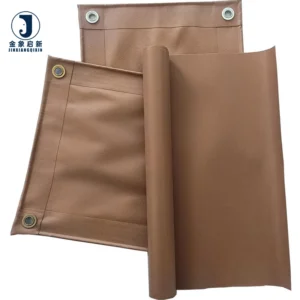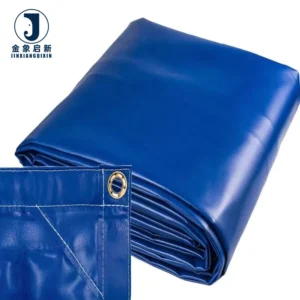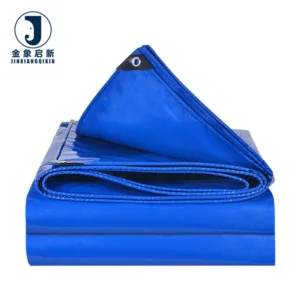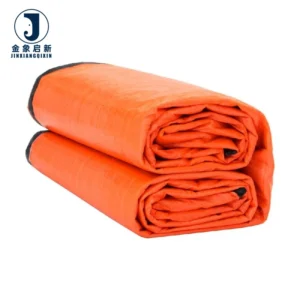
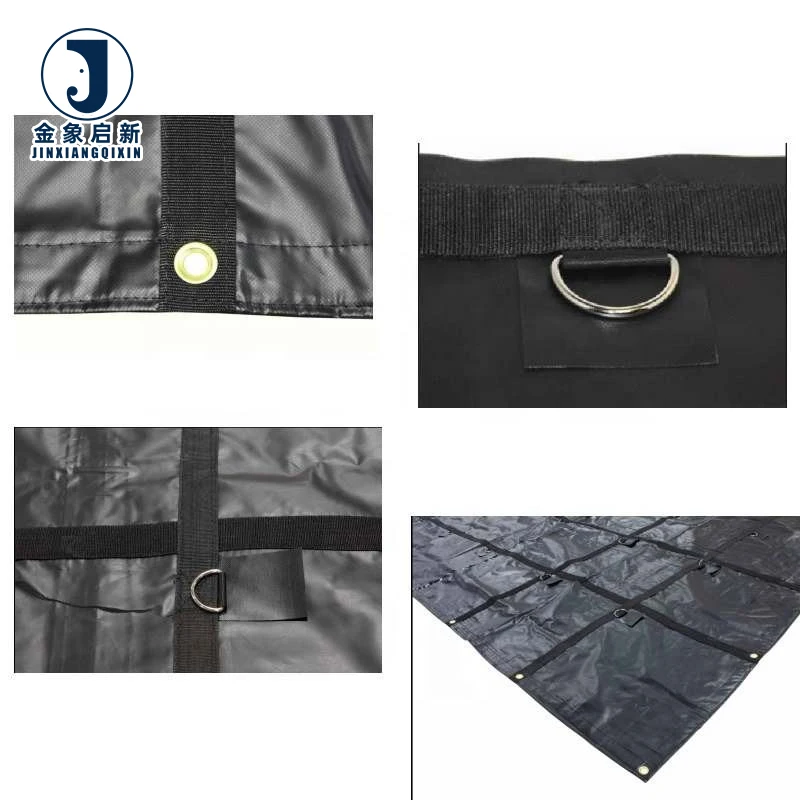
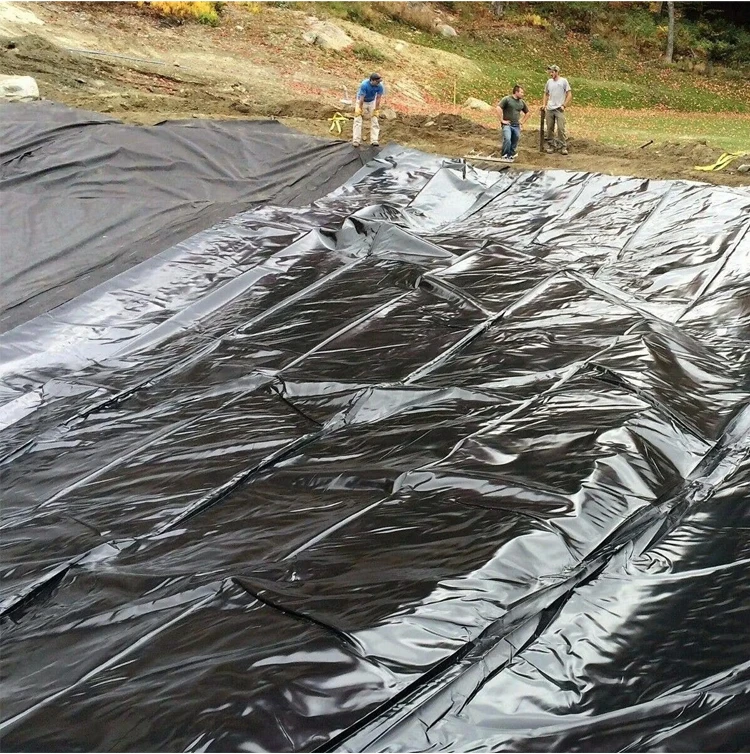
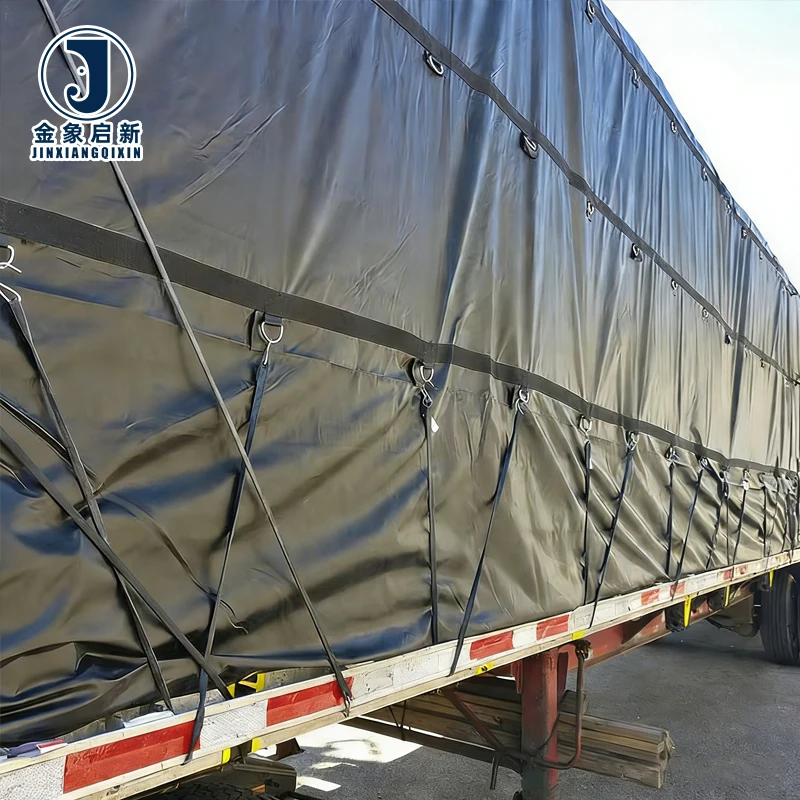
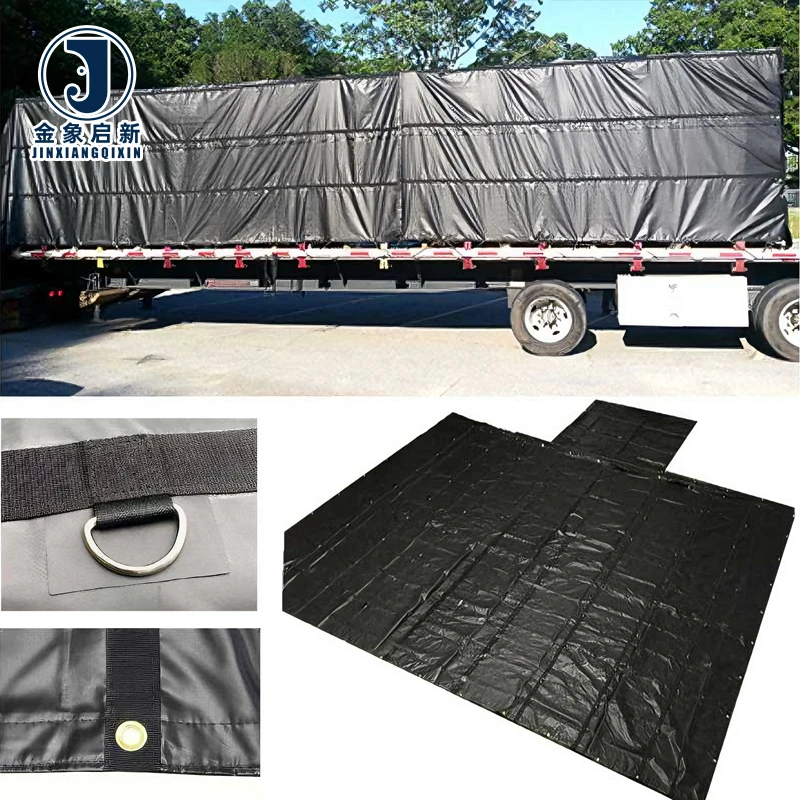
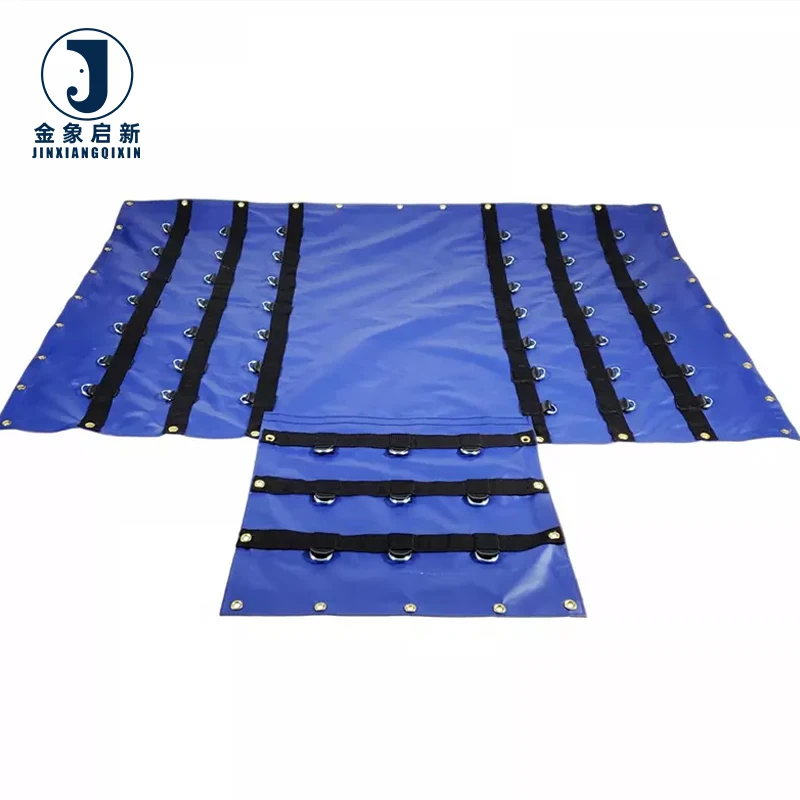
Description
Coating Weight Control — Every roll of PVC coated tarpaulin ships with a pre-shipment inspection record verifying actual coating weight against the agreed specification, eliminating the gap between quotation and arrival.
Technical Specifications
| Parameter | Value |
|---|---|
| Product Type | PVC Coated Tarpaulin |
| Material | PVC coated fabric |
| Treatment Options | Flame retardant (grade available — confirm requirement for your market); Anti-static (test basis available — confirm standard); Anti-cold; Anti-mildew |
| Weather Resistance | Suited to extended outdoor exposure |
| Strength | High tensile base fabric to resist damage during installation and flexing |
| Customization | Special treatments adopted to fit different industry requirements |
| Standards | ISO, CE certified production facility |
Application Suitability
| Application | Exposure & Requirement |
|---|---|
| Truck and trailer cargo covers | Constant road vibration, UV exposure, wind loading, rain ingress at seams |
| Side curtain fabric for fleets | Repeated flexing at tie-down points, abrasion against load edges, weather sealing |
| Pallet and equipment wrapping | Outdoor storage exposure, puncture risk from sharp corners, moisture protection |
| Transport fleet standardization | Batch colour consistency across multiple vehicles, uniform weld behaviour during fabrication |
Why Roll Consistency Matters More Than Quoted GSM
GSM on paper means nothing if it changes from the first roll to the last in the same container.
When transport fleet operators order PVC coated tarpaulin roll stock for truck cover fabrication, they expect uniform weight and colour across every roll delivered. Yet one of the most common complaints in the coated fabric trade is material arriving lighter than the quotation stated, with colour shifts visible once multiple panels are installed side by side on adjacent trailers. These inconsistencies force fabricators to re-sort, reject partial shipments, or absorb the cost of remaking covers that do not match the fleet standard. [NEED_CITE: tensile and tear test methods for coated fabrics per ISO 1421]
Batch-to-Batch Colour Matching Across Container Loads
Fleet operators replacing side curtains or cargo covers across a mixed vehicle fleet need every panel to read as the same shade under daylight. Colour variation between rolls within a single PVC coated tarpaulin roll order becomes immediately apparent when covers are fitted to trailers parked in a row. Our production process controls pigment dosing and coating temperature to maintain colour reference alignment across the full batch, so the fabric cut from roll one matches roll twenty when installed on adjacent vehicles.
Treatment Verification Before the Roll Leaves the Factory
Flame retardant and anti-static treatments are specified for compliance reasons — transport regulations, terminal safety rules, or insurance requirements. A PVC coated tarpaulin roll that claims treatment without a supporting test result creates liability at the point of inspection. We supply material specification sheets stating the exact treatment applied, with test documentation available for the grades produced. Buyers should confirm the fire classification or anti-static standard required in their operating market before placing the order. [NEED_CITE: DIN 4102 fire classification for building materials]
How Coating Weight, Base Fabric, and Treatment Interact
Coating weight alone does not determine how a PVC coated tarpaulin performs under load. The base fabric denier and weave density govern tensile and tear strength, while the PVC coating weight governs waterproofing, abrasion resistance, and UV shielding. A heavier coating on a loosely woven base will crack at flex points before a balanced specification would fail. Treatment options such as flame retardant or anti-static additives are integrated into the coating formulation, and their effectiveness depends on uniform coating application across the full roll width. This is why in-process QA checks coating adhesion and weight distribution at multiple points along each roll, not just at the start of the production run.
The Hidden Cost of Specifying on Price Per Roll Alone
A PVC coated tarpaulin roll that arrives underweight or with inconsistent coating will fail at the welded seam before the fabric body does — precisely where the cover flexes most during transit. Fabricators then face warranty claims from fleet clients who see the cover splitting after months of service rather than years. Batch colour inconsistency forces sorting and selective cutting, reducing yield per roll and pushing material costs above what a slightly higher-grade roll would have cost from the start. [NEED_CITE: common failure modes in PVC coated fabric at welded seams]
What You Receive With Each Shipment
Every roll ships from a facility with nearly 30 years focused exclusively on coated fabric production, where process control over coating weight and adhesion is built into the line rather than inspected in after the fact. Three full production lines and 36 sets of professional equipment support bulk volume with reliable scheduling. A 10-person R&D team handles custom width, treatment selection, and colour matching before production begins. Dedicated QA/QC runs at every production stage with full inspection before dispatch. Samples for custom treatment or colour requirements are developed within days so buyers can verify the material before committing to the full roll order.
Documentation & Verification
- Material specification sheet stating base fabric, PVC coating type, and colour reference per roll
- Pre-shipment inspection record confirming actual coating weight against the quoted specification
- Roll packing list with roll count, net weight, and container loading plan
- Test documentation for flame retardant and anti-static grades where applicable
- ISO and CE certificates covering the production facility
- Certificate of origin and customs documentation for cross-border shipment
Fabrication, Handling & Storage
- High-frequency welding parameters should be adjusted to the specific PVC coating weight on each roll batch
- Reinforced hem sections at tie-down points distribute load across the base fabric weave, not just the coating surface
- Store rolls upright on end caps to prevent flat-spot deformation that shows as creases when unrolled for cutting
- Unroll PVC coated tarpaulin in temperatures above freezing to avoid cold-cracking the coating surface
- Cut panels with overlap allowance for welded seams to maintain waterproof integrity at join lines
What to Include in Your Enquiry
Specify the truck or trailer models you are covering so we can recommend roll widths that minimise cutting waste and weld seams. Confirm whether flame retardant or anti-static certification is required by your operating jurisdiction and which standard applies. State your annual roll consumption and preferred colour reference so we can align production scheduling and batch consistency across repeat orders.
Frequently Asked Questions
Q: How is coating weight verified before shipment and on arrival?
A: Each roll undergoes in-process QA checks during production, with a final pre-shipment inspection confirming actual GSM against the quoted specification. The inspection record travels with the shipment documentation. Buyers can conduct independent weight verification on arrival using standard cut-and-weigh methods per ISO test protocols.
Q: How do you control colour consistency across rolls in the same order?
A: Pigment dosing and coating temperature are controlled throughout the production run to maintain the agreed colour reference. Rolls from the same batch are grouped for dispatch so that fabricators cutting multiple truck covers from one shipment see uniform colour across all panels when installed side by side.
Q: What roll widths and lengths are available for truck cover fabrication?
A: Standard and custom widths are produced to match common truck and trailer dimensions, reducing offcut waste during fabrication. Roll lengths are configured for container loading efficiency. Confirm your target vehicle models and cutting layout so we can recommend the width that maximises yield per roll.
Q: How are rolls packed for container loading and transit protection?
A: Rolls are packed on end caps with protective wrapping to prevent surface damage and edge crushing during transit. A detailed roll packing list accompanies each shipment showing roll count, net weight, and the container loading plan so buyers can verify receipt against the manifest on arrival.