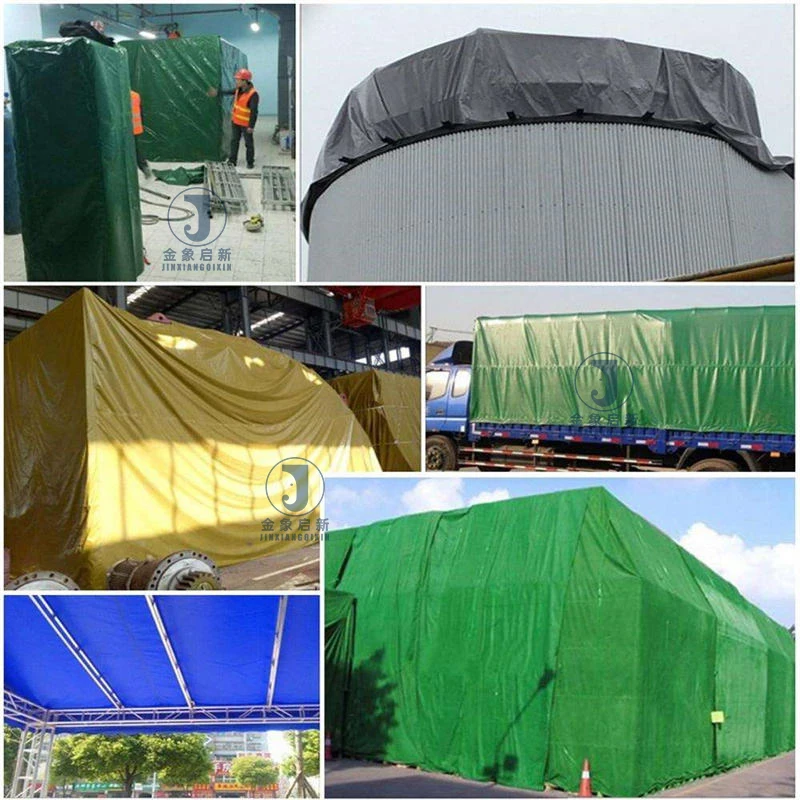
Description
Consistent Coating Weight — Every roll in your order is verified against the quoted GSM during production, so the material you fabricate matches the material you specified.
Technical Specifications
| Parameter | Value |
|---|---|
| Product Type | PVC Coated Tarpaulin Roll |
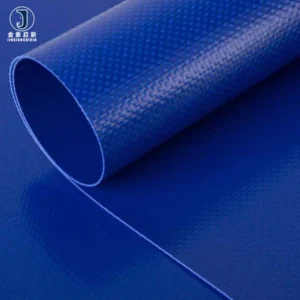
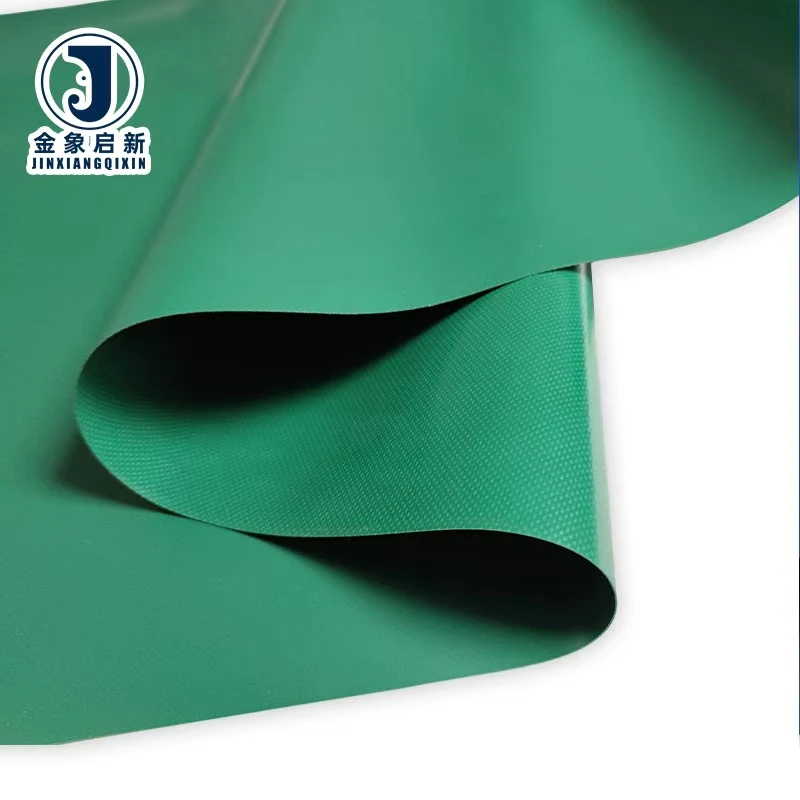
| Material | PVC coated high-strength polyester mesh fabric |
| Weight (GSM) | 350gsm / 420gsm / 500gsm / 550gsm / 600gsm / 750gsm |
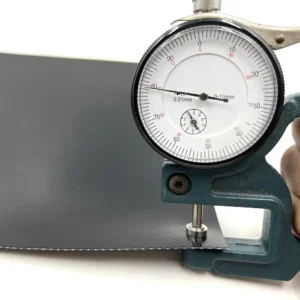
| Total Thickness | 0.32mm / 0.35mm / 0.4mm / 0.45mm / 0.5mm / 0.65mm |
| Coating Method | Laminated technology & hot-melt coating technology |
| Roll Width | 2m / 2.1m |
| Roll Length | 75m (for 2m width) / 50m (for 2.1m width) |
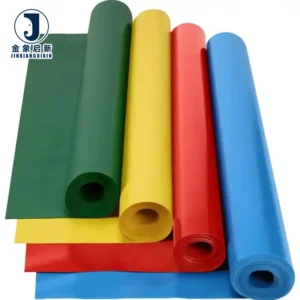
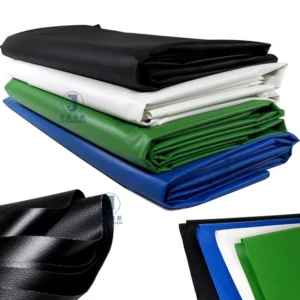
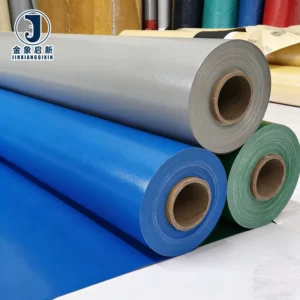
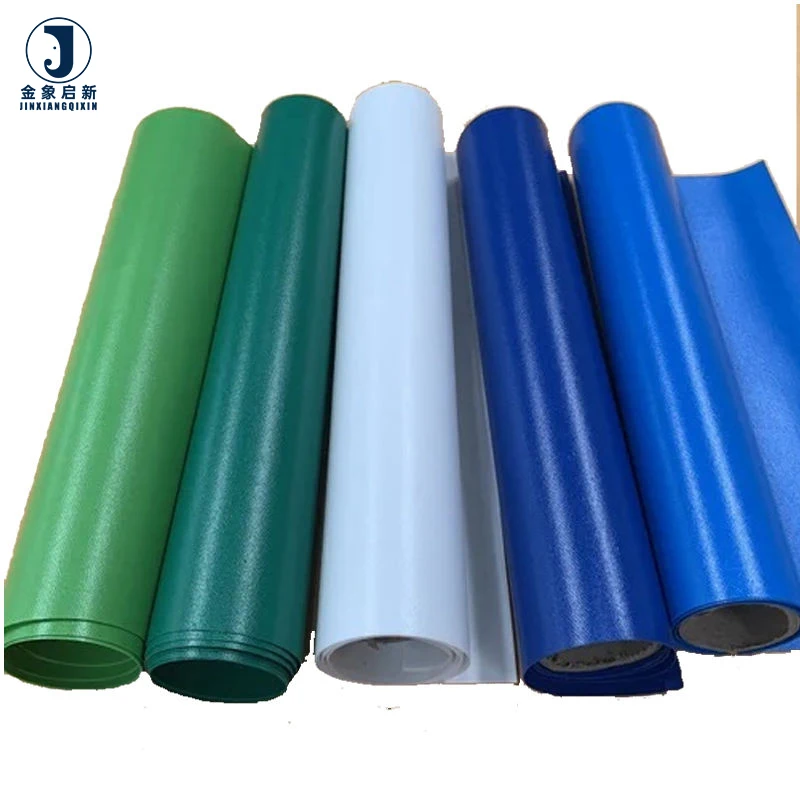
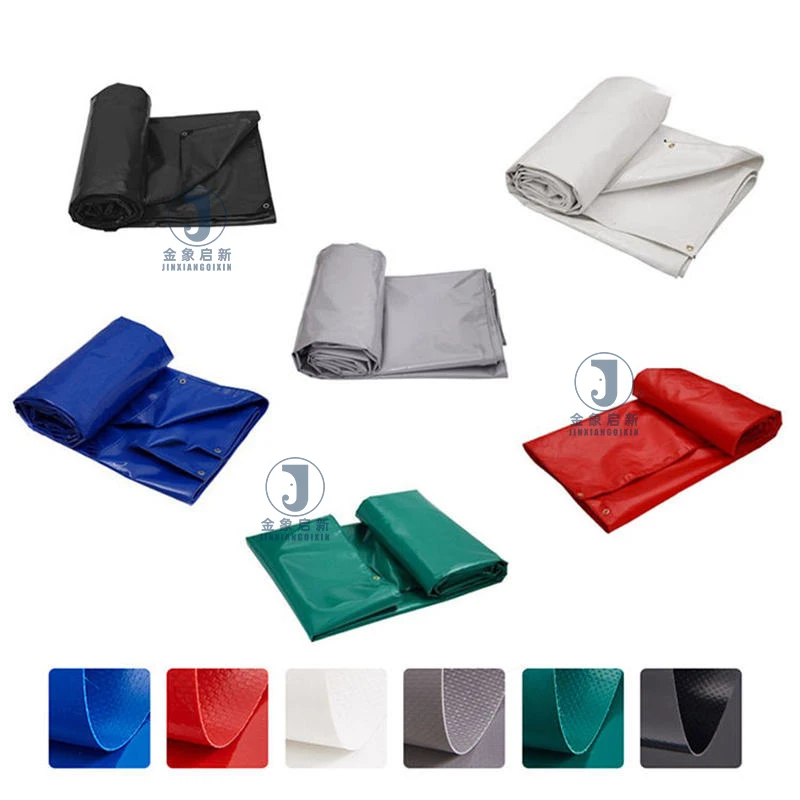
| Colour Options | Blue, Red, Yellow, Light Blue, Grey (custom colours available) |
| Waterproof | Fully waterproof coated construction |
| Flame Retardant | Available in flame retardant grades — confirm the grade required for your market |
| Anti-Static | Available as special treatment — confirm the standard required |
| Anti-Mildew | Anti-mildew treatment available |
| Anti-UV | Sunproof treatment available — confirm test basis for your region |
| Cold Crack Resistance | Cold crack resistant formulation available |
| Colour Fastness | Colour fastness treatment available — test basis on request |
| Certifications | ISO, CE |
Application Suitability
| Application | Exposure & Requirement |
|---|---|
| Tarpaulin distributor stock | Multiple GSM grades needed in consistent colour and weight for regional resale |
| Tent and awning fabrication | Roll-to-roll colour matching, reliable weld adhesion for panel joining |
| Inflatable structure manufacturing | Airtight coating integrity, hot-melt weld compatibility across long seams |
| Construction and scaffolding enclosure | Prolonged outdoor exposure, wind loading, abrasion from scaffolding contact |
| Agricultural pond and tank liner | Permanent water contact, soil chemistry, puncture risk during installation |
| Truck awning and canopy production | UV exposure, repeated deployment flexing, road debris abrasion |
Why Colour Varies Between Rolls and What We Do About It
Batch-to-batch colour drift is a coating-line control problem, not a dye problem. When rolls from the same PVC coated tarpaulin roll wholesale order show visible shade differences side by side, the root cause is usually inconsistent pigment dispersion or uneven coating thickness across the production run [NEED_CITE: coating weight variation and colour consistency in PVC fabric production]. For a distributor holding stock or a fabricator cutting panels that will be joined into a single structure, that mismatch means customer complaints or wasted material. Our in-process QA checks pigment loading and coating weight at defined intervals across the run, and we hold approved colour swatches against which every roll is compared before packing. The goal is simple: every roll in your container matches the one beside it, so your downstream customers see no difference when two rolls are installed next to each other.
Roll Width and Length Optimised for Container Loading
Our PVC coated tarpaulin roll wholesale stock ships in two standard configurations: 2m × 75m and 2.1m × 50m. These dimensions are not arbitrary — they are calculated against standard 20-foot and 40-foot container internal dimensions to maximise roll count per shipment. A wider roll means fewer welds and seams during fabrication, which directly reduces labour cost for tent and awning makers. For distributors, consistent roll dimensions mean predictable warehouse racking and straightforward inventory management by grade and colour.
Coating Technology and What It Means for Your Fabrication Line
The choice between laminated and hot-melt coating technology affects how the fabric behaves when you heat-weld it. Hot-melt coated rolls tend to show more consistent adhesion at the weld line because the PVC coating bonds with the polyester mesh at a molecular level during production. Laminated rolls, where PVC film is bonded to the base fabric under heat and pressure, offer a cost advantage on lighter grades. Understanding which coating method sits behind your roll stock lets your fabrication team dial in weld temperature and speed with confidence rather than trial and error [NEED_CITE: hot-melt versus laminated coating adhesion and weld behaviour in PVC tarpaulin].
Reading GSM, Thickness and Base Fabric Together
GSM alone tells you how much material is present per square metre, but it does not tell you how that weight is distributed between the polyester base fabric and the PVC coating. A 550gsm roll with a high-denier, tightly woven base will resist tearing differently from a 550gsm roll where most of the weight comes from a thick coating layer over a lighter mesh. The six available grades — from 350gsm at 0.32mm through to 750gsm at 0.65mm — cover a range where both base fabric density and coating weight increase together, giving a predictable relationship between weight and mechanical performance. Thicker coating provides better abrasion resistance and waterproofing, while a denser base fabric improves tensile and tear strength. Choosing the right grade means matching both properties to the exposure conditions the finished product will face.
The Hidden Cost of Specifying on GSM Alone
Fabricators who select roll stock based only on the cheapest GSM quote often discover the real cost later. A roll that is lighter than its quoted weight means thinner coating, which leads to premature pinhole leaks in pond liners or faster UV degradation on outdoor structures. Inconsistent coating weight across a roll also creates weak spots at weld lines — the seam fails before the fabric does, typically at the point where the load flexes most [NEED_CITE: weld failure versus fabric failure in coated polyester tarpaulin]. For distributors, underweight rolls mean customer returns and eroded trust. Our pre-shipment inspection records document the verified weight of every roll grade in your order before it leaves the factory, so you know what you are receiving matches what you ordered.
Why Distributors Source Roll Stock Here
Three full production lines give us the capacity to fulfil container-quantity orders across multiple GSM grades in a single shipment, so you do not have to place separate orders with different suppliers. A 10-person R&D team handles custom colour matching and sample development within days, letting you confirm shade and hand-feel before committing to a bulk run. Dedicated QA at every production stage means coating weight, colour consistency and surface quality are checked in-process, not just at the packing bench. Every consignment ships with ISO and CE certificates, a material specification sheet for each roll grade, and a packing list with roll count and weight — the documentation your import team needs to clear customs without delay.
Documentation & Verification
- Material specification sheet stating exact GSM, base fabric construction and coating type for each roll grade
- Pre-shipment inspection record documenting weight verification per roll before dispatch
- Roll packing list with roll count, net weight and dimensions for container loading planning
- ISO and CE certificates provided with every shipment
- Test reports for UV and flame retardant grades where applicable to your order
- Certificate of origin and customs documentation support included
Fabrication, Handling & Storage
- Hot-melt coated grades weld reliably at standard PVC tarpaulin temperatures — test weld a sample strip before running full panels
- Store rolls upright on pallets to prevent flat-spot deformation on the 2m and 2.1m widths
- Allow cold-stored rolls to reach workshop temperature before unrolling to avoid coating crack on lighter 350gsm grades
- Use sharp rotary blades for cutting 600gsm and 750gsm grades to prevent fraying at the polyester mesh edge
- Clean finished products with mild detergent only — solvent-based cleaners may degrade the PVC coating surface
Planning Your Roll Stock Order
To specify the right PVC coated tarpaulin roll wholesale order for your operation, we need to know the GSM grades and roll widths you currently stock or plan to fabricate, along with your annual volume by grade. If your market requires specific fire classification or anti-static certification, share the standard that applies in your region so we can confirm available treatments. For custom colours or printed branding, provide a Pantone or RAL reference and we will develop a sample for your approval before the bulk run.
Frequently Asked Questions
Q: How is GSM verified on arrival and what documentation supports the quoted weight?
A: Every roll is weighed during our pre-shipment inspection and the results are recorded in the inspection report that accompanies your shipment. You can re-weigh a sample roll on arrival using a calibrated scale and a measured square-metre cut to cross-check. If any discrepancy is found, the inspection record gives both parties a clear baseline for resolution.
Q: How do you ensure colour consistency across multiple rolls in one order?
A: We hold an approved colour swatch for each shade in production. During coating, pigment dispersion and coating thickness are checked at intervals, and every finished roll is visually compared against the master swatch before packing. This process applies across all rolls in your container, so shade variation between adjacent rolls is controlled.
Q: Which roll width and length combination optimises my container load?
A: The 2m × 75m configuration yields more linear metres per container, while the 2.1m × 50m option suits fabricators who need wider panels with fewer weld seams. We can provide a container loading plan showing roll count and weight for either option, helping you compare total yield against freight cost before confirming your order.
Q: What are the minimums and lead times for custom width, colour or print?
A: Custom colours and printed branding require a sample approval stage before bulk production. Minimum order quantities depend on the specific width and treatment combination you need. Share your target specification and annual volume, and we will confirm the minimum, lead time and sample timeline for your requirements.
Q: How are rolls packed and loaded to prevent transit damage?
A: Rolls are packed on pallets in a vertical or horizontal arrangement depending on container configuration, with protective wrapping to prevent abrasion between rolls during sea freight. The packing list included with your shipment details the roll count, weight and loading sequence so your warehouse team can plan unloading and storage on arrival.