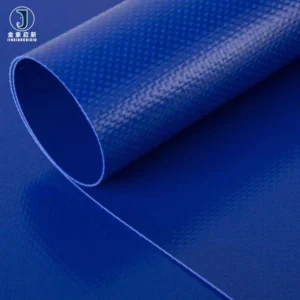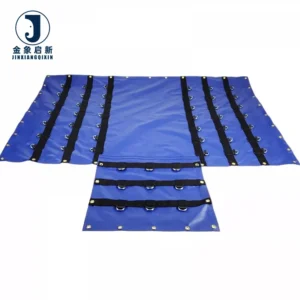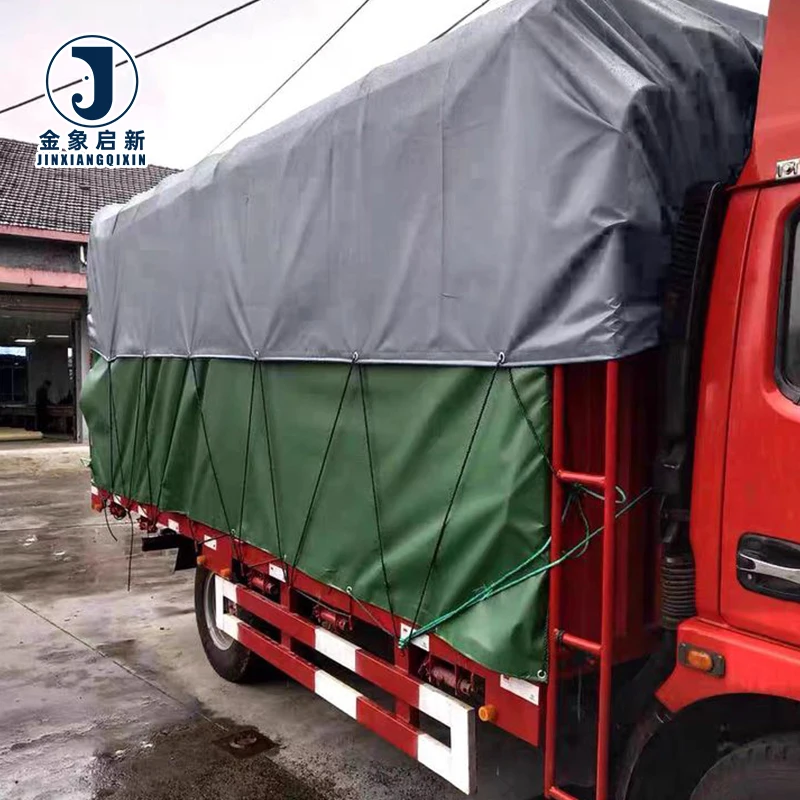
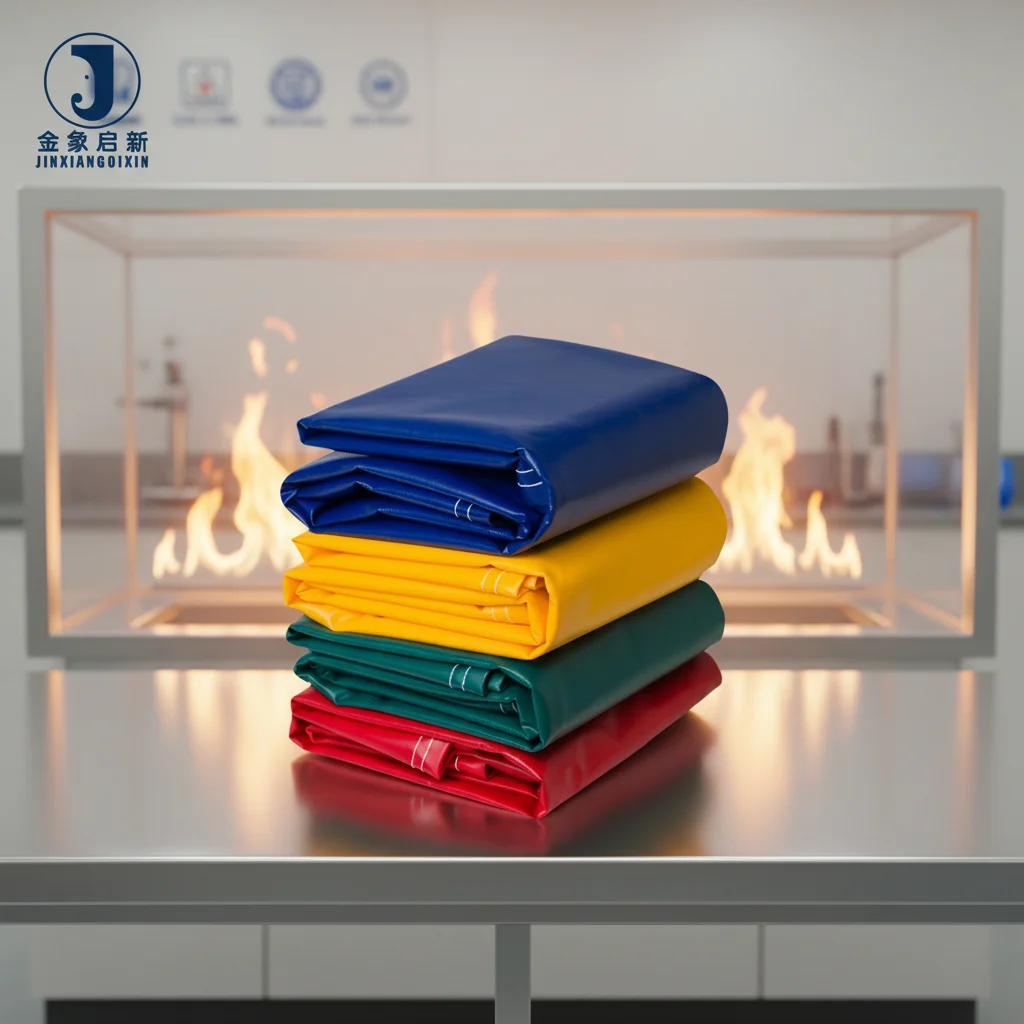
Description
Consistent Roll-to-Roll Supply — Three full production lines with 100% pre-shipment inspection ensure every PVC tarpaulin roll matches its stated specification before it leaves the factory.
Technical Specifications
| Parameter | Value |
|---|---|
| Product Type | PVC Coated Tarpaulin |
| Material | 100% high toughness polyester yarn with PVC coating |
| Coating Technology | Lamination technology and hot melt coating technology |
| Weight Options | 400–500 g/m² (medium) / 700–1000 g/m² (heavy-duty) / 1100–1500 g/m² (super heavy) |
| Thickness | 0.35–0.45 mm (medium) / 0.70–1.0 mm (heavy-duty) / 1.2–1.5 mm (super heavy) |
| Base Fabric Denier | 500D (medium) / 1000D (heavy-duty) / 500D–2000D (super heavy) |
| Tensile Strength (N/5cm) | Warp 1500–2000 / Weft 1200–1800 (medium); Warp 2000–2500 / Weft 1800–2200 (heavy-duty); Warp 2500–3000 / Weft 2200–2800 (super heavy) — test standard available on request |
| Surface Finish | Available in glossy or matte finish |
| Flame Retardant | Available in flame retardant grades — confirm the grade required for your market |
| Anti-Static | Anti-static treatment available — confirm the standard required for your application |
| UV Treatment | Anti-UV treatment available — test basis available on request |
| Additional Features | Cold resistant, mold proof, waterproof |
| Weather Resistance | Suited to extended outdoor exposure |
| Color Fastness | Rated best grade per supplier — test basis available on request |
| Standards | ISO, CE |
Application Suitability
| Application | Exposure & Requirement |
|---|---|
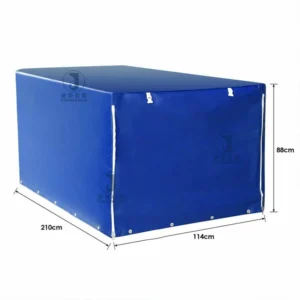
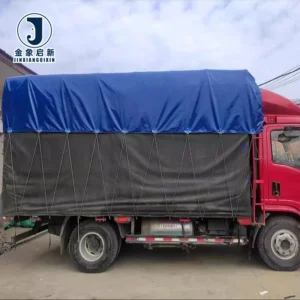
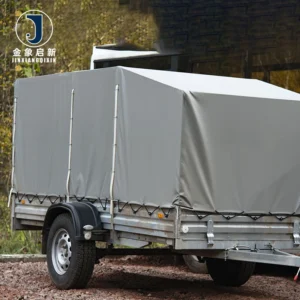
| Truck side curtain and trailer cover | Constant flexing at load points, road abrasion, UV exposure, wind-driven rain ingress |
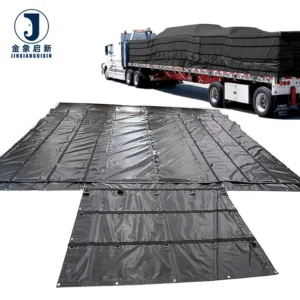
| Heavy truck tarpaulin and flatbed cover | High tensile loads during tie-down, repeated folding and unfolding, temperature cycling |
| Engineering protective cloth and industrial pipe canopy | Prolonged outdoor weathering, dust and moisture barrier, occasional contact with chemicals |
| Tensioned structural fabric and inflatable structure | Sustained biaxial tension, UV exposure, wind uplift, air-holding integrity at seams |
Why Bulk PVC Tarpaulin Roll Buyers Need More Than a GSM Figure on the Quotation
Verified weight, matched colour, and documented coating adhesion are what separate a reliable roll from a container of surprises.
When sourcing PVC tarpaulin roll by the container load, the gap between the quoted GSM and the weight that arrives on the dock can turn an entire shipment into dead stock. Roll-to-roll colour variation becomes visible the moment two panels hang side by side on a trailer, and welded seams that fail before the fabric itself does are almost always traced back to inconsistent coating thickness across the batch [NEED_CITE: common failure modes in coated fabric supply chains].
Roll-to-Roll Consistency Is Where Volume Buyers Win or Lose
For tarpaulin distributors and transport equipment builders, a single order often runs to multiple container loads of PVC tarpaulin roll. Every roll must cut, weld, and drape identically — otherwise the finished cover shows shade banding or the welding operator has to adjust heat settings from one roll to the next. Batch consistency in coating weight, colour reference, and base fabric tension is the difference between a smooth production run and a line that stops every hour for re-calibration.
Container Loading Efficiency and Width Planning
Buying by the roll means container space is a cost variable. Standard and custom widths are available to match your cutting pattern, reducing off-cut waste and maximising the number of usable linear metres per container. When the PVC tarpaulin roll width aligns with your most common panel dimension, you eliminate the longitudinal weld that would otherwise sit at the highest-stress point on a side curtain [NEED_CITE: weld placement and stress distribution in side curtain design].
Coating Adhesion and Its Effect on Fabrication Yield
Hot melt coating and lamination technology produce a bond between the PVC layer and the polyester base that directly determines how well the material holds together at a welded seam. Poor adhesion means the coating delaminates under the heat bar, creating a weak line that peels open under load. Consistent coating weight across the full roll width keeps the welding operator within a stable process window, reducing rework on the shop floor.
Reading the Specification Sheet Beyond the Weight Number
GSM alone does not predict how a PVC coated tarpaulin will perform in service. A 1000D base fabric with a tight weave delivers higher tear resistance than a 500D construction at the same weight, because the yarn density resists crack propagation once a puncture starts. Coating method matters equally: hot melt lamination typically produces stronger peel resistance than knife-over-roll coating at comparable thickness, which translates to fewer delamination failures at hem lines and eyelet patches. The denier, weave density, and coating technology must be read together — any one number in isolation gives an incomplete picture of the fabric’s real-world behaviour [NEED_CITE: relationship between base fabric construction and coating adhesion in PVC tarpaulins].
The Hidden Cost of Overlooking Batch Documentation
When a roll shipment arrives without a material specification sheet or pre-shipment inspection record per roll, the buyer has no way to verify GSM, coating weight, or colour reference against the original quotation. The result is often a dispute that delays container clearance, forces a partial re-order, or requires on-site re-sorting of rolls by shade. For fleet operators producing covers in-house, a single mismatched roll can shut down a production bay while the operator waits for a replacement — a cost that far exceeds the price difference between a documented and an undocumented supply [NEED_CITE: cost of supply chain documentation gaps in industrial textiles].
Procurement Advantages Built Into Every Roll
Dedicated QA and QC stages at every point of production mean coating weight and colour are checked before the roll is wound, not after it is packed. Three full production lines and 36 sets of professional equipment allow the factory to run bulk PVC tarpaulin roll orders with stable on-time delivery even during peak demand periods. The 10-person R&D team supports custom width, colour matching, and pattern printing requests with samples developed within days, so buyers can confirm the roll before committing a full container.
Documentation & Verification
- Material specification sheet stating GSM, base fabric denier, and coating weight for each roll in the shipment
- Pre-shipment inspection record confirming 100% inspection of colour, weight, and coating adhesion before dispatch
- Roll packing list with container loading details by roll count and net weight for logistics planning
- Test reports for UV and flame retardant treatments supplied where applicable to the grade ordered
- Certificate of origin and customs support documentation included with every export shipment
Fabrication, Handling & Storage
- Hot melt coated rolls weld consistently across standard impulse and hot-air settings — calibrate to the specific GSM grade received
- Store rolls upright on pallets to prevent flat-spot creases that transfer into the finished truck cover panel
- Unroll and allow PVC coated tarpaulin to acclimatise before fabrication in cold-weather transit conditions
- Matte finish surfaces accept solvent-based ink printing with good adhesion — test ink compatibility on a sample first
- Plan cutting layouts around the ordered roll width to minimise longitudinal welds on high-flex side curtain panels
What to Include in Your Inquiry
Provide the target application, expected environmental exposure, and any fire or anti-static compliance requirements for your market. Specify the roll width, GSM grade, and estimated annual volume so we can confirm availability and container loading options. If custom colour matching or printed branding is required, send a reference sample or Pantone code so we can develop a production roll sample for your approval before the main order runs.
Frequently Asked Questions
Q: How can I verify the GSM of each roll when the shipment arrives?
A: Every roll is weighed and inspected before dispatch, and a pre-shipment inspection record is included with the shipment documentation. You can cross-check the roll packing list against physical weight on receipt. If a discrepancy is found, the inspection record provides the baseline data needed for a swift resolution.
Q: How do you control colour consistency across multiple rolls in one order?
A: All rolls in a single order are matched to one colour reference and produced within the same batch run. The 100% pre-shipment inspection process checks each roll against that reference before packing, so shade banding between adjacent panels on a trailer or structure is avoided.
Q: What roll widths and container loading options are available for bulk orders?
A: Custom and standard widths are available to match your cutting pattern and reduce off-cut waste. The roll packing list provides container loading by roll count and net weight, allowing you to plan logistics and warehouse space before the shipment departs.
Q: Are flame retardant and anti-static treatments certified to specific standards?
A: Flame retardant and anti-static treatments are available in multiple grades. The specific grade and test standard applicable to your market or job-site requirement should be confirmed at the inquiry stage so the correct treatment and supporting documentation are included with your order.
Q: Can I order custom colour or printed branding on roll stock?
A: Yes. Custom colour matching and pattern printing are available on roll stock. A production sample is developed for your approval before the full order runs, ensuring the colour and print quality meet your specification across the entire batch.