Description
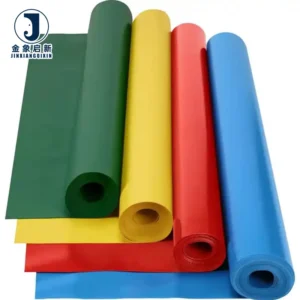
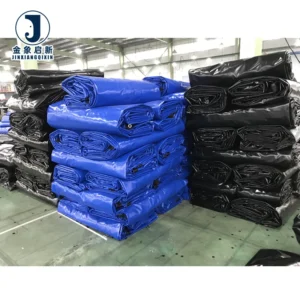
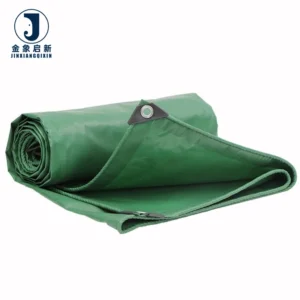
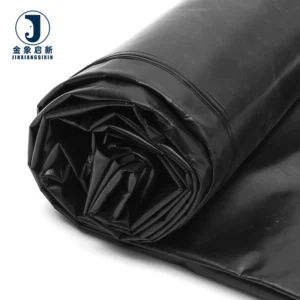
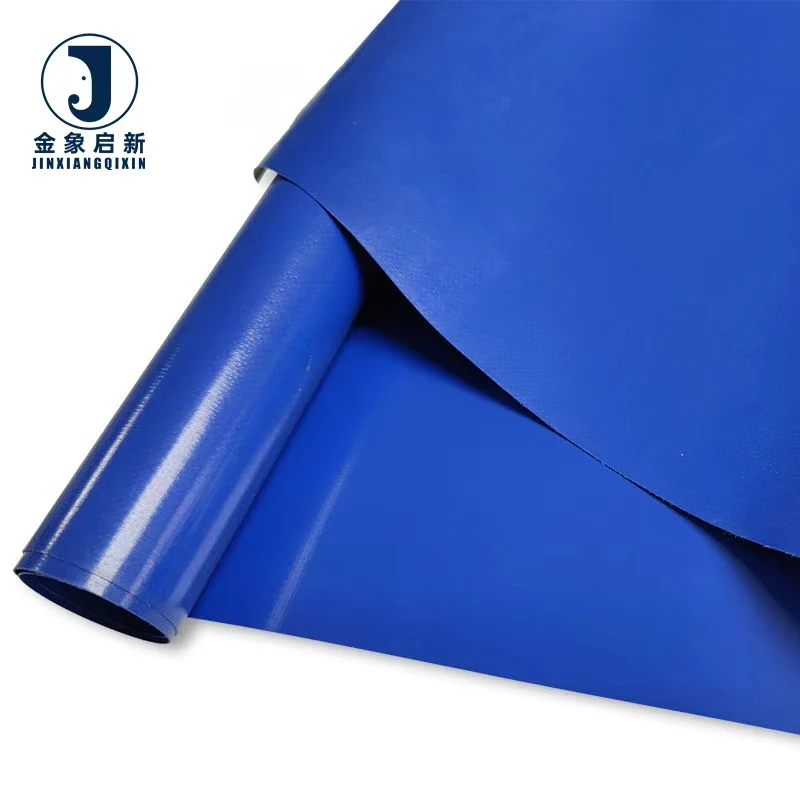
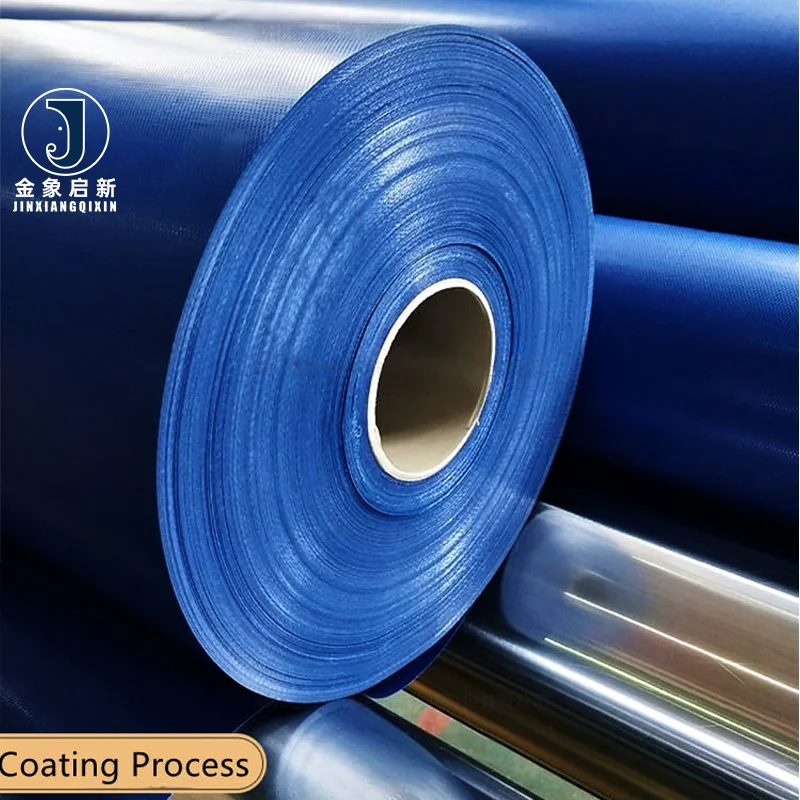
Roll-Stock Consistency — Three dedicated production lines maintain batch-to-roll colour and weight uniformity across every PVC tarpaulin roll dispatched, backed by 100% pre-shipment inspection.
Technical Specifications
| Parameter | Value |
|---|---|
| Product Type | PVC Coated Tarpaulin |
| Material | PVC coated polyester fabric; HDPE weaving with LDPE lamination option |
| Weight (GSM) — PVC | 400–500 (medium) / 700–1000 (heavy) / 1100–1500 (super heavy) |
| Weight (GSM) — PE | 50–220 |
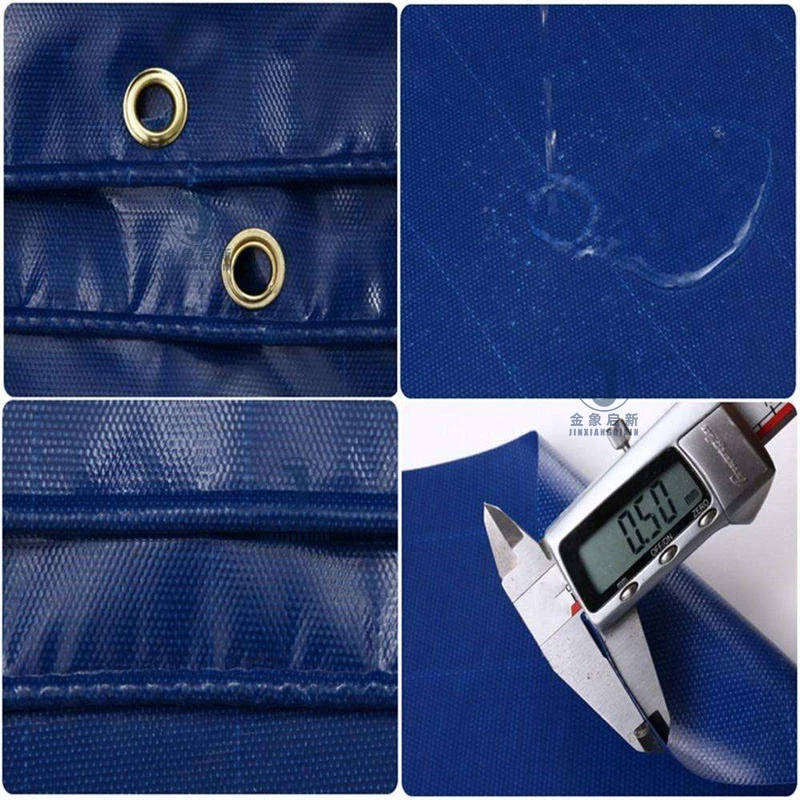
| Thickness | 0.35–0.45 mm (medium) / 0.70–1.0 mm (heavy) / 1.2–1.5 mm (super heavy) |
| Base Fabric Denier | 500D / 1000D / 500D–2000D |
| Tensile Strength (N/5cm) | Warp 1500–3000 / Weft 1200–2800 (varies by grade, test basis not stated in source) |
| Roll Width | 2 m, 4 m, 6 m / 6 ft, 8 ft, 10 ft, 12 ft |
| Roll Length | 100 yards, 100 meters, or custom |
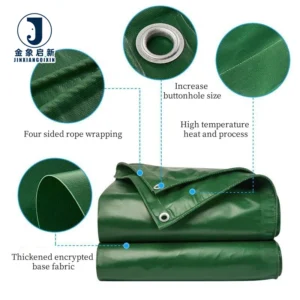
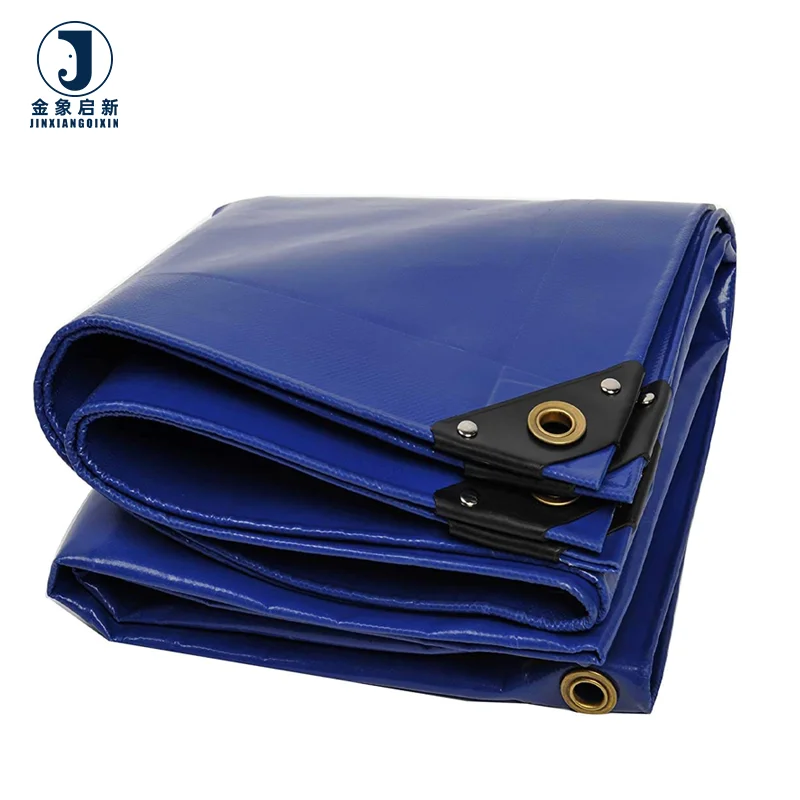
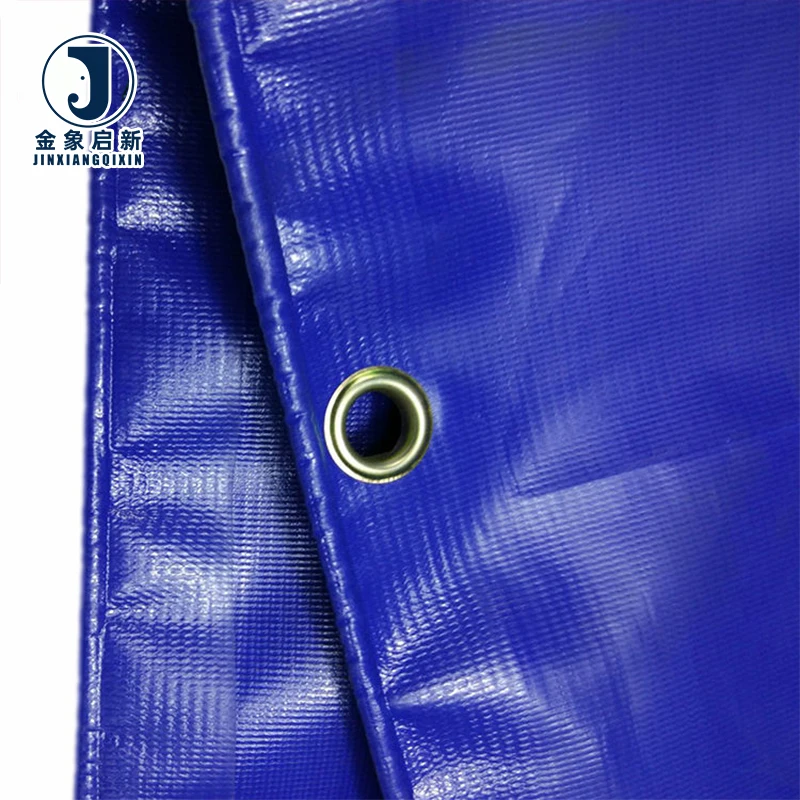
| Edge Finishing | PP rope reinforced hem, galvanized eyelets at 3 ft / 1 m intervals, reinforced plastic corners (finished tarps) |
| UV Treatment | Available (test basis not stated in source) |
| Anti-Mildew | Mildew proof and anti-aging (test basis not stated in source) |
| Certifications | ISO, CE |
Application Suitability
| Application | Exposure & Requirement |
|---|---|
| Truck side curtain and flatbed cover | Constant flexing, road abrasion, wind load, UV exposure |
| Tent and awning fabrication | Tensioned spans, weather cycling, repeated assembly and tear-down |
| Inflatable and membrane structure | Air pressure retention, seam welding integrity, outdoor weathering |
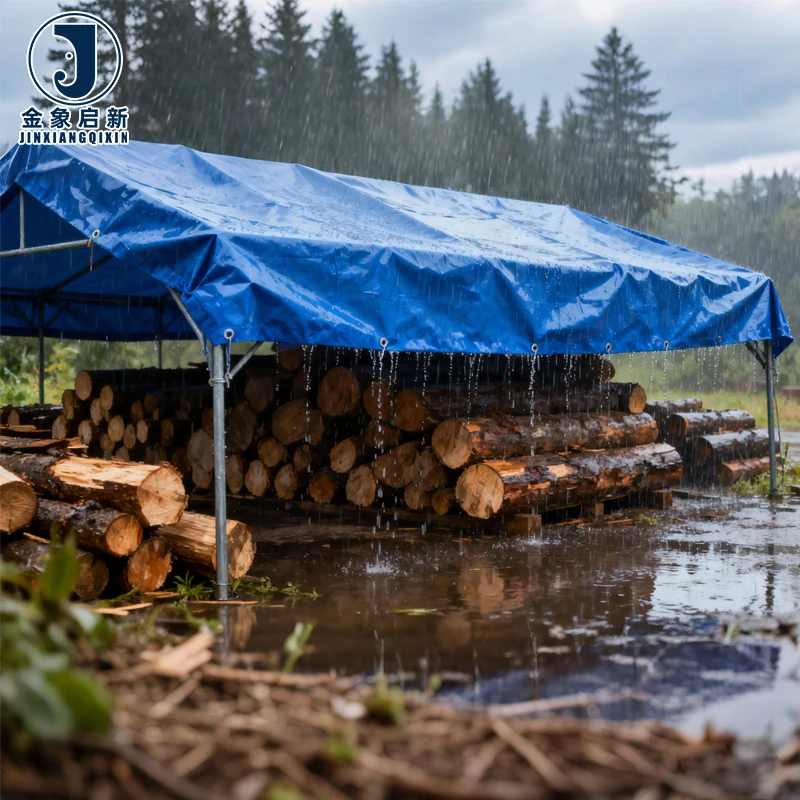
| Lumber, steel and coil tarp | Heavy point loads, sharp edge contact, tie-down strap abrasion |
| Industrial pipe canopy and protective cloth | Moisture ingress, chemical dust, moderate mechanical contact |
| Pond and reservoir liner (PE range) | Permanent water contact, soil chemistry, puncture risk |
Why a Quoted GSM Does Not Guarantee What Arrives at Your Dock
Every PVC tarpaulin roll is weighed and measured against the specification sheet before it leaves the factory.
Distributors loading full containers often discover after customs clearance that one or two rolls in a batch sit well below the quoted weight. That shortfall may not be visible until a fabricator cuts into the material and notices the hand-feel is wrong, or worse, until a truck cover fails under load six months into service [NEED_CITE: pre-shipment weight verification methods for coated fabric rolls]. Batch consistency is what separates a reliable wholesale supply from a costly rework cycle, and it starts with documented inspection at the production stage, not a spot-check at the port of loading.
Roll Width Strategy and Slitting Waste
Stock widths of 2 m, 4 m and 6 m cover the majority of side curtain and flatbed cover panels without requiring a longitudinal weld. When a fabricator orders a PVC tarpaulin roll in a width that matches the finished panel dimension, the number of heat-welded seams drops and the overall cutting yield improves. Custom widths are available on request, which matters when a production run targets a specific trailer model where even a 10 cm reduction in off-cut translates into measurable material savings across hundreds of covers.
Colour Matching Across a Multi-Roll Shipment
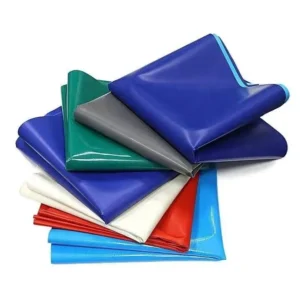
Shade variation between rolls produced in different batches is a frequent complaint from fabricators who install two panels side by side on the same trailer. Controlling pigment dispersion and coating temperature within a single production run keeps the colour reference stable from the first roll to the last [NEED_CITE: colour consistency measurement methods for PVC coated fabrics]. Buyers specifying a Pantone or RAL reference should request a lab-dip sample before committing to container-load volume, then verify the shade on the pre-shipment inspection record against that approved sample.
Reading the Specification Sheet Beyond GSM
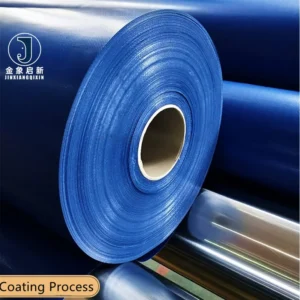
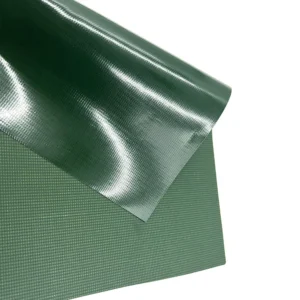
GSM alone does not predict how a coated fabric behaves under load. A 650 g/m² roll built on a 1000D base fabric with a tight weave will outperform a 650 g/m² roll woven from 500D yarn with a looser construction, because the higher denier and denser weave resist tear propagation. The PVC coating method also matters: dipping coating produces a fully encapsulated mesh with strong adhesion between yarn and compound, supporting repeated flexing without delamination, while lamination bonds a film layer to the base and may separate under sustained peel stress. Warp and weft tensile values declared across the medium, heavy-duty and super heavy tiers indicate how the fabric distributes load directionally — a critical input when designing panels that will be tensioned or welded. Roll width and length together determine how many linear meters arrive per container, and any mismatch with the cutting table length forces additional joins.
The Hidden Cost of Specifying on Price Per Kilogram Alone
A lighter roll that passes the initial visual check can still fail when a welded seam peels under tension, because insufficient coating weight reduces the thermal bond area at the joint. Fabricators who have seen heavy-grade coated rolls fail at the weld line before the fabric body tears often trace the issue back to a coating formulation that was not matched to the recommended heat-seal temperature window [NEED_CITE: weld peel strength testing for PVC coated tarpaulin fabrics]. When a truck cover returns from the field with a split seam, the liability and replacement cost far outweigh the per-kilogram saving on the original roll purchase.
What Makes This a Reliable Roll-Stock Source
Three full production lines handle volume orders without cross-contamination between PVC and PE runs, so batch scheduling stays predictable. A 10-person R&D team develops custom widths, colour references and sample rolls within days rather than weeks, letting buyers approve material before committing to a full container. Dedicated quality assurance personnel inspect every roll for weight, width and surface defects before packing, and the inspection record travels with the shipment. Coating weight and adhesion are controlled at the line level through nearly 30 years of process refinement, reducing the GSM variance that plagues less specialised mills. Container loading plans are agreed before dispatch, so roll count and gross weight align with the buyer’s warehouse handling capacity.
Documentation & Verification
- Material specification sheet listing exact GSM, base fabric denier and coating type per roll
- Pre-shipment inspection record with roll-by-roll weight and width measurement
- Roll packing list showing roll count, net weight and container loading plan
- Certificate of origin and customs documentation for cross-border wholesale shipments
- UV or flame-retardant test report where the grade has been specified and confirmed
Fabrication, Handling & Storage
- Set heat-weld temperature to match the PVC coating formulation; test on a scrap piece from the same roll first
- Store rolls upright on a clean pallet to prevent edge crushing and coating crease marks
- Allow cold-stored rolls to reach ambient temperature before unrolling to avoid cracking the PVC surface
- Use a sharp rotary blade on heavy-duty grades to prevent fraying the 1000D base fabric at cut edges
- Clean finished tarps with mild detergent; avoid solvents that attack the plasticiser in the PVC coating
- Reinforce eyelet positions with an extra patch layer on super heavy grades where tie-down loads concentrate
Starting Your Roll-Stock Inquiry
Provide the target GSM, base fabric denier preference and the roll width that matches your cutting table or welding jig. State whether your end market requires a specific flame-retardant or anti-static grade so the correct test report can be included. Confirm the annual volume and container-load frequency so production scheduling and colour batch continuity can be planned ahead.
Frequently Asked Questions
Q: How do you verify GSM per roll before shipment and what documentation is provided?
A: Each roll is sampled and weighed against the specification sheet during the pre-shipment inspection. The recorded GSM, along with width and visual surface check, is logged on an inspection report that accompanies the shipping documents. Buyers receive this record together with the material specification sheet, packing list and certificate of origin.
Q: What roll widths and lengths are stocked versus made to order, and what are the MOQs?
A: Standard widths of 2 m, 4 m and 6 m in 100-yard or 100-meter lengths are produced on a rolling schedule. Custom widths and non-standard lengths are available with a short lead time. Minimum order quantities depend on the grade and colour selected; buyers should confirm the MOQ for their specific combination at the inquiry stage.
Q: How is batch-to-roll colour consistency controlled across a multi-roll order?
A: All rolls in a single order are produced in one continuous run using the same pigment batch and coating temperature profile. An approved lab-dip sample serves as the colour reference during production and again at the pre-shipment inspection, so shade variation is caught before the container is sealed.
Q: What are the container loading options by roll count and gross weight?
A: Loading plans are agreed before dispatch, taking into account roll diameter, weight per roll and the container’s maximum payload. Rolls are packed upright or horizontally according to the buyer’s warehouse equipment, and a detailed packing list is provided so the receiver can verify roll count and weight on arrival.
Q: How are rolls packed to prevent coating damage and edge crushing during ocean freight?
A: Each roll is wound on a reinforced core and wrapped in a protective outer layer to guard against moisture and abrasion. End caps or boxing prevent edge crushing when rolls are stacked or secured inside the container. Packing method can be adjusted to suit the buyer’s handling and storage requirements.