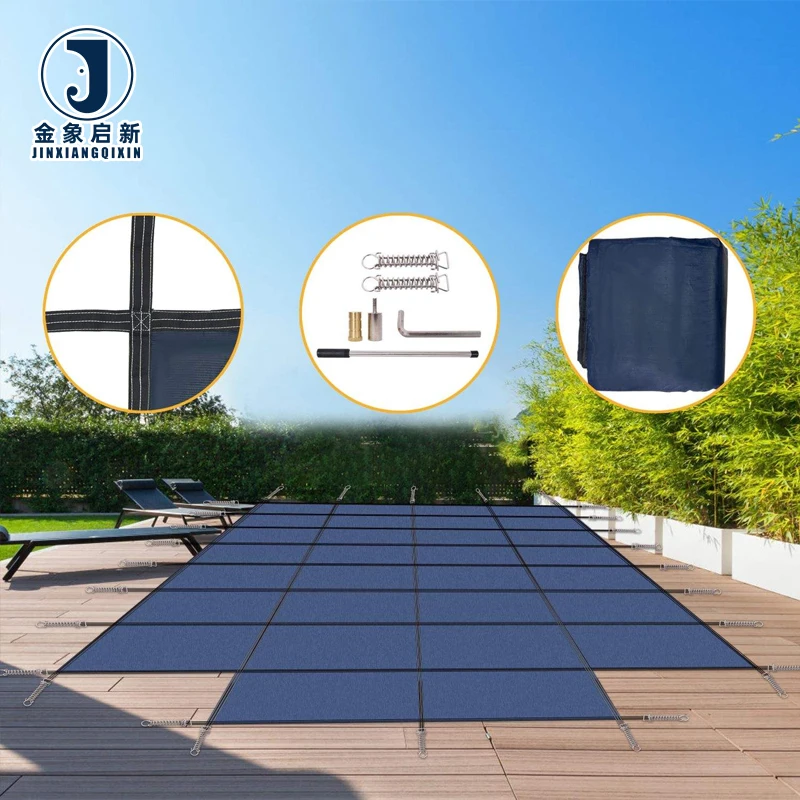
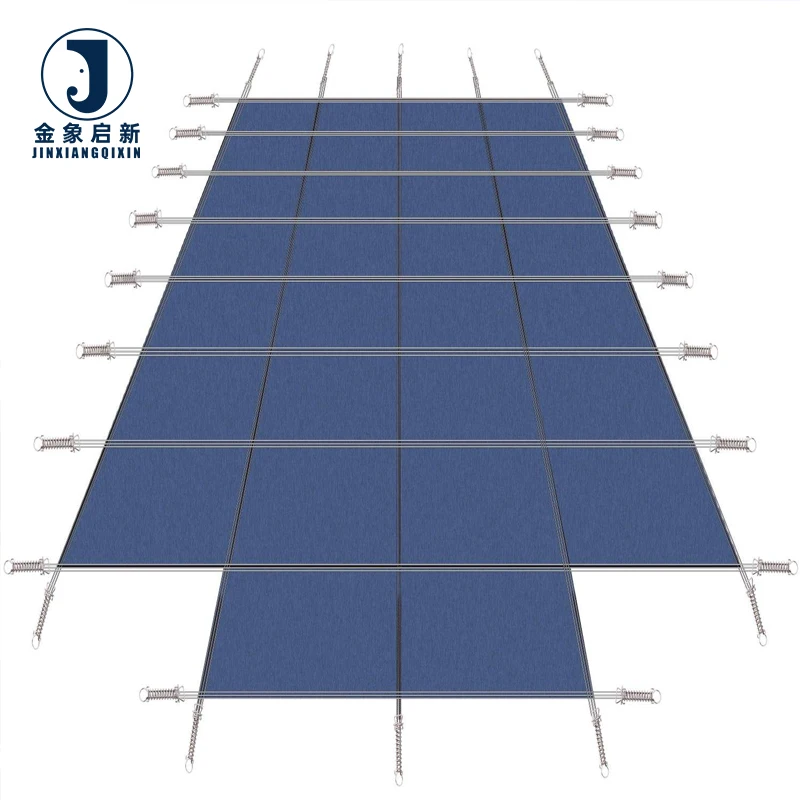
Description
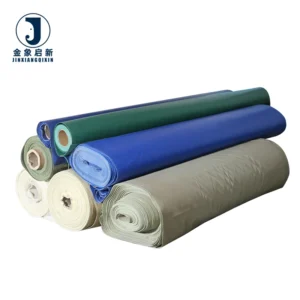
Roll-to-Roll Consistency — Every roll of PVC Tarpaulin Roll for swimming pool covers is inspected against the quoted GSM, base fabric, and colour reference before leaving the line, eliminating batch mismatches that disrupt fabrication.
Technical Specifications
| Parameter | Value |
|---|---|
| Product Type | PVC Tarpaulin Roll |
| Material | HDPE weaving with LDPE lamination on both sides |
| Weight (GSM) | 50gr/m² ~ 220gr/m² (confirm the grade required for your market) |
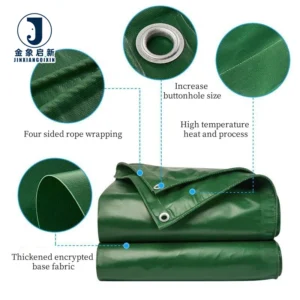
| Thickness | 0.2mm – 0.4mm / 8 mil – 16 mil / Custom |
| Waterproof | Yes |
| UV Treatment | Available (test basis not stated — request report if specified) |
| Anti-Mildew | Mildew proof and anti-aging claimed (grade not stated) |
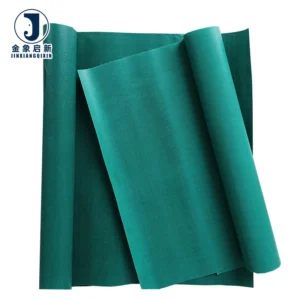
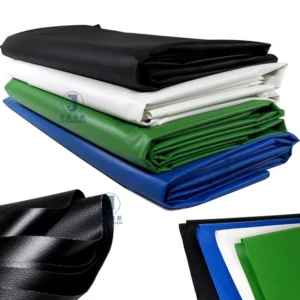
| Colour Options | Blue, Blue/Orange, Green, Grey, Black, Clear, Grey/Green, Orange, or custom |
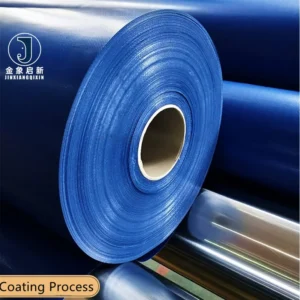
| Roll Packing | Hard paper tubes, wrapped by the same tarpaulin sheet |
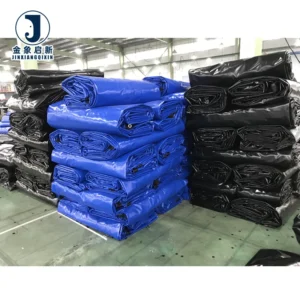
| Finished Packing | Folded into clear poly bag; colour paper available; several pieces packed in bale |
| Standards | ISO 9001, ISO 14001, ISO 45001, CE |
Application Suitability
| Application | Exposure & Requirement |
|---|---|
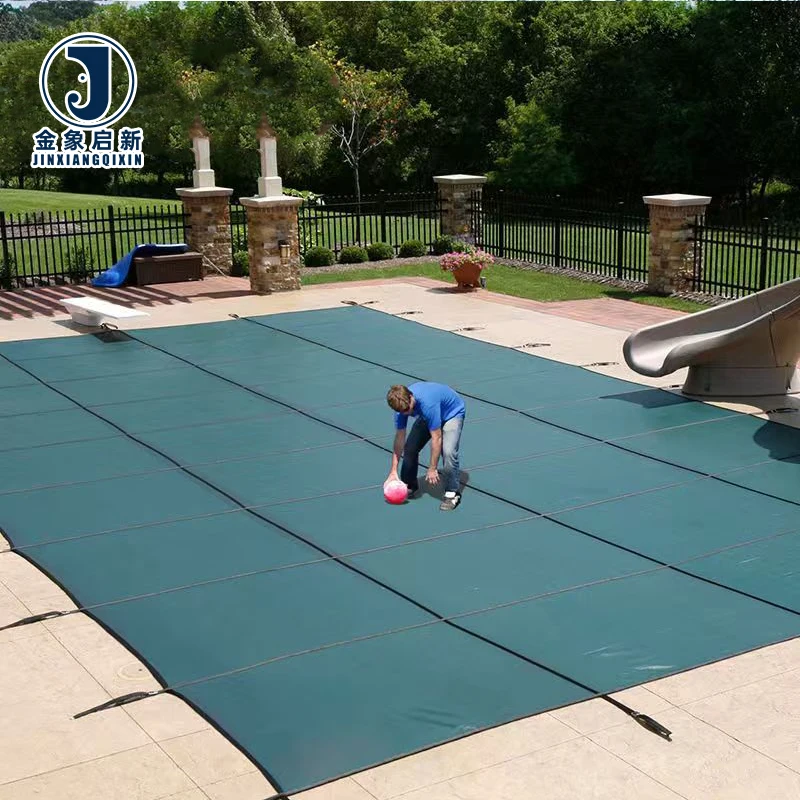
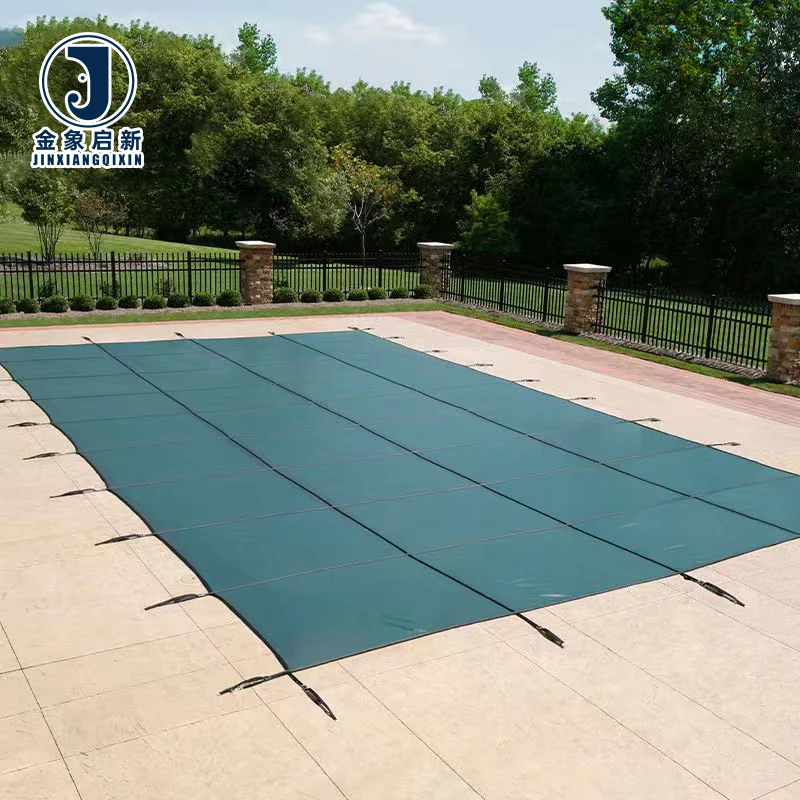
| Swimming pool covers | Constant water contact, UV and heat exposure, chemical splash from pool treatment, repeated rolling and unrolling on winder systems |
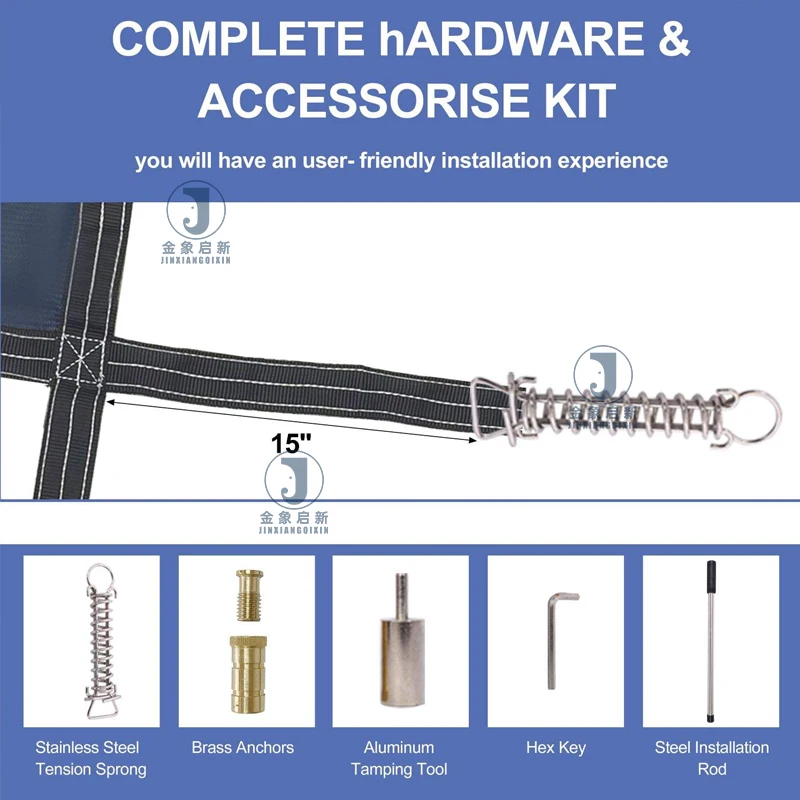
| Outdoor pool enclosures | Wind load, sun degradation, mildew in humid environments, tension from anchor hardware |
| Pond and reservoir liners | Permanent water immersion, soil chemistry, puncture risk from substrate |
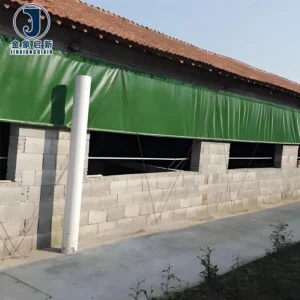
| Industrial and commercial covers | Weather exposure, abrasion from handling, need for waterproof barrier |
Why Roll-to-Roll Colour Variation Wrecks a Pool Cover Production Run
Colour drift across rolls in a single container is the leading cause of visible panel mismatch on finished pool covers.
When a fabricator unrolls ten rolls to cut panels for a large commercial pool enclosure, even a slight hue shift between rolls becomes obvious once the panels are heat-welded side by side. The entire batch may need re-sorting or partial rejection, delaying installation and raising material waste. This problem compounds on high-volume PVC Tarpaulin Roll wholesale orders where multiple production batches are consolidated into one shipment. Controlling colour at the coating stage — not just inspecting after the fact — is the only reliable way to prevent it [NEED_CITE: colour consistency standards for coated fabrics in roll form].
Batch Colour Control Across the Full Spectrum
Whether the order calls for solid blue, dual-tone Grey/Green, or a custom colour matched to a pool manufacturer’s brand palette, maintaining uniformity across every roll in the shipment is non-negotiable. Our coating lines are calibrated per production run so that pigment dispersion and coating weight stay within tolerance from the first metre to the last. This matters especially for dual-tone options like Blue/Orange, where any inconsistency in either face becomes visible once the fabric is cut and assembled into a finished cover.
GSM Verification Before the Rolls Leave the Factory
A quotation stating 180 GSM means little if the rolls arriving at the fabricator’s dock measure lighter. Each roll in a PVC Tarpaulin Roll wholesale shipment is weighed and cross-checked against the material specification sheet before dispatch. The verification covers total weight, coating adhesion, and base fabric integrity, ensuring that the grade you specified for pool cover use is the grade you receive. This step prevents the downstream failures — sagging under wind load, premature tearing at anchor points — that trace back to undersized material [NEED_CITE: GSM verification methods for coated and laminated tarpaulin fabrics].
Reading the Thickness and Weight Range for Pool Cover Grades
The available weight range of 50gr/m² to 220gr/m² spans lightweight residential pool covers through to mid-duty commercial enclosures. Lighter grades in the 50gr/m² – 90gr/m² bracket suit temporary or seasonal covers where ease of handling and manual winding are priorities. Heavier grades above 150gr/m² provide the added tensile body needed for motorized winder systems and larger span pools where the fabric must resist pooling water and sustained wind uplift. Thickness options from 0.2mm to 0.4mm correlate with puncture resistance and stiffness during fabrication — a thicker laminate holds a cleaner heat-weld line and resists edge curl during cutting. The HDPE weaving base with LDPE lamination on both sides delivers a fully waterproof barrier, while the surface finish determines how well the material sheds debris and resists mildew build-up over repeated wet-dry cycles.
The Hidden Cost of Specifying the Wrong Grade
Selecting a pool cover grade based on price per roll rather than verified GSM and coating weight leads to predictable failures. Covers made from underweight material sag between anchor points, collecting standing water that accelerates UV degradation and promotes mildew. At the fabrication stage, lighter rolls may not feed cleanly through automated cutting tables, causing misaligned panels and wasted yardage. Worse, if the UV treatment claimed on the quotation lacks a supporting test report, the cover may show visible fading and embrittlement within the first season — a warranty claim that falls back on the fabricator, not the mill [NEED_CITE: UV degradation testing protocols for laminated polyethylene fabrics].
Why Fabricators Source Their Roll Stock Here
Three full production lines with 36 sets of professional equipment provide the capacity to fill container-load PVC Tarpaulin Roll wholesale orders without splitting batches across different machines — the root cause of roll-to-roll inconsistency. A dedicated 10-person R&D team develops custom colour matches and non-standard widths within days, not weeks, keeping your product launch timeline intact. QA checkpoints at every coating and lamination stage mean that GSM, colour, and adhesion are verified in-process, not just at final inspection. Pre-shipment inspection records accompany every order, giving your receiving team documented proof of what was checked and what passed. Samples for custom GSM grades, colours, or widths are turned around rapidly so you can approve material before committing to production volume.
Documentation & Verification
- Material specification sheet stating GSM, base fabric type, and coating weight per roll
- Colour reference matched to production batch for consistent panel appearance
- UV and anti-mildew test reports supplied where treatment grades are specified
- Pre-shipment inspection record covering weight, colour, and lamination adhesion
- Roll packing list detailing container loading by roll count, width, and gross weight
- Certificate of origin and customs documentation for international shipment
Fabrication, Handling & Storage
- Heat-weld temperature and dwell time should be matched to the LDPE lamination thickness — test on a scrap section of the roll first
- Store rolls upright on their hard paper tubes to prevent flat-spotting and permanent crease marks on the laminated surface
- Allow cold-stored rolls to acclimatise to workshop temperature before unrolling to avoid cracking the LDPE lamination
- Cut panels with a straight-edge and hot knife to seal edges and prevent delamination of the HDPE weave from the coating
- Use mild detergent for cleaning finished pool covers — harsh solvents can degrade the LDPE surface and compromise waterproofing
- Plan panel layout to minimise cross-grain cuts, which reduce tear resistance along the HDPE weave direction
Requesting a Quotation That Matches Your Production Needs
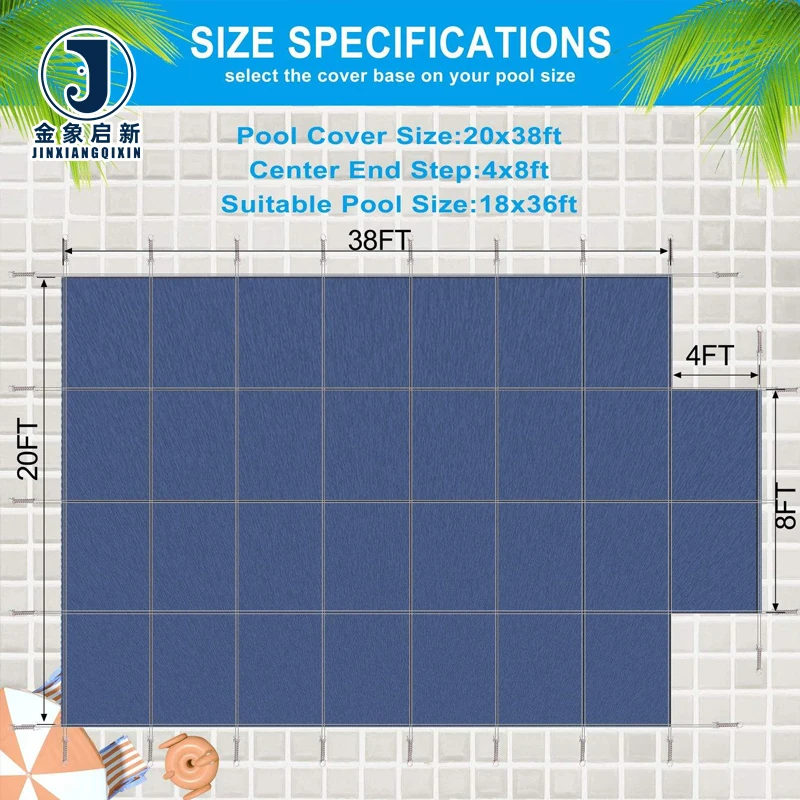
To specify the right roll stock for your pool cover line, share the target GSM range, the pool cover sizes you fabricate most often, and whether you need manual-winder or motorized-winder grades. Let us know your preferred roll width, annual volume, and whether dual-tone or custom colours are part of your catalogue. If your market requires UV or mildew-resistance test documentation, state the standard or test method so we can include the correct reports with your shipment. Samples are available for approval before you commit to a bulk order.
Frequently Asked Questions
Q: How do you verify GSM on each roll before shipment?
A: Every roll is weighed and measured against the material specification sheet stated in your quotation. The pre-shipment inspection record documents actual GSM, base fabric type, and coating weight. This record ships with your order so your receiving team can cross-check without delay.
Q: Can I mix different colours and widths in one container?
A: Yes. Container loads can combine multiple colours, dual-tone options, and roll widths to match your production schedule. Each roll is labelled with its specification, and the packing list details the exact roll count and placement for easy unloading and sorting.
Q: What lead time should I expect for custom width or colour rolls?
A: Custom widths and colours require a dedicated production run, so lead times are longer than stock grades. We provide a confirmed schedule at quotation stage. Samples for your approval are developed within days so that bulk production can start once you sign off.
Q: How do you control colour consistency across a large bulk order?
A: Pigment formulation and coating calibration are locked per production run. Rolls destined for the same order are produced consecutively on the same line to minimise drift. Pre-shipment inspection includes a side-by-side colour comparison before the rolls are packed for dispatch.
Q: Which certifications and documents ship with the rolls?
A: Each shipment includes a material specification sheet, pre-shipment inspection record, roll packing list, and certificate of origin. UV or anti-mildew test reports are included where applicable. ISO 9001, ISO 14001, ISO 45001, and CE documentation is available for your compliance records.