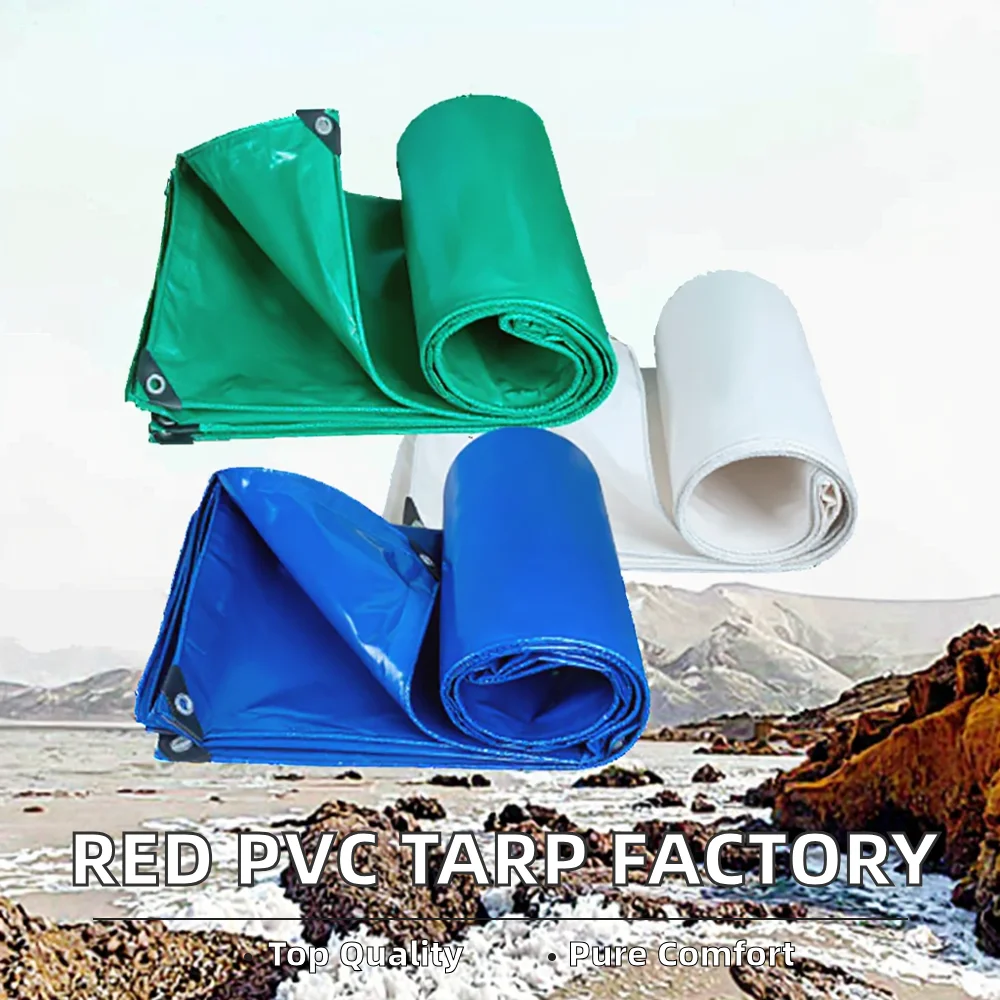
Description
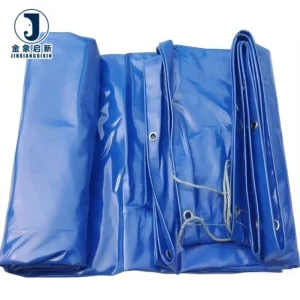
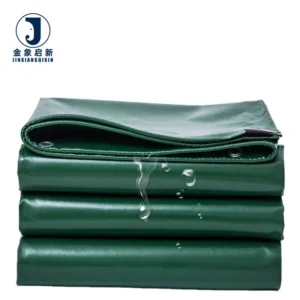
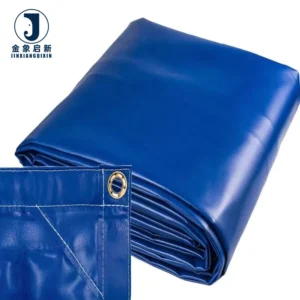
Batch-to-Batch Roll Consistency — three full production lines with dedicated QA at every coating stage ensure each PVC coated tarpaulin roll matches the ordered GSM and colour before it leaves the facility.
Technical Specifications
| Parameter | Value |
|---|---|
| Product Type | PVC Coated Tarpaulin Roll |
| Material | 100% high toughness polyester yarn with PVC coating |
| Coating Technology | Lamination technology and hot melt coating technology |
| Base Fabric Denier (Medium-duty) | 500D |
| Thickness (Medium-duty) | 0.35–0.45 mm |
| Weight (Medium-duty) | 400–500 g/m² |
| Tensile Strength (Medium-duty) | Warp 1500–2000 / Weft 1200–1800 N/5cm |
| Base Fabric Denier (Heavy-duty) | 1000D |
| Thickness (Heavy-duty) | 0.70–1.0 mm |
| Weight (Heavy-duty) | 700–1000 g/m² |
| Tensile Strength (Heavy-duty) | Warp 2000–2500 / Weft 1800–2200 N/5cm |
| Base Fabric Denier (Super Heavy-duty) | 500D–2000D |
| Thickness (Super Heavy-duty) | 1.2–1.5 mm |
| Weight (Super Heavy-duty) | 1100–1500 g/m² |
| Tensile Strength (Super Heavy-duty) | Warp 2500–3000 / Weft 2200–2800 N/5cm |
| Available Treatments | Flame retardant, anti-static, cold resistant, mold proof, anti-UV (grades available — confirm the grade required for your market) |
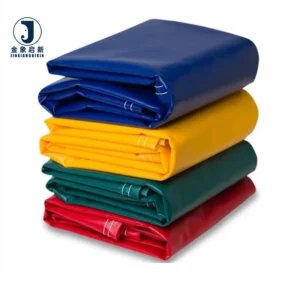
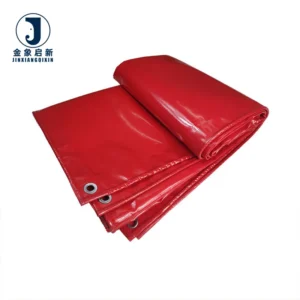
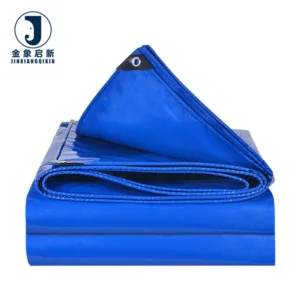
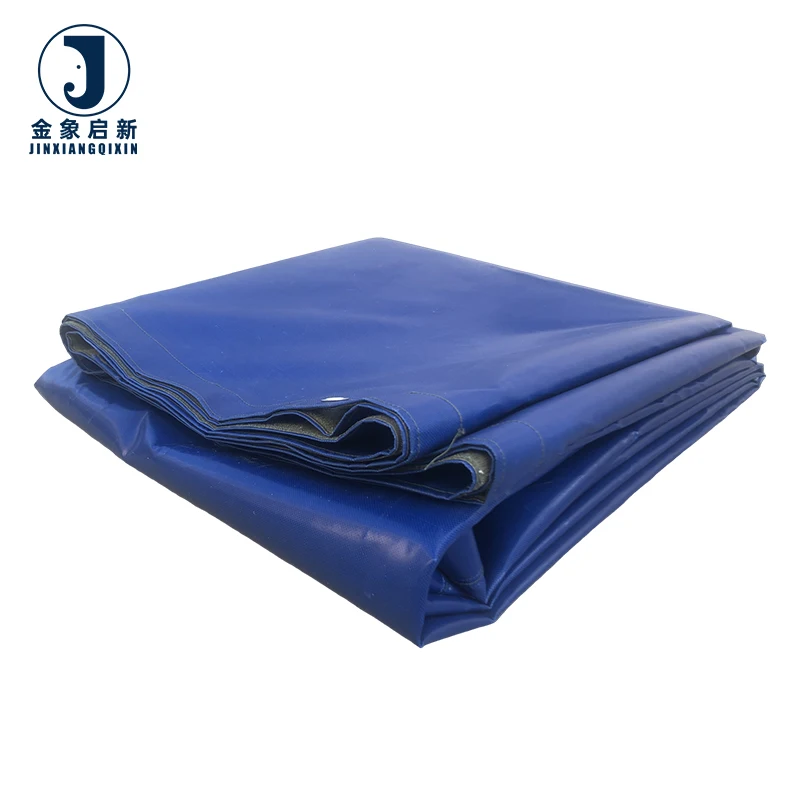
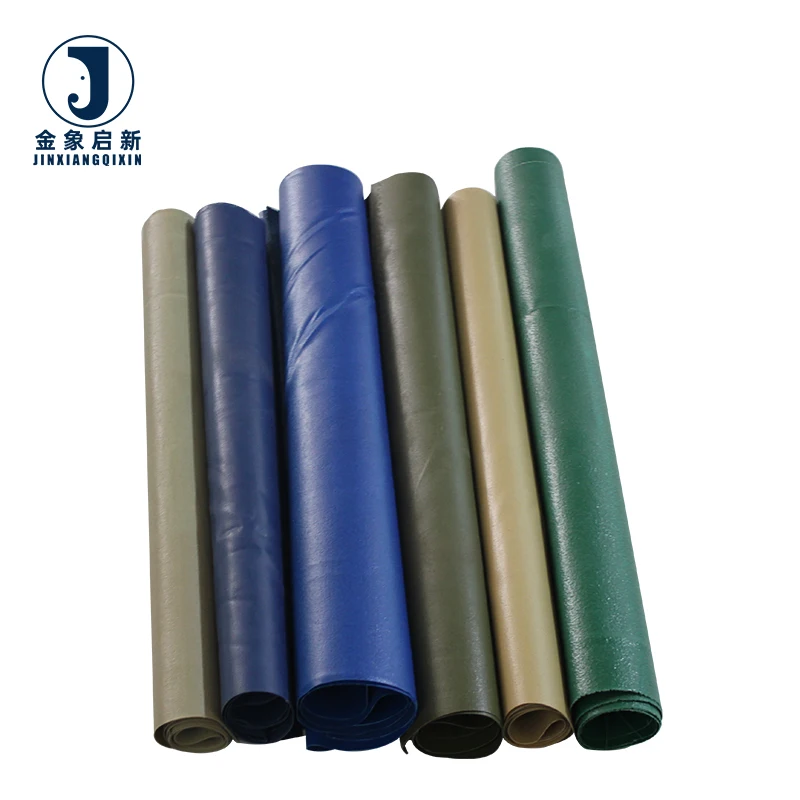
| Color Options | Blue, Blue/Orange, Green, Grey, Black, Clear, Grey/Green, Orange, or custom |
| Standards | ISO, CE |
Application Suitability
| Application | Exposure & Requirement |
|---|---|
| Truck and trailer side curtains | Constant flexing at load points, road debris abrasion, UV and rain exposure, repeated roll-up tension |
| Construction site protective covers | Wind load, scaffold contact abrasion, prolonged sun exposure, dust and water ingress prevention |
| Agricultural and transport load covers | Moisture exposure, chemical contact from fertiliser residues, tie-down strap friction at edges |
| Industrial pipe and equipment canopies | Chemical splash, thermal fluctuation, long-term static loading on support frames |
| Tensioned structural fabric | Sustained biaxial stress, wind uplift cycles, welding at seam junctions |
Why GSM Alone Does Not Tell You How Strong the Fabric Is
Coating weight and base fabric denier together determine real-world performance — not the GSM figure printed on the label.
A PVC coated tarpaulin roll specified at 700 g/m² can underperform a 650 g/m² roll if the heavier coating is applied over a lighter base fabric with lower denier yarn. The polyester yarn carries the tensile load; the PVC layer provides waterproofing and abrasion protection. When the balance shifts too far toward coating mass with insufficient yarn structure, the fabric gains weight without proportional gains in tear resistance. Wholesale buyers loading containers by roll count need to verify that the quoted GSM is supported by both the base fabric specification and the coating weight breakdown [NEED_CITE: tensile and tear test methods for coated fabrics per ISO 1421].
Roll-to-Roll Colour Consistency at the Coating Stage
Colour variation between rolls becomes visible the moment two panels are installed side by side on a truck or structure. The PVC coated tarpaulin roll range controls pigment dispersion at the mixing stage before coating begins, so every roll within a single production run carries the same colour reference. This matters for wholesale buyers who distribute to end users that fabricate on site — a shade difference in roll stock creates complaints at the installer level, not the importer level.
Stock Grade Availability and Container-Load Planning
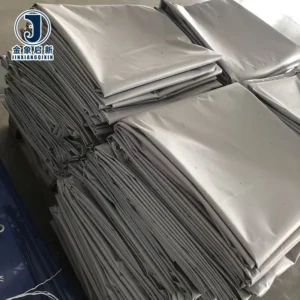
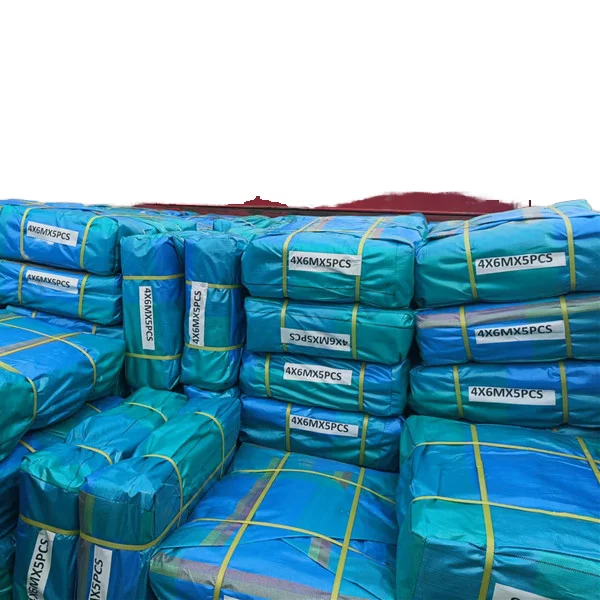
Volume buyers ordering PVC coated tarpaulin roll wholesale need predictable roll dimensions and weights to plan container loading efficiently. The medium-duty, heavy-duty and super heavy-duty tiers each carry distinct roll characteristics that affect how many linear metres fit into a standard container. Batch scheduling across three production lines allows mixed-grade container loads without extended wait times between different GSM categories [NEED_CITE: container loading optimization for coated fabric rolls].
Decoding the Specification Sheet for Procurement Decisions
The denier of the base fabric — ranging from 500D to 2000D across the tier system — directly controls how the fabric resists tear propagation once a puncture occurs. Higher denier yarn creates a denser weave that stops small cuts from spreading under tension. Coating technology matters equally: lamination bonding creates a distinct interface between base fabric and PVC film, while hot melt coating penetrates the yarn structure for deeper mechanical adhesion. This distinction influences how the material behaves during heat welding, where the seam must hold at least as strong as the parent fabric. Thickness values from 0.35 mm up to 1.5 mm correspond to the intended loading environment — lighter covers for temporary weather protection, heavier grades for sustained mechanical stress on transport and construction applications.
The Hidden Cost of Specifying on Price Per Kilogram Alone
When procurement decisions reduce to the lowest cost per kilogram of PVC coated tarpaulin roll, the result is often a lighter base fabric hidden beneath a thicker coating layer. The roll arrives at the correct total weight but lacks the yarn density needed for long-term flex resistance. At the fabrication stage, welded seams fail prematurely because the coating delaminates from a loosely woven base under bending stress. Batch colour inconsistency compounds the problem when rolls from different production runs are used on the same project, forcing selective cutting to hide shade differences and increasing material waste [NEED_CITE: weld strength versus base fabric density in coated technical textiles].
Why Wholesale Buyers Source Here
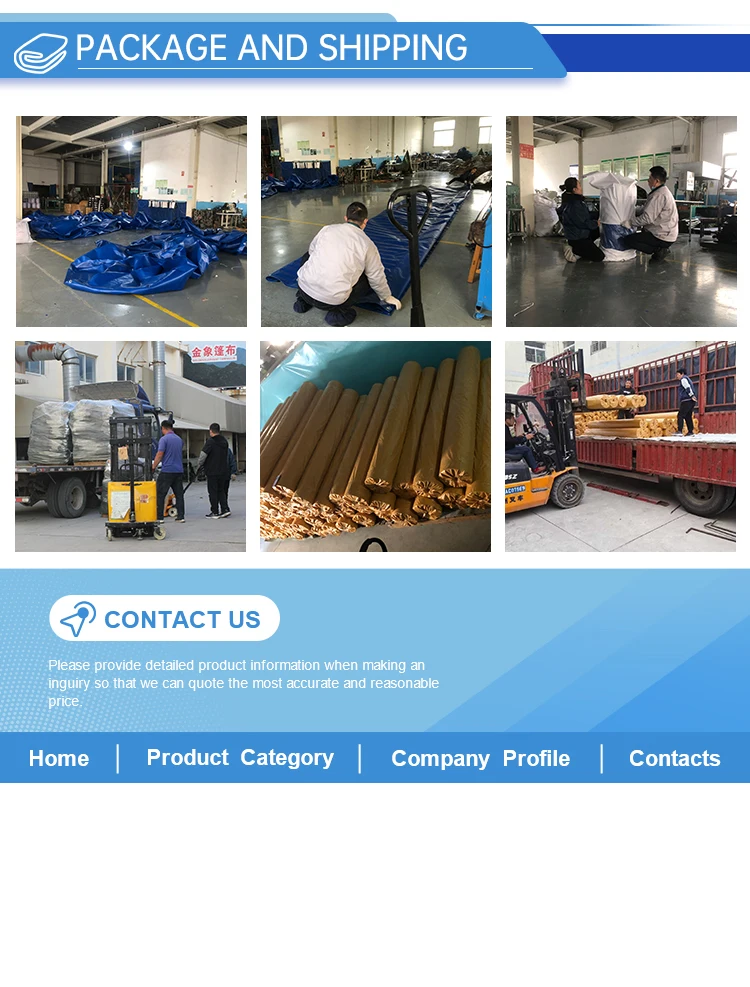
Three full production lines running dedicated grade schedules mean medium, heavy and super heavy-duty rolls can be produced in parallel without cross-contamination of coating formulations. A ten-person R&D team develops custom colour and treatment combinations with sample approval before bulk commitment, reducing the risk of container-load rejection. Dedicated QA inspection at every coating stage verifies GSM per roll against the specification sheet — not just at the quotation stage. The lamination and hot melt coating processes are matched to each grade tier, ensuring that adhesion strength supports downstream fabrication including heat welding and eyelet installation. Pre-shipment documentation includes roll-by-roll weight records and container loading data so buyers can reconcile inventory on arrival.
Documentation & Verification
- Material specification sheet stating base fabric denier, coating weight and GSM per roll grade
- Pre-shipment inspection record with roll-by-roll GSM verification before container loading
- Roll packing list with individual roll weight and dimensions for customs reconciliation
- Batch colour reference card matching the production run to your approved sample
- Test reports for flame retardant and anti-static treatments where applicable to your market
- Certificate of origin and customs support documentation for import clearance
Fabrication, Handling & Storage
- Heat welding parameters must match the coating technology — lamination grades require different temperature profiles than hot melt coated rolls
- Store PVC coated tarpaulin rolls upright on pallets to prevent flat-spot deformation on the coating surface
- Unroll cold-resistant grades gradually in low temperatures to avoid crease marks in the PVC layer
- Clean with neutral pH detergent to preserve mold proof and anti-UV treatment integrity on the coating
- Cut super heavy-duty 1100–1500 g/m² rolls with rotary blades to prevent fraying at the polyester base edge
- Plan cutting layout across roll width to minimise offcuts, especially on heavy-duty 0.70–1.0 mm grades
What We Need From Your Enquiry
Provide the GSM tier and denier range you are currently specifying, along with your annual volume and container frequency. Confirm whether your end users require flame retardant or anti-static certification and which market standard applies to your region. Indicate preferred roll width and whether you need stock colour options or custom colour matching against a Pantone or RAL reference.
Frequently Asked Questions
Q: What GSM tolerance do you guarantee on delivery versus the quotation?
A: Every PVC coated tarpaulin roll is weighed and measured against the material specification sheet during pre-shipment inspection. The inspection record documents actual GSM per roll alongside the quoted value. Any deviation outside the agreed tolerance triggers a hold before container loading, so you receive documented proof that what arrives matches what was specified.
Q: Can I get a sample roll before committing to a container order?
A: Sample rolls are produced on the same coating lines as bulk orders, so the material you evaluate reflects actual production quality. Custom colour, treatment and GSM combinations are available as samples. Approval of the sample sets the production reference for the entire batch.
Q: How do you ensure colour consistency across multiple rolls in the same shipment?
A: Pigment is mixed at batch level before coating begins, and a colour reference card is pulled from each production run. Rolls within the same batch share identical pigment dispersion. When your order spans multiple production runs, each batch is cross-checked against the approved reference to maintain visual consistency across the full container load.
Q: What custom widths and roll lengths are available, and what are the minimums?
A: Roll width and length can be adjusted to match your fabrication requirements or regional distribution standards. Minimum quantities depend on the GSM grade and treatment combination. Providing your target dimensions and annual volume allows us to confirm production scheduling and container utilisation for your specific roll format.
Q: Which certifications and test reports ship with the rolls?
A: ISO and CE documentation accompanies every shipment. Flame retardant and anti-static test reports are included where the specific grade has been ordered with those treatments. The pre-shipment inspection record, roll packing list, certificate of origin and customs documentation are all provided in the dispatch package.