Description
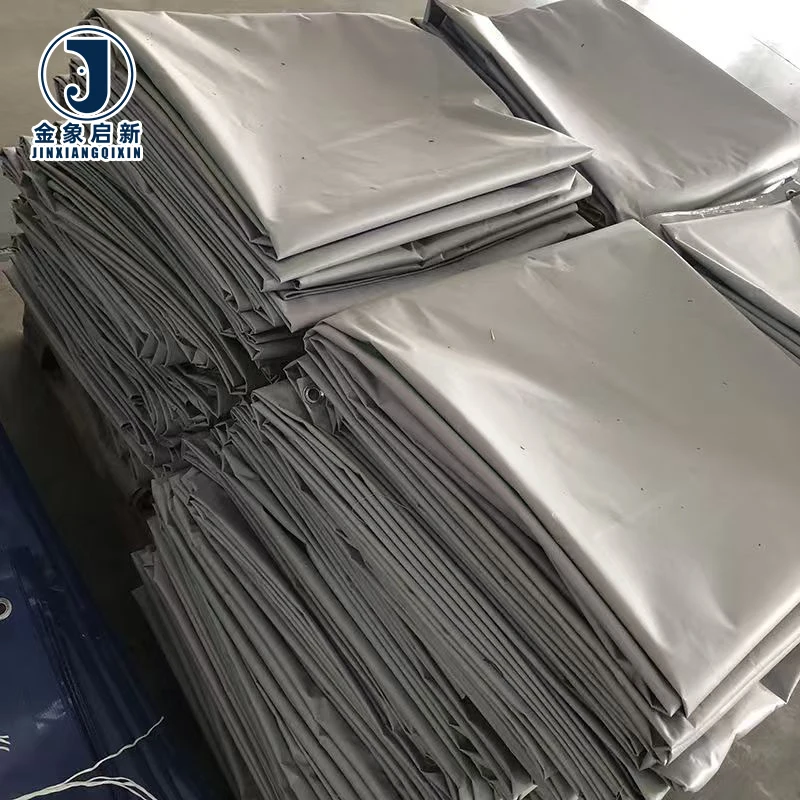
Verified Roll Weight Consistency — every roll undergoes 100% GSM verification before container loading, so the PVC coated tarpaulin roll stock you receive matches the grade specified on your purchase order.
Technical Specifications
| Parameter | Value |
|---|---|
| Product Type | PVC Coated Tarpaulin Roll |
| Weight Range | 250gsm–1500gsm |
| Base Fabric Denier Options | 200D×300D, 500D×500D, 840D×840D, 1000D×1000D |
| Coating Material | PVC |
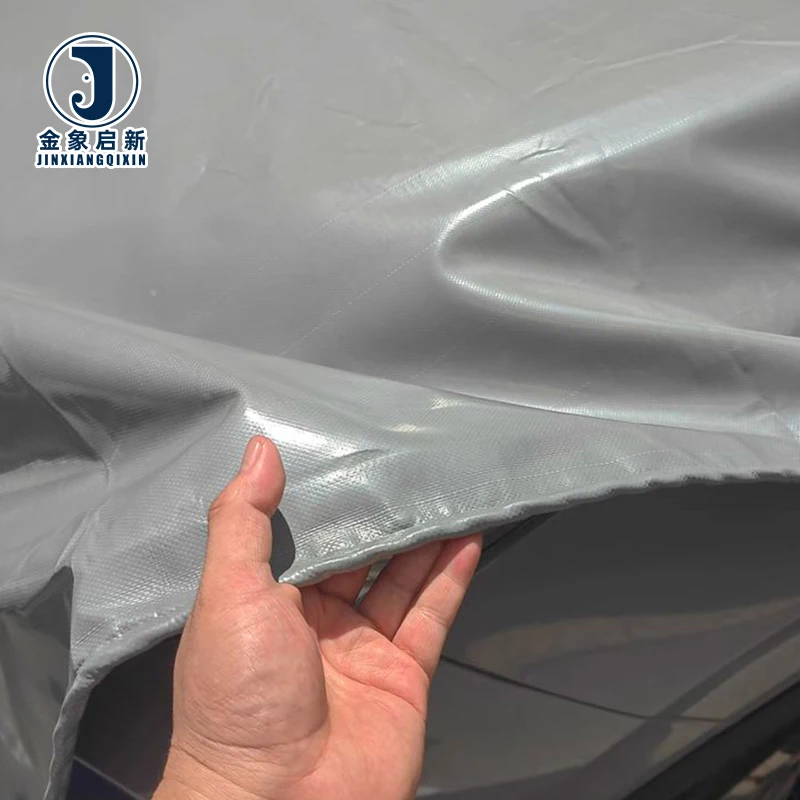
| Surface Finish | Glossy or matte |
| Waterproof | Yes |
| UV Treatment | Customized (grade available on request — confirm the test standard required for your market) |
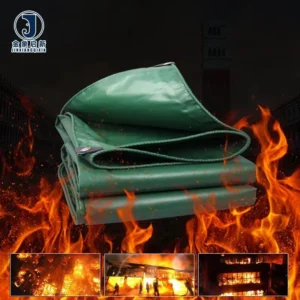
| Flame Retardant | FR treated (grade not stated — confirm the fire classification required for your region) |
| Anti-Fungal | Treated |
| Temperature Service Range | -15°C to 70°C |
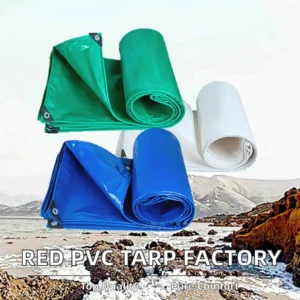
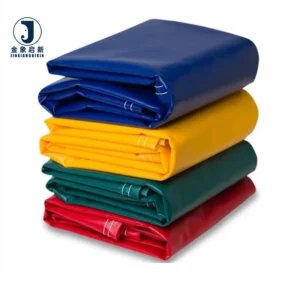
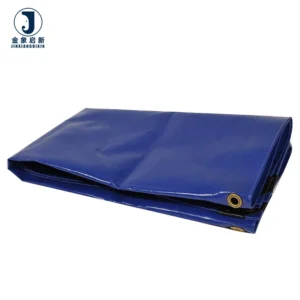
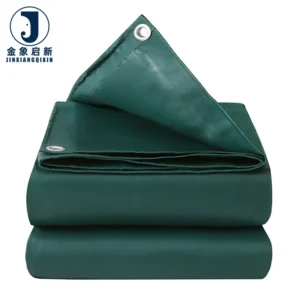
| Color Options | Blue, yellow, black, green, white, and custom colours |
| OEM/ODM | Accepted |
| Custom Sizing | Available in widths and roll lengths to specification |
Application Suitability
| Application | Exposure & Requirement |
|---|---|
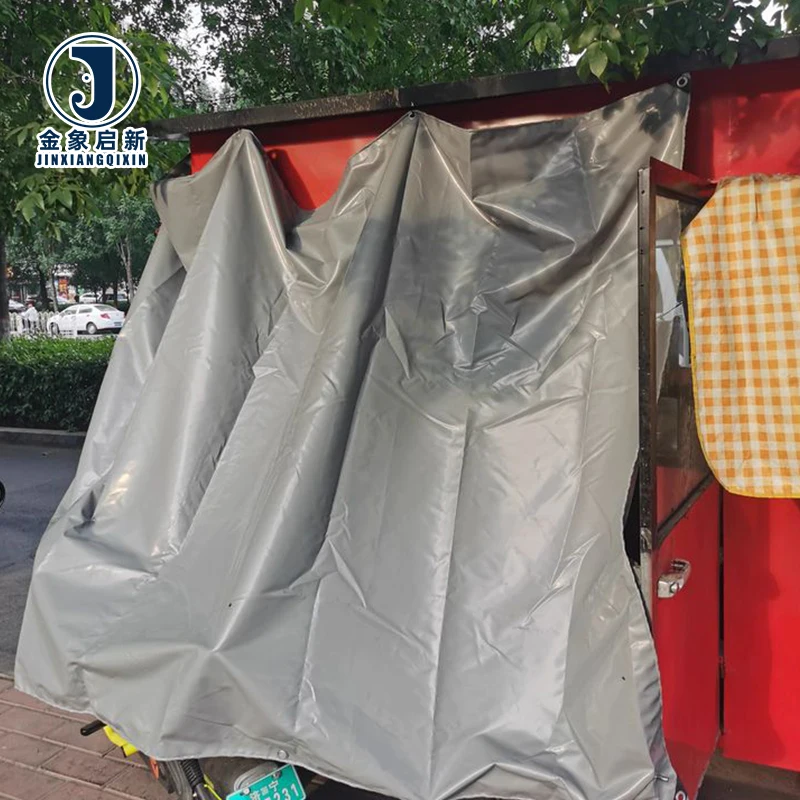
| Truck side curtains and transport covers | Constant flexing at tie-down points, road debris abrasion, prolonged UV and weather exposure |
| Tent and awning fabrication | Roll-stock cutting and high-frequency welding, colour consistency across panels, outdoor weathering |
| Inflatable and membrane structures | Air-holding seam integrity, tensile load under inflation pressure, UV stability for permanent outdoor installation |
| Construction site enclosures | Wind load, abrasion from scaffolding contact, repeated installation and removal cycles |
| Equipment and pallet covers | Stacking compression, forklift contact abrasion, moisture ingress prevention |
| Agricultural pond liners | Permanent water immersion, soil chemistry contact, puncture risk from substrate irregularities |
Why GSM Drift Between Rolls Costs More Than You Expect
Consistent PVC coated tarpaulin roll stock weight across a shipment prevents visible panel mismatch and weld-line weakness at the fabrication stage.
When a distributor receives twenty rolls for truck cover conversion and two of them measure lighter than the quoted grade, the finished panels sit side by side on a trailer with a visible difference in drape and stiffness. The lighter panels flex more under road vibration, accelerating coating fatigue at the weld seam. Fabricators who buy roll stock for resale or conversion absorb this rework cost silently, because the rolls look identical on the pallet [NEED_CITE: batch consistency test methods for coated fabrics per ISO 1421]. The problem is not the average GSM across the shipment — it is the roll-to-roll variance that escapes detection without individual weighing before dispatch.
Roll-to-Roll Consistency in Colour and Coating Weight
When you order multiple rolls of PVC coated tarpaulin roll stock for a single project, colour drift between batches is a common source of complaint after installation. Two panels cut from rolls produced in different coating runs can show a visible shade difference once welded together on a truck side curtain or structure facade. Our production process controls pigment dosing and coating thickness within a single continuous run, so rolls pulled from the same batch maintain a uniform colour reference from first to last.
Stock Widths, Custom Widths, and How They Affect Your Yield
Standard roll widths cover the most common cutting patterns for truck covers and general-purpose tarps. When your fabrication pattern requires a non-standard width to reduce offcut waste, custom widths are produced with lead time and minimum order stated clearly at quotation. The key variable is the relationship between roll width and your panel dimensions — a wider roll may reduce the number of weld seams on a large trailer cover, but only if your cutting table and welding bed can handle the extra width. Ordering PVC coated tarpaulin roll stock in widths matched to your specific panel layout improves material yield and reduces fabrication labour per unit.
How Denier and Weave Density Determine What the Roll Can Handle
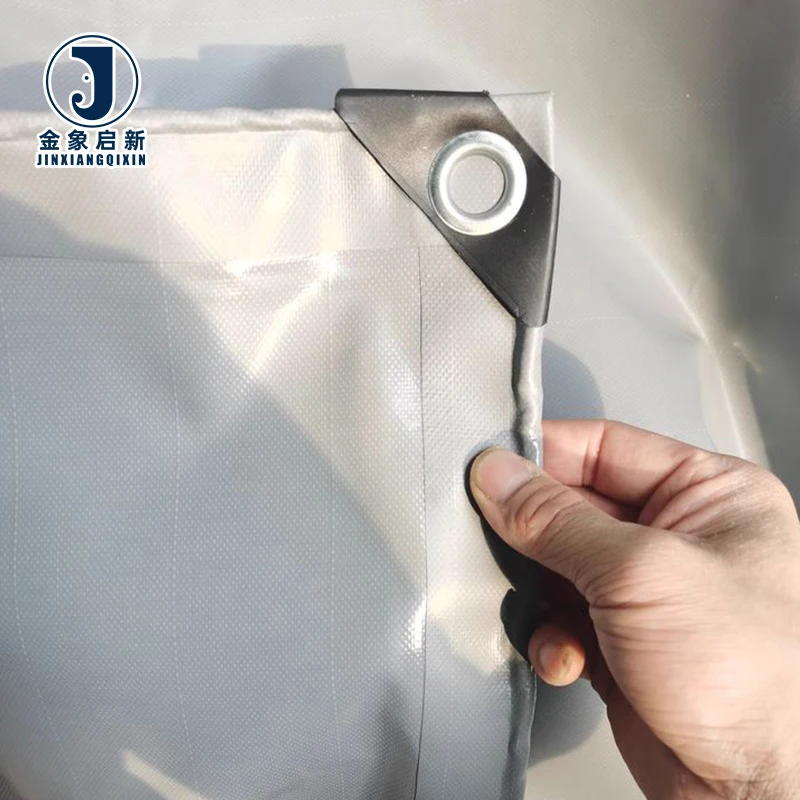
The base fabric denier — from 200D×300D up to 1000D×1000D — defines the yarn thickness woven into the scrim before coating. A heavier denier provides higher tensile and tear strength, but the actual performance depends on the weave density and how thoroughly the PVC coating penetrates the yarn interstices. For truck side curtains subjected to constant flexing and road debris impact, a 1000D×1000D base with full coating penetration delivers better long-term abrasion resistance than a lighter denier at the same GSM. Conversely, tent and awning fabricators often prefer a mid-range denier such as 500D×500D, which balances adequate strength with the lighter weight needed for portable structures. The GSM alone does not tell the full story — a 650gsm roll built on a loosely woven 1000D base will tear more easily than a 650gsm roll on a tightly woven 840D base, because tear propagation follows the path of least resistance through the weave [NEED_CITE: tensile and tear test methods for coated fabrics per ISO 1421]. Surface finish also plays a functional role: a glossy surface sheds dirt and water more readily, while a matte finish reduces glare and provides better adhesion for printed branding or applied graphics. Temperature service range from -15°C to 70°C means the PVC coating retains flexibility in cold conditions and resists softening in summer heat, though extreme environments may require formulation adjustments available on request.
What Happens When Roll Specifications Do Not Match the End Use
Selecting a GSM that is too light for the application leads to coating wear-through at high-friction contact points long before the expected service period ends. Specifying a flame retardant grade without confirming the specific classification required by the destination market can result in shipment rejection at the point of installation — a site inspector asks for a certificate referencing a particular standard, and a generic "FR treated" label does not satisfy the requirement [NEED_CITE: DIN 4102 fire classification for building materials]. Colour inconsistency across rolls in the same order becomes visible only after the panels are welded and installed side by side, forcing either acceptance of a patchwork appearance or full replacement of the affected panels. Choosing the wrong surface finish — glossy when matte was needed for print adhesion, or matte when glossy was needed for easy cleaning — adds post-installation maintenance cost that was entirely avoidable at the specification stage.
Why Wholesale Buyers Source PVC Coated Tarpaulin Roll Stock Here
Three full production lines and 36 sets of professional equipment support volume roll output with consistent scheduling, so container shipments dispatch on time even during peak order periods. A dedicated ten-person R&D team handles custom width requests, colour matching, and sample development within days rather than weeks, giving distributors and fabricators the flexibility to respond to end-user requirements without carrying excessive inventory. Every roll passes 100% inspection before shipment — GSM is weighed and recorded per roll, and any unit falling outside the specified tolerance is removed from the packing list before container loading. The coating process controls adhesion between PVC layers and the base scrim, reducing the risk of delamination during high-frequency welding at the fabrication stage. Buyers receive a complete documentation package with each shipment: material specification sheets, pre-shipment inspection records, roll packing lists with container loading plans, and test reports for any specified treatments.
Documentation & Verification
- Material specification sheet confirming GSM, base denier, coating type, and colour reference per roll
- Pre-shipment inspection record with individual roll weight verification against quoted grade
- Roll packing list detailing roll count, net weight, and container loading sequence
- UV and flame retardant test reports provided where specific treatment grades are confirmed at order
- Certificate of origin and customs documentation prepared for international roll-stock shipments
Fabrication, Handling & Storage
- Set high-frequency welding parameters to match the specific GSM and PVC coating thickness to avoid seam delamination
- Store rolls upright on pallets in a dry environment to prevent edge compression marks on the coating surface
- Allow rolls to acclimatise to workshop temperature before unrolling to avoid creasing in cold-stiffened PVC
- Use sharp rotary blades for cutting to prevent fraying the base scrim yarns at panel edges
- Clean glossy surfaces with mild detergent only — solvents can degrade the PVC coating plasticiser over time
What to Include in Your Enquiry
To receive an accurate quotation with lead time and minimum order, provide your target GSM and preferred base denier, the roll width and length your equipment can handle, the quantity of rolls per colour, and any treatment requirements such as flame retardant grade or UV stability level for your destination market. If you need a sample roll for weld testing and colour approval before committing to a full container order, specify this at the enquiry stage so sample development can proceed in parallel with quotation.
Frequently Asked Questions
Q: How is GSM verified per roll before shipment?
A: Every roll is individually weighed and measured during pre-shipment inspection. The recorded GSM is compared against the grade stated on your purchase order, and any roll falling outside the agreed tolerance is removed from the shipment. You receive an inspection record showing the weight data per roll along with your packing list.
Q: Can you guarantee colour consistency across multiple rolls in one order?
A: Rolls within a single production batch are coated in a continuous run with controlled pigment dosing, maintaining uniform colour from the first roll to the last. For large orders spanning multiple batches, we provide colour reference confirmation and recommend requesting a sample panel from each batch for your approval before dispatch.
Q: What stock widths and roll lengths are available for immediate dispatch?
A: Standard widths cover the most common cutting patterns used by tarpaulin fabricators and distributors. Stock availability varies by grade and colour. For non-standard widths or custom roll lengths, lead time and minimum order quantities are stated clearly at the quotation stage so you can plan your procurement schedule accordingly.
Q: Do you provide test reports for UV and flame retardant grades?
A: Yes, where a specific UV or flame retardant treatment grade is confirmed at the order stage, the corresponding test report is included in your shipment documentation. Specify the test standard required by your destination market so the correct grade can be applied and verified during production.
Q: How are rolls packed and loaded for container shipping?
A: Rolls are packed in carton or bale wrapping and loaded according to a container loading plan that accounts for roll count, weight distribution, and stacking limits. The packing list provided before dispatch details the loading sequence so your warehouse team can plan unloading and storage efficiently.