Description
Batch-to-Batch Consistency — every roll of PVC coated tarpaulin is weighed and inspected against the quoted GSM before it leaves the production line, ensuring the fabric you receive matches the specification you approved.
Technical Specifications
| Parameter | Value |
|---|---|
| Product Type | PVC Coated Tarpaulin Roll |
| Coating Material | PVC (100% PES dipping coating) |
| Base Fabric Construction | Knitting and plain weave polyester |
| Base Fabric Denier | 500D (medium) / 1000D (heavy-duty) / 500D–2000D (super heavy) |
| Total Thickness | 0.35–0.45 mm (medium) / 0.70–1.0 mm (heavy-duty) / 1.2–1.5 mm (super heavy) |
| Weight (GSM) | 400–500 (medium) / 700–1000 (heavy-duty) / 1100–1500 (super heavy) |
| Tensile Strength (warp/weft, N/5cm) | 1500–2000 / 1200–1800 (medium); 2000–2500 / 1800–2200 (heavy-duty); 2500–3000 / 2200–2800 (super heavy) — test basis not stated in source |
| Roll Width | 6 ft, 8 ft, 10 ft, 12 ft / 2 m, 4 m, 6 m |
| Roll Length | 100 yards, 100 meters, or custom |
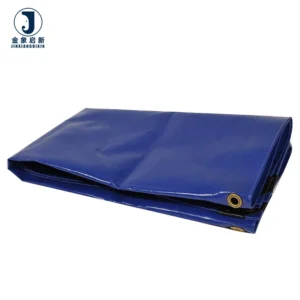
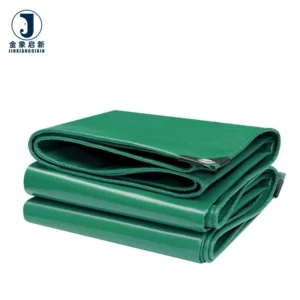
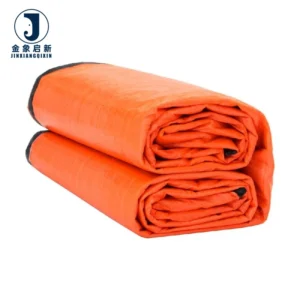
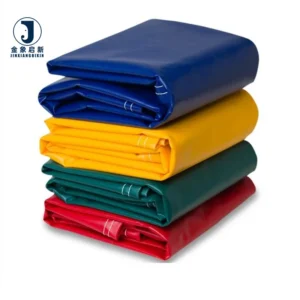
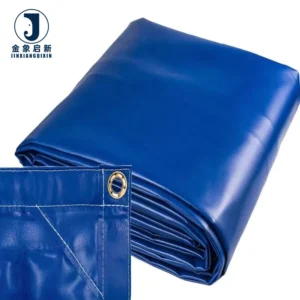
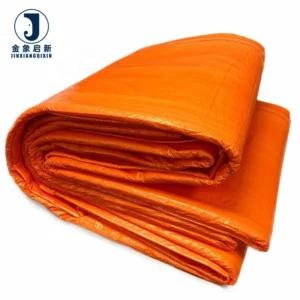
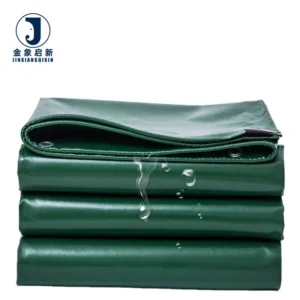
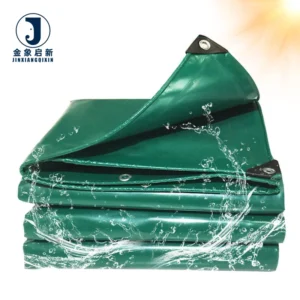
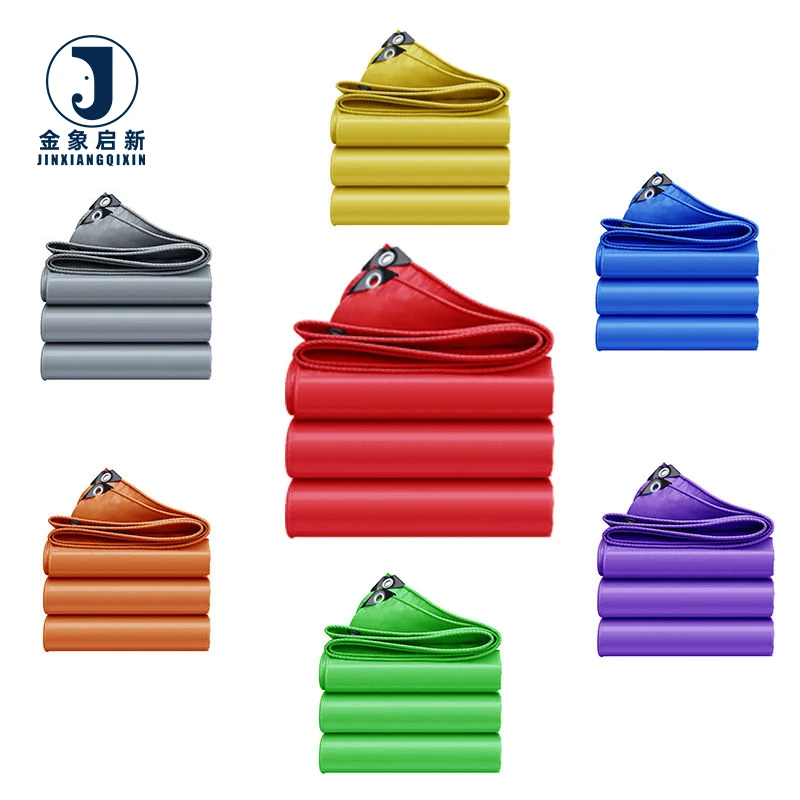
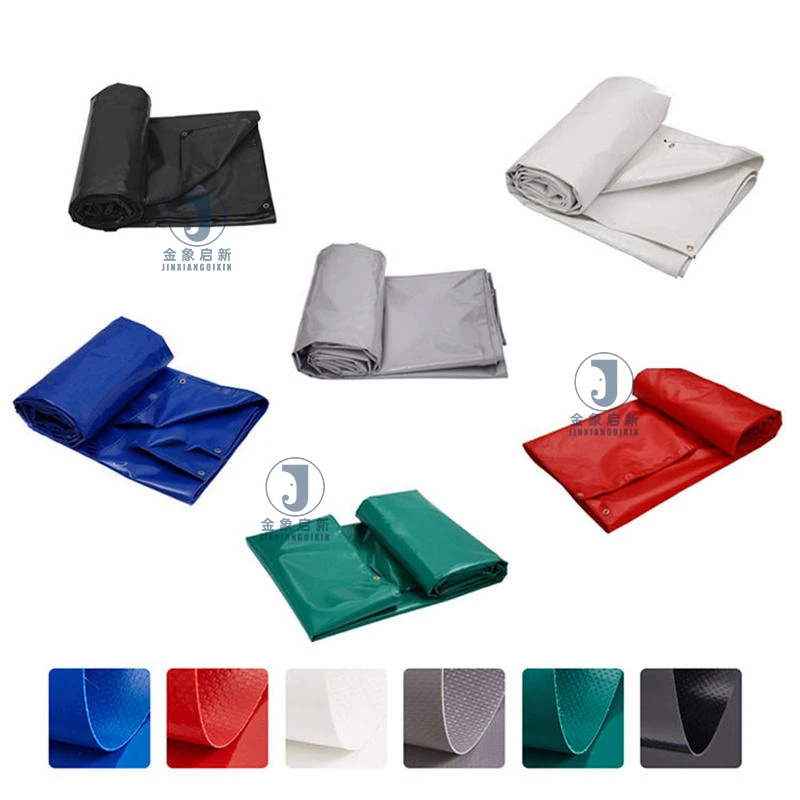
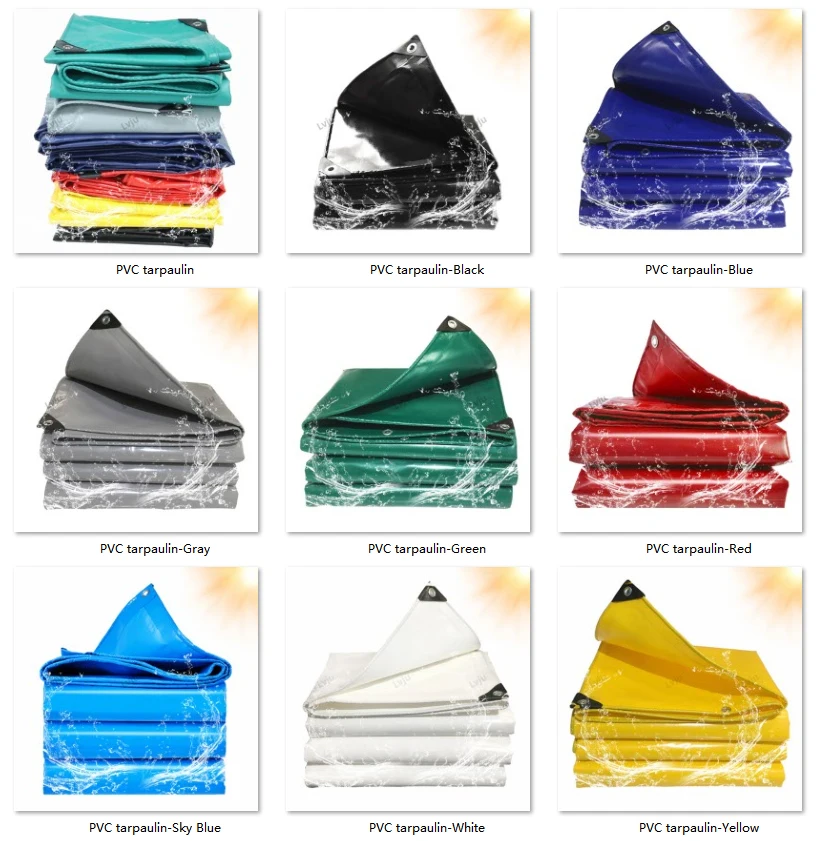
| Color Options | Blue, Blue/Orange, Green, Grey, Black, Clear, Grey/Green, Orange, or custom |
| UV Treatment | Available — confirm the grade required for your market |
| Flame Retardant | Available in flame retardant grades — confirm the grade required for your market |
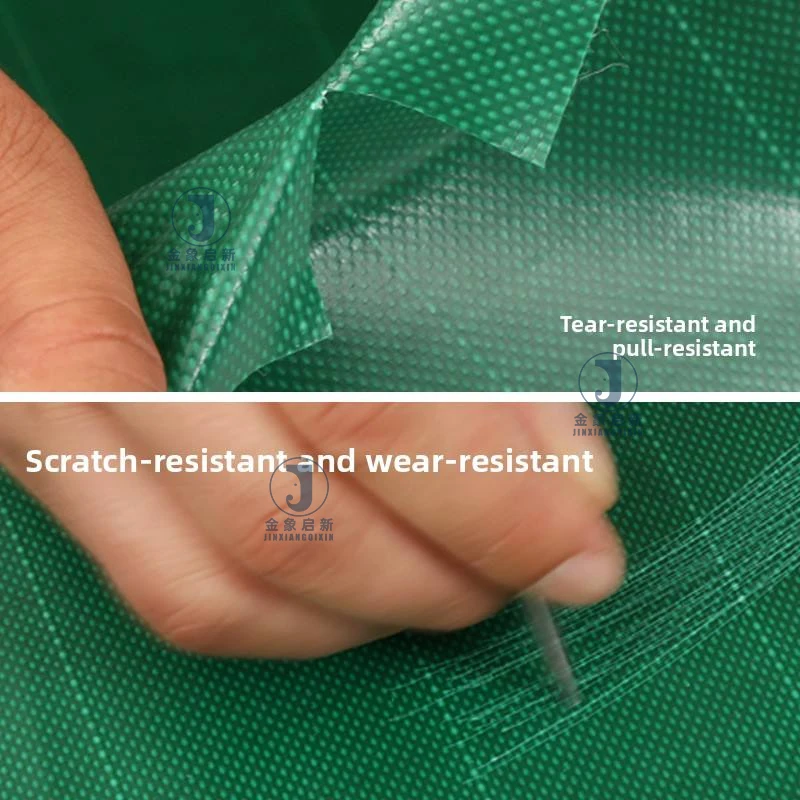
| Key Features | Waterproof, washable, tear resistant, mildew proof, anti-aging |
| Finished Edge Options (cut-to-size only) | PP rope reinforced hem, galvanized eyelets every 3 ft or 1 m, reinforced plastic corners |
| Printing | Custom brand printing available |
| Standards | ISO, CE certified facility |
Application Suitability
| Application | Exposure & Requirement |
|---|---|
| Tarpaulin distributor stock | Multiple GSM grades in container-load quantities with consistent colour and weight across every roll |
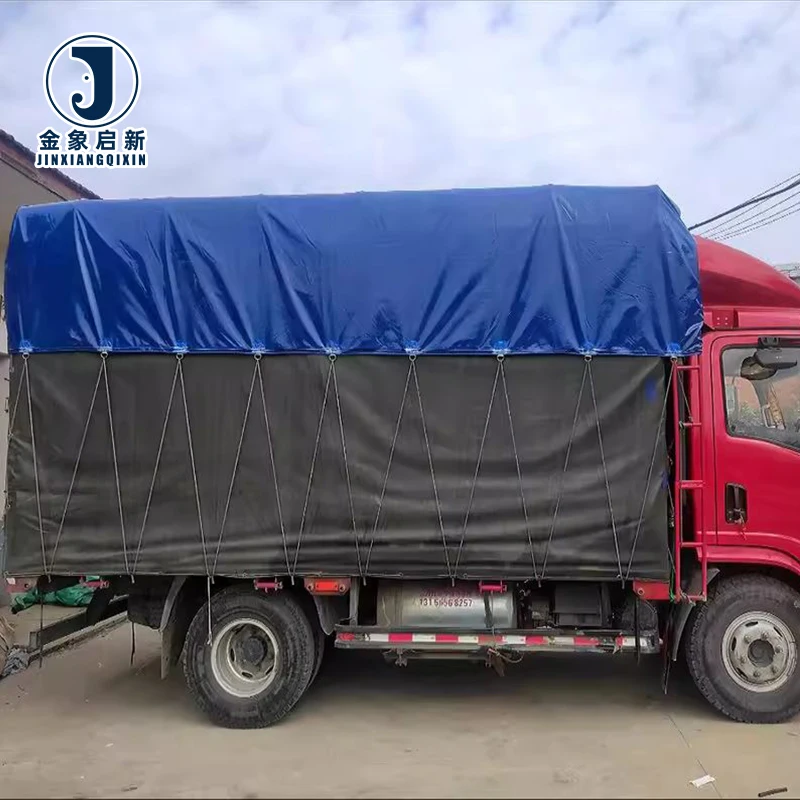
| Truck and trailer side curtains | Constant flexing at hinges, road abrasion, UV exposure, wind load at highway speed |
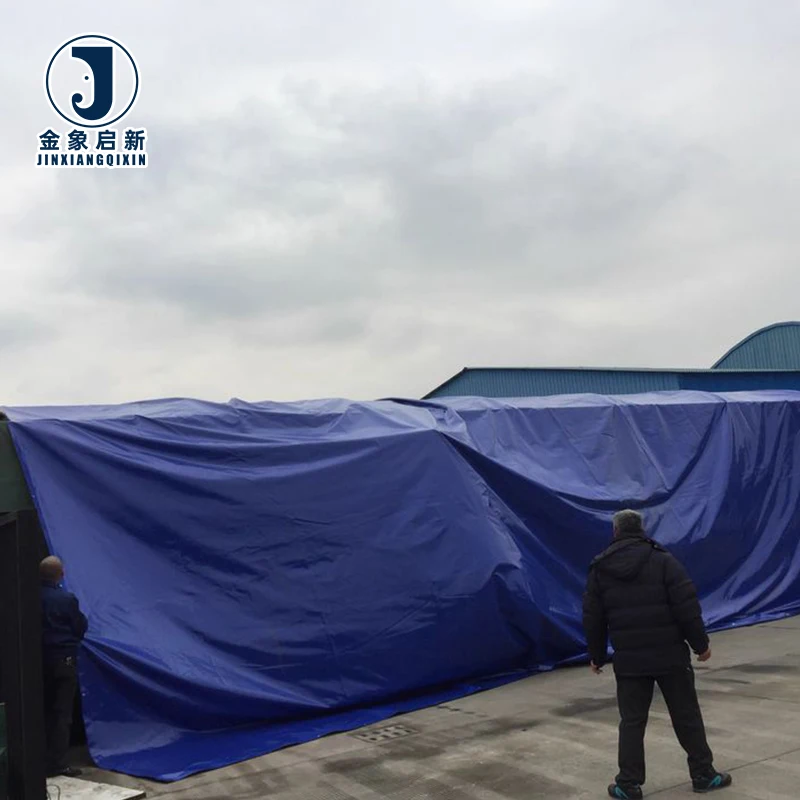
| Tent and awning manufacturing | Roll-to-roll colour match for panel assembly, weldability for seam joining, UV treatment for outdoor service |
| Lumber and steel tarpaulins | Heavy abrasion from sharp cargo edges, high tensile demand during tie-down |
| Lightweight engineering covers | Moderate weather protection, easy handling on site, frequent deployment and folding |
| Tensioned structural fabric | Sustained tension load, weather exposure, weld integrity at connection points |
Why GSM Alone Does Not Tell You How Strong a Roll Really Is
GSM measures weight, not structural performance — denier, weave density, and coating adhesion together determine how the fabric behaves under load.
When buyers compare PVC coated tarpaulin roll wholesale options on GSM alone, they often overlook the base fabric underneath the coating. A 700 GSM roll built on loosely woven 500D yarn will stretch and tear more readily than a 700 GSM roll on tightly woven 1000D polyester. [NEED_CITE: tensile and tear test methods for coated fabrics per ISO 1421]. The coating adds weight and waterproofing but contributes less to tensile strength than the scrim layer. That is why we publish denier, tensile values, and coating method alongside every GSM grade — so you can compare the full construction, not just a number on a tag.
Roll Widths and Container Loading Efficiency
Standard stock widths from 2 m to 6 m cover most converter and distributor requirements without custom lead times. Wider rolls reduce the number of welded seams when fabricating large truck covers or tent panels, which directly affects production speed and long-term seam reliability. Our PVC coated tarpaulin roll stock is planned at quotation stage with a full container loading schedule — roll count, net weight per roll, and total payload — so you know the exact utilisation of each container before you commit.
Colour Matching Across the Full Order
Colour variation between rolls is a recurring complaint in the tarpaulin trade, especially when panels are installed side by side on a tent or truck curtain. We control this by locking the colour reference at sample approval and running matched coating batches for the entire order. [NEED_CITE: colour tolerance standards for PVC coated fabrics in production runs]. Every roll is tagged with its batch number, enabling traceability back to the coating run if a discrepancy is spotted at the receiving warehouse.
Reading the Specification Sheet Correctly
Three parameters interact to define real-world performance: base fabric denier, weave density, and coating weight. A 1000D polyester scrim provides the structural backbone; the PVC dipping coating fills the weave and bonds to the yarn, adding tear resistance and waterproofing. Thicker coatings improve abrasion resistance and weld strength but add weight and reduce flexibility in cold conditions. Tensile strength figures across our three weight tiers — from 1500 N/5 cm in the medium grade to 3000 N/5 cm in the super heavy — reflect the combined contribution of scrim and coating rather than either layer alone. Roll widths up to 6 m reduce seam count on large fabricated items, which matters because the heat-welded seam is often the first point of failure under cyclic loading.
The Hidden Cost of Picking the Wrong Grade
Choosing a medium-weight roll for a heavy-abrasion application like steel coil covers leads to premature surface wear and coating delamination at contact points. Conversely, specifying super-heavy fabric for lightweight temporary covers adds unnecessary weight, increases shipping cost per roll, and makes on-site handling difficult for workers deploying covers repeatedly. [NEED_CITE: coating delamination patterns under cyclic abrasion in PVC tarpaulins]. Batch colour inconsistency across rolls in a single shipment can force an entire tent panel batch to be re-cut if adjacent sections show visible shade difference after assembly.
Why Buyers Source Roll Stock from Jinxiang
Nearly 30 years of focused production on coated fabric has given us deep process control over coating weight, adhesion, and batch uniformity. Three full production lines and 36 sets of professional equipment support container-volume output with consistent on-time dispatch. A 10-person R&D team handles custom width, colour, and sample development — typically turning samples around within days. Dedicated QA/QC runs at every stage, and every roll undergoes 100% inspection before shipment, with results recorded on the pre-shipment inspection report you receive before the container is sealed.
Documentation & Verification
- Material specification sheet stating exact GSM, base fabric denier, and coating method per roll
- Pre-shipment inspection record confirming weight, colour, and surface quality against approved sample
- Roll packing list with individual roll weight, running length, and batch number for receiving checks
- UV and flame retardant test reports provided for applicable grades with the order
- Container loading plan detailing roll count, arrangement, and total net weight at quotation stage
- ISO and CE certificates available with shipping documentation
Fabrication, Handling & Storage
- Heat-weld seams at manufacturer-recommended temperature; the 100% PES dipping coating supports strong thermal bonding across all GSM grades
- Allow rolls to acclimatise before unrolling in cold conditions to prevent cracking in heavier grades above 1000 GSM
- Store rolls upright on pallets in a dry, shaded warehouse to prevent flat-spotting and surface marking
- Plan cutting layouts around standard 2 m to 6 m widths to maximise yield and minimise off-cuts per roll
- Clean finished surfaces with mild detergent only; avoid solvents that degrade the PVC coating layer
- Eyelet and hem reinforcement is available on cut-to-size pieces; specify spacing and corner reinforcement at inquiry stage
What to Include in Your Inquiry
Provide the end-use application and exposure conditions so we can recommend the appropriate GSM grade, denier, and treatment. Confirm whether you need roll stock only or finished cut-to-size pieces with eyelets and hems. Let us know your target roll width, colour reference, and estimated annual volume so we can structure pricing tiers and production scheduling around your container plan.
Frequently Asked Questions
Q: What GSM grades do you keep in stock versus produce to order?
A: Medium (400–500 GSM), heavy-duty (700–1000 GSM), and super-heavy (1100–1500 GSM) grades are produced regularly. Standard widths of 2 m, 4 m, and 6 m in common colours ship from scheduled production runs. Custom widths, colours, or specialised treatments are produced to order with confirmed lead times at quotation.
Q: Can I mix widths and colours in one container?
A: Yes. Container-load orders routinely combine multiple roll widths, GSM grades, and colours. We provide a detailed loading plan at the quotation stage showing roll count, arrangement, and net weight so you can confirm the container payload before committing to production.
Q: How do you guarantee GSM matches the quotation on arrival?
A: Every roll is weighed and inspected during the pre-shipment check. The individual roll weight and batch number are recorded on the packing list you receive before dispatch. If a roll falls outside the stated GSM tolerance, it is pulled from the shipment and replaced before the container is sealed.
Q: What is the minimum order for a custom width or colour?
A: Custom widths and colours are available without prohibitive minimums, though a practical minimum applies to ensure coating batch consistency. We confirm the exact minimum at inquiry based on your width, colour, and GSM requirement, along with sample lead time for approval before bulk production begins.
Q: How are rolls packed to prevent damage in transit?
A: Rolls are wound on cardboard cores, wrapped in protective PE film, and loaded upright or horizontally depending on the container plan. The packing method is specified in the loading plan provided at quotation, and the pre-shipment inspection record confirms that wrapping and securing meet dispatch standards.