
Description
Batch-to-Batch Consistency — Every PVC coated tarpaulin roll leaving the facility is verified against the stated specification before dispatch, ensuring distributors receive uniform weight and thickness across the entire order.
Technical Specifications
| Parameter | Value |
|---|---|
| Product Type | PVC Coated Tarpaulin Roll |
| Base Fabric Denier Options | 500D×840D, 500D×1000D, 1000D×1000D, 1000D×1300D, 1300D×1300D, 1000D×2000D |
| Mesh Count | 20×20, 30×15, 30×19 |
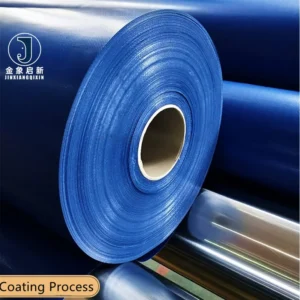
| Coating Material | Double-sided PVC coating on polyester base fabric |
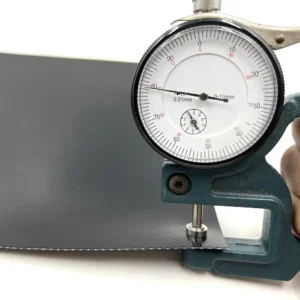
| Thickness Range | 0.29 mm, 0.32 mm, 0.38 mm, 0.44 mm, 0.46 mm, 0.55 mm, 0.65 mm |
| Weight Options (GSM) | 350, 400, 420, 500, 600, 650, 750, 900 |
| Tensile Strength (Warp) | 1650 N to 3900 N (test basis not stated in source) |
| Tensile Strength (Weft) | 1600 N to 3500 N (test basis not stated in source) |
| Temperature Range | Brittle ≤ -50 to -60 °C / Softening ≥ 80 °C |
| Flame Retardant | Available in flame retardant grades — confirm the grade required for your market |
| UV Treatment | Anti-UV treatment available — test basis not stated in source |
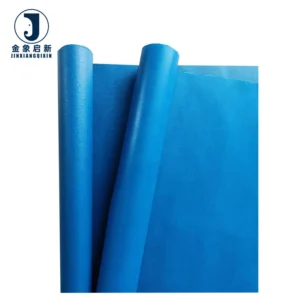
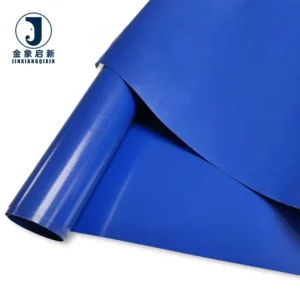
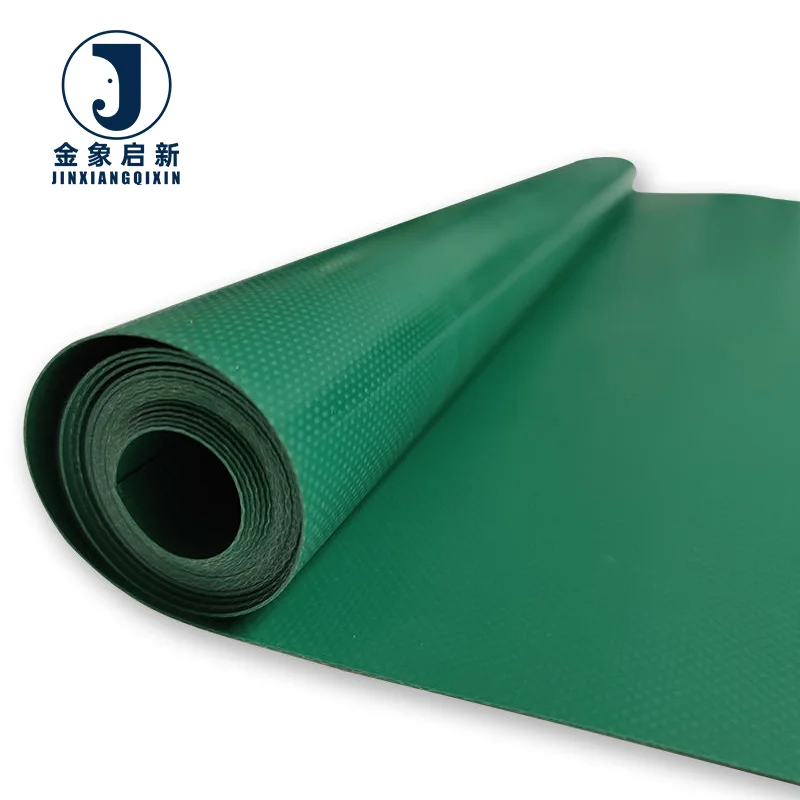
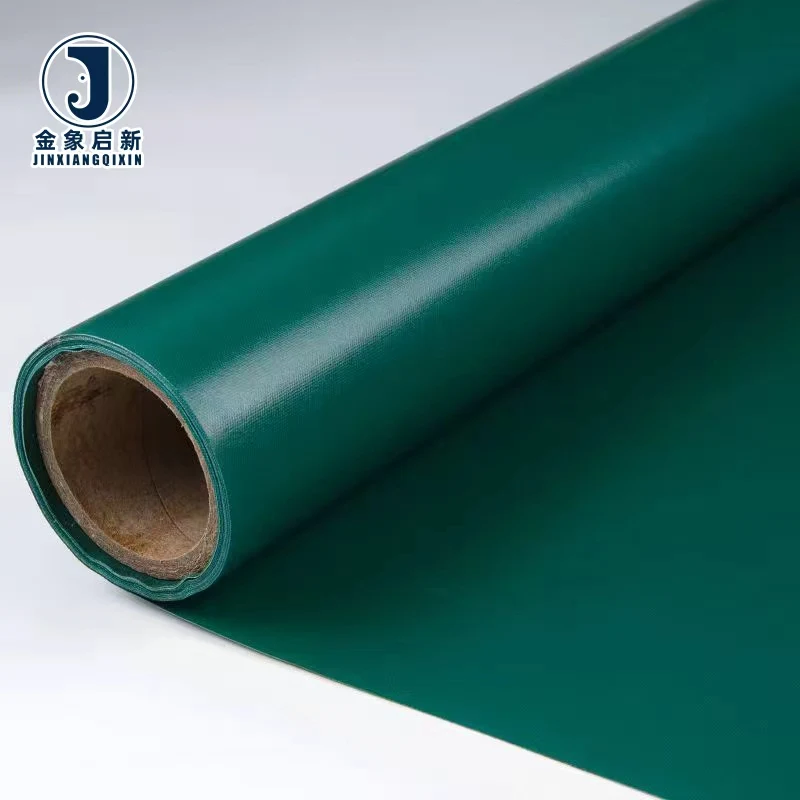
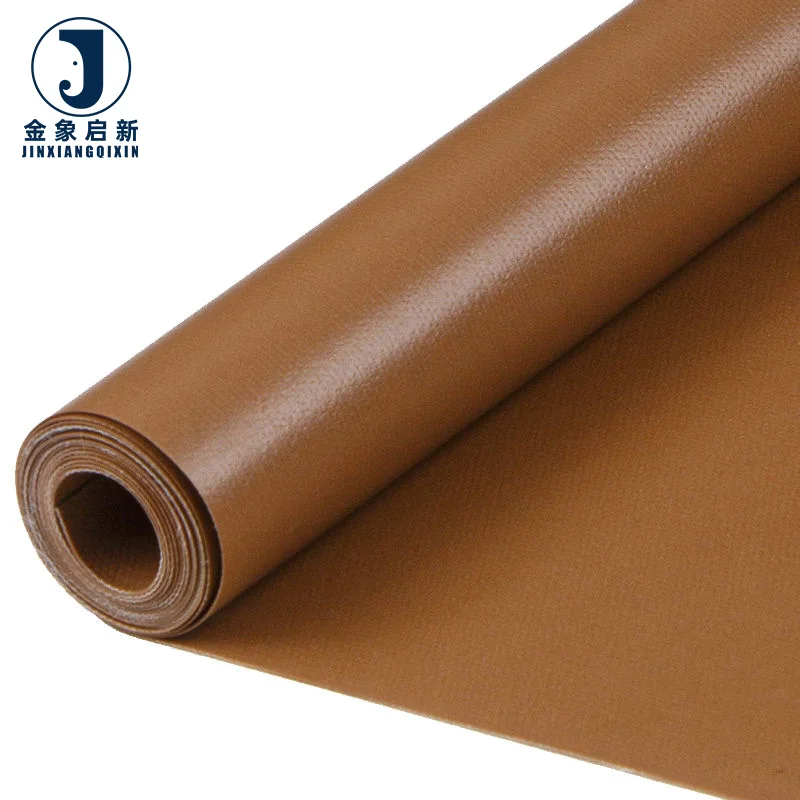
| Finish | Smooth and soft surface with a leather-like texture |
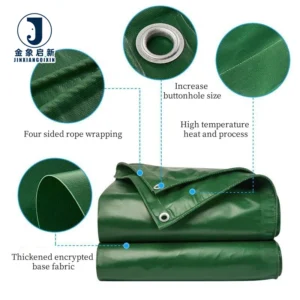
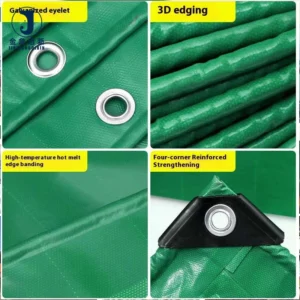
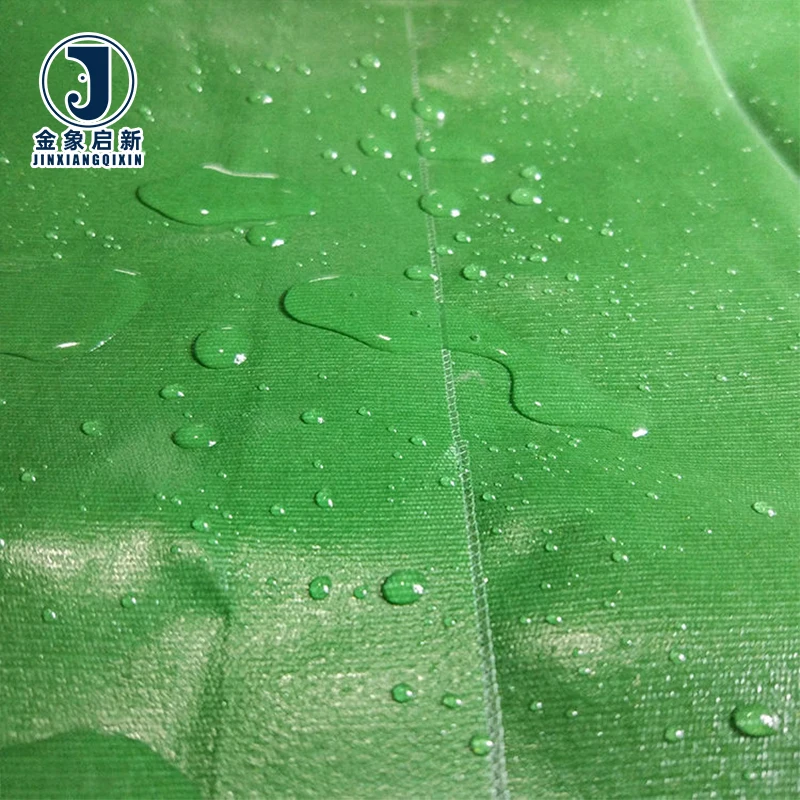
| Key Features | Water resistant, anti-UV, flame retardant options, heat-sealed seamless edge wrapping |
Application Suitability
| Application | Exposure & Requirement |
|---|---|
| Tarpaulin distributor regional restocking | Consistent colour and GSM across multiple rolls, broad grade selection for diverse end users |
| Tent and awning manufacturing | Smooth surface for fabrication, reliable tensile strength for frame tension, UV exposure |
| Side curtain and transport cover fabrication | Repeated flexing at folds, road debris abrasion, wind-driven rain ingress |
| Industrial shelter and site cover | Prolonged outdoor weathering, puncture risk from site materials, wind uplift load |
| Inflatable structure and membrane fabric | Air retention, structural stability under pressure, welded seam integrity |
| Outdoor furniture and pergola rain cover | Water pooling on horizontal surfaces, UV degradation of surface finish |
Why GSM Alone Does Not Tell You How Strong the Fabric Is
A 650 GSM roll with a loosely woven base fabric can tear more easily than a 500 GSM roll built on a dense 30×19 construction.
Purchasing managers reviewing quotations often see GSM as the single indicator of quality, yet the denier of the yarn and the mesh count define the actual load-bearing capacity of the woven skeleton beneath the coating. When wholesale buyers select PVC coated tarpaulin roll stock purely on weight, they risk receiving material that feels substantial in hand but fails to resist tearing at stress points during fabrication or end use [NEED_CITE: tensile and tear test methods for coated fabrics per ISO 1421]. The coating adds mass without proportional strength, making base fabric specification the more reliable predictor of field performance.
Container-Ready Roll Stock for Distributors and Importers
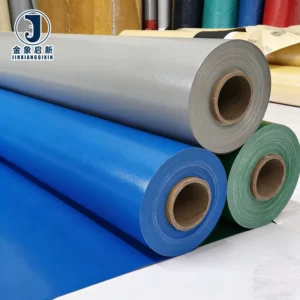
Distributors restocking regional warehouses need a single supplier that covers lightweight grades for temporary covers and heavy-duty grades for industrial applications without splitting orders across multiple mills. The eight available GSM options — from 350 to 900 — allow consolidation of the entire product range into one container load. Roll packing is optimised for container weight and cube, with each roll counted and documented against the packing list for straightforward receiving inspection on arrival.
Colour and Thickness Uniformity Across the Entire Shipment
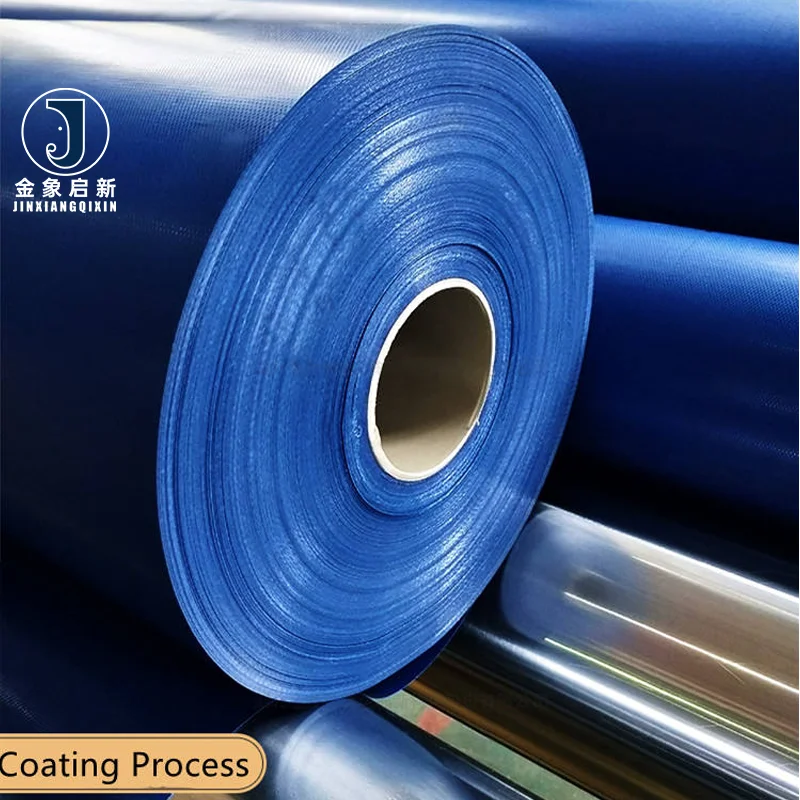
When fabricators unroll multiple PVC tarpaulin panels side by side during installation, any variation in colour depth or coating thickness becomes immediately visible to the end customer. Consistent pigment dosing and controlled coating weight across every production run prevent this outcome. A dedicated quality checkpoint at each stage of the coating line ensures that a 650 GSM order delivered in twenty rolls will show no discernible shade difference when panels are deployed adjacent to one another [NEED_CITE: colour consistency standards for coated fabric batches].
Reading the Specification Sheet: What the Numbers Actually Mean
The relationship between denier, mesh count, and GSM determines how the material behaves under real-world loads. A 1000D×1000D 20×20 construction provides thick yarns with moderate spacing, yielding high tensile strength in both warp and weft directions but a slightly more flexible hand. Moving to a 1300D×1300D 20×20 variant increases yarn mass substantially, pushing tensile values toward the upper end of the range while adding puncture resistance that matters for construction site covers and heavy-duty transport applications. The PVC coating weight then governs waterproofness, surface durability, and weldability — a heavier coat improves water shedding and seam adhesion but also raises the total roll weight and affects fabric drape. Thickness readings from 0.29 mm to 0.65 mm correspond to these coating layers, and selecting the right point on that scale depends on whether the end use demands flexibility for folding and packing or rigidity for semi-permanent shelter structures. The brittle temperature threshold of -50 to -60 °C and softening point above 80 °C define the operational climate envelope, which is relevant for buyers specifying stock for markets with extreme seasonal swings.
The Hidden Cost of Underspecifying Roll Stock
Ordering a mid-range GSM without checking the base fabric denier often leads to premature failures at welded seams and tie-down points, where the fabric flexes under load and the woven skeleton carries the stress. Buyers who skip the pre-shipment weight verification step sometimes receive rolls that measure lighter than the quoted specification, a discrepancy that only becomes apparent after the container has cleared customs. Colour inconsistency across rolls in a single shipment forces fabricators to segregate panels and absorb material waste, eroding margins on fixed-price installation contracts [NEED_CITE: common causes of coated fabric warranty claims in distribution]. Specifying the flame retardant grade required by the destination market before placing the order avoids costly rejections at project inspection.
Why Source Roll Stock Through This Supply Chain
Three full production lines running in parallel provide the output volume needed to fill multi-container orders without extending lead times beyond the quoted schedule. The 36 sets of professional coating and finishing equipment support simultaneous production of different GSM grades, so a mixed-order container is feasible without sequential bottlenecks. A ten-person research and development team handles custom colour matching, width adjustments, and sample development, with sample turnaround measured in days rather than weeks. Quality control runs through every production stage with full inspection before shipment, meaning the pre-shipment documentation reflects actual measured values rather than batch averages. ISO and CE certification underpins the documentation package, which supports customs clearance and compliance verification in destination markets [NEED_CITE: ISO and CE certification scope for PVC coated textile manufacturing].
Documentation & Verification
- Material specification sheet stating exact GSM, denier, mesh count, and coating type per roll grade
- Pre-shipment inspection record with weight verification against stated GSM for every roll
- Roll packing list detailing roll count, net and gross weight, and container loading plan
- Test report for anti-UV and flame retardant grades supplied where applicable to the order
- Certificate of origin and customs documentation for international wholesale shipment clearance
Fabrication, Handling & Storage
- Heat-sealed seamless edge wrapping maintains roll integrity during transit and prevents edge fraying before fabrication
- Weld temperature and dwell time should be adjusted to match the selected coating thickness from 0.29 mm to 0.65 mm
- Store rolls upright on a flat surface to prevent flat-spot deformation of the polyester base fabric over extended warehousing
- Unroll and allow the material to acclimatise before fabrication if transported in temperatures approaching the -50 °C brittle threshold
- Clean the smooth leather-like surface with mild detergent only; solvent-based cleaners may compromise the PVC coating bond
- Plan cutting layouts to utilise full roll width, minimising offcuts and welded seam count in the finished product
Requesting a Quotation for Roll Stock
Provide the target GSM range, base fabric denier preference, and intended end application so the appropriate grade can be recommended. Specify the roll width and length required, along with any custom colour or pattern printing needs, to confirm availability and lead time. If the destination market mandates a particular flame retardant classification or anti-UV test standard, include that requirement in the initial enquiry to ensure the correct treatment is applied from the outset.
Frequently Asked Questions
Q: How is GSM verified before the rolls are shipped?
A: Every roll undergoes weight verification during the pre-shipment inspection process. The measured GSM is recorded against the material specification sheet, and this data is included in the dispatch documentation so buyers can cross-reference on arrival without relying solely on supplier claims.
Q: Can you guarantee colour consistency if I order twenty rolls of the same grade?
A: Colour matching is controlled through pigment dosing consistency across each production run. Rolls within a single container order are produced under the same batch conditions, and the pre-shipment inspection includes a visual check for shade uniformity across the roll set.
Q: What roll widths and lengths are available for bulk wholesale orders?
A: Standard and custom widths are produced across the three coating lines. The specific width and roll length available depend on the selected GSM grade and denier construction. Submit your required dimensions with the enquiry for confirmation of production feasibility and container loading calculations.
Q: What is the minimum order for custom colour or printed branding on rolls?
A: Custom colour and printed rolls carry minimum quantities that vary by the specific grade and print complexity. Sample development is available within days to confirm colour and pattern before full production proceeds, allowing buyers to approve the output before committing to the bulk run.
Q: How are rolls packed for long-distance export shipping?
A: Roll packing, bale packing, and carton options are available depending on the grade and buyer preference. The packing list documents roll count, weight, and container loading arrangement to support logistics planning and receiving inspection at destination.